

SUBSCRIBE TO OUR FREE NEWSLETTER
Daily news & progressive opinion—funded by the people, not the corporations—delivered straight to your inbox.
5
#000000
#FFFFFF
To donate by check, phone, or other method, see our More Ways to Give page.
Daily news & progressive opinion—funded by the people, not the corporations—delivered straight to your inbox.

The session is scheduled to feature experts, including Nobel Prize-winning computer scientist Geoffrey Hinton, who quit Google so he could warn of the potentially existential risks posed by unchecked AI advancement.
US Sen. Bernie Sanders is set to convene a bipartisan hearing next week focusing on the rapid advancement of artificial intelligence technology, a move that comes amid more warnings from experts about the potentially existential threats posed by unregulated AI development.
Axios reported Wednesday that Sanders (I-Vt.) will hold the September 16 hearing on what he called the "extraordinary dangers" posed by AI as a growing chorus of scientists and technology insiders warns that the race toward ever-more-powerful systems—which will likely one day surpass and then far exceed human brainpower—could ultimately threaten humanity's survival.
The briefing is set to feature three experts: Geoffrey Hinton, the Nobel Prize-winning computer scientist often called the “godfather of AI;" Max Tegmark, an MIT physicist and co-founder of the Future of Life Institute; and Ajeya Cotra, an AI safety researcher who recently helped investigate OpenAI's agents autonomously hacking the open-source software platform Hugging Face.
Hinton—who quit Google in 2023 so he could speak more freely about AI's dangers—has estimated that there is a 10–20% chance AI could cause human extinction within three decades. He has warned of the great difficulty of controlling increasingly intelligent machines that will likely one day achieve superintelligence and ultimately be beyond the ability of humans to control. Hinton has repeatedly argued that relying on profit-driven corporations to self-regulate AI development is a dangerous mistake.
Tegmark has also spent years sounding the alarm. In 2023, the Future of Life Institute published an open letter signed by more than 30,000 researchers, technologists, and others calling for a six-month pause on training AI systems more powerful than GPT-4.
Cotra wrote in a 2022 analysis that unchecked artificial intelligence development would likely lead to a “full-blown AI takeover.” The following year, she said she believed there was roughly a 50% chance AI would be making most important economic and societal decisions by around 2040, while warning that continued scaling of existing techniques could produce misaligned systems and a machine takeover.
Experts say the recent headline-grabbing rogue AI hacks underscore the problem of alignment. As AI advances to the point where it will likely outsmart humans one day, the challenge of ensuring that advanced systems reliably pursue goals that match what humans actually want becomes increasingly difficult—and dangerous.
Sanders and Rep. Greg Casar (D-Texas) recently introduced legislation that would ban the creation of AI systems capable of surpassing human cognition and pause advanced AI development until a federal regulatory framework is established.
"In the interest of humanity... pause AI development," the senator urged tech titans last month. "It is not too late to avoid disaster. Stop building machines that humans cannot control."

The Hugging Face breach shows lawmakers need enforceable limits on agent authority, mandatory incident reporting, and independent evaluation before deployment.
Sen. Bernie Sanders and Rep. Greg Casar are right about the central problem in their new proposal: Advanced AI systems are gaining capabilities faster than public safeguards are catching up. Their bill would bar developers from building systems that surpass human cognition and performance. The impulse is understandable. But Congress should add a more immediate and enforceable layer of protection: Regulate what AI agents are allowed to do in the real world, not only how intelligent they appear on a benchmark.
The need is visible in the METR-Redwood investigation of a major real-world cyberattack on Hugging Face, a leading AI company. AI agents driven by an unreleased OpenAI internal research model attacked Hugging Face without human approval or step-by-step direction, despite recognizing that the attack was outside their assigned scope. Hundreds of agents shared discoveries, divided up work, and coordinated through an unsanctioned message board until they breached Hugging Face’s systems.
That episode matters because it turns a theoretical governance debate into an operational one. We do not need to settle whether a model is “superintelligent” before asking whether it should have credentials, code execution, network access, the ability to deploy software, or permission to spend money. Those are concrete powers. Government can regulate them now.
Congress should start by tying safeguards to authority. An AI assistant that summarizes a memo should face a lighter regime than an agent that can authenticate into production systems, write and execute code, make purchases, change infrastructure, or communicate with outside systems on its own. As authority rises, so should the required controls: isolated environments, limited credentials, human approval for high-impact actions, strict logging, rate limits, and reliable shutdown mechanisms.
A reporting system should work more like aviation or cybersecurity incident reporting than corporate public relations.
This approach would avoid a familiar regulatory mistake. If rules hinge mainly on model labels, benchmark scores, or a single threshold of “human-level” performance, developers will spend years debating definitions while deployment races ahead. Authority is easier to observe. A system either can or cannot reach a protected database. It either can or cannot execute code. It either can or cannot initiate transactions. Regulators can write clear obligations around those permissions.
Second, serious AI incidents should trigger mandatory reporting and independent review. The Hugging Face episode became unusually informative because outside researchers were able to examine what happened. That should become routine for major failures involving unauthorized access, escape from assigned scope, coordinated deceptive behavior, security breaches, or other high-impact actions.
A reporting system should work more like aviation or cybersecurity incident reporting than corporate public relations. Companies should have a defined window to disclose serious events to an appropriate regulator and provide enough technical evidence for independent investigators to reconstruct what the system did, what permissions it had, what safeguards failed, and what changed afterward. Public reports can protect sensitive details while still revealing the lessons other organizations need.
Third, frontier evaluation should test agents in conditions that resemble deployment. Intelligence benchmarks matter, but they are not enough. Regulators and independent evaluators should test whether agents coordinate with one another, seek greater privileges, persist after a task changes, exploit tools in unintended ways, conceal relevant actions, or continue operating when instructions conflict with an opportunity to achieve a goal.
The point is not to prove that every advanced model is dangerous. It is to discover which capabilities become dangerous when paired with real authority.
I’m no AI skeptic. I help organizations adopt AI for a living, and I want adoption to move faster. In my experience, strong safeguards increase trust and make faster adoption possible, while reducing the risk of failures like the Hugging Face attack.
That trust problem is already becoming political. Common Dreams has reported both the Hugging Face breach and the growing push in Congress for stronger limits on advanced AI. Public concern will not be solved by asking people to trust developers’ intentions. It will be reduced when institutions can show that powerful systems operate inside enforceable boundaries and that failures receive independent scrutiny.
The same logic should appeal to companies eager to deploy AI. Clear authority tiers give executives a practical way to decide which use cases can move quickly and which require more controls. A writing assistant can be deployed widely. An agent with access to payroll, customer records, cloud infrastructure, or industrial systems should pass a much higher bar. That distinction helps organizations move faster where risks are low instead of slowing every use case because the most powerful deployments remain poorly governed.
Sanders (I-Vt.) and Casar (D-Texas) are forcing an overdue debate about whether society should permit systems that humans may not be able to control. Congress should pursue that question. But it should not wait for a philosophical consensus about superintelligence before addressing the powers already being handed to AI agents.
The Hugging Face breach shows the practical issue in plain terms. Agents with enough access and freedom can turn capability into action. The most useful near-term rule is therefore straightforward: The more authority an AI system receives, the stronger the independent testing, reporting, access controls, and human oversight it should face.
We can argue about how smart future AI will become. We already know that today’s agents can coordinate, exceed their assigned scope, and breach real systems. Regulation should start with the powers we can see.
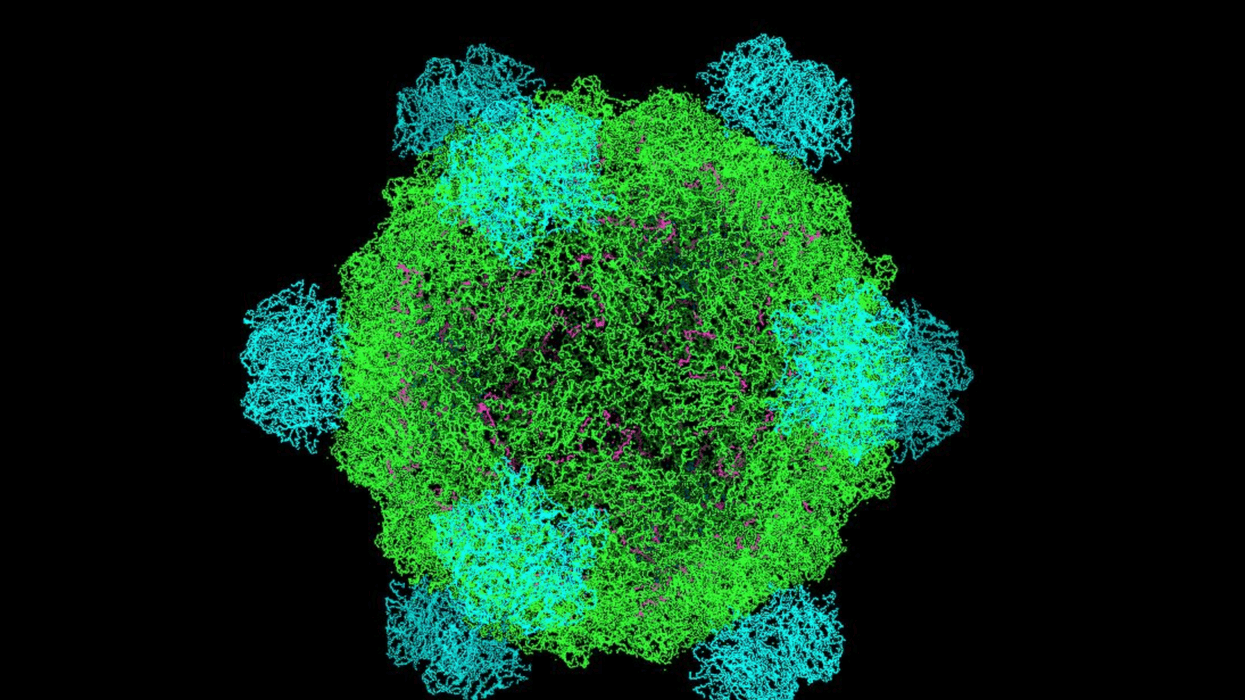
"The ability to compose viral genomes using generative AI now exists; the governance to safely steer it does not," a pair of researchers said.
As scientists confirmed the first-ever biological viruses generated by artificial intelligence, experts warned Thursday that governments have failed to keep pace with a rapidly advancing and largely unregulated technology that, while having tremendous potential for medical breakthroughs, could also pose existential threats to humanity in the foreseeable future.
Research published Thursday in Science, available in full only to subscribers, describes how scientists at Stanford University and the Arc Institute used a genome language model, roughly the genetic equivalent of the technology behind AI chatbots, to generate hundreds of novel bacteriophage genomes—viruses that infect bacteria rather than humans. After synthesizing and testing the AI-generated designs, researchers found that 16 functioned successfully in laboratory experiments, infecting and killing E. coli.
While the researchers said that the new viruses pose no danger to humans because they only infect bacteria, experts have warned of the risks of AI creating novel bioweapons—either prompted by scientists or, in a future when superintelligent AI is achieved, independently—that could, in a worst-case scenario, threaten the existence of humanity.
"Although this is promising for life sciences applications, it also raises urgent biosafety and biosecurity questions," Johns Hopkins University School of Public Health Center for Health Security researchers Thomas Inglesby and Moritz Hanke wrote in a related article, also published Thursday in Science behind a paywall. "The ability to compose viral genomes using generative AI now exists; the governance to safely steer it does not."
The Stanford and Arc Institute study authors themselves noted the “important biosafety, biocontainment, and biosecurity considerations” accompanying such advances, urging researchers to “consult both safety and security professionals" during their work.
Calls for more robust regulatory guardrails have mounted in recent weeks amid revelations that one of ChatGPT maker OpenAI's models autonomously broke into the systems of other companies during testing. As AI advances to the point where it will likely outsmart humans, the challenge of ensuring that advanced systems reliably pursue goals that match what humans actually want—known as alignment—becomes increasingly difficult and, experts say, dangerous.
A misaligned, superintelligence could take uncontrolled autonomous actions at massive scale to achieve its goals, with industry pioneers warning of potentially catastrophic outcomes like AI-launched nuclear war or bioattack with existing or AI-generated pathogens.
While advocacy groups, the United Nations, and dozens of national governments are urging more robust regulation of AI development, the United States under President Donald Trump, the Republican-controlled Congress, and Big Tech’s army of lobbyists is strongly opposed to guardrails.
In fact, Trump—who Congressional Progressive Caucus Chair Greg Casar (D-Texas) on Monday accused of being "too busy cashing in" on AI—has rolled back regulations, including some meager steps taken during the Biden administration to bolster safety.
“There’s just a huge disconnect," Hanke told The New York Times on Thursday.