SUBSCRIBE TO OUR FREE NEWSLETTER
Daily news & progressive opinion—funded by the people, not the corporations—delivered straight to your inbox.
5
#000000
#FFFFFF
To donate by check, phone, or other method, see our More Ways to Give page.
Daily news & progressive opinion—funded by the people, not the corporations—delivered straight to your inbox.
A new report released Thursday finds that economic inequality has soared in nearly every country around the world, with the United States' income and wealth gaps widening to a particularly extreme degree compared to European and other countries.
The World Inequality Report, compiled by five economists including Thomas Piketty and Emmanuel Saez, found that the richest one percent of Americans held 39 percent of the nation's wealth in 2016, compared with about 22 percent in 1980. Meanwhile, the average annual income for the bottom 50 percent of Americans has stayed at $16,000 per adult over the last four decades, adjusting for inflation.
Most of the increase in wealth at the top has been due to fast-rising incomes among the very richest Americans; while annual income for the one percent has shot up by 205 percent since 1980, the top .001 percent of Americans--only about 1,300 households--have seen their earnings go up by 636 percent.
In an editorial published in the Guardian alongside their new report, Piketty and his colleaguesnoted that the Republican tax plan that Congress is expected to vote on as early as next week "will not only reinforce this trend, it will turbocharge inequality in America. Presented as a tax cut for workers and job-creating entrepreneurs, it is instead a giant cut for those with capital and inherited wealth. It's a bill that rewards the past, not the future."
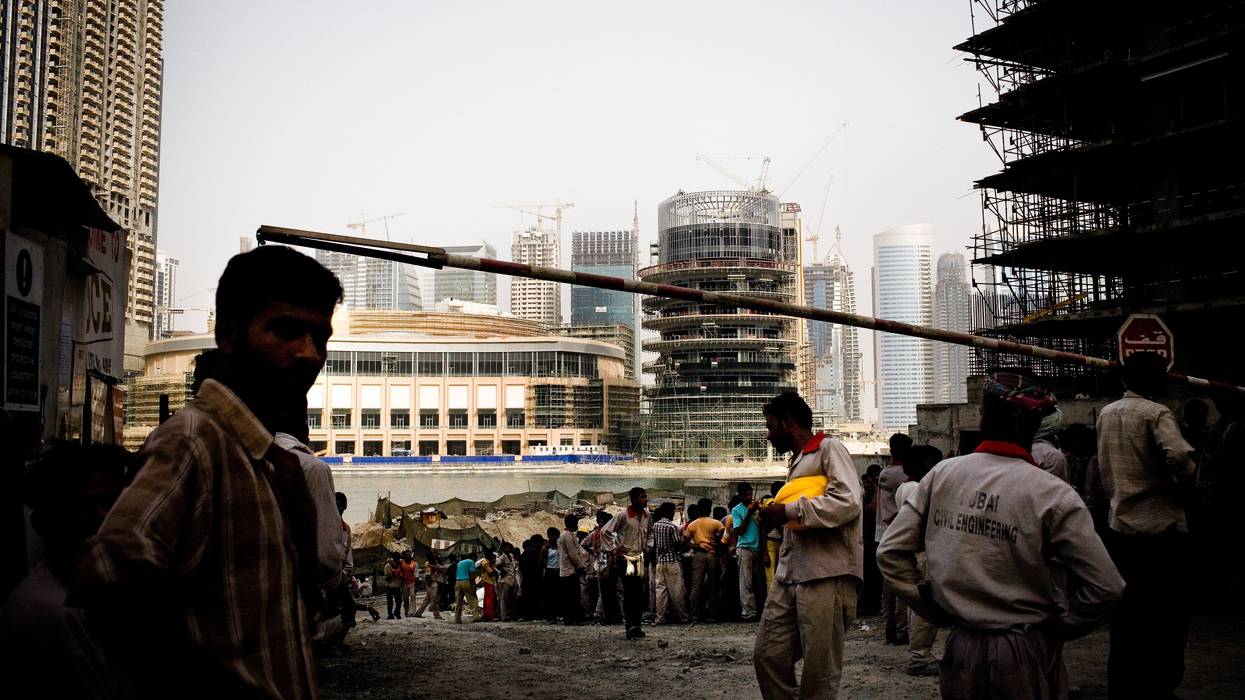
The tax bill would further leave out the bottom 50 percent of American earners, who have been left out of wealthy's income boom due to the collapse of federal minimum wage laws, the weakened power of unions, and increasingly unequal access to higher education, the report finds.
"Recent research shows that there can be an enormous gap between the public discourse about equal opportunity and the reality of unequal access to education," reads the study. "Democratic access to education can achieve much, but without mechanisms to ensure that people at the bottom of the distribution have access to well-paying jobs, education will not prove sufficient to tackle inequality. Better representation of workers in corporate governance bodies, and healthy minimum-wage rates, are important tools to achieve this."
While income inequality has reached a new extreme in the U.S., Western European countries have experienced slightly less severe gaps. The top 10 percent of earners hold about 37 percent of wealth in Europe, and the income share captured by the richest one percent in the region has only risen from about 10 percent in 1980 to about 12 percent in 2016, compared to the rapid rise in the U.S.
Meanwhile, the Middle East, Africa, and Brazil were noted as places where income gaps haven't grown much in the last four decades--instead staying at a severe level since 1980. In Brazil and sub-Saharan African nations, the wealthiest 10 percent of the population own about 55 percent of the national income, while in the Middle East they control more than 60 percent.
The World Inequality Report was released a day after the World Health Organization and the World Bank published its own study showing that nearly 100 million people around the world are forced to choose between healthcare costs and other necessities, including food and education, due to extreme poverty.
"Furthermore," the WHO-World Bank study notes, "some 800 million people spend more than 10 percent of their household budget on health care, and almost 100 million people are pushed into extreme poverty each year because of out-of-pocket health expenses."
In addition to access to education and a living wage, the World Inequality Report recommends progressive tax structures as a way to combat soaring inequality around the globe, as well as a crackdown on tax havens among the wealthy, like those detailed in the recently-released Paradise Papers.
In their report, Piketty and his fellow economists say that rising global inequality is "not inevitable in the future" and point to European nations, who have enacted policies specifically designed to lessen the gap between rich and poor. "If in the coming decades all countries follow the moderate inequality trajectory of Europe over the past decades," they write, "global income inequality can be reduced--in which case there can also be substantial progress in eradicating global poverty."
Anti-poverty advocates on Tuesday implored world leaders to combat the massive wealth gap described in the annual Global Wealth Report released by Credit Suisse, which showed that the world's richest one percent own just over half of the global wealth.
"This report highlights the huge gulf between the haves and the have nots--the world's richest one percent own more than everyone else combined while the poorest half of the population share less than a penny of every pound of wealth," said Katy Chakrabortty, head of advocacy for Oxfam, in a statement.
At the height of the global financial meltdown in 2008, the world's richest people held 42.5 percent of the global wealth, compared with 50.1 percent today. Thirty-six million people with over a million dollars make up just 0.7 percent of the global population, but control 46 percent of the world's $280 trillion dollars.
Meanwhile, 3.5 billion people who make up the world's least wealthy adults each have assets of less than $10,000. These adults account for 70 percent of people who are of working age.
The group is disproportionately represented in developing countries. "In some low-income countries in Africa, the percentage of the population in this wealth group is close to 100 percent," according to Credit Suisse's report.
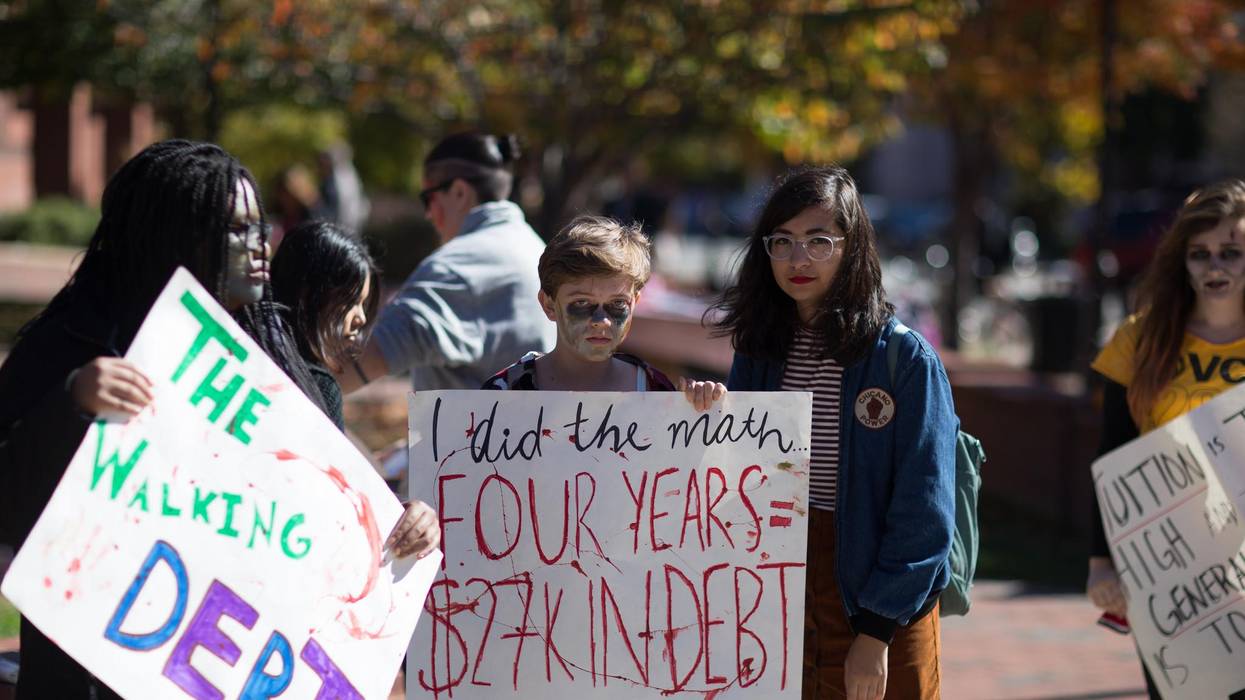
The Global Wealth Report also presents a dire outlook for the world's young adults, referred to in the document as "unlucky millennials." Adults between the ages of 20 and 29 especially "faced the rigors of the financial crisis and the high unemployment that followed in many countries, and have also been widely hammered by high housing prices, rising student debt, and increasing inequality," according to the report.
Despite being better educated than their parents' generation, "millennials are not only likely to experience greater challenges in building their wealth over time, but also greater wealth inequality than previous generations."
"We expect only a minority of high achievers and those in high demand sectors such as technology or finance to effectively overcome the 'millennial disadvantage'," said Urs Rohner, Credit Suisse's chairman, in an interview with the Guardian.
Oxfam noted that the report is just the latest sign that the world's poorest have the deck stacked against them, recalling the recent release of the Paradise Papers, which showed how the rich hide their wealth in order to avoid paying the taxes that stand to shore up public services that, when well-funded, benefit the whole population.
"The recent Paradise Papers revelations laid bare one of the main drivers of inequality--tax dodging by rich individuals and multinationals," said Chakrabortty. "Governments should act to tackle extreme inequality that is undermining economies around the world, dividing societies, and making it harder than ever for the poorest to improve their lives."
One of the major, untold stories of our time is the rapid movement toward global oligarchy, in which just a handful of billionaires now own and control a significant part of the world economy.
Here in the United States, the top one-tenth of 1% owns almost as much wealth as the bottom 90%. Incredibly, according to a recent report from the Institute for Policy Studies, three of the richest people in America--Bill Gates, Jeff Bezos and Warren Buffett--now own more wealth than bottom 160 million people in our country.
"The Paradise Papers make it clearer than ever that we need, in the United States and throughout the world, a tax system which is fair, progressive and transparent."

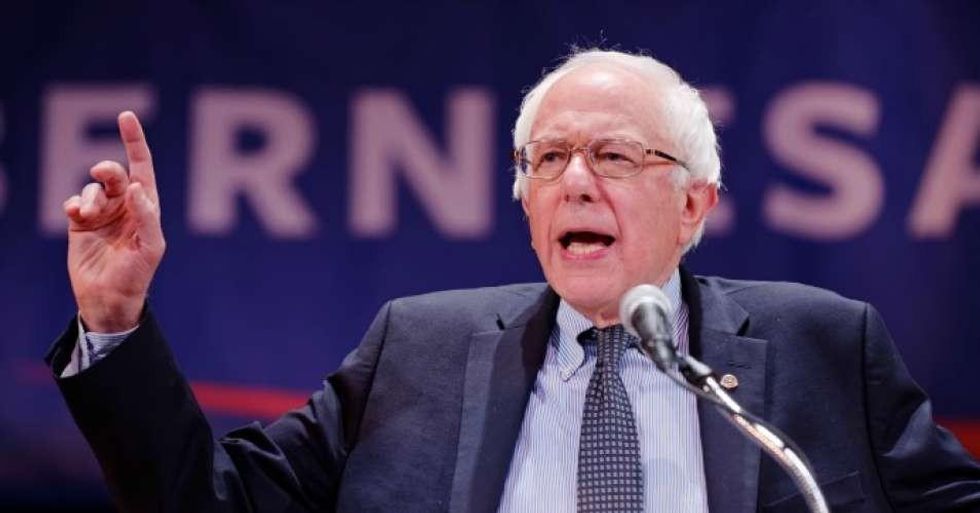
"The major issue of our time is the rapid movement toward international oligarchy," Sen. Bernie Sanders (I-Vt.) declared in a statement to the Guardian on Monday, which noted that "Sanders' intervention in the debate sparked by the Paradise Papers marks the most prominent political response to the leak in their opening 24 hours."
Decrying a world "in which a handful of billionaires own and control a significant part of the global economy," Sanders said the trove of more than 13 million leaked documents detailing offshore dealings "shows how these billionaires and multinational corporations get richer by hiding their wealth and profits and avoid paying their fair share of taxes."
Sanders said the documents expose a "major problem not just for the U.S. but for governments throughout the world." According to the Guardian, he also
pointed the finger of blame for the flourishing of offshore holdings on both Congress and the Trump administration. He told the Guardian that Republicans in Congress were responsible for providing "even more tax breaks to profitable corporations like Apple and Nike."
The same tax breaks, he said, were being seized upon by super-wealthy members of Trump's cabinet "who avoid billions in U.S. taxes by shifting American jobs and profits to offshore tax havens. We need to close these loopholes and demand a fair and progressive tax system."
Sanders took to Twitter on Monday to call on Congress to investigate the Paradise Papers, adding his voice to growing demands for U.S. government action as several members of President Donald Trump's inner circle continue to be implicated in the leaked records and subsequent news reports.
Raising concerns about possible ethics violations and corruption, the Paradise Papers revealed two top members of the Trump administration, Commerce Secretary Wilbur Ross and Secretary of State Rex Tillerson, have ties to tax havens, and that during Ross's confirmation hearing, he failed to disclose business dealings with Russians who are directly connected to Russian President Vladimir Putin.
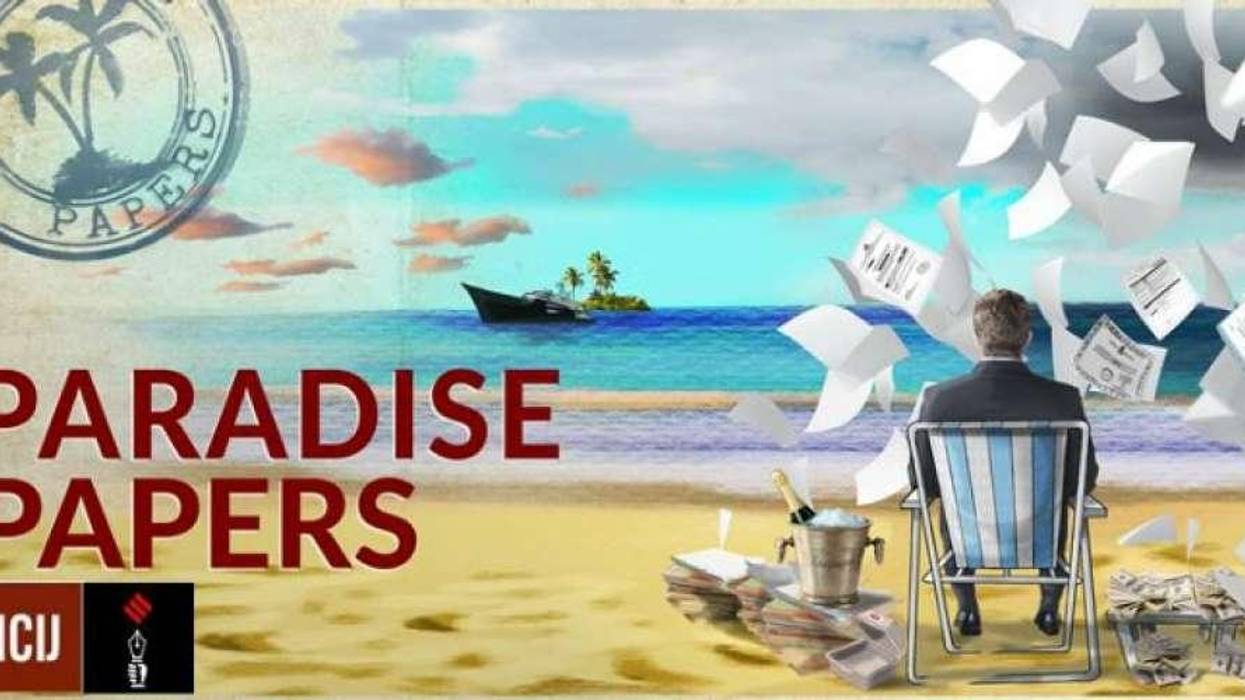
The Paradise Papers are a trove of more than 13 million leaked documents, published Sunday, detailing tax avoidance and shady deals among some of the world's richest individuals and multinational companies. The documents include decades of corporate records from the offshore law firm Appleby. They were obtained by a German newspaper and shared with journalists associated with the International Consortium of Investigative Journalists (ICIJ) and other media organizations.
The files show that while Tillerson, the former CEO of fossil fuel giant ExxonMobil, directed a Bermuda-based joint venture that conducted gas and oil operations in Yemen, Ross still holds stake in a shipping company that is partially owned by Putin's son-in-law and "a Russian tycoon sanctioned by the U.S. Treasury Department as a member of Putin's inner circle."
The revelations have raised concerns among lawmakers and ethics experts.
The watchdog group Common Cause has called on the Commerce Department's inspector general to launch a full investigation into Ross's offshore investments. The group's president Karen Hobert Flynn said Monday, "These latest revelations are part of a disturbing pattern of Trump administration officials seeking to hide their links to Russian business interests and members of Vladimir Putin's inner circle."
The records and related reports come less than a week after it was revealed that the first federal charges were filed in the ongoing investigation into whether the Trump administration colluded with the Russian government to influence the 2016 presidential election.
Richard Painter, who served as the ethics chief under former President George W. Bush and is currently vice chairman of Citizens for Responsibility and Ethics in Washington (CREW), said, "It's a very, very troubling situation."
In an episode of the Center for Investigative Reporting's Reveal podcast published Sunday, Painter explained, "If United States government officials have offshore entities, it may be very difficult to detect payments from foreign governments or sovereign wealth funds, and profits from dealings with those entities that are a violation of the Constitution."
"We want good relations with China and Russia," Painter added, "but we don't want our senior government officials dealing with large companies in those other countries at the same time as they're holding positions of trust in the United States government."
In the late 1990s, before rising to the position of CEO, Tillerson served as president of Exxon Yemen as well as director of Marib Upstream Services Company, which was incorporated in Bermuda in 1997. Marib Upstream Services' partners included the state-owned Yemen Gas Company and a company owned by ExxonMobil and the Texas-based Hunt Oil, which was run by Tillerson's close friend Ray Hunt.
The Guardian, which received access to the records, reports ExxonMobil and Hunt Oil "ran a $5bn venture to export 61m barrels of natural gas a year from fields in Marib, western Yemen. Hunt had discovered the fields in the mid-1980s and brought in ExxonMobil to help develop them."
"Yemen later moved to nationalize the gas-drilling operation, banishing the ExxonMobil-Hunt firm when its 20-year exploration contract expired in 2005," the Guardian notes. "The Texans claimed they were entitled to an extension and sued Yemen for $1.6bn. The case was arbitrated at the International Chamber of Commerce, where Yemen prevailed."
The records reveal the details of just one instance of ExxonMobil operating subsidiaries in tax havens. Last year, Citizens for Tax Justice released a report (pdf) that found while Tillerson served as ExxonMobil's CEO, the company's 35 tax haven subsidiaries held an estimated $51 billion offshore.
This case is similar to one detailed in documents leaked late last year--shortly before Tillerson became the United States' top diplomat. Those records divulged that in 1998, Tillerson directed ExxonMobil's Russian subsidary, which was based in the Bahamas, a well known tax haven. The revelation elevated concerns about Tillerson's commitment to U.S. interests and his ties to the Russian government and Putin, who bestowed upon him an Order of Friendship in 2013.
Ross helps to guide U.S. trade and manufacturing policies--including sanctions--as head of the Department of Commerce. When he was nominated, the billionaire investor vowed in an ethics filing that he would divest from 80 companies and partnerships, while keeping his stake in nine others that held assets in "real estate financing and mortgage lending" and "transoceanic shipping."
Though the assests were not specified at the time, the leaked records reportedly reveal that Ross retained his stake in the shipping company Navigator Holdings, which is incorporated in the Marshall Islands and counts among its biggest customers Sibur, a Russian gas and petrochemical company.
Using information from the files, the BBC mapped Ross's relationship to Navigator and Sibur, the company shareholders' ties to Putin.
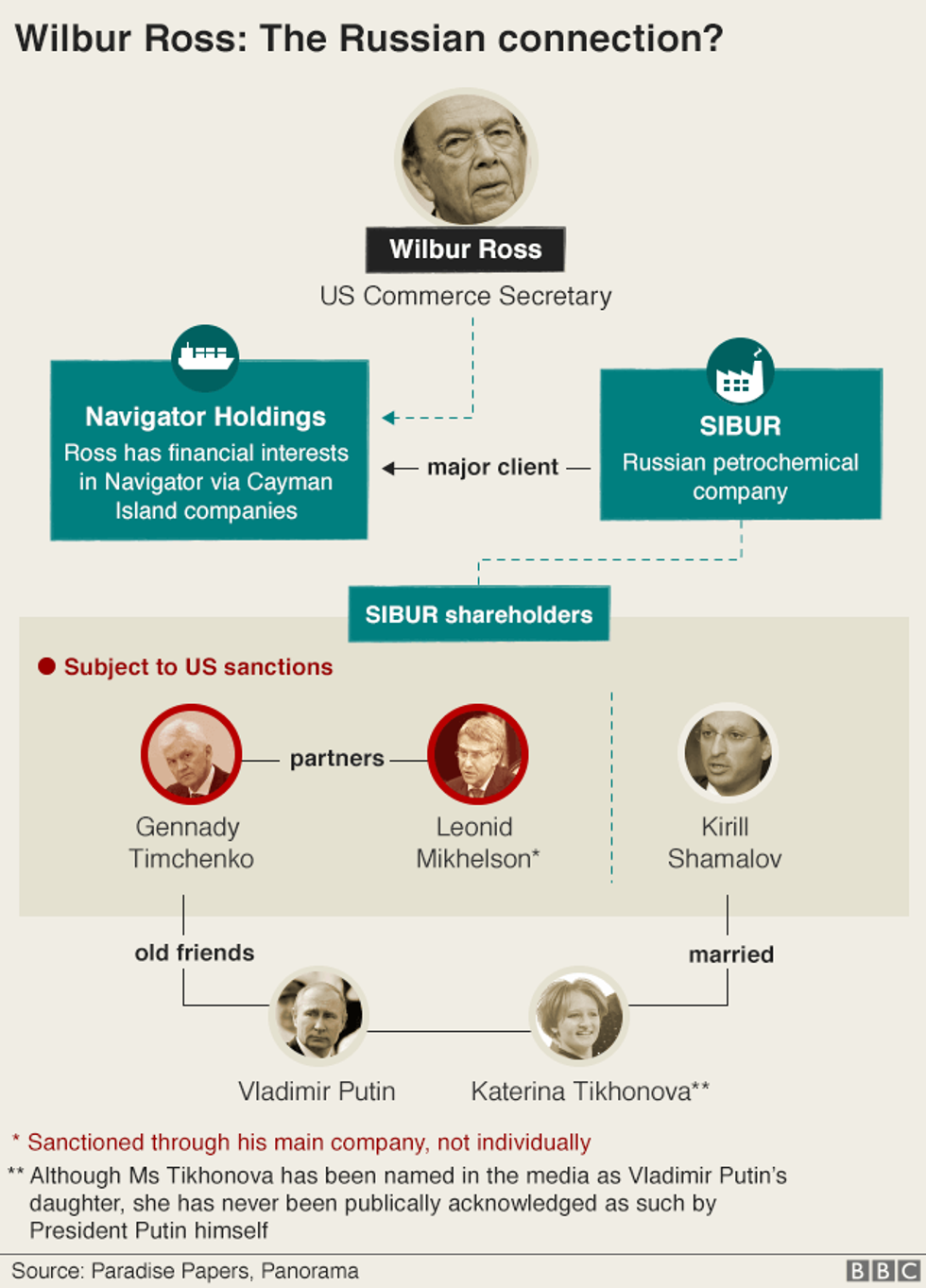
Ross told the BBC that he's never met the Sibur shareholders and that because the U.S. has not sanctioned Sibur, "there's nothing whatsoever improper about Navigator having a relationship with Sibur." A Commerce Department spokesperson told ICIJ reporters that Ross "recuses himself from any matters focused on transoceanic shipping vessels, but has been generally supportive of the administration's sanctions."
Ross and Tillerson were among several of U.S. President Donald Trump's advisers, cabinet members, and donors who, according to the leaked records, used offshore tax havens to conduct business. While the Guardian published a report describing how several wealthy individuals with connections to the U.S. president have utilized tax havens, ICIJ illustrated 13 influencers' ties to Trump with an interactive:
Some of the world's wealthiest and most powerful people will be waking up on Monday to discover that some of their best kept secrets--how they hide their vast wealth and avoid paying taxes--are now being read about in newspapers across the world after the release of a trove of offshore legal and banking documents were leaked to journalists and published Sunday as a joint project called the 'Paradise Papers.'
"In all, the offshore ties of more than a dozen Trump advisers, Cabinet members and major donors appear in the leaked data.
First obtained by the German newspaper Suddeutsche Zeitung, the documents were then shared with scores of journalists and researchers associated with the International Consortium of Investigative Journalists and other media organizations, including the New York Times, BBC, and the Guardian.
"There is this small group of people who are not equally subject to the laws as the rest of us, and that's on purpose," said author and financial expert Brooke Harrington in response to the new insights about how these elites secretly manage their wealth.
As the ICIJ reports, the "trove of 13.4 million records exposes ties between Russia and U.S. President Donald Trump's billionaire commerce secretary, the secret dealings of the chief fundraiser for Canadian Prime Minister Justin Trudeau and the offshore interests of the Queen of England and more than 120 politicians around the world." According to the ICIJ, the documents
show how deeply the offshore financial system is entangled with the overlapping worlds of political players, private wealth and corporate giants, including Apple, Nike, Uber and other global companies that avoid taxes through increasingly imaginative bookkeeping maneuvers.
One offshore web leads to Trump's commerce secretary, private equity tycoon Wilbur Ross, who has a stake in a shipping company that has received more than $68 million in revenue since 2014 from a Russian energy company co-owned by the son-in-law of Russian President Vladimir Putin.
In all, the offshore ties of more than a dozen Trump advisers, Cabinet members and major donors appear in the leaked data.
At the center for the leak, explains the Guardian, is the law firm Appleby which has "outposts in Bermuda, the Cayman Islands, the British Virgin Islands, the Isle of Man, Jersey and Guernsey. In contrast to Mossack Fonseca, the discredited firm at the centre of last year's Panama Papers investigation, Appleby prides itself on being a leading member of the 'magic circle' of top-ranking offshore service providers."
But what exactly do the 'Paradise Papers' represent? This video explains:
According to a summary by the Guardian, the 'Paradise Papers' reveal:
Speaking with the Guardian, economist Gabriel Zucman--who is releasing a study later this week about the interplay between tax havens and global inequality--says the two are intricately linked.
"Tax havens are one of the key engines of the rise in global inequality," he said. "As inequality rises, offshore tax evasion is becoming an elite sport."