

SUBSCRIBE TO OUR FREE NEWSLETTER
Daily news & progressive opinion—funded by the people, not the corporations—delivered straight to your inbox.
5
#000000
#FFFFFF
To donate by check, phone, or other method, see our More Ways to Give page.
Daily news & progressive opinion—funded by the people, not the corporations—delivered straight to your inbox.
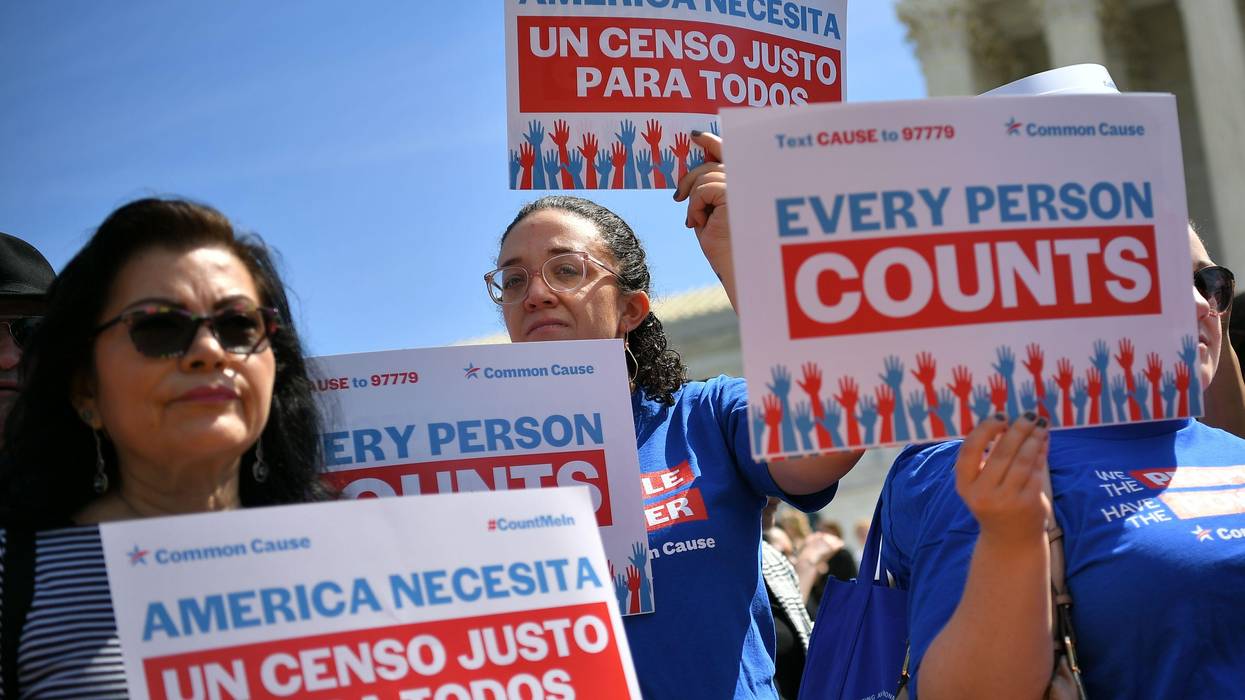
A U.S. House of Representatives panel probing the Trump administration's attempt to add a citizenship question to the 2020 census on Wednesday released a memorandum underscoring that the failed effort was politically motivated.
"The documents ultimately obtained by the committee... shed additional light on the depth of partisan manipulation in the 2020 census."
The memo focuses on documents that were finally shared with the panel in January after former President Donald Trump's commerce secretary and attorney general, Wilbur Ross and William Barr, were held in contempt of Congress for refusing to turn over requested materials.
"The documents ultimately obtained by the committee--including the legal memorandum prepared for Secretary Ross and secret communications between Trump administration lawyers and political appointees--shed additional light on the depth of partisan manipulation in the 2020 census, including senior officials' focus on using a citizenship question to alter apportionment counts and their illegal attempt to develop a pretext," the memo states.
"These documents exposed the vulnerability of our national statistical system to partisan manipulation and highlighted the need for Congress to protect the constitutionally mandated census from abuses of power and political interference," the memo continues.
As the panel's report lays out, the documents from the departments of Commerce and Justice (DOJ) show that:
"Lest anyone doubted that what the Trump administration was up to was wrong, these documents show that even the Trump administration itself knew that what it was doing was illegal," Thomas Wolf, deputy director of the Democracy Program at the Brennan Center for Justice, told The Washington Post on Wednesday.
Civil rights groups have long slammed the Trump administration's push for inserting a citizenship question into the census--which informs the allocation of federal funding and the drawing of political voting maps--as a bid to benefit Republican candidates for office.
John C. Yang, president and executive director of Asian Americans Advancing Justice - AAJC, one of the groups that challenged the Trump effort, nodded to that critique on Wednesday.
"The documents released today demonstrate the depths to which political actors sought to corrupt a basic function enumerated in the Constitution: the counting of all people in America every 10 years," Yang told The New York Times. "Secretary Ross chose to pursue his political goals through whatever means available."
Both the committee's memo and chair, Rep. Carolyn Maloney (D-N.Y.), pointed to the findings as further evidence of the need for reforms--specifically those included in the Ensuring a Fair and Accurate Census Act that she introduced last week.
"For years, the Trump administration delayed and obstructed the oversight committee's investigation into the true reason for adding a citizenship question to the 2020 census, even after the Supreme Court ruled the administration's efforts were illegal," Maloney said in a statement Wednesday.
Though the high court's 2019 decision effectively blocked the inclusion of the citizenship question and a federal court ruled against a July 2020 Trump memorandum intended to exclude undocumented immigrants from the census, a government analysis confirmed this year that minorities were significantly undercounted.
Maloney said that the committee's new memo "pulls back the curtain on this shameful conduct and shows clearly how the Trump administration secretly tried to manipulate the census for political gain while lying to the public and Congress about their goals."
The congresswoman added that "it is clear that legislative reforms are needed to prevent any future illegal or unconstitutional efforts to interfere with the census and chip away at our democracy."
"My bill, the Ensuring a Fair and Accurate Census Act, is commonsense legislation that will help prevent a similar crisis from occurring again and will protect one of our nation's most vital democratic institutions from partisan exploitation," she continued, calling on the Democrat-controlled House to swiftly pass the legislation "to safeguard the integrity and independence of the U.S. Census Bureau."
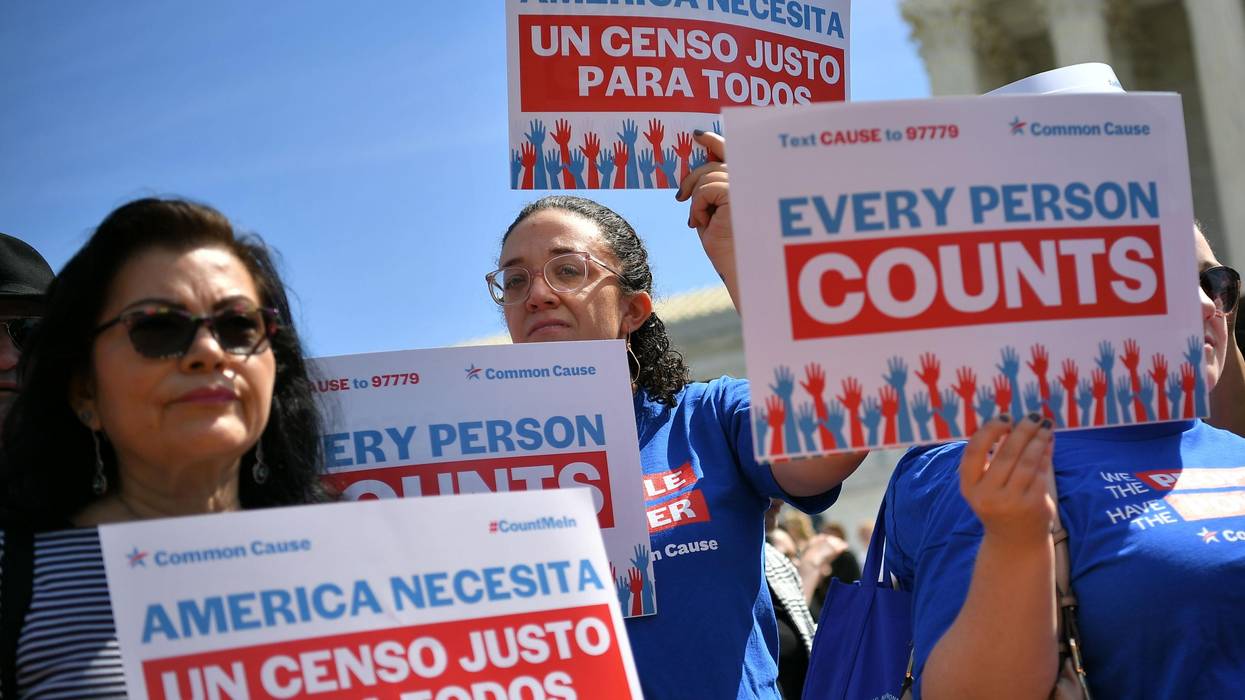
Latino Americans were significantly undercounted in the 2020 U.S. Census, according to an analysis released Thursday by the Census Bureau--a result which advocacy groups said was what former President Donald Trump's administration intended to happen when it attempted to change the decennial survey.
"This was intentional."
The census miscounted the U.S. population by 18.8 million people--an overall count that was relatively consistent with past surveys but that saw communities of color undercounted at higher rates than in past years.
Following Trump's efforts to add a citizenship question and to stop undocumented immigrants from being counted for the apportionment of U.S. House seats, the undercount of Latino people tripled from 1.54% in 2010 to 4.99% in 2020.
"This was intentional," said Rep. Joaquin Castro (D-Texas), warning that "the undercount will strip Latino communities of government funding and electoral power."
The undercount for people who identify as "some other race" was also statistically significant compared to the results in 2010, rising from 1.63% to 4.34%. Black Americans and Indigenous people were also undercounted, but at lower rates than the other groups.
Meanwhile, white Americans were overcounted at double the rate found in 2010.
"These numbers are devastating," Marc Morial, president of the National Urban League, told the Post. "The warnings we gave, the concerns that we raised, were absolutely true, and today we find ourselves with a census that is neither complete nor accurate."
The Census Bureau was challenged by numerous factors in 2020, as the coronavirus pandemic delayed the survey and wildfires in the West kept census-takers from reaching people who had not filled out the questionnaire online.
Critics said as the bureau was preparing to take the census that Trump's push to include a question about whether household members were U.S. citizens would intimidate Latino residents out of responding--warning that significant damage was done even after the former president's efforts failed.
Trump also moved up the deadline for finishing the count, leading to concerns of inaccuracies among census experts.
"Terrible demographic data has many consequences in our communities, especially in public health."
"I lay this at the feet of Donald Trump and [former Commerce Secretary] Wilbur Ross and their efforts to disrupt the census and make it as difficult as possible for Latinos to participate," Arturo Vargas, chief executive of the Latino advocacy group NALEO Educational Fund, told the Post.
"I said from the beginning when the first numbers were released that I smelled smoke," he added, referring to an analysis released in September by the American Statistical Association. "Today we learned that the 2020 Census was a five-alarm fire."
Census data is used to determine the allocation of $1.5 trillion in annual funding for communities based on how many residents are reported, including funds for Medicaid, public housing, the Supplemental Nutrition Assistance Program, and highway planning. The numbers are also used to apportion U.S. House seats and draw congressional district maps.
"Terrible demographic data has many consequences in our communities, especially in public health," said epidemiologist Jessica Malaty Rivera.
Damon Hewitt, president and executive director of the Lawyers' Committee for Civil Rights Under Law, said the undercounting of communities of color "robs us of the opportunity to be the directors of our fate, reducing our representation and limiting our power while depriving policymakers of the information they need to make informed decisions about where the next hospital will be built or where the next school should be located."
"This undercount means we are saddled with inaccurate numbers for the next decade," he added. "The consequences are serious."
Correction: An earlier version of this article stated that 18.8 million people had been undercounted by the 2020 U.S. Census. The article has been changed to reflect that 18.8 million people were miscounted rather than undercounted.

Just days after a federal judge ordered the Trump administration to reinstate the previous October 31 deadline for the 2020 census, the U.S. Census Bureau late Monday released a one-sentence statement announcing that Commerce Secretary Wilbur Ross plans to shut down the once-in-a-decade count on October 5 in open defiance of court instructions.
"The Secretary of Commerce has announced a target date of October 5, 2020 to conclude 2020 census self-response and field data collection operations," the Census Bureau said in a Twitter post just minutes before a court hearing on the administration's compliance with last week's court order.
"This is disturbing and another example of the Trump administration politicizing the census. Rushing the census risks an inaccurate census and a constitutional crisis."
--Sen. Jeanne Shaheen
In response to the bureau's statement, Judge Lucy Koh of the U.S. District Court for the Northern District of California ordered the Commerce Department to turn over records related to the decision to shut down the census on October 5 by Tuesday at 1 pm ET.
Civil rights groups that have been fighting the Trump administration's push to prematurely shut down the 2020 census raised alarm at Ross' brazen effort to bypass Koh's order extending the deadline, which activists applauded last week as an essential step toward ensuring an accurate count for the proper allocation of congressional seats and federal funding.
"Complying with a federal court's order is not optional," tweeted immigrant rights group Make the Road New York. "The Trump administration is flouting the rule of law to undercount and erase our communities."
Sen. Jeanne Shaheen (D-N.H.) said late Monday that Ross' defiance of a federal court order--which the Trump administration is currently appealing--is "disturbing and another example of the Trump administration politicizing the census."
"Rushing the census risks an inaccurate census and a constitutional crisis," Shaheen warned.
Last month, the Census Bureau abruptly announced that it would be ending door-knocking and other counting efforts for the 2020 census on September 30--a decision rights groups immediately and successfully challenged in court, denouncing it as an effort to rush and "sabotage" the census count. Earlier this month, as Common Dreams reported, advocacy organizations also secured a court ruling blocking the Trump administration's attempt to exclude undocumented immigrants from the census.
In a statement late Monday responding to the Trump administration's latest effort to cut short the counting process, House Oversight Committee Chairwoman Rep. Carolyn Maloney (D-N.Y.) said the Census Bureau's push for an October 5 deadline "appears to directly contradict the clear orders of a federal court, which requires the Census Bureau to continue counting households until October 31."
"This should not be a partisan issue," said Maloney. "The Trump administration's unlawful undercount will negatively affect the hundreds of millions of dollars that both red and blue states are due in federal funding. It is time that the Trump administration stopped working to politicize and jeopardize the 2020 census."

In what free speech advocates say is a violation of the First Amendment, the Trump administration Friday announced a ban on TikTok and WeChat from app stores in the United States.
"This order violates the First Amendment rights of people in the United States by restricting their ability to communicate and conduct important transactions on the two social media platforms," Hina Shamsi, director of the American Civil Liberties Union's National Security Project, said in a statement. "The order also harms the privacy and security of millions of existing TikTok and WeChat users in the United States by blocking software updates, which can fix vulnerabilities and make the apps more secure."
Commerce Secretary Wilbur Ross announced the ban--set to go into effect on Sunday and which follows a controversial executive order issued by President Donald Trump in August--and claimed the popular apps pose a security threat to the United States.
"Today's actions prove once again that President Trump will do everything in his power to guarantee our national security and protect Americans from the threats of the Chinese Communist Party," Ross said. "At the president's direction, we have taken significant action to combat China's malicious collection of American citizens' personal data, while promoting our national values, democratic rules-based norms, and aggressive enforcement of U.S. laws and regulations."
But free speech watchdogs and advocates denounced such reasoning condemned the move.
The order requires that WeChat--which has millions of U.S. users who rely on the app to stay in touch and conduct business with people and companies in China--end payments through its service as of Sunday and prohibits it from getting technical services from vendors, according to the Associated Press.
Similar technical limitations for TikTok don't go into effect until Nov. 12, shortly after the U.S. election. According to reporting from the AP, TikTok has 100 million U.S. users and 700 million globally.
In an interview with Fox Business on Friday, Ross, appeared to misunderstand how mobile app technology works when he attempted to clarify what the order means for TikTok, saying by Sunday the app's users "won't have access to improved apps, updated apps, upgraded apps, or maintenance."
As critics point out, a downloaded app without the ability to access updates poses serious security and privacy risks for users.
As for WeChat, Ross said, "For all practical purposes it will be shut down in the U.S., but only in the U.S., as of midnight Monday."
In an article published last month--when President Trump initially announced plans to ban the apps--Eva Galperin, David Greene and Kurt Opsahle of the Electronic Freedom Foundation (EFF) criticized the Trump administration's claims that banning the apps would be an effort to combat overreach of the Chinese government.
"It is ironic that, while purporting to protect America from China's authoritarian government, President Trump is threatening to ban the TikTok app," they wrote. "Censorship of both speech and social media applications, after all, is one of the hallmarks of the Chinese Internet strategy. While there is significant cause for concern with TikTok's security, privacy, and its relationship with the Chinese government, we should resist a governmental power to ban a popular means of communication and expression."
Additionally, according to the EFF article, banning the apps, which many Americans already have downloaded onto devices, would pose a security threat:
As courts have held, code is speech, and the Supreme Court has recognized that software is a protected means of expression (addressing age warnings for video games). Just as bookstores have a right to sell books protected by the First Amendment, so too do app stores have a right to distribute protected software. Of course, it would be up to Apple and Google to challenge a purported distribution ban on their app store.
As a practical matter, an app store ban would not be particularly effective, as close to 100 million people in the U.S. already have the app. However, an inability to get updates--as a result of a ban--would create a security nightmare. Major vulnerabilities left unpatched would leave TikTok users susceptible to a variety of attackers, up to and including the Chinese government.
U.S. corporations include Oracle have been negotiating terms for a potential buy-out of the company, but, according to the AP, "details remain foggy and the administration is still reviewing it."
On Friday, the AP reported, TikTok expressed "disappointment" over the move and said it would continue to challenge the president's "unjust executive order." WeChat owner Tencent said that it will continue to discuss ways to address concerns with the government and look for long-term solutions, according to the AP.
"In implementing President Trump's abuse of emergency powers, Secretary Ross is undermining our rights and our security," said ACLU's Shamsi. "To truly address privacy concerns raised by social media platforms, Congress should enact comprehensive surveillance reform and strong consumer data privacy legislation."

President Donald Trump's Commerce Secretary Wilbur Ross on Thursday suggested the deadly coronavirus that has sparked fears of a global pandemic could have a bright side, at least for the United States: more jobs.
"Every American's heart has to go out to the victims of the coronavirus, so I don't want to talk about a victory lap over a very unfortunate, very malignant disease," Ross said in an interview with Maria Bartiromo of Fox Business. "But the fact is it does give businesses yet another thing to consider when they go through their review of their supply chain."
"It's another risk factor that people need to take into account," added Ross. "I think it will help to accelerate the return of jobs to North America, some to [the] U.S., probably some to Mexico as well."
"Ah, that's a good point actually," responded Bartiromo.
Watch:
The coronavirus has killed at least 170 people in China and infected nearly 8,000 more as the Chinese government and other nations have worked to contain the outbreak with travel bans and restrictions.
Ross' rosy assessment of potential U.S. economic gains from the virus was immediately denounced as grossly callous.
"This is the kind of thing you say when you have no soul," tweeted Jonathan Metzl, director of the Center for Medicine, Health, and Society at Vanderbilt University.

U.S. Commerce Secretary Wilbur Ross inadvertently--and without using words--spoke for millions upon millions of people around the world on Tuesday morning as he very clearly fell asleep during President Donald Trump's ultra-nationalist address to the United Nations General Assembly.
But was Ross actually sleeping? It certainly looks like it:
The scene of Ross sleeping during the address quickly went viral on social media, not just because of the U.S. president's numerous false statements during the "low-energy" speech but because Ross has been known to fall asleep during public events as well as meetings.
During a Trump speech in Saudi Arabia in 2017, Wilbur also appeared to doze off:
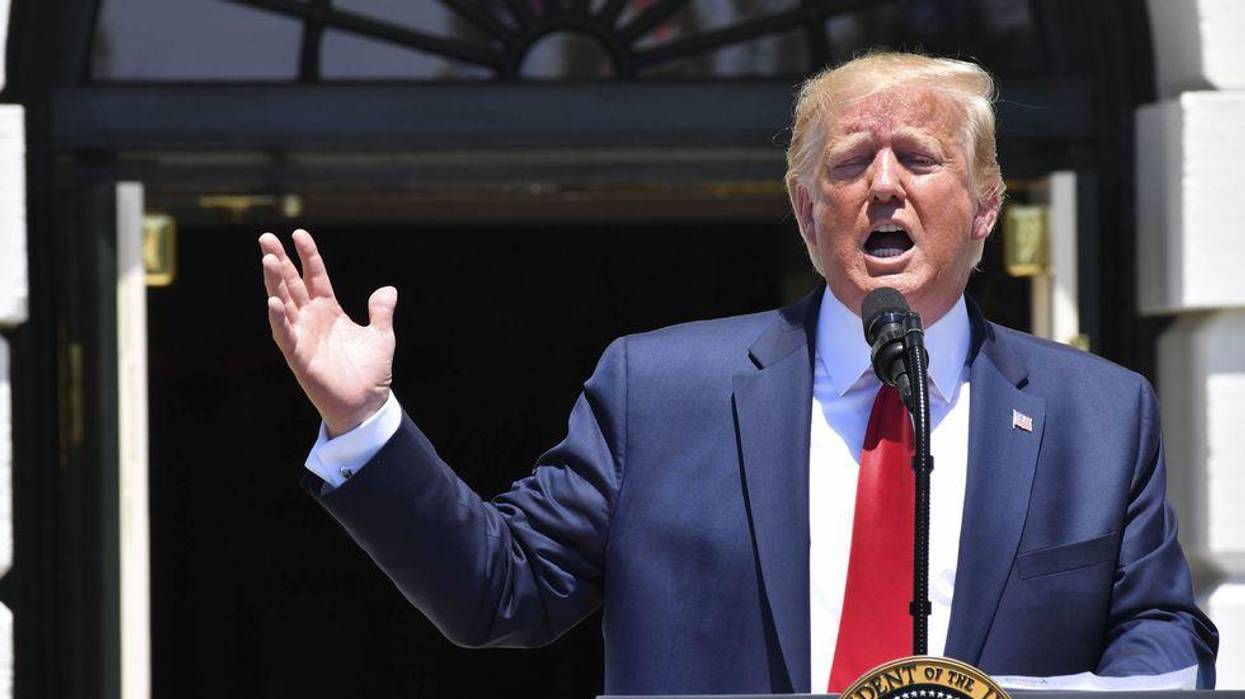
And another week in hell begins. The president* is demanding an apology from the members of Congress at whom he directed his racist slanders. He also has a new way to save us all from the "invasion"--one that is going to get him sued. And Secretary of Commerce Wilbur Ross woke up to find himself at the top of the well-used Cabinet slip-and-slide. It's always something.
Going from last to first, the government would be well rid of Ross, he of the amazing disappearing assets. Among his other disqualifications for public service, Ross is tangled up with Deutsche Bank, which is not a line on the resume that sensible and honest people want these days. Of course, having contacts with shady financiers and international grifters is a pre-requisite for a job in this Cabinet. What's got Ross on the express train back into the swamp from whence he came was his role in not giving El Caudillo del Mar-a-Lago what he wanted. From NBC News:
Frustrated by Ross' leadership of the Census Bureau, which is within the Commerce Department, Trump has been making calls to allies outside the White House musing about replacing Ross.
The president* didn't get his citizenship question. Ross was unable to use his international money-grubbing Jedi mind tricks to work on judges who can see a church by daylight. Not getting the president* his cookie is the easiest route out of the administration*. So the long slide begins for Ross, who will have a lovely pile of money to break his fall.
Also on Monday, the president*, hard on the heels of his apartheid cosplay on the electric Twitter machine, announced a unilateral change in the country's asylum system. Put briefly, if you come from any of the failing, violent states in Central America, don't even think about following that lamp beside that golden door. You can be Mexican if you want, but don't even think about becoming American. From Time:
According to a new rule published in the Federal Register, asylum seekers who pass through another country first will be ineligible for asylum at the U.S. southern border. The rule, expected to go into effect Tuesday, also applies to children who have crossed the border alone. There are some exceptions: If someone has been trafficked, if the country the migrant passed through did not sign one of the major international treaties that govern how refugees are managed (though most Western countries have signed them) or if an asylum-seeker sought protection in a country but was denied, then a migrant could still apply for U.S. asylum. But the move by President Donald Trump's administration was meant to essentially end asylum protections as they now are on the southern border.
(You will notice that the northern border will operate as before. As it happens, a number of my relatives came here from Ireland via Halifax. For the first time in my life, I'm wondering if moving south from there was the right call.)
To the surprise of absolutely nobody, the ACLU is already saddled up. From their statement:
The following reaction is from Lee Gelernt, deputy director of the Immigrants' Rights Project of the American Civil Liberties Union: "The Trump administration is trying to unilaterally reverse our country's legal and moral commitment to protect those fleeing danger. This new rule is patently unlawful and we will sue swiftly."
This, of course, isn't the first assault on the asylum rules undertaken by the administration*. Back in 2018, in seeming conflict with a 1951 UN treaty to which the U.S. was a signatory, the administration issued changes in the asylum rules aimed at deterring asylum seekers from coming to the border. An example, from the Voice of America:
At the beginning of 2018, the administration released new and more restrictive guidelines for passing the credible fear interview. According to news reports, a clause in the new interpretation of credible fear was changed to factor in applicants' "demeanor, candor and responsiveness" in determining their credibility. Immigration lawyers have told VOA that trauma, difference in culture, not speaking the language, and the journey from Central America to the U.S. often affect people's behavior. The new guidance says these circumstances should not be seen as "significant factors" in determining credibility, essentially authorizing asylum officers to consider signs of stress as a reason to doubt an applicant's credibility.
"By raising the bar at this initial stage ... the Service (USCIS) is running the risk of screening out those who have bona fide claims but who lack the ability or sophistication to present them to the asylum officer at this early stage," Catholic Legal Immigration Network, a nonprofit group that provides legal services to immigrants, said on its website.
But essentially closing off asylum requests at one border for the purpose of shutting one specific group of asylum seekers? Some judge is going to have a good time with this one.
And, finally, the president* is now arguing that he is the real victim of his own bigotry. And Senator Graham from South Carolina is right there with him. On Fox TV, Lindsey Graham argued that the president* should "aim higher" than attacking four Democratic legislators who happen to be women of color. After all, according to Graham...
"We all know that [Rep. Alexandria Ocasio-Cortez] and this crowd are a bunch of communists, they hate Israel, they hate our own country, they're calling the guards along our border--the Border Patrol agents--concentration camp guards. They accuse people who support Israel as doing it for the benjamins, they are anti-Semitic, they are anti-America. Don't get them--aim higher."
Christ, this was all before breakfast.

In what one expert described as "an absurd filing," the Trump administration told a federal judge on Friday that the Justice and Commerce departments "have been asked to reevaluate all available options" for including a citizenship question on the 2020 census, an effort which was effectively blocked by the U.S. Supreme Court last week.
The Supreme Court temporarily prevented the inclusion of the question on the grounds that the alleged rationale for doing so appeared "contrived," a ruling which was cautiously welcomed by civil liberties and immigrant rights groups who accused the administration of attempting to rig the next national survey to create an electoral advantage for "Republicans and Non-Hispanic Whites."
On Tuesday, a spokesperson for the Justice Department confirmed that the census would not include a citizenship question and Commerce Secretary Wilbur Ross said that "the Census Bureau has started the process of printing the decennial questionnaires without the question."
However, hours after Trump tweeted Wednesday morning that reports of Commerce dropping its quest to add the question were "FAKE" and "we are absolutely moving forward," Maryland U.S. District Judge George Hazel ordered the administration to provide an official update to the court by 2pm Friday.
The deadline provoked the Justice Department's Friday filing (pdf)--which, as BuzzFeed's Zoe Tillman explained in a Twitter thread, is not definitive and means that for now the Census Bureau will proceed with printing the census forms without the question.
Noting that the filing reveals the Justice Department's "lawyers have been instructed to devise/fabricate a new reason for imposing a citizenship question," Kristen Clarke, head of the National Lawyers' Committee for Civil Rights Under Law, said the development "marks a new low point for the federal government."
"This is complete politicization of DOJ's work being done to carry out the naked political and discriminatory goals of the White House," she added.
Summarizing the filing, Rick Hasen--a professor of law and political science at University of California, Irvine--tweeted: "This is par for the course with this administration: Sorry if we were acting with discriminatory intent before. Give us a do over and we'll do a better job hiding our real intent."
In response to the filing, voting rights expert Ari Berman reported for Mother Jones that "Hazel reopened discovery in a case looking at whether the administration added the question to intentionally discriminate against Hispanics, based on smoking-gun evidence, uncovered after the death of the GOP's longtime gerrymandering mastermind, Thomas Hofeller, showing that he had pushed for the question in order to draw new political districts that he said would be 'advantageous to Republicans and Non-Hispanic Whites.'"
Hazel wrote in his court order, according to HuffPost, "Plaintiffs' remaining claims are based on the premise that the genesis of the citizenship question was steeped in discriminatory motive... Regardless of the justification defendants may now find for a 'new' decision, discovery related to the origins of the question will remain relevant."
The DOJ filing and Hazel's subsequent decision came after Trump told reporters earlier Friday that he was considering an executive order as one of "four or five" ways he believes the administration can force through the question.
The president also told reporters Friday that the question is needed "for many reasons," but "number one, you need it for Congress. You need for Congress, for districting." Trump's statement contradicts the rationale the administration's lawyers argued in court (that the question was needed to improve enforcement of the Voting Rights Act) and seemed to reveal the administration's real intent behind the question is precisely what civil liberties and immigrant rights groups have charged all along.
As Popular Information founder Judd Legum put it, "This really gives up the game."
Others concurred--including Washington Post political reporter Aaron Blake and Ashley Shapitl, a spokesperson for Sen. Dianne Feinstein (D-Calif.).
Rep. Ted Lieu (D-Calif.) tweeted Friday that he was pleased Trump "has made it even harder now to include the citizenship question" on the next census.
"Drawing congressional districts based on 'citizens,' rather than 'persons,' is unconstitutional," Lieu added. "Trump has now stated the real reason, and that reason is unconstitutional."

This is a breaking news story... Check back for updates...
Civil liberties and immigrant rights advocates celebrated Thursday as the U.S. Supreme Court blocked--at least temporarily--the Trump administration from adding a citizenship question to the 2020 census, an effort critics had decried as a blatant attempt by Republicans to "weaponize" the national survey for political advantage.
"This ruling is a victory for immigrants and communities of color across America. It is a victory for democracy itself."
--ACLU
"The Trump administration's attempt to politicize and manipulate this fundamental pillar of our democracy has failed. Our communities will be counted," tweeted the ACLU. "This ruling is a victory for immigrants and communities of color across America. It is a victory for democracy itself."
Dale Ho, director of the ACLU's Voting Rights Project, argued the case before the high court. In a statement Thursday, Ho said that "this case has never been about a line on a form. It is about whether everyone in America counts. This ruling means they do."
The Supreme Court heard arguments for the case in April, after federal courts in New York and California ruled that Commerce Secretary Wilbur Ross's attempt to insert a citizenship question into the next census--which will be used to draw political voting maps--violated the Administrative Procedures Act. Critics charged that Ross's effort was an illegal attempt to intimidate immigrant communities and undercount people of color to create an electoral advantage for the GOP.
Chief Justice John Roberts on Thursday joined with the court's four liberal justices in the 5-4 decision, which denied a citizenship question for now while still granting the administration another opportunity to argue before a lower court its rationale for such an addition to the 2020 census.
"It's unclear whether the administration would have time to provide a fuller account," The Associated Press noted. "Census forms are supposed to be printed beginning next week."
"The court should have ruled more forcefully against a citizenship question on the census, but a compromise to block it for now is a step in the right direction that protects our democracy," Patriotic Millionaires chairperson Morris Pearl said in a statement. "While this comes on the same day on a disastrous and anti-democratic decision on political gerrymandering, the Supreme Court got at least one major decision right today."
Roberts wrote in the majority opinion (pdf) that Ross's move to add a citizenship question to the census "cannot be adequately explained" in terms of a request from the Department of Justice (DOJ) for data to improve enforcement of the Voting Rights Act (VRA). The chief justice explained:
Altogether, the evidence tells a story that does not match the explanation the secretary gave for his decision. In the secretary's telling, Commerce was simply acting on a routine data request from another agency. Yet the materials before us indicate that Commerce went to great lengths to elicit the request from DOJ (or any other willing agency). And unlike a typical case in which an agency may have both stated and unstated reasons for a decision, here the VRA enforcement rationale--the sole stated reason--seems to have been contrived. We are presented, in other words, with an explanation for agency action that is incongruent with what the record reveals about the agency's priorities and decision-making process.
The ruling comes just weeks after the Supreme Court and district courts in New York and Maryland were made aware of "explosive" evidence--left behind by Thomas Hofeller, a Republican redistricting strategist who died last year--which shows that the GOP fought for a citizenship question to create an electoral advantage for "Republicans and Non-Hispanic Whites."
In a statement from Common Cause that acknowledged Hofeller's documents, redistricting and representation director Kathay Feng said, "The last-minute effort to add the question was clearly a cover-up to mask their true motives--to rig redistricting for partisan and racial gain."
Kristen Clarke, president and executive director of the Lawyers' Committee for Civil Rights Under Law, expressed gratitude that the court "has seen through the charade perpetrated by Secretary Ross, evaluated the record which was replete with examples of lies underlying the justification for adding the citizenship question, and has stopped this travesty from affecting the 2020 census."
"The census is too important to become a toy for government officials to use to achieve political ends. This is particularly so when those ends are discriminatory and would depress participation rates among on communities of color," Clarke said in a statement. "While the issue is remanded to the Commerce Department, time is of the essence, and our government should now turn to the important business of ensuring a fair count in 2020."
Greenlining Institute interim president Preeti Vissa Kristipati, in a statement, welcomed the ruling but also highlighted that "today's Supreme Court ruling doesn't finally settle the issue."
"And even if the citizenship question is kept off the 2020 census," Kristipati said, "at best this is just one step in what will be a long battle--both to stop voter suppression and to end the Trump administration's relentless war against science and accurate data."

Just weeks before the U.S. Supreme Court is set to rule on the Trump administration's attempt to add a citizenship question to the 2020 census, previously undisclosed documents found on the hard drives of a deceased Republican operative offer "explosive" new evidence that the GOP fought for the question to create an electoral advantage for "Republicans and Non-Hispanic Whites."
"This new evidence shows there was a plan to undermine the integrity of our census, manipulate redistricting, and rig the elections for partisan advantage."
--Kathay Feng, Common Cause
Federal district judges in New York and California ruled earlier this year that Commerce Secretary Wilbur Ross's attempt to add a citizenship question to the next census violated the Administrative Procedures Act. The Supreme Court heard arguments in April and is expected to issue a ruling in June.
Immigration and civil rights advocates warn that inserting the citizenship question would cause an undercounting of Latinx Americans--particularly due to fears of the Trump administration's anti-immigrant agenda--which would lead to voting maps that electorally benefit the GOP.
Attorneys for the plaintiffs in the New York case submitted the new documents (pdf)--which focus on longtime Republican redistricting specialist Thomas Hofeller--in a filing to the U.S. District Court for the Southern District of New York.
When Hofeller, known as "the Michelangelo of the modern gerrymander," died last year, he left behind hard drives--discovered by his estranged daughter--containing documents which reveal that he "played a significant role" in the GOP push to insert the citizenship question to help Republicans in future elections.
Specifically, per the filing, the documents show that Hofeller "concluded in a 2015 study that adding a citizenship question to the 2020 Census 'would clearly be a disadvantage to the Democrats' and 'advantageous to Republicans and Non-Hispanic Whites' in redistricting," and that the strategist "helped ghostwrite" a draft Justice Department letter about the citizenship question.
The filing charges that key witnesses for the Commerce Department in the court case--Ross's expert adviser Mark Neuman and senior DOJ official John Gore--"falsely testified" under oath and obscured the role that Hofeller and his study played in the DOJ's request to Commerce in December of 2017 to add the citizenship question to the census supposedly based on a Voting Rights Act enforcement rationale.
"This new evidence shows there was a plan to undermine the integrity of our census, manipulate redistricting, and rig the elections for partisan advantage," Kathay Feng, national redistricting director of the advocacy group Common Cause, said in a statement. "Hofeller knew that adding the citizenship question to the census would erase millions of Latinos and other Americans from redistricting."
Journalist Ari Berman, an expert on voting rights, tweeted, "I can't overstate how big a deal this is: we now have smoking gun evidence showing Trump rigging 2020 census to protect conservative white political power & harm minority/immigrant communities for next decade."
Rep. Ilhan Omar (D-Minn.) also responded to the filing on Twitter, accusing the Trump of "weaponizing" the census. "This is an attack on democracy," she added, "and in any other administration, it would be a multi-year scandal."
"The Hofeller memo confirms what we've known all along but is alarming nonetheless: the census citizenship question was motivated by blatant right-wing partisanship," Vanita Gupta, president and CEO of the Leadership Conference on Civil and Human Rights, said in a statement.
"The Trump administration has lied to Congress and the U.S. Supreme Court about why it added the citizenship question--voting rights enforcement was but a ruse," Gupta added. "Republican political operatives plainly want to deny communities of color the healthcare, education, and other services they need in order to consolidate GOP power and a whiter electorate."