

SUBSCRIBE TO OUR FREE NEWSLETTER
Daily news & progressive opinion—funded by the people, not the corporations—delivered straight to your inbox.
5
#000000
#FFFFFF
To donate by check, phone, or other method, see our More Ways to Give page.
Daily news & progressive opinion—funded by the people, not the corporations—delivered straight to your inbox.

One US author called the staggering surge a "reproductive genocide that Western feminists can't be allowed to ignore."
A senior medical official in the Gaza Strip sounded the alarm on Tuesday over a dramatic rise in miscarriages in the Palestinian exclave, with nearly 4,000 cases reported during the first half of 2026 amid Israel's ongoing genocide.
Gaza Medical Relief Director Bassam Zaqout said that 3,958 miscarriages were recorded in Gaza during the first half of this year—an increase the doctor called "unprecedented," and a serious risk to the health of pregnant women and their unborn fetuses.
Zaqout cited the soaring miscarriage rate to factors in Israel's genocidal assault on Gaza, including the destruction of the strip's infrastructure, unsanitary living conditions in camps for forcibly displaced Palestinians—where numerous babies have died of hypothermia—lack of hot water and hygiene supplies, and relentless terror caused by Israel Defense Forces bombing.
The Gaza Health Ministry documented 921 miscarriages and 2,004 live births in April. This staggering ratio—460 miscarriages for every 1,000 live births—is more than double that in neighboring nations Israel and Egypt.
Live births have also dropped dramatically in Gaza this year, from 5,210 in January, to 3,433 in February, 3,233 in March, 2,004 in April, and just 1,701 in May 2026, according to the ministry.
Last month, the Gaza Center for Human Rights said that the alarming rise in miscarriages is due to the systematic destruction of Gaza’s healthcare system, repeated attacks on hospitals, and widespread deprivation of food, medicine, and essential medical services amid 33 months of what United Nations experts and others have described as a genocide.
The Gaza Center for Human Rights said the following factors are the most significant drivers of the miscarriage crisis:
The center also noted that Article II of the Genocide Convention—the legal basis for the South Africa-led genocide case against Israel currently before the International Court of Justice—includes “imposing measures intended to prevent births within the group” in its definition of the crime.
United Nations officials and other experts have accused Israel of “systematically” using reproductive, sexual, and other forms of gender-based violence against Palestinians in Gaza and committing “genocidal acts” by deliberately destroying reproductive and healthcare facilities in the strip.
There has also been a documented surge in birth defects among Gaza newborns. According to the Gaza Health Ministry, congenital anomalies doubled in 2025 compared with 2022.
Successive medical warnings of a long-term health catastrophe in the Gaza Strip, with a notable increase in fetal deformities and miscarriages resulting from the harsh conditions of war. pic.twitter.com/T2rN6XQec6
— Eye on Palestine (@EyeonPalestine) June 25, 2026
Experts attribute the increase to many of the same factors driving miscarriages, pointing to contaminated water and widespread malnutrition, including the former famine that killed at least hundreds of Palestinians in Gaza, many of them children and infants.
Zaqout warned that Gaza’s health crisis is worsening as severe shortages of medicines, equipment, diagnostic tools, and laboratory supplies persist amid the strip's heavily damaged healthcare infrastructure and ongoing siege. He also noted the epidemics of diseases such as chickenpox, waterborne illnesses, and respiratory infections.
Numerous Palestinian women have lost their pregnancies due to direct acute trauma inflicted by Israeli bombs and bullets, which have often also killed would-be mothers. Israeli invaders have also ordered the evacuation of Gaza's hospitals, forcing staff to leave prematurely born babies to die and decompose in incubators.
A United Nations commission of inquiry reported last month that approximately 30% of the more than 73,000 Palestinians killed during Israel's 33-month war on Gaza were children—many of whom were deliberately targeted. Israeli forces have killed more than 21,500 Gazan children, including 1,022 babies, since the October 7, 2023 Hamas-led attack, according to the Gaza Government Media Office.
The United Nations Children's Fund has called Gaza "the most dangerous place in the world to be a child."
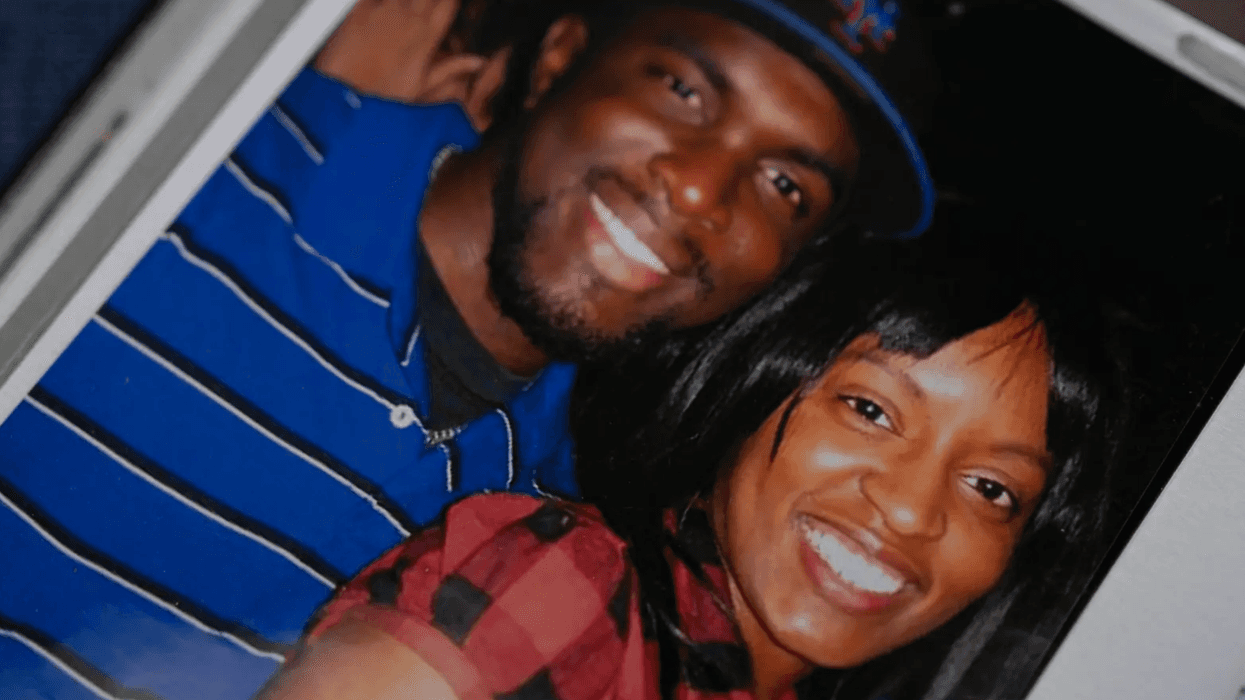
"The only reason she is not with us is because of Donald Trump, Greg Abbott, and every single Republican politician who helped put Texas' abortion ban in place," said one advocacy group.
Friends and family of Porsha Ngumezi, a 35-year-old mother of two in Houston, were stunned last year to learn that she had died in a hospital after suffering a miscarriage when she was 11 weeks pregnant—and medical experts who spoke to the investigative outlet ProPublica on Monday had the same reaction.
"All she needed was a [dilation and curettage]," one friend told Ngumezi's grieving husband, Hope Ngumezi, referring to a standard procedure which is often given to pregnant patients who have first-trimester miscarriages. Commonly called a D&C, it is also diagnose or treat other health conditions and provide abortion care.
Dr. Daniel Grossman, an obstetrics and gynecology professor at University of California, San Francisco, told ProPublica that "at every point" of Ngumezi's visit to Houston Methodist Sugar Land, a hospital outside Houston, medical providers' response to her case was "kind of shocking."
"She is having significant blood loss and the physician didn't move toward aspiration," Grossman told ProPublica.
Like at least two other Texas women—Nevaeh Crain and Josseli Barnica—Ngumezi's death in June 2023 was the result of the abortion ban that went into effect in Texas in 2022, according to medical experts who reviewed her case.
Ngumezi arrived at the hospital on June 11, 2023 after experiencing heavy bleeding 11 weeks into her pregnancy with her third child. Doctors noted that Ngumezi had a blood-clotting disorder and that she was experiencing "significant bleeding" with large clots.
"Doctors assume that a D&C is not standard in Texas anymore, even in cases where it should be recommended. People are afraid: They see D&C as abortion and abortion as illegal."
An ultrasound showed a "sac-like structure," but no fetus or cardiac activity were detected, indicating that she was having a miscarriage.
But instead of providing a D&C, in which a small tube is inserted into the uterus to gently remove any remaining fetal tissue, doctors took a "wait-and-see approach [that] has become more common under abortion bans," according to the medical experts who spoke to ProPublica.
Dr. Gabrielle Taper, who has worked as an OB-GYN in Austin, told ProPublica that since Texas' abortion ban went into effect in 2022—two months after the right-wing majority on the U.S. Supreme Court overturned Roe v. Wade—there has been "much more hesitation [among doctors] about: When can we intervene, do we have enough evidence to say this is a miscarriage, how long are we going to wait, what will we use to feel definitive?"
For Ngumezi, that hesitation meant that Dr. Andrew Ryan Davis, the obstetrician on duty, prescribed misoprostol to help Ngumezi pass the fetal tissue without a D&C.
Dr. Alison Goulding, another OB-GYN in Houston, told ProPublica that because misoprostol can also be used for women in labor or to treat postpartum bleeding, under Texas' abortion ban, "stigma and fear are there for D&Cs in a way that they are not for misoprostol."
"Doctors assume that a D&C is not standard in Texas anymore, even in cases where it should be recommended," Goulding said. "People are afraid: They see D&C as abortion and abortion as illegal."
But more than a dozen doctors told ProPublica that considering Ngumezi's blood-clotting disorder, doctors should have provided a D&C.
"Misoprostol," reported ProPublica, "is an effective method to complete low-risk miscarriages but is not recommended when a patient is unstable."
Some critics who support abortion bans have dismissed Ngumezi's case—and that of other women who have died because of the laws—as the result of medical malpractice that had nothing to do with recently passed state laws. They claim Texas' law protects women who have miscarriages.
But ProPublica noted that Ngumezi had a similar case to one described on social media by podcast host Ryan Hamilton earlier this year. Hamilton's wife experienced bleeding while miscarrying at 13 weeks, and was prescribed misoprostol and sent home after an ultrasound at Surepoint Emergency Center Stephenville showed no fetal cardiac activity. The bleeding got worse, but an emergency doctor told the couple they couldn't provide a D&C because of "the current stance" in Texas.
Greer Donley, a law professor at University of Pittsburgh, said that "the antiabortion movement wants us to blame the doctors and sometimes that is warranted. But abortion bans are the ultimate cause of this harm."
"When life in prison is the penalty for violating a ban, doctors will understandably be risk averse. And that chill in care will cause death," said Donley.
ProPublica reported that "performing a D&C attracts more attention from colleagues, creating a higher barrier in a state where abortion is illegal."
Doctors, added Goulding, "have to convince everyone that it is legal and won't put them at risk [of prosecution]."
In Ngumezi's case, the bleeding continued after she took misoprostol, and her heart stopped three hours later—a "preventable" death, according to the experts.
"The only reason" Ngumezi died, said Reproductive Justice for All, is that Republican politicians including President-elect Donald Trump helped put Texas' abortion ban in place.
"We are heartbroken and enraged by the tragic, preventable death of Porsha Ngumezi," said Planned Parenthood Texas Votes. "This nightmare reality, where political agendas outweigh patients' lives, has left another family shattered."

The ad was released as Americans learn of a growing number of women who have died because doctors would not provide standard miscarriage and abortion care under state abortion bans.
"Dr. Davis, what do I do?" asks a man frantically, kneeling near his partner as she writhes in pain on the floor.
"John, she needs an abortion, or she's going to die from the pregnancy," answers the doctor over the phone.
But a Republican congressman suddenly appears and tells the man, "That's not happening," explaining that abortion care is now banned because the GOP is in control of the government.
The scenario plays out in the latest ad from Progress Action Fund, a Democratic political action committee that's produced a number of viral videos focusing on how Republican presidential candidate Donald Trump's policies and those outlined in the right-wing agenda Project 2025 would impact both men and women's ability to make private decisions.
In the ad, the Republican lawmaker tells the man, "I won the last election, so it's my decision" whether the woman is able to receive the standard care needed to end her pregnancy.
"Don't worry, you can still have children," he tells the man. "Just not with her."
Watch:
The ad went viral on social media late Saturday, the day after ProPublica reported on Nevaeh Crain, an 18-year-old in Texas who died last year at six months pregnant, when she was diagnosed with sepsis—a fast-moving and potentially deadly condition that can result from an infection.
Because of Texas' six-week abortion ban, which threatens doctors with prison time if they terminate a pregnancy before a fetal heartbeat has stopped, Crain made three emergency room visits and was required to have multiple ultrasounds as she became increasingly ill. By the time doctors confirmed "fetal demise," Crain's organs had begun failing. She died hours later.
The investigative outlet has also reported on the deaths of another woman in Texas—Josseli Barnica—and two women in Georgia, Amber Nicole Thurman and Candi Miller—from state abortion bans since Roe v. Wade was overturned in 2022.
"This is a healthcare crisis and Donald Trump is the architect of this crisis," said Vice President Kamala Harris, the Democratic presidential nominee, after the two Georgia women's deaths came to light in September.
Abortion bans and restrictions like those in Texas now exist in 21 states. Both Trump and his running mate, Sen. JD Vance (R-Ohio) have expressed support for a nationwide ban on abortion care—a position from which they have both attempted to distance themselves as polls have increasingly shown a majority of voters support access to abortion care.
Other viral ads by Progress Action Fund have been more risqué and have even used absurdist humor to warn voters about Project 2025's proposal to ban pornography and emergency contraception.
With two days to go until Election Day, the "terrifying but important" ad released Saturday shows that "MAGA abortion bans are killing our wives, mothers, sisters, and daughters," said nonprofit progressive advocacy group DemCast.
"They're willing to risk your wife's heartbeat," said Eleven Films, a progressive film production company. "Are you?"

"Criminalizing a woman for miscarrying at home shouldn't have happened in the first place," said SisterSong. "Our fight for reproductive justice isn't over."
While welcoming that an Ohio woman who miscarried a nonviable fetus last year won't face a felony charge of abuse of a corpse, reproductive rights advocates on Thursday highlighted Brittany Watts' experience as further proof that, as Jane's Due Process put it, "pregnant people still live with the threat of prosecution in the current oppressive environment."
The Trumbull County grand jury's decision to not indict Watts—who miscarried at her Warren home in September at just over 21 weeks pregnant—comes after the 34-year-old's case garnered national attention amid battles over reproductive freedom that have ramped up in the wake of the U.S. Supreme Court's June 2022 ruling in Dobbs v. Jackson Women's Health Organization.
"Let's be clear that this doesn't undo the harm, and the case shouldn't have been pursued in the first place," the group Pregnancy Justice said after the grand jury's decision. "This is why advocacy matters. As long as prosecutors feel obligated to criminalize pregnancy, there will be more cases like Brittany's. When we fight collectively, we can win."
SisterSong similarly declared that "we're relieved Brittany Watts will NOT be criminalized for having a miscarriage. It's wild to us that we even have to say something like that, because... criminalizing a woman for miscarrying at home shouldn't have happened in the first place."
"Our fight for reproductive justice isn't over," the organization stressed. "We will continue to demand a world where we have the autonomy to make decisions about our bodies."
The Afiya Center pointed out that Black women like Watts face "a higher risk of maternal mortality and morbidity."
"Let’s be clear—Brittany Watts should never have been charged with a felony because of her pregnancy outcome," the center said. "The criminalization of Black folk who miscarry sets a dangerous tone and poses a threat to the health of ALL Black pregnant folk."
Watts and her attorney, Traci Timko, also emphasized the need for broader change on Thursday.
"From the start of this case, I have argued that the charge was not supported by Ohio law and that Brittany was being demonized for something that takes place in the privacy of women's homes regularly," Timko said in a statement. "No matter how shocking or disturbing it may sound when presented in a public forum, it is simply the devastating reality of miscarriage.”
"We thank the public for the outpouring of love and support Brittany received. To the countless women who reached out to share their own devastating stories of pregnancy loss—Brittany read every one of them and felt a sisterhood to each of you," the lawyer said. "The emails, letters, calls, donations, and prayers—they all played a part in empowering and getting her through each day. It is our hope and intention to make sure that Brittany's story is an impetus to change."
The Associated Press reported that while speaking at a pre-planned event on Thursday, Watts said: "I want to thank my community—Warren. Warren, Ohio. I was born here. I was raised here. I graduated high school here, and I'm going to continue to stay here because I have to continue to fight."
A prosecutor in Trumbull County, Ohio is "under no legal obligation" to prosecute Brittany Watts, said an advocacy group.
Joined by national reproductive rights groups, a physician-led advocacy organization in Ohio is pushing a county prosecutor to drop a felony charge against Brittany Watts, a woman who suffered a miscarriage in September, saying it's entirely in the attorney's power to stop a grand jury case—in which the odds are stacked against the defendant—from moving forward.
On Friday, Ohio Physicians for Reproductive Rights (OPRR) wrote to Trumbull County Prosecutor Dennis Watkins, a Democrat, to refute his claim that he is obligated to charge Watts with abuse of a corpse and to bring the case to a grand jury.
The group pointed out that nearly 100 elected prosecutors from across the U.S., including two in Ohio, said in a joint statement after Roe v. Wade was overturned in June 2022 that "prosecutors are entrusted with immense discretion" when deciding to pursue criminal charges.
"Prosecutors make decisions every day about how to allocate limited resources and which cases to prosecute," said the June 2022 statement. "Indeed, our communities have entrusted us to use our best judgment in deciding how and if to leverage the criminal legal system to further the safety and well-being of all, and we are ethically bound to pursue those interests in every case."
With that in mind, said OPRR, Watkins is "under no legal obligation" to prosecute Watts.
"As has been widely publicized and as you well know, but choose to ignore, the principle of prosecutorial discretion is well established in both federal and Ohio law," the group's letter reads.
The case stems from a miscarriage Watts suffered at home in September, after she had experienced pain and passed blood clots at 22 weeks of pregnancy. Doctors at a local hospital told her the pregnancy was not viable despite some cardiac activity, but Watts was forced to wait several days for an ethics panel to determine whether the hospital could induce labor under Ohio law. The state currently permits abortion care until 22 weeks of pregnancy, but the state has claimed it can enforce a six-week ban that has been blocked by preliminary injunction.
Watts eventually had the miscarriage in her bathroom, and police got involved in the case after she told a nurse at the hospital that she had taken the tissue, fluid, and blood in her toilet and placed it in a bucket. The authorities investigated and found Watts' fetus, which weighed less than one pound, in a pipe connected to the toilet.
Mini Timmaraju, president and CEO of Reproductive Freedom for All, told MSNBC on Wednesday night that prosecutors are punishing Watts for doctors' inability to make a decision about providing her with medical attention in the United States' post-Roe political climate.
"She should be treated with compassion, with dignity, with care, but because of this climate and environment we're in now," said Timmaraju, "this is the America that has been wrought."
The grand jury is investigating Watts' case and is expected to vote on whether to indict her in the coming weeks, unless Watkins drops the charge.
If the case proceeds, Watts could be called to testify before the grand jury, but she would not be granted legal representation and Watkins' office would not be required to present any information that could help the defendant's case. In Trumbull County, Watkins noted in a recent memo, grand juries decide against indicting defendants in only about 20% of cases.
Watts could face up to a year in prison and a $2,500 fine if she is found guilty.
"Prosecuting people for miscarriage doesn't improve public health or safety," said If/When/How, a national network of reproductive rights lawyers, earlier this month. "Instead, it means locking someone up, separating families, and dire financial harm to them."