

SUBSCRIBE TO OUR FREE NEWSLETTER
Daily news & progressive opinion—funded by the people, not the corporations—delivered straight to your inbox.
5
#000000
#FFFFFF
To donate by check, phone, or other method, see our More Ways to Give page.
Daily news & progressive opinion—funded by the people, not the corporations—delivered straight to your inbox.
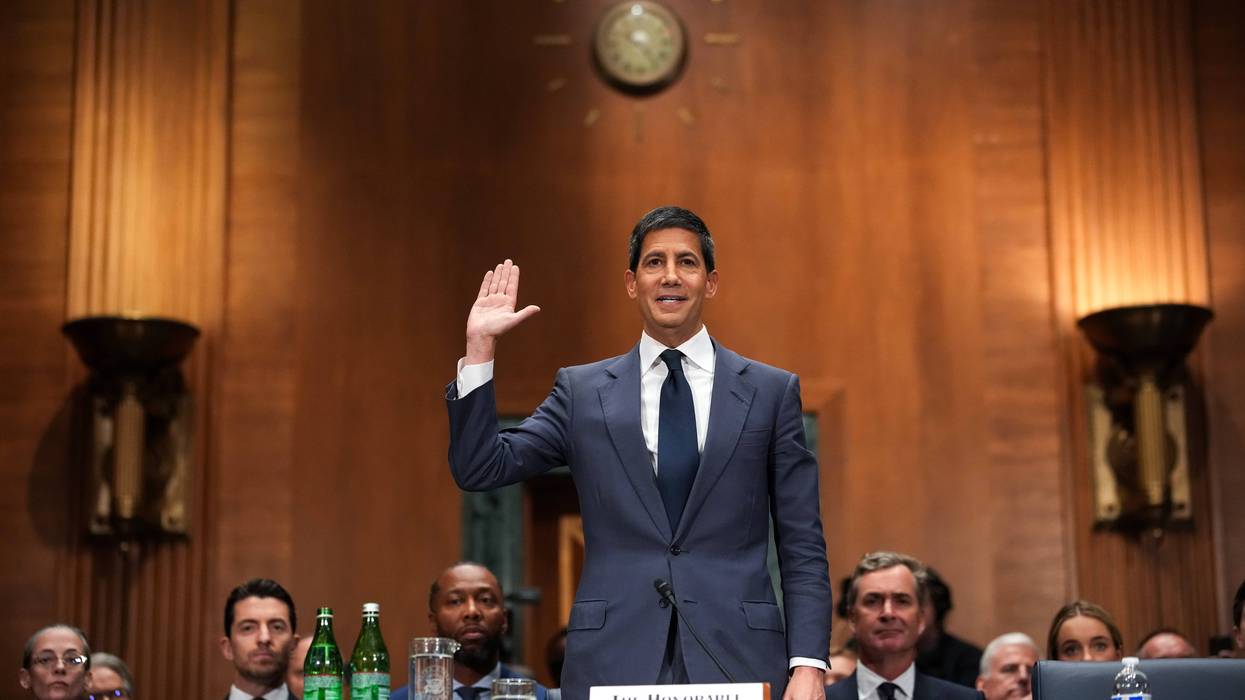
One campaigner asserted that Trump's "recklessness in the White House has pushed working families’ budgets to their breaking point."
The US Federal Reserve on Wednesday raised its benchmark interest rate for the first time since 2023, prompting renewed criticism from progressive economists and Democratic lawmakers who argue that President Donald Trump’s tariffs and warmongering are fueling inflation and further squeezing working families.
The 12-member Federal Open Market Committee unanimously lifted its federal funds target range by a quarter percentage point, to 3.75-4%, while signaling that it could raise the rate again to around 4.1% in the coming months. Fed officials cited persistently elevated inflation and said the move would support a “timelier return” to their 2% inflation target.
The increase came despite months of pressure from President Donald Trump for the central bank to cut rates. Trump has repeatedly demanded substantially lower borrowing costs, including calling for rates as low as 1%, while accusing the Fed of holding rates too high.
"Interest Rates in the United States should be 1%, or less, because we are the Best Credit in the World—BY FAR," Trump said on his Truth Social network in response to the hike. "Our Country is BOOMING with new Investment! If we stopped Trading with every country that we have a Deficit with, which is most of them, we would make, at least, 1.5 Trillion Dollars a year."
The United States is actually rated AA+ by S&P and Fitch—which is not the "best credit in the world" by any measure. Numerous nations have AAA ratings from major agencies, the highest level of creditworthiness.
"The word 'Deficit' is nothing more than a fancy word for LOSS," Trump added. "We are 'carrying' almost every country in the World, and that cannot go on any longer. LOWER THE INTEREST RATES FOR THE UNITED STATES OF AMERICA, AND FAST!"
Federal Reserve Chair Kevin Warsh—whom Trump tapped to lead the central bank—nonetheless backed the increase. The Fed's latest projections indicate that inflation will remain above its target and that most officials anticipate at least one additional rate increase before the end of the year.
The rate hike means consumers and businesses will face higher borrowing costs for mortgages, auto loans, and other debt. The average 30-year mortgage rate had already risen above 7% by Wednesday.
Referring to the worsening affordability crisis caused by Trump administration choices like tariffs and the illegal US-Israeli war on Iran, the progressive economic advocacy group Groundwork Collaborative lamented how "working families foot Trump's bill twice."
Trump's "never-ending war with Iran and his chaotic tariffs have driven inflation high enough that his own pick for chairman raised rates anyway, in a unanimous vote—a decision that will lead to higher borrowing costs for families and small businesses but does little to combat high prices from Trump’s economic mismanagement," the group said in a statement.
Groundwork Collaborative chief economist Breyon Williams said that "Trump can deny, disparage, and deflect from Americans’ economic reality all he wants, but there’s no hiding the truth: His recklessness in the White House has pushed working families’ budgets to their breaking point."
"Under his watch, inflation has skyrocketed, prices on essentials like gas and groceries have emptied wallets, and the labor market has lost steam," Williams added. "Today’s decision from the Federal Reserve confirms Americans’ fears of continued price pains to come, and its own forecast now says families will not see borrowing costs go down until 2028.”
Addressing the Fed rate hike, US Senate Minority Leader Chuck Schumer (D-NY) said Wednesday that "the chaos of Trump’s disastrous war and costly economic policies are drowning Americans in inflation. Trump has sown chaos in our economy, scared off potential investors, rattled our markets, and made it harder for American workers and businesses alike to succeed."
"Ever since taking office, Trump has taken aim at the Fed and other institutions designed to keep our economy stable and growing. That has only added to the economic chaos plaguing our country," he added. "But what does Trump care? Trump doesn’t care that Americans have to pay to more; he only cares about raking in as much money as he can off the presidency before Americans send him and his Republican Party packing."
Sen. Elizabeth Warren (D-Mass.) said during a Wednesday interview on CNN that "it's the American people who are paying the price" for Trump's policies.
"There is no happy solution at this moment based on interest rates," she added.
"Warsh's confirmation is another step in Trump's attempt to take over the Fed. That's not good for working families—it's good for Wall Street," said Sen. Elizabeth Warren.
The US Senate on Wednesday voted to confirm Kevin Warsh, the financier picked by President Donald Trump to be the next chair of the Federal Reserve.
Sen. John Fetterman (D-Pa.) joined with all Senate Republicans in voting to confirm Warsh, whose nomination was opposed by all other Senate Democrats except for Sen. Kirsten Gillibrand (D-NY), who did not vote.
US Treasury Secretary Scott Bessent thanked Republican senators and Fetterman for backing Warsh's confirmation, which he predicted would "usher in a new day at an institution that is in need of accountability, sound policy guidance, and the renewed sense of purpose to help guide our economy."
Warsh's nomination has been controversial from the start given that Trump has repeatedly undermined the US central bank's independence by browbeating outgoing Federal Reserve Chairman Jerome Powell to lower interest rates.
After the confirmation vote, Sen. Elizabeth Warren (D-Mass.) warned that Warsh would try to carry out Trump's demands to lower rates, even as key metrics show that inflation has accelerated in recent months thanks to the president's illegal war with Iran.
"Trump wants to control interest rates, and he nominated Kevin Warsh to be his sock puppet," wrote Warren in a social media post. "Warsh's confirmation is another step in Trump's attempt to take over the Fed. That's not good for working families—it's good for Wall Street."
Sen. Dick Durbin (D-Ill.) said he voted against Warsh's nomination because "working families are struggling more than ever to afford basic goods," and "they need a central bank that will fight for them, not the president and billionaires."
"I am not convinced that Warsh has the willingness to do what is best for the American people," Durbin added. "For that reason, I voted no on his nomination."
While Trump may want Warsh to start slashing interest rates to boost the economy, he likely faces an uphill climb in convincing other Fed board members.
Data released by the US Bureau of Labor Statistics this week showed the consumer price index posted a year-over-year increase of 3.8%, the highest rate of inflation since May 2023, driven by energy prices that surged nearly 18% from the year before.
Additionally, the latest producer price index, which measures wholesale prices paid by businesses and is considered a strong predictor of future inflation, posted a year-over-year increase of 6% in April, indicating inflation will likely accelerate in the coming months.
During Powell's final meeting as Fed chair last month, the board voted to hold interest rates steady, with several board members indicating opposition to projecting future rate cuts in the near term given signals of rising inflation.
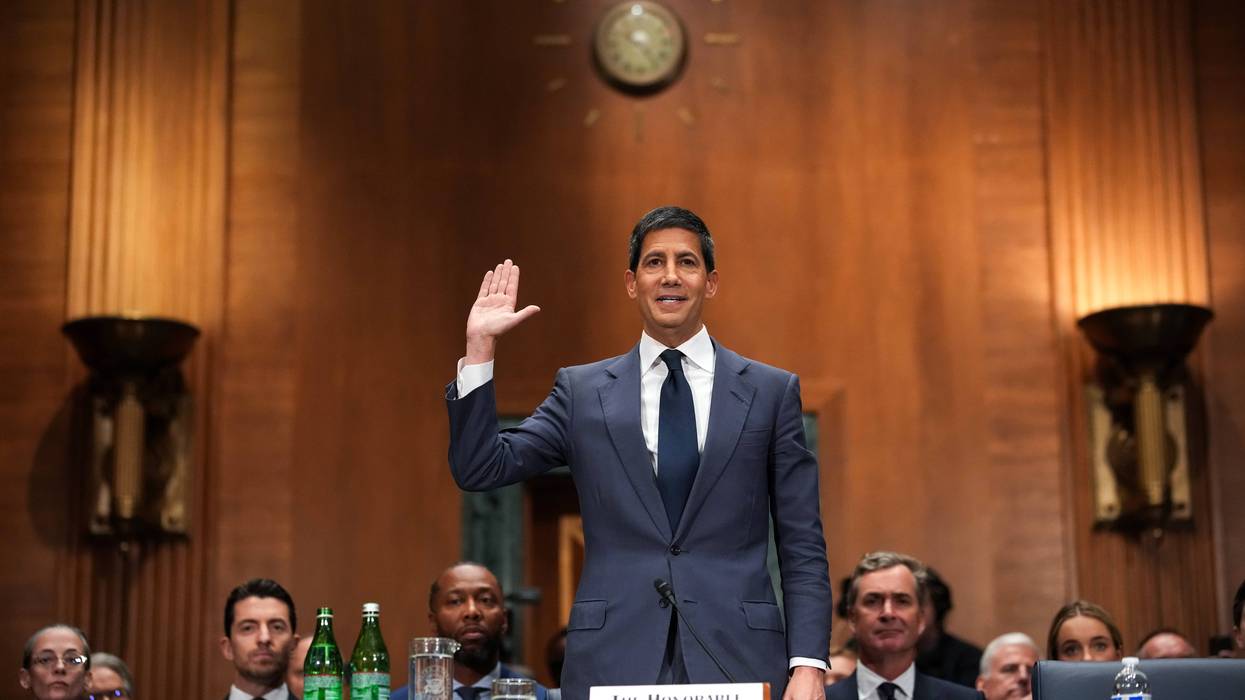
"No Republican claiming to care about Fed independence should support moving forward the nomination of Kevin Warsh," said Sen. Elizabeth Warren.
In the late hours of Friday night, Republicans on the Senate Banking Committee scheduled a vote to advance President Donald Trump's pick to lead the Federal Reserve, shortly after the Justice Department announced it was dropping its criminal probe into the current head of the central bank, Jerome Powell.
The committee vote will take place on April 29, putting megarich financier Kevin Warsh on track for full Senate confirmation by the time Powell's term as Fed chair ends on May 15. Sen. Elizabeth Warren (D-Mass.), the top Democrat on the banking panel, said in a statement early Saturday morning that "either the Republican majority is fooled easily or they are hoping to fool the American people," arguing that the Justice Department only agreed to drop its widely condemned probe of Powell—for now, at least—to clear the way for Warsh's confirmation.
"The Department of Justice threatened to restart the investigation into Fed Chair Powell at any time while continuing its probe against Gov. Lisa Cook," said Warren. The senator pointed to White House Press Secretary Karoline Leavitt's remark on Friday that the investigation into Powell "is not necessarily dropped, it's just being moved over to the inspector general."
The probe into the Fed's building renovations produced no evidence of a crime and was seen as a politically motivated attack on Powell, whom Trump has targeted repeatedly for not supporting the president's desired monetary policy. Trump originally nominated Powell to lead the central bank in 2017.
Warren said Saturday that "no Republican claiming to care about Fed independence should support moving forward the nomination of Kevin Warsh, who proved in his nomination hearing to be nothing more than President Trump’s sock puppet.”
While the DOJ investigation into Powell was ongoing, Sen. Thom Tillis (R-NC)—a banking committee member—put a hold on Warsh's confirmation. As of this writing, Tillis has yet to indicate he is satisfied with federal prosecutors' announcement of an end to the Powell investigation.
Warren and other critics see Warsh as someone who would bow to Trump's influence at the Federal Reserve. During his confirmation hearing, Warsh declined to say whether Trump lost the 2020 election, which the president still falsely claims was stolen.
"He argues he's going to be an independent Fed chair, but refuses to acknowledge that Trump lost the 2020 election," said economist Justin Wolfers. "If you can't state simple facts when you're in the political spotlight, you aren't independent. You're a coward."
Observers have also raised concerns about Warsh's financial disclosures—or lack thereof. In recent Senate filings, Warsh disclosed owning assets worth between around $135 million and $226 million, but he did not provide specific details about more than $100 million in holdings, citing confidentiality agreements.
Warren told reporters earlier this month that after meeting with Warsh, she spoke with "the White House briefer on the FBI investigation into Mr. Warsh’s background."
"And what I can say about that report," said Warren, "is that I was told that the FBI made zero investigation into any of Mr. Warsh’s financial holdings, including those that he is refusing to disclose, and that they made zero investigation as to why [Warsh] appears in the publicly available Epstein files and whether he appears in other files that have not been made public.”
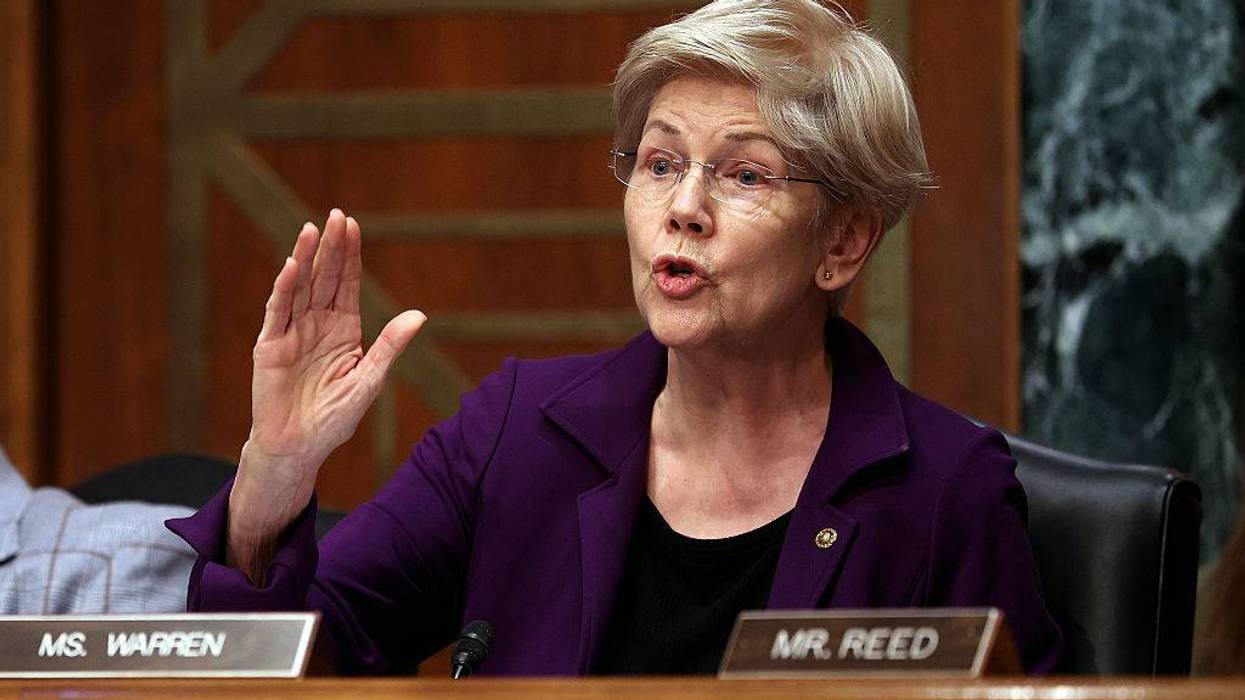
“American monetary and bank safety policy will now depend on a demented ventriloquist in the White House," said one consumer watchdog.
Kevin Warsh, the financier picked by President Donald Trump to be the next chair of the US Federal Reserve, found himself tripped up by a seemingly simple question from Sen. Elizabeth Warren.
During a confirmation hearing before the Senate Banking Committee, Warren (D-Mass.) said she wanted Warsh to demonstrate he had the prerequisite independence to serve as chairman of America's central bank.
"Independence takes courage," Warren informed Warsh. "Let's check out your independence and your courage."
She then asked Warsh if Trump lost the 2020 election to former President Joe Biden—a question numerous appointees of Trump have failed to answer correctly during their confirmation hearings.
"We try to keep politics, if I'm confirmed, out of the Federal Reserve..." Warsh began.
At this point, Warren interjected.
"I'm just asking you a factual question," she said. "I need to know, I need to measure your independence and your courage."
ELIZABETH WARREN: Did Donald Trump lose the 2020 election?
KEVIN WARSH: Uhm, we try to keep politics if I'm confirmed out of the Federal Reserve
WARREN: I'm just asking a factual question
WARSH: I believe this body certified the election
WARREN: That's not the question I'm… pic.twitter.com/AZvmIqZXhN
— Aaron Rupar (@atrupar) April 21, 2026
"Senator, I believe that [the US Senate] certified that election many years ago," said Warsh.
"That's not the question I'm asking," Warren shot back. "I'm asking, 'Did Donald Trump lose in 2020?'"
Warsh refused to directly answer the question, insisting that asking about the outcome of the election was outside the realm of monetary policy.
University of Michigan economist Justin Wolfers took note of Warsh's response to Warren, and wrote in a social media post that it "raises real questions about whether Warsh is independent of the president and if he has the courage to tell hard truths."
Later in the hearing, Warren pressed Warsh on whether there was anything he would disagree with Trump about any aspect of his economic agenda, the financier responded with a joke about the president's comment that Warsh was straight out of "central casting."
"Quite adorable," the senator said sarcastically. "But you know, we need a Fed chair who is independent."
Warren wasn't the only senator to probe Warsh's ability to maintain his independence should he be confirmed as chairman of the Federal Reserve.
Sen. Raphael Warnock (D-Ga.) asked Warsh, who is a visiting scholar at the Stanford Graduate School of Business, to give a letter grade to the US economy.
Trump and top administration officials including Treasure Secretary Scott Bessent have insisted is strong and serving working families well even as the war in Iran has sent gas prices soaring and Trump's tariff policy has cost households more than $2,500 on average.
Warsh joked that modern universities practically require all students to get "A" grades, but Warnock nonetheless pressed him to give his own evaluation of the economy under Trump's stewardship.
"Well, if I gave a student anything other than an 'A,' the dean would summon me to his office because I would have hurt his self-image," Warsh replied.
WARNOCK: What grade would you give the American economy?
WARSH: Well, if i gave a student anything other than an A, the dean would summon me because I would've hurt his self-image
WARNOCK: Consumer confidence is at a record low. That's Americans' grade on the economy pic.twitter.com/3B5dOa2DKe
— Aaron Rupar (@atrupar) April 21, 2026
Warnock was not satisfied with Warsh's answer.
"Well, the Americans that I talk to, particularly in the state of Georgia," said Warnock, "who haven't had the benefit of attending some of these elite institutions... they're sitting around their kitchen tables trying to figure out how to put their kids through school."
Warnock then added that "regardless of how the markets are doing, consumer confidence is at a record low."
Bartlett Naylor, economist for Public Citizen, said on Tuesday that Warsh's confirmation hearing showed how fundamentally unfit he is to be chair of the Federal Reserve.
"Trump named Kevin Warsh because he won the sycophancy contest, threatening the independence of the nation’s most important economic institution," Naylor said. "At his nomination hearing, he failed to acknowledge that Trump lost the 2020 election, affirming that loyalty, not facts, will govern his policy choices."
Naylor warned that, if Warsh is confirmed, then "American monetary and bank safety policy will now depend on a demented ventriloquist in the White House."