SUBSCRIBE TO OUR FREE NEWSLETTER
Daily news & progressive opinion—funded by the people, not the corporations—delivered straight to your inbox.
5
#000000
#FFFFFF
To donate by check, phone, or other method, see our More Ways to Give page.
Daily news & progressive opinion—funded by the people, not the corporations—delivered straight to your inbox.

Sen. Maggie Hassan (D-NH), the ranking member of the US Congress Joint Economic Committee, asks questions during a hearing in the Dirksen Senate Office Building in Washington, DC, on February 12, 2026.
Sen. Maggie Hassan said that while paying back businesses hit by Trump’s illegal tariffs, the administration “refuses to provide relief for families.”
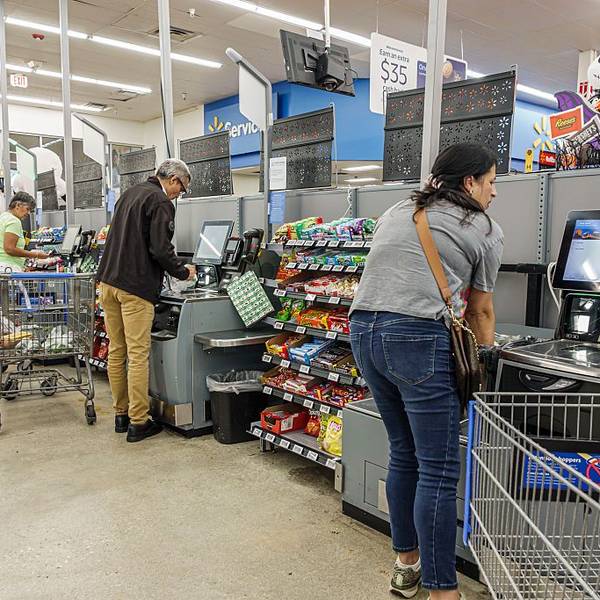
American families could pay a combined $330 billion this year as a result of President Donald Trump's aggressive tariff policy, according to a report released Friday by the Democratic minority on the Joint Economic Committee in Congress.
Although the Supreme Court ruled Trump's use of emergency powers to pass sweeping tariffs illegal last month, US Treasury Secretary Scott Bessent has said the government is expected to bring in "virtually unchanged tariff revenue in 2026" compared with the previous year, as Trump has continued to enact new tariffs using different legal authorities in hopes of getting around the high court's ruling.
If Bessent's projection holds true, the committee's Democrats estimated that the average US household would pay more than $2,500 in tariff costs this year, a considerable increase from the more than $1,700 the committee found Americans paid in 2025.
The minority said it reached its findings based on official data on the amount of tariff revenue collected by the Treasury since 2025 combined with independent research from the nonpartisan Congressional Budget Office (CBO), which found last month that only about 5% of tariff costs are borne by foreign entities. About 30% is taken on by domestic companies, and the remaining 65% is passed on to consumers.
There is already somewhat of an answer in the works for businesses to recoup the illegal duties they've had to pay. Earlier this month, the US Court of International Trade (CIT) ruled that the Treasury Department and Customs and Border Protection must return $166 billion to around 330,000 importers hit by tariffs, including thousands of companies that have filed lawsuits seeking to recover their money.
However, the Trump administration has said it could take more than 4.4 million hours to process all refund requests for more than 53 million entries subject to the now-illegal tariffs.
On Thursday, Brandon Lord, an official with US Customs and Border Protection responsible for tariff collections, informed the court that CBP is about 40-80% done creating a system that will allow importers and brokers to submit refund requests. He said in a filing last week that it could be operational as soon as mid-April.
But Sen. Maggie Hassan (D-NH), the ranking member of the joint committee, lamented on Friday that while businesses are going to be reimbursed with interest, "the Trump administration refuses to provide relief for families" and is instead "choosing to institute new tariffs that will push prices even higher.”
On Thursday, Sen. Martin Heinrich (D-NM), another committee member, introduced a bill to create a new tax rebate for individuals and families hit by tariffs.
The so-called "Working Families Refund" would provide a $600 rebate to individuals earning $90,000 or less annually and to head-of-household filers earning $120,000 or less. Joint filers earning $180,000 or less per year would receive a $1,200 rebate. Each family would also receive an additional $600 for each dependent child.
"This is money that belongs to working families—not the CEOs of Walmart or Amazon or any other big corporation,” Heinrich said.
Trump has pressed ahead with his tariffs despite their rising unpopularity. In an NBC News poll last week, 55% of voters said the tariffs have hurt the economy, while just 33% said they have helped. And as his newly launched war with Iran has heightened economic instability, 62% of voters said they disapproved of his handling of inflation and the cost of living.
Seeking to stop Trump from squeezing a political win out of his policy's failure, Heinrich's bill also forbids the president from putting his own name on the tariff rebate checks, as he famously did with Covid-19 stimulus checks sent months before the 2020 election.
“The president may call the affordability crisis a ‘hoax,’ but working people feel it every time they pay for groceries or everyday essentials," Heinrich said. "This bill will return the money lost to Trump’s tariffs back to the people who paid the price.”
Dear Common Dreams reader, It’s been nearly 30 years since I co-founded Common Dreams with my late wife, Lina Newhouser. We had the radical notion that journalism should serve the public good, not corporate profits. It was clear to us from the outset what it would take to build such a project. No paid advertisements. No corporate sponsors. No millionaire publisher telling us what to think or do. Many people said we wouldn't last a year, but we proved those doubters wrong. Together with a tremendous team of journalists and dedicated staff, we built an independent media outlet free from the constraints of profits and corporate control. Our mission has always been simple: To inform. To inspire. To ignite change for the common good. Building Common Dreams was not easy. Our survival was never guaranteed. When you take on the most powerful forces—Wall Street greed, fossil fuel industry destruction, Big Tech lobbyists, and uber-rich oligarchs who have spent billions upon billions rigging the economy and democracy in their favor—the only bulwark you have is supporters who believe in your work. But here’s the urgent message from me today. It's never been this bad out there. And it's never been this hard to keep us going. At the very moment Common Dreams is most needed, the threats we face are intensifying. We need your support now more than ever. We don't accept corporate advertising and never will. We don't have a paywall because we don't think people should be blocked from critical news based on their ability to pay. Everything we do is funded by the donations of readers like you. When everyone does the little they can afford, we are strong. But if that support retreats or dries up, so do we. Will you donate now to make sure Common Dreams not only survives but thrives? —Craig Brown, Co-founder |
American families could pay a combined $330 billion this year as a result of President Donald Trump's aggressive tariff policy, according to a report released Friday by the Democratic minority on the Joint Economic Committee in Congress.
Although the Supreme Court ruled Trump's use of emergency powers to pass sweeping tariffs illegal last month, US Treasury Secretary Scott Bessent has said the government is expected to bring in "virtually unchanged tariff revenue in 2026" compared with the previous year, as Trump has continued to enact new tariffs using different legal authorities in hopes of getting around the high court's ruling.
If Bessent's projection holds true, the committee's Democrats estimated that the average US household would pay more than $2,500 in tariff costs this year, a considerable increase from the more than $1,700 the committee found Americans paid in 2025.
The minority said it reached its findings based on official data on the amount of tariff revenue collected by the Treasury since 2025 combined with independent research from the nonpartisan Congressional Budget Office (CBO), which found last month that only about 5% of tariff costs are borne by foreign entities. About 30% is taken on by domestic companies, and the remaining 65% is passed on to consumers.
There is already somewhat of an answer in the works for businesses to recoup the illegal duties they've had to pay. Earlier this month, the US Court of International Trade (CIT) ruled that the Treasury Department and Customs and Border Protection must return $166 billion to around 330,000 importers hit by tariffs, including thousands of companies that have filed lawsuits seeking to recover their money.
However, the Trump administration has said it could take more than 4.4 million hours to process all refund requests for more than 53 million entries subject to the now-illegal tariffs.
On Thursday, Brandon Lord, an official with US Customs and Border Protection responsible for tariff collections, informed the court that CBP is about 40-80% done creating a system that will allow importers and brokers to submit refund requests. He said in a filing last week that it could be operational as soon as mid-April.
But Sen. Maggie Hassan (D-NH), the ranking member of the joint committee, lamented on Friday that while businesses are going to be reimbursed with interest, "the Trump administration refuses to provide relief for families" and is instead "choosing to institute new tariffs that will push prices even higher.”
On Thursday, Sen. Martin Heinrich (D-NM), another committee member, introduced a bill to create a new tax rebate for individuals and families hit by tariffs.
The so-called "Working Families Refund" would provide a $600 rebate to individuals earning $90,000 or less annually and to head-of-household filers earning $120,000 or less. Joint filers earning $180,000 or less per year would receive a $1,200 rebate. Each family would also receive an additional $600 for each dependent child.
"This is money that belongs to working families—not the CEOs of Walmart or Amazon or any other big corporation,” Heinrich said.
Trump has pressed ahead with his tariffs despite their rising unpopularity. In an NBC News poll last week, 55% of voters said the tariffs have hurt the economy, while just 33% said they have helped. And as his newly launched war with Iran has heightened economic instability, 62% of voters said they disapproved of his handling of inflation and the cost of living.
Seeking to stop Trump from squeezing a political win out of his policy's failure, Heinrich's bill also forbids the president from putting his own name on the tariff rebate checks, as he famously did with Covid-19 stimulus checks sent months before the 2020 election.
“The president may call the affordability crisis a ‘hoax,’ but working people feel it every time they pay for groceries or everyday essentials," Heinrich said. "This bill will return the money lost to Trump’s tariffs back to the people who paid the price.”
American families could pay a combined $330 billion this year as a result of President Donald Trump's aggressive tariff policy, according to a report released Friday by the Democratic minority on the Joint Economic Committee in Congress.
Although the Supreme Court ruled Trump's use of emergency powers to pass sweeping tariffs illegal last month, US Treasury Secretary Scott Bessent has said the government is expected to bring in "virtually unchanged tariff revenue in 2026" compared with the previous year, as Trump has continued to enact new tariffs using different legal authorities in hopes of getting around the high court's ruling.
If Bessent's projection holds true, the committee's Democrats estimated that the average US household would pay more than $2,500 in tariff costs this year, a considerable increase from the more than $1,700 the committee found Americans paid in 2025.
The minority said it reached its findings based on official data on the amount of tariff revenue collected by the Treasury since 2025 combined with independent research from the nonpartisan Congressional Budget Office (CBO), which found last month that only about 5% of tariff costs are borne by foreign entities. About 30% is taken on by domestic companies, and the remaining 65% is passed on to consumers.
There is already somewhat of an answer in the works for businesses to recoup the illegal duties they've had to pay. Earlier this month, the US Court of International Trade (CIT) ruled that the Treasury Department and Customs and Border Protection must return $166 billion to around 330,000 importers hit by tariffs, including thousands of companies that have filed lawsuits seeking to recover their money.
However, the Trump administration has said it could take more than 4.4 million hours to process all refund requests for more than 53 million entries subject to the now-illegal tariffs.
On Thursday, Brandon Lord, an official with US Customs and Border Protection responsible for tariff collections, informed the court that CBP is about 40-80% done creating a system that will allow importers and brokers to submit refund requests. He said in a filing last week that it could be operational as soon as mid-April.
But Sen. Maggie Hassan (D-NH), the ranking member of the joint committee, lamented on Friday that while businesses are going to be reimbursed with interest, "the Trump administration refuses to provide relief for families" and is instead "choosing to institute new tariffs that will push prices even higher.”
On Thursday, Sen. Martin Heinrich (D-NM), another committee member, introduced a bill to create a new tax rebate for individuals and families hit by tariffs.
The so-called "Working Families Refund" would provide a $600 rebate to individuals earning $90,000 or less annually and to head-of-household filers earning $120,000 or less. Joint filers earning $180,000 or less per year would receive a $1,200 rebate. Each family would also receive an additional $600 for each dependent child.
"This is money that belongs to working families—not the CEOs of Walmart or Amazon or any other big corporation,” Heinrich said.
Trump has pressed ahead with his tariffs despite their rising unpopularity. In an NBC News poll last week, 55% of voters said the tariffs have hurt the economy, while just 33% said they have helped. And as his newly launched war with Iran has heightened economic instability, 62% of voters said they disapproved of his handling of inflation and the cost of living.
Seeking to stop Trump from squeezing a political win out of his policy's failure, Heinrich's bill also forbids the president from putting his own name on the tariff rebate checks, as he famously did with Covid-19 stimulus checks sent months before the 2020 election.
“The president may call the affordability crisis a ‘hoax,’ but working people feel it every time they pay for groceries or everyday essentials," Heinrich said. "This bill will return the money lost to Trump’s tariffs back to the people who paid the price.”