
SUBSCRIBE TO OUR FREE NEWSLETTER
Daily news & progressive opinion—funded by the people, not the corporations—delivered straight to your inbox.
5
#000000
#FFFFFF
To donate by check, phone, or other method, see our More Ways to Give page.


Daily news & progressive opinion—funded by the people, not the corporations—delivered straight to your inbox.
"We cannot afford to celebrate or lose momentum. The threat to our reproductive freedom is as immediate today as it ever was," said the campaign behind the ballot initiative.
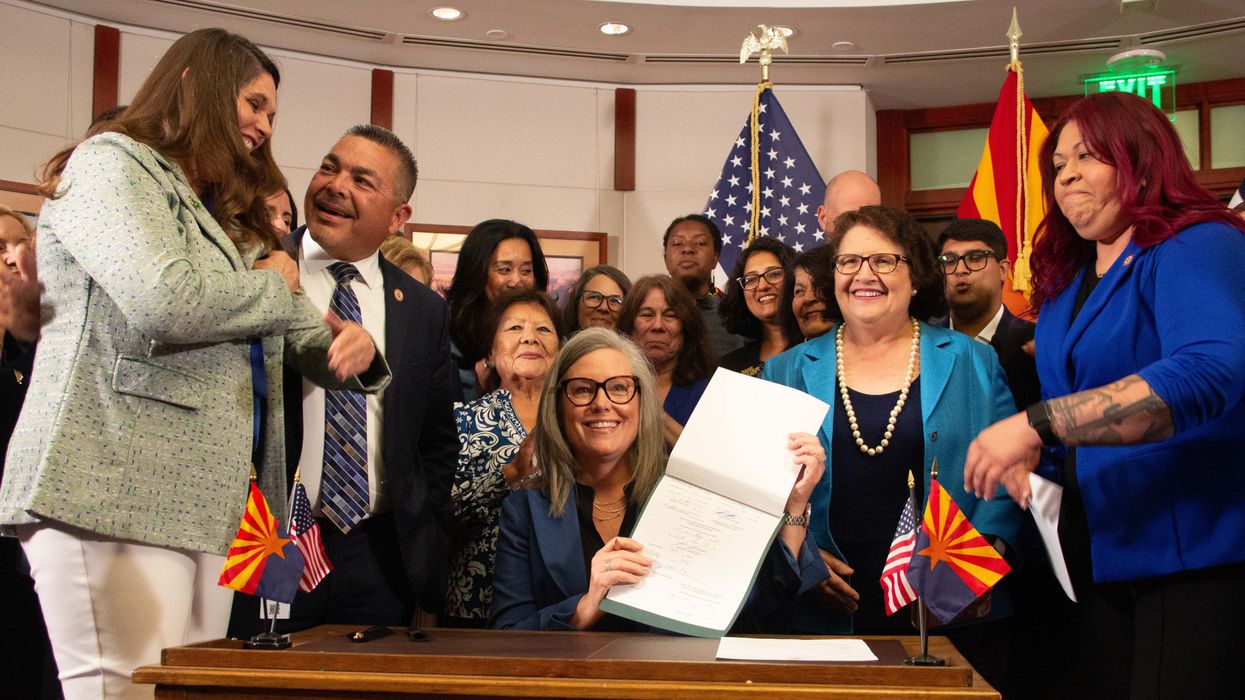
While Democratic Arizona Gov. Katie Hobbs on Thursday signed legislation repealing an 1864 abortion ban, reproductive rights advocates in the state reiterated that fuller freedom over family planning requires passing a November ballot measure.
In response to an
Arizona Republic opinion piece noting that there is no emergency clause in House Bill 2677, the law repealing the ban, "which means it won't go off the books until 90 days after the Legislature adjourns," Arizona for Abortion Access stressed that "Arizonans will still be living under a law that denies us the right to make decisions about our own health."
"We cannot afford to celebrate or lose momentum. The threat to our reproductive freedom is as immediate today as it ever was," the campaign behind the ballot initiative said, adding that only passing the Arizona Abortion Access Act "changes that for good."
The Arizona Abortion Access Act is a proposed state constitutional amendment that would prohibit many limits on abortions before fetal viability and safeguard access to care after viability to protect the life or physical or mental health of the patient. Arizonans were fighting for it even before the state Supreme Court reinstated the 160-year-old ban.
Even Hobbs recognized that the battle for reproductive freedom is far from over, saying Thursday that "today, we should not rest, but we should recommit to protecting women's bodily autonomy, their ability to make their own healthcare decisions, and the ability to control their lives."
"Let me be clear: I will do everything in my power to protect our reproductive freedoms, because I trust women to make the decisions that are best for them, and know politicians do not belong in the doctor's office," the Democrat pledged.
Her signature came just a day after the Arizona Senate approved H.B. 2677, following its state House passage last month. In both cases, a couple of Republican lawmakers voted with Democrats to advance the legislation—defying not only party members in the state but a national GOP that is hellbent on ending access to abortion care.
Democratic Arizona Attorney General Kris Mayes said Wednesday that the Senate vote "to repeal the draconian 1864 abortion ban is a win for freedom in our state" and she was looking forward to Hobbs signing the bill.
"However, without an emergency clause that would allow the repeal to take effect immediately, the people of Arizona may still be subjected to the near-total abortion ban for a period of time this year," Mayes acknowledged. "Rest assured, my office is exploring every option available to prevent this outrageous 160-year-old law from ever taking effect."
Law Dork's Chris Geidner pointed out that "on Tuesday—though technically unrelated—Mayes' office asked the Arizona Supreme Court to stay the issuance of the mandate in the case holding the near-total ban enforceable."
According to Geidner:
If granted, that would push the issuance of the mandate to July 25—90 days beyond the date when the Arizona Supreme Court denied Mayes' request for reconsideration—which would then block enforcement to at least 45 days beyond that, to September 8.
At that point, the repeal law passed on Wednesday likely will have gone into effect—meaning that the 15-week ban would remain the applicable law throughout this entire time—and the expected vote on the proposed constitutional amendment will be less than two months away.
Planned Parenthood Arizona took similar action after the Senate vote on Wednesday. The group's CEO, Angela Florez, explained that "we have said all along that we will use every possible avenue to safeguard essential care for our patients and all Arizonans, and that's exactly what we're doing with today's motion."
"While anti-abortion extremists in the state Legislature will continue to do everything in their power to undermine Arizonans' freedom and criminalize essential healthcare, Planned Parenthood Arizona is taking action to prevent a harmful total ban on abortion from taking effect in our state," Florez continued. "The court's April 9 ruling was both tragic and wrong, but it rested on trying to discern legislative intent. The Legislature has now spoken and clearly does not want the 1864 ban to be enforced."
"We hope the court stays true to its word and respects this long-overdue legislative action, by quickly granting our motion to end the uncertainty over the future of abortion in Arizona," added Florez, whose group supports the ballot measure.
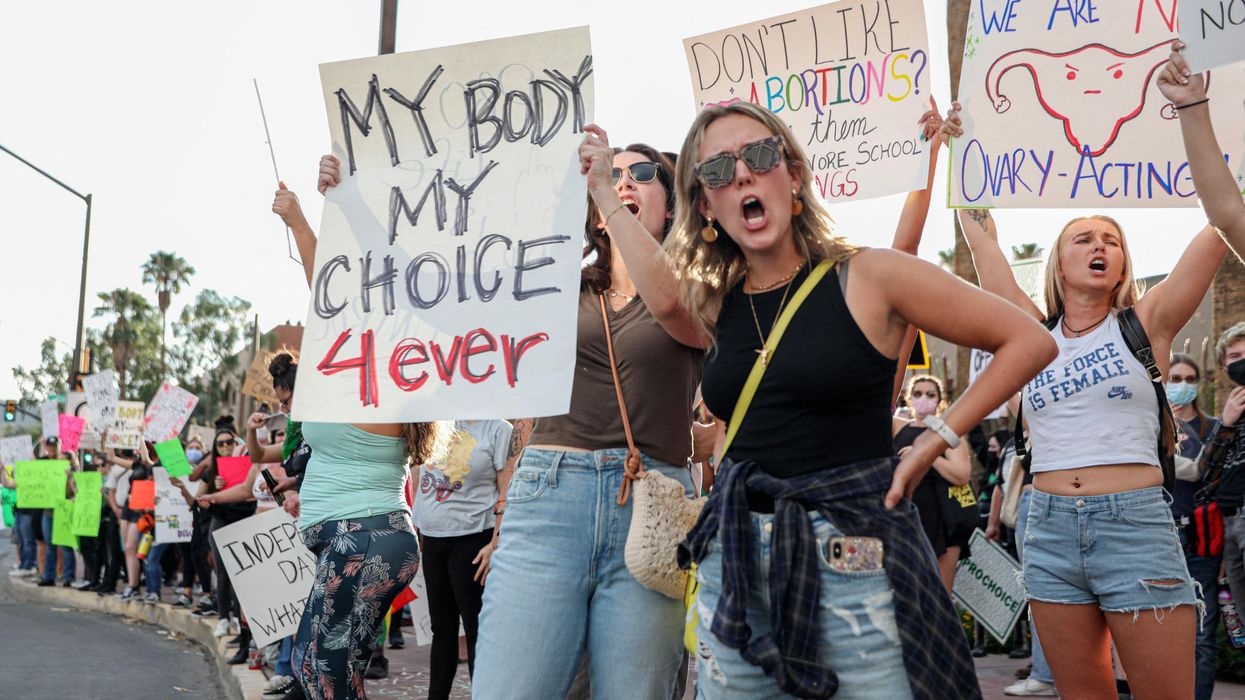
"The majority of Arizonans agree: People who can become pregnant deserve the freedom to decide for themselves when to become a parent or grow their families," said one state lawmaker. "Let's do this, Arizona."
Following the success of pro-abortion rights ballot initiatives in several states last year, organizers from across the nation are zeroing in on Arizona as the next state where the question of whether the right to abortion care should be codified should be posed directly to voters.
Groups including NARAL Arizona, the ACLU of Arizona, and Planned Parenthood Advocates of Arizona (PPAA) on Tuesday filed proposed language for a new amendment to the state constitution which, if passed in the 2024 election, would guarantee the right to abortion care up until about 22 to 24 weeks of pregnancy—the point of fetal viability.
Pregnant people whose lives or health would be put at risk by continuing a pregnancy would also be guaranteed the right to abortion care after the 24-week point.
The groups are among those forming a new political action committee called Arizona for Abortion Access, more than a year after the right-wing majority on the U.S. Supreme Court overturned Roe v. Wade, paving the way for abortion bans in more than 20 states and restrictions in at least six, including Arizona.
Former Republican Gov. Doug Ducey signed a law months before Roe was overturned that bans most abortions after 15 weeks of pregnancy.
Since taking office in January, Democratic Gov. Katie Hobbs has made protecting abortion access a centerpiece of her legislative agenda, signing an executive order in June to prevent the state from prosecuting people for obtaining an abortion or assisting someone in getting care. She has also expressed support for a voter-approved constitutional amendment affirming that Arizonans have a right to abortion care.
After filing the proposed amendment on Tuesday, Arizona for Abortion Access will have about 11 months—until July 3, 2024—to gather the required 383,923 signatures from residents in order to place the question on next year's ballot.
Chris Love, a senior adviser to PPAA, told The Washington Post that the coalition plans to get at least half a million signatures.
A 2022 poll by the Public Religion Research Institute showed that 62% of Arizonans believe abortion should be legal in most or all cases.
The coalition launched its initiative as voters in Ohio went to the polls in a special election that could be a deciding factor in whether the state's own proposed constitutional amendment guaranteeing reproductive freedom will pass in November.
In Tuesday's special election in Ohio, voters are being asked whether the threshold for passing a new constitutional amendment should be raised from a simple majority to 60% of voters. Just under 58% of Ohio residents support the proposed constitutional amendment being put to voters in November, meaning the rule being proposed on Tuesday's ballots could harm the chances of passing the abortion rights measure.
Republicans in the Arizona state Senate have also passed a constitutional amendment requiring a 60% supermajority for future amendments. If passed by the state House, the proposal could appear on ballots in 2024.
Arizona "has been ground zero of MAGA attacks on our rights and our democracy," said the national progressive advocacy group Indivisible, which pledged to mobilize its local chapters across the state to help gather signatures supporting Arizona for Abortion Access' efforts.
Last year following the overturning of Roe, voters in states including Kansas and Kentucky rejected proposed constitutional amendments that aimed to restrict abortion care, and voters in California, Vermont, and Michigan approved amendments to affirm the right to abortion.
Advocates in Arizona are predicting voters will do the same next year.
"The majority of Arizonans agree: People who can become pregnant deserve the freedom to decide for themselves when to become a parent or grow their families," said state Rep. Analise Ortiz (D-24). "Let's do this, Arizona."
"The only way to solve the long-term shortage on the Colorado River is to take a lot less water out of the system," said one agricultural economics professor. "Which necessarily means permanent reductions in crops grown."
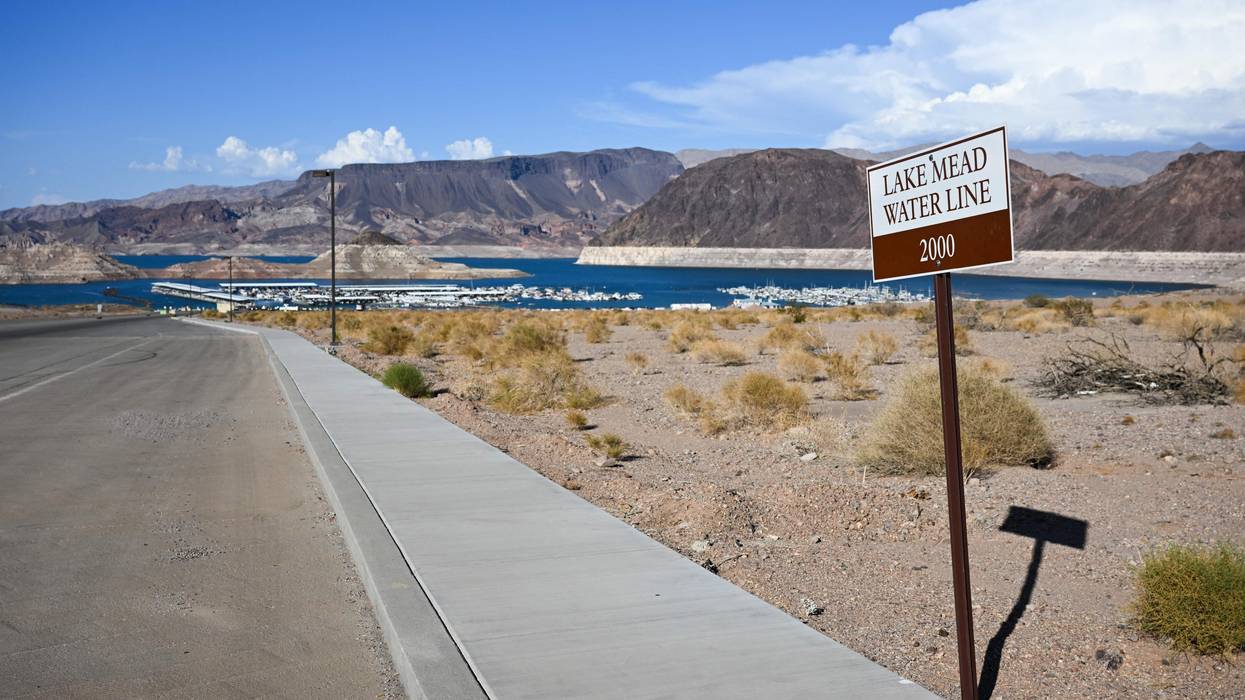
California, Arizona, and Nevada on Monday struck a deal with the Biden administration in which the states agreed to take less water from the dangerously overdrawn Colorado River—an agreement cautiously welcomed by conservationists, who warned that the cuts are insufficient to stabilize a system upon which tens of millions of people rely.
Monday's breakthrough agreement follows nearly a year of negotiations and missed deadlines and involves the Biden administration, the three states, Indigenous tribes, water management districts, and agribusinesses. Under the plan, the federal government will distribute around $1.2 billion worth of Inflation Reduction Act funds to cities, tribes, and water districts if they cut back on water use. The three states agreed to use 3 million acre-feet less water between them by the end of 2026. This would amount to 13% of their total Colorado River allocation.
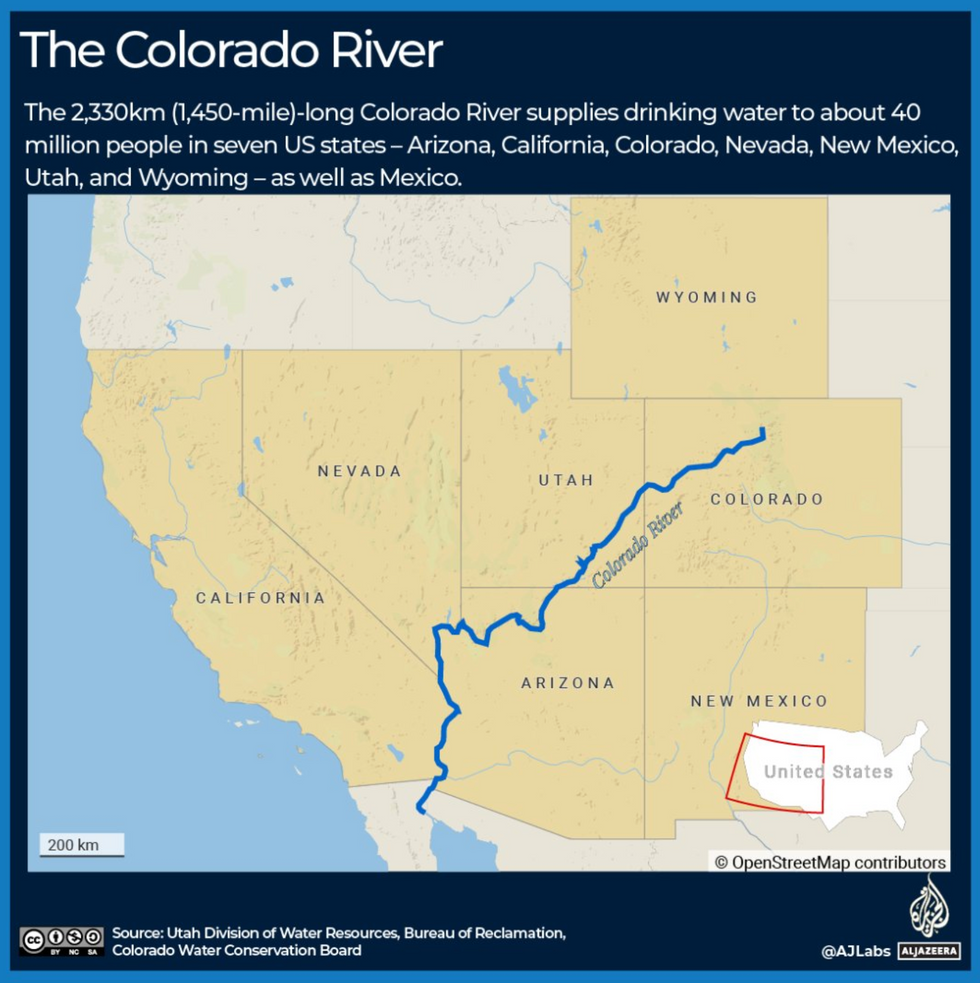
"There are 40 million people, seven states, and 30 tribal nations who rely on the Colorado River Basin for basic services such as drinking water and electricity," U.S. Interior Secretary Deb Haaland said in a statement. "Today's announcement is a testament to the Biden-Harris administration's commitment to working with states, tribes, and communities throughout the West to find consensus solutions in the face of climate change and sustained drought."
"The agreed-to cuts are significantly less than what federal scientists and officials had said were necessary to stabilize the river system on which tens of millions in the Southwest rely."
Last August, amid extreme drought driven by the climate emergency and warnings of a possible "catastrophic collapse" of the Colorado River, the U.S. Interior Department announced the first-ever tier 2 shortage for the waterway, triggering water-use cuts in Arizona, Nevada, and the country of Mexico for 2023.
U.S. Bureau of Reclamation Commissioner Camille Calimlim Touton called the agreement "an important step forward towards our shared goal of forging a sustainable path for the basin that millions of people call home."
Arizona Gov. Katie Hobbs, a Democrat, hailed the "partnership with our fellow Basin states and historic investment in drought funding," while asserting that "we now have a path forward to build our reservoirs up in the near-term."
"From here, our work must continue to take action and address the long-term issues of climate change and overallocation to ensure we have a sustainable Colorado River for all who rely upon it," Hobbs added.
Luke Runyon, president of the Society of Environmental Journalists, noted on Twitter that "the agreed-to cuts are significantly less than what federal scientists and officials had said were necessary to stabilize the river system on which tens of millions in the Southwest rely."
John Entsminger, general manager of the Southern Nevada Water Authority, told E&E News that "the plan set forth by the Lower Basin states is not a panacea for the river, but rather a consensus solution that will help manage near-term water demands while serving as a bridge to negotiate the post-2026 operating criteria."
"The Colorado River Basin has a warmer and drier future ahead and reducing water use, increasing water efficiency, and maximizing water recycling and reuse is paramount to a sustainable future for the 40 million people that depend upon this critical water supply," he added.
As Common Dreams reported last month, advocacy groups including Food & Water Watch also criticized proposed deals between the administration and states for failing to address the overexploitation of water resources by corporate agriculture and fossil fuel companies.
While unusually heavy snowfall and subsequent spring meltwater have helped temporarily avert what experts warned last year could be a "doomsday scenario" for the Colorado River Basin in 2023, the vital waterway remains in danger of running too low to provide enough water for all who rely upon it.
The Colorado River historically ran about 1,450 miles from its headwaters high in the Rocky Mountains of northern Colorado into Utah, through the Grand Canyon in Arizona, and then along Nevada and California's southeastern borders before flowing into the northernmost tip of the Gulf of California in Mexico.
The river—which is an oasis in the unforgiving desert that surrounds it for much of its course—long sustained Indigenous peoples both before and after the genocidal colonization of the Southwest, and since the U.S. conquered the region from Mexico it has been a lifeline for American settlers and cities as well as Native tribes.
Western states began dividing the river's water between them around a century ago, and throughout the 20th century, massive dams and channels diverted water hundreds of miles away to sprawling, thirsty farms on previously desert lands and to rapidly expanding cities like Los Angeles, Phoenix, San Diego, and Las Vegas.
Under the Colorado River Compact, states sidestepped Indigenous tribes and agreed to annual water allocations that they must use in full or face usage-based cuts the following year. This "use it or lose it" system has created what critics call "perverse" incentives for farmers to grow water-intensive crops in the desert.
Today, around three-quarters of the river's flow is siphoned off to irrigate more than five million acres of farmland, according to the U.S. Bureau of Reclamation. Hydroelectric plants along the Colorado also generate more than 12 billion kilowatt hours of electricity annually.
The river has been running especially low in recent decades as worsening droughts driven by the climate emergency have gripped the Southwest and as the population of the nation's driest region explodes. The Colorado no longer empties into the sea, and models predict that by the year 2100 its flow could be further reduced by more than half.
"The only way to solve the long-term shortage on the Colorado River is to take a lot less water out of the system," environmental and resource economist Nick Hagerty stressed in reaction to Monday's announcement. "Which necessarily means permanent reductions in crops grown. That's where the focus needs to be."
This is a developing story... Please check back for possible updates...
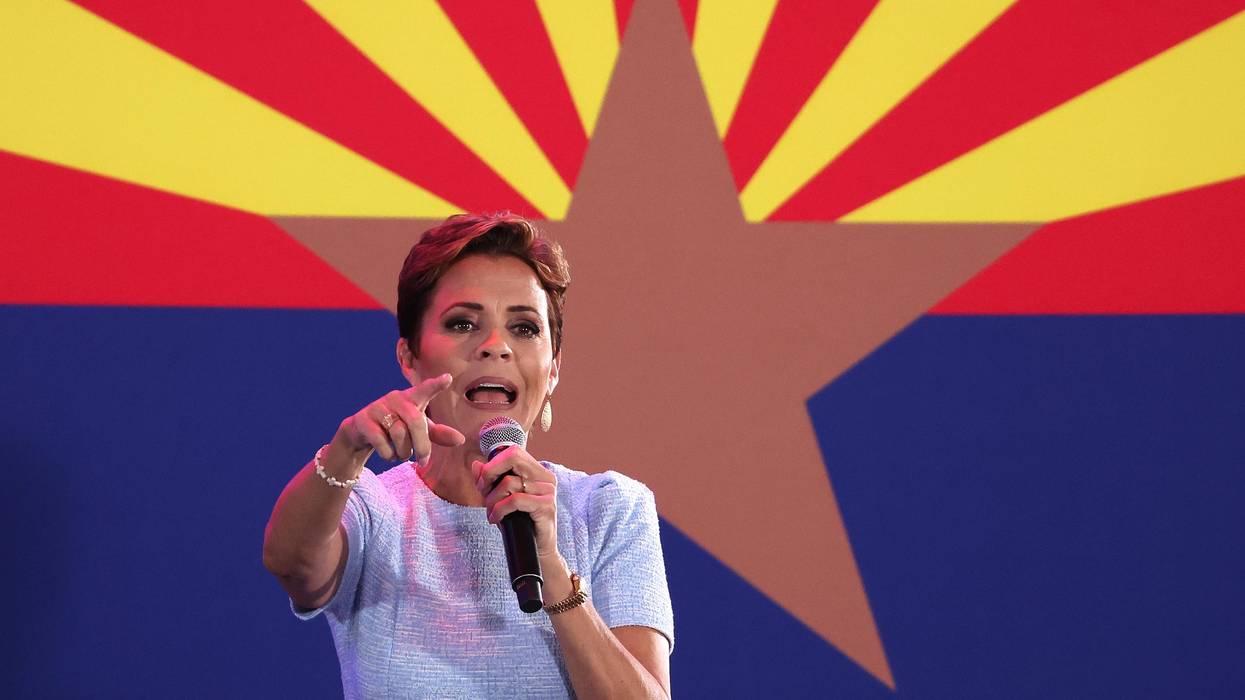
Failed Arizona Republican gubernatorial candidate Kari Lake on Friday followed in the footsteps of her political ally former President Donald Trump by challenging her loss to Democrat Katie Hobbs in state court.
Lake's anticipated lawsuit in Maricopa County Superior Court came within the five-day window for such filings after Arizona election officials--including Hobbs, who is currently secretary of state--certified the results on Monday.
Despite losing by more than 17,000 votes, the former news anchor asked the court for either "an order setting aside the certified result... and declaring Kari Lake is the winner," or an injunction requiring the state's largest county to reconduct the gubernatorial election under the direction of a special master.
"This isn't how democracy works," watchdog group Citizens for Responsibility and Ethics in Washington (CREW) tweeted Saturday.
As The New York Times summarized: "The 70-page filing relies on a hodgepodge of allegations, ranging from voter and poll worker accounts to poll numbers claiming that voters agreed with Ms. Lake on the election's mismanagement. Some of what is cited comes not from last month's election but from the 2020 contest. Other allegations accuse officials of wrongdoing for taking part in efforts to try to tamp down election misinformation."
Lake is a prominent supporter of Trump's "Big Lie" that the 2020 presidential election was stolen from him. Trump--who is running for president again in 2024, despite his legal trouble--traveled to Arizona to campaign for her.
"If the process was illegitimate then so are the results," Lake tweeted late Friday with a photo of the lawsuit. "Furthermore, if the process was legitimate then so are the results. Let's find out."
The Times--which previously reviewed dozens of accounts from Arizona voters, poll workers, and observers--explained that some of Lake's claims stem from issues that the Maricopa County faced on Election Day:
County officials have said they responded to printer problems at around 30% of the county's voting locations. The printer problem meant that on-site tabulators--the machines that count ballots--rejected some of those ballots. The county had provided a backup system that allowed voters to drop ballots in a secure box to be processed at a different location rather than by the tabulator on site.
But some voters' mistrust of the voting systems led them to not want to use the ballot boxes. Officials say those voters were given other options, including voting elsewhere. The situation created long lines at some of the voting centers, but the county says that every person who wanted to cast a ballot was able to do so.
In response to the suit, Hobbs' campaign manager, Nicole DeMont, said that "Kari Lake needs attention like a fish needs water--and independent experts and local election officials of both parties have made clear that this was a safe, secure, and fair election."
"Arizonans made their voices heard and elected Katie Hobbs as their governor," she added. "No nuisance lawsuit will change that, and we remain laser-focused on getting ready to hit the ground running on Day One of Katie Hobbs administration next year."
The Arizona Republic reported Friday that along with Lake, "Republican secretary of state candidate Mark Finchem and U.S. House candidate Jeff Zink contested their losses saying Arizona's election was not full, fair, or secure--and must be nullified."
"Both men were outside the U.S. Capitol on January 6, 2021, when Trump supporters stormed the building in an effort to prevent Congress from certifying election results," the newspaper noted. "Zink's son, Ryan Zink, was arrested and indicted on several charges in connection with the riot, including trespassing and obstruction. He has pleaded not guilty."
Zink fell over 76,000 votes short of unseating incumbent Democratic Rep. Ruben Gallego and Trump-backed Finchem lost to Democrat Adrian Fontes by more than 120,000 votes.
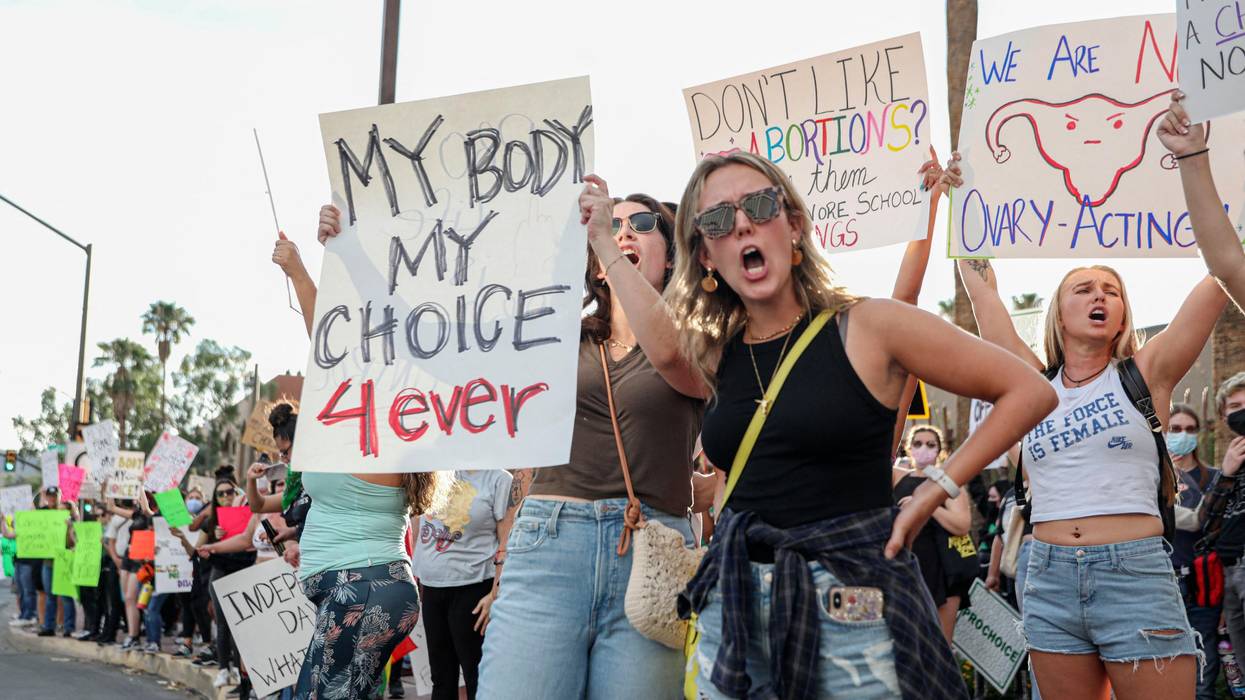
Planned Parenthood Arizona on Friday night vowed that its fight to protect reproductive healthcare in the state was "far from over" after a judge lifted a decades-old injunction which had blocked an anti-abortion rights law dating back to 1864--before Arizona was even established as a state--and allowed the ban to be enforced.
Pima County Superior Court Judge Kellie Johnson said in her ruling that Roe v. Wade, the 1973 U.S. Supreme Court ruling which affirmed the constitutional right to abortion care, had been the basis for barring the 1864 law from being enforced. Since Roe was overturned in June, she said, the injunction should be annulled.
Johnson's decision will "unleash [a] near-total abortion ban in Arizona," said Planned Parenthood Arizona, with the law including no exceptions for people whose pregnancies result from rape or incest. Under the law, which was first passed by Arizona's territorial legislature and then updated and codifed in 1901, anyone who helps a pregnant person obtain abortion care can be sentenced to up to five years in prison.
The law does include an exception for "a medical emergency," according to The New York Times, but as Common Dreams has reported, such an exception in practice has already resulted in a Texas woman being forced to carry a nonviable pregnancy until her health was deemed sufficiently in danger before a doctor provided care.
"Make no mistake: this backwards decision exemplifies the disturbing trend across the country of Republican officials at the local and national level dead-set on stripping women of their rights."
Democratic gubernatorial candidate and Secretary of State Katie Hobbs told the Times that "medical professionals will now be forced to think twice and call their lawyer before providing patients with oftentimes necessary, lifesaving care."
In a statement on Twitter, Hobbs vowed to "do everything in my power to protect" abortion rights in Arizona, "starting by using my veto pen to block any legislation that compromises the right to choose" if she becomes governor.
"No archaic law should dictate our reproductive freedom," Brittany Fonteno, the president and chief executive of Planned Parenthood Arizona, said in a statement. "I cannot overstate how cruel this decision is."
The ruling was handed down a day before the state's 15-week abortion ban, which was signed by Republican Gov. Doug Ducey in March, was set to go into effect. Although abortion care had remained legal in Arizona after Roe was overturned on June 24, it has been largely unavailable as medical providers waited to see whether Republican Attorney General Mark Brnovich's motion to lift the injunction on the 1864 law would succeed.
Johnson's ruling made Arizona the 14th state to ban nearly all abortions following the overturning of Roe. Earlier this month, Sen. Lindsey Graham (R-S.C.) announced his proposal to pass a nationwide forced-pregnancy bill that would ban abortion care at 15 weeks of pregnancy.
White House Press Secretary Karine Jean-Pierre on Saturday called the ruling "catastrophic, dangerous, and unacceptable."
"Make no mistake: this backwards decision exemplifies the disturbing trend across the country of Republican officials at the local and national level dead-set on stripping women of their rights," she said.
Planned Parenthood Arizona, which had argued in court that medical professionals in the state should be permitted to continue providing abortions under the 15-week ban, said its "lawyers are evaluating next steps in the case."
Arizona's governor signed an extreme abortion restriction bill on Monday, which women's health advocates say effectively writes medical malpractice into law.
The new law, which passed the state's Republican-controlled legislature last week, requires that doctors tell women that drug-induced abortions can be reversed. Experts said the provision--the first of its kind to pass in the U.S.--was medically unfounded.
"This law will force abortion providers to give patients information about medical abortion care that is unsubstantiated and not supported by evidence--even abortion opponents admit there is no medical proof to support this information," said Vicki Saporta, president and CEO of the National Abortion Federation. "This is unacceptable and not how safe medical care of any kind is provided."
The LA Times reported that State Sen. Katie Hobbs, a Democrat who voted against the legislation, said the provision "requires medical professionals to commit medical malpractice."
"This is junk science. It is quack medicine," she said Wednesday. "There is absolutely no evidence anywhere in any peer-reviewed journal that supports this as a valid medical procedure."
According to MSNBC's Irin Carmon, who said the bill was part of "the next wave of abortion restrictions":
An increasingly popular method of terminating a pregnancy, known as medication abortion, involves a doctor administering two pills that ultimately induce miscarriage. The purported "reversal" happens in the event that after taking the first pill, the woman changes her mind. That's when the doctor injects her with the hormone progesterone, which allegedly stops the abortion in its tracks. Anti-abortion physicians are already experimenting with such "reversals" across the country, and claiming success with subsequent live births.
But not only has there been no formal medical study or FDA approval of the protocol or its potential side effects, there's no reason to think the progesterone is even doing anything to stop the abortion. Abortion provider Dr. Cheryl Chastine told Talking Points Memo, "The medical literature is quite clear that mifepristone on its own"--the first pill in a medication abortion--"is only about 50% effective at ending a pregnancy. That means that even if these doctors were to offer a large dose of purple Skittles, they'd appear to have 'worked' to 'save' the pregnancy about half the time."
Reproductive rights advocates charge that the law is part of a coordinated attack on abortion rights across the country. Indeed, Arizona's "abortion reversal" language is cribbed from Americans United for Life's 2015 model legislation guide (pdf).
"It's just a piece of the larger strategy--using any means possible to dissuade a woman from a decision that she's already made," Hayley Smith, associate advocacy and policy counsel for the ACLU, told ThinkProgress last week.
Amanda Allen, state legislative counsel at the Center for Reproductive Rights, echoed that charge.
"Efforts to encourage women to 'reverse' mifepristone with progesterone are rooted solely in the desire by anti-choice extremists to control the reproductive choices of women and are not based in any evidence-based medicine or research," Allen told Common Dreams in an email.
She continued:
It is extraordinarily hypocritical for Americans United for Life to push for these laws, which force doctors to provide biased and medically unproven information to women seeking safe and legal abortion services. To suggest that women should submit to a medical procedure that has not been rigorously studied or tested is nothing short of unethical. This is the very same group has pushed for laws banning evidence-based use of medication abortion based on years of research and doctors' practical experience. Their intentions could not be more clear: these laws are not about women's health and safety, but about restricting a woman's ability to obtain abortion care.
Arizona's SB 1318 also bars insurance companies from providing abortion services to women who purchase medical coverage through the federal health-care exchange, except in cases of rape, incest, or where the woman's life is endangered.
In a statement, Republican Gov. Doug Ducey said the legislation "protects Arizona taxpayers" by ensuring public funds are "not used to subsidize abortions."
Arizona already has severe abortion restrictions in place. According to the Guttmacher Institute, which tracks abortion policies around the country, a woman must receive state-directed counseling that includes information designed to discourage her from having an abortion and then wait 24 hours before the procedure is provided. Counseling must be provided in person and must take place before the waiting period begins, thereby necessitating two separate trips to the facility.
On top of that, a woman must undergo an ultrasound before obtaining an abortion and the provider must offer her the option to view the image. The ultrasound must be provided at least 24 hours before the abortion.
In addition, the use of telemedicine for the performance of medication abortion is prohibited. Medication abortion must be provided using the FDA protocol, thereby preventing the use of a more common, simpler evidence-based regimen.