SUBSCRIBE TO OUR FREE NEWSLETTER
Daily news & progressive opinion—funded by the people, not the corporations—delivered straight to your inbox.
5
#000000
#FFFFFF
To donate by check, phone, or other method, see our More Ways to Give page.


Daily news & progressive opinion—funded by the people, not the corporations—delivered straight to your inbox.
State-level progress on election protection, ballot access, and voting rights is a reflection of a basic reality documented in poll after poll: Voters want meaningful reforms to democracy.
Over the past few years, states across the country have passed laws that make voting more difficult and elections more vulnerable to partisan interference, and 2023 is no exception. But it is critical to remember that there is also flourishing pro-democracy movement that has pushed many states to make important strides in the opposite direction.
This past year, at least 24 states enacted over 50 laws that protect the freedom to vote, prevent attacks on the electoral process, crack down on gerrymandering, or strengthen campaign finance safeguards as of December 1, 2023. Yet state lawmakers cannot safeguard democracy on their own. Robust federal legislation is needed to ensure that democracy is protected across the country and that every voter has equal access to the ballot.
Among the most notable advances in 2023 was Minnesota’s passage of a transformative package of pro-voter reforms. Among them is automatic voter registration, bringing the total number of states with automatic voter registration to 23 plus the District of Columbia. This means that when eligible Minnesota residents interact with certain state agencies—including when applying for a driver’s license or state health insurance—they will automatically be registered to vote unless they choose to opt out. The legislation also allows 16- and 17-year-olds to pre-register to vote, enacts new protections for election workers, and creates a permanent absentee voter list.
While state reforms are critical, they are not a substitute for federal legislation that would set baseline national standards to protect the freedom to vote and make other critical changes.
Minnesota lawmakers also passed legislation this year that restores voting rights for people convicted of a felony, instantly re-enfranchising over 50,000 Minnesotans on parole, probation, or community release—and countless more in the future.
Another closely divided Midwestern state, Michigan, made important advances. This year, lawmakers passed a package of legislation to implement Proposal 2, a pro-voter constitutional amendment that was approved by Michigan voters in 2022 with nearly 60% of the vote. (Proposal 2 is one of several pro-democracy amendments that Michigan voters approved with overwhelming margins in the past few years.)
Michigan voters now have nine days of early voting, improved absentee ballot options, a higher number of ballot drop boxes, and an expanded list of acceptable voter IDs. This reform will benefit the many voters who prefer to vote by mail, a trend that exploded in popularity during the pandemic and remains highly popular in the state.
Additionally, Michigan lawmakers passed legislation this year protecting election officials from harassment and another that automatically registers individuals to vote upon release from incarceration—the first state to offer such an immediate and automatic restoration of voting rights.
In New Mexico, the legislature passed a wide-ranging bill that restores voting rights to individuals with a felony conviction, establishes automatic voter registration, and added voting rights protections for Native Americans. It also made it so voters who want to vote by mail only have to opt-in once.
The Nevada legislature passed a series of pro-voter laws this year that were signed by the state’s Republican governor: one that improves ballot access for eligible incarcerated voters by requiring jails to better provide voting materials, another that standardizes the design of mail-in ballot return envelopes and clarifies electioneering rules, and one that make it easier to vote on Native American reservations.
In another notable development, Connecticut became the sixth state to establish a state-level Voting Rights Act. In recent years, states have passed their own versions of the Voting Rights Act to protect voting access for historically disenfranchised groups. This trend is in response to two Supreme Court rulings that gutted the federal Voting Rights Act of 1965.
2023 also saw several states enact significant new campaign finance reforms. Minnesota improved campaign finance safeguards to boost transparency and deter foreign influence in elections. Almost 90% of Maine voters adopted new safeguards to prevent foreign governments and corporations from interfering in the state’s elections. And New York State’s groundbreaking small donor matching system went into effect, and over 150 candidates have already signed up to participate.
Important voting reforms are not exclusive to blue states, with many pro-democracy bills also passing in red and purple states this year. For example, Oklahoma codified protections for election officials, and Louisiana and Utah improved voting access for voters with disabilities. The divided Virginia legislature voted to ease absentee ballot requirements, a measure that was signed into law by a Republican governor. Lastly, an important win for direct democracy took place in Ohio, where 57% of voters rejected a proposal that would have increased the threshold required to pass citizen-initiated constitutional amendments from 50% to 60%.
This state-level progress is a reflection of a basic reality documented in poll after poll: Voters want meaningful reforms to democracy. And in 24 states this year, elected officials have responded, passing critical reforms that will improve the state of democracy for many Americans.
Ultimately though, while state reforms are critical, they are not a substitute for federal legislation that would set baseline national standards to protect the freedom to vote and make other critical changes. Access to the ballot box, secure election systems, fair district maps, and strong campaign finance laws are the basic safeguards needed to ensure we have a democracy that works for all Americans, regardless of where they live.
Women don't want men making laws getting between us, our families, and our doctors.
It is clear that the Dobbs decision by the Supreme Court caught the Republicans completely off guard, even though they have been working to take away the rights of women since before they killed the Equal Rights Amendment.
The right must have thought that stealing the basic rights to bodily autonomy and to determining the size of one's own family would be upsetting at first, but then we would all get over it. The pundits always say that Americans have a short span of attention, especially when it comes to politics, so it appears that the forced birthers didn't have a clue about the buzz saw they were about to confront.
The discussion of abortion has shifted greatly from the pre- Dobbs days. It is standard now, unless you are a fan of Fox and its ilk, to hear abortion referred to as "abortion healthcare." In fact, the media now tells us that abortion is a part of the many procedures used by doctors and midwives to keep women healthy. Some of the heartbreaking cases of doctors being unable or unwilling to do their jobs have resulted in permanent damage to the women who were denied care—whether it is being unable to have more children because of the damage done to the reproductive organs, or people who have to go through unbearable suffering when they could be resting, recovering, and taking care of their lives.
It is hard to imagine that these mostly white, buttoned up men think that the women of 2023—who either lived the explosion of feminism or have raised daughters with the feminist awareness of the past 50 years—will be persuaded, bribed, or forced into accepting their intervention into the most basic aspects of our lives.
A woman described her torment waiting for her sepsis to become life threatening so she could be treated for a fetus that had no chance of survival. Another woman who was so thrilled to get pregnant, only to learn that her fetus was not viable and she had to stay pregnant for months until she birthed a child who would suffer for a few days before passing away. The real fanatics want to deny women with cancer the chance to live, since often the drugs will damage a fetus.
Unlike 50 years ago, when the abortionist was forced to work in a back alley or underground and most people were secret about having the procedure, dozens of brave women have opened up and discussed their worst moments in order to prevent others from having to face the same horrors. These stories are magnified many times over on social media.
In Ohio, the voters recalled the spectacle of the poor 10 year old, impregnated by rape, who had to travel out of state in the miserable no-exception land that Ohio has been. In Kentucky, Andrew Beshear was reelected to his seat as governor with the help of a brave young woman who addressed the Republican in the race directly, telling him about her experience as a victim of incest at age 12. The deplorable Glenn Youngkin thought he was real smart when he told Virginia voters that he had the solution for all this abortion talk: the 15-week ban with exceptions for rape and incest. We all agree on this, right? Not so fast.
The voting earlier this week showed us something very interesting: Women don't want men making laws getting between us, our families, and our doctors. The vast majority of this country does not want Republican men deciding that six weeks is the cutoff for treatment, or 12 weeks, or, Mr. Youngkin, 15 weeks. The numbers don't lie: Women and those who love them say NO. Taking away a human right that most of us felt was secure will not be compromised away.
After a long string of not-even-close defeats, the Republicans, who are loathe to compromise on anything, suddenly are talking about the need to come to "common ground." It is hard to imagine that these mostly white, buttoned up men think that the women of 2023—who either lived the explosion of feminism or have raised daughters with the feminist awareness of the past 50 years—will be persuaded, bribed, or forced into accepting their intervention into the most basic aspects of our lives. Fifty years ago, women were not all in the workforce. In 2023, those who are trying to force women to give birth also fight tooth and nail against expanded Medicare, family medical leave, and any other programs helping women and families.
The level of delusion is remarkable: In Ohio, the tremendous margin of passage for the constitutional amendment enshrining abortion, birth control, and other good things into the state constitution did not seem to percolate down to the state legislature. The day after the vote, these guys are already trying to find ways to circumvent the will of the people. As Rick Santorum brilliantly deduced from the referendum "pure democracies aren't how to run a country."
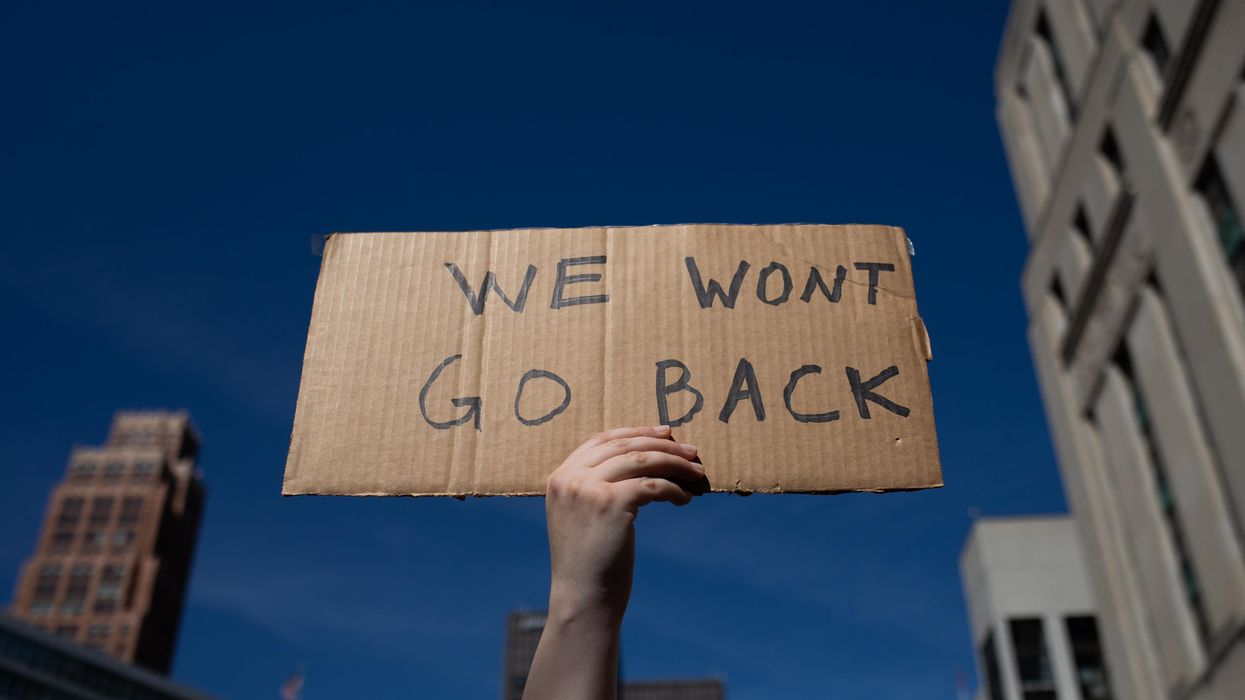
Millions of women came out for the Women's March after the disaster that was the 2016 election. We did not disappear. We were waiting for the right opportunity, and after Trump-appointed justices gave us the Dobbs decision, now is the time. Women are not going back to being chattels.
And Republicans think their problem is messaging!
Tuesday’s vote has broader implications for direct democracy and its ability to reshape state policy across the country.
Ohio voters amended their state constitution Tuesday to protect reproductive rights, including the right to abortion. They also passed a law legalizing marijuana possession and use by adults 21 and older. This watershed election underscores the vital role that direct democracy plays in enabling voters to shape their own laws when their elected representatives ignore their preferences.
To enshrine reproductive rights in the state constitution by passing Issue One, proponents had to overcome multiple hurdles thrown up in the past several months by anti-abortion politicians. They also had to overcome voters’ general reluctance to change the constitution: In the past 15 years, out of more than 60 campaigns in Ohio, only three amendments had passed before this one.
Ohio is one of 16 states that allows voters to put constitutional amendments up for a popular vote if they collect enough signatures. As in most of these states, Ohio voters fought for this form of direct democracy to counteract political cartels that captured the legislature in the late 19th century. As one contemporary account described, when delegates to the 1912 Ohio constitutional convention adopted a new amendment to create the citizen initiative process and referred the measure to voters, “every ruse and trick known to Big Business politicians was employed to frighten the people of Ohio from adopting” it. It passed with 58% of the vote.
In enacting these policies, voters are overcoming various barriers to democracy—not just gerrymandering but also the incumbency advantage and the distorting effects of campaign financing rules that give undue influence to the wealthy and special interests.
This year, true to history, anti-abortion politicians like Gov. Mike DeWine and Secretary of State Frank LaRose used “every ruse and trick” available to block Issue One. First, they cynically engineered an off-season summer election to propose a constitutional amendment that would have made it far harder to amend the constitution in the future. Rather than disclose to voters that the proposed amendment would reduce opportunities for direct democracy, the plan’s proponents described it as “elevating” standards. Voters saw through the dishonesty and overwhelmingly rejected the measure.
Next, these politicians set to work using their state authority to discourage voters from passing the abortion rights amendment. They drafted a confusing and argumentative ballot description for voters to read just before voting. They ran misleading ads, passed a legislative resolution rife with misinformation, and warned that the amendment would bring about “atrocities.” Once again, voters weren’t tricked, approving the amendment 57–43.
It’s no accident that this constitutional amendment passed in Ohio, where one of the most gerrymandered legislatures in the country had enacted a draconian and wildly unpopular abortion ban that—before being temporarily blocked by a court—forced a 10-year-old rape victim to travel to Indiana for care and denied women treatment for dangerous pregnancy complications.
But Tuesday’s vote has broader implications for direct democracy and its ability to reshape state policy across the country, particularly in states where gerrymandered legislatures have for years insulated themselves from the will of the voters. Even now, voting rights advocates are readying an initiative to reform Ohio’s redistricting process. They are not backing down from their vision of a legislature that actually reflects the political balance in the state, even after Republican lawmakers pushed through unfair maps in violation of voter-approved constitutional requirements, then flouted multiple court orders to fix them, and even after the attorney general has repeatedly thwarted current reform efforts.
Citizens in other states have enacted major policies in a number of areas where legislatures had refused to act. They created independent redistricting commissions in Arizona, California—and in Michigan, where they also passed automatic voter registration and other voting rights measures. In Florida, they restored voting rights for individuals with felony convictions who have served their sentences. In Missouri, they banned lobbyist gifts to lawmakers. Voters have made policy in other areas as well, enacting wage increases in states like Arizona, Arkansas, Florida, Maine, and Nebraska; expanding Medicaid in Idaho, Missouri, Nebraska, Oklahoma, and Utah; and securing reproductive rights in Michigan.
In enacting these policies, voters are overcoming various barriers to democracy—not just gerrymandering but also the incumbency advantage and the distorting effects of campaign financing rules that give undue influence to the wealthy and special interests. Looking ahead, citizens are planning paid sick leave initiatives in Missouri, Nebraska, and Alaska, as well as open primaries and ranked choice voting in Nevada.
Perhaps unsurprisingly, politicians in several of these states, as in Ohio, have been trying to make initiatives harder to pass—most egregiously in Missouri, Arizona, North Dakota, Florida, and Wisconsin. Tuesday’s results represent a spectacular failure of that approach. People care about their right to govern themselves. And Ohio voters have shown that direct democracy remains a vital tool for voters to make themselves heard over the noise of moneyed and powerful special interests.
"This victory should serve as a clear warning to other extremists who want to pass dangerous abortion bans across the country," said Ohioans United for Reproductive Rights.
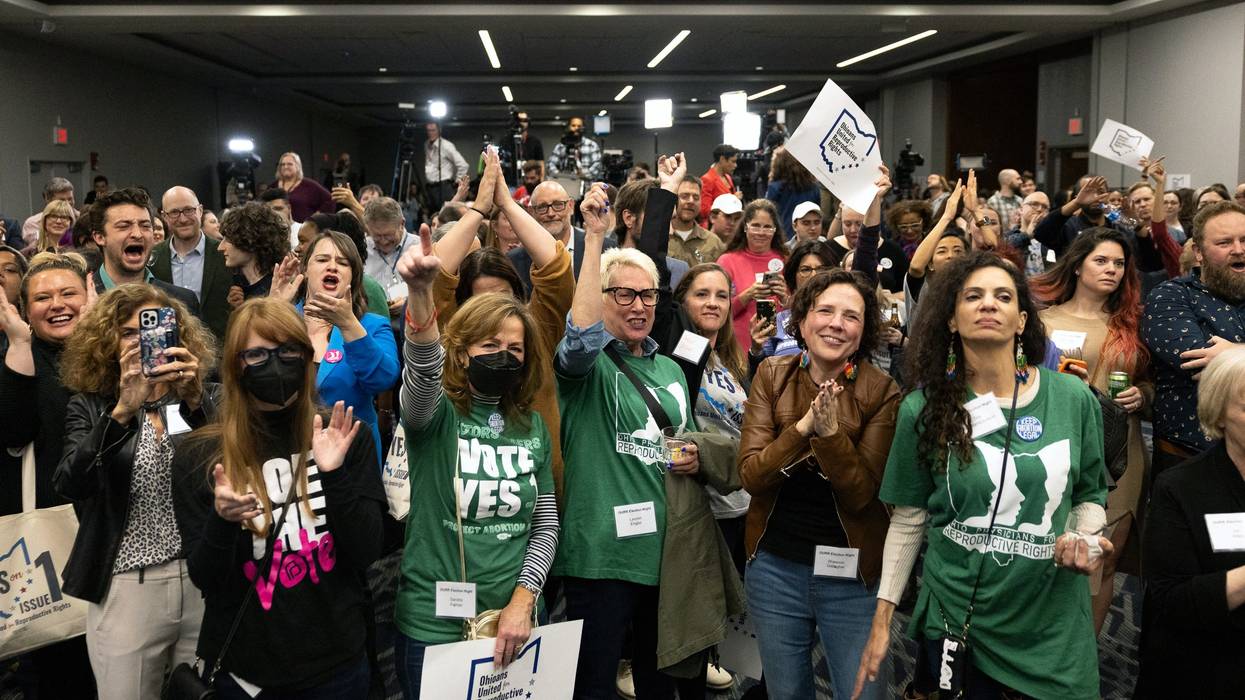
Ohio voters on Tuesday delivered a resounding win for reproductive freedom by approving a citizen-sponsored measure to enshrine abortion rights in the state's constitution, overcoming Republican-led efforts to derail the initiative with misinformation and undemocratic procedural changes.
Ohioans approved Issue 1 by a decisive 56.6% to 43.4% margin, creating the constitutional right to "make and carry out one's own reproductive decisions," including contraception, abortion, fertility treatment, and miscarriage care.
The measure states that while "abortion may be prohibited after fetal viability," it establishes that "in no case may such an abortion be prohibited if in the professional judgment of the pregnant patient's treating physician it is necessary to protect the pregnant patient's life or health."
The passage of the constitutional amendment likely spells an end to the prolonged legal fight over a six-week abortion ban that Ohio's GOP-controlled Legislature approved in 2019. The ban was blocked in court, but Ohio's Republican attorney general moved to revive the law after the U.S. Supreme Court overturned Roe v. Wade last year.
While the case is currently before the Ohio Supreme Court, the passage of Issue 1 means the draconian six-week ban would violate the state's constitution.
"Today, the people of Ohio voted to restore their reproductive rights and reclaim their freedom to make their most personal decisions. They rejected the disinformation and fear and voted instead to ensure that every Ohioan will have access to the healthcare they need," Ohioans United for Reproductive Rights said in response to Tuesday's vote.
"We know Ohioans overwhelmingly support reproductive freedom and abortion rights—and we know the majority of Americans support it, too. This victory should serve as a clear warning to other extremists who want to pass dangerous abortion bans across the country," the coalition added. "Tonight is a historic night for Ohio. We voted to secure our constitutional right to control our private healthcare decisions and make sure that all Ohioans have access to abortion care—no matter who is in public office."
Issue 1's passage was one of several election night victories for abortion rights advocates.
In the red state of Kentucky, voters reelected Democratic Gov. Andy Beshear, defeating a Republican challenger who backed the state's near-total abortion ban.
Virginia voters, meanwhile, kept Democrats in control of the state Senate and ended GOP control of the House after a campaign focused heavily on abortion rights. The state's Republicans, led by Gov. Glenn Youngkin, have proposed banning abortion after 15 weeks of pregnancy.
Nancy Northup, president of the Center for Reproductive Rights, said in a statement that "voters across the U.S. are stepping up to protect the rights the Supreme Court dismantled."
"Since the Supreme Court's reversal of Roe v. Wade, every time voters have been able to weigh in, they've voted in favor of protection of abortion rights," said Northup. "This victory in Ohio could not have happened without the grassroots organizers on the ground, who fought tirelessly against the anti-abortion movement's misinformation campaign."
Republicans "know they can't win a fair fight, so they're trying to rig the game," said former U.S. Labor Secretary Robert Reich.
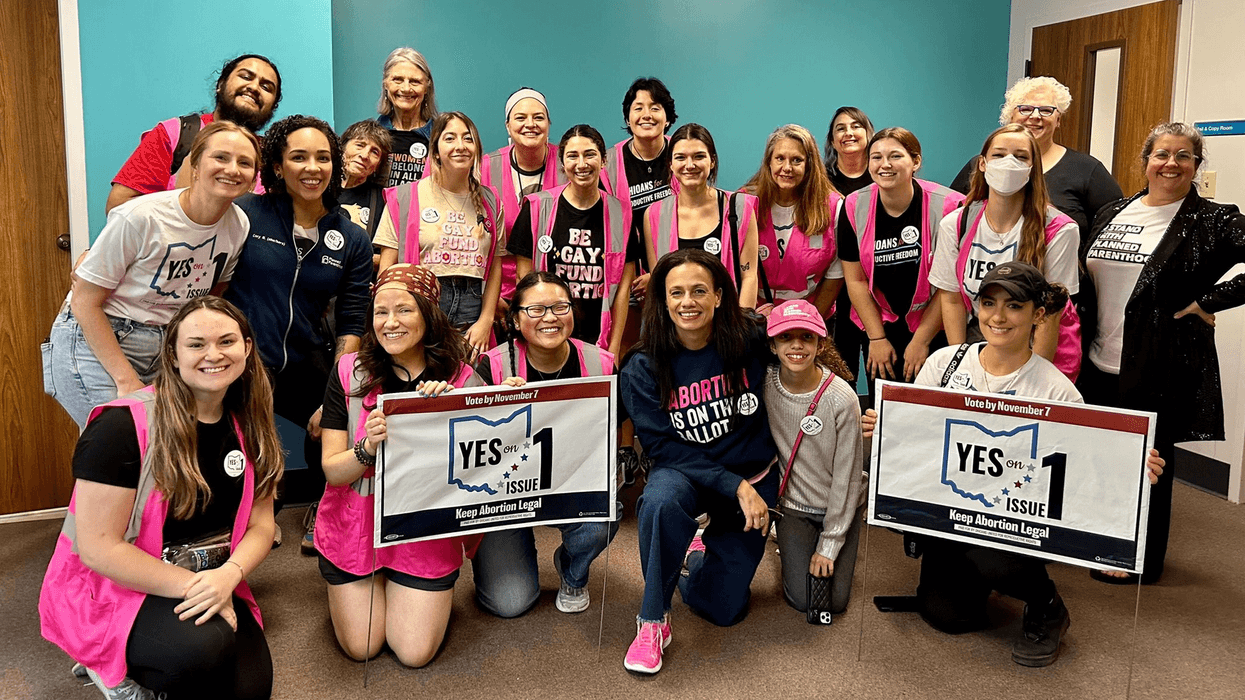
Reproductive rights advocates in Ohio and across the U.S. are intensifying efforts to ensure voters in the Midwestern state approve a ballot measure on November 7 that would enshrine the right to abortion care in the Ohio Constitution—making a final push with canvassing and phone banking campaigns as they combat misinformation from pro-forced pregnancy Republicans.
Issue 1 will ask voters whether the state constitution should be amended to affirm that Ohioans have the right to "carry out one's own reproductive decisions," including abortion.
Abortion care is currently legal in Ohio up to 22 weeks of pregnancy as the right-wing state Supreme Court deliberates over a six-week abortion ban that was passed by Republicans and then put on hold.
Advocates have warned that failing to amend the constitution will leave Ohioans without "the freedom to decide what it best for [their] own families," with Ohioans United for Reproductive Rights (OURR) featuring in one ad a woman who needed an abortion after getting pregnant in an abusive relationship.
The Ohio secretary of state's office reported earlier this week that more than 200,000 voters had cast their ballots early in person and about 110,000 people had sent in absentee ballots by October 24, representing an even higher early voter turnout than the state saw ahead of an August special election.
That election, which progressive news outlet Heartland Signal said was likely "supercharging pro-choice voters" as Ohioans flocked to the polls to vote early, asked voters whether the state should require a 60% threshold on referendums regarding amendments to the state constitution, rather than a simple majority. The initiative, backed by Republicans who oppose abortion rights, failed by a vote of 43% to 57%.
Led by Republican Secretary of State Frank LaRose, forced pregnancy advocates have managed to change the language of the question appearing on ballots in the November 7 general election, using the word "unborn child" instead of the originally proposed "fetus" and saying the amendment would, as the ACLU of Ohio explained in September, "'always allow' abortion care 'at any stage of pregnancy, regardless of viability,' if the treating physician finds it necessary to protect health."
"Not only is this phrasing confusing and inflammatory, but it also suggests that the physician could override the pregnant patient's wishes," said Sheila Smith, communications strategist at the ACLU of Ohio. "This is absolutely false."
The amendment would allow the state to ban abortion care after about 23 weeks of pregnancy unless it "is necessary to protect the pregnant patient's life or health," but that language does not appear in the certified language on Ohioans' ballots.
State Attorney General Dave Yost has also falsely claimed the proposed amendment would invalidate parental consent laws for minors seeking abortion care.
Republican leaders in the state "know they can't win a fair fight, so they're trying to rig the game," said former U.S. Labor Secretary Robert Reich.
A poll by the Institute for Civics and Public Policy at Ohio Northern University last week found that 52% of Ohio voters still support Issue 1 based on the certified language that will appear on ballots, while 68% supported the proposed amendment as advocates initially phrased it.
In addition to working to ensure voters know that Issue 1 will be appearing on ballots, groups including Innovation Ohio are working to educate Ohioans on the facts about the referendum and Republicans' false claims.
State Senate Minority Leader Nickie Antonio (D-23) told The Hill on Wednesday that the ballot initiative may represent "a real turning point in terms of whether or not young people especially even see Ohio as a state they want to live in," as states like California and New York work to make abortion more accessible.
"And I do believe that the outcome of this election and of this ballot measure is gonna send a message to young people on whether or not there's a future for them here in Ohio," said Antonio.
For years, extremists and the special interests who fund them have made it clear that they are willing to shut down the use of ballot measures if it means making short-term gains to restrict progress on issues like reproductive rights.
Early last month, Ohioans delivered a resounding victory for both reproductive rights and democracy. Voters handily rejected Issue 1, a bad-faith effort to limit voters’ right to propose and enact their constitutional amendments—like the one headed to the ballot this November to ensure Ohioans have control over their reproductive freedoms.
The proposal would have undone majority rule in Ohio, allowing just 41% of voters to veto the will of the majority. It also would have required petitioners to collect signatures in all 88 counties to qualify a measure, effectively giving a single county veto power over an entire ballot question.
Ohio Republicans were transparent that Issue 1 was intended to block the constitutional amendment on reproductive rights that will be voted on this November. Anti-abortion groups spent millions on the special election, and Ohio Secretary of State Frank LaRose went so far as to boast that the question was “100%” about abortion.
Since the Dobbs decision, and as advocates for reproductive freedom have sought to use the ballot measure process to protect their rights in more states, legislatures in red states are fired up to strip voters of their right to direct democracy.
Unsurprisingly, Ohioans did not take kindly to being asked to vote their rights away. In an off-year special election in the middle of the summer, turnout more closely mirrored that of a midterm, and opposition to Issue 1 spanned party lines. Issue 1 fell short in a number of counties that Trump won, and it underperformed Trump’s 2020 margin nearly everywhere, according to an Associated Press analysis.
Ohio politicians tried every trick in the book—including putting misleading language on the ballot and breaking their law to schedule the election in August—yet the effort crashed and burned. This follows the failures of politicians in Arkansas and South Dakota, both of which proposed 60% thresholds for ballot measures last year and were soundly rejected by voters in back-to-back elections.
Issue 1 also continues the inspiring trend of voters turning out directly at the ballot box in red, blue, and purple states to defend reproductive rights after the fall of Roe v. Wade. Last year, voters defeated anti-abortion measures in Kansas, Kentucky, and Montana, and enshrined proactive reproductive freedom measures in California, Vermont, and Michigan.
The news out of Ohio is undoubtedly positive, but the fact that this election happened at all is symptomatic of a much larger problem. We’ve seen repeatedly that ballot measures are an incredibly effective antidote to political institutions acting against voters’ interests. On few issues is that contrast more pronounced than reproductive rights; more than 8 in 10 Americans believe that abortion should be legal in some or all circumstances, even as the Supreme Court has ended federal protections for abortions and more than 24 states have active abortion bans or are likely to pass them.
For years, extremists and the special interests who fund them have made it clear that they are willing to shut down the use of ballot measures, an essential piece of our democracy, if it means making short-term gains to restrict progress on issues like Medicaid expansion, minimum wage, paid leave benefits, and criminal justice reform—and since Dobbs v Jackson Women’s Health Organization, that list now includes abortion access.
Politicians in more than a dozen states have made myriad attempts, some successful, to undermine direct democracy in recent years. In addition to Ohio, The Fairness Project, where I am deputy executive director and campaigns director, has tracked attacks in Arizona, Arkansas, Florida, Idaho, Utah, Missouri, Montana, Oklahoma, North Dakota, South Dakota, and Wyoming.
These attacks often take the shape of the 60% threshold like Ohio’s. They also include building up tedious signature and circulation requirements for petitions, limiting how many subjects a ballot measure can address, and passing counter-legislation to hinder or slow-roll the implementation of successful ballot measures.
Since the Dobbs decision, and as advocates for reproductive freedom have sought to use the ballot measure process to protect their rights in more states, legislatures in red states are fired up to strip voters of their right to direct democracy. We saw it in Ohio, and we will no doubt see it again.
2024 may produce the highest number of issues put directly to voters we’ve seen in recent years, and organizers in several states are already working to qualify reproductive rights measures for next year. But restoring and defending reproductive rights at the ballot box—among many other issues—now necessitates a two-pronged strategy that includes defending the ballot measure process itself.
Thankfully, Ohio shows us that there is promise and that the people are ready to fight back.
More than 3 million voters rejected an attempt to weaken their power, but our work is far from over.
On Tuesday, Ohio voters took to the polls for an unusual summertime special election. The only question before them was whether or not to raise the threshold for passing citizen-initiated constitutional amendments from a simple majority to 60 percent — but much more than a procedural reform was on the ballot. Extreme legislators in Ohio led a concerted attack on both abortion rights and democracy.
Despite their blatant effort to change the rules and strip away Ohio voters’ rights, in a stunning and historic display of democracy in action, over three million voters turned out across the state and ultimately rejected the measure by a wide margin. But our work is far from over. We need all hands on deck to pass a ballot measure that will enshrine reproductive freedom in the Ohio Constitution during the upcoming election in November.
While we revel in the victory of Tuesday night, a look at how we got here reveals a long-term agenda. Republican legislators started this year by banning August special elections because of their high cost and low voter participation rates, but when Ohioans began collecting signatures to put a measure on the ballot in November to protect abortion rights, lawmakers did an about-face and changed the rules to protect their extremist agenda. Hoping that the same low voter turnout they railed against would be a boon to their side, legislators hastily scheduled a last-minute, vacation-season election to move the goalpost on the November reproductive freedom measure.
Unfortunately, attacks on democracy in order to push an extreme, unpopular agenda are not new in Ohio. In 2015 and 2018, Ohio voters overwhelmingly passed two constitutional amendments to reform redistricting efforts and ban partisan gerrymandering in the state. Ohio Republicans blatantly ignored these new amendments, and redrew the state’s congressional and state legislative maps to favor their party and hoard political power by any means necessary. Despite the Ohio Supreme Court ruling seven different district maps unconstitutional, the GOP legislative majority ignored the court and ran elections using unconstitutional maps. This month’s special election is a page from the same authoritarian, make-up-your-own-rules playbook.
But hundreds of thousands of Ohio voters recognized these efforts for exactly what they were and were undeterred at every step of the process. Just last month, advocates submitted nearly 700,000 signatures from Ohioans to place a constitutional amendment on the November ballot to enshrine reproductive freedom into the state’s constitution. At the same time, countless volunteers across the state began talking with their friends and family, knocking on doors, and showing up at community events to highlight the stakes of both the August and November elections. These herculean organizing efforts echo those we saw in Michigan last year, where a grassroots coalition of advocates successfully put reproductive freedom on the ballot, and voters chose to amend their state constitution.
Make no mistake: we are on the precipice of a true authoritarian regime, and we have to stop it.
As extreme lawmakers continue to fear that the will of voters will prevail against an anti-abortion and anti-democratic agenda, they keep deploying tactics to silence and take power from women, people of color, and other vulnerable communities. This is what a slow-motion authoritarian regime looks like. And it’s happening across our country.
Similar moves to rig the rules can be seen in Arizona, Florida, Idaho, South Dakota, and Arkansas. As in Ohio, these attacks on our democratic process are also a clear attack on reproductive freedom. Diminishing the ability of voters to amend their constitutions through statewide ballot initiatives following the Supreme Court’s overturn of Roe v. Wade is a clear statement from anti-abortion lawmakers: there is no limit to their efforts to stop voters who disagree with them from participating in our democracy.
These efforts are strategic and deliberate. The same lawmakers who are rigging the rules are also restricting voters’ ability to vote, working to limit what books we can read in public libraries or teach in public schools, banning trans people from accessing gender-affirming care or participating in school sports, and criminalizing abortion care. Make no mistake: we are on the precipice of a true authoritarian regime, and we have to stop it. This crisis of democracy is not business or politics as usual, and our response must mirror the urgency of this moment.
We know that when voters do get to decide, they choose reproductive freedom, and they choose democracy. Last night was proof that when the people mobilize and organize to defend our essential liberties, we all win. At the ACLU, we will continue to work with our partners on the ground in Ohio to fight to enshrine reproductive freedom in the state constitution, fight back against our opposition’s misinformation campaign to confuse voters, and galvanize a broad movement to protect abortion rights — just as we did in Michigan. We will fight with every tool at our disposal in a whole-of-organization response, because to durably safeguard abortion, we must durably protect and strengthen our democracy.
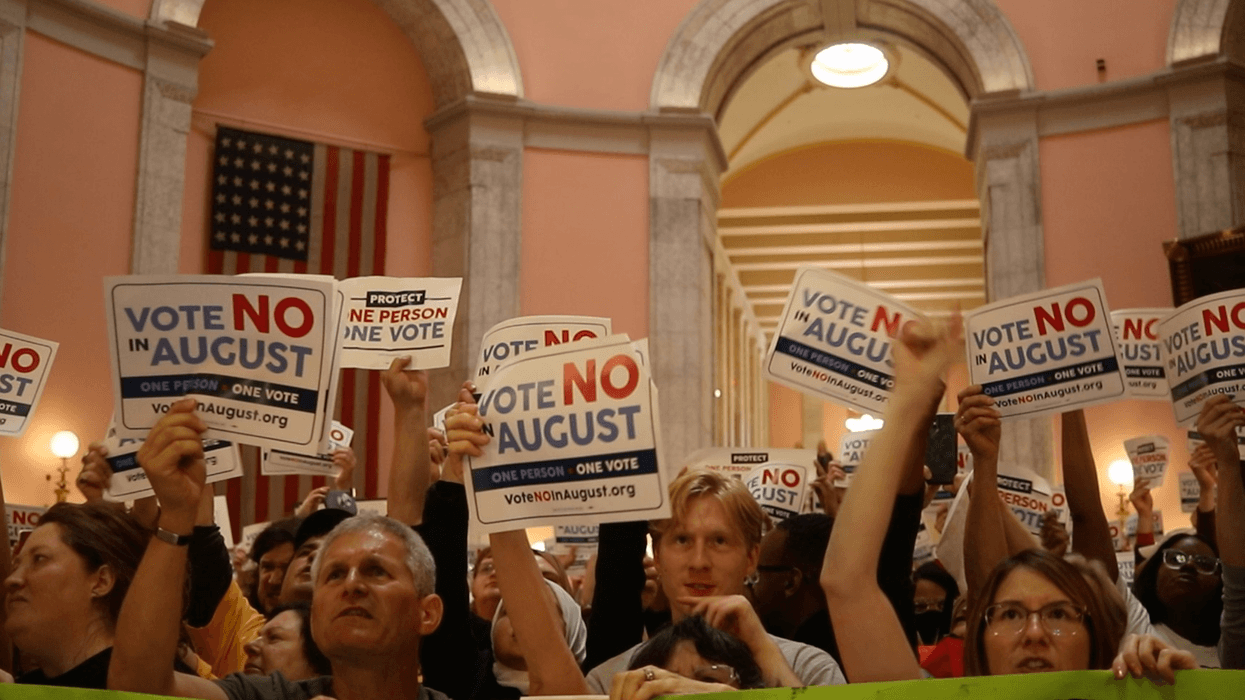
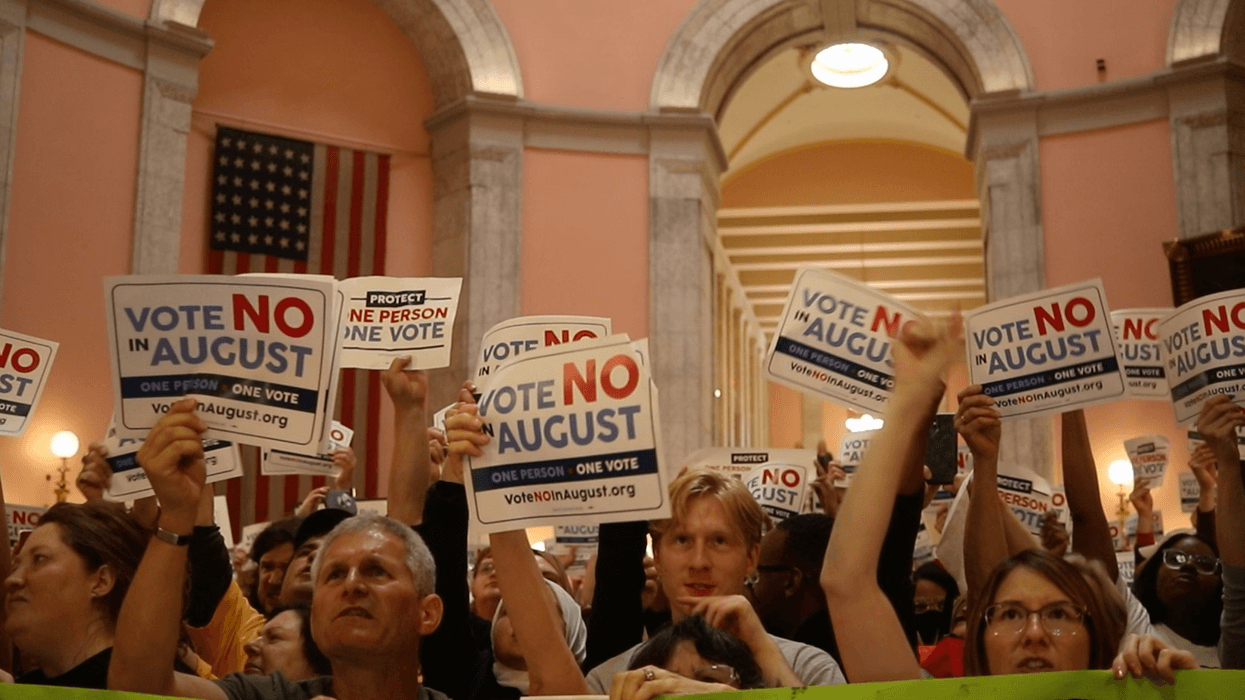
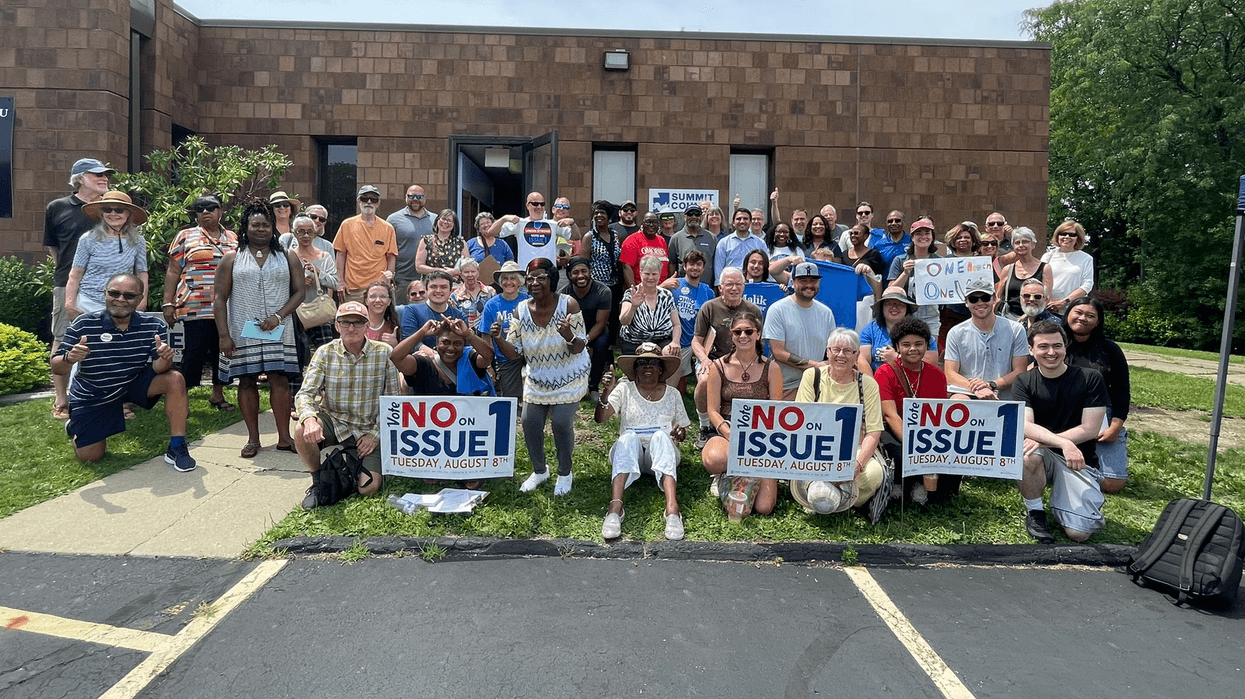
"Preserve your voice and protect our democracy," said one Democratic lawmaker. "Vote NO on August 8th to ensure fairness and equity in the democratic process."
Recent polling in Ohio has shown that a majority of residents disapprove of a proposed measure that will be on ballots across the state in a special election on Tuesday, but abortion rights advocates have spent recent days warning voters that failing to block the proposal could have major repercussions for reproductive freedom in the state.
In the special election, Ohioans will be asked their position on Issue 1, which if approved would raise the threshold for passing new constitutional amendments to 60% rather than a simple majority.
Issue 1 needs just a simple majority to pass.
The outcome of Tuesday's election will determine how many votes will be needed to pass a referendum in November's general election, which will determine whether to codify the right to abortion care in the Ohio Constitution.
If Issue 1 passes, the state will also require signatures from all 88 counties in the state rather than the current requirement of 44 counties, making it harder for supporters of a referendum to secure a place for it on ballots, and would give organizers only one chance to collect enough signatures instead of allowing for extensions if they don't meet the requirement on the first try.
U.S. Rep. Emilia Sykes (D-Ohio) is among the lawmakers who have joined advocacy groups in recent weeks in canvassing and promoting get-out-the-vote efforts to ensure the August 8 special election does not go unnoticed by Ohioans.
"We all want the freedom to make decisions that affect our lives," said Sykes on social media late last month. "Issue 1 ends majority rule and the principle of 'one person, one vote.'"
In Canton last week, Sykes joined a rally sponsored by the Ohio Education Association, Planned Parenthood Advocates of Ohio (PPAO), and other groups that organized a "parade to the polls" to encourage reproductive rights supporters to vote early in the election.
Polls suggest that the constitutional amendment would easily pass if the state continues its current "majority rules" system for passing constitutional amendments, as nearly 58% of Ohioans have said they support amending the document to enshrine a right to reproductive healthcare. Organizers last month collected more than 495,000 signatures in support of including the proposed constitutional amendment on the November ballot, far surpassing the required 413,446 signatures.
"Majority rule allows for collective decision-making, fostering inclusivity, and reflecting the broader interests of the people," Sykes tweeted last week. "Let's embrace this principle and work together towards a stronger, more equitable future. Vote no on Issue 1!"
The progressive advocacy group Swing Left said Saturday that Republican lawmakers in the state—and right-wing billionaires that have supported the push to pass Issue 1—are counting on low voter turnout to ensure the measure passes. The group has organized numerous phone-banking and door-knocking events in recent weeks.
As Common Dreams reported last month, Illinois-based billionaire Richard Uihlein has donated $17.6 million since 2014 to the Foundation for Government Accountability, which has lobbied for higher thresholds to pass constitutional amendments in several states including Ohio.
The special election was permitted to go forward after a ruling by the Ohio Supreme Court's right-wing majority in June.
By defeating Issue 1, said PPAO last week, voters can help "stop special interests from ending majority rule" in the state.
Heartland Signal reported late last month that voters had already set a record pace for early voting in the special election, with 116,000 people casting their ballots in person in the first week of voting and 38,000 turning in absentee ballots.
By comparison, a total of 138,000 people cast early votes in the May 2022 Republican Senate primaries in the state.
"Election Day is approaching," said Sykes on social media Saturday. "Preserve your voice and protect our democracy. Vote NO on August 8th to ensure fairness and equity in the democratic process."
"Every vote counts," she added, "and together, we can uphold the principles that make our system strong."