

SUBSCRIBE TO OUR FREE NEWSLETTER
Daily news & progressive opinion—funded by the people, not the corporations—delivered straight to your inbox.
5
#000000
#FFFFFF
To donate by check, phone, or other method, see our More Ways to Give page.
Daily news & progressive opinion—funded by the people, not the corporations—delivered straight to your inbox.
"All the lawyers want to know is, will there be a qualified physician on staff?" said one advocate. "The state of Tennessee has refused to answer this question."
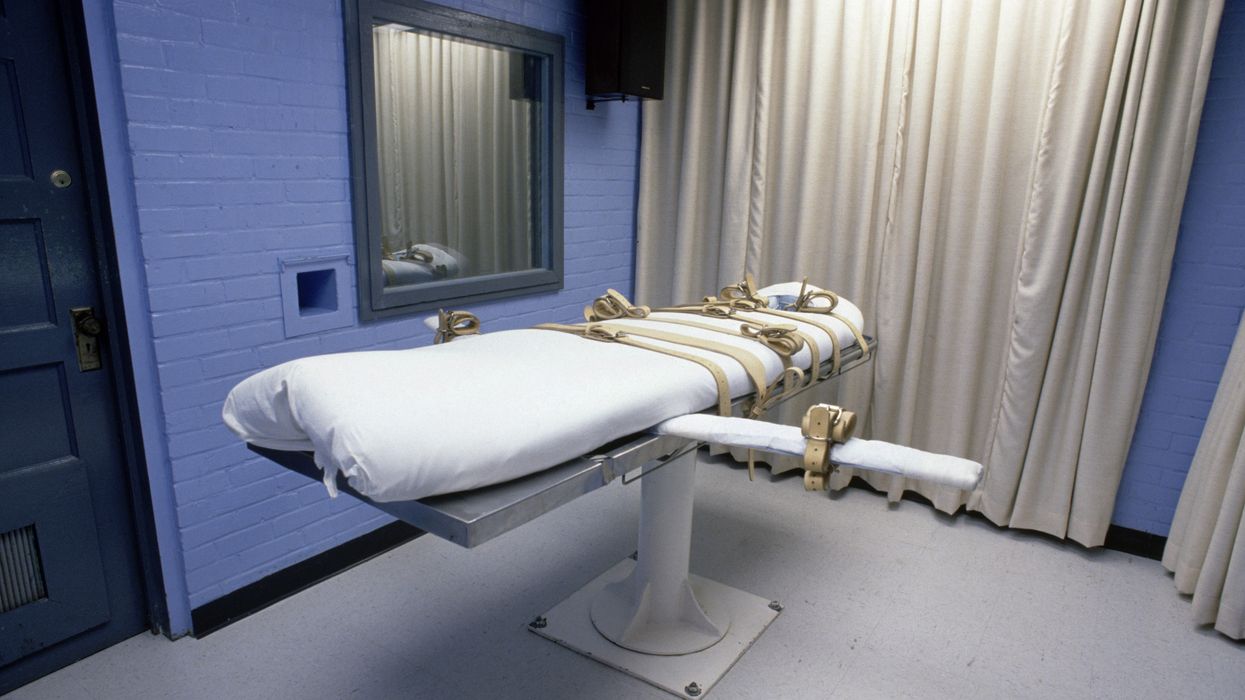
A lawyer for Anthony Darrell Hines, a man who was convicted of the 1985 murder of Catherine Jean Jackson Jenkins in Kingston Springs, Tennessee, said the state's Republican governor will force a "grotesque spectacle" to move forward on Thursday by refusing to stop Hines' planned execution despite a botched lethal injection involving another death row inmate in May.
The lawyer, Kit Thomas, noted that Hines, 66, has experienced muscular atrophy after several recent strokes, has been in a wheelchair or confined to his bed for eight months, and has stiffness in his arm that forces his hand to remain clenched in a fist—medical issues that could make it challenging for physicians and staffers to establish an IV line to administer lethal drugs.
Hines' medical condition particularly raises alarm considering the Tennessee Department of Correction's attempt to execute Tony Carruthers earlier this year in an ordeal that continued for an hour and 15 minutes before a warden intervened.
An IV team and a physician, later publicly identified as Dr. Mark Fowler, attempted to locate veins in Carruthers' arms, legs, feet, shoulder, hands, and finally his neck, causing what one witness called a "bloody mess" as the inmate remained strapped to a gurney, groaning in pain.
An attorney for Carruthers described the scene as "outright barbaric."
Thomas has asked the US Supreme Court to intervene to stop Hines' lethal injection.
Gov. Bill Lee granted a one-year reprieve to Carruthers, and Fowler was deposed by attorneys—a process during which he admitted he had not placed an IV line since 2013.
Thomas said the Department of Correction had violated its own protocol by appointing an unqualified doctor to carry out Carruthers' execution, and Hines' legal team expressed concern that the state has not disclosed whether Fowler will be involved in the inmate's planned lethal injection.
Last week, the Tennessee Supreme Court rejected Hines' request to force the state to confirm whether Fowler will be administering the drugs.
"It’s particularly horrifying to think of them lifting a partially paralyzed man from his hospital bed, which he’s lived in for the last eight months, then strapping him to a gurney, while executioners attempt to establish IV access," Thomas said.
The advocacy group Death Penalty Action delivered a petition to Lee's office last week calling on him to halt Hines' execution.
Hines' legal team has also expressed concern about the leadership of Frank Strada, who oversees executions for the Department of Correction and was previously deputy director of the Arizona Department of Corrections, Rehabilitation, and Reentry.
During his tenure in Arizona, the three executions that took place were "marked by prolonged and problematic attempts to establish IV access."
Thomas has also called on the state to confirm that officials have done quality control testing on the drugs scheduled to be used Thursday and ensured they were properly stored and handled. Nine Republican state senators, all of whom support capital punishment, wrote to Lee in June, urging an independent review of Carruthers' botched execution and "independent testing" of the lethal drugs the state plans to use before it attempts another execution.
"All the lawyers want to know is, will there be a qualified physician on staff? That's a very reasonable request for them to make," Robin Maher, executive director of the Death Penalty Information Center, told Fox 17 in Nashville. "The state of Tennessee has refused to answer this question, and the Tennessee courts have not forced them to answer. So everyone is in the dark and concerns are mounting."
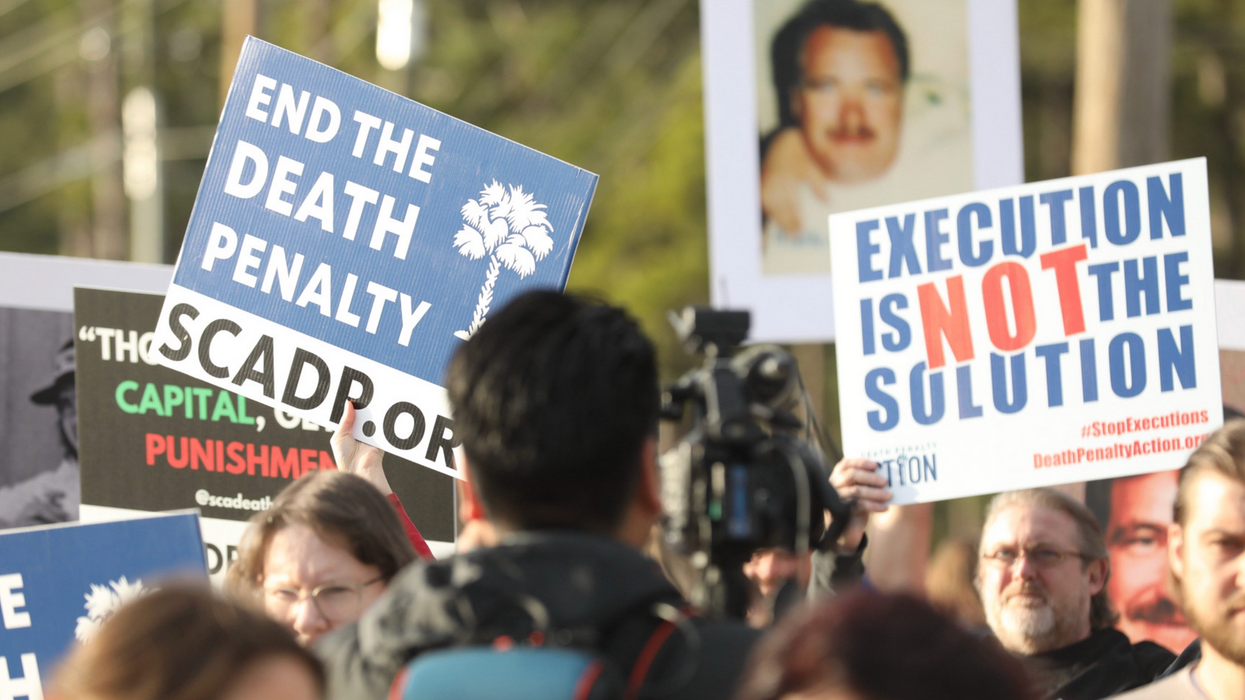
"By executing Brad Sigmon, South Carolina has also executed the possibility of redemption," said one critic. "Our state is declaring that no matter what you do to make up for your wrongdoing, we reserve the right to kill you."
South Carolina executed Brad Keith Sigmon by firing squad on Friday evening, drawing international attention to a method that hasn't been used for 15 years in the United States and prompting renewed calls to abolish capital punishment.
Sigmon, 67—who was convicted of beating his ex-girlfriend's parents, David and Gladys Larke, to death with a baseball bat in 2001—was shot by a firing squad consisting of three volunteers at the Broad River Correctional Institution in Columbia, the state capital, at 6:05 p.m. local time Friday, according to a statement from the South Carolina Department of Corrections. He was pronounced dead by a physician three minutes later.
Gerald "Bo" King, an attorney representing Sigmon, read his client's final statement shortly before his execution.
"I want my closing statement to be one of love and a calling to my fellow Christians to help us end the death penalty," Sigmon wrote. "An eye for an eye was used as justification to the jury for seeking the death penalty."
"At that time, I was too ignorant to know how wrong that was," he added. "Why? Because we no longer live under the Old Testament law but now live under the New Testament. Nowhere does God in the New Testament give man the authority to kill another man."
A hood was then placed over Sigmon's head and a bullseye over his heart. The three volunteers then fired their rifles from an opening in a wall 15 feet (4.5 meters) away.
"There was no warning or countdown," wrote witness and journalist Jeffrey Collins. "The abrupt crack of the rifles startled me. And the white target with the red bullseye that had been on his chest, standing out against his black prison jumpsuit, disappeared instantly as Sigmon's whole body flinched... A jagged red spot about the size of a small fist appeared where Sigmon was shot."
"I've now watched through glass and bars as 11 men were put to death at a South Carolina prison," Collins noted. "None of the previous 10 prepared me for watching the firing squad death of Brad Sigmon on Friday night."
King, who also witnessed Sigmon's killing, described the execution as "horrifying and violent."
"He chose the firing squad knowing that three bullets would shatter his bones and destroy his heart," said King. "But that was the only choice he had, after the state's three executions by lethal injection inflicted prolonged and potentially torturous deaths on men he loved like brothers."
"He chose the firing squad knowing that three bullets would shatter his bones and destroy his heart."
A desire to resume executions during a 10-year pause due to a shortage of lethal injection drugs prompted Republican state lawmakers to pass and GOP South Carolina Gov. Henry McMaster in 2021 to sign legislation forcing the state's death row inmates to choose between the electric chair, firing squad, or lethal injection (if available) as their method of execution.
King said state officials failed to provide information about lethal injection drugs.
"Brad only wanted assurances that these drugs were not expired, or diluted, or spoiled—what any of us would want to know about the medication we take, or the food we eat, much less the means of our death," the attorney explained.
Sigmon's legal team had unsuccessfully argued that brain damage and mental illness should have spared him from execution.
Rev. Hillary Taylor, executive director of the advocacy group South Carolinians for Alternatives to the Death Penalty (SCADP), said in a
statement Friday that "by executing Brad Sigmon, South Carolina has also executed the possibility of redemption."
"As Brad's spiritual advisor, I can personally attest to the fact that he is a different man today than the person he was more than 20 years ago, when he harmed the Larke family," she continued. "Our state is declaring that no matter what you do to make up for your wrongdoing, we reserve the right to kill you."
"But the question is not whether Brad deserved to die: The question is whether we deserved to kill," Taylor asserted. "In John 8, Jesus had very pointed instructions about which people can kill other people: 'Only those without sin can cast the first stone."
"The last time I checked, no person on this Earth fits that description, not even Gov. Henry McMaster, whose hardened heart remains the reason why executions continue in the first place," she added.
South Carolina has been executing condemned inmates at a rate described by ACLU of South Carolina communications director Paul Bowers as an "assembly line." The state has put four people to death since last September: Freddie Eugene Owens, killed by lethal injection last September 20; Richard Bernard Moore, killed by lethal injection (after changing his choice from firing squad) last November 1; Marion Bowman Jr., killed by lethal injection on January 31; and Sigmon.
State records show 28 inmates on South Carolina's death row.
Across the United States, there are five more executions scheduled this month, according to the Death Penalty Information Center.
This is the first of six executions scheduled in six states this month. From the Death Penalty Information Center, one is scheduled for next week and then a horrifying four the week after that. This appears, however, to be more confluence than some big change. deathpenaltyinfo.org/executions/u...
[image or embed]
— Chris Geidner (@chrisgeidner.bsky.social) March 7, 2025 at 3:52 PM
Addressing the issue of capital punishment in South Carolina, SCADP's Taylor said Friday that "despite national and international media news coverage, most South Carolinians will go to bed tonight unaware that we have executed another person—let alone with a firing squad."
"That's how little this issue impacts our citizens," she continued. "South Carolina should be known by other states and countries for its radical care of its citizens. Instead, we are known for our state-sponsored violence."
"If executions made us safer, we would be the 9th-safest state in the country," Taylor argued. "But they don't, and we aren't. It is not the state leaders who will reap the consequences of the death penalty: it is the everyday South Carolina citizens themselves. As long as we have the death penalty, we will fail to address the true causes of violence, including poverty, abuse, and neglect."
South Carolina carries out execution by firing squad, first in USA since 2010. A reminder that these 6 MAGA men also intro'd a bill to codify abortion as murder—enabling the horrific scenario that a woman who gets an abortion could be executed by firing squad. www.qasimrashid.com/p/s-carolina...
[image or embed]
— Qasim Rashid, Esq. (@qasimrashid.com) March 8, 2025 at 5:38 AM
Yet instead of curtailing executions, many South Carolina Republicans want to expand the category of crimes that qualify for capital punishment. In 2023, more than 20 Republican state lawmakers backed a bill to make people who obtain abortion care eligible for execution.
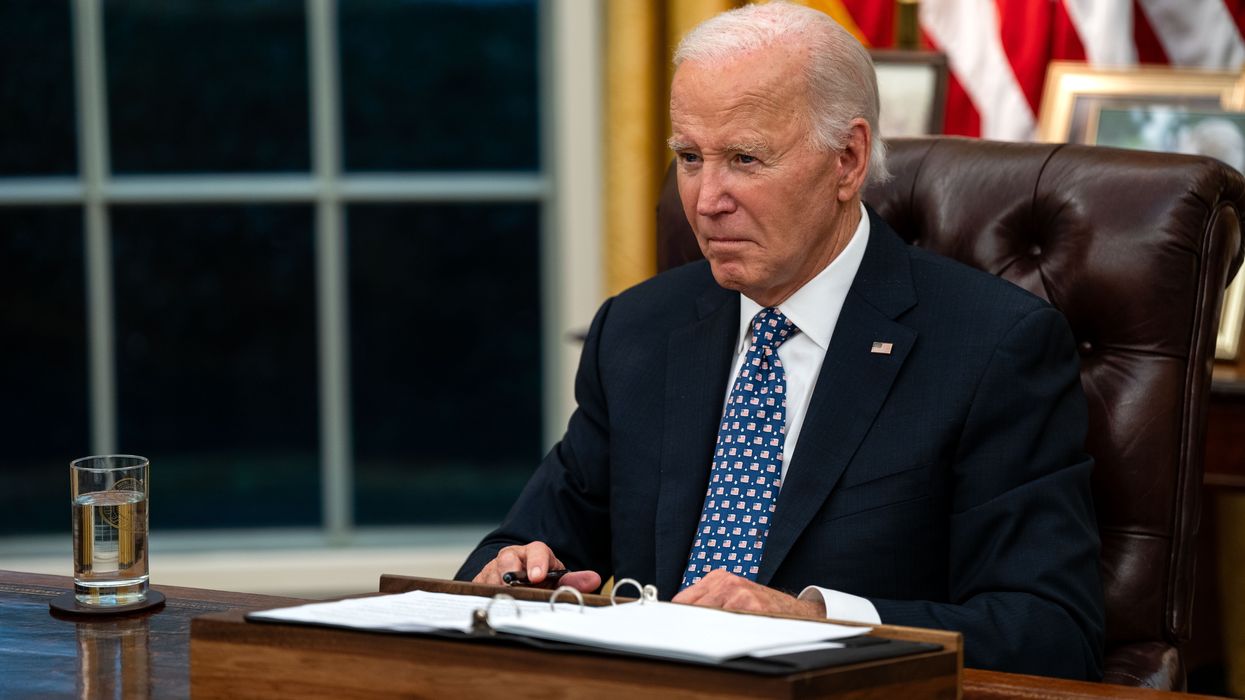
"President Biden came into office committing to abolishing the federal death penalty because of its fundamental flaws. Commuting the federal row is the way he can honor that commitment," said one advocate.
For weeks, President Joe Biden has faced calls to use his clemency powers to save the lives of federal inmates on death row ahead of a transfer of power to President-elect Donald Trump, who has said he will expand the use of the death penalty.
Biden's inaction on the issue has drawn increased scrutiny following his pardon of his own son, Hunter Biden, clearing the younger Biden of wrongdoing in any federal crimes he committed or may have committed in the last 11 years.
Presidents have broad authority under Article II, Section 2 of the Constitution to grant pardons and reprieves for federal crimes. Biden recently pardoned two Thanksgiving turkeys as part of an annual tradition to highlight these constitutional powers, but he has not issued commutations for the 40 incarcerated men on federal death row. (He did, however, order a moratorium on carrying out federal death sentences in 2021).
"If Biden does not act, there is little doubt that Trump will aggressively schedule executions in his next term. Their blood will primarily be on Trump's hands, but, if Biden does not act to prevent it, his hands will be bloody too," wrote Matt Bruenig, president of the People's Policy Project think tank, reacting to the news of Hunter Biden's pardon.
"The death penalty is a morally-bankrupt and inescapably racist institution" —Yasmin Cader, ACLU deputy legal director
The pardoning of Hunter Biden, who was awaiting sentencing in two federal cases, also prompted scrutiny around pardon actions Biden could take that are not just focused on death row.
"This," wrote Rep. Rashida Tlaib (D-Mich.) in response to a post on X that contrasted Hunter Biden's pardon with the fact that tens of thousands of people are in federal custody for drug offenses.
In 2020, Biden pledged to work to abolish the federal death penalty but, according to the Death Penalty Information Center, "there has been little evidence of anything done in furtherance of this promise."
Pressure to issue clemency was building prior to the announcement of Hunter Biden's pardon.
On November 20, over 60 members of Congress sent a letter to Biden, encouraging him to use his "clemency powers to help broad classes of people and cases, including the elderly and chronically ill, those on death row, people with unjustified sentencing disparities, and women who were punished for defending themselves against their abusers."
During a press conference in November that featured House Democrats and anti-death penalty advocates, Rep. Ayanna Pressley (D-Mass.) said that "those on death row who are at risk of barbaric and inhumane murder at the hands of the Trump administration can have their death sentence commuted and be resentenced to a prison term," according to Oklahoma Voice.
"We're here today to ask him to take another step in that direction and to demonstrate, once again, a very positive consequence of his having been elected our 46th president, and to carry out his clemency powers in a very positive way," Rep. James Clyburn (D-S.C.) said.
Meanwhile, the ACLU has also urged Biden to use the lame duck session to commute federal death sentences—pointing out that Trump has vowed to expand the death penalty, including to non-homicide crimes such as drug-related offenses.
"The death penalty is a morally-bankrupt and inescapably racist institution. President Biden came into office committing to abolishing the federal death penalty because of its fundamental flaws. Commuting the federal row is the way he can honor that commitment, and prevent irreversible miscarriages of justice," said Yasmin Cader, ACLU deputy legal director and the director of the Trone Center for Justice and Equality.
While Biden so far has granted far fewer pardon and commutation petitions compared to former President Barack Obama, according to the Department of Justice's Office of the Pardon Attorney, he did in 2022 grant full and unconditional pardons to all U.S. citizens convicted of simple federal marijuana possession—a move that was cheered by advocates.
"President Joe Biden can—and must—act now to finish the death penalty reform work his administration began in 2020," the ACLU said last month. "He must commute the sentences of all people on federal death row to stymie Trump’s plans and to redress the racial injustice inherent to capital punishment."
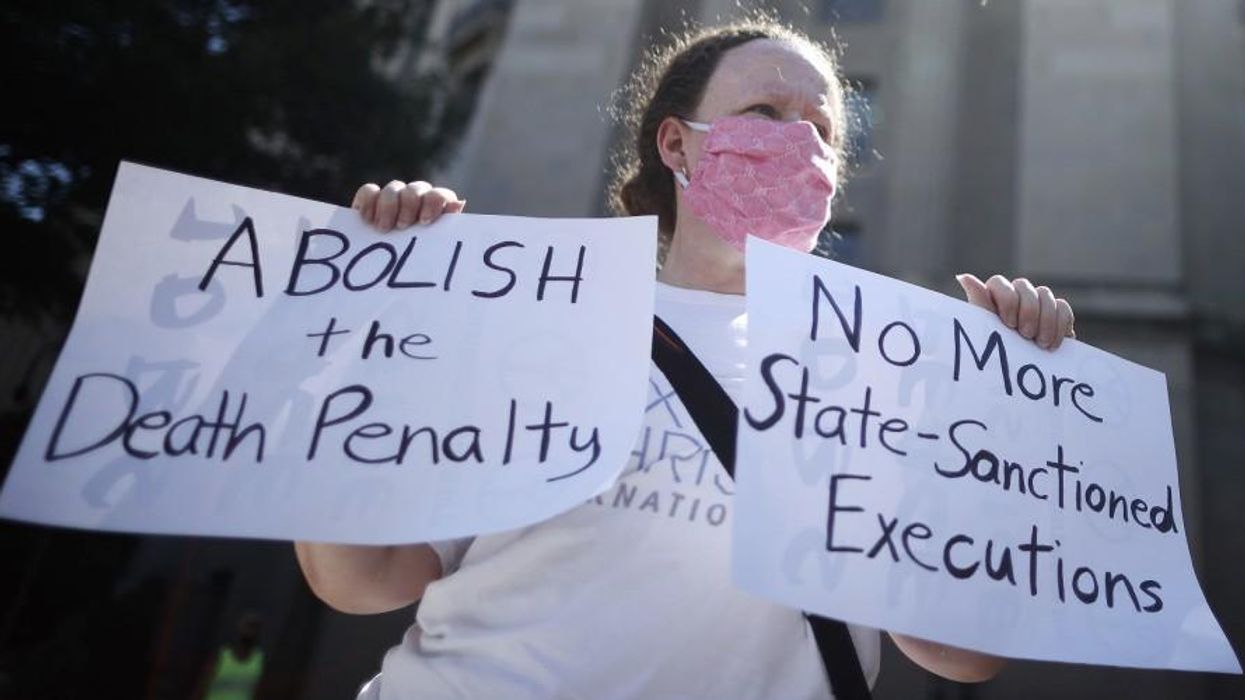
"The use of the death penalty in the United States is one of the ugliest stains on our broken criminal justice system," said Congresswoman Barbara Lee.
Amid a wave of executions in Republican-led states—including Tuesday's lethal injection of Marcellus Williams in Missouri—progressive U.S. lawmakers and groups renewed calls to "abolish the death penalty."
Congressional Progressive Caucus Chair Pramila Jayapal (D-Wash.) and Congresswomen Alexandria Ocasio-Cortez (D-N.Y.), Rashida Tlaib (D-Mich.), Ilhan Omar (D-Minn.), and Cori Bush (D-Mo.) were among those who took to social media to demand an end to capital punishment following Williams' execution.
"The use of the death penalty in the United States is one of the ugliest stains on our broken criminal justice system," said Rep. Barbara Lee (D-Calif.). "It is disproportionately imposed against poor people and people of color. We must abolish it once and for all."
Williams, 55, was killed by the state of Missouri via lethal injection—a method known for botched executions—despite serious doubts about his guilt. The office that prosecuted him sought to have his murder conviction overturned and members of the victim's family pleaded for clemency.
"Sometimes injustice is so glaring that it leaves us struggling to comprehend how such events could happen in the first place," Bush said in a statement released after Williams' execution.
The congresswoman continued:
The deadly decision to execute Williams came despite urgent pleas from Missourians and people all across the country... who called for clemency. Gov. Mike Parson didn't just ignore these pleas and end Williams' life, he demonstrated how the death penalty is wielded without regard for innocence, compassion, equity, or humanity. He showed us how the standard of "beyond a reasonable doubt" can be applied selectively, depending on who stands accused and who stands in power.
"The state of Missouri and our nation's legal system failed Marcellus Williams, and as long as we uphold the death penalty, we continue to perpetuate this depravity—where an innocent person can be killed in the name of justice," Bush stressed. "We have a moral imperative to abolish this racist and inhumane practice, and to work towards building a just legal system that values humanity and compassion over criminalization and violence."
"Rest in power, Marcellus Williams," she added.
Williams wasn't the only one executed on Tuesday. Travis Mullis—a 38-year-old autistic man who murdered his infant son—was killed by lethal injection in Texas after waiving his right to appeal.
Last week, South Carolina executed Freddie Owens by lethal injection after Republican state Attorney General Alan Wilson brushed off a key prosecution witness' bombshell claim that the convicted man did not commit the murder for which his life was taken.
Although the number of U.S. executions has been steadily decreasing from 85 in 2000 to 24 last year, there is currently a surge in state killings, with five more people set to be put to death in three states by October 17.
On Thursday, Alabama is scheduled to kill Alan Eugene Miller using nitrogen gas, despite the inmate suffering severe mental illness. Miller was meant to be put to death in 2022; however, prison staff could not find a vein in which to inject the lethal cocktail and his execution was postponed.
That same day, Emmanuel Antonio Littlejohn is set to be executed by lethal injection in Oklahoma, even after the state's Pardon and Parole Board voted to recommend clemency.
According to a 2014 study, over 4% of people on U.S. death rows did not commit the crime for which they were condemned. The Death Penalty Information Center found that since 1973, at least 200 people who were wrongly convicted and sentenced to death in the U.S. have been exonerated.
"The only way to eliminate the possibility of executing an innocent person is to do away with the death penalty altogether," the advocacy group Human Rights First said Wednesday.
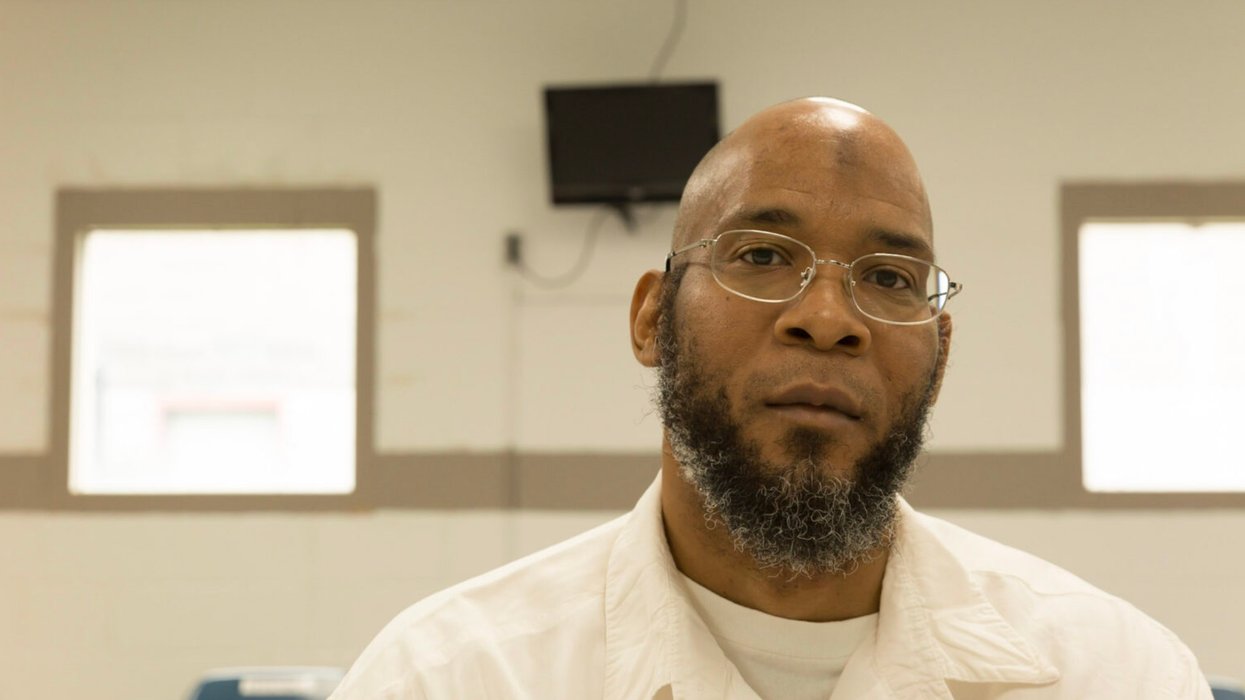
"We must abolish this flawed, racist, inhumane practice once and for all," Congresswoman Cori Bush said of the death penalty.
Update: The state of Missouri executed Marcellus Williams by lethal injection Monday evening over the objections of his prosecutor and the murder victim's relatives, The Associated Press reported.
Earlier:
Advocates for a man set to be executed by the state of Missouri on Tuesday lodged desperate pleas for Republican Gov. Mike Parson to change course and grant an eleventh-hour reprieve in a case with such serious red flags that even the office that prosecuted the defendant wants his conviction overturned.
On Tuesday, the U.S. Supreme Court denied a stay for Williams, one day after both Parson and the Missouri Supreme Court said they would not halt Williams' killing by lethal injection—a method associated with botched executions—barring a last-minute change of heart by the governor.
"We wish we had better news. But as of now, Marcellus Williams is still scheduled to be executed by Missouri tonight at 6:00 pm Central for a crime he is totally innocent of," the Innocence Project—which works to exonerate wrongfully convicted people—said in a social media post.
Williams, who is Black, was convicted in 2001 of murdering Felicia Gayle, a white woman, during a 1998 robbery. DNA found on the knife used to kill Gayle matched another man. However, Williams was convicted by a nearly all-white jury after St. Louis County prosecutors were permitted to preemptively strike half a dozen Black prospective jurors from service.
Earlier this year, St. Louis County Prosecutor Wesley Bell, a Democrat running for Congress, asked to vacate Williams' conviction, citing "clear and convincing evidence" of his innocence including evidence contamination and the revelation that at least one potential juror was excluded because he was Black.
However, the Missouri Supreme Court unanimously ruled against stopping the execution, asserting that Williams' lawyers "failed to demonstrate by clear and convincing evidence Williams' actual innocence or constitutional error at the original criminal trial that undermines the confidence in the judgment of the original criminal trial."
Following the ruling, Parson said that Williams "has exhausted due process and every judicial avenue, including over 15 hearings attempting to argue his innocence and overturn his conviction."
Congresswoman Cori Bush (D-Mo.)—a death penalty opponent who was recently defeated by Bell in their district's Democratic House primary—joined civil and human rights defenders in appealing to Parson to reconsider.
"A system that rules that an innocent man can be executed by the hands of the state is anything but just," Bush said on social media. "Gov. Parson must reverse his disgraceful decision not to stop this inhumane execution and act now to save Marcellus Williams' life."
As NAACP Legal Defense and Educational Fund president and director-counsel Janai Nelson noted:
There is a groundswell of voices calling for either commutation or a temporary reprieve. As you know, these voices include the family of Felicia Gayle... Gayle's family had communicated their "desire that the death penalty not be carried out in this case." Mr. Williams has presented compelling evidence that he is innocent of Ms. Gayle's murder. The perpetrator of this horrific crime left behind significant forensic evidence, including fingerprints, footprints, hair, and trace DNA on the murder weapon. None of this evidence matches Mr. Williams. The St. Louis County prosecuting attorney has recognized that Mr. Williams' capital trial was marred by constitutional errors and the prosecution's presentation of unreliable evidence, which undermine confidence in the judgment against him.
"I implore you to use your gubernatorial authority to grant Mr. Williams clemency, or, at a minimum, grant a reprieve until the underlying conviction can be investigated further and applicable law can be determined," Nelson said.
As Amherst College law professor Austin Sarat noted in Slate Monday, the United States is currently "witnessing the worst execution spree in three decades."
Republican-led states are set to carry out four state-sanctioned killings in addition to last week's lethal injection of Freddie Owens in South Carolina, despite the key prosecution witness' bombshell claim that the convicted man did not commit the murder for which he was put to death.
"This week's execution spree should unsettle all Americans, whether or not they support the death penalty," Sarat wrote. "It will offer further reasons for why capital punishment should be abolished everywhere in this country."
As the Death Penalty Information Center (DPIC) notes on its website, capital punishment "carries the inherent risk of executing an innocent person."
"Since 1973, at least 200 people who had been wrongly convicted and sentenced to death in the U.S. have been exonerated," the group says, adding that it is "clear that innocent defendants will be convicted and sentenced to death with some regularity as long as the death penalty exists."
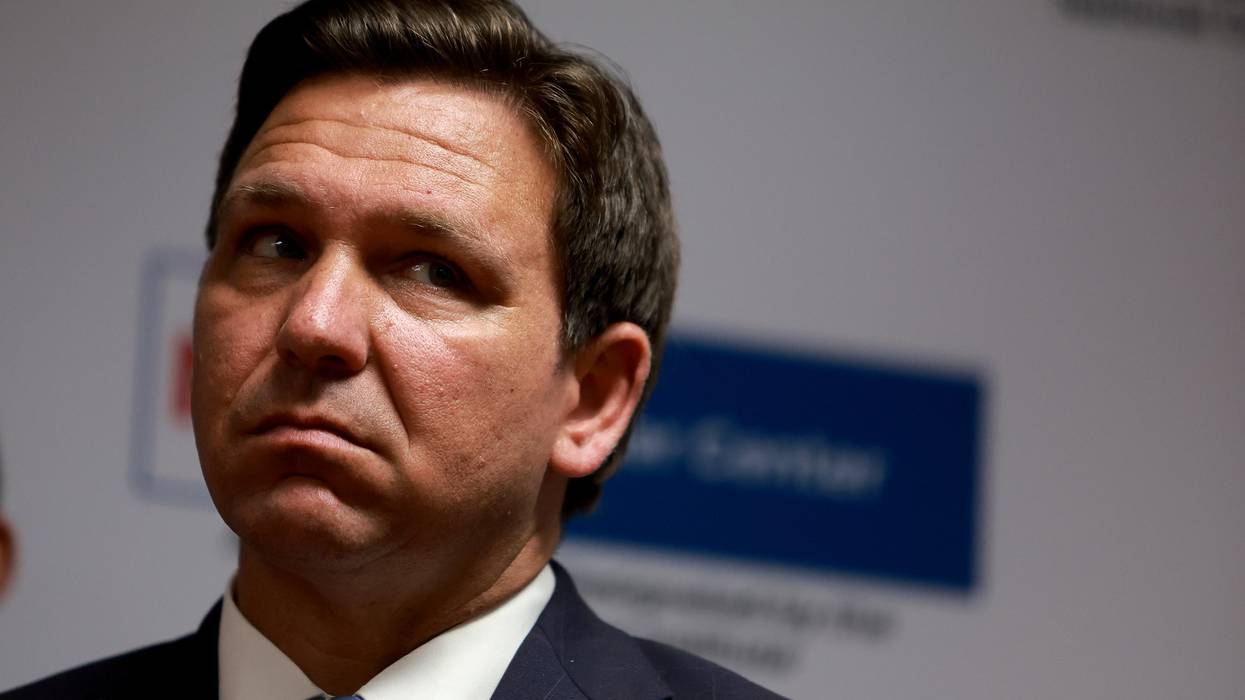
The Florida governor approved the executions of six people this year, and the state imposed five new death sentences.
Florida governor and 2024 presidential candidate Ron DeSantis made a return to capital punishment in his state a key element of his "tough on crime" campaign messaging this past year, and the result was an overall increase in the use of the death penalty in the United States, according to a new annual report.
The Death Penalty Information Center (DPIC) found that although a majority of U.S. states—29 of them—have now either abolished the death penalty or enacted a moratorium on executions, the number of people killed by state governments rose from 18 in 2022 to 25 in 2023.
The group attributed the rise to Florida's return to capital punishment after a four-year hiatus, with DeSantis moving forward with the executions of six people—the highest number in the state since 2014.
The state's new pattern of putting Floridians to death showed no sign of slowing down in the coming year, as it also imposed five new death sentences—the most of any state in 2023.
The DPIC catalogued other laws signed by DeSantis this year as he joined the Republican presidential primary race, in which he is currently trailing former Republican President Donald Trump by more than 47 points, with an average of 12.6% of Republicans backing him according to the latest polls.
In April Florida passed a law allowing the state to execute people convicted of sexual battery of a child under the age of 12 in cases in which the victim is not killed—a law that conflicts with a 2008 U.S. Supreme Court ruling that struck down a similar statute in Louisiana.
DeSantis also approved a law giving Florida the lowest threshold in the U.S. for permitting juries to sentence a convicted criminal to death, allowing a death sentence if only eight out of 12 jurors agree. Only Alabama and Florida allow non-unanimous juries to impose a death sentence, and Alabama's threshold is 10 jurors.
Florida also holds the country's record for the highest number of exonerations from death row, with 30 people exonerated—the majority after being sentenced by non-unanimous juries.
"It should be hard to send someone to the death penalty," Randolph Bracy, a former Democratic Florida state senator who pushed to require a unanimous jury vote for death sentences, told The New York Times when DeSantis signed the bill. "Florida has the highest rate of wrongful convictions, I think, in the country. We needed that threshold to make sure that we were doing the right thing."
As DeSantis' policies led to an increase in executions in the U.S., the DPIC reported that the Florida governor is out of step with a growing number of Americans. For the first time this year, Gallup found that 50% of Americans believe the death penalty is administered unfairly, while only 47% believe it is used fairly.
"That important change can also be seen in the unprecedented show of support for death-sentenced prisoners from conservative lawmakers and elected officials this year, some of whom now oppose use of the death penalty in their state," said Robin M. Maher, executive director of DPIC.
Richard Glossip, who was convicted of a 1997 murder in Oklahoma and sentenced to death earlier this year, was issued a stay of execution in May after the state's Republican attorney general joined campaigners who had long advocated for Glossip's life to be spared.
The DPIC found that a majority of the people who were executed in 2023—79% of whom had impairments such as brain injuries, serious childhood trauma, or developmental disabilities—would likely not have received death sentences had they been tried today, "due to significant changes in the law, prosecutorial decision-making, and public attitudes over the past few decades."
"Today," said the group, "they would have powerful arguments for life sentences and decisions from juries who better understand the effects of mental illness, developmental impairments, and severe trauma."