SUBSCRIBE TO OUR FREE NEWSLETTER
Daily news & progressive opinion—funded by the people, not the corporations—delivered straight to your inbox.
5
#000000
#FFFFFF
To donate by check, phone, or other method, see our More Ways to Give page.
Daily news & progressive opinion—funded by the people, not the corporations—delivered straight to your inbox.
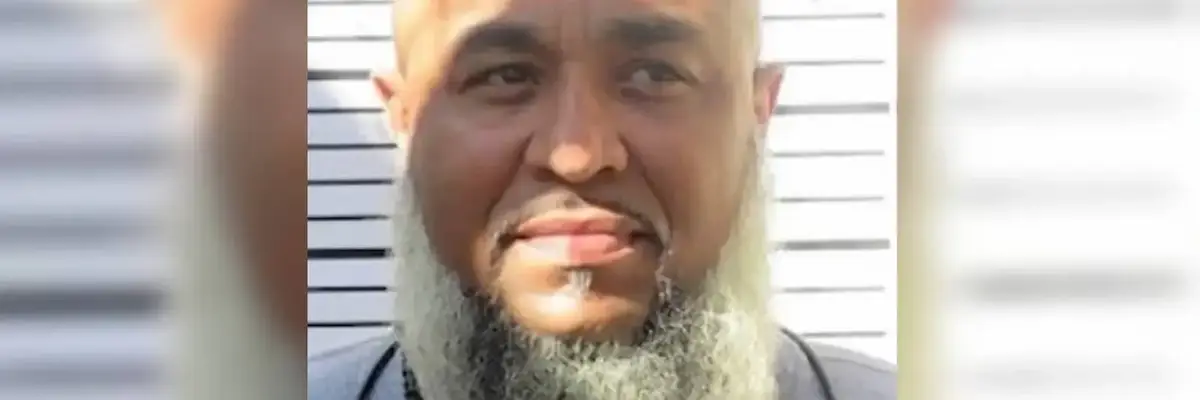
Tennessee man Tony Carruthers is seen in a mugshot.
"Tennessee has effectively made the case against the death penalty," said one opponent of capital punishment.
A Tennessee man set to be executed on Thursday got a temporary reprieve—but not due to any intervention by the US Supreme Court.
As reported by The Associated Press, the execution of Tony Carruthers was called off after medical officials struggled to locate a vein during the scheduled lethal injection procedure.
After the failed execution, Republican Tennessee Gov. Bill Lee ordered a one-year stay for Carruthers, who has been on death row for three decades after being convicted of kidnapping and murdering three people in 1996.
Maria DeLiberato, an attorney representing Carruthers, told the AP that she saw her client "wincing and groaning" during the botched procedure, which she described as "horrible" to watch.
DeLiberato, who is also senior counsel at the ACLU’s Capital Punishment Project, later issued a statement describing the execution attempt as "outright barbaric," and reiterated demands for state investigators to examine potentially exculpatory forensic evidence before proceeding with any future attempt.
"We are incredibly relieved Gov. Lee issued a reprieve," DeLiberato said. "We will also continue to push the governor to use this moment to allow the forensic testing that should have happened long ago. Tennessee cannot continue torturing a man while refusing to answer serious questions about his innocence."
The ACLU on Wednesday had called for the US Supreme Court to block Carruthers' execution until all potentially exculpatory evidence had been fully examined.
Lucas Cameron-Vaughn, legal director of the ACLU of Tennessee, said the state had a duty to ensure that it had convicted the right man, and he pointed to troubling aspects of the case that should give courts pause before signing off on his execution.
“Mr. Carruthers was forced to represent himself at trial, and now faces death based on flimsy circumstantial evidence, and unreliable witnesses,” Cameron-Vaughn said. “Forensic evidence the state refuses to test could change everything."
Laura Porter, executive director for US Campaign to End the Death Penalty, argued that the botched execution shouldn't just give Carruthers a one-year reprieve, but should push the US to end capital punishment all together.
"Tennessee has effectively made the case against the death penalty," said Porter. "They forced Tony Carruthers to represent himself at his own capital trial, failed to test DNA and fingerprint evidence and now they have failed to execute him. It is time to end the death penalty."
Stacy Rector, executive director for Tennesseans for Alternatives to the Death Penalty, described the failed execution as "horrifying but not surprising," adding that her organization "has sounded the alarm for years about the serious problems with lethal injection and urged our state toward greater transparency so these problems can be addressed."
Dear Common Dreams reader, It’s been nearly 30 years since I co-founded Common Dreams with my late wife, Lina Newhouser. We had the radical notion that journalism should serve the public good, not corporate profits. It was clear to us from the outset what it would take to build such a project. No paid advertisements. No corporate sponsors. No millionaire publisher telling us what to think or do. Many people said we wouldn't last a year, but we proved those doubters wrong. Together with a tremendous team of journalists and dedicated staff, we built an independent media outlet free from the constraints of profits and corporate control. Our mission has always been simple: To inform. To inspire. To ignite change for the common good. Building Common Dreams was not easy. Our survival was never guaranteed. When you take on the most powerful forces—Wall Street greed, fossil fuel industry destruction, Big Tech lobbyists, and uber-rich oligarchs who have spent billions upon billions rigging the economy and democracy in their favor—the only bulwark you have is supporters who believe in your work. But here’s the urgent message from me today. It's never been this bad out there. And it's never been this hard to keep us going. At the very moment Common Dreams is most needed, the threats we face are intensifying. We need your support now more than ever. We don't accept corporate advertising and never will. We don't have a paywall because we don't think people should be blocked from critical news based on their ability to pay. Everything we do is funded by the donations of readers like you. When everyone does the little they can afford, we are strong. But if that support retreats or dries up, so do we. Will you donate now to make sure Common Dreams not only survives but thrives? —Craig Brown, Co-founder |
A Tennessee man set to be executed on Thursday got a temporary reprieve—but not due to any intervention by the US Supreme Court.
As reported by The Associated Press, the execution of Tony Carruthers was called off after medical officials struggled to locate a vein during the scheduled lethal injection procedure.
After the failed execution, Republican Tennessee Gov. Bill Lee ordered a one-year stay for Carruthers, who has been on death row for three decades after being convicted of kidnapping and murdering three people in 1996.
Maria DeLiberato, an attorney representing Carruthers, told the AP that she saw her client "wincing and groaning" during the botched procedure, which she described as "horrible" to watch.
DeLiberato, who is also senior counsel at the ACLU’s Capital Punishment Project, later issued a statement describing the execution attempt as "outright barbaric," and reiterated demands for state investigators to examine potentially exculpatory forensic evidence before proceeding with any future attempt.
"We are incredibly relieved Gov. Lee issued a reprieve," DeLiberato said. "We will also continue to push the governor to use this moment to allow the forensic testing that should have happened long ago. Tennessee cannot continue torturing a man while refusing to answer serious questions about his innocence."
The ACLU on Wednesday had called for the US Supreme Court to block Carruthers' execution until all potentially exculpatory evidence had been fully examined.
Lucas Cameron-Vaughn, legal director of the ACLU of Tennessee, said the state had a duty to ensure that it had convicted the right man, and he pointed to troubling aspects of the case that should give courts pause before signing off on his execution.
“Mr. Carruthers was forced to represent himself at trial, and now faces death based on flimsy circumstantial evidence, and unreliable witnesses,” Cameron-Vaughn said. “Forensic evidence the state refuses to test could change everything."
Laura Porter, executive director for US Campaign to End the Death Penalty, argued that the botched execution shouldn't just give Carruthers a one-year reprieve, but should push the US to end capital punishment all together.
"Tennessee has effectively made the case against the death penalty," said Porter. "They forced Tony Carruthers to represent himself at his own capital trial, failed to test DNA and fingerprint evidence and now they have failed to execute him. It is time to end the death penalty."
Stacy Rector, executive director for Tennesseans for Alternatives to the Death Penalty, described the failed execution as "horrifying but not surprising," adding that her organization "has sounded the alarm for years about the serious problems with lethal injection and urged our state toward greater transparency so these problems can be addressed."
A Tennessee man set to be executed on Thursday got a temporary reprieve—but not due to any intervention by the US Supreme Court.
As reported by The Associated Press, the execution of Tony Carruthers was called off after medical officials struggled to locate a vein during the scheduled lethal injection procedure.
After the failed execution, Republican Tennessee Gov. Bill Lee ordered a one-year stay for Carruthers, who has been on death row for three decades after being convicted of kidnapping and murdering three people in 1996.
Maria DeLiberato, an attorney representing Carruthers, told the AP that she saw her client "wincing and groaning" during the botched procedure, which she described as "horrible" to watch.
DeLiberato, who is also senior counsel at the ACLU’s Capital Punishment Project, later issued a statement describing the execution attempt as "outright barbaric," and reiterated demands for state investigators to examine potentially exculpatory forensic evidence before proceeding with any future attempt.
"We are incredibly relieved Gov. Lee issued a reprieve," DeLiberato said. "We will also continue to push the governor to use this moment to allow the forensic testing that should have happened long ago. Tennessee cannot continue torturing a man while refusing to answer serious questions about his innocence."
The ACLU on Wednesday had called for the US Supreme Court to block Carruthers' execution until all potentially exculpatory evidence had been fully examined.
Lucas Cameron-Vaughn, legal director of the ACLU of Tennessee, said the state had a duty to ensure that it had convicted the right man, and he pointed to troubling aspects of the case that should give courts pause before signing off on his execution.
“Mr. Carruthers was forced to represent himself at trial, and now faces death based on flimsy circumstantial evidence, and unreliable witnesses,” Cameron-Vaughn said. “Forensic evidence the state refuses to test could change everything."
Laura Porter, executive director for US Campaign to End the Death Penalty, argued that the botched execution shouldn't just give Carruthers a one-year reprieve, but should push the US to end capital punishment all together.
"Tennessee has effectively made the case against the death penalty," said Porter. "They forced Tony Carruthers to represent himself at his own capital trial, failed to test DNA and fingerprint evidence and now they have failed to execute him. It is time to end the death penalty."
Stacy Rector, executive director for Tennesseans for Alternatives to the Death Penalty, described the failed execution as "horrifying but not surprising," adding that her organization "has sounded the alarm for years about the serious problems with lethal injection and urged our state toward greater transparency so these problems can be addressed."