

SUBSCRIBE TO OUR FREE NEWSLETTER
Daily news & progressive opinion—funded by the people, not the corporations—delivered straight to your inbox.
5
#000000
#FFFFFF
To donate by check, phone, or other method, see our More Ways to Give page.
Daily news & progressive opinion—funded by the people, not the corporations—delivered straight to your inbox.
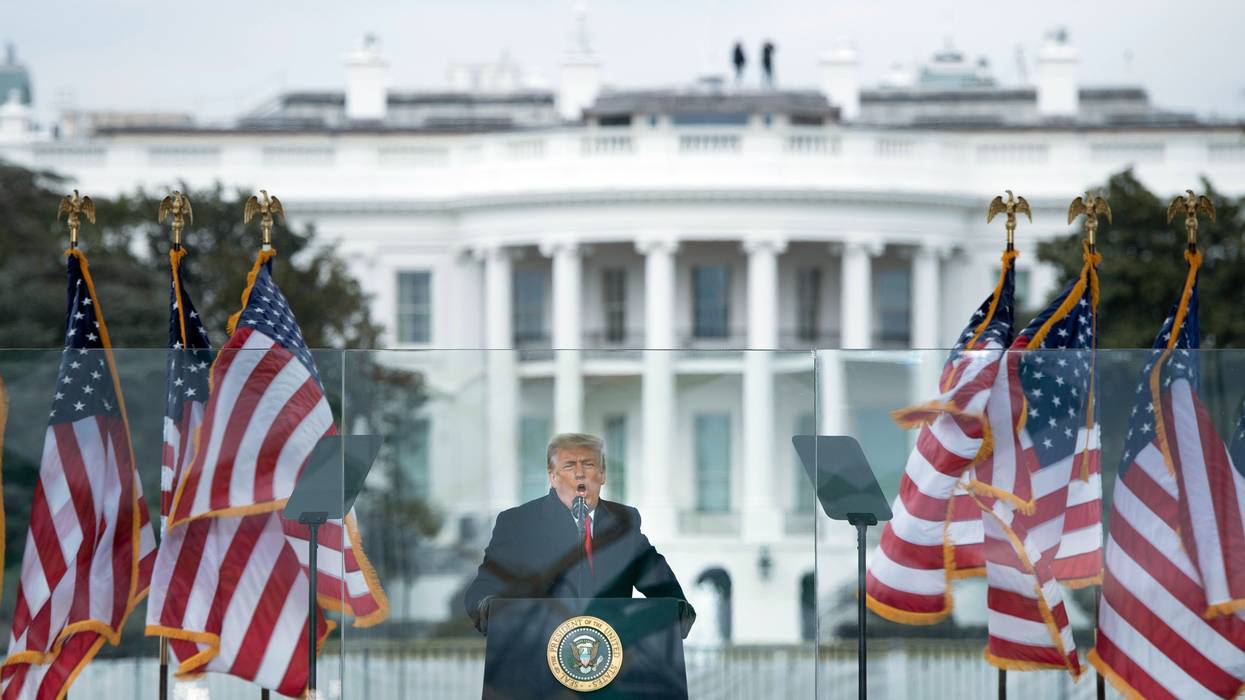
The 9-0 ruling which reverses a decision by the Colorado Supreme Court, warned one pro-democracy watchdog, "undermines the integrity of our Constitution and emboldens those seeking to disrupt and dismantle our democratic systems."
The U.S. Supreme Court delivered Republican presidential candidate Donald Trump a resounding legal victory on Monday by rejecting a push by Colorado voters to have him disqualified from the state's ballot under a clause of the 14th Amendment on the grounds that the former president was guilty of insurrection due to his actions leading up to and on January 6, 2021.
Though the Colorado Supreme Court last year ruled in favor of the argument to exclude Trump in this year's election, Monday's 9-0 ruling said, "Because the Constitution makes Congress, rather than the States, responsible for enforcing Section 3 [of the 14th Amendment] against federal officeholders and candidates, we reverse."
The decision by the nation's highest court was unanimous, though Justices Sonia Sotomayor, Elana Kagan, and Ketanji Brown Jackson—the three remaining liberals on the Court—signed a concurring opinion in the judgment, indicating a varied reason for supporting the underlying decision. In addition to Colorado, officials in Maine and Illinois have moved to remove Trump from the ballot.
"The Supreme Court couldn't exonerate Trump because the evidence of his guilt was overwhelming, so instead the Justices neutered our Constitution's built-in defense against insurrectionists and said the facts don't matter."
Supporters of the effort to disqualify Trump from seeking public office due to his insurrectionary words and deeds following his loss in the 2020 election, which he refused to accept, condemned Monday's ruling.
"This decision is disgraceful," said Ron Fein, legal director of Free Speech For People (FSFP), which pioneered the first litigation under Section 3 of the 14th Amendment and co-led the successful Illinois challenge. "The Supreme Court couldn't exonerate Trump because the evidence of his guilt was overwhelming, so instead the Justices neutered our Constitution's built-in defense against insurrectionists and said the facts don't matter."
Legal experts said the ruling did not hinge on the question of whether or not Trump was, in fact, guilty of insurrection but only that Colorado was not qualified to invoke the 14th Amendment.
"Yes, the Supreme Court ruled for Trump based on only Congress having the power to enforce the 14th amendment," said Norm Eisen, senior fellow at the Brookings Institute and an outspoken Trump critic. "But just as important as what they did is what they didn't do. They did not expressly challenge that he was an insurrectionist—and the concurrence emphasizes that finding."
Nonetheless, Common Cause called the ruling a "major setback for democracy" that sets a worrying precedent.
"This decision undermines the integrity of our Constitution and emboldens those seeking to disrupt and dismantle our democratic systems. For over 200 years, all but one of our leaders have abided by the Constitution and practiced the peaceful transfer of power," said Kathay Feng, the group's vice president of programs.
"This ruling reverses the Colorado Supreme Court’s decision, and with it, green lights future presidents to intimidate, threaten, and attack Congress into obedience," Feng added. "Our Constitution depends on checks and balances. Removing states as a check on tyrannical presidents threatens the future of our democracy."
In its statement, FSFP similarly said the ruling was "dangerous" as it "encourages Trump–and those who follow his example–to engage in more insurrections and disregard more broadly the Constitution."
"As one Senator explained in 1866 when advocating for Section 3, 'the man who has once violated his oath will be more liable to violate his fealty to the Government in the future,'" the group noted. "The framers of the Fourteenth Amendment learned this lesson in blood, and gave us Section 3 to prevent a repeat. With today's ruling, the Supreme Court has utterly failed in its duty to uphold this constitutional mandate at this critical moment in history."

"Ginni Thomas' involvement in the seditious conspiracy that led to the January 6 insurrection is a bald-faced conflict of interest," argued one watchdog.
U.S. Supreme Court Justice Clarence Thomas, who once went a full decade without speaking during oral arguments, asked the first question Thursday as the high court heard a case challenging former President Donald Trump's eligibility to run for a second White House term.
But Thomas, whose initial question focused on whether the 14th Amendment is "self-executing," shouldn't even be involved in the case, progressive watchdogs and other observers argued, given his wife Ginni's role in far-right efforts to overturn the results of the 2020 election—an effort that culminated in the January 6, 2021 insurrection.
"The Supreme Court is facing its most significant electoral test since Bush v. Gore. The stakes are high, and the American people should be able to trust that this case will be decided without outside influence," Tishan Weerasooriya, senior associate of policy and political affairs at Stand Up America, said in a statement shortly before oral arguments kicked off Thursday.
"Justice Thomas should recuse himself from this monumental case," Weerasooriya added. "Ginni Thomas' involvement in the seditious conspiracy that led to the January 6 insurrection is a bald-faced conflict of interest. If Thomas refuses, it will not only be a blatant denial of impartial review but also a rejection of Chief Justice [John] Roberts' recently issued Code of Conduct."
That code states that "a justice should disqualify himself or herself in a proceeding in which the justice's impartiality might reasonably be questioned." A University of Massachusetts at Amherst survey released Wednesday found that 64% of U.S. voters believe Thomas should recuse from any case related to the 2020 election given his wife's role in trying to subvert the results.
Will Bunch, a columnist for the Philadelphia Inquirer, argued that Thomas' failure to recuse from the case on Trump's eligibility "is a giant middle finger to American democracy."
"It's no wonder public trust in the court is terrible. Corrupt Thomas should resign."
The case in question, Trump v. Anderson, stems from the Colorado Supreme Court's December ruling that Trump engaged in insurrection and is thus disqualified from running for federal office again under Section 3 of the 14th Amendment. Trump quickly appealed the decision to the U.S. Supreme Court, which agreed to an expedited review of the case amid the 2024 presidential primaries.
Just over a week after the Colorado Supreme Court handed down its ruling, Maine's secretary of state moved to disqualify Trump from the 2024 primary ballot—a decision that was paused by a state judge pending the U.S. Supreme Court's ruling in Trump v. Anderson.
As oral arguments in the case proceeded Thursday, Rep. Bill Pascrell Jr. (D-N.J.) wrote that "Clarence Thomas is participating in a Supreme Court hearing today on Donald Trump's eligibility after trying to overthrow the government even though Thomas' wife conspired to help Trump."
"It's no wonder public trust in the court is terrible," Pascrell continued. "Corrupt Thomas should resign."
Citizens for Responsibility and Ethics in Washington (CREW), which filed an amicus brief in Trump v. Anderson supporting the former president's disqualification, noted in an analysis released earlier this week that Colorado and Maine are "the only two states that have substantively grappled with whether the 14th Amendment bars Trump from the ballot and reached a final decision based on the merits."
"Other individuals and groups have brought ballot eligibility challenges in other states across the country, some of which are pending and many of which have failed," CREW observed. "None of the cases that have been dismissed reached the stage where a court heard evidence and ruled on the merits, which includes questions of whether Trump is an insurrectionist and whether the 14th Amendment applies in his case."
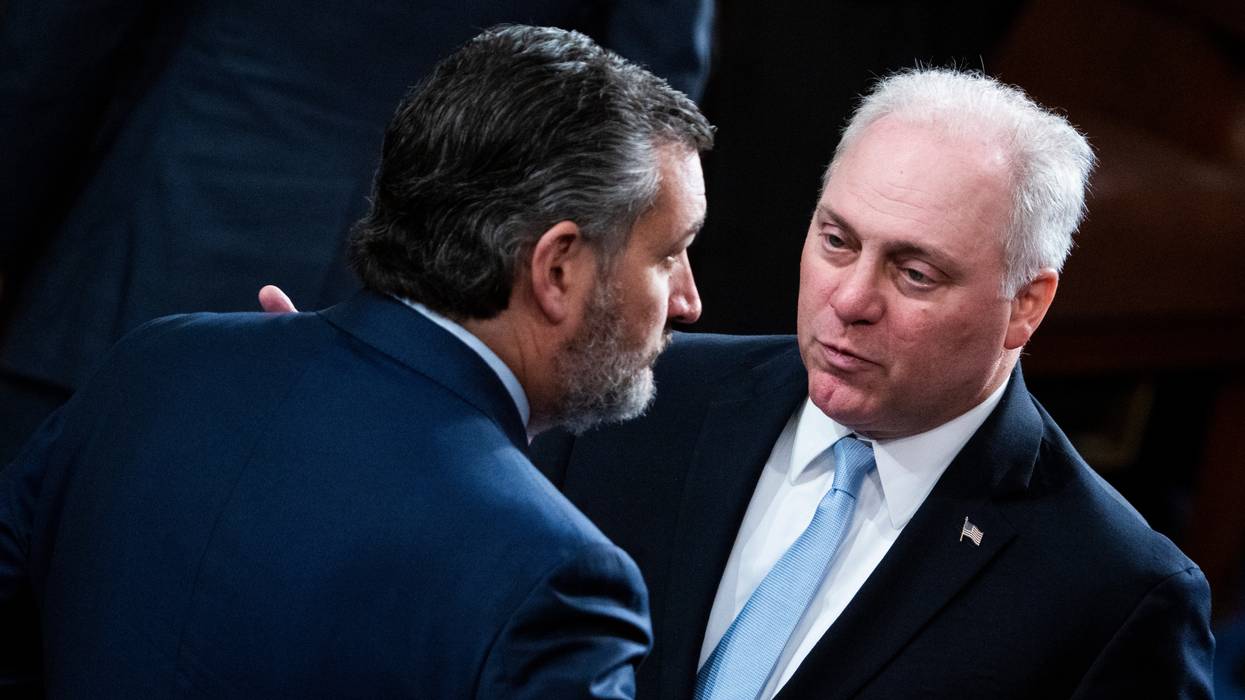
The ex-president also filed a brief and claimed that ballot disqualification efforts "promise to unleash chaos and bedlam if other state courts and state officials follow Colorado's lead."
Two-thirds of congressional Republicans on Thursday signed an amicus brief to the U.S. Supreme Court urging the justices to reverse the Colorado Supreme Court's recent decision to remove former President Donald Trump from the state primary ballot.
The country's highest court—which has a right-wing supermajority that includes three Trump appointees and Justice Clarence Thomas, whose wife was involved in efforts to overturn President Joe Biden's 2020 win—agreed to take the case earlier this month, just before the start of the presidential primary season, which is now underway.
With arguments scheduled for February 8, the deadline for Trump's brief on the merits as well as any amicus curiae—or "friend of the court"—briefs like the one submitted by 179 Republican lawmakers, was Thursday. It was led by Sen. Ted Cruz (R-Texas) and House Majority Leader Steve Scalise (R-La.), and other supporters include Senate Minority Leader Mitch McConnell (R-Ky.) and House Speaker Mike Johnson (R-La.).
The voters behind the Colorado case—like other lawsuits and applications to election officials across the country—successfully argued that Trump's incitement of the January 6, 2021 attack on the U.S. Capitol, while Congress was certifying Biden's win, disqualifies him from serving as president again, because the 14th Amendment prohibits anyone who took an oath to the U.S. Constitution and then engaged in insurrection from holding office.
After having to flee the Trump-supporting rioters three years ago, the Republican lawmakers argued Thursday that "the Colorado Supreme Court's decision encroaches on Congress' express powers," claiming that federal lawmakers "must pass authorizing legislation to enforce Section 3" of the 14th Amendment.
"The Colorado Supreme Court also erred by rejecting the argument that Section 3 is inapplicable to former President Trump, as he was never previously 'an officer of the United States,'" the GOP lawmakers claimed. The brief also contests the court's definitions of "engaged in" and "insurrection," and warns that the decision "will lead to widespread de-balloting of political opponents."
Trump's lawyers also filed his brief on Thursday, writing that "the court should put a swift and decisive end to these ballot disqualification efforts, which threaten to disenfranchise tens of millions of Americans and which promise to unleash chaos and bedlam if other state courts and state officials follow Colorado's lead and exclude the likely Republican presidential nominee from their ballots."
So far, only Maine has joined Colorado in disqualifying the twice-impeached former president during the primary stage, but that decision is on hold until the high court weighs in.
"Donald Trump sent an armed mob to the Capitol in an attempt to overturn the results of the election, violating the Constitution and undermining the will of the people. He should not be given another opportunity to do so again," said Aly Belknap, executive director of Colorado Common Cause, in a statement Thursday.
"Former President Trump's eligibility for the Colorado ballot has broad-reaching implications for the permissible conduct of future presidents and other public officials," she continued. "In a strong democracy, elections are decided by the voters at the ballot box, not with violence or intimidation. The Supreme Court has the power to set a critical legal precedent to safeguard the future of American democracy: You cannot stoke political violence against your own country and hold elected office."
Belknap asserted that "the Supreme Court must embrace its role as an active defender of our Constitution, or else it may crumble under the immense pressure it will surely face in the years to come. Just as we argued in our brief to the Colorado Supreme Court, the U.S. Supreme Court must not allow politics to supersede constitutional requirements."
Take Back the Court Action Fund's president, Sarah Lipton-Lubet, declared that "if congressional Republicans want Trump on the ballot, they should simply pass a bill exempting him from the 14th Amendment's prohibition on insurrectionists holding office, as the Constitution specifies. But they've grown so accustomed to the Supreme Court doing their dirty work that they're hoping it will again."
In addition to the 14th Amendment arguments, Trump is facing four ongoing criminal cases—two of which stem from his 2020 election interference. Despite all of that, he won the Iowa caucuses on Monday and is the leading Republican candidate in other states. On the Democratic side, Biden is seeking reelection.
This post has been updated with comment from Colorado Common Cause and Take Back the Court Action Fund.
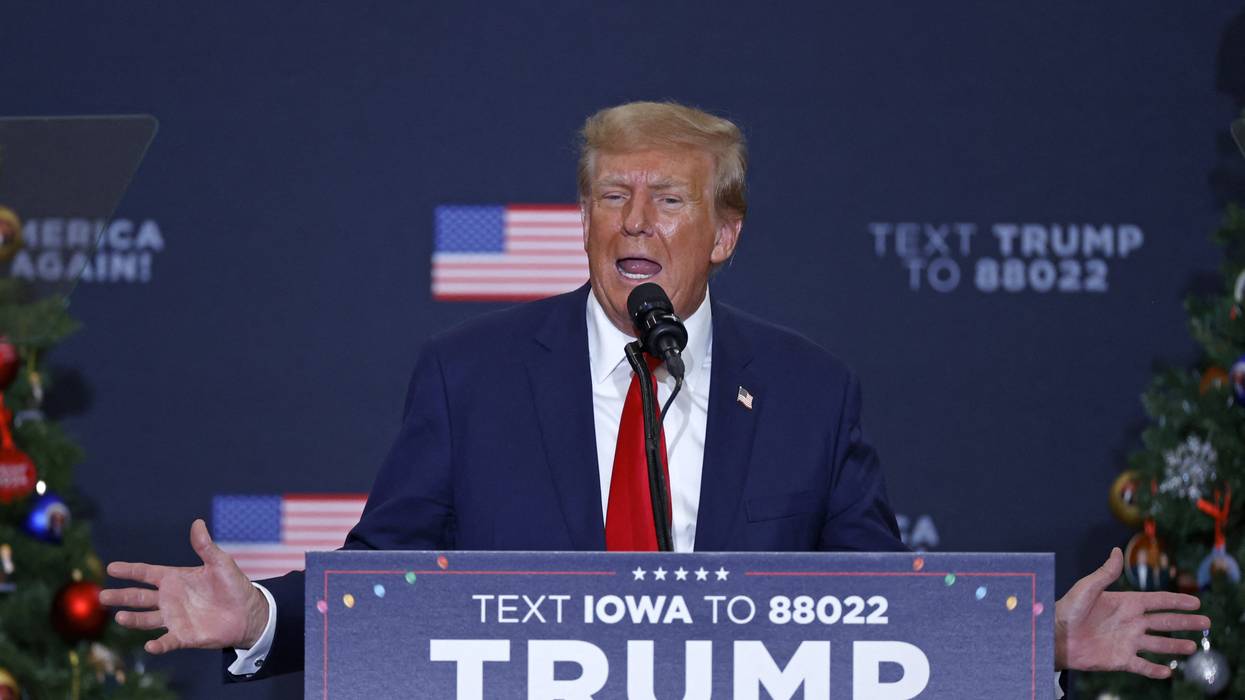
"The critical question of Donald Trump's eligibility—given his incitement of insurrection—should be resolved before primary voters cast their ballots," said a watchdog group involved in the legal battle.
After the Colorado Republican Party asked the U.S. Supreme Court to reverse a ruling that removed former President Donald Trump from the state GOP's 2024 primary ballot, the legal team for voters behind the initial case requested a swift decision.
The legal battle was launched in September by the government watchdog Citizens for Responsibility and Ethics in Washington (CREW) and law firms representing six GOP and unaffiliated Colorado voters, who argued that Section 3 of the 14th Amendment to the U.S. Constitution disqualifies Trump from holding office again because he incited the January 6, 2021 insurrection.
The Colorado Supreme Court last week overturned a lower court's decision and threw Trump off the state's primary ballot but also paused its ruling until January 4, to give the nation's highest court—which includes three Trump appointees—time to weigh in. Hoping the high court's right-wing majority will reverse the Colorado decision, the state party on Wednesday asked the justices to review and rule on the case by Super Tuesday, which is March 5, 2024, or if that's not possible, by the end of the current term.
The voters' legal representatives responded on Thursday with their own motion requesting a decision by February 11, explaining that "Colorado votes almost exclusively by mail" and clerks must mail ballots to many residents starting February 12.
One of the voters' attorneys, Sean Grimsley of Olson Grimsley Kawanabe Hinchcliff & Murray, said in a statement that "the ruling issued by the Colorado Supreme Court affirmed our clients' argument: Donald Trump engaged in insurrection after taking an oath to support the Constitution and is consequently disqualified from serving as president and barred from Colorado primary ballots."
"The Colorado Supreme Court's decision was well-rooted in the text and historical context of the 14th Amendment and they correctly applied those principles to the facts of this case," he continued. "The Colorado Republican Party's appeal of our clients' case will address an issue of exceptional national importance—whether, as the Colorado Supreme Court found, a former president, and current candidate for office, who has engaged in insurrection against the Constitution is disqualified from holding office again."
"We have filed a motion asking the United States Supreme Court to expedite their consideration of the Colorado Republican Party's appeal and any subsequent review on the issues so that the important question of Trump's eligibility can be resolved before nearly all primary voters cast their ballots," he added.
As Politico reported Thursday:
The state GOP's petition argues three points: The office of the presidency is not covered by the 14th Amendment, the insurrection clause is not "self-executing"—meaning Congress alone must enforce it, and states cannot make that determination on their own—and that by kicking Trump off the primary ballot, the state Republican Party's First Amendment rights of association have been violated.
The party is represented by the American Center for Law and Justice, a conservative Christian law group. Jay Sekulow, who defended Trump during his first impeachment trial, is the organization's chief counsel.
Colorado is the first state where Trump—the GOP's 2024 front-runner—has been barred from the primary ballot but it's not the only one where voters and advocacy groups, backed by legal scholars across the ideological spectrum, are challenging his eligibility. Free Speech for People (FSFP) is leading similar legal challenges in Michigan and Minnesota.
The Minnesota Supreme Court dismissed the case last month while the Michigan Supreme Court on Wednesday let stand a lower court ruling that the secretary of state lacks the legal authority to remove Trump from the ballot.
"We are disappointed by the Michigan Supreme Court's decision," said FSFP legal director Ron Fein. "The ruling conflicts with longstanding U.S. Supreme Court precedent that makes clear that when political parties use the election machinery of the state to select, via the primary process, their candidates for the general election, they must comply with all constitutional requirements in that process."
"However, the Michigan Supreme Court did not rule out that the question of Donald Trump's disqualification for engaging in insurrection against the U.S. Constitution may be resolved at a later stage," he added. "The decision isn't binding on any court outside Michigan and we continue our current and planned legal actions in other states to enforce Section 3 of the 14th Amendment against Donald Trump."
The owner of Minocqua Brewing Company, Kirk Bangstad, on Thursday filed a complaint with the Wisconsin Elections Commission seeking to remove Trump from the state's primary ballot, citing the 14th Amendment. The WEC refused to hear the complaint.
"It's pivotal that someone at least try in Wisconsin to do this," Bangstad told local reporters, vowing that "If WEC, and they will deny our complaint, we will sue in Dane County."
Meanwhile, in Maine, Democratic Secretary of State Shenna Bellows on Thursday barred Trump from the state's primary ballot.

Sen. Thom Tillis' bill also states that the Supreme Court "shall have sole jurisdiction to decide" cases involving the Constitution's insurrection clause.
Republican U.S. Sen. Thom Tillis announced late Tuesday that he plans to introduce legislation to slash federal funding for states whose lawmakers or judges disqualify presidential candidates from the ballot, as Colorado's Supreme Court did with former President Donald Trump in a landmark ruling.
Tillis (N.C.) said in a statement following the decision that "regardless of whether you support or oppose former President Donald Trump, it is outrageous to see left-wing activists make a mockery of our political system by scheming with partisan state officials and pressuring judges to remove him from the ballot."
"American voters, not partisan activists, should decide who we elect as our president," he added.
Tillis' legislation, titled the Constitutional Election Integrity Act, would prevent federal funds from being used to "administer any election for federal office in a state that has in effect a law or policy to prohibit a candidate for the office of president who is otherwise eligible from appearing on the ballot for such office using Section 3 of the 14th Amendment to the Constitution."
The bill also states that the U.S. Supreme Court—which is likely to hear the Trump campaign's appeal of the Colorado ruling in the coming weeks—"shall have sole jurisdiction to decide" matters related to Section 3, which is known as the insurrection clause. The clause bars those who have "engaged in insurrection" from holding office.
Aaron Fritschner, deputy chief of staff for Rep. Don Beyer (D-Va.), called Tillis' bill "an idiotic response" to the Colorado Supreme Court's decision.
"If the Supreme Court overturns CO this will be unnecessary, if they uphold it will be unconstitutional," Fritschner wrote on social media.
Following Tuesday's ruling, Trump's presidential campaign expressed "full confidence" that the U.S. Supreme Court—which consists of three Trump-appointed justices—will "quickly rule in our favor and finally put an end to these un-American lawsuits."
Legal efforts to bar Trump from the 2024 ballot under the insurrection clause are currently underway in more than a dozen states across the U.S.
In recent weeks, judges in Michigan, Minnesota, and New Hampshire have ruled that Trump—who is currently facing more than 90 criminal charges, including several stemming from his incitement of the January 6, 2021 attack—can stay on the states' presidential primary ballots despite what even some conservative scholars say is a clear legal case for disqualification under the 14th Amendment.
A majority of Colorado's high court agreed with that position, ruling Tuesday that Trump's actions in the lead-up to the January 6 assault on the U.S. Capitol constituted engagement in insurrection and were therefore disqualifying under the 14th Amendment.
"We do not reach these conclusions lightly," the decision reads. "We are mindful of the magnitude and weight of the questions now before us. We are likewise mindful of our solemn duty to apply the law, without fear or favor, and without being swayed by public reaction to the decisions that the law mandates we reach."
The ruling is stayed until January 4, 2024, the day before the deadline to certify Colorado's presidential primary ballot.
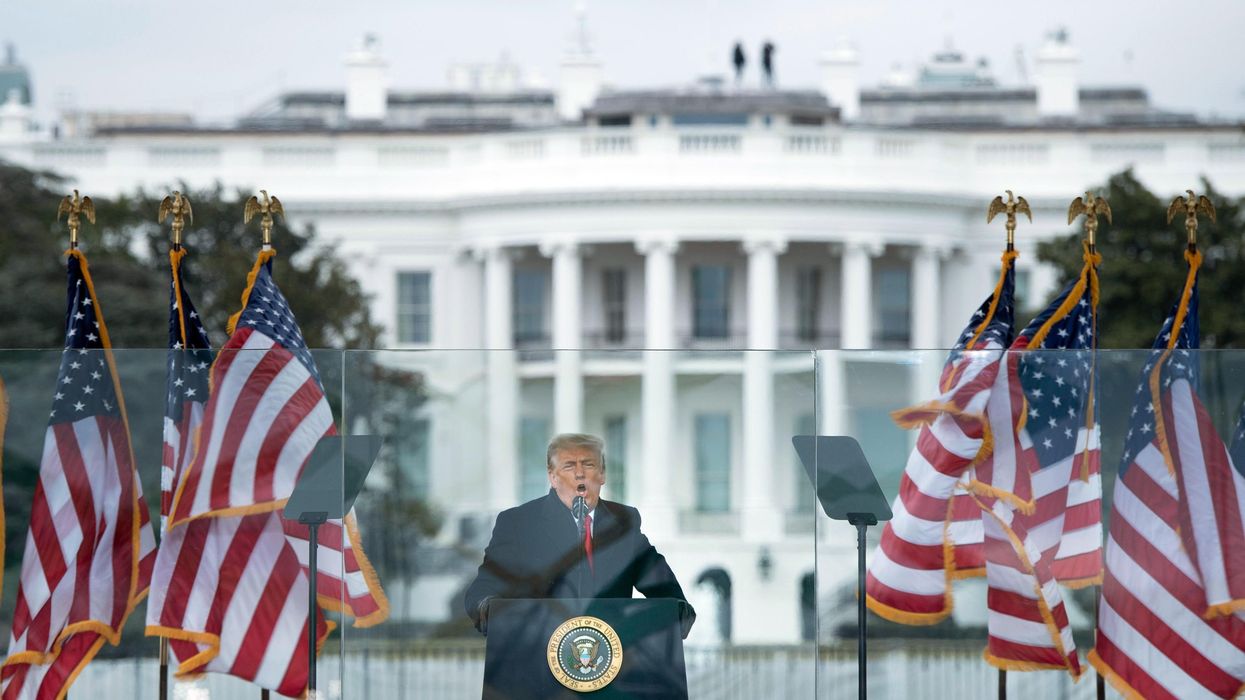
"Trump is disqualified from holding the office of president," the state's highest court found, citing his role in fomenting the January 6, 2021 attack on the U.S. Capitol.
In a decision likely to be appealed to the U.S. Supreme Court, the Colorado justices ruled 4-3 that Trump's effort to thwart the peaceful transition of presidential power for the first time in the nation's history rendered him constitutionally ineligible to hold elected office.
The majority found that a state court "did not err in concluding that President Trump engaged in... insurrection through his personal action" before and on January 6.
Enacted after the Civil War, Section 3 of the 14th Amendment bars from public office any "officer of the United States" who takes an oath to uphold the Constitution and subsequently participates in an insurrection or rebellion against the U.S. government.
"President Trump asks us to hold that Section 3 disqualifies every oath-breaking insurrectionist except the most powerful one and that it bars oath-breakers from virtually every office, both state and federal, except the highest one in the land," the court said.
"The sum of these parts is this: President Trump is disqualified from holding the office of president... because he is disqualified, it would be a wrongful act under the Election Code for the [secretary of state] to list him as a candidate on the presidential primary ballot," the ruling states.
"We do not reach these conclusions lightly," the court stressed. "We are mindful of the magnitude and weight of the questions now before us. We are likewise mindful of our solemn duty to apply the law, without fear or favor, and without being swayed by public reaction to the decisions that the law mandates we reach.
Last month, Colorado District Judge Sarah Wallace ruled that Trump "engaged in insurrection" but allowed him to remain on the state's 2024 presidential ballot because she determined he was not "an officer of the United States," and therefore could not be proscribed from holding office under the insurrection clause.
This, despite Wallace citing examples in her ruling of times when the president has been considered an "officer of the United States."
The pro-democracy group Free Speech for People said in a statement that "this is a victory for the principle that a president who loses his reelection bid must step down peacefully, not launch a bloody insurrection to intimidate Congress, disrupt the electoral count, and remain in power after his term ends."
Noah Bookbinder, president of the government accountability watchdog Citizens for Responsibility and Ethics in Washington, said in a statement that "the court's decision today affirms what our clients alleged in this lawsuit: that Donald Trump is an insurrectionist who disqualified himself from office under Section 3 of the 14th Amendment based on his role in the January 6th attack on the Capitol, and that [Colorado Secretary of State Jena Griswold] must keep him off of Colorado's primary ballot."
"It is not only historic and justified," he added, "but is necessary to protect the future of democracy in our country."
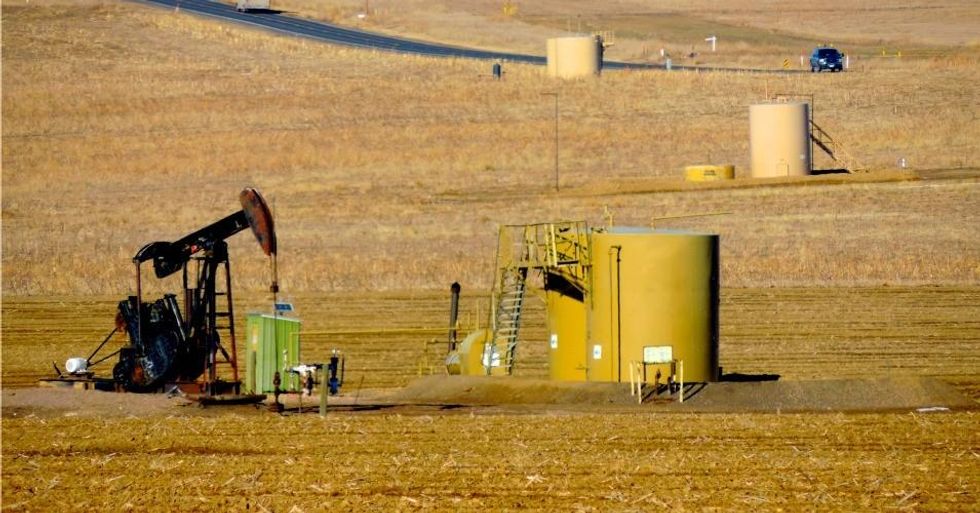
On Monday, the Colorado Supreme Court ruled that state law trumps two cities' attempts to stem the domestic fracking boom, issuing "a severe slap in the face" to Coloradans and local democracy alike.
The court heard cases from Longmont, where voters banned the oil and gas drilling practice in 2012, and Fort Collins, where voters approved a 5-year moratorium in 2013. The Colorado Oil and Gas Association, an industry trade group that brought the suits against both cities, argued that the fossil fuel-friendly state clearly regulates fracking, and the cities can't forbid a practice that the state allows.
According to the Denver Post:
The court ruled that Fort Collins' five-year moratorium within the city limits is "a matter of mixed state and local concern and, therefore, is subject to preemption by state law. Applying well-established preemption principles, the court further concludes that Fort Collins's moratorium operationally conflicts with the effectuation of state law."
It said the same in Longmont's 2012 ban on fracking.
"The Oil and Gas Conservation Act and the Commission's pervasive rules and regulations ... convince us that the state's interest in the efficient and responsible development of oil and gas resources includes a strong interest in the uniform regulation of fracking," the court wrote in the Longmont ruling.
"The Colorado Supreme Court has now ruled that corporate polluters' profits outweigh the will of Coloradans who have said 'no' to fracking and 'yes' to a safe environment for their communities."
--Michael Brune, Sierra Club
In other words, said Sierra Club executive director Michael Brune, "The Colorado Supreme Court has now ruled that corporate polluters' profits outweigh the will of Coloradans who have said 'no' to fracking and 'yes' to a safe environment for their communities."
Environmentalists responded to the ruling with dismay, citing a slew of peer-reviewed studies on the impacts of fracking and shale gas development, many of which point to potential health risks, water contamination, and air pollution associated with the practice.
"It is beyond comprehension that the Colorado Supreme Court still fails to recognize the rights of people to live in a safe and healthy environment," said Kaye Fissinger, president of Our Health, Our Future, Our Longmont. "The state has declared that fostering oil and gas development is in its interest. That the court equates a government interest superior to human rights is a severe slap in the face. Our country's founding fathers are turning over in their graves."
Lauren Petrie, Rocky Mountain Region director with Food & Water Watch, added, "Today's decision deals a devastating blow not just to Longmont residents but to all Coloradans who have been stripped of a democratic process that should allow us the right to protect our health, safety, and property from the impacts of this dangerous industrial activity."
Indeed, the Longmont Times-Call noted:
The Colorado Supreme Court's decision will have a broad effect on other Colorado cities and counties with their own fracking bans and moratoria.
Both the city of Boulder and Boulder County have moratoria in place on oil and gas applications. Broomfield has a five-year moratorium on fracking and faces a Colorado Oil and Gas Association lawsuit, just like Fort Collins.
Still, CBS Denver reports, "the courts may not have the final say...Fracking critics hope to get at least five measures on the November ballot to amend the state Constitution to restrict the industry or allow local governments to do so."
The Denver Business Journal reported in April that "Supporters of a ballot proposal to expand Colorado's existing buffer zones surrounding oil and gas operations from 500 feet to 2,500 feet, a move that if approved by voters would ban drilling across a wide area of the state, can start gathering the 98,492 valid signatures needed to be on the 2016 ballot."
Karen Dike, a leader of that effort, declared in December: "We're stalemated in the legislature, we know that the governor is continuing to support suing against bans and moratoriums, the COGCC [Colorado Oil and Gas Conservation Commission] isn't doing anything to protect the citizens, and the citizens need a way to defend themselves and get some of the fracking away from the homes and schools--and that's what we're doing."
Texas and Oklahoma have similarly banned local fracking bans.