

SUBSCRIBE TO OUR FREE NEWSLETTER
Daily news & progressive opinion—funded by the people, not the corporations—delivered straight to your inbox.
5
#000000
#FFFFFF
To donate by check, phone, or other method, see our More Ways to Give page.
Daily news & progressive opinion—funded by the people, not the corporations—delivered straight to your inbox.
In response to the election of Yoon Seok-youl as the next president of the Republic of Korea ("South Korea") today, members of the Korea Peace Now! campaign -- an international coalition of women's peace groups advocating for a formal end to the Korean War with a peace agreement -- encourage President-elect Yoon to make meaningful progress toward lasting peace on the Korean Peninsula.
In response to the election of Yoon Seok-youl as the next president of the Republic of Korea ("South Korea") today, members of the Korea Peace Now! campaign -- an international coalition of women's peace groups advocating for a formal end to the Korean War with a peace agreement -- encourage President-elect Yoon to make meaningful progress toward lasting peace on the Korean Peninsula. Specifically, we urge him to take a peace-first approach with the Democratic People's Republic of Korea ("North Korea") by, together with the United States, officially ending the Korean War with a peace agreement. This action must come at the beginning, not the end, of negotiations. A state of peace will benefit millions of people living on the Korean Peninsula and in the Northeast Asia region.
We also encourage President-elect Yoon to recognize the importance of the full, effective, and meaningful participation of women and civil society groups in the Korea peace process. Research shows this will contribute to a more durable peace, and international law and national laws and policies also mandate women's participation in peace processes. We are deeply troubled by Yoon's statements regarding abolishing the Ministry of Gender Equality and Family, and hope his administration will support the full equality and rights of women, which benefit everyone in society and strengthen democracy.
Regional cooperation amid rising tensions between the United States and China is also crucial to ensuring a peaceful outcome to the security crisis on the Korean Peninsula. Increasing sanctions, military exercises, and pressure will only exacerbate tensions, prolong the arms race, and raise the risk of renewed hot conflict in the region. Such a disastrous outcome must be prevented at all costs.
"I hope that Yoon recognizes that the military-first approach is counterproductive to building peace," said YouKyoung Ko, the South Korea-based consultant for WILPF (Women's International League for Peace & Freedom). "The way to build peace and achieve goals such as denuclearization is by addressing the root cause of tensions, which is the unresolved Korean War."
"Considering his hawkish stance against China and opposition to an end-of-war-declaration, Yoon's election will unfortunately be a setback to building peace and stability in Northeast Asia," said Christine Ahn, Executive Director of Women Cross DMZ. "Given conservative presidents' past record of repressing South Korean peace and social justice activists, it will be ever more urgent for the international community to be vigilant and lend their solidarity."
"Yoon's election will likely have negative consequences for gender equality and women's rights in South Korea," said Youngmi Cho, Executive Director of Korean Women's Movement for Peace. "If Yoon follows through on his promise to abolish the Ministry of Gender Equality and Family, it will not only reverse important progress on gender discrimination and women's rights, it will also have a chilling effect on the women's peace movement."
Women Cross DMZis an organization led by women working globally for peace in Korea. In May 2015, on the 70thanniversary of the division of Korea, Women Cross DMZ led a historic women's peace walk across the De-Militarized Zone from North to South Korea to draw global attention to the urgent need to end the Korean War with a peace treaty, reunite divided families, and ensure women's leadership in peacebuilding. www.womencrossdmz.org

"This is a strong ruling vindicating freedom of the press, due process, and the rule of law," said an attorney representing the outlets.
A federal judge on Thursday ordered President Donald Trump to immediately restore White House access to CNN, MS NOW, and Politico, prominent media outlets that the president banned last week.
Timothy Kelly, a Trump-appointed judge for the US District Court in Washington, DC, granted the media outlets' request for a temporary restraining order as the legal fight continues. Kelly ruled that the outlets showed "a likelihood of success" on their claim that the president's ban and revocation of reporters' press credentials violated the Fifth Amendment's due process protections.
The judge rejected the Trump administration's claim that the president's ban on the three outlets was necessary to protect national security.
"The court is skeptical—at least on this record—that defendants’ interest in safeguarding national security is the actual motivation for, or is even advanced by, the revocation of plaintiffs’ hard passes," Kelly wrote. "The record lacks factual support for defendants’ contention that the revocation of plaintiffs’ hard passes will in fact protect national security or that national security will be endangered if the court orders their passes reinstated while this litigation proceeds."
Trump's initial announcement of the ban, on September 18, said nothing about national security. The president vaguely accused the outlets he has long attacked of publishing "FICTION and LIES."
In letters submitted to the court as part of the ongoing legal fight over the ban, the White House press office cited examples of reporting from the three outlets that it claimed damaged US national security.
In its letter to CNN, the White House points to the outlet's reporting on "construction details related to the East Wing bunker" and a story on the US military's bombing of an Iranian elementary school.
Ted Boutrous, the lawyer representing the news outlets, welcomed Kelly's decision to grant the temporary restraining order, which will be in effect for 14 days.
"This is a strong ruling vindicating freedom of the press, due process, and the rule of law," Boutrous said. "We greatly appreciate the court’s swift action."
Kelly ordered the Trump administration to "immediately return, reinstate, and restore" White House press passes to reporters from CNN, MS NOW, and Politico.
It's unclear how swiftly the news outlets will resume their typical coverage of the White House following the judge's order. Earlier this week, a White House event was broadcast with no audio after the administration dropped CNN from its TV press pool duties, prompting other major networks to ditch pool coverage in solidarity with CNN.
On Wednesday, when Trump greeted Chinese President Xi Jinping upon his arrival in the US, no major TV network captured the moment.
"Other television outlets whose crews were present, according to signs on their tripods and cameras, were NewsNation, Newsmax, Right Side Broadcasting Network, One America News, and LindellTV," The Associated Press reported.
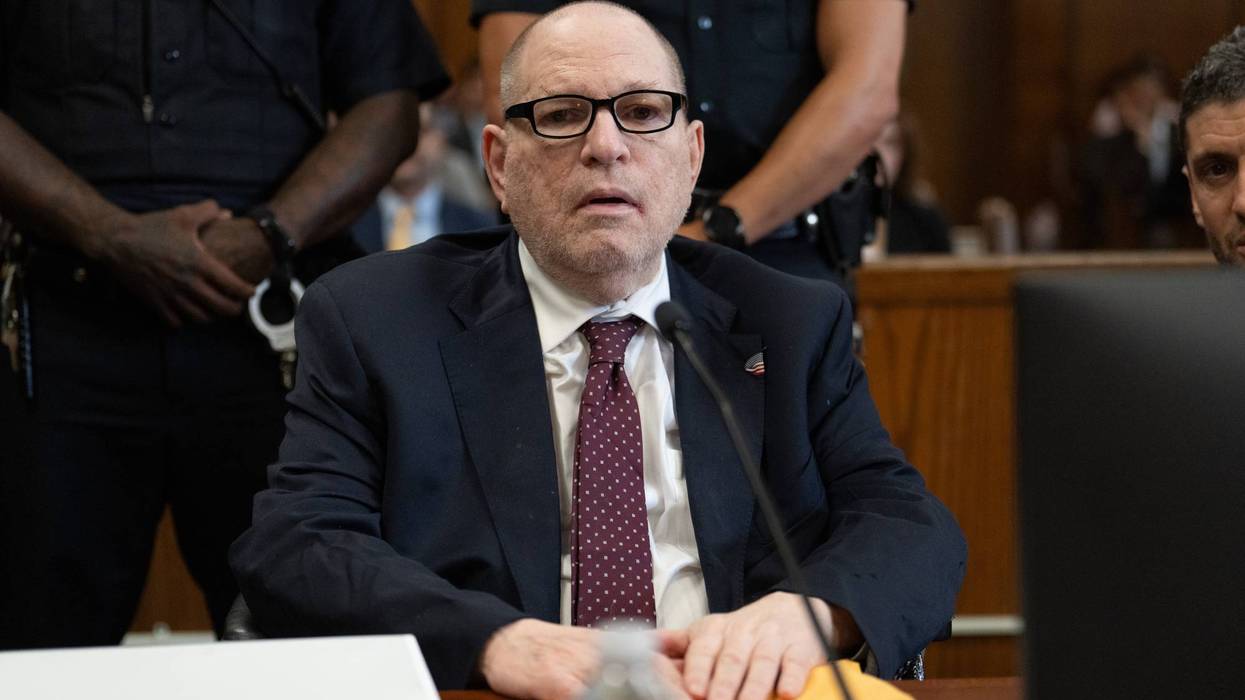
Disgraced Hollywood producer Harvey Weinstein was sentenced Wednesday to 15 years in prison for sexually assaulting former assistant Miriam “Mimi” Haley in 2006, prompting expressions of relief from survivors and advocates after nearly a decade of legal battles—and calls to improve how such cases are handled so that the process does not punish victims.
The sentence, handed down by Manhattan Supreme Court Justice Curtis Farber, adds to the prison time Weinstein has already served and follows his conviction last year for committing a first-degree criminal sexual act. With three separate felony sex crime convictions stemming from his 2022 California case still standing, Wednesday’s conviction marks the 74-year-old's fourth extant felony.
In 2020, Weinstein was sentenced to 23 years behind bars after a New York jury found him guilty of sexually assaulting Haley and raping aspiring actress Jessica Mann—but those convictions were overturned in 2024, sparking widespread anguish and outrage.
“Having been sexually assaulted by Harvey Weinstein has had a devastating effect on my life and sense of security that may never go away. Making the decision to speak up will have me looking over my shoulder for years to come," Haley—who testified at both New York trials—told the court Wednesday in her pre-sentencing victim impact statement. "It’s a life sentence for me."
No survivor should have to relive their most difficult moments to be heard, yet so many showed incredible bravery. We're grateful to @manhattanda.bsky.social for pursuing justice and the survivors who stood through such a challenging process to bring accountability to light. We stand with you ❤️
[image or embed]
— Safe Horizon (@safehorizon.bsky.social) September 23, 2026 at 1:02 PM
Haley—who had worked briefly on the Weinstein-produced reality show “Project Runway"—described the years of litigation, public scrutiny, and attacks on her credibility as deeply damaging. She said that she often considered dropping the case, a process she called one of the most difficult decisions of her life.
Prosecutors had sought a 20-year sentence, arguing that Weinstein had shown no genuine remorse and continued to portray himself as the victim, and that he had used private investigators and other intimidation tactics against Haley.
After Weinstein's sentence was announced, Manhattan District Attorney Alvin Bragg praised Haley and other survivors for their perseverance through the lengthy process.
“Today was about the survivors,” Bragg said. “Ms. Haley, her remarks were powerful, moving, and eloquent.”
Weinstein—who is expected to appeal—also addressed the court before Farber imposed the sentence. He apologized for causing Haley pain but again professed his innocence.
“I am not a perfect person. I live with many regrets and sincerely apologize for my actions," he said. “I do have remorse for Miriam Haley’s pain, but I have to reiterate my innocence.”
Farber wasn't having it, calling Weinstein "the literal face of the #MeToo movement."
A 2017 New York Times investigation into Weinstein led to a flood of allegations against him and others—sparking a #MeToo movement that featured a phrase coined by survivor and activist Tarana Burke more than a decade earlier.
“You had it all,” the judge said. “Your legacy could have been cemented with greatness. But you threw it all away by assaulting Miriam Haley.”
In June 2025, a Manhattan jury convicted Weinstein of first-degree criminal sexual act, a felony, for forcibly sexually assaulting Haley at his Manhattan apartment in 2006. He was acquitted of a separate first-degree charge involving former model Kaja Sokola. The jury deadlocked on the third charge, involving Mann's 2013 rape, resulting in a mistrial.
In California, Weinstein was convicted of felony rape, forcible oral copulation, and sexual penetration by a foreign object stemming from a 2013 assault. Originally sentenced to 16 years, a California appeals court upheld the convictions in June while ordering a pending resentencing.
Rose McGowan, one of Weinstein’s most prominent accusers and a major figure in the #MeToo era, posted an Instagram video reacting to the sentence.
“It’s done. I can’t really adequately explain what this is like, what this feels like,” McGowan said. “It’s too strange and surreal and massive exhale and massive fucking yes.”
“Enough,” she added. “Years stolen from so many of us. Thank you to the women in New York. You did this."
Gloria Allred, Haley's attorney, said that "Mimi underwent a trial by fire twice, and prevailed both times, unlike any other person in the 'MeToo' movement."
"Mimi is a true hero. She has survived all attempts both inside and outside of court to discredit her or question her motives,” Allred added. “To describe Mimi as courageous is an understatement. She faced her fears and overcame them.”
Elisa Batista, campaign director at the women-led gender justice group UltraViolet, said in a statement that “Harvey Weinstein, like so many powerful abusers, thought the system would enable and protect him forever. That era is over."
"This victory belongs to courageous survivors like Miriam Haley, Kaja Sokola, and Jessica Mann who came forward at great personal risk to tell their stories, as well as those abused by Weinstein who were unable to," Batista continued.
“Thankfully, justice was delivered. But our work doesn’t end here," she stressed. "Across the country, it’s still the case that a majority of survivors of sexual abuse are often not served by our courts,” said Batista. “We will continue to stand with survivors and fight the systems that enable and protect abusers—whether in Hollywood, the workplace, the White House, or anywhere else.”
Haley left the courthouse Wednesday surrounded by supporters, including other Weinstein accusers and Allred.
NEW YORK: Miriam Haley, alongside her attorney Gloria Allred, spoke to the press after Harvey Weinstein was sentenced to 15 years in prison. Haley said she “appreciated Judge Farber’s statement,” adding that she believed the “sentence was fair” and that she is “happy with it.” https://t.co/82CwIjRwXh pic.twitter.com/bN1M5DPlxX
— Los Angeles Magazine (@LAmag) September 23, 2026
“This being so public, for this having gone on for so long," she said, "it’s been really, really tough."
The US National Domestic Violence Hotline can be reached at 1-800-799-SAFE (7233), by texting "START" to 88788, or through chat at thehotline.org. It offers 24/7, free, and confidential support. DomesticShelters.org has a list of global and national resources.

"Benjamin Netanyahu's disgraceful policy of expanding West Bank settlements crosses a clear red line and makes Palestinian statehood and lasting peace even more difficult."
Nineteen US Senate Democrats on Wednesday introduced a bill to sanction people or companies that facilitate the construction of Israeli settlements in the E1 area east of Jerusalem in the West Bank, which would split the illegally occupied Palestinian territory in two.
"The E1 settlement project is a move towards de facto annexation of the West Bank, and those who choose to facilitate settlement construction should understand that they risk losing access to the US financial system," said Sen. Elizabeth Warren (D-Mass.), who is leading the legislation with Sens. Chris Coons (D-Del.), Ruben Gallego (D-Ariz.), and Ron Wyden (D-Ore.).
"The United States must use all diplomatic and economic tools available to counter rapid settlement expansion and extremist settler violence in the West Bank, spiraling trends that will only undermine the prospect of lasting peace for Israelis and Palestinians," she argued.
Critics of the plan to build 3,401 housing units in the E1 area—and recent unprecedented violence by Israeli settlers and soldiers toward Palestinians in the West Bank—have pressured governments across the globe to respond with sanctions. In the face of such pressure, UK Foreign Secretary Ed Miliband said earlier this month that the E1 plan was designed to "make the two-state solution unviable."
Within the next nine months, Miliband pledged, the United Kingdom's Labour government will "take action against specific companies and individuals who provide services such as construction, infrastructure, financing, or real estate for settlement expansion," and penalize “those who finance or facilitate illegal settlements."
The United Kingdom, France, and Canada have joined forces to ban imports of goods and some services from illegal Israeli settlements. Their foreign ministers also partnered with those from Denmark, Finland, Iceland, Ireland, Norway, Poland, Portugal, Spain, and Sweden for a joint statement in which they said the situation in the West Bank is "rapidly deteriorating amid unprecedented levels of settler violence and settlement expansion, including the unacceptable decision to publish tenders for the E1 settlement project."
The foreign ministers confirmed their "intention to introduce national and/or support European restrictions on trade in goods with settlements which are illegal under international law, or that they are actively considering these and other measures, in accordance with their national procedures."
In the United States on Wednesday, Wyden took aim at Israeli Prime Minister Benjamin Netanyahu—who is heading to New York City this week for the United Nations General Assembly, which has sparked fresh calls for his arrest in accordance with an International Criminal Court warrant issued over his government's genocidal war on Palestinians in the Gaza Strip.
"Benjamin Netanyahu's disgraceful policy of expanding West Bank settlements crosses a clear red line and makes Palestinian statehood and lasting peace even more difficult," said Wyden. "The United States must stand up against Netanyahu's campaign of violence and aggression against Palestinian civilians and sanction individuals and companies that are complicit in this unlawful action."
Under both Republican President Donald Trump and his Democratic predecessor, former President Joe Biden, the US has given Israel billions of dollars in military support, despite the ongoing slaughter of Palestinians in Gaza and the West Bank.
As the Trump administration pushes a proposed $2.8 billion transfer of 40,000 2,000-pound bombs to Israel—weapons Israeli forces have dropped on civilians in Gaza and Lebanon—polling commissioned by the magazine Liberal Currents and released Monday by the Center for Strategic Politics shows that Americans want Trump and Biden officials held accountable for the genocide.
Although a growing number of lawmakers have joined scholars and rights advocates around the world in condemning Israel's war on Gaza since the October 2023 Hamas-led attack as a genocide, Congress hasn't taken any concrete action to limit military aid to Israel.
The bill unveiled Wednesday is similarly unlikely to go anywhere—even though, as Gallego noted, "for decades, Democrats and Republicans alike have pushed for a two-state solution," and the Israeli construction would "threaten a viable Palestinian state."
"It's a step in the wrong direction," Gallego said of the settlement plan. "This legislation sends a clear message to Prime Minister Netanyahu: The United States stands firmly behind a two-state solution as the only path to real peace and security for all."
Coons—a "staunch" longtime supporter of Israel—pointed out that "for decades, American presidents from both parties have warned successive Israeli governments that construction in E1 threatened the viability of a Palestinian state and was unacceptable to the United States."
However, even if Democrats win back control of the Senate, or perhaps both congressional chambers, in November's midterm elections, there appears to be little appetite within the Trump administration to do or say anything about the E1 plan.
After the European nations' moves earlier this month, Politico highlighted that "the White House's approach to US allies hitting Israeli settlers with sanctions comes down to this: Say as little as possible and let it happen."
Still, according to Coons, "as Palestinian civilians face a campaign of devastation and fear from violent extremist settlers, the United States must send a strong message that this behavior is unacceptable and that it remains committed to freedom, security, prosperity and self-determination for all Israelis and Palestinians."
The bill is backed by the liberal Zionist organization J Street, whose president, Jeremy Ben-Ami, also pointed to previous administrations treating E1 construction "as a clear red line because of the devastating blow it would deal to the possibility of a negotiated resolution to the conflict," and called Trump's failure to enforce that same standard "shameful."
"We applaud Sen. Coons, Warren, Wyden, and Gallego for taking a clear stand to preserve the possibility of peace and long-term security for Israelis and Palestinians," said Ben-Ami, whose group opposes broad boycotts of Israel.
In addition to the four lead sponsors, the bill is co-sponsored by Democratic Sens. Michael Bennet (Colo.), Tammy Duckworth (Ill.), Martin Heinrich (NM), Tim Kaine (Va.), Mark Kelly (Ariz.), Andy Kim (NJ), Jeff Merkley (Ore.), Chris Murphy (Conn.), Patty Murray (Wash.), Jack Reed (RI), Brian Schatz (Hawaii), Adam Schiff (D-Calif.), Elissa Slotkin (Mich.), Chris Van Hollen (Md.), and Peter Welch (Vt.).
Khaled Elgindy, a senior research fellow in the Quincy Institute for Responsible Statecraft's Middle East program and adjunct instructor at Georgetown University's Center for Contemporary Arab Studies, offered some criticism of the bill.
"The 'individuals or groups' enabling E1 is called the Israeli [government]," Elgindy wrote on social media. "This looks like another attempt by D's to look like they're doing something without actually doing something."
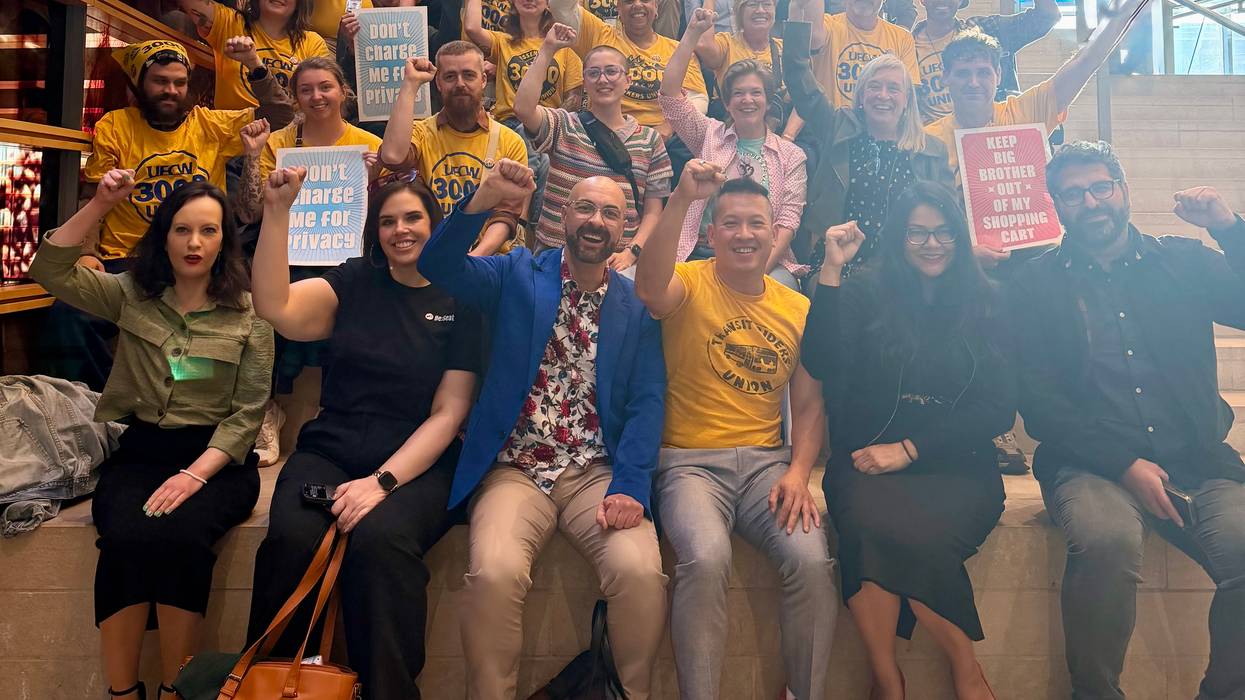
"The price you see shouldn’t be different based on who you are. Mayor Wilson and the City Council have made Seattle a leader on protecting shoppers from unfair grocery pricing tactics," one advocate said.
Seattle became the first city in the country to ban surveillance pricing on Tuesday afternoon after the City Council voted 7-2 to approve a measure co-sponsored and championed by progressive Mayor Katie Wilson.
The Fair Pricing and Transparency policy bans big retail outlets—both online and brick-and-mortar—from using customer data such as race, gender, employment status, internet or social media history, and conversations with chatbots to charge different shoppers different prices for the same products.
“Food is an essential good that’s getting more expensive all the time,” Wilson said in a statement celebrating the win. “People have been clear: They don’t want their data fed into algorithms that decide how much they pay at the grocery store. Everyone deserves transparent pricing and equal treatment, not hidden systems that charge some shoppers more than others.”
“I don’t think we could do that without the kind of mayor that was elected and the moment that we’re in."
Surveillance pricing is the practice of feeding shopper data to artificial intelligence, which then sets distinct prices for different customers based on what the AI thinks they can afford. A 2025 investigation from Consumer Reports, Groundwork Collaborative, and More Perfect Union found that the practice could add $1,200 a year to the average Seattle family’s grocery bill.
“This is a huge win for consumers against companies that abuse their personal data to rip them off,” former Labor Secretary Robert Reich said on social media in response to the news.
Seattle just became the first city in America to ban grocery stores from engaging in surveillance pricing.
This is a huge win for consumers against companies that abuse their personal data to rip them off.
Watch former FTC Chair Lina Khan explain. pic.twitter.com/TxAJGFy7H2
— Robert Reich (@RBReich) September 23, 2026
Grace Gedye, a senior policy analyst at Consumer Reports, said in a statement: “Nobody should pay more for basic necessities because a data broker is quietly collecting information about what they’re searching for online, what they hover over, what their income is, or where they go. The price you see shouldn’t be different based on who you are. Mayor Wilson and the City Council have made Seattle a leader on protecting shoppers from unfair grocery pricing tactics with this bill. We commend this work.”
The Seattle ordinance comes amid an ongoing affordability crisis as grocery prices spike while President Donald Trump and the Republican-controlled Congress have slashed the budget of crucial federal programs such as the Supplemental Nutrition Assistance Program (SNAP). At the same time, there is a growing national backlash against AI and Big Tech, with 78% of Americans favoring mandatory regulation of the technology. The ban on surveillance pricing follows a data center moratorium passed by the Seattle City Council in June.
Maya Morales, the founder of WA People’s Privacy and one of the organizers mobilizing grassroots support for the measure, told Common Dreams that harder day-to-day living conditions were leading to a "national shift” in awareness of how Big Tech and Big Retail make life even more difficult, likely enabling a major tech city like Seattle to take a stand against surveillance pricing.
“People are feeling the heat very intensely all over the nation, so in many ways it doesn't surprise me that this would be the moment that we could get this done, because the harms are so obvious,” she said.
Progressive City Councilmember Alexis Mercedes Rinck, another co-sponsor of and key advocate for the bill, also emphasized the importance of food security.
“Groceries are getting more expensive for everyday Seattleites, while the buying, selling, and leveraging our private information to manipulate prices is making big national grocery corporations millions in profit,” Rinck said in a statement. “This legislation is intended to put some guardrails on what big businesses can do with our personal information. At a time when SNAP reductions have rocked our community and people have less to spend on food, this is an important step we can take to prevent AI-assisted price gouging and ensure fair discounts for everyone.”
The measure was also co-sponsored by Councilmembers Dionne Foster and Rob Saka and backed by labor and community groups including WA People’s Privacy, Washington Working Families Party, Transit Riders Union, Lavender Rights Project, Queer Power Alliance, Washington Fair Trade Coalition, The Nexus of Privacy, MLK Labor, Consumer Reports, and United Food and Commercial Workers (UFCW) 3000.
Grocery workers supported the measure in part because they would be likely to take the brunt of customer complaints if a shopper sees that they are being charged differently than the person next to them at the self checkout. They were also concerned about their own food bills remaining affordable.
“Passing the strongest ban on AI-powered price gouging on groceries feels historic,” Seattle grocery store worker Kristen Wilder said in a statement. “My coworkers and the customers we serve proudly stood together to stop the grocery industry from imposing this scheme here in Seattle. Today that worked paid off for families who just want to know they’re paying a fair price and for workers who want to focus on customer service instead of defending some algorithm making decisions in a black box.”
In addition to fighting food insecurity, Morales emphasized that the measure “takes a little bit of a crack” at the privacy violations enabled by AI and embraced at the federal level as a way of targeting people of color, immigrants, sex workers, low-income and LGBTQ+ people, and other vulnerable groups.
“AI harms are generally privacy and surveillance harms,” Morales said, because “AI needs data in order to work. Mass commercial data surveillance is the reason we have AI and vice versa, and that is an infinite loop.”
However, from a privacy standpoint Morales said there was one disappointing aspect of the bill: an amendment passed to specify that nothing in the law prohibited “technology used solely for security, loss prevention, safety, fraud prevention, fraud detection, or compliance with law.” Morales said this provision was unnecessary because the bill’s language had been very clear that it was focused on pricing. She was also concerned it could open up loopholes, as it is difficult to prove a given technology is only being used for one purpose, and a grocery store might then be able to introduce an invasive surveillance technology—such as shopping baskets that track customers—under the guise of fighting shoplifting.
Because of that amendment, Morales told Common Dreams, “we managed to get a privacy win on pricing but not a privacy win at the grocery store.”
That said, five other corporate “bill-gutting” amendments were voted down, which Morales called a “spectacular win,” and the overall bill was itself an important victory.
Both Morales, and Jon of The Nexus of Privacy, credited the bill’s strength and ability to resist watering down in part to Wilson, who worked with stakeholders including smaller grocery outlets, labor, and community groups to build a coalition and write a strong ordinance from the get-go. Morales noted that Wilson came to office from an organizing background, and that she and Rinck did a good job of bringing grassroots organizations into the process to secure a victory, allowing Seattle policymakers to counter powerful local technology and retail interests.
“I don’t think we could do that without the kind of mayor that was elected and the moment that we’re in,” Morales said.
There is now hope that the bill would have statewide and even national implications. A surveillance pricing ban was introduced into the Washington Legislature in 2026 but failed to advance.
Morales said a legislative win at the local level can show state lawmakers: "This can be done. You don’t have to cave to the Big Retail and Tech lobby, and you can protect people.”
On a national level, Jon of The Nexus of Privacy wrote:
This huge win will help organizers in other cities and states... across the country. Industry had killed a surveillance pricing bill in California just a couple of weeks ago, and they've stalled New York's surveillance pricing bill for months... but guess what, they're not invincible! And as well as the strong legislation providing... a model of what's possible, the Seattle coalition's very successful tactics can hopefully be adapted by organizers elsewhere to reflect the dynamics wherever they are.
As Morales told Common Dreams, “I hope every city will pass something like this.”
"The proposed diesel export ban is a short-sighted 'America First' response to a global crisis his reckless war helped create."
In an effort to blunt price hikes from his war with Iran, President Donald Trump is reportedly preparing a 90-day ban on diesel exports from the United States.
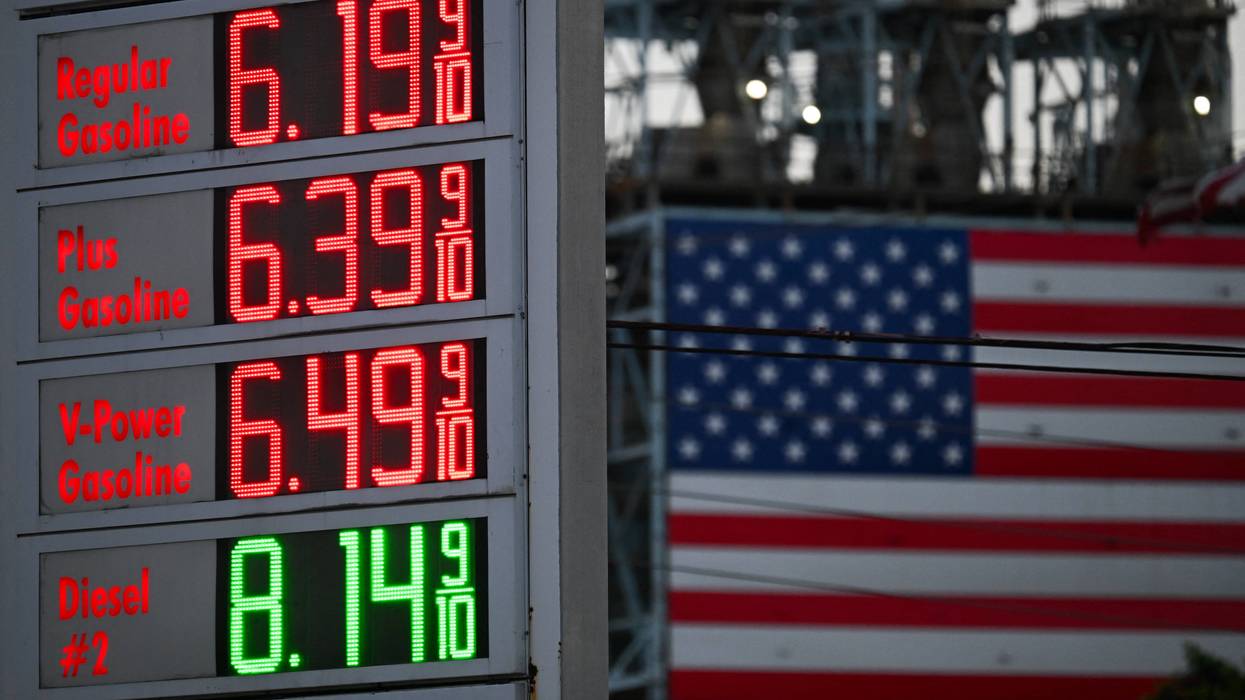
The cost of diesel—which is used to power semitrucks, trains, construction and farm equipment, and other large machines—has soared since Trump launched the war at the end of February, prompting Iran to restrict oil shipments through the critical Strait of Hormuz.
As of Wednesday, according to the American Automobile Association, average US diesel prices have jumped to $6.52 per gallon, a 77% increase from last year. Over the past month, as Trump has ramped up hostilities with Iran, prices have risen by 91 cents a gallon, a 16.2% increase.
Heightened diesel prices increase the cost of everything else—including food, transportation, and other energy sources. And while Trump claimed earlier this month to be bringing prices "way down, way, way down,” the latest federal data show consumer prices rising 0.4% in August—four times July’s monthly increase—and 3.4% over the past year.
With the midterms less than two months away and many voters blaming Trump for the strain on their pocketbooks, several GOP members of Congress, including some facing tough Senate races, such as Sen. Dan Sullivan (Alaska) and Rep. Ashley Hinson (Iowa), have cheered the idea.
During a press conference on Tuesday, Trump told reporters: "I’ve said let’s not send out the diesel. We make a lot of diesel. It could have a little bit of an effect on regular automobile gasoline because when you do that, you know, it’s a sort of a flow. It’s a balance. But no, I’ve called for it. I’ve called for it within my people. I’ve been talking about it.”
But while the plan may help to keep diesel prices down for long enough to help Republicans stop the bleeding before November, some economists are warning that it could make things much worse in the long term.
“The US Gulf Coast would get a temporary pump price dip, at the cost of likely higher coastal prices [elsewhere] and eventually, higher prices for everyone as investment gets scared away," explained Bob McNally, president of Rapidan Energy Group and a former White House energy adviser under the administration of former President George W. Bush.
"You would get a short-term, abrupt collapse in pump prices” in some regions, McNally said, but “the US would shatter its reputation as a safe place to invest for a generation.”
Energy economist Philip Verleger said that a ban, even if temporary, "would have the same long-term effect as President [Richard] Nixon’s soybean embargo: the world would no longer view the United States as a dependable source.”
Speaking to Reuters, Verleger warned that in an already undersupplied market, removing US barrels could potentially double global prices.
But the short term seems to be all Trump and those around him pushing the ban are considering. An oil industry executive who discussed the proposed ban with White House officials told Politico that Trump viewed any fallout as “a December problem.”
He said that "cooler heads" in the White House have been "overpowered" by the "political camp" that has a "sky-is-falling, we-have-to-do-something concern about prices at the pump."
Lorne Stockman, research director at Oil Change International, argued that there was a much simpler solution: ending the war that has caused oil prices to spike in the first place.
"The proposed diesel export ban is a short-sighted 'America First' response to a global crisis his reckless war helped create," Stockman said. "The US exports about 5% of global diesel, and a ban risks turning a severe shortage into a global economic disaster."
"It could send international prices soaring, drive up the cost of food, fertilizer, and essential goods, deepen hunger, and push already-struggling economies toward recession," he continued. "At the same time, it would likely do nothing for people in the US, as refineries would cut production and gasoline prices would rise even further."
He said, "Congress should use its constitutional powers to stop Trump’s war, tax the oil industry’s soaring windfall profits, and support farmers and other hard-hit sectors, and accelerate renewable energy and electrification, not hoard fuel and force the rest of the world to pay the price.”
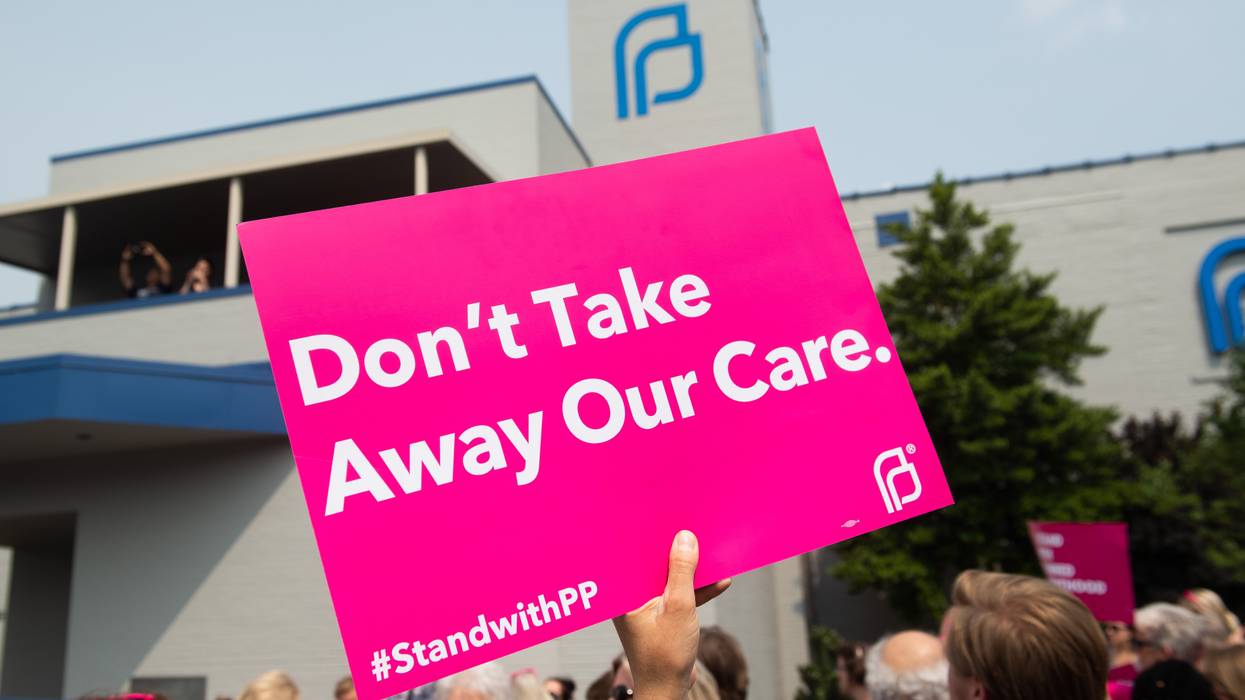
"There is no replacement for Planned Parenthood health centers or the essential, lifesaving care they provide. Women, their families, and entire communities will suffer.”
Data released Wednesday by the Guttmacher Institute and Power to Decide shows "the stark and brutal reality that awaits patients across the country" if Republican lawmakers in Congress fulfill their goal of "defunding" Planned Parenthood, which provides contraceptive counseling and services to millions of patients per year, as well as other essential healthcare services.
As part of the publicly funded contraceptive care network that's been in place for over half a century, the Guttmacher Institute said, Planned Parenthood's healthcare centers served 1.6 million—roughly a third—of the 4.7 million patients who needed access to affordable family planning centers in 2020.
But with the Trump administration and Republicans in Congress aiming to remove Planned Parenthood facilities from the network, as many as 12.4 million women who need low-cost or free birth control could have their access sharply reduced, as they live in counties that would be affected by the GOP cuts.
Millions in the US rely on @ppfa.org for affordable birth control. If Planned Parenthood was removed from the publicly funded contraceptive care system, 12.4 million women in need of low- or no-cost #BirthControl would be affected.More in our research with @powertodecide.bsky.social: gu.tt/4y5ai5M
[image or embed]
— Guttmacher (@guttmacher.org) September 23, 2026 at 4:17 PM
The One Big Beautiful Bill Act brought the GOP "closer than ever" to stripping Planned Parenthood of funding—which comes not from a "blank check from the federal or state government," as Republicans have often suggested, but largely from reimbursements for care clinics provide to patients who have Medicaid or who are eligible for free or reduced-fee services through Title X.
The law included an effective ban on Medicare reimbursements to Planned Parenthood clinics for one year, and just over a year since its passage, nearly 30 of the organization's health centers have closed.
If Republicans succeed in further cutting off funds to Planned Parenthood, 58% of women who need access to affordable or free birth control would be affected, said Guttmacher.
The West would be the hardest-hit region in the country, with 4.1 million women losing access to contraceptives in 94 counties.
Nearly 30 counties across the US would be left with no publicly funded contraceptive provider at all.
“When President [Donald] Trump and his backers in Congress say they want to shut down Planned Parenthood, they mean it," said Alexis McGill Johnson, president and CEO of Planned Parenthood Action Fund. "And when we say the consequences of stopping people from being able to get the healthcare they need are catastrophic, we mean it too."
"This is not a hypothetical, and we’re not playing make-believe," she added. "There is no replacement for Planned Parenthood health centers or the essential, lifesaving care they provide. Women, their families, and entire communities will suffer.”
Amy Friedrich-Karnik, director of federal policy for Guttmacher, said the data released by the group "demonstrates why policymakers and advocates must stand together in strong defense of Planned Parenthood and all providers of quality and affordable sexual and reproductive healthcare.”
“As politically motivated attacks against Planned Parenthood have resulted in shuttered clinics and real harms to patients," she said, "it is increasingly important to study the critical role that Planned Parenthood plays in the publicly funded healthcare system and why attacks on these health centers are so devastating."

"Trump's abuse of taxpayer dollars is especially egregious at a time when families are grappling with high costs for rent, groceries, childcare, and other necessities," said US Sen. Maggie Hassan.
Democrats on the congressional Joint Economic Committee on Wednesday released a report calculating that taxpayer funding for President Donald Trump's vanity projects has soared to more than $1.8 billion.
Renovations made to the White House—including the president's luxury ballroom—are the biggest projected expenses, as the analysis cites reporting from The Washington Post last month to estimate that they will cost $927 million.
After the White House renovations, the second-most expensive Trump vanity project highlighted in the report is the estimated $400 million that will be required to provide security upgrades to the luxury jet the president received as a gift from the Qatari government.
The report finds that taxpayers will also be on the hook for $257 in renovations to the the John F. Kennedy Memorial Center for the Performing Arts, which the president has threatened to tear down unless he is allowed to slap his name on the side of the building.
The president's "Triumphal Arch" monument is another big-ticket item, as the report calculates it will cost $100 million to construct. Trump's infamously botched attempt to renovate the Lincoln Memorial Reflecting Pool, meanwhile, is set to cost taxpayers $16 million.
The Democrats on the JEC also released a Trump Vanity Calculator, an online tool that shows the opportunity costs of the president's assorted projects.
Among other things, the calculator shows that the $1.8 billion spent on the projects would be enough to pay for more than 607 million school lunches, or 117,000 additional Head Start slots, or 246,000 Pell Grants.
Redirecting the spending on the Trump projects would also be enough to restore funding for Supplemental Nutrition Assistance Program (SNAP) benefits—which were cut as part of the Republican Party's 2025 budget law—for over 429,000 families.
Sen. Maggie Hassan (D-NH), ranking member of the JEC, said the report shows that Trump "has wasted taxpayer dollars on projects that benefit himself instead of the American people."
“Trump’s abuse of taxpayer dollars is especially egregious at a time when families are grappling with high costs for rent, groceries, childcare, and other necessities," Hassan said. "President Trump admits that he doesn’t think about the financial situation of Americans, and the American people can see that; instead, he thinks about how he can use their money to build gold-plated monuments to himself."
During the 2024 presidential campaign, Trump promised to cut Americans' energy costs in half while keeping the country out of foreign wars.
In February, Trump launched an illegal war against Iran without any congressional authorization that has sent energy prices skyrocketing, including record-high prices for diesel fuel.
Through it all, Trump has continued touting his vanity projects, including the aforementioned ballroom and arch, even as polls show that the high cost of living is American voters' biggest concern.
With the midterm elections just six weeks away, a survey released by CNN on Wednesday shows that just 24% of Americans say that Trump has the right priorities as president, while two-thirds say he has worsened economic conditions in the country.
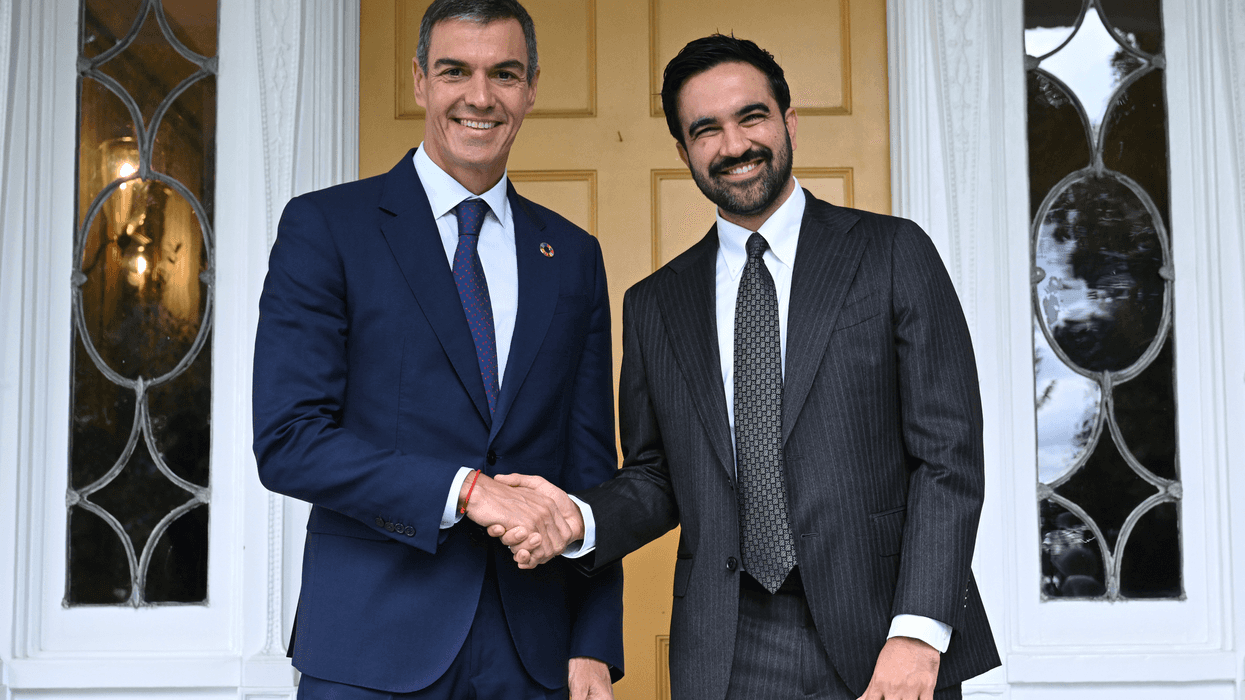
The two leaders spoke about policies to promote economic justice and immigrant rights at an event, as nearly 130 world leaders gather in New York for the United Nations General Assembly.
As New York City plays host to nearly 130 world leaders gathered for the United Nations General Assembly, progressive Mayor Zohran Mamdani is making a point of meeting with a number of international politicians who share his commitment to “building an economy for the many"—the official theme of a Wednesday morning breakfast he held at Gracie Mansion, where Spanish Prime Minister Pedro Sánchez was a key guest.
The event gave the two leaders an opportunity to discuss, as the prime minister said on social media, "more jobs, better wages, less inequality."
"Social justice is not the enemy of economic growth," he said.
Sánchez spoke to a group of assembled leaders—including Barbados Prime Minister Mia Mottley, a fierce critic of government inaction on the climate emergency and inequality, and socialist European Council President António Costa—about Spain's economic policies, such as a 66% increase in the national minimum wage over the past eight years.
“Spain is showing that another economic model is possible, and New York is demonstrating that the same ambition can transform our cities," said Sánchez, who represents the Spanish Socialist Workers' Party. "That is why the powerful fear us, because every day we show that there is another possible path and that it works."
“We were told that if you want growth, you have to accept inequality. That the workers have to make sacrifices. That if you want to be competitive, you have to have low wages and bad public services. I never believed it," Sánchez added. "Spain has shown that it was not true. We have raised the [Spanish minimum income] by 66%. We were told it would destroy jobs, but we have more workers than ever. One in every two jobs created in Europe are Spanish. We were told that with clean energy we would be less competitive. Now we have 60% and the cheapest energy. They always tell us that [these policies] are not going to work. The reality is that they do work for ordinary people."
The policies of Sánchez and Mamdani have angered right-wing leaders, including President Donald Trump. The president threatened Spain with a trade embargo earlier this year when Sánchez refused to allow US war planes to refuel at Spanish military bases as the US and Israel waged war on Iran.
Administration officials also condemned Sánchez's pro-immigration stance in July when migrants from Africa entered the self-governing Spanish city of Ceuta. The prime minister offered hundreds of thousands of migrants a chance at permanent legal residency in Spain earlier this year, contrasting with Trump's violent mass deportation campaign.
"Migration has made Spain stronger," said Sánchez on Wednesday. "Migration makes us a better country. No question."
Spanish PM Pedro Sánchez:
Migration has made Spain stronger. Economically, socially, culturally, migrants work in our companies, contribute to our public finances, sustain our welfare state and enrich our communities. Migration makes us a better country. No question.
This… pic.twitter.com/3GEIy7IWtR
— Clash Report (@clashreport) September 23, 2026
Without mentioning Trump by name, he added: "This matters because there are politicians on both sides of the Atlantic trying to convince working people that their problem is another working person—someone born somewhere else, someone who earns even less than they do. It is one of the oldest political tricks in history: Make people look sideways so they never look up."
While appearing to admire the charismatic and ultrapopular Mamdani—whose 69% approval rating among his constituents contrasts sharply with the 29% of Americans who currently support the president—Trump has railed against recent electoral victories of politicians who share Mamdani's commitment to universal, government-funded social services, raising taxes on billionaires, and ensuring life is affordable for working people.
In June, he called democratic socialists like Mamdani "the most serious threat to our country since its existence," and during Mamdani's mayoral campaign, the candidate confronted border czar Tom Homan over Trump's anti-immigration agenda.
At the Wednesday morning event, where Mamdani praised Sánchez for sending a message through his minimum wage policy that "work matters... dignity matters," the mayor said that working together, the two leaders and other progressives in power can build "a better world, bringing the movement for equality and justice to more distant horizons.”
Costa, who served as the prime minister of Portugal, added on social media that "in an interdependent world, we need coordinated solutions to global and local challenges."
"That is why we must defend international law and multilateral institutions like the UN," said Costa. "And that is why we must put the well-being of our citizens at the center of our policies."
“It is truly a privilege to be able to learn from one another, emulate each other's successes, and develop strategies that imitate the great progress those in this room have achieved," said Mamdani at the event.
The mayor has also met with progressive mayors from Barcelona, Paris, Rome, Mexico City, and other cities to discuss housing, migration, and climate policies. On Tuesday, he visited a New York City public school with Norwegian Prime Minister Jonas Gahr Støre, and the two leaders discussed limiting artificial intelligence in education.

The mayor has said New York can’t enforce the ICC warrant against Israel’s prime minister, but one human rights lawyer argued it’s “not the only tool available to the US when it comes to holding Netanyahu accountable.”
As Israeli Prime Minister Benjamin Netanyahu prepares to land in New York for a speech at the United Nations General Assembly on Thursday, calls are once again mounting for the accused war criminal to be arrested.
While campaigning last year, New York City Mayor Zohran Mamdani pledged that if the prime minister ever set foot in his city, he'd find himself in handcuffs, pursuant to an International Criminal Court (ICC) warrant, which accused him of war crimes and crimes against humanity in Gaza, where Israel's genocidal military assault has killed nearly 74,000 people, including more than 21,000 children.
After becoming mayor, Mamdani backed off the pledge earlier this summer, stating that New York lacked the “independent legal authority” to detain him under the ICC warrant. However, he said Netanyahu should still be "arrested and tried" by the federal government.
In the days leading up to his visit to New York, which is expected to be brief, Netanyahu indicated he planned to address the mayor during his General Assembly speech, falsely accusing him of supporting Hamas and inciting riots against Jewish New Yorkers.
“I'm coming to the UN,” the prime minister said. “I'm going to tell the truth about our heroic soldiers, and I'm going to tell the truth about you."
Mamdani hit back during a CNN interview on Tuesday: "I have been clear about the way that I see the world. And I always owe New Yorkers that honesty. And when it comes to Benjamin Netanyahu, I have described him as I believe him to be: a war criminal and an architect of a horrific genocide of the Palestinian people."
Of the ICC warrant, he reiterated that it was "something that should be honored, because what we want to see... is a faith in our politics, a faith in accountability."
In July, a YouGov poll found that 49% of Americans believed the US government should arrest Netanyahu under the warrant, 27% said it should not, and 23% were unsure.
President Donald Trump stated earlier this summer that Netanyahu “will not be arrested, in any way, shape, or form" while visiting the US. His administration's position, as stated in a February 2025 executive order, is that Netanyahu can't be arrested. The ICC, it says, “has no jurisdiction over the United States or Israel” because, unlike most other nations, neither is a party to the Rome Statute, which created the court.
Jake Romm, a legal adviser for the Hind Rajab Foundation—a group named after a 5-year-old Palestinian girl killed by Israeli forces—argued Tuesday in The Nation that even if the ICC warrant can't be enforced on US soil, it "is not the only tool available to the US when it comes to holding Netanyahu accountable."
Romm noted the existence of "two robust federal criminal statutes," the War Crimes Act and the Genocide Statute, which he said incorporate "important international instruments into US law"—the Geneva Convention governing the laws of war and the Genocide Convention, respectively.
He wrote that both of these laws give the US jurisdiction over alleged war criminals “regardless of where the crimes have been committed” when the suspect is physically present in the US, or the crimes were committed against US nationals.
Romm acknowledged that Netanyahu is shielded from arrest during his official UN visit and that sitting heads of government generally enjoy immunity from national courts, but argued that those protections do not eliminate the United States' underlying authority to prosecute him under federal war crimes and genocide laws.
"The United States has the ability to arrest Netanyahu for crimes under US law and to prosecute him in US courts," Romm wrote. "I stress this not because I believe that an administration that has, at every turn, deepened its complicity in Israel’s crimes will suddenly change. I stress the US’s ability and obligation to arrest Netanyahu—and all Israeli perpetrators of the genocides in Palestine and southern Lebanon—in order to make one thing clear: Every day that Netanyahu remains free is a day that the US has allowed him to remain free."
It's not just the United States that has allowed Netanyahu to travel freely despite the warrant. Emma Fourreau, a French member of the European Parliament, accused her nation's government—which is obligated to arrest Netanyahu under the Rome Statute—of having "trample[d] on international law" by giving his aircraft clearance to pass through its airspace en route to New York.
Craig Mokhiber, a former senior UN human rights official who resigned in 2023 while accusing Israel of carrying out a “textbook genocide” in Gaza, said the fact that Netanyahu would be showing up at the UN unencumbered, even while being "universally despised, and blocked from travel to most countries on the planet," was a "stain" on the entire institution.
"He will even be allowed to enter UN premises and to address the [General Assembly], received as a VIP rather than the blood-soaked war criminal that he is," Mokhiber said on social media, describing it as one of many failures of the institution to respond to Israel's actions in Gaza.
He noted that the General Assembly had not stripped Israel of its credentials as it did with apartheid-era South Africa, that the UN Security Council had endorsed the Trump-led "Board of Peace" proposal to govern postwar Gaza, and that Secretary-General António Guterres had declined to use the word "genocide" to describe Israel's conduct, even while other top UN experts had.
"The genocidaires are not just walking among us, they are ruling over us. They are trying to normalize genocide and apartheid," Mokhiber said. "We, in our millions, must act to denormalize these scourges, to hold the perpetrators and accomplices accountable, and to ensure they never have a moment’s peace until justice prevails."
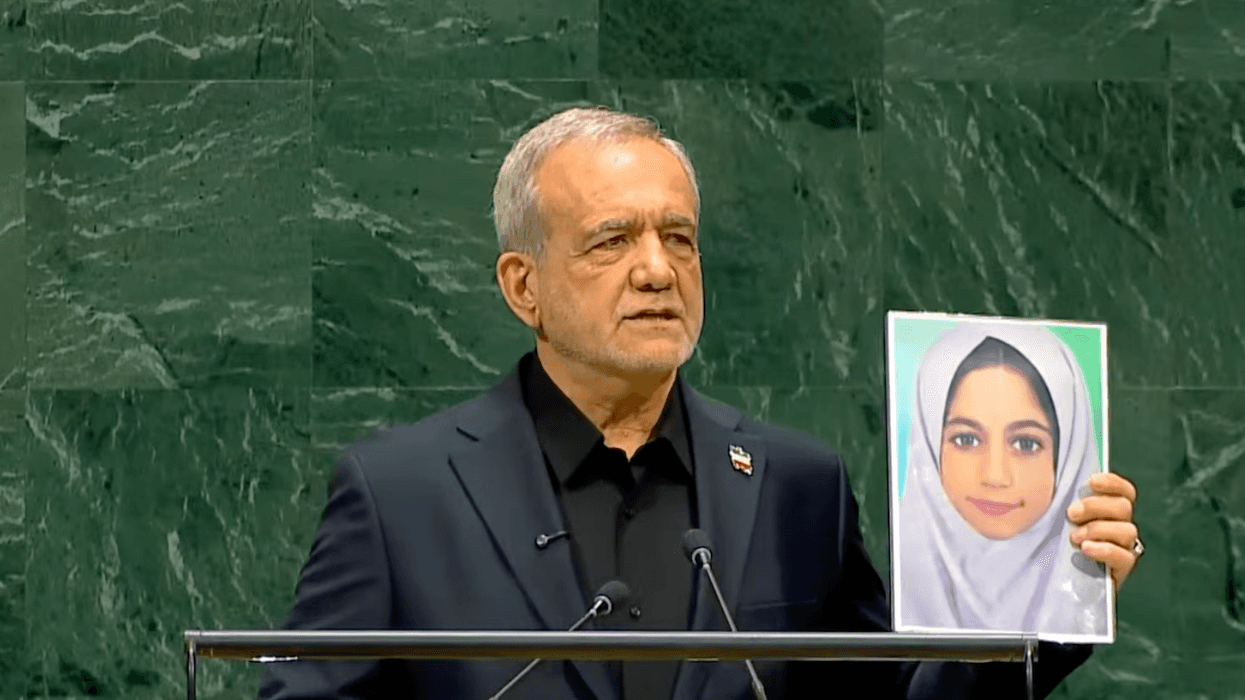
Masoud Pezeshkian delivered his address after the president of the United States—which one progressive commentator called "the world's biggest terrorist"—again threatened to "annihilate" Iran.
Iran's president used his address to the United Nations General Assembly on Wednesday to turn Washington's decades-old assertion that his country is the world's leading terrorist state on its head by accusing the US—which has killed and wounded tens of thousands of Iranians during President Donald Trump's illegal war of choice—of terrorism against Iranians.
“The United States president described us as terrorists,” Masoud Pezeshkian told world leaders gathered in New York, referring to President Donald Trump’s speech there the previous day. “We have been the victims of terrorism.”
Pezeshkian held up photographs of some of the 120 children massacred when the US bombed the Shajareh Tayyebeh Primary School in Minab during the opening hours of the US-Israeli war in February, an attack that killed over 150 people in total and was called a likely war crime by UN experts last week.
"You see these children?” he said. “These children perished under bombs with weapons used by the United States and Israel. They were innocent.”
“Those who are terrorists, and train and protect terrorists, describe us as such," the president continued. "We have only defended ourselves. We are not terrorists."
As Pezeshkian continued, the US representative attending the session got up and walked out. This, a day after Trump again threatened to "annihilate" the entire country of Iran—comments interpreted by many observers to mean nuclear war.
"Our innocent people have been the targets of cowardly attacks and aggression imposed upon our country," the Iranian president said. "America and Israel attacked us equipped with the latest technology and weapons systems, and our people stood steadfast. Yes, they did hit us, but we did not bend the knee. We did not bow our head."
"They came into surrounding territories... and targeted our universities, our healthcare centers, our schools, our hospitals, our infrastructure, all of it against international law," Pezeshkian continued.
He also noted that Israel "targets any neighborhood in any city in any province" and "commits assassinations like a true terrorist."
The Iranian president stressed that "for the past two centuries, Iran has not attacked any country," even as Washington helped overthrow Iran's reformist government in the 1950s, restoring a brutal monarchy and, later, supported actual US-designated terrorists who had carried out deadly attacks against not only Iranians but also US officials. The US also shot down an Iranian commercial airliner—an attack deemed an accident, for which then-President George HW Bush refused to apologize.
Pezeshkian also said that Israel is "committing genocide" in Gaza, where officials say that more than 250,000 Palestinians have been killed or wounded; 2 million have been forcibly displaced, starved, or sickened; and the majority of the strip destroyed since October 2023.
Israeli Prime Minister Benjamin Netanyahu is set to address the UN General Assembly on Thursday, despite an International Criminal Court arrest warrant for alleged crimes against humanity and war crimes in Gaza.
The United States and Iran have designated all or parts of each other's armed forces as terrorist organizations. Both countries have long histories of supporting militant groups which often act as proxies.
The US and Israel—often alone or nearly so on the world stage—deny all the allegations against them. Trump and senior members of his administration even initially claimed that Iran bombed the Minab school, even as the evidence of US culpability grew too damning to deny.
The back-and-forth allegations of terrorism highlight a larger question raised by Pezeshkian’s speech: Who gets to define terrorism when the world's most powerful military is involved? Do the more technologically sophisticated arsenals of the US and Israel—which include 2,000-pound bombs and artificial intelligence systems capable of selecting targets far faster than any human—legitimize their users' violence, even if they're killing more people than their enemy, and exponentially so?
Under 18 US Code § 2331(5), terrorism is defined as "acts dangerous to human life that are a violation of the criminal laws of the United States or of any state appearing to be intended to intimidate or coerce a civilian population, influence the policy of government by intimidation or coercion, or affect the conduct of a government by mass destruction, assassination, or kidnapping."
By that definition, say many critics of US policy and practice, the United States is a terrorist state. And not just any terrorist, progressive political commentator Kyle Kulinski contended in a new essay published by Current Affairs, but rather "the world's biggest terrorist."
Kulinski's piece addressed the controversy surrounding leftist streamer Hasan Piker, who argued that the United States has caused extraordinary amounts of terror around the world under successive presidents regardless of party, and should be judged by the same standards Washington applies to organizations such as al-Qaeda, many of whose fighters had received US funding and arms to fight the Soviet invasion of Afghanistan in the 1980s before they turned on their erstwhile benefactors in response to Washington's own militant imperialism.
Kulinski pointed to the Minab school strike, the US bombing of a wedding in Iran, its support for Israel during the Gaza genocide, the illegal attacks on boats in the Caribbean Sea and Pacific Ocean—which UN experts this week said could amount to crimes against humanity—and the abduction of President Nicolás Maduro during January's invasion of Venezuela, which is one of 10 countries attacked during the two terms of Trump, who campaigned for reelection as the "peace president."
"And do you think it began with Trump? Bad news for you. The architect of the Great Society, the great Democrat [former President]Lyndon Johnson, was napalming little Vietnamese girls long before Trump was blowing up Iranian elementary schools," Kulinski wrote.
Johnson's Democratic predecessor, John F. Kennedy, "began a massive terror campaign against Cuba, designed specifically to hurt civilians in order to bring political change—textbook terrorism."
Subsequently, he continued, then-President Barack Obama "was bombing hospitals and weddings long before Trump. He talked about how good he was at killing people, including a teenage American citizen he took out with a drone, and he helped Saudi Arabia commit war crimes in Yemen."
Recently, Kulinski wrote, former President Joe Biden "was sending constant weapons to Israel during the deadliest parts of Israel’s genocide."
"The record of US-supported terrorism is long," he said. "We helped the Indonesian government massacre half a million communists. We helped the Contras terrorize Nicaragua. We even helped Saddam Hussein use chemical weapons on Iran."
Kulinski noted that former President George W. Bush, "possibly the worst terrorist of our age, caused maybe half a million deaths in Iraq with his totally illegal war. He made Osama bin Laden look like an amateur. And now he has a new book of paintings coming out. They’re portraits of political prisoners. I’m guessing it probably won’t include all the people he tortured for years in Guantánamo."
"The truth needs to matter," Kulinski concluded. "In defamation cases, truth is always a defense. The US is the biggest, baddest bully on the block. We do not care about international law, human rights, the Constitution, or justice. How are we supposed to change anything for the better if we can’t acknowledge the most obvious things in the world?"