SUBSCRIBE TO OUR FREE NEWSLETTER
Daily news & progressive opinion—funded by the people, not the corporations—delivered straight to your inbox.
5
#000000
#FFFFFF
To donate by check, phone, or other method, see our More Ways to Give page.
Daily news & progressive opinion—funded by the people, not the corporations—delivered straight to your inbox.
Seth Gladstone – sgladstone@fwwatch.org, 917.363.6615
RL Miller – rlm@climatehawksvote.com, 818.518.3470
As this month's report from the Intergovernmental Panel on Climate Change has intensified focus on the alarming nature of the planet's fossil fuel-driven climate crisis, dozens of Congressional candidates from across the county have pledged to support two key climate initiatives if elected or reelected in November. 46 current Congress members and an additional 38 Congressional candidates have co-sponsored or formally pledged to co-sponsor the Off Fossil Fuels for a Better Future (OFF) Act (HR 3601), the most aggressive, comprehensive climate legislation yet introduced in Washington. Simultaneously, 85 Congress members or candidates have signed the No Fossil Fuels Money Pledge, a public commitment to refuse campaign funding from the fossil fuel industry.
A comprehensive list of candidates backing these two "Vote Climate" measures was released today in a report by Climate Hawks Vote and Food & Water Action, two political organizations that have been organizing support for these complementary climate initiatives and tracking their endorsers.
"As our planet fast approaches the point of no return on devastating climate catastrophe, only an urgent, aggressive transition away from fossil fuels and onto a clean, renewable energy future will save us. Congressional candidates that have pledged to both support the OFF Act and reject dirty campaign cash from the oil and gas industry are our true climate champions. As voters head to the polls in November - or vote early now - they need to know which Congressional candidates are actually fighting for the health and stability of future generations. We've identified them clearly right here," said Wenonah Hauter, executive director of Food & Water Action, a co-author of the report.
"The OFF Act and No Fossil Fuel Money pledge are the two fiercest measures in today's political climate. And this report provides voters with a simple Venn diagram of those climate hawk politicians who have pledged to immediately transition to a fossil fuel free-future, those who have pledged not to listen to the fossil fuel industry's blandishments, or both," said RL Miller of Climate Hawks Vote, a co-author of the report.
The OFF Act would place a moratorium on new fossil fuels projects and move our electricity and ground transportation systems to 100 percent clean, renewable energy by 2035, with 80 percent of that transition occurring in the next decade. It would also provide for an equitable, just transition for environmental justice communities and those currently employed in the fossil fuel industry.
Taking the No Fossil Fuels Money Pledge means that a politician or candidate's campaign will adopt a policy to not knowingly accept any contributions over $200 from the PACs, executives, or front groups of fossil fuel companies -- companies whose primary business is the extraction, processing, distribution, or sale of oil, gas, or coal.
Food & Water Watch mobilizes regular people to build political power to move bold and uncompromised solutions to the most pressing food, water, and climate problems of our time. We work to protect people's health, communities, and democracy from the growing destructive power of the most powerful economic interests.
(202) 683-2500“This lawless killing for content cannot become mere background noise," said one critic.
The Trump administration isn't letting its unconstitutional war with Iran stop its illegal boat-bombing campaign in Latin America.
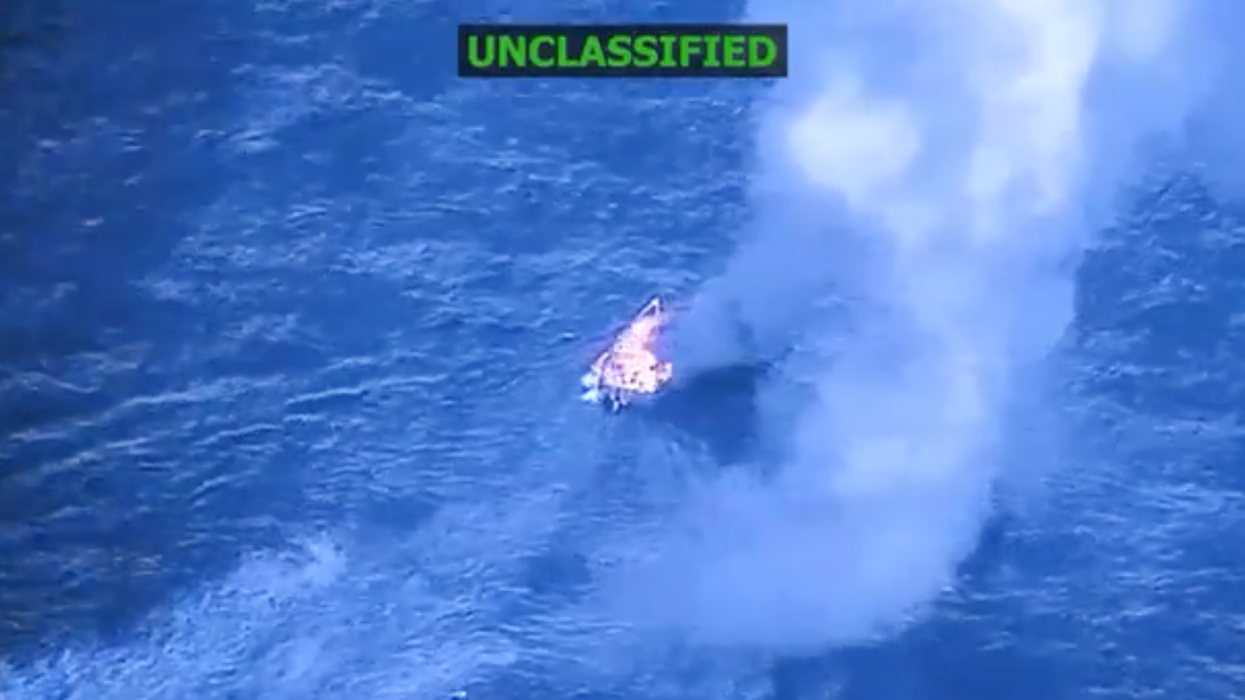
US Southern Command (SOUTHCOM) said on Friday that it had conducted yet another lethal boat strike on a suspected drug boat traveling in what it described as "known narco-trafficking routes in the Eastern Pacific."
While SOUTHCOM initially said that three men survived the Thursday strike, a spokesperson for the US Coast Guard subsequently told CNN reporter Zachary Cohen that two of the men on the boat were killed, while a lone survivor was rescued and taken into custody by authorities in Costa Rica.
According to Cohen, at least 160 people have so far been killed by the Trump administration's boat strikes, which several legal experts have described as illegal acts of murder.
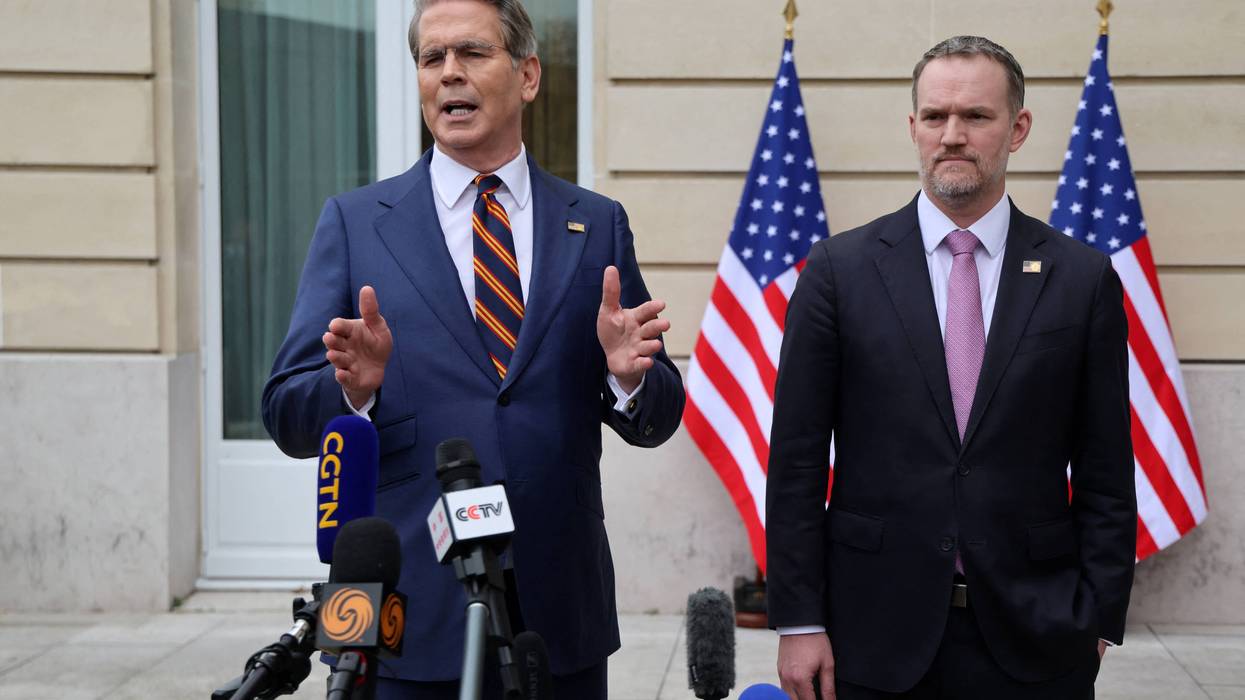
The latest strike on a suspected drug vessel came on the same day Gen. Francis L. Donovan, the commander of SOUTHCOM, told the Senate Armed Services Committee that the Trump administration's boat-bombing spree is "not the answer" to the drug addiction crisis in the US.
As reported by The New York Times on Thursday, Donovan told lawmakers that the strikes are "probably not the most effective" tool to combat illicit drug trafficking, and said he was developing a more comprehensive plan to stop the flow of drugs into the US.
Human rights group Amnesty International slammed Donovan for carrying out another strike even while acknowledging their negligible impact on the drug trade.
"Congress must take action against these strikes!" the group said in a social media post.
Brian Finucane, senior adviser at the International Crisis Group, expressed concern that the Trump administration's Iran war was distracting from the other illegal killing it is carrying out.
"This lawless killing for content cannot become mere background noise," he wrote.
A coalition of rights organizations led by the ACLU last year sued the Trump administration to demand it release documents that provide legal justification for its boat-bombing campaign.
The groups said that the Trump administration’s rationales for the strikes deserve special scrutiny because their justification hinges on claims that the US is in an “armed conflict” with international drug cartels akin to past conflicts between the US government and terrorist organizations such as al-Qaeda.
The groups argued there is simply no way that drug cartels can be classified under the same umbrella as terrorist organizations, given that the law regarding war with nonstate actors says that any organizations considered to be in armed conflict with the US must be an “organized armed group” that is structured like a conventional military and engaged in “protracted armed violence” with the US government.
"Republicans, Democrats, and independents all overwhelmingly want Congress to take serious action to protect privacy—in particular against AI and data brokers," said one campaigner.
With just a month until a key Foreign Intelligence Surveillance Act spying power expires, US House Speaker Mike Johnson was planning to try to push through reauthorization legislation next week, but the Louisiana Republican leader is now reportedly delaying the vote while "still dealing with a dozen or so Republican members who want reforms."
Privacy advocates and lawmakers across the political spectrum have long called for reforms to FISA's Section 702, which empowers the US government to surveil electronic communications of noncitizens located outside the United States to acquire foreign intelligence information, without a warrant.
Citing three unnamed sources familiar with discussions in the House of Representatives, Politico reported Friday that "with a GOP hard-liner revolt over warrantless surveillance threatening to tank the legislation," Johnson "will instead work through the remaining issues over the upcoming two-week recess and try to put the extension on the floor the week of April 14."
Welcoming the development, Demand Progress executive director Sean Vitka said in a statement that "Speaker Johnson is backing away from his plan to ram through a FISA reauthorization vote next week because he knows his members don't want it and the American people don't want it."
"Republicans, Democrats, and independents all overwhelmingly want Congress to take serious action to protect privacy—in particular against AI and data brokers—and oppose any efforts to rubber-stamp the government's warrantless mass surveillance powers as is," Vitka continued.
"Before any vote on reauthorizing FISA," he added, "Congress must first enact real protections for Americans' privacy, in particular by closing the data broker loophole to prevent the government from circumventing the courts and independent oversight through the purchase of Americans' private location, web browsing, and other sensitive information."
Various bills, including the bipartisan Security and Freedom Enhancement (SAFE) Act introduced last month by Sens. Dick Durbin (D-Ill.) and Mike Lee (R-Utah), would close the loophole that agencies use to buy their way around the Fourth Amendment to the US Constitution, which is supposed to protect Americans against unreasonable searches and seizures.
Demand Progress has endorsed that bill, and on Thursday partnered with the Project On Government Oversight and over 130 other artificial intelligence and civil rights groups for a letter urging Republican and Democratic congressional leaders to impose "much-needed privacy protections against government agencies' warrantless mass surveillance of people in the United States."
President Donald Trump and his pro-spying deputy chief of staff, Stephen Miller, have fought for a "clean" reauthorization, but the GOP has slim majorities in both chambers of Congress. In the House, Johnson can only afford to lose two votes, and in the Senate, most bills require at least some Democratic support to get to the president's desk.
The conduct of Trump's second administration has fueled calls for reform. Rep. Pramila Jayapal (D-Wash.), a member of the House Judiciary Committee, said in a Thursday statement that "as the Trump administration continues to run roughshod over our Constitution, we cannot continue to give them a further opening to sacrifice our civil liberties in the name of national security. We cannot give Stephen Miller a blank check to conduct domestic surveillance in violation of the Fourth Amendment."
"I have been working on essential reforms to FISA across administrations, and I have not wavered—whether it is a Democratic or Republican president," she noted. "This has always been a bipartisan issue for good reason. Americans across political parties care deeply about privacy and not being surveilled. Congress has a duty to protect those fundamental constitutional liberties. Any attempt to push forward a 'clean' reauthorization of Section 702 will put our private, sensitive data at risk."
Jayapal stressed that "this Trump administration has been particularly brazen in its use of domestic surveillance to suppress our constitutional rights and dissent. In just the last six weeks, the administration has blacklisted Anthropic for refusing to stand down on its requirement that its technology not be used for the mass surveillance of Americans, and we learned that the Department of Justice surveilled me—and likely many other members—while reviewing the Epstein files, seeking justice for survivors."
"In Minnesota, federal immigration agents have surveilled and intimidated US citizens exercising their First Amendment rights to document agents' unlawful actions," the congresswoman noted. "It is time to reform FISA, ensure our Fourth Amendment protections are guaranteed, and stop the government surveillance of Americans."
"The US has lost control of this war," said foreign policy expert Trita Parsi.
As fears mount that he may soon launch a ground invasion of Iran, President Donald Trump is sending thousands more Marines and sailors to the Middle East.
According to a Friday report from Reuters, three US officials said that an expeditionary unit of about 2,500 Marines, among roughly 4,000 total service members, departed from San Diego aboard three ships on Wednesday—the amphibious assault ship USS Boxer and two amphibious transport dock ships, the USS Portland and the USS Comstock.
They will join around 50,000 US troops already in the Middle East, including another unit of around 2,500 Marines who were reported to be headed to the region last week, just before Trump launched an assault that struck military installations on Kharg Island, a critical hub for Iran’s oil exports.
Officials said it was not known for what purpose the additional troops were being deployed.
Trump was coy this week when asked by reporters if he planned to send ground troops into Iran.
“No, I’m not putting troops anywhere,” Trump said in the Oval Office on Thursday. “If I were, I certainly wouldn’t tell you, but I’m not putting troops.”
He previously emphasized that he would not be afraid to put "boots on the ground" in Iran if he deems it necessary.
“I don’t have the yips with respect to boots on the ground—like every president says, ‘There will be no boots on the ground.’ I don’t say it,” the president told The New York Post at the beginning of March.
With US gas prices nearing $4 per gallon and expected to climb further due to Iran's closure of the Strait of Hormuz, Axios reported on Friday that Trump is weighing plans to have US troops occupy Kharg Island, through which about 90% of Iran's oil exports move, in a bid to pressure Tehran into reopening the critical waterway.
Foreign policy experts have warned that a full-scale occupation of Kharg Island would be likely to fail and put more troops in harm's way while further embroiling the US in a quagmire.
"Even a blockade of Kharg Island would not force Iran to reopen the Strait of Hormuz," said Danny Citrinowicz, a senior fellow at Israel's Institute for National Security Studies. "For Tehran, control over the Strait is not just economic leverage—it is a core component of regime survival and deterrence."
"Reopening the Strait would likely require one of two extreme options: either regime change, or a large-scale military campaign to seize and secure the waterway. Such an operation would take months and still wouldn’t prevent Iran from disrupting traffic through asymmetric means."
Dominic Waghorn, the international affairs editor of Sky News, explained that "opening up a waterway that can be blocked again by cheap, easily deployable drones will be hugely challenging" and will likely only demonstrate to Tehran that the United States is "desperate."
The idea of sending ground troops into Iran is also deathly unpopular with the American public. In a Data For Progress poll published Thursday, 68% of voters surveyed said they would oppose putting boots on the ground, compared to just 26% who'd support it.
Even Republicans, who've generally backed Trump's military interventions to the hilt even though the president campaigned on "no new wars," are split on the idea, with 48% saying they'd oppose it and 48% in support.
Nevertheless, one official told Axios that in addition to the Marine units already heading to the Middle East, the Pentagon was considering sending even more troops soon.
"He wants Hormuz open," the official said, referring to Trump. "If he has to take Kharg Island to make it happen, that's going to happen. If he decides to have a coastal invasion, that's going to happen. But that decision hasn't been made."
Karim Sadjadpour, a senior fellow at the Carnegie Endowment for International Peace, noted earlier this week that the Strait of Hormuz would never have become an issue in the first place were it not for Trump's decision to launch a "war of choice" against Iran.
"I don't think President Trump, in his own words frankly, understood what he was getting into," Sadjadpour told NPR. "What began as a war of choice, in my view, has actually morphed into a war of necessity. I don't think that President Trump is going to simply be able to end the war and claim victory."
The war is costing American taxpayers $1-2 billion per day, according to lawmakers familiar with the Pentagon budget who spoke with The Intercept earlier this week, which estimated that it could cost trillions in the decades to come if prolonged.
"The US has lost control of this war," said Trita Parsi, the executive vice president of the Quincy Institute for Responsible Statecraft. He said that even if Trump pulled out now and declared victory, Iran would be determined to inflict maximum costs.
"Iran has leverage for the first time in years and will seek to trade it in," he said. "It has publicly demanded a closing of US bases, reparations, and sanctions relief in order to stop shooting at Israel and open the straits."
If the president's base of supporters begins to sour on the war, Parsi said, "it will become increasingly clear—if it hasn't already—to Trump that all his escalatory options only deepen the lose-lose situation he has put himself in."