Princeton Experts Speak Out Against Trump Boat Strikes as 'Illegal' and Destabilizing 'Murders'
"Deploying an aircraft carrier and US Southern Command assets to destroy small yolas and wooden boats is not only unlawful, it is an absurd escalation," said one scholar.
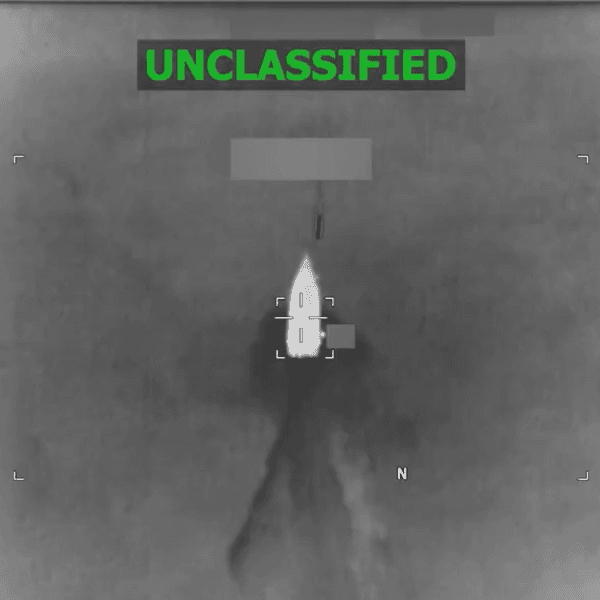
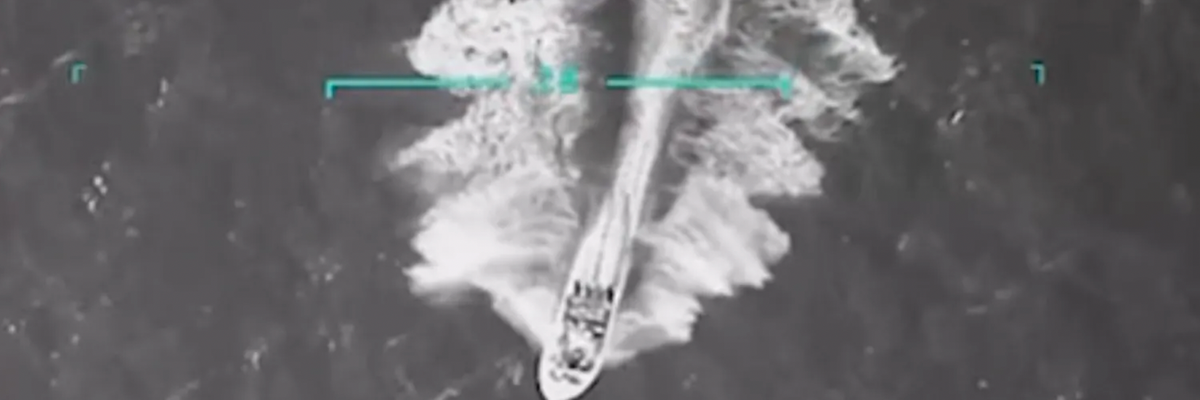
Multiple scholars at the Princeton School of Public and International Affairs on Wednesday spoke out against the Trump administration's campaign of bombing suspected drug boats, with one going so far as to call them acts of murder.
Eduardo Bhatia, a visiting professor and lecturer in public and international affairs at Princeton, argued that it was "unequivocal" that the attacks on on purported drug boats are illegal.
"They violate established maritime law requiring interdiction and arrest before the use of lethal force, and they represent a grossly disproportionate response by the US," stressed Bhatia, the former president of the Senate of Puerto Rico. "Deploying an aircraft carrier and US Southern Command assets to destroy small yolas and wooden boats is not only unlawful, it is an absurd escalation that undermines regional security and diplomatic stability."
Deborah Pearlstein, director of the Program in Law and Public Policy at Princeton, said that she has been talking with "military operations lawyers, international law experts, national security legal scholars," and other experts, and so far has found none who believe the administration's boat attacks are legal.
Pearlstein added that the illegal strikes are "a symptom of the much deeper problem created by the purging of career lawyers on the front end, and the tacit promise of presidential pardons on the back end," the result of which is that "the rule of law loses its deterrent effect."
Visiting professor Kenneth Roth, former executive director of Human Rights Watch, argued that it was not right to describe the administration's actions as war crimes given that a war, by definition, "requires a level of sustained hostilities between two organized forces that is not present with the drug cartels."
Rather, Roth believes that the administration's policy should be classified as straight-up murder.
"These killings are still murders," he emphasized. "Drug trafficking is a serious crime, but the appropriate response is to interdict the boats and arrest the occupants for prosecution. The rules governing law enforcement prohibit lethal force except as a last resort to stop an imminent threat of death or serious bodily injury, which the boats do not present."
International affairs professor Jacob N. Shapiro pointed to the past failures in the US "War on Drugs," and predicted more of the same from Trump's boat-bombing spree.
"In 1986, President Ronald Reagan announced the 'War on Drugs,' which included using the Coast Guard and military to essentially shut down shipment through the Caribbean," Shapiro noted. "The goal was to reduce supply, raise prices, and thereby lower use. Cocaine prices in the US dropped precipitously from 1986 through 1989, and then dropped slowly through 2006. Traffickers moved from air and sea to land routes. That policy did not work, it's unclear why this time will be different."
The scholars' denunciation of the boat strikes came on the same day that the US seized an oil tanker off the coast of Venezuela in yet another escalatory act of aggression intended to put further economic pressure on the government of Venezuelan President Nicolás Maduro.
We are at a crossroads
This country and this world are at a monumental crossroads. In a few short weeks, US voters will have an opportunity to beat back the forces of fascism and confront the billionaires who are rigging the economy, our media system, and our democracy, making it increasingly impossible for ordinary people to get by. We’re not just talking about the election. We’re talking about what must be done once these fascist elements are vanquished from power. We need a bolder set of solutions than what either major party has so far been willing to offer and a working-class movement ready to fight like hell for it. Trump didn't emerge from nowhere. The conditions that fueled MAGA authoritarianism were created by decades of radical neoliberal economic policies and a corrupt political system dominated by corporate interests. They slashed taxes on the super-rich, promising that the benefits would trickle down. They said giveaways to the corporate titans would make life more affordable for the rest of us. It was all bullshit. And when a bitter, betrayed populace searches for someone to blame, right-wing demagogues have little trouble finding scapegoats. People know when they're being lied to, but you won't hear any of this from the corporate media. Only independent journalism—powered and funded by people who believe in building a better world—can deliver truly trustworthy daily news. Our Fall Campaign is underway, and we need your help. To power our newsroom through the rest of the year, we need to raise $125,000 by midnight on October 31. So if you share our vision, please contribute whatever you can to sustain our work. |
Multiple scholars at the Princeton School of Public and International Affairs on Wednesday spoke out against the Trump administration's campaign of bombing suspected drug boats, with one going so far as to call them acts of murder.
Eduardo Bhatia, a visiting professor and lecturer in public and international affairs at Princeton, argued that it was "unequivocal" that the attacks on on purported drug boats are illegal.
"They violate established maritime law requiring interdiction and arrest before the use of lethal force, and they represent a grossly disproportionate response by the US," stressed Bhatia, the former president of the Senate of Puerto Rico. "Deploying an aircraft carrier and US Southern Command assets to destroy small yolas and wooden boats is not only unlawful, it is an absurd escalation that undermines regional security and diplomatic stability."
Deborah Pearlstein, director of the Program in Law and Public Policy at Princeton, said that she has been talking with "military operations lawyers, international law experts, national security legal scholars," and other experts, and so far has found none who believe the administration's boat attacks are legal.
Pearlstein added that the illegal strikes are "a symptom of the much deeper problem created by the purging of career lawyers on the front end, and the tacit promise of presidential pardons on the back end," the result of which is that "the rule of law loses its deterrent effect."
Visiting professor Kenneth Roth, former executive director of Human Rights Watch, argued that it was not right to describe the administration's actions as war crimes given that a war, by definition, "requires a level of sustained hostilities between two organized forces that is not present with the drug cartels."
Rather, Roth believes that the administration's policy should be classified as straight-up murder.
"These killings are still murders," he emphasized. "Drug trafficking is a serious crime, but the appropriate response is to interdict the boats and arrest the occupants for prosecution. The rules governing law enforcement prohibit lethal force except as a last resort to stop an imminent threat of death or serious bodily injury, which the boats do not present."
International affairs professor Jacob N. Shapiro pointed to the past failures in the US "War on Drugs," and predicted more of the same from Trump's boat-bombing spree.
"In 1986, President Ronald Reagan announced the 'War on Drugs,' which included using the Coast Guard and military to essentially shut down shipment through the Caribbean," Shapiro noted. "The goal was to reduce supply, raise prices, and thereby lower use. Cocaine prices in the US dropped precipitously from 1986 through 1989, and then dropped slowly through 2006. Traffickers moved from air and sea to land routes. That policy did not work, it's unclear why this time will be different."
The scholars' denunciation of the boat strikes came on the same day that the US seized an oil tanker off the coast of Venezuela in yet another escalatory act of aggression intended to put further economic pressure on the government of Venezuelan President Nicolás Maduro.
- 'National Security Threat'? 95-Year-Old Human Rights Scholar Richard Falk Interrogated for Hours by Canada ›
- 'Thuggery From Trump and Vance': World Reacts to Oval Office Meltdown With Zelenskyy ›
- Experts Decry US 'Summary Execution' of Alleged Drug Runners Off Venezuelan Coast ›
- Death Toll Up to 128 People as Trump Pentagon Commits Two More Killings at Sea | Common Dreams ›
Multiple scholars at the Princeton School of Public and International Affairs on Wednesday spoke out against the Trump administration's campaign of bombing suspected drug boats, with one going so far as to call them acts of murder.
Eduardo Bhatia, a visiting professor and lecturer in public and international affairs at Princeton, argued that it was "unequivocal" that the attacks on on purported drug boats are illegal.
"They violate established maritime law requiring interdiction and arrest before the use of lethal force, and they represent a grossly disproportionate response by the US," stressed Bhatia, the former president of the Senate of Puerto Rico. "Deploying an aircraft carrier and US Southern Command assets to destroy small yolas and wooden boats is not only unlawful, it is an absurd escalation that undermines regional security and diplomatic stability."
Deborah Pearlstein, director of the Program in Law and Public Policy at Princeton, said that she has been talking with "military operations lawyers, international law experts, national security legal scholars," and other experts, and so far has found none who believe the administration's boat attacks are legal.
Pearlstein added that the illegal strikes are "a symptom of the much deeper problem created by the purging of career lawyers on the front end, and the tacit promise of presidential pardons on the back end," the result of which is that "the rule of law loses its deterrent effect."
Visiting professor Kenneth Roth, former executive director of Human Rights Watch, argued that it was not right to describe the administration's actions as war crimes given that a war, by definition, "requires a level of sustained hostilities between two organized forces that is not present with the drug cartels."
Rather, Roth believes that the administration's policy should be classified as straight-up murder.
"These killings are still murders," he emphasized. "Drug trafficking is a serious crime, but the appropriate response is to interdict the boats and arrest the occupants for prosecution. The rules governing law enforcement prohibit lethal force except as a last resort to stop an imminent threat of death or serious bodily injury, which the boats do not present."
International affairs professor Jacob N. Shapiro pointed to the past failures in the US "War on Drugs," and predicted more of the same from Trump's boat-bombing spree.
"In 1986, President Ronald Reagan announced the 'War on Drugs,' which included using the Coast Guard and military to essentially shut down shipment through the Caribbean," Shapiro noted. "The goal was to reduce supply, raise prices, and thereby lower use. Cocaine prices in the US dropped precipitously from 1986 through 1989, and then dropped slowly through 2006. Traffickers moved from air and sea to land routes. That policy did not work, it's unclear why this time will be different."
The scholars' denunciation of the boat strikes came on the same day that the US seized an oil tanker off the coast of Venezuela in yet another escalatory act of aggression intended to put further economic pressure on the government of Venezuelan President Nicolás Maduro.
- 'National Security Threat'? 95-Year-Old Human Rights Scholar Richard Falk Interrogated for Hours by Canada ›
- 'Thuggery From Trump and Vance': World Reacts to Oval Office Meltdown With Zelenskyy ›
- Experts Decry US 'Summary Execution' of Alleged Drug Runners Off Venezuelan Coast ›
- Death Toll Up to 128 People as Trump Pentagon Commits Two More Killings at Sea | Common Dreams ›