August, 01 2018, 12:00am EDT

CFS Sues Trump Administration Over GMO Labeling Delay
WASHINGTON
Today, Center for Food Safety (CFS) filed a federal lawsuit against the Trump administration for failing to abide by the mandatory deadlines Congress set in the 2016 genetically engineered (GE) food disclosure law. That law required that its regulations be finished by two years after its enactment, or July 29, 2018. Earlier this week Secretary of Agriculture Sonny Perdue and the U.S. Department of Agriculture (USDA), which is assigned to draft and issue the new labeling rules, missed the final rules deadline. So today CFS went to Court, in order to get a mandated schedule for completion and judicial oversight of USDA, to ensure timely completion of the rules.
"Americans have waited for decades for GE foods to be labeled, which Congress knew when it ordered USDA to get this done in a reasonable timeframe," said George Kimbrell, CFS Legal Director. "Trump, Perdue, and their corporate lobbyists may want indefinite delay and keeping Americans in the dark, but the law doesn't permit it."
The comment period on the USDA proposal ended July 3. CFS recently filed a separate lawsuit over USDA's unlawful withholding of internal agency documents related to the GE disclosure rulemaking. Last year, CFS won a lawsuit over USDA's failure to publicly release a critical study related to the use of electronic or digital disclosures for GE foods. The USDA study showed that major segments of Americans, including disproportionately rural, minority, elderly, and poor Americans, would not have sufficient access to this form of disclosure.
Background:
CFS has been fighting for mandatory GE food labeling for over two decades at the federal and state levels, work that helped lead to the passage of the 2016 federal law. After CFS executive director Andrew Kimbrell wrote the award-winning book, Your Right to Know: Genetic Engineering and the Secret Changes in Your Food, CFS assisted in drafting and passing the first-ever law to require labeling of GE fish and fish products in Alaska. In addition to writing model legislation used to create GE labeling rule on a federal level, CFS also wrote model legislation that has been used in dozens of state legislation efforts, including California, Washington, Connecticut, and Maine. CFS filed a legal petition with FDA that garnered more than 1.2 million comments in support of mandatory GE food labeling nationwide. 64 countries, including member nations of the European Union, Russia, China, Brazil, Australia, Turkey, and South Africa require standards of mandatory GE food labeling.
View the complaint here.
Center for Food Safety's mission is to empower people, support farmers, and protect the earth from the harmful impacts of industrial agriculture. Through groundbreaking legal, scientific, and grassroots action, we protect and promote your right to safe food and the environment. CFS's successful legal cases collectively represent a landmark body of case law on food and agricultural issues.
(202) 547-9359LATEST NEWS
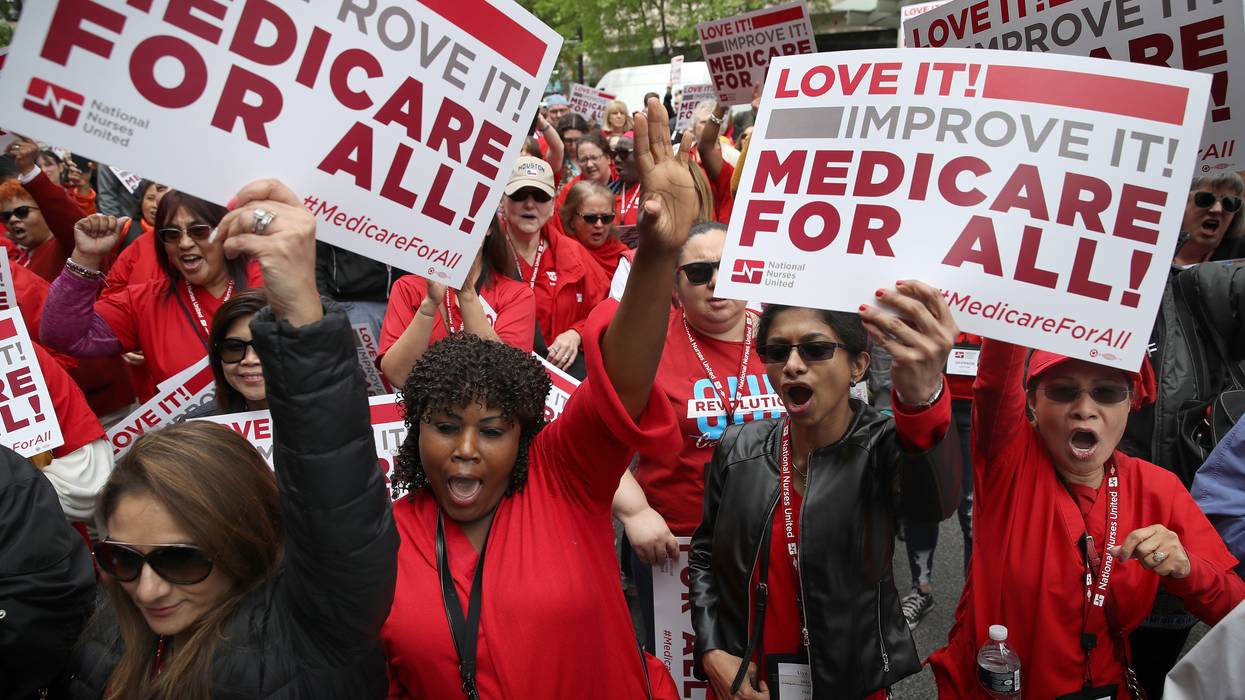
Former Top GOP Strategist Says It's 'Unimaginable' That US Won't Have Medicare for All Within 20 Years
"This is just a matter of how long are we going to delay this?”
Oct 26, 2026
A prominent former Republican political strategist said Monday that he believes it's just a matter of time before the United States adopts a Medicare for All universal healthcare system, citing the popularity of the program for older Americans across the political spectrum.
"Close your eyes and think about what will America be like in 20 years," Stuart Stevens—a senior strategist for Mitt Romney's failed 2012 presidential campaign—said during an MS NOW panel discussion hosted by Katy Tur. "It is unimaginable we will not have a national health plan."
"We're already the only Western country that doesn't," Stevens noted. "And this is just a matter of how long are we going to delay this?"
" Medicare is wildly popular," he said. "So you can see what the appeal of Medicare for All is."
"Why shouldn't everybody have Medicare?" Stevens asked. "I mean, it's the wealthiest country in the history of the world."
Stevens noted that the prospect of universal healthcare is "getting a tremendous response," even "from people who aren't exactly on the far left."
"So I think this is an issue that's changing," he added.
Responding to Stevens comments, Rep. Ro Khanna (D-Calif.) told Common Dreams that Medicare for All will ultimately happen in the United States "because it is not just a moral imperative but makes economic sense," as study after study have shown.
"It's what will truly reduce the cost of our system," Khanna said.
A KFF survey released earlier this month found that 66% of Americans favor Medicare for All, the highest level of support since the organization began tracking the proposal. Support included 84% of Democrats, 72% of independents, and 34% of Republicans—up from just 21% of Republicans in 2020.
A separate Axios-Ipsos poll, also published this month, found that 43% of Americans supported the proposal, compared with just 24% opposed, while 21% of Republicans backed it.
Multiple studies have shown that Medicare for All would save lives—and money. Most recently, researchers at Yale University estimated that implementing such a system would save over 114,000 lives annually while reducing healthcare expenditures by more than $1 billion per year.
Stevens' comments came as Sen. Chris Van Hollen (D-Md.)—a possible 2028 presidential candidate—said his party needs to pursue Medicare for All if it succeeds in winning control of the Senate next week.
Keep ReadingShow Less
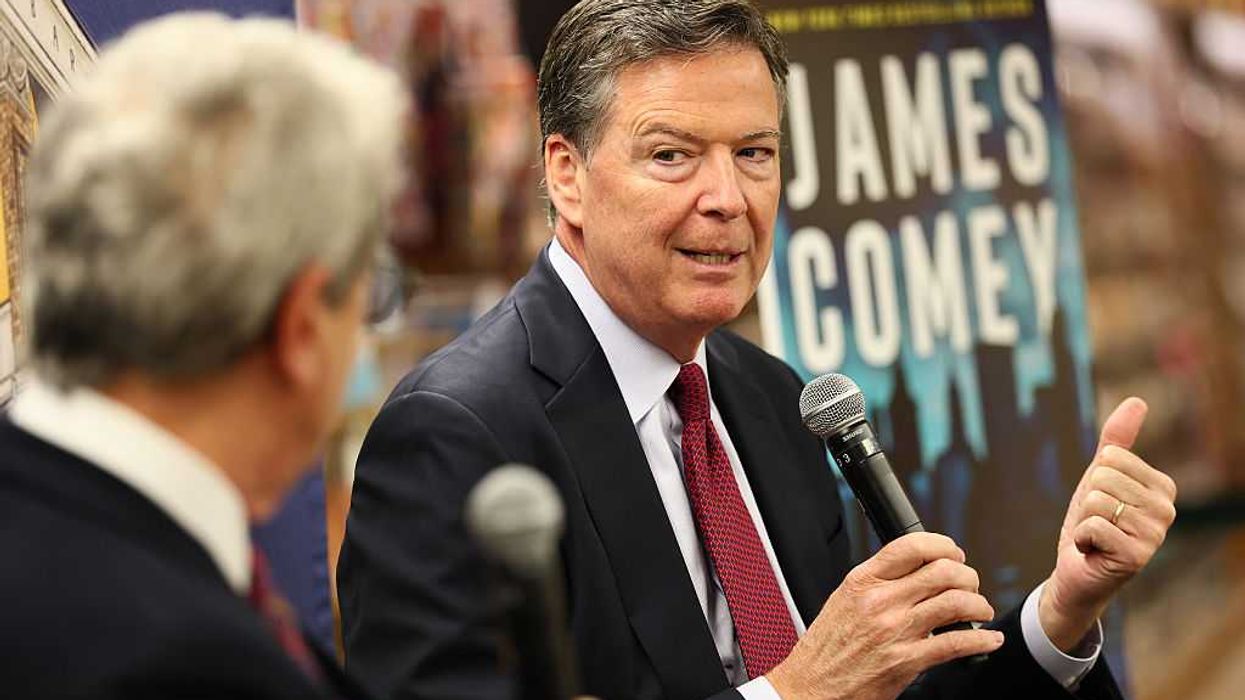
Trump DOJ Charges Ex-FBI Chief James Comey a Third Time
"It would almost be funny if it weren't such an appalling abuse of the Department of Justice—one that we cannot become numb to," said James Comey.
Oct 26, 2026
President Donald Trump's administration has charged former Federal Bureau of Investigation Director James Comey a third time, according to documents unsealed on Monday—the same day a US judge ruled that the administration unlawfully fired Comey's prosecutor daughter, who worked on the sex crimes case against the president's dead ex-friend Jeffrey Epstein.
Comey, a former Republican fired during Trump's first term, and various critics have condemned all of the cases against him and others who publicly call out the administration as weaponization of the US Department of Justice (DOJ) against the president's political enemies. The latest case relates to a New York Times article from over a decade ago, when he was still FBI chief.
The case, in which he's accused of unlawfully disclosing classified information, "has played out under seal since October 5. Comey's defense attorneys filed a motion 10 days ago to dismiss the charges against him. He has not been indicted in the case," NBC News reported. "The charges that were filed are a criminal information—essentially a charge filed by prosecutors—and not a grand jury indictment."
Elie Honig, a former federal prosecutor and CNN's senior legal analyst, was among the experts who highlighted that "this is a bizarre, and likely improper, use of a criminal 'information' to end-run the statute of limitations."
"Typically an information must be agreed to by a defendant—and Comey did not consent here," Honig explained. "It therefore likely cannot extend the statute of limitations, which would have expired on October 5, 2026."
The DOJ Rapid Response account on X said that "the department filed a waiverless criminal information to toll the statute of limitations as it relates to allegations concerning former FBI Director Comey. Filing a criminal information to toll the statute of limitations is a widely recognized practice in federal court and has been approved by multiple circuit courts of appeals. This is an ongoing criminal investigation, and we will not comment further."
Comey's attorney, Pat Fitzgerald, said that he "steadfastly maintains his innocence" and noted some details from all cases: "In September 2025, the Department of Justice used a person who was not actually a United States attorney to seek an indictment that was not actually shown to the grand jury. And it charged Mr. Comey with crimes that he did not commit. That case was promptly and properly dismissed. In April 2026, the Department of Justice filed charges in the Eastern District of North Carolina concerning Mr. Comey's posting of a photograph of seashells spelling '8647.' We will not comment beyond our filings in that case."
"This most recent case involves an October 5, 2016 New York Times article that two different teams of prosecutors investigated during the first Trump administration," Fitzgerald continued. "Both times the government determined that no charges should be brought against anyone. Now, 10 years after the article was published, the government filed an 'information' against Mr. Comey that was not approved by a judge nor issued by a grand jury. It purports to charge Mr. Comey with crimes that he did not commit. We are gratified that United States District Judge Trevor McFadden has ordered this matter unsealed. Mr. Comey will fight these charges vigorously and in the open."
Comey also directly declared his innocence and vowed to fight back in a video he posted on Substack, saying that "it would almost be funny if it weren't such an appalling abuse of the Department of Justice—one that we cannot become numb to."
Yet another case in DC by James Comey
Read on SubstackThe documents were unsealed shortly after US District Judge Jesse M. Furman—appointed to the Southern District of New York by former President Barack Obama—sided with Maurene Comey, concluding that the DOJ "violated the separation of powers, federal administrative law and Ms. Comey’s due process rights when it fired her in July 2025," as the Times detailed Monday.
A spokesperson for the DOJ—which is now led by Attorney General Todd Blanche, who previously served as the president's personal lawyer—said that "the department disagrees with this decision and will appeal in due course."
Sharing news of that ruling on X, Sen. Sheldon Whitehouse (D-RI) predicted, "This will drive 'Ranting Man' Trump even crazier!!"
Keep ReadingShow Less

175 House Democrats Decry Omar Raid as Dangerous 'Attempt to Influence an Election'
"This weaponization of law enforcement to harass a sitting member of Congress 22 days before an election is unprecedented and unacceptable."
Oct 26, 2026
While Congresswoman Ilhan Omar calls out the "fascist" Trump administration's recent raid on her home in fundraising emails as she seeks reelection in a solidly Democratic Minnesota district, over three-quarters of the progressive's fellow Democrats in the US House of Representatives came together on Monday to condemn the "weaponization of federal law enforcement against her."
As part of what the White House and US Department of Justice (DOJ) have confirmed is an ongoing criminal investigation, Department of Homeland Security (DHS) agents executed a search warrant on Omar's Washington, DC home on October 12, and "were seen carrying out boxes of documents from the home, and reportedly obtained her DNA, personal phone, and passport," notes House Democrats' letter to Attorney General Todd Blanche and DHS Secretary Markwayne Mullin.
President Donald Trump has a long history of attacking the Somali-American lawmaker with "baseless lies and smear campaigns," and during this probe, Mullin, Vice President JD Vance, and White House adviser Stephen Miller and his wife, Katie Miller, have piled on. The letter calls the warrant "a dramatic escalation of an almost decade-long campaign of attacks on Congresswoman Omar."
The persecution of @repilhan.bsky.social just days before an election is vile and politically-motivated.I'm leading 175 House Democrats in denouncing this. When we retake power, we have to seriously look at how we can stop these abuses of power — starting with the power of the purse.
[image or embed]
— Congresswoman Pramila Jayapal (@jayapal.house.gov) October 26, 2026 at 4:12 PM
"This weaponization of law enforcement to harass a sitting member of Congress 22 days before an election is unprecedented and unacceptable," argued the Democrats, led by Reps. Greg Casar (Texas), Yvette Clarke (NY), Robert Garcia (Calif.), Pramila Jayapal (Wash.), Jamie Raskin (Md.), and Bennie Thompson (Miss.), who are all congressional committee ranking members or caucus chiefs.
The four-term congresswoman is running again in Minnesota's 5th District, which earlier this year was targeted in Trump's Operation Metro Surge. That was part of his mass detention and deportation agenda, which has involved sending armed immigration agents into various communities, where they have killed, injured, and violated the rights of US citizens and noncitizens alike.
Early voting began in Minnesota just days after the raid. The members of Congress wrote that "news of the search warrant, whether properly predicated or not, could affect voters' decisions, which is exactly why federal law enforcement should not engage in such conduct when voters are casting their ballots. This type of interference strips Minnesotans of their right to a free and fair election guaranteed to them under the Constitution."
"Your actions are clearly driven by a pre-determined political outcome rather than an objective pursuit of justice," the lawmakers told Blanche and Mullin. "Your probe into the congresswoman reportedly concerns her late father's filing of immigration paperwork after she fled Somalia's civil war at age 8, making her a US citizen at age 17. This does not justify a pre-dawn raid on her home for paperwork her father filed when she was a minor."
Citing previous cases in which Trump's second administration "has prioritized retribution over its responsibility to apply the laws without fear or favor," the lawmakers added that "your unprecedented attempt to influence an election through federal law enforcement will also fail but the attempt itself is incompatible with our democracy."
We stand with @repilhan.bsky.social against Trump's baseless attacks and the continuing weaponization of the federal government.
[image or embed]
— The Progressive Caucus (@usprogressives.bsky.social) October 26, 2026 at 3:16 PM
"Political disagreements never justify intimidation, and no president should use the power of the federal government to threaten, silence, or intimidate political opponents," the Democrat stressed. "You have already disgraced the offices you hold, and we demand you refrain from taking any further actions that could affect the outcome of the upcoming election."
Democrats are aiming to reclaim majorities in both chambers of Congress in the November 3 elections—and if they do, House Minority Leader Hakeem Jeffries (D-NY), who could become the next speaker, made clear last month that party members "are preparing a vast oversight agenda" and "we haven't ruled anything out," including impeachment.
Keep ReadingShow Less

UN Report Details Israeli Crimes Against Humanity in Palestine, Including Extermination, Rape, and Torture
The UN-mandated commission of inquiry found that Israel's genocidal acts are ultimately aimed at "blocking any viable attempts to realize Palestinians’ right to self-determination."
Oct 26, 2026
A United Nations-mandated commission of inquiry on Monday issued a report detailing Israeli crimes against humanity in the occupied Palestinian territories, while also affirming that Israel's genocide continues in Gaza, despite a nominal yearlong ceasefire.
"Israel has committed war crimes and the crimes against humanity of extermination, persecution, torture, rape, and other forms of sexual violence in the Occupied Palestinian Territory, intentionally targeting Palestinian civilians as it continues to commit genocide in Gaza," the UN Office of the High Commissioner for Human Rights (OHCHR) said in a summary of the 19-page report.
"In Gaza... Israeli authorities and forces continue to commit genocidal acts even after the so-called ceasefire agreement, with the intent to destroy the Palestinian people, in whole or in part," OHCHR saids of the report, which was authored by the UN-mandated Independent International Commission of Inquiry on the Occupied Palestinian Territory, including East Jerusalem, and Israel.
"Israeli forces have also deliberately killed and inflicted serious bodily and mental harm against children in the West Bank—as they have in Gaza—committing age-based persecution against Palestinian children," the report found. More than 21,500 Palestinian children, including over 1,000 infants, have been killed in Gaza over the past three years.
The commission documented cases of rape and sexual assault of Palestinians, including at the notorious Sde Teiman prison in Israel, where, according to the report, a prisoner "was raped with a stick and forced to insert it into his mouth until he vomited."
Previous reporting, including by The New York Times, detailed sexual violence against Palestinian prisoners, including one man who died after allegedly being sodomized by an electric baton.
The commission's report also affirmed that Israeli forces sexually abused Global Sumud Flotilla activists who were seized upon the high seas and abducted to Israel, including one male activist who was raped with a metal detector.
The report comes as Israeli forces intensify a military lockdown and ethnic cleansing in the occupied West Bank, including expulsions and home demolitions in Hebron, following the killing of two Israel Defense Forces (IDF) soldiers by Palestinians resisting the nearly half-century occupation, and ahead of Tuesday's Israeli elections.
Israeli Prime Minister Benjamin Netanyahu—who is wanted by the International Criminal Court for alleged crimes against humanity and war crimes in Gaza—is trying to shore up support for his far-right coalition ahead of the elections. Netanyahu and other senior officials, including Defense Minister Israel Katz, National Security Minister Itamar Ben-Gvir, and Finance Minister Bezalel Smotrich have vowed to annex parts or all of the West Bank and to ethnically cleanse Gaza.
Netanyahu and members of his Cabinet have also said that Israel is planning to launch the biggest military operation in the West Bank since it was captured and occupied during the 1967 Six-Day War. Both the occupation and colonization of the West Bank are illegal under international law.
More than 250,000 Palestinians have been killed or wounded in Gaza since the Hamas-led attack of October 2023. Roughly 1.9 million others have been forcibly displaced, often multiple times. Israel's conduct in Gaza is the subject of a genocide case filed by South Africa at the International Court of Justice. A ruling is not expected until at least 2029.
The new report shows how the scale of deadly violence has increased dramatically in the West Bank. Six Palestinians were killed in Israeli airstrikes there between 2008 and October 6, 2023, compared with 254 killed in aerial bombardments between October 7, 2023 and September 30, 2026.
OCHCR has documented 1,143 Palestinians killed in the occupied West Bank, including East Jerusalem, between October 7, 2023 and October 9, 2026. At least 250 of those killed were children.
“The intentional killing and injuring of Palestinian civilians and destruction of homes in the West Bank combined with Israel’s persistent denial of responsibility form part of a broader strategy to exterminate and displace Palestinians and impose conditions of life that are unliveable,” Srinivasan Muralidhar, who chairs the commission of inquiry, said in a statement. “Meanwhile, Israel’s expansion of territorial control in Gaza continues to result in the killing and harming of Palestinian civilians."
The commission also faulted the Palestinian Authority for targeting Palestinians for voicing dissent to its policies and actions and for its failure "to conduct effective and impartial investigations into incidents of killings and to ensure effective remedy, including financial compensation to victims and their family members."
The report found that Israel's actions ultimately are designed to thwart any possibility of an independent Palestinian state.
“Seizing maximum land while minimizing the Palestinian population in relation to size, autonomy, and viability stems from Israel’s colonizing policies and is rooted in historical practices and patterns of action, resulting in the excessive and discriminatory application of lethal force, displacing, injuring, and killing Palestinians over generations,” said Muralidhar.
“Attempting to equate Palestinian statehood with a threat to the existence of Israel is blocking any viable attempts to realize Palestinians’ right to self-determination," he added.
Keep ReadingShow Less

Israel Bars International Delegation From West Bank Amid Attacks on Palestinian Olive Harvesters
"It is clear that Israel is trying to erase Palestinian life in the West Bank and Gaza with minimum fuss and attention—cutting off support and solidarity from the outside world."
Oct 26, 2026
Amid international outcry over escalating settler terrorism against Palestinian farmers, the Israeli government on Monday blocked a group of European legislators seeking to observe the olive harvest in the occupied West Bank.
The group denied entry to the West Bank from Jordan included British Labour Member of Parliament Clive Lewis, Scottish National Party MP Lara Bird, Scottish Green lawmaker Kate Nevens, former Labour MP Sam Tarry, and Spanish Sen. Josu Estarrona Elizondo of EH Bildu, along with other international activists.
The lawmakers were set to join Palestinian olive harvesters on October 31 at the Qamar al-Balad Farm in the village of Farkha in the central West Bank. Earlier this month, Israeli settlers attacked the farm and attempted to burn its poultry shed before being repelled by local residents.
“I came to stand alongside Palestinians being attacked for harvesting olives on their own land. Instead, we were turned away at the border with no reason given,” Bird said. “More than ever, Palestinians are being subject to terror and violence by the [Israel Defense Forces] and illegal settlers. Increased blockades, demolitions, and unthinkable violence have become the norm for Palestinians in the West Bank.”
The United Nations has documented at least 272 attacks since September 1, eclipsing the full-season totals for 2024 and 2025, including assaults by armed Israeli settlers against farmers, journalists, and European diplomats. Last week, Israeli authorities detained around 80 volunteers accompanying Palestinian farmers, including US House candidate Brad Lander, a Jewish New York Democrat.
“For more than eight hours, we were held, interrogated, and made to feel as though we had done something wrong simply by attempting to enter,” Lewis said. “The simple truth is we had done nothing wrong. We went to show our support for the Palestinian people and highlight the terrible injustice and violence being perpetrated against them. We want to ensure that people back home do not look away from the reality of what is happening.”
The Israeli government has promised to crack down on violence by settlers, but the military has often aided them. Meanwhile, Defense Minister Israel Katz has pursued removal orders against activists seeking to protect Palestinian olive harvesters.
“We are dismayed that Israel has barred our entry to Palestine,” said Nick Dearden, director of Global Justice Now, which participated in the delegation. “But this is clearly part of a much wider campaign in which Israel is increasingly stopping politicians, observers, and even aid workers from entering the West Bank to witness or provide support to Palestinians.”
In retaliation for a UK policy cutting off trade with the settlements, which are considered illegal under international law, Israel placed 11 members of the UK Parliament on a “ban” list—including Your Party MP Jeremy Corbyn, Labour MP Diane Abbott, and Green MP Carla Denyer.
American activists who’ve traveled to Israel and the occupied territories to provide support for Palestinians at risk of settler attacks have also had their legal status revoked, including several Jewish Americans—even though Jewish Americans are generally encouraged to migrate to Israel.
The exclusion of international observers comes just before a highly visible national election on Tuesday, in which Israeli Prime Minister Benjamin Netanyahu is at risk of having his government toppled.
Netanyahu has ramped up military assaults on Palestinians in the West Bank in recent days, particularly after an attack that killed two Israeli soldiers Friday in Hebron. In what has been decried by the United Nations human rights office as "collective punishment," nearly 4,000 Palestinians have been forced from their homes while houses and businesses have been raided and demolished by the military.
While the surge in settler violence has drawn global condemnation and heightened Israel's pariah status, Netanyahu has praised Israel's "heroic settlers" in the final days of his campaign and vowed to expand settlements.
"It is clear that Israel is trying to erase Palestinian life in the West Bank and Gaza with minimum fuss and attention—cutting off support and solidarity from the outside world," Dearden said. "In this context, it is more essential than ever that the UK and other governments act with extreme urgency and courage to deter Israel’s attacks on Palestinians. This can’t wait.”
Keep ReadingShow Less
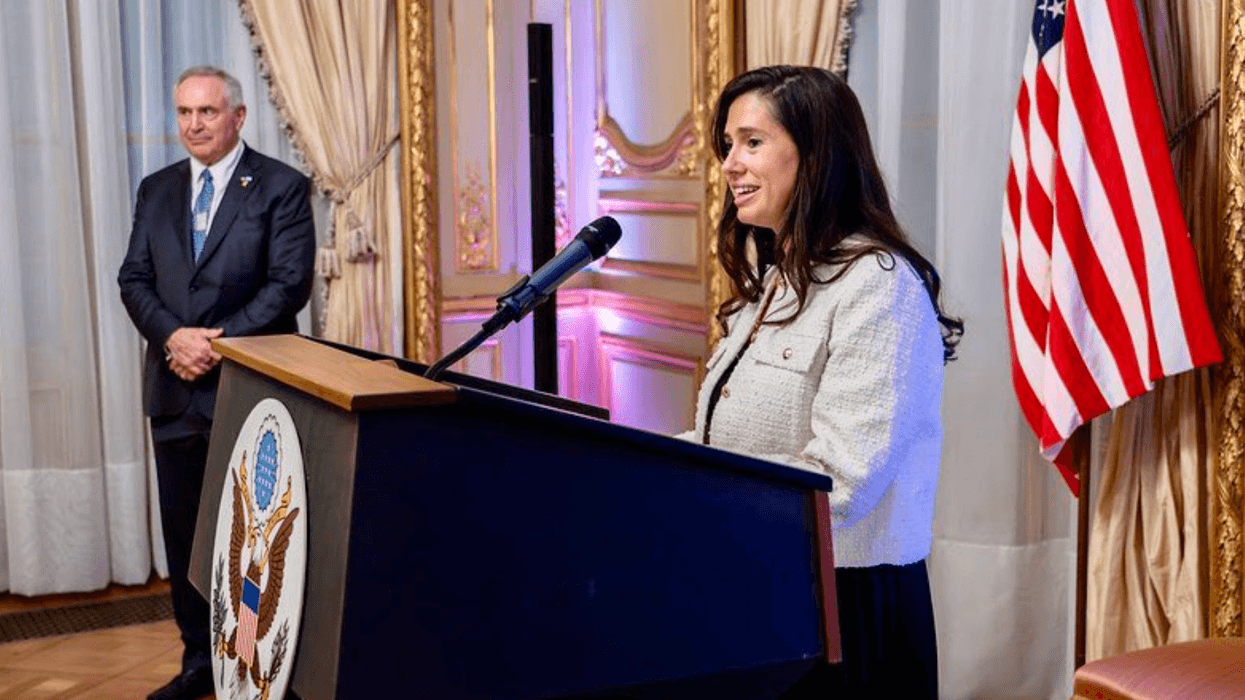
Former Biden Official With AIPAC Ties Tapped for Trump's 'Corrupt, Anti-Palestinian' Board of Peace
"Democrats should firmly oppose it regardless of how many former AIPAC employees the Trump administration sends up to the Hill to sell it," said one policy expert of the Board of Peace.
Oct 26, 2026
As President Donald Trump's Board of Peace, the organization that is tasked with overseeing a peace plan in Gaza, looks to boost its bipartisan appeal ahead of the midterm elections, in which Democrats could take control of one if not both chambers of Congress, the board announced Monday that it had appointed a former Biden administration official to help smooth the effort.
Shelley Greenspan, who served in the State Department and then as the White House liaison to the Jewish community for two years under President Joe Biden, was selected to lead external affairs, including outreach to members of Congress and think tanks in Washington, DC.
Greenspan has previously worked for Amazon in global innovation policy, for the Hillary Clinton presidential campaign in 2016, and as a legislative manager for the powerful pro-Israel lobbying group, the American Israel Public Affairs Committee (AIPAC).
Her appointment comes just before the US elections, but also legislative elections in Israel, which have held up the peace process as Prime Minister Benjamin Netanyahu has refused to take steps on the peace plan before the country goes to the polls Tuesday.
Recent polling has projected that a bloc of opposition parties could win more seats than Netanyahu's far-right nationalist alliance.
Greenspan has promoted Trump's 20-point peace plan as one that could bring "practical results" to Palestinians in Gaza.
In a statement to Axios on Monday, she said that in her last federal government role at the State Department, "I saw how the president's 20-Point Plan can tangibly deliver for the peoples of Gaza and Israel. I look forward to continuing that work with the Board."
But rights groups have warned the Board of Peace has failed to deliver safety to Palestinians. In May, five months after the board was established at the World Economic Forum in Davos, Switzerland—where Trump's son-in-law, Jared Kushner, presented a vision for a "new Gaza" complete with data centers and luxury high-rises—Human Rights Watch found that 865 Palestinians had been killed by Israeli forces since the October 2025 ceasefire and humanitarian aid was still "far below required levels."
The Board of Peace was given a mandate by the United Nations Security Council to oversee the reconstruction of Gaza, with Trump serving as "chairman for life." Last month, it unveiled a $2.45 billion recovery plan, including 66 projects.
But as Eric Reidy wrote at The New Humanitarian last week, the board "has put forward grand visions for redevelopment that are entirely disconnected from Gaza’s past and present as well as preliminary plans for stabilization that lack any viable path for implementation."
Meanwhile, Israel has continued to wage deadly attacks on Palestinians and daily life in the exclave has been "suspended in an intolerable state of limbo," he wrote.
"Trump’s 20-point peace plan says that Israel 'will not occupy or annex Gaza,' but it makes no mention of the West Bank," Reidy added. "The question of Palestinian self-determination is kicked indefinitely down the line to some point in the future when 'the conditions may finally be in place.' There is no mention of Palestinian rights or of justice and restitution, let alone recognition of Israeli crimes. Can there really be a path forward in Gaza that would benefit its people without addressing, or even acknowledging, the underlying causes of their suffering, namely Israel’s colonization and subjugation of Palestinians?"
Meanwhile, allegations of corruption have emerged, with Trump pledging $10 billion in taxpayer funds to the Board of Peace.
Matt Duss, executive vice president at the Center for International Policy, urged Democrats in Congress to oppose to board despite its attempt to cast itself as a bipartisan operation by appointing Greenspan.
"There's no 'fixing' the Board of Peace, and it's doing exactly what the world expects of it: serving as a Trump slush fund while validating continued Israeli control of Gaza, at the expense of Palestinian lives and rights," said Duss. "That is its purpose. No one should pretend otherwise."
Greenspan's appointment, said Akbar Shahid Ahmed of The Washington Sun, "underscores continuity in Biden-Trump policy for ongoing Palestinian suffering," and the "reluctance to pressure Israel even for stated US goals" such as an end to Israeli attacks on Gaza.
The Board of Peace, said progressive organizer Melissa Byrne, "is war and subjugation by another name."
Keep ReadingShow Less
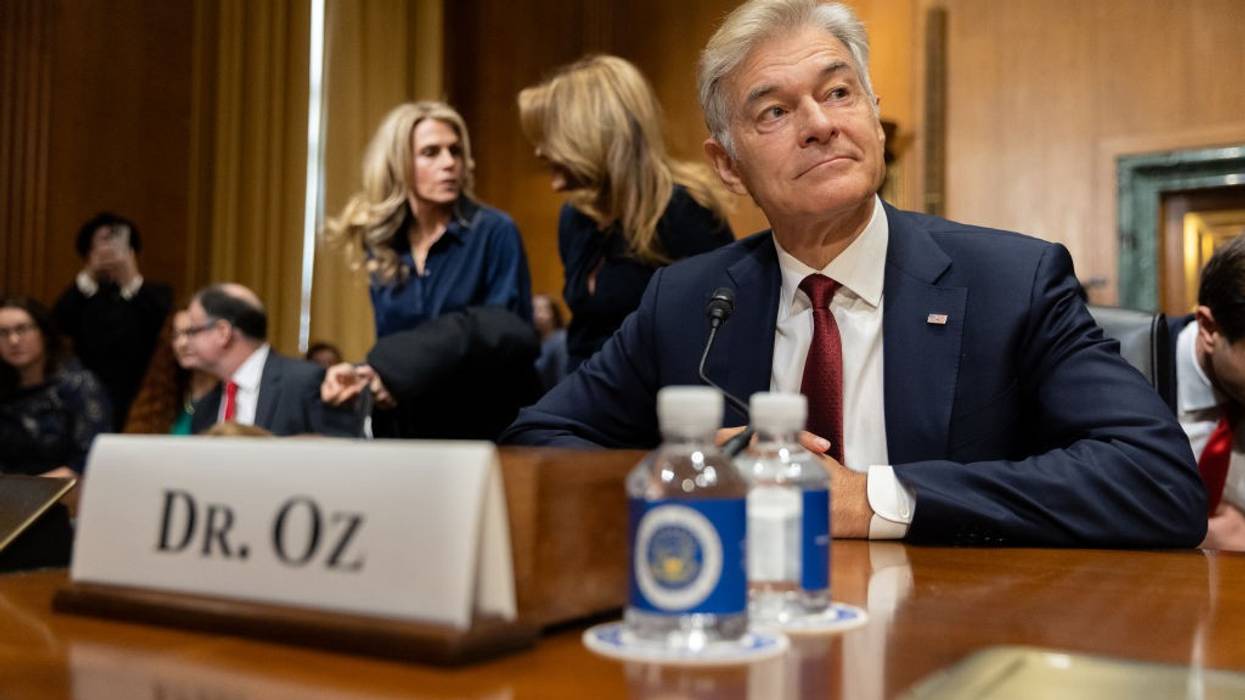
Over a Million Seniors Sent Scrambling as Medicare Advantage Giants Slash Plans Under Trump
Medicare Advantage giants are seeking to boost their profits by cutting benefits and exiting counties across the US—despite receiving a big payment boost from the Trump administration.
Oct 26, 2026
Seniors across the United States are scrambling to find alternative health coverage as Humana, UnitedHealthcare, and other private insurance giants slash Medicare Advantage benefits and cancel some plans entirely—despite receiving a major payment increase from the Trump administration for the coming fiscal year.
Humana and UnitedHealthcare's plan cancellations are expected to impact more than 1 million seniors nationwide, forcing people to find new plans in the current open enrollment period that runs until December 7. Both companies have signaled that they are trying to boost their bottom lines by exiting unprofitable Medicare Advantage markets and cutting benefits such as routine dental coverage, which is not offered by traditional Medicare.
"My biggest challenge for picking a plan next year is the cost of dental plans and vision are going up," one Medicare Advantage enrollee told PBS last week.
The health policy nonprofit KFF noted in an analysis earlier this month Humana and UnitedHealthcare are withdrawing their Medicare Advantage prescription drug plans from more US counties than they are entering in 2027. UnitedHealthcare is exiting 228 counties and entering nine new ones, while Humana is leaving 62 counties and entering four new ones, KFF found.
Blue Cross Blue Shield is also eliminating some of its Medicare Advantage plans, which are funded by the federal government—at a massive cost to US taxpayers—and run by private companies. The Boston Globe reported on Monday that "about 20,000 seniors in Massachusetts will be forced to find new health insurance plans" due to the Blue Cross Blue Shield cuts.
In Minnesota, an analysis by the Star Tribune found that around two-thirds of state residents enrolled in Medicare Advantage—around 340,000 people—will have to find new coverage for the coming year due to private insurers' cuts.
"Fifteen counties are losing their remaining Medicare Advantage options next year. In 12 of those counties, though, insurers will sell a different kind of privatized Medicare coverage called a Cost plan," the Star Tribune reported last week. "Cost plans sell at typically higher monthly premiums than Medicare Advantage plans."
Nationwide, more than half of the Medicare-eligible population is enrolled in Medicare Advantage plans, which are notorious for overbilling the federal government and denying coverage for necessary care—increasingly using artificial intelligence technology.
Medicare Payment Advisory Commission estimated in a report published earlier this year that the federal government will pay roughly $76 billion more to cover seniors on Medicare Advantage plans than it would have if those same people were on traditional Medicare. Over the next decade, according to the nonpartisan Congressional Budget Office, Medicare Advantage overpayments could cost the federal government around $1 trillion.
Earlier this year, the Trump administration gave the Medicare Advantage industry a significant boost by hiking federal payments to private insurers by roughly 2.5%—a sizeable increase compared to the 0.9% raise that the administration previously floated. Reuters reported in April that the industry will also receive a "2.5% benefit from a change to risk assessment payments related to health status, for a total increase of about 5%."
The Centers for Medicare & Medicaid Services, which announced the payment boost, is currently headed by Mehmet Oz, who once proposed a healthcare plan dubbed "Medicare Advantage for All."
The advocacy group Families USA called the 2027 payment increase for Medicare Advantage insurers "a big giveaway" that could have gone toward "bolstering benefits in Medicare for all seniors and people with disabilities."
Keep ReadingShow Less
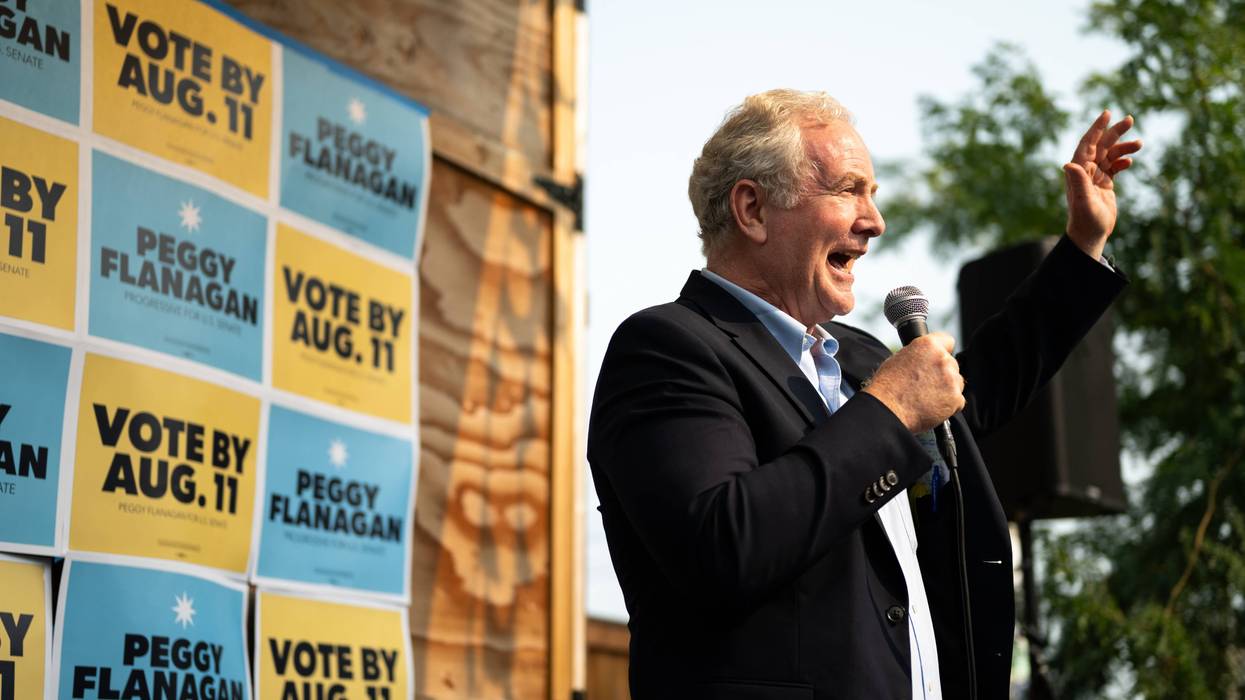
Van Hollen Says Medicare for All Is What's Needed If Democrats Take Back the Senate
“The reality is people are facing huge increases in premiums and copays… So we need a Medicare-for-All-type solution,” Van Hollen said. “This is the kind of debate we need to have.”
Oct 26, 2026
Another possible Democratic presidential contender says the party needs to pursue “Medicare for All” as a solution to America’s healthcare crisis should the US Senate flip blue in November.
“The reality is people are facing huge increases in premiums and copays. So we need a Medicare-for-All-type solution,” Sen. Chris Van Hollen (D-Md.) said in a Monday report from Politico. “This is the kind of debate we need to have.”
Van Hollen joins a list of potential 2028 hopefuls who have endorsed the idea of a single-payer healthcare system—including Reps. Alexandria Ocasio-Cortez (D-NY) and Ro Khanna (D-Calif.), who have championed the policy for years, following the lead of Sen. Bernie Sanders (I-Vt.).
Democratic California Gov. Gavin Newsom has also declared that he believes in “universal healthcare” and “Medicare for All” but has not yet released a concrete proposal for what his version of the policy would look like.
Van Hollen, who previously backed a public health insurance option to compete with private insurance, supported Sanders' Medicare for All bill in December as premiums were set to skyrocket after Republicans allowed enhanced Affordable Care Act insurance subsidies to expire.
He declared that Congress "must stop tinkering around the edges of a broken healthcare system," pointing to the massive administrative costs and poor health outcomes under the for-profit status quo.
Medicare for All could also face a more favorable climate in the Senate than it did during the Biden presidency.
If Democrats retake the chamber this November—buoyed by promises to tackle the high costs of everything from healthcare to energy to food—Sanders is expected to once again be appointed chair of the Senate Health, Education, Labor, and Pensions (HELP) Committee.
Sanders led the committee from 2023-25, a time when Medicare for All lacked any chance of passing out of a Republican-controlled House of Representatives.
While a new Medicare for All bill would likely be routed through the Senate Finance Committee, chairing HELP would give the Vermont socialist the power to frame the debate on healthcare by holding hearings that could address problems with private insurance and launching investigations into industry practices, while making the case for a single-payer system.
In an April 2026 letter, co-signed by Sen. Ron Wyden (D-Ore.), Sanders called for a series of high-profile Senate hearings grilling insurance CEOs over rising premiums, coverage denials, executive compensation, and industry consolidation.
“The American public deserves to know why the big insurance executives... continue to get richer and richer, while over one-third of people with health insurance have been forced to skip or delay getting the care they need because of the outrageous cost,” Sanders and Wyden wrote. “It is time for our committees to hold the chief executives of the major health insurance companies accountable for their greed and to address the healthcare crisis in America."
A strong showing for Democrats in November's midterms could bring a new crop of Medicare for All supporters to Congress, such as former Detroit public health official Abdul El-Sayed and labor leader Troy Jackson, who are leading their Senate races in Michigan and Maine.
As private insurance premiums spike and millions of Americans lose coverage after the Trump administration imposed the largest federal healthcare spending cut in the nation's history, Medicare for All also has more public support than it has had in years.
A September survey by KFF found that 66% of adults said they’d favor “a national health plan in which everyone gets insurance from a single government plan.” Support came from 84% of Democrats, who’ve long backed it, as well as nearly three-quarters of independents and even just over a third of Republicans.
“If I have anything to say about it… the agenda of the Democratic Party is going to be extremely bold. It is going to take on high costs,” Sanders told Politico. “The super [political action committees] are not going to run the agenda anymore. We’re going to do what the American people want.”
Keep ReadingShow Less

Israel's Intensified Ethnic Cleansing of West Bank Spurs Calls for 'Urgent Action'
“The world cannot stand by as Israel continues its assault on Palestinians, waiting for yet more neighborhoods to be emptied and erased before intervening,” said the Israeli rights group B'Tselem.
Oct 26, 2026
Human rights groups on Monday implored the international community to act in the face of Israel's accelerating ethnic cleansing of West Bank Palestinians following a resistance attack that killed two Israel Defense Forces soldiers and ahead of Tuesday's Israeli elections.
Al Jazeera reported that more than 3,000 Palestinians have been forced from their homes in Hebron in the illegally occupied West Bank, a city long beset by Israeli settlement expansion and displacement. In addition to a military lockdown, Israeli occupation forces have detained scores of Palestinians since two IDF soldiers were shot dead on Friday.
Israeli Prime Minister Benjamin Netanyahu—whose far-right coalition is trying to shore up support ahead of Tuesday's elections—and other senior officials have openly indicated plans to ramp up the ethnic cleansing of the area. Israeli Defense Minister Israel Katz and Finance Minister Bezalel Smotrich have vowed to treat the West Bank like Gaza, where more than 250,000 Palestinians have been killed or wounded and around 1.9 million others have been forcibly displaced amid a "complete siege" since the Hamas-led attack of October 2023.
“This is not only a humanitarian crisis but a deliberate assault on the economic foundations of Palestinian life, as families lose their homes and livelihoods," Mustafa Tamaizeh, Oxfam International's West Bank response lead, said Monday. "The destruction of factories, workshops, and business premises is wiping out years of investment and hard work."
"These illegal actions amount to collective punishment and are accelerating the forced displacement of Palestinian communities across the West Bank," Tamaizeh continued. "They come during the olive harvest, one of the most important sources of income for Palestinian farming families."
“In recent days, high-ranking Israeli officials have openly acknowledged they are considering plans for the largest military operation in the West Bank since 1967, with calls for operations in the West Bank to be conducted like those in Gaza," he added. "Against this backdrop Oxfam is calling for urgent action by the international community to stop Israel’s campaign of mass forced displacement, demolitions, and state-backed settler violence, which amount to a policy of ethnic cleansing.”
The International Commission to Support Palestinian Rights (ICSPR) said Monday that it "strongly condemns the escalation of Israeli occupation crimes across the occupied Palestinian territory, including the siege, raids, home demolitions, and forced displacement of residents in Hebron and other areas of the West Bank."
"These violations coincide with raids on more than 15 towns and cities in the northern West Bank, the arrest of numerous Palestinians, escalating settler attacks, and road closures, alongside the continued mass killings and war crimes against civilians in the Gaza Strip," ICSPR continued.
"ICSPR calls on the United Nations and the states parties to the Geneva Conventions to take immediate and binding measures to halt Israeli occupation crimes and provide international protection for civilians in Gaza, the West Bank, and occupied East Jerusalem," the group added. "It calls for an end to forcible evictions, home demolitions, settler attacks, and settler terrorism."
United Nations Secretary-General António Guterres weighed in Monday, invoking the "specter of ethnic cleansing" and calling for "the realization of the legitimate rights of the Palestinian people to self-determination."
Community Peacemaker Teams (CPT), a Christian human rights group, also condemned Israel's actions, issuing a statement Monday asserting that “families should never have to live in fear of being forced out of their homes or separated from the places where they have built their lives."
CPT stressed that "every Palestinian has the right to live safely and with dignity in their own home." The group urged the international community "and diplomatic missions to act now to protect civilians in Hebron," and "people of faith and conscience to contact their elected representatives and call for action to protect Palestinian civilians."
At least one Israeli rights group also condemned the government's and IDF actions.
“The world cannot stand by," B'Tselem said, "as Israel continues its assault on Palestinians, waiting for yet more neighborhoods to be emptied and erased before intervening."
Keep ReadingShow Less

Trump Doesn't 'Give a Damn' About Iran War Price Hikes—His Oil and Gas Holdings Are Up to $81.6 Million
"Trump's Iran War has forced Americans to pay much more at the pump while Big Oil rakes in profits and the president's own stock wealth in the oil and gas industry continues to balloon."
Oct 26, 2026
After US President Donald Trump spent the weekend reminding midterm campaign rally attendees that he doesn't "give a damn" about soaring gasoline prices from his illegal Iran War, congressional Democrats on Monday released a report showing that his oil and gas stock holdings could now top $80 million.
During a Saturday rally in Georgia, Trump highlighted that due to his war of choice, the US fossil fuel industry is "making hundreds of billions of dollars," and predicted his comments will be turned into "fake headlines," but he added: "I don't give a damn, I'm going to say it: We're making a freaking fortune."
Just how much extra is the public paying at the pump because of the eight-month conflict? As of Monday, the national average was $4.29 a gallon for gasoline and $6.35 for diesel, according to the American Automobile Association.
An online tracker from the Costs of War Project at Brown University estimates US residents have paid at least $144.6 billion more for fuel—$79.8 billion for gasoline and $64.79 billion for diesel. That's over $609 per household, just for gasoline.
Data from the congressional Joint Economic Committee suggest the impact could be even worse. As JEC Democrats' Monday report notes, the panel found that US households "have now spent an additional $101 billion on gasoline since the start of the Iran War, or an average of $856 in gas costs per family."
A state-by-state breakdown in the report—released just days ahead of the midterm elections that will determine control of Congress for the remainder of Trump's second term—reveals that price increases for gasoline have hit some areas particularly hard. Wyoming, a Republican stronghold, has had the highest hike per household, at $1,454.
Rounding out the top 10 are Utah ($1,240), Alabama ($1,232), Montana ($1,180), Mississippi ($1,141), South Dakota ($1,122), Idaho at ($1,108), North Dakota ($1,087), New Hampshire ($1,029), and Iowa ($1,010). Trump won all of those states but New Hampshire in 2024—when he campaigned on a promise to serve the interests of the climate-wrecking fossil fuel industry if its executives dumped $1 billion into his run, while also claiming he would lower costs for working people.
Meanwhile, the report stresses, Trump's oil and gas holdings could have nearly doubled this year, growing by as much as $35.8 million, for a total of up to $81.6 million—and 94% of his 2026 industry stock purchases occurred after he went to war with Iran, which has restricted ship traffic through the Strait of Hormuz.
The document details Trump's holdings—which are reported in ranges—in Chevron, ConocoPhillips, ExxonMobil, Marathon Petroleum, Occidental Petroleum, Phillips 66, Valero Energy, and Williams Companies. It also warns that "the true value may in fact be higher given that Trump has yet to report stock transactions for September or October, and because he has a history of filing his transactions much later than the law requires."
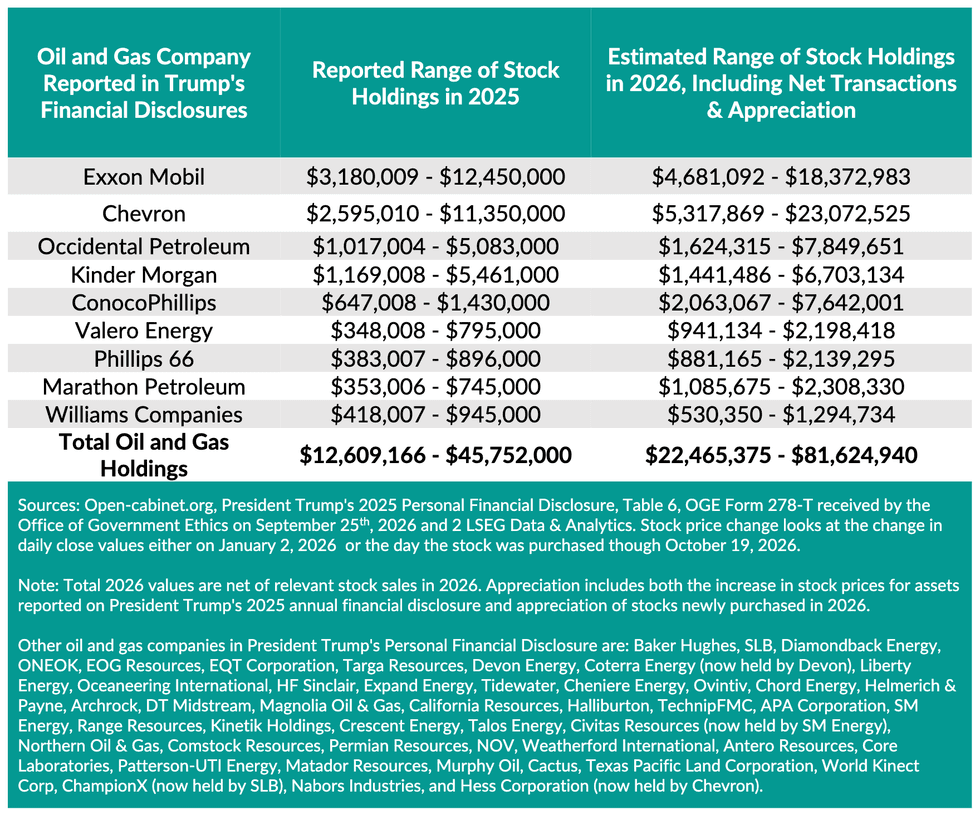 The graph published by the congressional Joint Economic Committee on October 26, 2026 shows US President Donald Trump's stock holdings in oil and gas companies.
Sen. Maggie Hassan (D-NH), the JEC's ranking member, declared that "Trump's Iran War has forced Americans to pay much more at the pump while Big Oil rakes in profits and the president's own stock wealth in the oil and gas industry continues to balloon."
Trump has faced scrutiny and criticism for cashing in on the conflict he created, which the White House has tried to dismiss by pointing out that the president's "stock and bond portfolio is independently managed by third-party financial institutions."
Such comments have not appeased critics, including Hassan, who said that "as Trump—the country's highest-ranking public employee—continues to own and trade stocks in companies that stand to benefit from his decisions, his actions raise major concerns about conflicts of interest. Unfortunately, this is nothing new from this administration and only reinforces that the president puts his own financial interests above the American people."
Keep ReadingShow Less
See More
Most Popular