

SUBSCRIBE TO OUR FREE NEWSLETTER
Daily news & progressive opinion—funded by the people, not the corporations—delivered straight to your inbox.
5
#000000
#FFFFFF
To donate by check, phone, or other method, see our More Ways to Give page.
Daily news & progressive opinion—funded by the people, not the corporations—delivered straight to your inbox.

Dan Beeton, 202-239-1460
The Center for Economic and Policy Research (CEPR) released a research paper today that looks at social and economic indicators, as well as policy changes that have occurred since 2003 in Brazil.
"The lives of tens of millions of Brazilians have been transformed by the economic and social policy changes of the past decade," said CEPR Co-Director Mark Weisbrot, lead author of the paper. "A sharp increase in economic growth, combined with increased social spending, large increases in the real minimum wage, and increased bargaining power for labor allowed for greatly reduced poverty and unemployment, as well as declining inequality."
"These changes appear to be durable, having mostly withstood the world recession and the slowdown in worldwide economic and trade growth of the past few years."
Among the paper's findings:
* Since the Workers' Party (PT) won the presidency with Lula da Silva taking office in 2003, poverty has been reduced by over 55 percent, from 35.8 percent of the population to 15.9 percent in 2012. Extreme poverty has been reduced by 65 percent, from 15.2 percent to 5.3 percent over the same time period. Over the last decade, 31.5 million Brazilians were lifted out of poverty and, of that number, over 16 million out of extreme poverty.
* GDP per person grew at a rate of 2.5 percent annually from 2003-2014, more than three times faster than the 0.8 percent annual growth of the prior government (1995-2002). This was in spite of the 2008-09 world financial crisis and recession, which pushed Brazil into recession in 2009; and also including the slowdown of the past few years.
* While inequality remains high, there were large changes in how the gains from economic growth were distributed as compared with the prior decade. For example, the top 10 percent of households received more than half of all income gains from 1993-2002, but this fell to about one-third for 2003-2012.
* Social spending has consistently increased since 2003, rising from 13 percent of GDP to over 16 percent in 2011, the last year for which data is available. Education spending has increased from 4.6 percent of GDP in 2003 to 6.1 percent of GDP in 2011.
* Unemployment has decreased from 13.0 percent in 2003 to an average of 4.9 percent in the first quarter of 2014, a historic low.
The paper finds that these results were achieved due to policy choices, including often counter-cyclical fiscal and monetary policy, a reactivated industrial policy, lowered domestic interest rates and a break with IMF conditionalities following Brazil's paying off its IMF debt early, in 2005. Economic stimulus helped Brazil rebound strongly from the 2008-2009 global recession. The government has raised the real (inflation-adjusted) minimum wage by 84 percent; this boosted pensions and public sector wages that are tied to it, as well as other wages and salaries.
Programs such as Bolsa Familia (BF) helped bring down poverty; since 2003, expenditures on the program in real (inflation-adjusted) Reais increased from 4.8 billion to 20.7 billion (0.2 percent of GDP to 0.5 percent of GDP). From 2003 to 2012 the number of individuals covered by Bolsa Familia increased from 16.2 million to 57.8 million. As a percent of the population, coverage increased from below 9 percent in 2003 to nearly 29 percent in 2012.
The PT government has aided the country's industrial sector in part through the national development bank BNDES. Disbursements from BNDES have increased from 2.2 percent of GDP in 2005 to nearly 4 percent in 2013, with priority sectors for Brazil's industrial policy receiving about 80 percent of BNDES disbursements between 2006 and 2012.
In the last few years the economy has slowed, although unemployment has continued to decline, and average wages have risen. The paper faults overly-tight and sometimes pro-cyclical macroeconomic policies, including monetary and fiscal policy, since 2011, for the economic slowdown; as well as the slowdown in world economic and trade growth.
The Center for Economic and Policy Research (CEPR) was established in 1999 to promote democratic debate on the most important economic and social issues that affect people's lives. In order for citizens to effectively exercise their voices in a democracy, they should be informed about the problems and choices that they face. CEPR is committed to presenting issues in an accurate and understandable manner, so that the public is better prepared to choose among the various policy options.
(202) 293-5380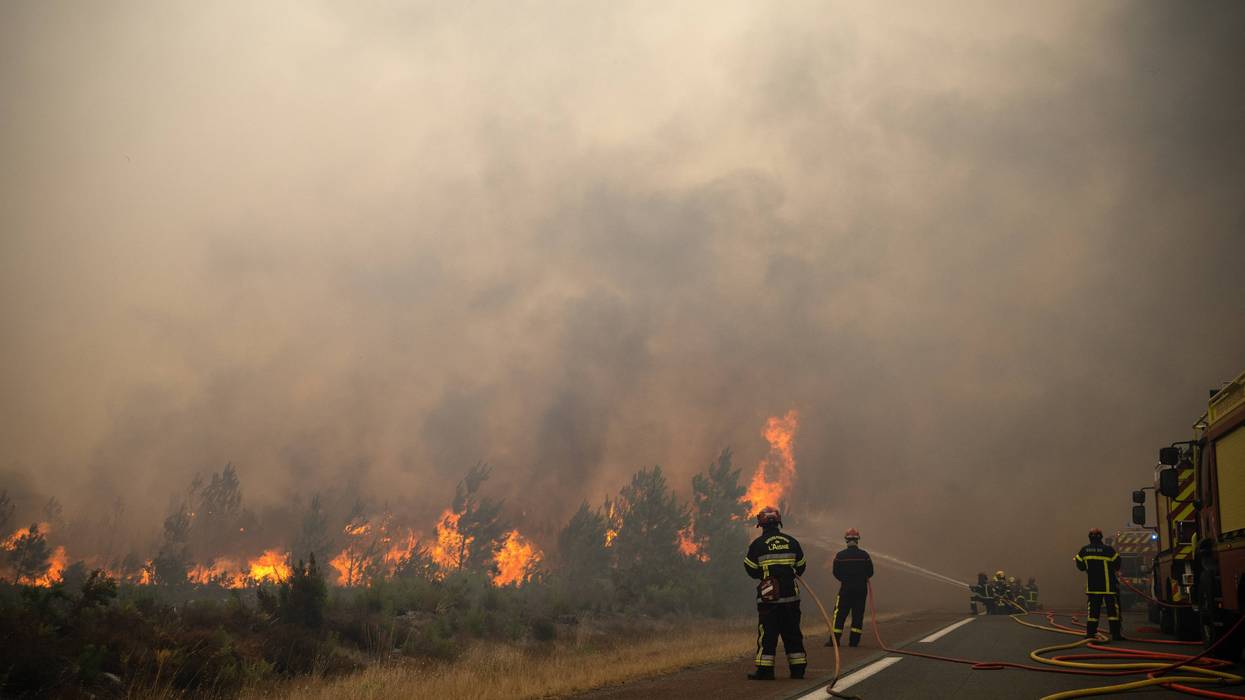
“It is the most painful manifestation of a climate emergency that is making… wildfires more voracious and heatwaves more frequent, and as a result our land more vulnerable," said Spanish Prime Minister Pedro Sánchez.
More than 300,000 people have been displaced as historic wildfires tear across France and Spain, presaging what some have called a climate-fueled "crisis of habitability" across Europe, which is heating faster than anywhere else on the globe.
Record heat and drought have fueled multiple record wildfires around the French wine-growing region of Bordeaux and in central Spain near Madrid. As the region expects to see temperatures above 95°F later this week, firefighters are racing to quell the blaze as it grows out of control.
Across the two countries, at least one person has been killed, and more than 100 have been sickened or injured. In France, 80 firefighters have been injured.
About 448 square miles of terrain have been scorched across France since the beginning of 2026, the highest annual total in modern history, even though it's only July.
The fires in France have grown so powerful and unwieldy that they've formed what the National Firefighters Federation of France described as a “pyrocumulonimbus”—an unprecedented fire-generated thunderstorm cloud that generates its own wind and lightning, which spreads the flames across the landscape.
In Spain, fires around Ávila burned about 193 square miles in five days—an area roughly five times the size of Barcelona—making it the largest wildfire in the nation's history. Civil protection chief Virginia Barcones said her country was facing a "monster."
Extreme wildfires are becoming more common around the world as global temperatures increase. Across Europe, where temperatures have soared twice as fast as the global average, the pattern has been even more intense.
Last year was the worst fire year on record in the European Union, with nearly 4,170 square miles of land burned—almost double the annual average from 2006-24.
Speaking at a climate conference, Spanish Prime Minister Pedro Sánchez emphasized that the fires should not be viewed as isolated incidents.
“It is the most painful manifestation of a climate emergency that is making… wildfires more voracious and heatwaves more frequent, and as a result our land more vulnerable,” Sánchez said. “It is no longer an exception. It is the rule.”
In an op-ed for Le Monde, philosopher Cynthia Fleury and the Socialist mayor of Saint-Médard-en-Jalles in southwestern France, Stéphane Delpeyrat-Vincent, wrote that where previous fires and heatwaves have posed threats to individuals, "the 2026 heatwave has been something else entirely."
"No longer are only individuals at risk, but entire regions," they wrote. "Extreme heat now goes hand in hand with megafires, the destruction of whole landscapes, the collapse of environments and the evacuation of entire towns. The health crisis has become a crisis of habitability."

"If the president continues to treat our economy like a schoolyard game, our students and their families will pay the price."
Even as President Donald Trump continues dismissing Americans' concerns about affordability heading into the 2026 midterm elections, a study released on Monday reveals that US parents are about to pay a hefty premium to ensure their children are prepared for school this fall.
A joint analysis from Groundwork Collaborative and The Century Foundation finds that a typical basket of school supplies costs nearly 8% more than it did last year, with typical school lunch items costing 11% more.
Lunch boxes have posted the largest yearly price increase, as the analysis estimates they will cost nearly 27% more this year than in 2025. Other items whose prices have soared include one-subject notebooks (23% yearly increase), index cards (22%), and notebook paper (20%).
Trump's illegal war with Iran, which has caused fuel prices including diesel to surge higher, has played a large role in increasing prices, as have his tariffs on foreign imports, the report notes.
The increase in diesel has been particularly troublesome for the price of food, the analysis points out, as the fuel is used both by farmers to power their agricultural equipment and by delivery trucks that ship food to grocery stores.
When it comes to the tariffs, the report points to Newell Brands—the company that makes Sharpies, Paper Mate, Elmer's glue, and other school supply staples—which has been hit with a $174 million tax bill thanks to Trump's policies and has consistently raised prices over the last year.
The report also points to changes made to the Supplemental Nutrition Assistance Program (SNAP) made in Republicans' 2025 budget law that will make it harder for low-income kids to qualify for food assistance this school year.
Lindsay Owens, president of Groundwork Collaborative, said Trump's policies are forcing parents "to worry about whether they can afford to buy what their students need to be successful in the classroom."
"If the president continues to treat our economy like a schoolyard game, our students and their families will pay the price," said Owens. "When report cards come this year, Americans will give Trump an F.”
Janelle Jones, senior fellow at The Century Foundation, noted that school supplies aren't luxuries for families, but rather "the baseline for a kid to show up ready to learn."
"When notebooks and paper are up over 20%," Jones emphasized, "we’re not just squeezing family budgets, we’re setting students up to fall behind. We know where this leads: lower test scores, more kids repeating grades, and worse outcomes well into adulthood."

"People across Maine and the country are ready to come together and finish the job" of defeating Susan Collins, said the Democratic candidate.
With Maine Republican Sen. Susan Collins backed by nearly 100 billionaires, Democratic Senate candidate Troy Jackson has been open about the fact that beating Collins in November will be an uphill battle—but he said Monday that $2 million that's poured in from small donors in recent days gave him hope about the "extraordinary grassroots momentum" behind his campaign.
Jackson officially became the Democratic nominee on Saturday at the party's convention—planned in a matter of weeks after former nominee Graham Platner dropped out due to rape allegations—with Democrats across the state apparently eager to throw their support behind a candidate who backs the same progressive policies that his predecessor did.
Since securing the nomination, said Jackson's campaign Monday, he has raised $2 million from more than 58,000 donors, including 30,000 new contributors.
"I'm humbled beyond words by the tens of thousands of people who have stepped up to become part of this campaign," said Jackson in a statement. "Every contribution—whether it was $5, $20, or more—is a vote of confidence in the working-class movement we're building together."
Without a billionaire-backed super political action committee (PAC) like the one set up by Collins' allies, Pine Tree Results—which is planning to spend $20 million on attack ads against Jackson this fall, according to The New York Times, the fifth-generation logger and former state Senate president is relying on donations that must be $3,500 or smaller per donor.
Collins' campaign and her allies have reserved about $60 million in air time for ads through the fall, according to AdImpact, while the Democrats have allocated about $24 million for ads in Maine.
Jackson told The New York Times Monday that he will likely need to raise at least $40 million-$50 million to beat Collins due to her fundraising advantage, but emphasized that he believes he is in a good position to win voters over based on the issues they'll be voting on in November.
“I’m going to definitely bust my ass in these next four months to make up the difference," Jackson said regarding the fundraising challenge. “And in the end, I think I’m on the right side of the issues compared to Susan Collins. So I feel very good about the race.”
Jackson is a strong supporter of Medicare for All, abolishing US Immigration and Customs Enforcement, ending US military support for Israel, and taxing the ultrawealthy and corporations to address massive wealth inequality in the US—all issues that are increasingly popular with voters.
"In the end, I think I’m on the right side of the issues compared to Susan Collins. So I feel very good about the race.”
He has condemned Collins, the chair of the powerful Senate Appropriations Committee, in recent weeks for backing President Donald Trump's agenda and for her vote to fund ICE earlier this year—expressing anger over the vote after a federal agent fatally shot a young father in Biddeford, Maine earlier this month.
A poll released by University of New Hampshire last week showed 49% of respondents backing Jackson, compared with 46% who supported Collins.
"Susan Collins has spent years voting with Donald Trump 96% of the time, helping him stack the Supreme Court to overturn Roe v. Wade and supporting an agenda that guts healthcare while handing more power to billionaires and corporations," said Jackson Monday. "Defeating her won't be easy, and we'll need everyone in this fight."
The early fundraising numbers, said Jackson, prove "that people across Maine and the country are ready to come together and finish the job."

Under the new rule, an immigrant rights activist said, many asylum seekers "will never get a chance to argue their case."
The Trump administration published a new regulation on Monday that will immediately allow it to potentially send almost a third of asylum applicants straight into deportation proceedings without an interview to evaluate their claims.
US asylum law requires the government to give asylum seekers a “reasonable opportunity” to present evidence that they face persecution in their country of origin as a result of race, religion, nationality, social group membership, or political opinion.
For more than three decades, US Citizenship & Immigration Services explicitly stated that this process includes the "right" to an interview, where those seeking asylum have the opportunity to describe the persecution they fear and provide facts that may not have been included in their written asylum application.
But an interim final rule is scheduled to take effect on Tuesday that will scrap this right, allowing USCIS to skip the interview and refer applicants directly to immigration judges based solely on other documents they have submitted, which are often prepared without the help of an attorney in a language the applicant may not speak fluently.
In the filing for the new rule, USCIS acknowledged that applicants may be more likely to provide greater detail in face-to-face interviews, but that the overwhelming backlog of cases makes this unsustainable.
The filing states that the new rule will “more quickly place certain aliens into removal proceedings” at the Executive Office of Immigration Review (EOIR), the agency within the Department of Justice (DOJ_ that runs the federal immigration court system.
While these officials are referred to as "judges," they are really part of the executive branch, appointed at the discretion of the attorney general and not subject to any Senate confirmation process.
Critics say that under President Donald Trump, these appointees have been selected to carry out his restrictive immigration agenda.
For these positions, which the administration has advertised as “deportation judges,” The Washington Post found that two-thirds of those appointed as of April 2026 had no immigration law experience. Immigration judges granted asylum in fewer than 5% of cases in February 2026, compared with 48% in 2024.
In September, the Trump DOJ gave immigration judges broader discretion to toss out claims by allowing them to "pretermit" those that they decide are "legally deficient," meaning that applicants can be deported without a full hearing.
As it has carried out its "mass deportation" campaign, the administration has often violated the due process of immigrants in the US by removing them without notice or hearings, detaining longtime residents without the opportunity to secure bond, restricting access to legal counsel, and using mass court procedures to prevent claims from being meaningfully heard in court.
Aaron Reichlin-Melnick, a senior fellow at the American Immigration Council, said that the new rule will allow USCIS to "deny hundreds of thousands of applications without an interview, sending applicants directly to deportation proceedings."
According to the filing, the Department of Homeland Security estimated that the new rule could affect as many as 444,724 pending cases and roughly 132,000 future applicants each year.
"This means many people will never get a chance to argue their case," Reichlin-Melnick said.
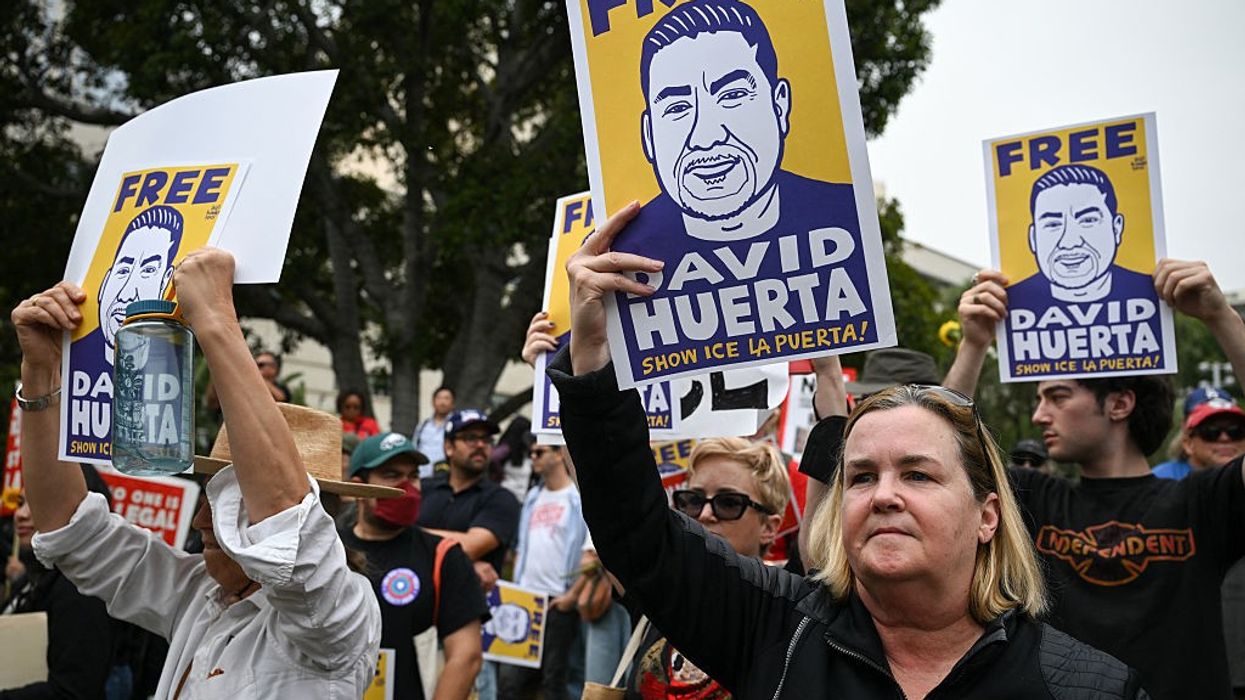
"This case, like others, sought to silence criticism of the administration's improper immigration actions," said attorneys representing California labor leader David Huerta.
The US Department of Justice on Monday moved to drop its criminal case against California labor leader David Huerta, who was charged with conspiring to impede an officer after being arrested last year while protesting federal immigration enforcement operations.
In a two-page filing, the DOJ said it was moving to dismiss charges against Huerta, president of SEIU California and SEIU-United Service Workers West.
As noted by a Monday Politico report, the DOJ had originally hit Huerta with a felony obstruction count, then downgraded it to a misdemeanor, before moving to drop the case altogether.
Heurta's arrest caused an outcry last year, as video footage taken from the protest showed a masked law enforcement officer shoving the labor leader to the ground during a demonstration against a US Immigration and Customs Enforcement (ICE) raid in Los Angeles.
EVERYBODY WATCH.
ICE IS OUT OF CONTROL.
Video of SEIU California’s President David Huerta getting assaulted & arrested during an ICE raid in the warehouse district of Downtown Los Angeles today.
He’s an LA native, American citizen and labor leader.
Don’t turn away. pic.twitter.com/TuDDSHaISC
— Fight for a Union (@FightForAUnion) June 6, 2025
In a statement released after the government's motion to dismiss the case, Huerta said that the Trump DOJ "is finally admitting what we knew from day one and what was obvious to anyone who saw the videos: the charge against me was baseless, meant to intimidate anyone who dares to speak out, organize, or demand justice."
Attorneys Abbe Lowell and Marilyn Bednarski, who are representing Huerta, delivered a scathing assessment of the DOJ's conduct.
"This case, like others, sought to silence criticism of the administration's improper immigration actions," the attorneys said. "Today's filing is proof that David and other critics will not be silenced."
Lowell and Bednarski added that, even though their client is no longer facing criminal charges, the choice to pursue prosecution in the first place inflicted significant costs upon him.
"This case revealed that the Department of Justice was willing to charge a labor leader, hold it over him for months, and then walk away from it once the charge couldn't survive scrutiny," they said. "That is not how a justice system is supposed to work."
The California Federation of Labor Unions expressed a similar sentiment, arguing that the decision to charge Huerta showed the DOJ has gone off the rails.
"Today, justice prevailed," the federation said. "But it never should have gotten this far. The arrest of our union brother David Huerta was an assault on the entire labor movement by the Trump administration. The decision to drop these outrageous charges reflects the power of working people standing together."
Laurie Levenson, a former federal prosecutor and professor at Loyola Law School in Los Angeles, told The Los Angeles Times on Monday that she wasn't surprised to see the government move to dismiss charges against Huerta because there were "problems with this case from day one."
“When you look at the photos and videos, there’s certainly an argument from the defense that it was law enforcement acting in a defensive manner and he was just protesting," Levenson said. "It would have been a tough case for the prosecution to win if this went to trial."

"At its core, the revisions strip communities of their right to be heard."
Preservationists are reacting with fury after allies of President Donald Trump moved to weaken federal restrictions on construction projects built on historic sites.
Trump-appointed members of the Advisory Council on Historic Preservation (ACHP) on Friday voted move forward with rules that would weaken Section 106 of the National Historic Preservation Act, which requires the federal government to both evaluate how construction projects might impact protected places and to consult with people and groups affected by such projects, including Tribal Nations.
Rep. Jared Huffman (D-Calif.), ranking member of the House Natural Resources Committee, on Monday ripped Trump for stacking the council with loyalists who appear determined to "tear down the safeguards that protect America's history so he and his billionaire friends can build whatever they want, wherever they want."
"Right now, a developer has to stop and listen before paving over a tribal burial ground, a Revolutionary War battlefield, or the church where your grandparents were married," Huffman added. "Trump's council wants to end that and cut tribal nations, states, counties, towns, and communities out of that conversation entirely."
Greg Werkheiser, founding partner at the law firm Cultural Heritage Partners, said in an interview with NPR published on Friday that the vote amounted to an "attempt to gut historic preservation protections."
"There are millions of these sites in this country," Werkheiser emphasized, "and all of them are made less protected by this effort by the Trump administration."
The American Institute of Architects (AIA) on Monday denounced the council's vote, describing it as "a significant step back for historic preservation, community participation, and the inclusive design processes that serve the public good."
"At its core, the revisions strip communities of their right to be heard," said the AIA. "These revisions place approximately 1.4 million historic sites at greater risk by shifting decisions away from the communities where they are rooted. The revisions make public comment optional rather than mandatory, narrow the definition of historic property, and shift decision-making authority almost entirely to federal agencies—sidelining state historic preservation officers, tribal historic preservation officers, tribes, and local governments."
Michaela Pavlat, manager for the National Parks Conservation Association Indigenous Partnerships Program, said the Friday vote was a "calculated, yet unwarranted attack on tribal consultation, historic preservation, and the regulations that have protected the places that tell our country’s diverse stories."
Gussie Lord, managing attorney for tribal partnerships at Earthjustice, noted that the National Historic Preservation Act "has not slowed the pace of new roads and power plants in this country, but it has given Tribes a seat at the table and preserved irreplaceable Indigenous sites from destruction."
"What happens when entire landscapes are bulldozed without a thought to their cultural and historic importance?" Lord asked. "No one should support cutting Tribes out of the decision-making process for projects that impact their rights and sacred places."

"We have funneled tens of billions of dollars in military aid to an Israeli government that has consistently violated international law and whose leader is a war criminal."
US Sen. Bernie Sanders on Sunday decried the ceaseless and horrific suffering that the Israeli military has inflicted on the population of the Gaza Strip with the assistance of American weapons, complicity that the Vermont senator called "shameful" and illegal under international law.
"We have funneled tens of billions of dollars in military aid to an Israeli government that has consistently violated international law and whose leader is a war criminal," wrote Sanders (I-Vt.), referring to Israeli Prime Minister Benjamin Netanyahu, a fugitive from the International Criminal Court who is expected to travel to the US this week. "Enough is enough! Congress must listen to the American people. NO MORE US MILITARY AID TO ISRAEL."
Sanders, who has repeatedly tried to block Trump administration arms sales to Israel, noted that the Israeli military's genocidal assault on Gaza has continued during the so-called ceasefire agreement enacted last year, with Israeli forces aggressively extending their reach into the occupied Palestinian territory.
The Associated Press reported last week that "the Israeli military is quietly but quickly building a giant earthen barrier separating the over 50% of the Gaza Strip it controls from the rest of the territory, according to satellite imagery, further entrenching the division of the tiny Palestinian enclave."
"More than 23 kilometers (14 miles) have been constructed in recent months, running through Palestinian communities demolished by the military," AP observed. "That is equivalent to more than half the length of the coastal strip, which is some 40 kilometers (25 miles) long and 11 kilometers (7 miles) wide, and home to over 2 million Palestinians."
Sanders noted in his statement on Sunday that Israel "now controls an estimated 70% of Gaza, well beyond what they agreed to, and has built dozens of military outposts inside Gaza since the 'ceasefire' began."
"In the nine months since the 'ceasefire' was announced, Israel has killed at least 1,150 Palestinians, including a family of six last week," the senator wrote. "Now, as if to remove any doubt about their intentions, senior leaders of the Netanyahu government are moving to make the occupation permanent."
"The good news is that the American people are catching on," Sanders added. "More and more Americans—Democrats, Republicans and independents—are demanding that we stop all military aid to Israel and use our considerable leverage to end the suffering of the Palestinian people."

"Governments need to act urgently so that the Israeli government does not continue to act as if it has a green light to commit further atrocities," said a researcher at Human Rights Watch.
As Israeli Prime Minister Benjamin Netanyahu prepares to meet with US President Donald Trump this week, Israeli soldiers stormed into several villages across the occupied West Bank on Monday, expanding a rolling campaign of violence waged by illegal settlers in recent days.
Over the weekend, armed settlers rampaged across more than a dozen Palestinian communities, torching homes and farmland, vandalizing buildings and cars, and burning a pair of mosques in Qusra and Kour.
They were acts of retaliation after two armed Israelis were killed while helping dozens of settlers carry out what Palestinian physician and political leader Mustafa Barghouti described as a “terrorist attack” in the village of Tell, near Nablus in the northern West Bank. That assault killed four Palestinians.
Tell was one of dozens of Palestinian communities to be attacked in recent weeks as part of a campaign of escalating settler violence egged on by the Israeli government as it seeks to cement total control over the West Bank.
More than 150 settler attacks involving killings or property damage have been documented in the West Bank so far this month, according to the United Nations Office for the Coordination of Humanitarian Affairs (UNOCHA).
The Palestinian Health Ministry reports that 21 Palestinians have been killed by settlers this year, already more than were killed in all of 2025.
While the Israeli military has said it was working with police to investigate the desecration of the two mosques, which were burned and spray-painted with graffiti calling for "revenge" and "blood," settlers have almost never faced accountability in Israeli courts.
This weekend's violence, meanwhile, has been openly egged on by members of Netanyahu's government, which ordered more troops into the territory, where they have raided over 20 towns as of Monday morning.
Finance Minister Bezalel Smotrich, an architect of Israel's accelerating settlement construction, said Tell should “look like the refugee camps in Nablus and Tulkarem,” referring to West Bank villages devastated by Israeli home demolitions that displaced tens of thousands of Palestinians last year.
Security Minister Itamar Ben-Gvir said the town should be treated like the village of Beit Hanoun in Gaza, which has largely been reduced to rubble by Israeli attacks. He also said he’d demand that Israel bomb and bulldoze Palestinian homes.
The military said it arrested at least 130 Palestinians across the West Bank over the weekend, while just two Israeli settlers tied to extremist violence have been arrested, with no details released about charges or what attack they were involved in.
Nida Ibrahim, a reporter for Al Jazeera, said on Monday this was typical: “Israeli settlers continue their attacks against Palestinians, mostly in their homes, at night, intimidating them. And what happens is that usually Israeli forces would come in and instead of curbing these settlers, they would conduct arrests in the occupied West Bank among Palestinians."
She said Palestinians felt like they had "no one to protect them,” while "the Israeli settlers have the support of the Israeli army and have the impunity to continue attacking Palestinians without any accountability.”
Shaiel Ben-Ephraim, an Israeli analyst who specializes in settlement policy, argued that settlers' confrontations with Palestinians were meant to provoke retaliation and a military response that allows them to deepen Israeli control of the territory.
"What everyone needs to understand is that the settlers in the West Bank intentionally cause these violent confrontations," Ben-Ephraim wrote on social media. "Ninety-nine percent of the time, the Palestinian victims don't even react. Then in the 1% when they do, the IDF treats it as terrorism and starts killing and arresting the victims and giving the land to the settlers."
"This is a method," he said. "It will not stop until there is nothing left."
This weekend's escalation was met with renewed international outcry from governments and human rights groups who demanded accountability for illegal settlers and the officials enabling them.
Francesca Albanese, the UN’s special rapporteur on the occupied Palestinian Territories, described the ongoing attacks against Palestinians as “pogroms against defenseless civilians.”
Sarah Sanbar, an Israel-Palestine researcher for Human Rights Watch, said this weekend's conflagration occurred because "the Israeli government didn’t prevent the settler attacks on Tell village, so now it needs to stop settler reprisals and escalating military action that will make a bad situation worse."
She added that "governments need to act urgently so that the Israeli government does not continue to act as if it has a green light to commit further atrocities.”
Jordan's foreign ministry condemned the “escalating settler terrorism" in the West Bank, while the state of Qatar said the attacks were a "flagrant violation of international law and international legitimacy resolutions."
The European Union issued a more muted statement, without naming Israel or mentioning the involvement of illegal settlers and instead calling on "all parties to avoid inflammatory language."
Spain, meanwhile, was much more direct, calling out "violence perpetrated by Israeli settlers, who continue to act with impunity" and calling on Israel to "reverse its policies of settlement expansion and of shielding settler violence."
As of Monday morning, the Trump administration has remained silent on the violent events of the past weekend, beyond a generic State Department statement condemning violence “by any party."
This is consistent with its policy of unrestrained military support for Israel and legitimation of its project to settle occupied Palestine in violation of international law.
Nabil Fahmy, the secretary general of the Arab League, urged Trump to push Netanyahu this week to restrain “the Israeli government’s extremist ambitions,” including its implementation of a “de facto annexation in the West Bank.”
Nearly 600 Israeli military, police, and intelligence officials with the group Commanders for Israel Security likewise urged Trump to pressure Netanyahu to rein in the violence, saying it was in the interest of US and Israeli security.
"Unless arrested swiftly and decisively, escalating violence in the West Bank is poised to ignite the region and carries severe ramifications for both Israeli security and US regional interests," wrote former IDF Chief of Staff, Retired Maj. Gen. Matan Vilnai in an open letter sent to the president on Monday. "It is no secret that certain members of our current government orchestrate much of this chaos, including by shielding their followers—who are armed and driven by messianic impulses—from the law and its enforcement."
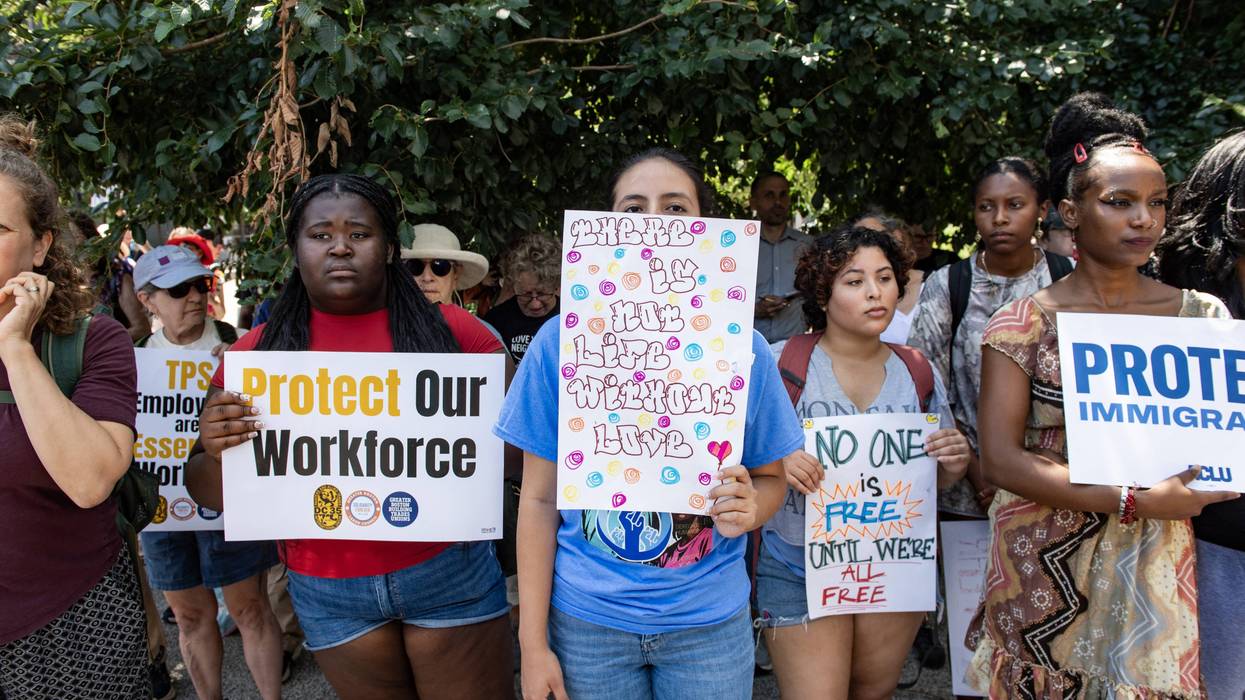
"ICE has been ordered to round up nurses, home health aides, factory workers, teachers, students, and thousands of others who have been living and working here legally for years; who’ve done nothing wrong."
Mass arrests of Haitian immigrants by federal agents could begin as early as this week, according to federal documents regarding President Donald Trump's new directive to US Immigration and Customs Enforcement following the right-wing majority on the Supreme Court's ruling that Trump could end deportation protections for the community.
A binding mandate was expected to be sent to lower courts on Monday regarding the high court's decision last month that held the Department of Homeland Security (DHS) could strip 350,000 Haitians and 6,000 Syrians of their Temporary Protected Status (TPS), which is granted to migrants from certain countries facing disasters, armed conflicts, or other conditions that would put immigrants in danger if they were forced to return there.
After the mandate is transmitted, Haitians across the country will lose their ability to legally live and work in the US, and the administration is reportedly already planning to send ICE agents into states including Ohio—where Haitian communities were targeted by Trump and Vice President JD Vance during the 2024 election—to quickly arrest and deport migrants to their crisis-stricken home country.
Jean Négot Bonheur Delva, director-general of Haiti’s National Office of Migration, told the Haitian Times this month that according to the US embassy in the Caribbean country, about 250 former TPS beneficiaries could be forced back to Haiti on flights each week.
Aaron Reichlin-Melnick, senior fellow at the American Immigration Council, emphasized that the reported operation targeting Haitian communities is just the latest evidence that Trump is rounding up people who have been living and working in the US for years, despite the White House's claims that it is going after "the worst of the worst."
"The majority of Haitians with TPS today entered the US lawfully on humanitarian parole during the Biden administration, and then transitioned to TPS before their parole status expired," said Reichlin-Melnick. "Those people have not spent a single day in violation of immigration law."
The crisis in Haiti that necessitated TPS for people who arrived in the US from the country, he added, "hasn't ended."
Haiti is the poorest country in the Western Hemisphere, with widespread food insecurity, and large swathes of the country as well as transport routes are controlled by armed gangs. Violence intensified toward the end of 2025 "and remains the dominant force shaping the daily life of Haitians," according to the United Nations, with more than 8,100 killings reported last year, and gangs have increasingly used children in violent attacks.
Many healthcare facilities are "barely functioning," and extreme weather including hurricanes and droughts have worsened the humanitarian crisis. The country has also struggled to fully recover from the devastating 2010 earthquake that killed hundreds of thousands of Haitians.
Last week, US Rep. Joaquin Castro (D-Texas) spoke out about a Pentagon plan to strengthen coordination between the UN's Gang Suppression Task Force in Haiti and a private military contractor run by Erik Prince, a close ally of Trump's. The contractor, Vectus Global, has conducted drone strikes that have killed dozens of Haitian civilians.
Those conditions are what DHS suggested Haitians should voluntarily return to, after having built lives in the US, when the agency told CBS News on Monday that TPS has been used as a "defacto amnesty program" and called on people who are about to lose protections that have been in place for 16 years to "self-deport."
"What we would say now is it's closing time which means you don't have to go home, but you can't stay here," DHS told CBS News. "The good news is it's not too late to get a $2,600 check and a free flight home."
The Supreme Court's majority asserted last month that Trump administration officials did not make "overtly racial" comments about Haitians that would suggest the push to end TPS for the population was driven by "racial animus"—but US District Judge Ana Reyes in the District of Columbia came to the opposite conclusion earlier this year, saying then-Homeland Security Secretary Kristi Noem had likely pushed to end TPS "because of hostility to nonwhite immigrants.”
Reyes pointed out that Noem had not acknowledged the $1.3 billion Haitian TPS holders pay each year in taxes, and said Trump's racist comments about Haitians in the US—including that they "probably have AIDS" and that residents of the community in Springfield, Ohio were eating their white neighbors' pets—were rooted in "racial animus."
The ICE directive to ramp up enforcement operations against "an ethnic group the president has repeatedly attacked is bigotry as official government policy," said Reichlin-Melnick.
Rep. Sylvia Garcia (D-Texas) called on members of Congress to sign on to a discharge petition she put forward for a vote on "the American Dream and Promise Act, to extend protections for TPS holders from Haiti and 16 other countries."
"In less than four days, House Democrats secured 210 signatures, including two Republicans, we just need eight more members of Congress to force a vote," said Garcia. "TPS holders, you are not alone, we are with you!"

"'Bombing boats' to stop drugs isn't just cruel and illegal—it's futile," said one expert.
An internal government analysis has revealed that President Donald Trump's campaign of strikes against alleged drug boats off the coasts of Latin America hasn't achieved its purported goal of diminishing the amount of cocaine being trafficked into the US.
The Washington Post reported on Monday that a Drug Enforcement Administration (DEA) analysis has concluded that the boat-bombing campaign, which many legal experts and human rights groups consider acts of murder, has not "reduced the amount of cocaine entering" the country.
"DEA analysts found the strikes had failed to affect the supply or price of cocaine in the United States," reported the Post, "and had led traffickers to diversify beyond go-fast boats and to avoid international waters, opting instead for larger boats and hemming close to coastlines, where US forces are less likely to open fire."
The Post added that US Department of Defense (DOD) officials last month gave a closed-door briefing toe members of Congress where they acknowledged the strikes had not reduced the purity of cocaine entering the US from Latin America.
In an interview with the Post, a DEA official said that drug cartels had several options in addition to smuggling contraband by boats and simply switched tactics to avoid being hit by US strikes, which so far have killed at least 221 people.
"When you squeeze the balloon on one side, it always expands on the other side," the official said. "They always find the weak spots and exploit them."
Journalist Alex Horton, one of the authors of the Post report, described the boat-bombing campaign as what happens "when you merge the failures of the war on terror and the failures of the war on drugs."
The Post's report on the effectiveness of boat strikes came days after the Washington Office on Latin America (WOLA) released a lengthy report that similarly found that the boat strikes' "impact on the trafficking of cocaine, the main drug flowing from South America, has been slight to non-existent."
Adam Isaacson, director of the Defense Oversight program at WOLA, explained the pointlessness of the boat-bombing spree in a Saturday social media post.
"All cocaine produced in a year could fit on just over 1% of a single container ship," Isaacson wrote. "Imagine that scattered worldwide across innumerable boats, planes, vehicles, and people. 'Bombing boats' to stop drugs isn't just cruel and illegal—it's futile."
Georgetown University Law School professor Marty Lederman noted in a Monday social media post that the boat-bombing spree would be unjustified even if it were successful at reducing the flow of cocaine into the US.
"Another reminder, since no one in Congress appears to care," wrote Lederman. "These strikes are a campaign of unlawful murders, and the administration hasn't offered any plausible argument to the contrary."