April, 19 2017, 03:00pm EDT

Activist-Driven Advertiser Boycott a Key Factor in O'Reilly's Demise
Color Of Change and others pressured O’Reilly advertisers behind the scenes and publicly to drop their ads, resulting in 77 corporations dropping “The Factor” in the past 3 weeks
WASHINGTON
A campaign demanding that advertisers boycott Bill O'Reilly led by Color Of Change, the racial justice organization with more than one million members, played a critical role in pressuring Fox News to fire Bill O'Reilly. Over the past three weeks, dozens of advertisers have dropped O'Reilly's show, as Color Of Change's led a high-profile pressure campaign calling on corporations to reject the former host's history of racism and sexism.
"This victory belongs to all those who O'Reilly has victimized, and those who have demanded that the corporations that sponsor his show put their money where their values are and pull their spots. Thanks to that pressure, Bill O'Reilly will no longer be a menace on-air or in the halls of Fox News's headquarters," said Rashad Robinson, Executive Director of Color Of Change. "Bill O'Reilly has spent years spewing racism and harassing women. Today, his reign of hate and abuse comes to an end."
Following new revelations this month about Bill O'Reilly history of sexual harassment, Color Of Change launched a campaign demanding that "O'Reilly Factor" advertisers pull their spots from the show. Continuing a campaign started in 2015 in response to O'Reilly's racism, Color Of Change called on current sponsors of "The Factor" to align their ad buys with their own corporate values. Over the last two years Color Of Change has been in direct communication behind the scenes with 100 advertisers, including formerly major sponsors who dropped the show like Nutrisystem and General Motors.
Color Of Change also launched a petition to pressure advertisers, which was signed by 340,000 people. With sources inside Fox News citing loss of ad revenue as a central reason for firing O'Reilly, Color Of Change's campaign--following the same model that Color Of Change used to push Glenn Beck off the air in 2011, escalating from behind-the-scenes pressure on companies to public pressure if companies did not drop their ads --was instrumental in getting O'Reilly off the air.
"Fox News and the Murdochs only listen when they hear the sound of money rushing out the door," said Robinson. "If dozens of advertisers had not dropped 'The Factor,' Bill O'Reilly would still be endangering 21st Century Fox employees."
In addition to directly pressuring advertisers, Color Of Change has also:
- Submitted a briefing to the British media regulator Ofcom, urging them to investigate harassment at 21st Century Fox before approving the company's acquisition of European media giant Sky plc. The precarity of the Sky deal has been widely cited as a reason for O'Reilly's termination.
- Held protests outside Fox News headquarters.
- Geo-targeted Fox News headquarters and affiliates with digital ads that share a phone number to confidentially report harassment.
But Color Of Change cautions that the fight for a fair workplace at Fox News is hardly over.
"While today is an important victory, it hardly absolves Fox News of its decades of racism and sexism," said Robinson. "Fox News didn't clean up its act after Roger Ailes was fired, and it won't just because O'Reilly was fired. We'll continue to demand accountability from the Murdochs."
For years, Color Of Change has challenged Bill O'Reilly's hateful speech and actions. In 2015 the organization called on advertisers to pull their spots from O'Reilly's show after he fabricated a story about being attacked by protestors while covering the 1992 Los Angeles riot. In 2010, Color of Change called on businesses to stop showing Fox News in public settings in response to O'Reilly's deceptive editing of then-USDA employee Shirley Sherrod's remarks to the NAACP.
In 2009, Color Of Change led a campaign that eventually forced Glenn Beck off-air, developing their unique inside/outside playbook for pressuring advertisers to pull spots from Beck's show. As the New York Times reported, Color Of Change was able to organize hundreds of thousands to demand Fox News drop Beck, and as a result more than 300 advertisers dropped their spots before Fox News cancelled his show.
Color Of Change is the nation's largest online racial justice organization. We help people respond effectively to injustice in the world around us. As a national online force driven by over one million members, we move decision-makers in corporations and government to create a more human and less hostile world for Black people in America.
LATEST NEWS
Republicans Advance New 'Slush Fund' for ICE While Taking Food Aid From Millions
"They don’t need more funding," one Democratic lawmaker said of Immigration and Customs Enforcement, "they need to be disbanded."
Apr 30, 2026
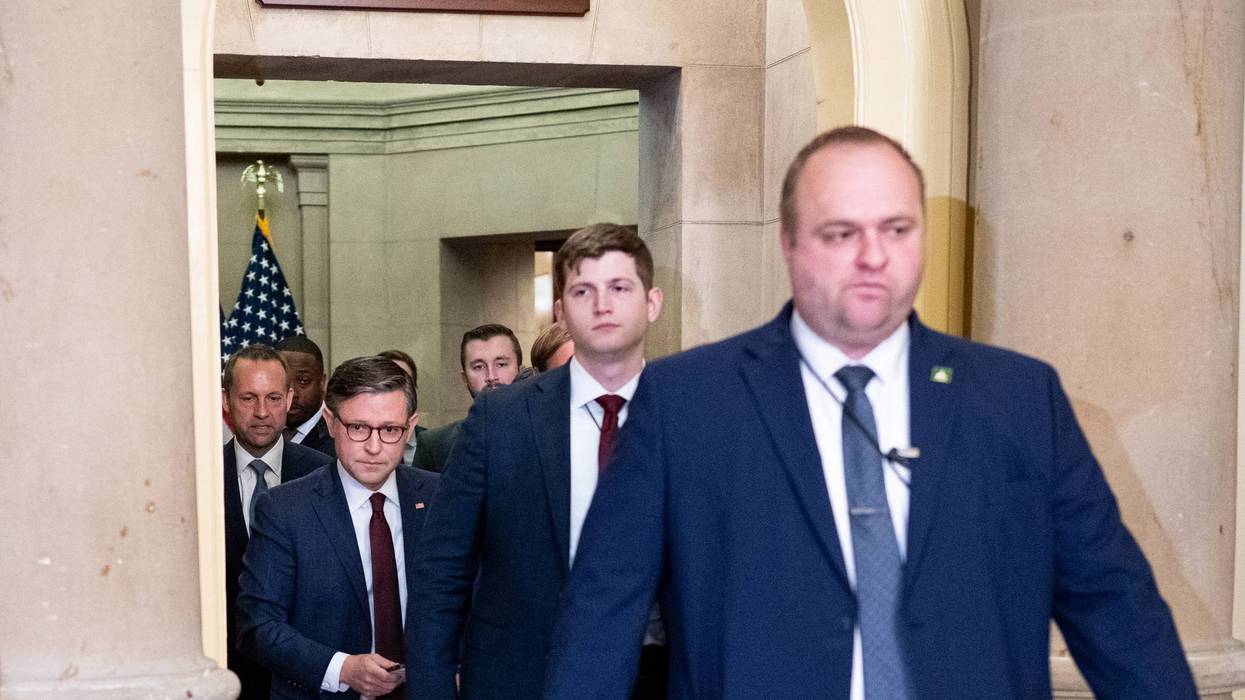
House Republicans on Wednesday passed a budget resolution that sets the stage for GOP lawmakers to draft and approve more funding for immigration enforcement without any support from Democrats, who condemned the proposal as another "blank check" for rogue agencies.
The resolution, which cleared the GOP-controlled Senate last week, gives Republicans the ability to allocate up to $140 billion total to Immigration and Customs Enforcement (ICE) and Customs and Border Protection (CBP), agencies that President Donald Trump has unleashed on American cities with deadly consequences. Republicans have said they plan to allocate roughly $70 billion total to the immigration agencies, which Democrats have refused to fund through the normal appropriations process without reforms.
The new GOP legislation will proceed through the budget reconciliation process, which is exempt from the Senate's 60-vote filibuster, enabling Republicans to fund ICE and CBP without Democratic backing.
Rep. Brendan Boyle (D-Pa.), the top Democrat on the House Budget Committee, said in a statement that the GOP's proposal "does nothing to protect healthcare, help families struggling with groceries, gas prices, and everyday expenses, or make our communities safer."
"House and Senate Republicans just paved the way to hand ICE and CBP another $70 billion without any reforms or accountability," said Boyle. "Republicans keep telling working families we cannot afford healthcare or relief from the cost-of-living crisis they continue to make worse, but they never seem to have a problem writing massive checks for these out-of-control agencies. I will keep fighting every step of the way to stop this reckless bill."
The forthcoming reconciliation package marks the second time Republicans have used the filibuster-proof budget process to ram through their agenda. Last summer, Republicans passed a sprawling budget reconciliation measure that included unprecedented cuts to Medicaid and nutrition assistance as well as tax breaks for the wealthiest Americans.
The previous legislation also contained $75 billion for ICE—making the agency's budget larger than that of the militaries of Canada, Australia, Spain, and other nations.
“Last year, Republicans gave ICE a $75 billion slush fund, transforming the agency into Donald Trump’s personal army in essence,” Rep. John Larson (D-Conn.) said Wednesday. “We have seen agents execute US citizens in the streets, snatch mothers from their children in our communities, and use excessive force against peaceful protesters. Now, they want to pass another $70 billion for this cruel and lawless agenda—holding up pay for our hard-working TSA officers and Coast Guard until ICE gets another blank check. I have opposed ICE since its inception."
"They don’t need more funding—they need to be disbanded," Larson added. "Congress should focus on paying our civil servants and troops and taking on the high prices squeezing families thanks to the failed Trump agenda, not billions for ICE."
Rep. Pramila Jayapal (D-Wash.) echoed that message in floor remarks criticizing the Republican plan:
Today, Republicans are working to jam through a budget resolution that hands another $70 BILLION to ICE and CBP on top of the $170 billion they got in the Big Bad Betrayal bill.
The same ICE and CBP that killed Americans in the street in MN have terrorized communities across… pic.twitter.com/IsImSvYcTH
— Rep. Pramila Jayapal (@RepJayapal) April 29, 2026
House Republicans passed their budget blueprint as new data showed that their first reconciliation package has spurred the steepest decline in Supplemental Nutrition Assistance Program (SNAP) participation in decades.
An analysis released Wednesday by the Center on Budget and Policy Priorities (CBPP) shows that SNAP participation fell by more than 3 million people across the US between July 2025 and January 2026. The think tank noted that "it took over three years for the caseload to drop by over 3 million people (or 7%) between its peak in December 2012 and February 2016, during the recovery following the Great Recession."
The new Republican budget reconciliation package would do nothing to ameliorate the damage inflicted by the previous bill. The GOP is also already considering what House Speaker Mike Johnson (R-La.) has described as "reconciliation 3.0," a new package that could include additional cuts to safety net programs.
Meanwhile, in the regular appropriations process, House Republicans voted to advance government funding legislation that would take food aid from millions by cutting the Special Supplemental Nutrition Program for Women, Infants, and Children (WIC).
“Parents are already making impossible choices at the grocery store—skipping meals, stretching food, and worrying about how to feed their kids," said Ailen Arreaza, executive director of the advocacy group ParentsTogether. "Cutting WIC’s fruit and vegetable benefit means taking fresh, healthy food off the plates of new mothers, babies, and young children at a time when families need more support, not less."
"You can’t say you want to make America healthy again while reducing access to the very foods that help children grow and thrive," Arreaza added.
Keep ReadingShow Less

As Hegseth Touts Autonomous Warfare Command, Human Rights Expert Pushes Civilian Protections
Responding to other recent remarks from the Pentagon chief, the expert warned that “a sole focus on achieving maximum lethality is inherently incompatible with civilian protection.”
Apr 29, 2026
As the US military accelerates its adoption of autonomous weapons systems amid a growing global artificial intelligence arms race, one expert told Common Dreams on Wednesday that "greater action needs to be taken urgently" to protect civilians and ensure meaningful human control over rapidly developing technologies.
US Defense Secretary Pete Hegseth told congressional lawmakers Wednesday during a House Armed Services Committee hearing on the proposed $1.5 trillion Pentagon budget for 2027 that the military will soon have a new "sub-unified command" dedicated to autonomous warfare.
Hegseth, who advocates “maximum lethality” for US forces, has expressed disdain for what he called “stupid rules of engagement” designed to minimize civilian harm. He has overseen the dismantling of efforts meant to mitigate wartime harm to civilians—hundreds of thousands of whom have been killed in US-led wars during this century, according to experts.
This "maximum lethality" ethos, combined with AI-powered systems allowing for exponentially faster and more numerous target selection, has raised concerns that have been underscored by actions including Israel Defense Forces massacres in Gaza and Lebanon, and US attacks like the cruise missile strike on a school in Iran that killed 155 children and staff.
"A sole focus on achieving maximum lethality is inherently incompatible with civilian protection," Verity Coyle, deputy director of Human Rights Watch's (HRW) crisis, conflict, and arms division, told Common Dreams. "If the United States truly seeks to protect civilians, it should forgo this limited focus and ensure it has guardrails in place that assess the proportionality of its actions and guarantee a distinction between civilians and combatants."
"Under international humanitarian law, civilian protection requires that military actions abide by the principles of distinction and proportionality," Coyle noted. "In other words, military actors must distinguish between civilians and combatants and ensure that the resulting harm to civilians from their actions would not be excessive in comparison to the perceived military gain."
Experts on lethal autonomous weapons systems—commonly called "killer robots"—stress the need for meaningful human control. However, with industry-backed efforts afoot to ban state and local governments from placing guardrails on AI development, retaining such control could become increasingly difficult as the technology advances.
"The lack of serious guardrails... shows a troubling lack of concern for these real and immediate risks to civilians both in the United States and abroad," Coyle said. "While we have seen some Congress members and state legislators express concern over these developments, greater action needs to be taken urgently."
Asked about the "if we don't build it, they will" mentality of many US proponents of unchecked AI development that is reminiscent of the Cold War nuclear arms race, Coyle said the United States is ignoring its "ability to set the global agenda and international humanitarian law norms."
"As we see greater integration of AI in the military domain and resulting civilian harm, we need strong international leadership to respond to these threats, not states relinquishing their responsibilities," she asserted.
Coyle continued:
Throughout [HRW's] decades of work in banning weapons that cause indiscriminate civilian harm, including the Mine Ban Treaty and Convention on Cluster Munitions, we have seen that even when some major military powers object to new international law, other states are able to band together and create new norms that major military powers eventually abide by. In this moment, the United States needs to decide if it will stand up for the principles of civilian protection and a rules-based order, or if it will walk away from the system it helped create and that has served to protect civilians for several decades.
There is also a danger that companies will proceed with risky AI weapons development, both in pursuit of profit and out of fear of getting left behind if they don't push forward. For example, Anthropic—maker of the AI assistant Claude—lost a $200 million Pentagon contract and is facing a government blacklist and legal battles after the company refused to loosen safety restrictions on autonomous weapons and surveillance.
Meanwhile, OpenAI, which makes the generative AI platform ChatGPT, rewrote its “no military use” policy to allow “national security” applications of its products, opening the door to lucrative Pentagon contracts.
Asked what civil society can do now to rein in reckless AI development, Coyle said that while HRW remains "focused on educating decision-makers and the public," there are "clear steps states can take, including supporting an international legally binding instrument on autonomous weapons systems and regulating the military use of AI."
"Through the Stop Killer Robots Campaign—a coalition of 270+ organizations focused on banning and regulating autonomous weapons systems and AI in the military domain—we are working globally to address these challenges," she noted.
While loss of human control over AI systems still appears to still be well over the horizon, Coyle said that "every day we see a world inching closer to this reality."
"Our message to states is that now is the time to take immediate, robust action to address this risk and protect civilians before it is too late," she stressed.
Keep ReadingShow Less
'Dangerous and Shameful': 42 House Democrats Help GOP Send Trump Spying Bill to Senate
"It was these Democrats' responsibility to stand up against this administration, and they voted to stand down instead," said one campaigner.
Apr 29, 2026
Dozens of Democrats in the Republican-controlled US House of Representatives helped the GOP send a key spying bill to the Senate on Wednesday, earning sharp condemnation from the diverse movement that has called for privacy reforms.
The House voted 235-191 in favor of the bill released last week by Speaker Mike Johnson (R-La.), who has been trying for months to get an extension of Section 702 of the Foreign Intelligence Surveillance Act (FISA) to President Donald Trump's desk.
FISA's Section 702 allows the US government to surveil electronic communications of noncitizens located outside the United States to acquire foreign intelligence information, without a warrant. However, Americans' data is also swept up, and civil society, along with some lawmakers from both major parties, has demanded reforms to prevent further abuse by federal agencies.
In the lead-up to the vote, progressives such as Rep. Ilhan Omar (D-Minn.) warned that "this bill has no meaningful reforms to stop warrantless surveillance, directly undermining the Fourth Amendment" to the US Constitution, which is supposed to protect Americans against unreasonable searches and seizures.
Another "Squad" member, Rep. Rashida Tlaib (D-Mich.), took to the House floor to blast Section 702 as "a dangerous mass surveillance tool" that "has been used to spy on Black Lives Matter protesters, members of Congress, journalists, and more."
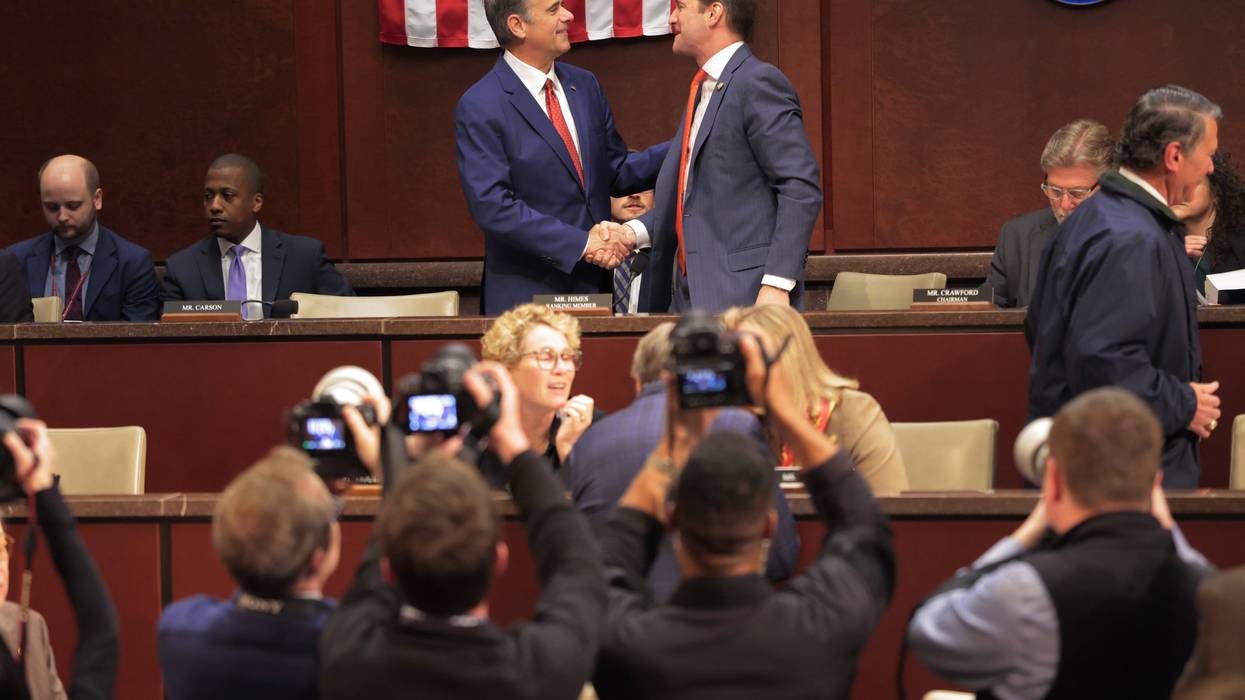
However, 42 Democrats—including House Permanent Select Committee on Intelligence Ranking Member Jim Himes (Conn.)—still joined most House Republicans in advancing the legislation.
"It's incredibly disappointing the House approved this measure," said Jake Laperruque, deputy director of the Center for Democracy and Technology's Security and Surveillance Project, in a statement. "This bill is empty calories through and through. It contains no warrant for querying Americans' messages, and no meaningful reforms of any kind. The razor-thin procedural vote this afternoon makes clear that there's an appetite for reform, but House leadership took meaningful reforms off the menu."
"There is nothing in this bill that would have prevented the abuses of FISA 702 we've already seen—snooping on lawmakers, protesters, and campaign donors—and there is nothing that would stop even worse abuses in the future. A vote for this bill was a vote to give the FBI and other intelligence agencies a three-year blank check for surveillance abuse."
Hajar Hammado, senior policy adviser at Demand Progress—which helped convene over 100 artificial intelligence, civil rights, and other progressive groups pressuring Congress to include privacy protections in any renewal bill for the spying power—took aim at the House Democrats who supported the legislation.
"The 42 Democratic votes to advance Speaker Johnson and Donald Trump's surveillance agenda are dangerous and shameful," she declared. "These Democrats defied their constituents and common sense to undercut meaningful privacy reforms in the House and instead voted to hand over sweeping spy powers to the Trump administration," she stressed. "This means continuing warrantless backdoor searches and allowing an increasing number of federal agencies to exploit the data broker loophole to supercharge AI and fuel mass domestic surveillance."
Hammado said that "their vote today has major consequences, as even 22 Republicans put principles over politics and voted against renewing FISA without warrant protections. It was these Democrats' responsibility to stand up against this administration and they voted to stand down instead."
While stressing that "no administration should have these powers," Free Press Action advocacy director Jenna Ruddock directed attention at "the champions for a clean extension of Section 702 in the Trump administration in particular," including the president's homeland security adviser, Stephen Miller.
"Stephen Miller has advocated against reforms to Section 702, claiming it is critical to his and Trump’s homeland security agenda, even as members of the administration refer to political opponents as 'enemies within,'" she noted. "Today, 42 Democrats joined 192 Republicans to co-sign Donald Trump and Stephen Miller's domestic surveillance agenda, jeopardizing the civil rights and liberties of every person in the United States."
Zeteo News reporter Prem Thakker pointed out that House "Democratic leadership did not whip their members, enabling them to vote with Republicans and give Trump the surveillance powers."
While calling out the House Democrats who backed the bill, campaigners also set their sights on the Senate, where Punchbowl News reporter Anthony Adragna predicted that "it's DOA," or dead on arrival. Republicans have a slim majority in the chamber and, due to its rules, need at least some Democratic support to pass most bills, including this one.
A key issue is the central bank digital currency ban included in the House bill. Senate Majority Leader John Thune (R-SD) told reporters on Wednesday that he may try to pass a 45-day extension instead. After a recent short-term extension, the spying authority is set to expire Thursday night.
"Now the fight moves to the Senate, where privacy champions in both parties are gearing up to try and stop this reckless giveaway to the surveillance state," Hammado said. She urged members of the upper chamber to join "bipartisan reformers" like Sens. Dick Durbin (D-Ill.), Mike Lee (R-Utah), Rand Paul (R-Ky.), and Ron Wyden (D-Ore.) "in voting against any FISA measure that lacks real reforms like a warrant requirement to close the backdoor search and data broker loopholes."
Laperruque similarly said that "we hope senators will stand strong and reject this dangerous proposal."
Ruddock highlighted that "there is bipartisan legislation already introduced in both the House and Senate that would make desperately needed reforms to government surveillance powers."
"The Senate should reject the fake reforms in the current House bill and demand a vote on real reforms to Section 702, including a warrant requirement, and closing the data broker loophole," she said. "Our constitutional rights depend on it."
Keep ReadingShow Less
Most Popular