

SUBSCRIBE TO OUR FREE NEWSLETTER
Daily news & progressive opinion—funded by the people, not the corporations—delivered straight to your inbox.
5
#000000
#FFFFFF
To donate by check, phone, or other method, see our More Ways to Give page.
Daily news & progressive opinion—funded by the people, not the corporations—delivered straight to your inbox.
"The Trump administration is pulling out all the stops to let tech companies build massive data centers on our public lands. This tremendous victory proves communities have the power to fight back and win.”
Environmental groups are celebrating on Tuesday after a federal panel halted construction of what would be the first artificial intelligence data center to be built on US public lands.
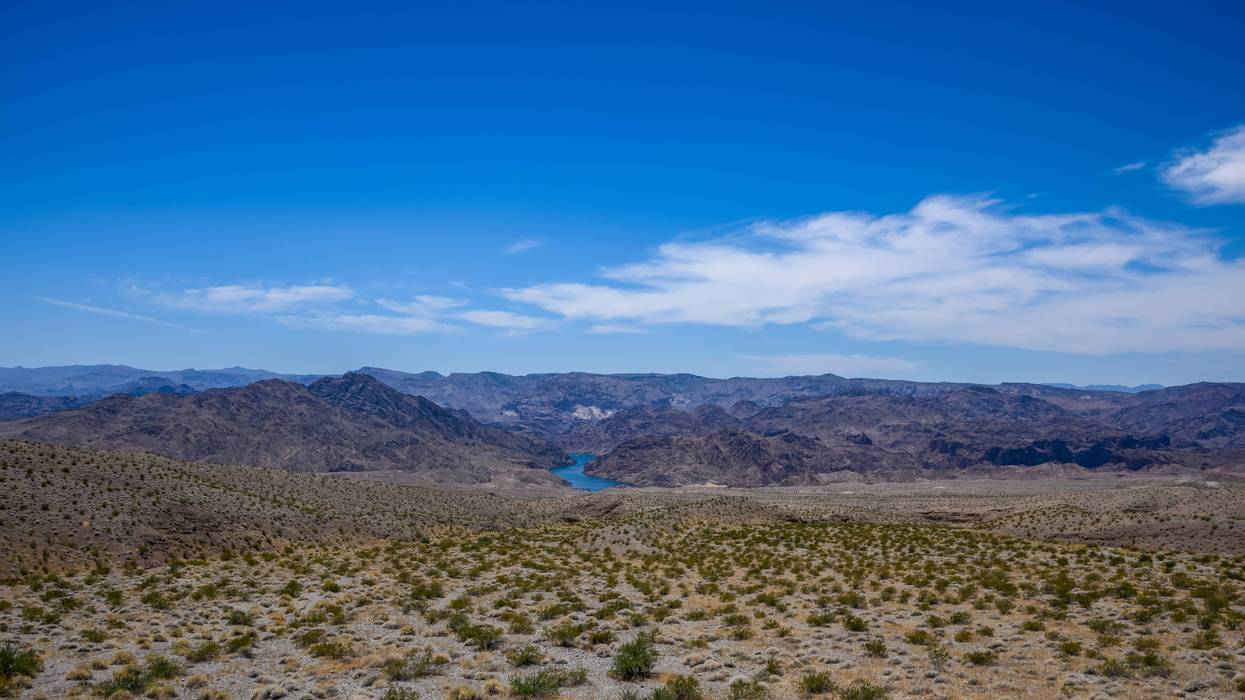
The Interior Board of Land Appeals, an appellate body within the US Department of the Interior, put a temporary stay on the Bureau of Land Management's (BLM) approval of the proposed 80-acre Townsite Data Center near Boulder City, Nevada, which environmental groups warned would jack up electricity demand and water usage and threaten local species.
The board sided with the Sierra Club, the Center for Biological Diversity (CBD), and the local government of Boulder City, which argued that the BLM had not conducted the legally required review of the plan's environmental impacts.
The BLM had approved the site based on a review of a proposed solar power plant, but had not reevaluated the impacts of a data center.
The board said that the environmental groups were "likely to prevail" in their case that the BLM had acted illegally "because the two projects are not ‘substantially the same.’” It also ruled that continuing the project without a proper review was likely to cause "irreparable harm" to the landscape—including soil disruption, habitat loss for species like the Mojave desert tortoise, and construction activities that pollute the air.
The temporary stay blocks the data center project from continuing while the board considers the environmental groups' appeal.
While it was not a final ruling on whether the project will be built at all, Patrick Donnelly, Great Basin director at the CBD, said the group was "thrilled that this data center has been stopped dead in its tracks."
Townsite has been described as a test case as BLM considers approving other data center proposals on federal lands, including in Nevada, where 80% of the land is federally managed.
Building data centers on federal lands is a major priority of the Trump administration's "AI Action Plan," which was published by the White House in 2025 and directs US agencies to identify public lands “well-situated for large-scale data centers."
Under the plan, the US Department of Energy announced in July 2025 that it had identified at least four other sites around the country for potential development, including the Idaho National Laboratory, the Oak Ridge Reservation in Tennessee, the Paducah Gaseous Diffusion Plant in Kentucky, and the Savannah River Site in South Carolina.
Donnelly said Tuesday's ruling had shown BLM would not be able to approve these and other sites without conducting the appropriate environmental reviews.
"The Trump administration is pulling out all the stops to let tech companies build massive data centers on our public lands," he said. "This tremendous victory proves communities have the power to fight back and win.”
Boulder City is one of many locales around the country where plans for large data centers have received public backlash. For months, the project faced protests at City Hall from residents who raised concerns about energy and water use, light pollution, and impacts on the local desert habitat.
Public anger ultimately led the Boulder City Planning Commission to turn against the project, voting in May against adding data centers to the city's land management process. To bypass the city, BLM approved the same project on adjacent federal lands. Boulder City responded by joining environmental groups' appeal against the project.
“The BLM essentially, sweepingly, approved a new land use without following processes in federal law, which include a meaningful engagement process with the city," City Attorney Brittany Walker told the Nevada Current in July, after the City Council unanimously voted to appeal.
Olivia Tanager, director of the Sierra Club Toiyabe chapter, called Tuesday's ruling "a victory for democracy, public participation, and the principle that our public lands should serve the public."
"The people of Boulder City have made clear that they do not want a data center on public lands, and this ruling gives their voices the weight they deserve," she said. "Data centers do not belong on public lands, and we will continue to fight unfettered data center development.”
Townsite is just one of several data center proposals being considered on federal lands in Nevada. In June, BLM officials told local leaders that it had received four applications for data centers on public lands around Silver Springs, a small community east of Reno in Lyon County, which has eight facilities planned in total, according to the US Data Center Map.
The sudden explosion of data center planning in the area has led many residents to push for a moratorium on new data center approvals.
Brynn deLorimier, a Boulder City resident who joined the appeal, said she hopes her city's victory will help to protect neighboring communities from unaccountable data center growth.
“We love our community and our desert, and we’re so grateful to our friends and neighbors for working hard to protect both,” she said. “We’re also grateful to the Interior Board of Land Appeals for recognizing that this case matters far beyond Boulder City and could set an important precedent for public lands in Nevada and across the country.”
"Government of the people, by the people, but for friends and donors of the president above everyone else."
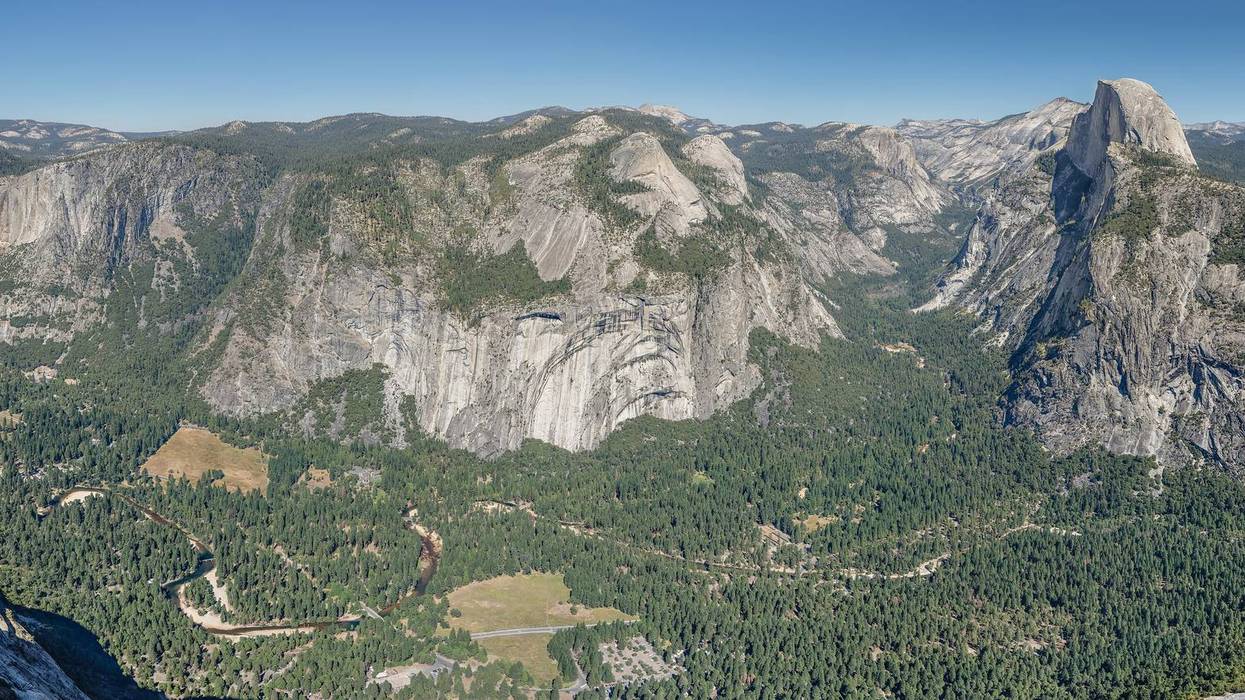
Even while repeatedly serving the interests of destructive industries, President Donald Trump and Interior Secretary Doug Burgum have claimed they are committed to protecting US national parks—but the Republican administration is now working to give a private developer a piece of Yosemite, NOTUS reported on Friday.
Specifically, according to unnamed sources and government documents, federal staffers are working on a potential land exchange to give a quarter-mile strip of land in California's Yosemite National Park "to a company that, through a web of limited liability companies, is operated by real-estate developer and investment firm Kingsbarn Realty Capital."
The developers own 83 acres west of the park, and Kingsbarn CEO Jeff Pori—whose company did not respond to a request for comment—aims "to build a short road connecting the property to one of Yosemite's central thoroughfares," providing "the land exceptionally rare private access to a park that is otherwise almost entirely buffered by national forests," NOTUS detailed.
The sources told NOTUS that political leaders at the US Department of the Interior "want us to be responsive to the property owner and their lobbyists or people, and they want us to work with these folks," and that "the political pressure being brought to bear is very unusual."
The National Park Service, which is part of the department, said that "no final decisions have been made," but any proposals "would be subject to all applicable federal laws, regulations, and departmental policies, including required environmental review and public notification processes."
The revelation—which came during National Park Week—was met with outrage.
Ripping the possible "secretive, backroom deal," as "an attack on the American people that own this national park," Mark Rose, the National Parks Conservation Association's Sierra Nevada program manager, told NOTUS that "it would also be unlawful, and a court previously rejected a road development proposal."
We are opposed to private developers building driveways and special access into our parks. The ultra wealthy can wait in line and go through the gate just like everyone else. www.notus.org/agencies/tru...
[image or embed]
— AltYellostoneNatPar (@altyellonatpark.org) August 28, 2026 at 9:00 AM
Sierra Club executive director Loren Blackford said in a statement that "Yosemite is not Donald Trump's to give away. This secretive deal betrays the purpose of our national parks and the promise our government has kept since Abraham Lincoln to protect Yosemite for the public and for generations to come."
"For more than 150 years, each generation has carried forward the responsibility to protect this sacred landscape and pass it on intact," Blackford continued. "The Trump administration is betraying that legacy by trying to hand parts of Yosemite to a private developer. We will use every tool at our disposal to stop this corrupt giveaway."
While the looming land swap could move forward without any sign-off from Congress, House Natural Resources Committee Ranking Member Jared Huffman (D-Calif.) was among those who spoke out on social media Friday.
"Our parks belong to all of us," the congressman emphasized. "These places should be protected for every generation, not sold off to Trump's ultrawealthy friends to profit off of. I will fight this, both for Yosemite and for every treasured park that would be up for grabs if this domino falls."
Columnist and self-described "recovering attorney" Wajahat Ali declared, "America is for sale," and American Immigration Council senior fellow Aaron Reichlin-Melnick said, "Government of the people, by the people, but for friends and donors of the president above everyone else."
While other critics condemned the reported efforts as "disgusting," "sickening," and "shocking," journalist Chris D'Angelo commented, "I would say this is shocking, but things have been headed in this direction since Trump reentered office."
After Trump won a second term in 2024—having secured campaign funds from Big Oil, and run on a promise to "drill, baby, drill"— one of his early actions post-inauguration was declaring a "national energy emergency" intended to boost the climate-wrecking fossil fuel industry.
Since then, while cashing in on his second presidency—including via stock transactions made this year as fuel prices soared due to his illegal war with Iran—Trump has continued to push policies that help polluters and other rich allies. For example, last week the administration delivered a "one-two punch" to national forests, taking aim at a pair of rules intended to protect such lands.
The Center for Biological Diversity warned this week that the Trump administration's proposed repeal of the 2001 Roadless Area Conservation Rule would "open pristine public lands to road construction, commercial logging, and industrial development," and, according to the group's analysis, put 400 species on an "extinction fast track."
"More roads mean more sediment in streams, more fragmentation of wildlife habitat, more human access to places wildlife depend on for refuge, and more wildfires in forests already facing unprecedented climate change-fueled risk," the center stressed. "The roadless rule has held that line for a generation. Without it the losses to wildlife, water, and the wild places that define the American landscape will be irreversible."
This article has been updated with comment from the Sierra Club.
After RWE disclosed its new gas investments as part of the deal, one climate campaigner declared that "committing to reinvest over $1 billion in fossil fuels is a disastrous mistake."
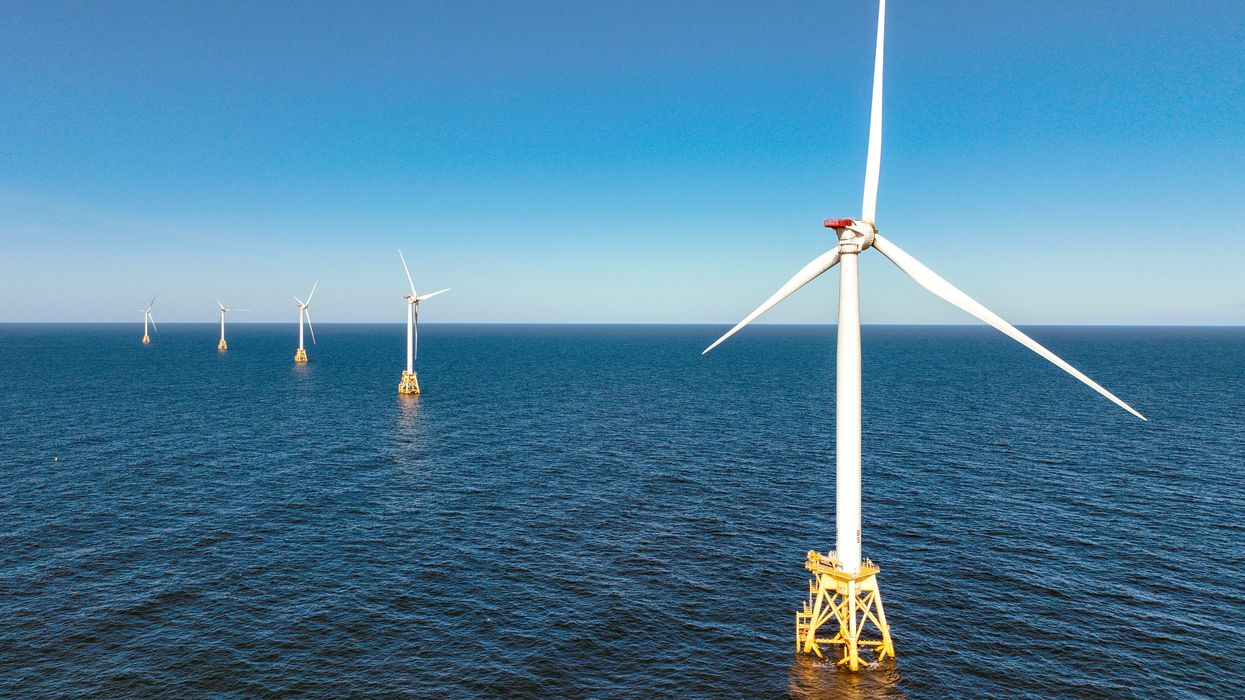
Despite climate concerns and high prices from President Donald Trump's illegal war on Iran, his administration continued its assault on offshore wind this week, using another "taxpayer-funded bribe" to convince a company to instead invest in fossil fuels.
The German company RWE announced Thursday that it had reached a settlement with the US Department of the Interior to relinquish offshore wind leases off the coasts of New York, California, and Louisiana for $1.22 billion.
"After careful consideration, it was determined there is no path forward to permit these projects in the US for the foreseeable future," the firm said in a statement. "The company determined that this resolution best serves the interests of its stakeholders and allows it to direct resources toward energy projects that can be advanced with certainty."
RWE also disclosed that it would put $900 million toward an indirect 16% stake in a Louisiana liquefied natural gas project, and $300 million toward turbines for a pipeline of 15 natural gas peaking projects across target US markets.
Reuters reported that the deal is "the fifth, and largest, the administration has entered into this year as part of its wide-ranging effort to stop development of US offshore wind projects," which Trump has fought against since before becoming president. His current term has featured various moves collectively condemned as a "war against renewables."
The RWE deal was ripped by climate and labor advocates, as well as Senate Minority Leader Chuck Schumer (D-NY), who said that "everything the Trump administration does can be summed up in four words: CORRUPTION AT YOUR EXPENSE."
"Trump is again spending billions of taxpayer money to limit the US energy supply in favor of exporting more energy to countries like China," Schumer wrote on social media. "This will only make your utility bill MORE expensive."
Interior Secretary Doug Burgum fired back at Schumer, claiming that "your climate extremist energy 'transition' was actually energy SUBTRACTION," and "ZERO taxpayer money will be spent. It's a dollar-for-dollar repurposing of RWE's own money."
RWE explained that it had "invested more than $1 billion toward the leases and the development of these projects," and the new agreement resolves the company's "legal claims and provides $1.22 billion in settlement funds."
House Natural Resources Committee Democrats Ranking Member Jared Huffman (D-Calif.) joined Schumer and other critics in railing against the deal, saying Friday: "Trump just paid RWE over $1 BILLION in taxpayer money to walk away from offshore wind projects—including a project off Humboldt in my district—and invest in fossil fuels instead."
"This fake, illegal settlement kills good-paying jobs, raises electricity costs, and rewards Big Oil with taxpayer dollars," he continued. "When the accountability comes, and I promise you it's coming, everyone involved in these deals will answer for it."
This potential settlement has been feared for months. In May, over 50 US groups "alarmed to learn that RWE was contemplating a deal" sent a letter urging CEO Mark Krebber to resist the Trump administration's "bullying" and "vendetta against offshore wind."
Among those organizations was Friends of the Earth US, whose senior energy campaigner Raena Garcia declared Friday that "committing to reinvest over $1 billion in fossil fuels is a disastrous mistake."
"The Trump administration won't be around forever, and any company that cuts a deal like this should expect accountability eventually," Garcia added.
The BlueGreen Alliance, which brings together environmental groups and labor unions, has a webpage tracking the costs of the buyouts, which so far include $3.9 billion in taxpayer money, 21.15 gigawatts of anticipated energy, and over 57,000 projected jobs.
"The Trump administration is relentless in its war on offshore wind," alliance executive director Jason Walsh said of the latest deal. "Billions of taxpayers' dollars have gone to waste along with tens of thousands of lost potential jobs. At a time when energy demand and costs are rising, we are disheartened by this latest buyout. Now working people on three coasts will no longer get to reap the benefits of the clean and reliable energy that would have come from these projects."
The settlements still face legal hurdles. New York Attorney General Letitia James announced in June that she is leading a coalition that includes AGs from Connecticut, Maine, Massachusetts, New Jersey, Rhode Island, and Vermont in a lawsuit seeking to block one of them. California Attorney General Rob Bonta has sent a notice of intent to sue over another deal.
Despite Big Oil-backed Trump's attacks on renewables and support for climate-wrecking fossil fuels, new data shows that the United States is generating more power from the sun and wind than ever, as Common Dreams reported earlier Friday.
For example, in May, solar generation eclipsed every other source of electricity in Utah for the first time. Weber State University physics professor Dan Schroeder said that is "wonderful news for air quality, it's wonderful news for the climate, and it's wonderful news for jobs and the economy."
"The use of false charges and criminal prosecutions to deflect blame away from politically powerful leaders and their allies is an abuse of the justice system that cannot be tolerated," said another critic.
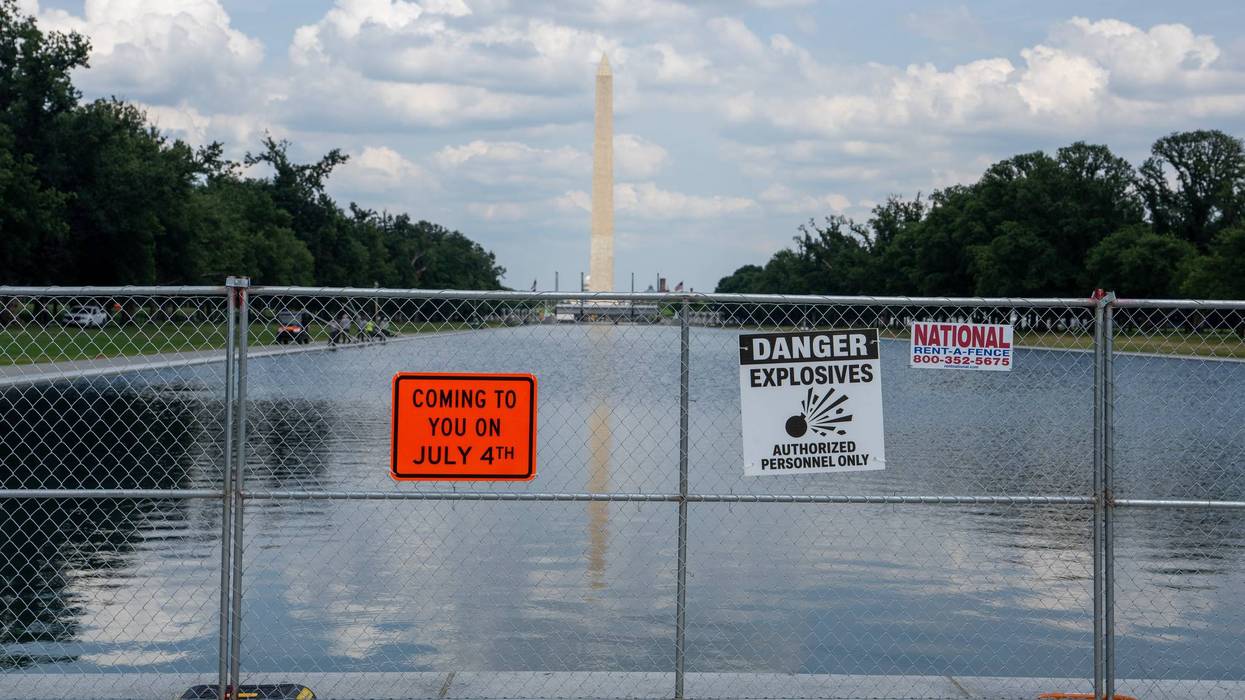
The US Department of Justice on Friday moved to throw out its criminal case against David Hearn, the Olympian it accused of vandalizing the Lincoln Memorial Reflecting Pool in Washington, DC, sparking demands for, at minimum, an apology from the DOJ.
"The Trump administration's case against Davey Hearn should have never been brought," said his attorneys, Norm Eisen of Democracy Defenders Fund, Mary Dohrmann of Washington Litigation Group, and Steve Levin of Steptoe LLP, in a joint statement.
"Its dismissal today does not erase the abuse of government power in arresting and charging a patriotic American who did nothing wrong," they continued. "The government's approach was ready, fire, aim. The administration owes Mr. Hearn an apology."
President Donald Trump in April announced plans to renovate the Reflecting Pool for the country's 250th anniversary. Two months later, despite the administration spending millions of dollars on resurfacing, the water turned green from algae. That led to a hydrogen peroxide treatment and a $1.7 million no-bid contract for a company whose owner is a Trump donor, after which multiple ducks were found dead.
Hearn, one of several people accused of tampering with the pool, was arrested in June. Early last month, Jeanine Pirro, the Trump-appointed US attorney for the District of Columbia, revealed that her office had secured a felony indictment against him. The 67-year-old, who faced up to a decade in prison, pleaded not guilty and had a trial scheduled for September.
"I didn't vandalize anything," Hearn, an Olympic canoeist, said in an interview with The Washington Post, explaining that he had touched a piece of pool lining that was already peeling off. "I didn't destroy or break or peel anything. By the time I realized what was going on, I was being put in handcuffs."
In its Friday motion to dismiss the case, Pirro's office said that after the return of the indictment, the US Department of the Interior (DOI) provided information indicating that the damage "was the result of flawed installation by the contractor, Atlantic Industrial Coatings (AIC), and the rush to complete the project prior to events associated with the America 250 celebration in the weeks surrounding Independence Day 2026."
"It is difficult to attribute the widespread damage to the Reflecting Pool to vandalism, let alone to establish that fact beyond a reasonable doubt," the document also states.
MS NOW legal analyst Lisa Rubin highlighted Pirro's previous promise to "prove beyond a reasonable doubt" that Hearn caused the damage.
NBC News noted that "a spokesperson for Pirro said the filing spoke for itself. Her office also moved to dismiss at least one of the other three misdemeanor cases that had been brought in connection with the Reflecting Pool."
It's not just Pirro's office and the DOJ under fire for this debacle. While welcoming the motion to dismiss, Tim Whitehouse, executive director of the nonprofit Public Employees for Environmental Responsibility (PEER), took aim at DOI in a Saturday statement.
"This project has become a poster child for corruption and why competitive bidding and transparency in federal contracting matter," Whitehouse said. "Transparency in contracting prevents waste, self-dealing, and exactly the kind of expensive, embarrassing failure this project has become. Decisions about the best way to repair public infrastructure should rest with engineers and career experts following open, competitive bidding, not with political officials chasing a photo-op deadline ordered by the president while steering money to favored contractors."
"The use of false charges and criminal prosecutions to deflect blame away from politically powerful leaders and their allies is an abuse of the justice system that cannot be tolerated," he added. "The Interior Department officials responsible for this failure—the no-bid contract, the botched renovation, lying to the public and the rush to blame an innocent man—owe the public a full accounting. PEER calls on Congress to investigate and demands that those responsible face real consequences."
Meanwhile, Trump took to his Truth Social platform to make clear that he "100%" disagrees with Pirro, sparking speculation about whether he may fire her.
Interior Secretary Doug Burgum then claimed that "the evidence is clear, vandals have repeatedly caused damage to the Reflecting Pool," in a post on the platform X that New York Times reporter Trip Gabriel described as "repeating the boss."
Hearn's attorneys said that "Trump and Burgum are attacking Pirro because she admitted what we established in our legal filings all along: Trump's botched renovation was responsible for the damage—not Davey Hearn. However, Pirro's claim that she and her office were previously duped by Interior is nonsense."
"Starting immediately after arraignment, our motions repeatedly proved that the administration was to blame for the Reflecting Pool failures, not Davey," they added. "This is far from over, as we consider all legal remedies."
This article has been updated with new comments from President Donald Trump, Interior Secretary Doug Burgum, and Davey Hearn's attorneys.
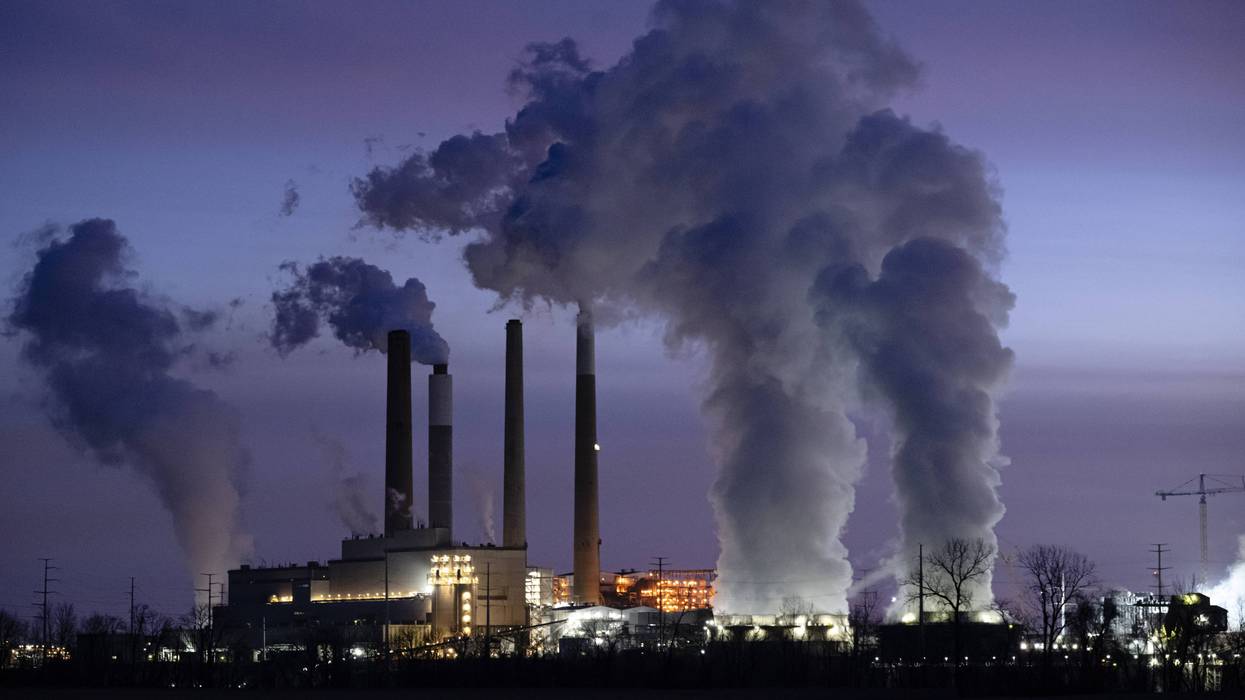
One critic of the president recently said that he's "forcing higher power bills" on Americans while "fattening the wallets of his cronies—all with billions of our tax dollars."
President Donald Trump's administration has dedicated over $1 billion to boosting the coal industry, and on Thursday announced a report about reserves beneath federally managed public lands, with Interior Secretary Doug Burgum claiming that the polluting fossil fuel "is more important than ever to the production of electricity."
The US Geological Survey (USGS) publication, titled Coal Beneath Federal Lands in the United States—Mines, Reserves, and Resources, says that "in 2024, the 34 coal mines on Federal lands produced more than 261 million short tons of coal." A short ton, the standard unit of measurement for coal in the United States, is equal to 2,000 lbs.
"These 34 coal mines control more than 4.2 billion short tons of reported coal reserves. Most of the coal mines (31) and more than 98% of the reported coal reserves are on federal lands west of the Mississippi River," according to the report. "Of all the states, Wyoming has the most coal mines on federal lands (14) and produces the most coal from federal lands."
"The USGS estimates that more than 355 billion short tons of available coal resources remain beneath federal lands in the conterminous United States," the document details. "Alaska contains substantial quantities of coal resources. The USGS estimates that Alaska has at least 140 billion short tons of identified available coal resources but may ultimately have as much as 5.5 trillion short tons of coal resources."
A US Department of the Interior statement announcing the report highlights that if the reserves accounted for in the document were produced, "that would be enough coal to supply all the nation’s needs for at least 600 years at the current rate of consumption."
Scientists have long argued that the international community must stop burning coal—plus oil and gas—to prevent a worst-case scenario future as the planet's inhabitants already face a fossil fuel-driven climate emergency and its related extreme weather.
However, climate crisis-denying Trump—who returned to the White House backed by Big Oil's campaign cash—and his Cabinet have spent his second term pushing polluting sources of energy, particularly as his illegal war on Iran drives up global prices, with oil surpassing $100 per barrel on Thursday.
Staying on message, Burgum declared in Interior's Thursday statement that "American Energy Dominance is more important than ever, and so is beautiful clean coal's role in the production of electricity needed to fuel our future prosperity."
"Thanks to the USGS's rigorous and independent assessment, we're better equipped to manage America's vast public lands responsibly while supporting energy security and economic opportunity," he continued.
Sharing the statement on the social media platform Bluesky Thursday, science journalist Emily Willingham said, "What an abuse of the USGS, the environment, and our intellects."
An ore deposit geologist named Elizabeth also ripped the statement on Bluesky, writing: "There is a lot messed up with this press release, but the thing that bothers me the most is how poorly it is written. What an embarrassment!"
The USGS report came just two days after the Energy and Labor departments signed a memorandum of understanding (MOU) creating a framework to accelerate the deployment of artificial intelligence, automation, and other emerging technologies in the mining sector.
Acting Secretary of Labor Keith Sonderling said, "It is our commitment to you that this MOU will further President Trump's promise to restore coal as a key driver of America’s energy supply chain and American coal will again be the envy of the world for generations to come."
While attacking clean energy initiatives, including offshore wind projects, the administration "has bolstered coal, the dirtiest and most expensive fossil fuel," The Guardian reported earlier this month.
According to the newspaper:
In September, the Department of Energy announced it would spend $625 million to "expand and extend the life of" coal-fired power plants, allocating $350 million to "modernize" coal plants, $175 million to fund coal projects powering rural communities, and $50 million to upgrade wastewater management systems to extend coal plants' lifespans.
Last month, the agency also set aside up to $500 million from the Defense Production Act to “expand and reinvigorate” the capacity of 13 coal plants, and to help build a coal export terminal in Oakland, California. A week later, the department announced an additional $3.6 million to "refurbish or retrofit" nine existing coal plants.
Former Democratic Washington Gov. Jay Inslee, a climate advocate and Trump critic, told the paper that the president is "forcing higher power bills" on Americans "by blocking clean energy, then he's fattening the wallets of his cronies—all with billions of our tax dollars."
"We pay more," he said, "Republicans rubber-stamp it, and Trump's donors walk off with the bag."
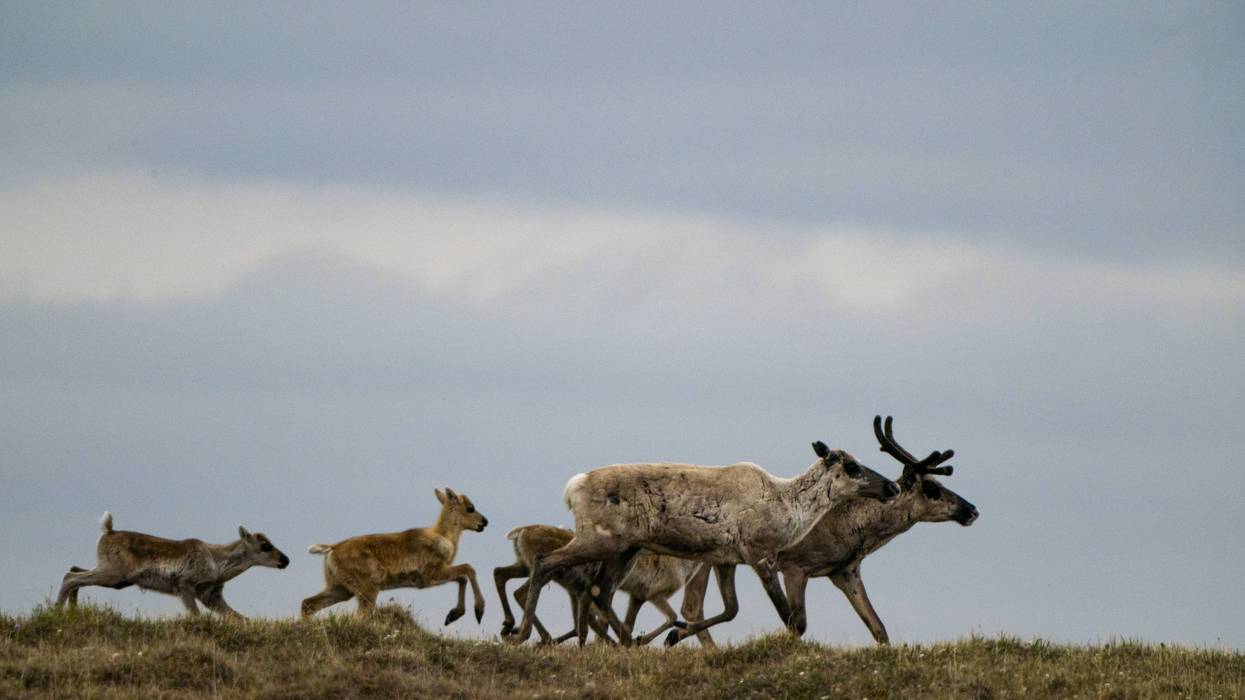
“Some places are too important to sacrifice,” said one Indigenous leader as the Trump administration invited fossil fuel companies to drill in the Arctic National Wildlife Refuge.
The Trump administration is set Friday to sell oil and gas drilling leases on 689,000 acres in the Arctic National Wildlife Refuge, a pristine and protected area in northeastern Alaska's coastal plain known for its massive biodiversity and held sacred by its Indigenous inhabitants.
The US Department of the Interior's (DOI) Bureau of Land Management (BLM) is offering 60 tracts in the ANWR to fossil fuel companies that submitted bids by Wednesday. The lease sale is the first of four in the ANWR mandated under the One Big Beautiful Bill signed by President Donald Trump last year and follows two previous sales this decade, one of which saw little interest during Trump's first term and another that generated no bids during the tenure of former President Joe Biden.
The sale is part of Trump's "drill, baby, drill" fossil fuel agenda and follows last October's reopening by the DOI of 1.56 million acres of the Coastal Plain to oil and gas leasing. The move reversed the Biden administration's 2023 cancellation of all existing oil and gas leases in the ANWR and ban on drilling across 13 million acres of the adjacent National Petroleum Reserve.
The Trump administration also recently transferred approximately 1.4 million acres of public lands along the Dalton Utility Corridor from the BLM to the state of Alaska, a move one conservationist warned "will only help corporate polluters transform Alaska into an industrial wasteland... for the sake of expanding the portfolios of mining and oil and gas companies."
The ANWR is home to Indigenous peoples, primarily the North Slope Iñupiat and the Gwich’in. The former are generally supportive of fossil fuel development, arguing that it provides jobs and revenue and boosts self-determination, while the latter broadly opposes drilling.
The Gwich'in call the area “the sacred place where life begins" and rely upon its rich biodiversity—especially its 200,000-strong porcupine caribou herd—for their survival. ANWR boasts some 270 animal species, including musk oxen, Arctic foxes, snow geese and other migratory birds, and all of the world’s remaining South Beaufort Sea polar bears.
While the American Petroleum Institute, the nation's leading fossil fuel lobby, welcomed Friday's lease sale, calling Alaska's oil and gas "key to America's energy security," Kristen Moreland, executive director of the Gwich'in Steering Committee, countered that "some places are too important to sacrifice."
In a Thursday call with reporters, Moreland said that "tomorrow's lease sale is about much more than economics or development. It is about whether our voices, our culture, and our way of life matters."
Conservationists also denounced the lease sale, which Earthjustice—part of a coalition challenging the DOI's policy in federal court—called "another effort to sell out our public lands to boost corporate profits, while Indigenous communities, wildlife, and future generations carry the risk."
US Sen. Tim Kaine (D-Va.) said Friday on X that "America's public lands—including the incredible Arctic National Wildlife Refuge—belong to all of us. But now the Trump-Vance administration is auctioning it off to their Big Oil cronies that already have plenty of other areas to drill."
In a video posted Thursday on social media, US Sen. Martin Heinrich (D-NM) called ANWR "the crown jewel of our American National Wildlife Refuge system."
"Tomorrow, the Trump administration is gonna try to lease the Arctic National Wildlife Refuge for oil drilling. So I've got a message for all the oil majors out there," the senator said. "I understand you have a job to do. That job never involves drilling in American national parks or national wildlife refuges. Don't bid."
Congresswoman Adelita Grijalva (D-Ariz.) also posted a video addressing the lease sale and arguing that Big Oil—part of an industry that spent nearly $450 million during the 2024 election cycle on campaign donations, lobbying, and other efforts to elect Trump and down-ballot Republicans—is "calling the shots."
The Alaska Wilderness League said on X that "no matter how the administration and oil industry spin today’s lease sale, the outcome doesn’t change: weak demand, shrinking interest, and a story that keeps collapsing under its own promises."
"The Arctic is not for sale, never has been, never will be," the group added. "Hands off the Arctic."

"We are fighting back to stop this illegal agreement that threatens to erase over a thousand union jobs and cheat millions of New Yorkers out of clean, affordable energy,” said New York AG Letitia James.
A group of state attorneys general sued the Trump administration on Tuesday, in an effort to block an unprecedented deal it made to pay an energy company to abandon a pair of large East Coast wind energy projects and invest in more polluting fossil fuel infrastructure instead.
As part of efforts to unilaterally block private wind power construction across the US while revving up fossil fuel production, the Interior Department agreed to pay $928 million in taxpayer funds to the French energy company TotalEnergies to scrap construction plans for a large wind project off the coast of New York and another off North Carolina, the leases for which had been approved back in 2022.
In exchange, the company agreed to halt any future development of clean power in the US and invest hundreds of millions of dollars in oil and gas projects instead.
On Tuesday, New York Attorney General Letitia James announced that she was leading a coalition of seven northeastern state AGs—from New Jersey, Connecticut, Maine, Massachusetts, Rhode Island, and Vermont—in a lawsuit seeking to block the agreement.
James described the deal as an unlawful attempt to get around a previous court rejection of President Donald Trump’s Day One executive order halting all wind energy development in the US.
“The Trump administration is once again trying to kill clean energy projects and destroy good-paying jobs for New Yorkers," James said. "After repeatedly losing in court, this administration cooked up a sham deal to pay a foreign energy company hundreds of millions of taxpayer dollars to abandon offshore wind and invest in oil and gas instead. We are fighting back to stop this illegal agreement that threatens to erase over a thousand union jobs and cheat millions of New Yorkers out of clean, affordable energy.”
The canceled New York project was expected to produce up to 1.4 gigawatts of energy for the state, powering more than 700,000 homes annually. According to a press release from James' office, it was projected to save New Yorkers $10 billion over its 25-year lifespan.
Another section of the Bight construction lease was slated for a wind farm projected to provide about 1.3 gigawatts to homes in New Jersey, powering 650,000 homes and generating $3 billion in economic benefits, according to state officials.
The other project set for North Carolina was projected by TotalEnergies to generate more than 1 gigawatt of power, enough for 300,000 homes.
The Oceantic Network, a nonprofit that supports the construction of offshore wind projects, estimated that the cancellation of a single 1-gigawatt offshore wind project costs between $8.5-9.5 billion in US economic output and about 3,350 construction jobs, along with hundreds of millions of dollars in lost wages.
Liz Burdock, the president and CEO of Oceantic, commended the states attempting to stop the Trump administration from killing the projects at a time when oil and gas costs are skyrocketing, largely due to Trump's war with Iran.
"For more than a year, offshore wind has faced an unprecedented and unrelenting campaign of political interference despite billions in private investment, state commitments, and court rulings," Burdock said. "These continued attacks on offshore wind are not just an assault on a single industry—they are an attack on American workers, energy affordability, national security, and the states’ right to shape their own energy future."
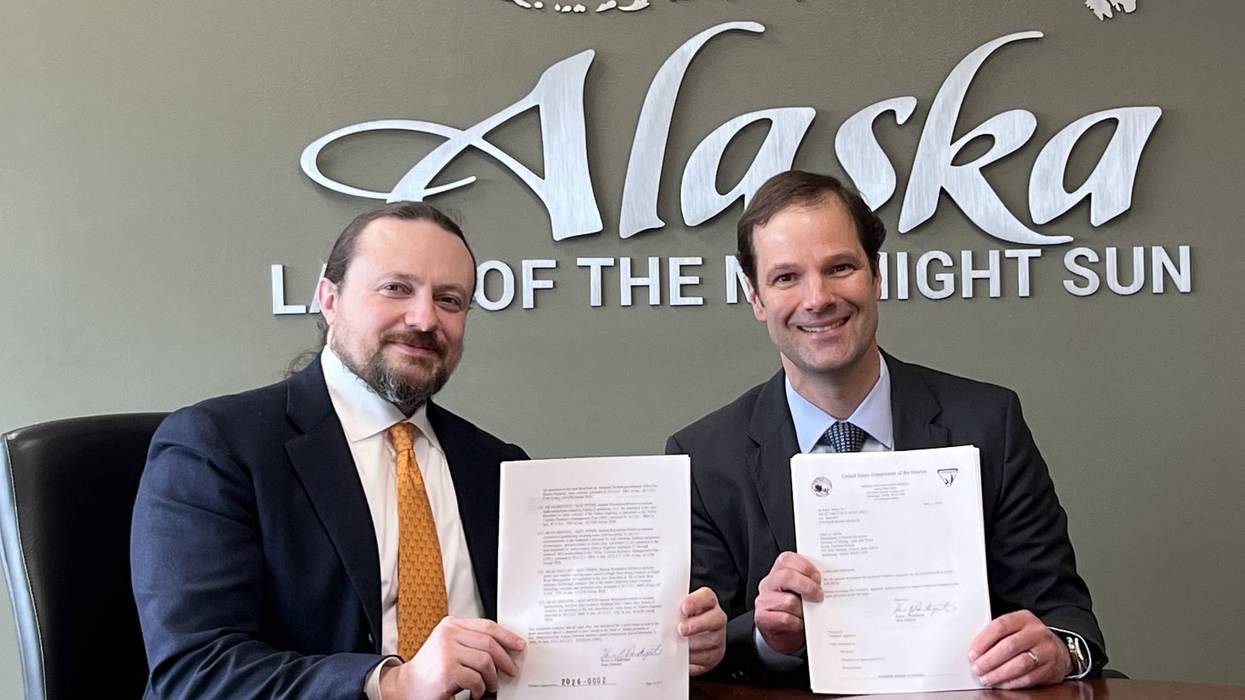
One critic called the transfer of 1.4 million acres a "massive giveaway to out-of-state corporations that don't want to be burdened by the federal protections that safeguard our lands, waters, wildlife, and communities."
Defenders of the planet took aim at President Donald Trump's administration on Wednesday for transferring approximately 1.4 million acres of public lands along the Dalton Utility Corridor from the US Bureau of Land Management to the state of Alaska.
"This corridor encompasses some of Alaska’s most critical transportation and energy assets, including portions of the Trans-Alaska Pipeline System corridor, the Dalton Highway, and proposed routes for the Ambler Road and Alaska Liquefied Natural Gas (LNG) projects," the US Department of the Interior noted in a statement, framing the move as part of DOI's commitment to the Alaska Statehood Act, as well as orders issued by Trump and the agency's secretary, Doug Burgum.
As Burgum and Republican Alaska Gov. Mike Dunleavy cheered the development on Wednesday, Andrea Feniger, director of the state's Sierra Club chapter, declared that "this is less a transfer to Alaskans than a massive giveaway to out-of-state corporations that don't want to be burdened by the federal protections that safeguard our lands, waters, wildlife, and communities."
"Gov. Dunleavy has repeatedly shown he is more interested in helping the Trump administration and fossil fuel executives exploit Alaska than standing up for the people who actually live here," Feniger said. "These companies will not be satisfied until every corner of our state is opened to industrial development and short-term profit, regardless of the permanent damage done to the wild places, subsistence traditions, and communities that make Alaska unique. Alaskans deserve leaders who will protect these lands for future generations, not politicians willing to hand them over to corporate polluters."
Bloomberg reported that "Alaska's acquisition along the highway north of Fairbanks is part of 2.1 million acres" that Burgum offered earlier this year, after revoking a pair of decades-old orders. In March, a coalition of environmental groups, including Trustees for Alaska, filed a federal lawsuit over the secretary "unlawfully removing federal protections."
While Alaska filed a motion to dismiss the case on Wednesday, Bridget Psarianos, senior staff attorney at Trustees for Alaska, told Bloomberg that the land transfer is illegal. She also said that "the interior secretary broke the law when removing federal protections for over 2 million acres of public lands in February without hearings in local communities, without a public comment period, and without addressing that decision's impacts on land, water, and subsistence users."
Other groups supporting that suit include the Alaska Wilderness League, Center for Biological Diversity, National Parks Conservation Association, and Sierra Club, whose director of conservation, Dan Ritzman, condemned Wednesday's transfer.
"This action will only help corporate polluters transform Alaska into an industrial wasteland—destroying irreplaceable landscapes for the sake of expanding the portfolios of mining and oil and gas companies that will never have to live with the consequences of this destruction," Ritzman stressed. "This decision completely ignores the wishes of local communities and tribes that depend upon these untouched areas for their livelihoods, cultures, and regional identities."
"Alaska is home to some of the country's last true wild places, and projects like Alaska LNG and the Ambler Road threaten irreversible damage to these precious landscapes, the wildlife that depend on them, and the communities that have stewarded them for generations," he added. "These lands belong to all Americans, not corporate special interests looking to exploit them for short-term profit. We are fighting this in court and will continue opposing any other attempts to sacrifice Alaska's public lands for the benefit of polluters and extractive industries."
Rebecca Noblin, an Alaska senior attorney at the Center for Biological Diversity, similarly told E&E News that "handing this incredible stretch of federal public lands over to the state puts the communities, fish, and wildlife who live there in danger."
"Alaska officials envision bulldozing the area for a private industrial mining road and the LNG pipeline boondoggle," Noblin said. "We're fighting this transfer of our federal public lands in court, and we'll keep standing up for Alaska's wild places."
Climate and conservation groups have also recently sounded the alarm about Interior's forthcoming fossil fuel lease sale for the Arctic National Wildlife Refuge's Coastal Plain, and warned—in the words of Kristen Monsell, the oceans legal director at the Center for Biological Diversity—that that Trump's "ridiculously reckless" plan to dramatically expand offshore drilling, including near Alaska, "could cause thousands of new oil spills, threatening almost every US coast."
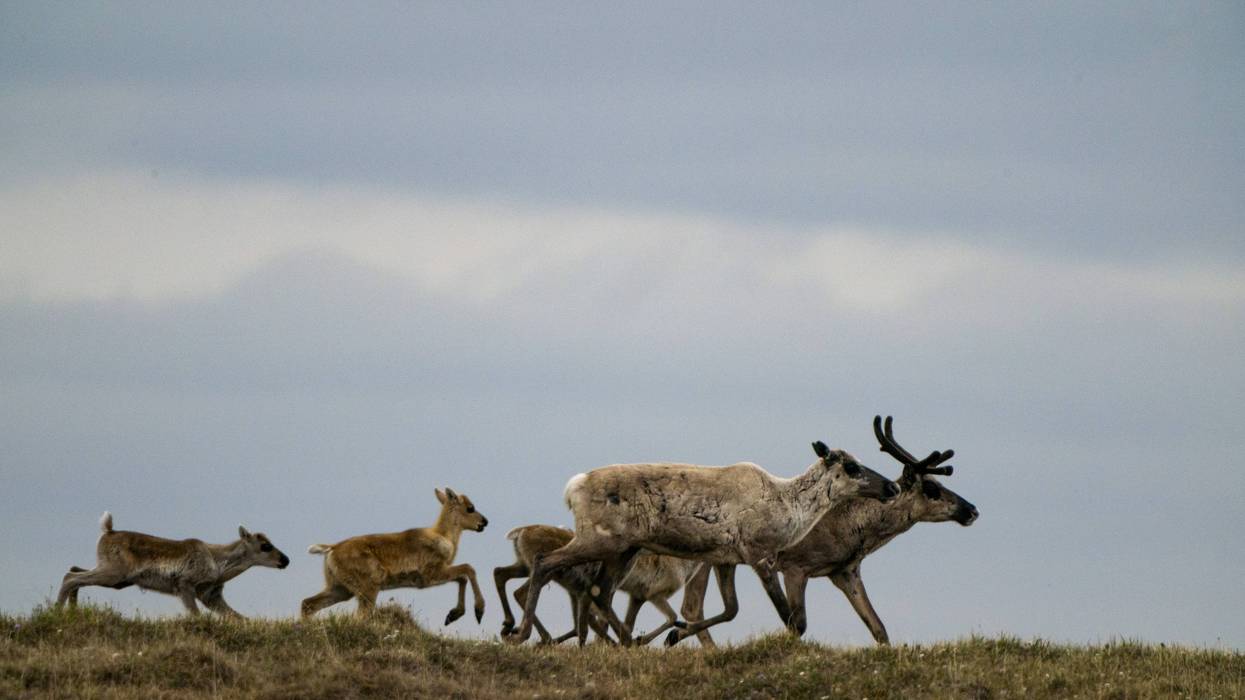
"The oil industry's allies in Congress are ignoring public opinion and the undeniable realities of the climate crisis by moving to drill on the sacred Coastal Plain and endanger the freedom of local communities."
Indigenous leaders joined with climate and wildlife defenders on Friday to blast President Donald Trump's administration and Republicans in Congress over the newly announced fossil fuel lease sale for the Arctic National Wildlife Refuge's Coastal Plain in Alaska.
The US Department of the Interior's Bureau of Land Management revealed Friday that it will hold the first of four legally mandated lease sales on June 5. The so-called One Big Beautiful Bill Act—which congressional Republicans passed and Trump signed last summer—requires BLM to hold the other three sales by 2035.
ANWR's Coastal Plain spans over 1.5 million acres and is known for its biodiversity. As a BLM webpage details, it is also believed to contain 4.25-11.8 billion barrels of "technically recoverable oil," according to US Geological Survey estimates.
Trump returned to the White House last year backed by Big Oil's campaign cash, and his deputy interior secretary, Kate MacGregor, said Friday that "after three acts of Congress and several successful lawsuits making it abundantly clear that oil and gas leasing in this area of Alaska is lawful, it is a great honor to once again announce another Coastal Plain lease sale."
MacGregor framed the forthcoming sale as just one piece of the administration's pro-fossil fuel agenda, adding that "President Trump has long supported Alaska's important contribution to American energy dominance, and Interior is proud to take the necessary and durable steps to unleash these important resources on behalf of the American people."
Earlier attempts to open up ANWR to drilling suggest that the sale may not draw much industry interest. Taxpayers for Common Sense pointed out Friday that two previous ones required by the Trump GOP's Tax Cut and Jobs Act "were originally estimated to bring taxpayers almost $1 billion in revenue but fell far short of this projection. The first lease sale, held in January 2021, brought in just $16.5 million. The second lease sale, held in January 2025, attracted no bidders and generated no revenue."
However, as the Anchorage Daily News reported, the plan for the next sale "comes on the heels of another recent lease sale, in the National Petroleum Reserve-Alaska to the west of the refuge, that drew heavy interest from oil companies," which "raises questions about how much bidding might occur in the refuge," particularly as Trump's war on Iran has driven up global oil prices.
Still, critics highlighted the previous ANWR sales—including the Wilderness Society's Alaska senior manager, Meda DeWitt, who said: "Once again, the oil industry's allies in Congress are ignoring public opinion and the undeniable realities of the climate crisis by moving to drill on the sacred Coastal Plain and endanger the freedom of local communities to sustain their cultures and lifestyles for generations to come."
"Two previous lease sales have already been economic failures, proving that the absurd Arctic Refuge leasing program should be eliminated and permanent protection must be provided for the calving grounds of the Porcupine Caribou herd," DeWitt argued.
The Arctic Refuge is the crown jewel of the American National Wildlife Refuge System – opening it up to drilling endangers the wildlife and the indigenous communities who have called the refuge their home for thousands of years.
— Senate Energy Dems (@energydems.senate.gov) April 17, 2026 at 1:24 PM
America Fitzpatrick of the League of Conservation Voters (LCV) similarly said that "time and again, the American people have said that they oppose drilling in the Arctic Refuge. The last lease sale in 2024 yielded no bids. Drilling here is not only bad economic—it's reckless and wildly unpopular. Instead of further handcuffing us to be more dependent on fossil fuels, the administration should focus on prioritizing cleaner, more affordable, and more reliable energy sources like clean energy."
"We simply cannot drill our way out of high energy costs," declared Fitzpatrick, the group's conservation program director. "The US is already producing more oil and gas than ever before, but when Trump forced a global energy crisis, prices skyrocketed once again. LCV stands with the Gwich'in people in their fight to ensure there is no drilling in the Arctic Refuge. Not now, not ever."
The Gwich'in, Indigenous people who live in Alaska and Canada, have long defended the refuge from fossil fuel intrusion, and are currently engaged in litigation over the Trump Interior Department's leasing program for the Coastal Plain.
"The Neets'ąįį Gwich'in have made our position clear that any development on the Coastal Plain would have irreversible, adverse effects on our people, our culture, and our way of life," Raeann Garnett, first chief of the Native Village of Venetie Tribal Government, said Friday. "This lease sale, once again, disregards our sovereignty and is a direct threat to the sacred land that sustains our people."
Karlas Norman, first chief of the Venetie Village Council, stressed that "no amount of money will make this land any less sacred to our people or any less vital to our way of life. The Trump administration's most recent actions to advance oil and gas development on the Coastal Plain does not change the fact that this land is sacred, that industry has walked away, and that the Gwich'in people will never stop fighting to protect it."
Galen Gilbert, first chief of the Arctic Village Council, charged that "the Trump administration's relentless push to auction off this sacred land despite overwhelming public opposition and industry that has already signaled they are not interested, makes clear that this administration values corporate interests over the rights and lives of Indigenous peoples."
Gilbert also vowed that "we will continue to fight with every tool available to protect the Coastal Plain for our children and all future generations."
Kristen Moreland, executive director of the Gwich'in Steering Committee, also pledged that "the Gwich’in Nation remains committed to be a voice for the caribou, and to fight oil and gas development in the Arctic Refuge."
"We condemn these efforts by the Trump administration to exploit the calving grounds of the Porcupine Caribou herd for short-term gain, and we know that the majority of Americans stand beside us in opposing development in this cherished and irreplaceable landscape," Moreland continued. "We have been raising our voices and fight[ing] for the protection of this sacred land and our way of life for decades—and we are not backing down now."
Also noting the US public's position, Andy Moderow, senior director of policy at Alaska Wilderness League, put pressure on the industry to stay away from the lease sale later this spring.
"For decades, the American people have recognized that the Arctic Refuge is not an industrial zone for oil development, and this sale simply runs counter to common sense," said Moderow. "Any oil and gas company that is even thinking about buying these leases should know that, if they do, they will be sending a clear message to the American people—that no place in Alaska is too sacred to drill in a quest for corporate profits. We urge companies to take a pass on the Arctic Refuge lease sale, and we look forward to rightfully restoring protections for this landscape in the years to come."
According to the Anchorage Daily News, "Elizabeth Manning, a spokesperson with Earthjustice, said in an email Friday that any new leases will be subject to a lawsuit brought by Natural Resources Defense Council, Center for Biological Diversity, and Friends of the Earth."
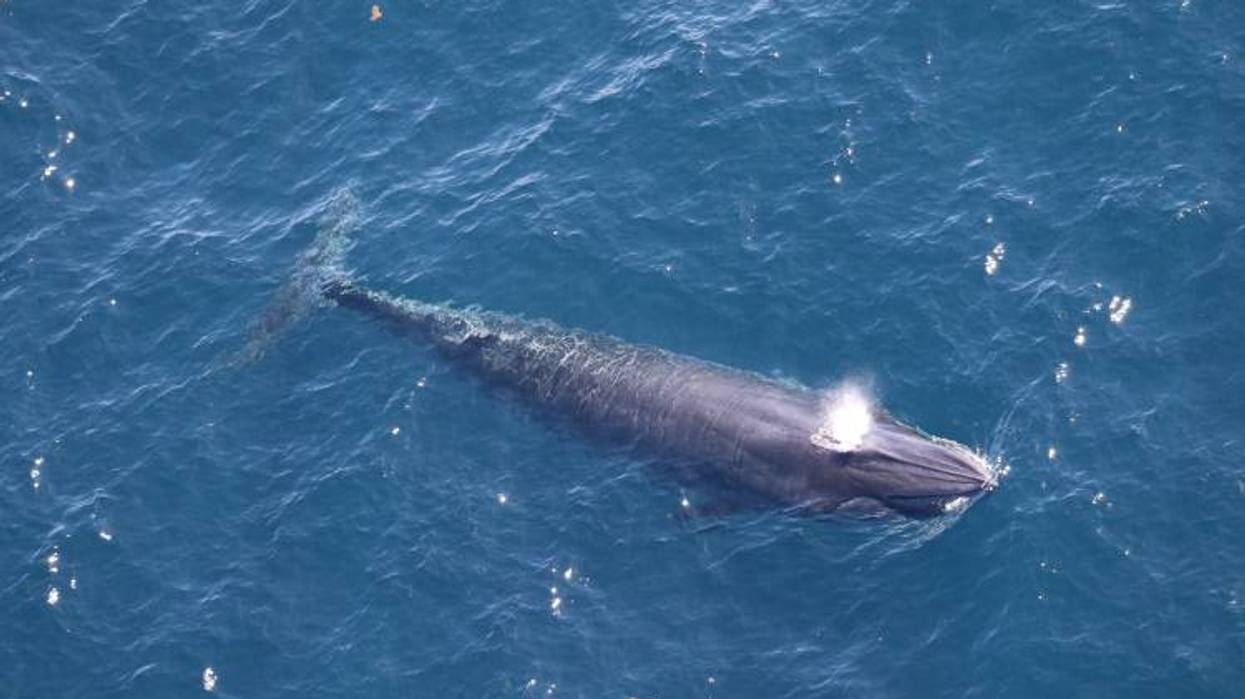
“Burgum’s Extinction Committee is immoral, illegal, and unnecessary,” said the head of the Center for Biological Diversity, which warns it could put the final nail in the coffin of the extremely endangered Rice's whale.
An environmental organization is suing to stop the Trump administration from illegally convening a meeting that could allow oil and gas companies to drive an extremely endangered whale species to extinction.
On Wednesday, the Center for Biological Diversity filed an emergency lawsuit against Secretary of the Interior Doug Burgum in a federal district court in Washington, DC, seeking to block him from convening the Endangered Species Committee, more commonly known as the “Extinction Committee,” on March 31.
This committee is sometimes referred to as the "God Squad" because its members have the power to grant exemptions to the Endangered Species Act that can result in the extinction of imperiled species.
Led by the interior secretary, it has seven total members who can vote to override regulations. Five of them are senior executive officials: the secretaries of agriculture and the Army, the head of the Council of Economic Advisers, and the administrators of the Environmental Protection Agency (EPA) and the National Oceanic and Atmospheric Administration (NOAA). Each affected state also receives a delegate to the committee, but they collectively receive just one vote. Five votes of seven are needed to grant an exemption.
In the federal register, Burgum announced earlier this week that the committee would meet at the end of the month “regarding an Endangered Species Act exemption for Gulf of America oil and gas activities," referring to the Gulf of Mexico by the name preferred by President Donald Trump.
The Center for Biological Diversity said Burgum was seeking to override a requirement for oil and gas companies in the Gulf of Mexico to drive boats at safe speeds in order to protect the nearly extinct Rice’s whale from strikes.
These whales, named after the cetologist Dale Rice, who first recognized them as distinct from other whales in 1965, were not formally recognized as a new species until 2021.
According to the Center for Biological Diversity, only about 51 Rice's whales remain after BP's catastrophic Deepwater Horizon oil spill in 2010, which devastated their population.
Last May, NOAA's National Marine Fisheries Service issued a biological opinion concluding that their continued existence—as well as that of other whale and sea turtle species—was under threat from boat strikes, since Rice's whales spend most of their time in the top 15 meters of water, which often puts them on a collision course with oil vessels.
The agency issued guidance requiring oil industry ships to travel at slower speeds in the eastern Gulf, saying that if they were followed, lethal collisions would be “extremely unlikely to occur” and that the species would be protected.
The Extinction Committee could override this rule, but it has only been convened three times in its history, and not since 1991, when then-President George H.W. Bush used it to open up timber harvests in the Pacific Northwest that endangered the habitats of spotted owls, which were considered threatened under the Endangered Species Act.
The Extinction Committee is invoked so rarely because the circumstances for its use, as outlined in law, are extremely narrow: It can only be convened within 90 days of a biological opinion by the US Fish and Wildlife Service or the National Marine Fisheries Service concluding that a federal action is likely to jeopardize a species. They must also determine that there is no “reasonable and prudent alternative” to the action the government plans to take.
In its lawsuit, the Center for Biological Diversity says that neither of these criteria has been reached, since the Fisheries Service issued its opinion 10 months ago and already established a reasonable alternative: slowing down the boats.
"Slowing boat speeds is not just reasonable, it’s easy, and it’s the absolute minimum the oil and gas industry can do to save Rice’s whales from extinction,” said Kierán Suckling, executive director of the Center for Biological Diversity.
The group said Burgum is also flouting other requirements of the law, including that the meeting be presided over by an administrative judge and have a formal hearing with public comment. No judge has been appointed by Burgum, and the meeting is only scheduled to be livestreamed on YouTube, with no forum for public input.
“Burgum’s Extinction Committee is immoral, illegal, and unnecessary,” Suckling said. “There’s no emergency, no legal basis to convene the committee, and no legal way to approve the extinction of Rice’s whales. This sham is nothing more than Burgum posturing for Trump and saving the fossil fuel industry a few dollars by allowing its boats to drive faster and more recklessly.”
If Rice's whales were to go extinct, they could be the first ever large whale species to be driven out of existence by human activity in recorded history. Earthjustice says that the rollback of boat speed restrictions and other activities by the Trump administration—including the approval of the first BP oil field in the Gulf since the 2010 spill—are putting other species at risk too.
The scheduled March 31 meeting, said the group, "could kick off a months-long process to decide whether to give special treatment to the oil industry by allowing offshore drilling to go forward even if it would lead to the extinction of Gulf species."
“The marine species in the Gulf are our natural heritage. There’s no imaginable justification to sacrifice them,” said Steve Mashuda, Earthjustice's managing attorney for oceans. "It’s beyond reckless even to consider greenlighting the extinction of sea turtles, fish, whales, rays, and corals to further pad the oil industry’s pockets at the public’s expense. Giving carte blanche to industry also takes us further away from renewable energy that is cleaner, cheaper, more reliable, and more efficient than ever before.”