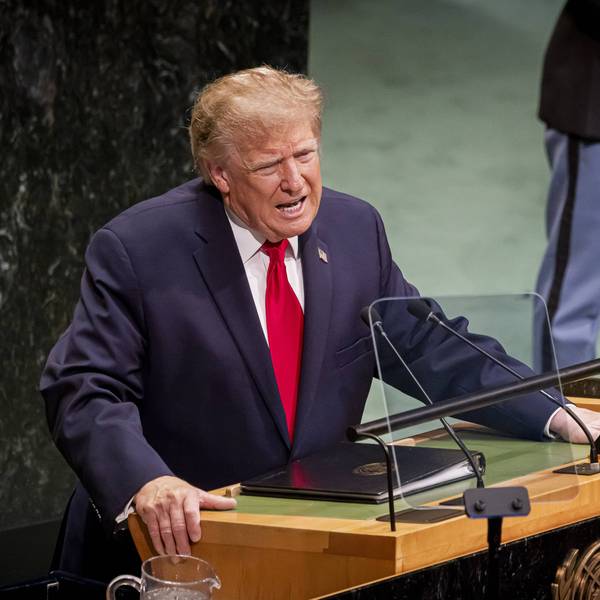
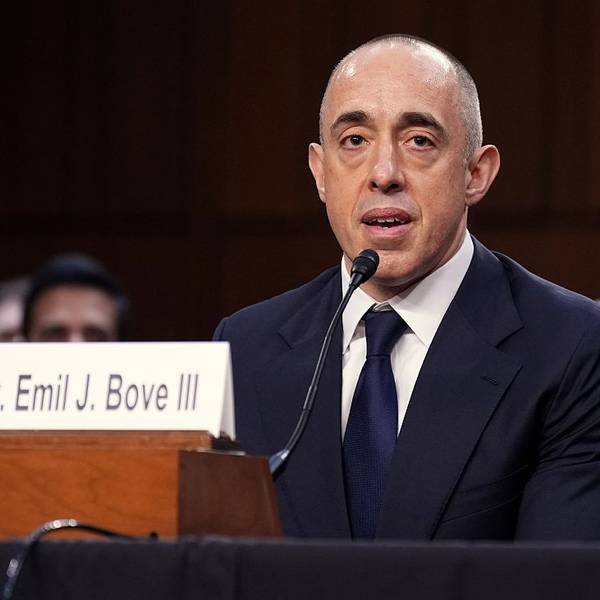

Sen. Tammy Duckworth (D-Ill.) speaks at a Senate Committee on Armed Services hearing on Capitol Hill on December 11, 2025 in Washington, DC.
Dem Senator Raises Alarm About Trump Bringing 'Illegal and Dangerous Misuse of Lethal Force' to Domestic Foes
"If Trump is using this justification to use military force on any individuals he chooses... what’s stopping him from designating anyone within our own borders in a similar fashion and conducting lethal, militarized attacks against them?"
A Democratic senator is raising concerns about President Donald Trump potentially relying on the same rationale he's used to justify military strikes on purported drug trafficking vessels to kill American citizens on US soil.
In an interview with the Intercept, Sen. Tammy Duckworth (D-Ill.) argued that Trump's boat strikes in the Caribbean and the Pacific Ocean have been flatly illegal under both domestic and international law.
Diving into specifics, Duckworth explained that the administration has been justifying its boat-bombing spree by arbitrarily declaring suspected drug traffickers as being part of "designated terrorist organizations," which the senator noted was "not grounded in US statute nor international law, but in solely what Trump says."
Many other legal experts have called the administration's strikes illegal, with some going so far as to call them acts of murder.
Duckworth, a military veteran, also said it was not a stretch to imagine Trump placing terrorist designations on US citizens as well, which would open up the opportunity to carry out lethal strikes against them.
"If Trump is using this justification to use military force on any individuals he chooses—without verified evidence or legal authorization—what’s stopping him from designating anyone within our own borders in a similar fashion and conducting lethal, militarized attacks against them?" Duckworth asked. "This illegal and dangerous misuse of lethal force should worry all Americans, and it can’t be accepted as normal."
Independent journalist Ken Klippenstein reported last week that Attorney General Pam Bondi recently wrote a memo that directed the Department of Justice (DOJ) to compile a list of potential “domestic terrorism” organizations that espouse “extreme viewpoints on immigration, radical gender ideology, and anti-American sentiment.”
The memo expanded upon National Security Presidential Memorandum-7 (NSPM-7), a directive signed by Trump in late September that demanded a “national strategy to investigate and disrupt networks, entities, and organizations that foment political violence so that law enforcement can intervene in criminal conspiracies before they result in violent political acts."
The Intercept revealed that it reached out to the White House, the DOJ, and the US Department of Defense and asked whether the tactics used on purported Caribbean drug traffickers could be deployed on the US citizens that wind up on Bondi's list of extremists. All three entities, reported the Intercept, "have, for more than a month, failed to answer this question."
The DOJ, for instance, responded the Intercept's question about using lethal force against US citizens by saying that "political violence has no place in this country, and this Department of Justice will investigate, identify, and root out any individual or violent extremist group attempting to commit or promote this heinous activity."
Rebecca Ingber, a former State Department lawyer and current professor at Cardozo Law School, told the Intercept that the administration's designation of alleged cartel members as terrorists shows that there appears to be little limit to its conception of the president's power to deploy deadly force at will.
“This is one of the many reasons it is so important that Congress push back on the president’s claim that he can simply label transporting drugs an armed attack on the United States and then claim the authority to summarily execute people on that basis," Ingber explained.
The Intercept noted that the US government "has been killing people—including American citizens, on occasion—around the world with drone strikes" for the past two-and-a-half decades, although the strikes on purported drug boats represent a significant expansion of the use of deadly force.
Nicholas Slayton, contributing editor at Task and Purpose, pointed the finger at former President Barack Obama for pushing the boundaries of drone warfare during his eight years in office.
"Really sucks that Obama administration set a legal precedent for assassinating Americans," he commented on Bluesky.
We are at a crossroads
This country and this world are at a monumental crossroads. In a few short weeks, US voters will have an opportunity to beat back the forces of fascism and confront the billionaires who are rigging the economy, our media system, and our democracy, making it increasingly impossible for ordinary people to get by. We’re not just talking about the election. We’re talking about what must be done once these fascist elements are vanquished from power. We need a bolder set of solutions than what either major party has so far been willing to offer and a working-class movement ready to fight like hell for it. Trump didn't emerge from nowhere. The conditions that fueled MAGA authoritarianism were created by decades of radical neoliberal economic policies and a corrupt political system dominated by corporate interests. They slashed taxes on the super-rich, promising that the benefits would trickle down. They said giveaways to the corporate titans would make life more affordable for the rest of us. It was all bullshit. And when a bitter, betrayed populace searches for someone to blame, right-wing demagogues have little trouble finding scapegoats. People know when they're being lied to, but you won't hear any of this from the corporate media. Only independent journalism—powered and funded by people who believe in building a better world—can deliver truly trustworthy daily news. Our Fall Campaign is underway, and we need your help. To power our newsroom through the rest of the year, we need to raise $125,000 by midnight on October 31. So if you share our vision, please contribute whatever you can to sustain our work. |
A Democratic senator is raising concerns about President Donald Trump potentially relying on the same rationale he's used to justify military strikes on purported drug trafficking vessels to kill American citizens on US soil.
In an interview with the Intercept, Sen. Tammy Duckworth (D-Ill.) argued that Trump's boat strikes in the Caribbean and the Pacific Ocean have been flatly illegal under both domestic and international law.
Diving into specifics, Duckworth explained that the administration has been justifying its boat-bombing spree by arbitrarily declaring suspected drug traffickers as being part of "designated terrorist organizations," which the senator noted was "not grounded in US statute nor international law, but in solely what Trump says."
Many other legal experts have called the administration's strikes illegal, with some going so far as to call them acts of murder.
Duckworth, a military veteran, also said it was not a stretch to imagine Trump placing terrorist designations on US citizens as well, which would open up the opportunity to carry out lethal strikes against them.
"If Trump is using this justification to use military force on any individuals he chooses—without verified evidence or legal authorization—what’s stopping him from designating anyone within our own borders in a similar fashion and conducting lethal, militarized attacks against them?" Duckworth asked. "This illegal and dangerous misuse of lethal force should worry all Americans, and it can’t be accepted as normal."
Independent journalist Ken Klippenstein reported last week that Attorney General Pam Bondi recently wrote a memo that directed the Department of Justice (DOJ) to compile a list of potential “domestic terrorism” organizations that espouse “extreme viewpoints on immigration, radical gender ideology, and anti-American sentiment.”
The memo expanded upon National Security Presidential Memorandum-7 (NSPM-7), a directive signed by Trump in late September that demanded a “national strategy to investigate and disrupt networks, entities, and organizations that foment political violence so that law enforcement can intervene in criminal conspiracies before they result in violent political acts."
The Intercept revealed that it reached out to the White House, the DOJ, and the US Department of Defense and asked whether the tactics used on purported Caribbean drug traffickers could be deployed on the US citizens that wind up on Bondi's list of extremists. All three entities, reported the Intercept, "have, for more than a month, failed to answer this question."
The DOJ, for instance, responded the Intercept's question about using lethal force against US citizens by saying that "political violence has no place in this country, and this Department of Justice will investigate, identify, and root out any individual or violent extremist group attempting to commit or promote this heinous activity."
Rebecca Ingber, a former State Department lawyer and current professor at Cardozo Law School, told the Intercept that the administration's designation of alleged cartel members as terrorists shows that there appears to be little limit to its conception of the president's power to deploy deadly force at will.
“This is one of the many reasons it is so important that Congress push back on the president’s claim that he can simply label transporting drugs an armed attack on the United States and then claim the authority to summarily execute people on that basis," Ingber explained.
The Intercept noted that the US government "has been killing people—including American citizens, on occasion—around the world with drone strikes" for the past two-and-a-half decades, although the strikes on purported drug boats represent a significant expansion of the use of deadly force.
Nicholas Slayton, contributing editor at Task and Purpose, pointed the finger at former President Barack Obama for pushing the boundaries of drone warfare during his eight years in office.
"Really sucks that Obama administration set a legal precedent for assassinating Americans," he commented on Bluesky.
A Democratic senator is raising concerns about President Donald Trump potentially relying on the same rationale he's used to justify military strikes on purported drug trafficking vessels to kill American citizens on US soil.
In an interview with the Intercept, Sen. Tammy Duckworth (D-Ill.) argued that Trump's boat strikes in the Caribbean and the Pacific Ocean have been flatly illegal under both domestic and international law.
Diving into specifics, Duckworth explained that the administration has been justifying its boat-bombing spree by arbitrarily declaring suspected drug traffickers as being part of "designated terrorist organizations," which the senator noted was "not grounded in US statute nor international law, but in solely what Trump says."
Many other legal experts have called the administration's strikes illegal, with some going so far as to call them acts of murder.
Duckworth, a military veteran, also said it was not a stretch to imagine Trump placing terrorist designations on US citizens as well, which would open up the opportunity to carry out lethal strikes against them.
"If Trump is using this justification to use military force on any individuals he chooses—without verified evidence or legal authorization—what’s stopping him from designating anyone within our own borders in a similar fashion and conducting lethal, militarized attacks against them?" Duckworth asked. "This illegal and dangerous misuse of lethal force should worry all Americans, and it can’t be accepted as normal."
Independent journalist Ken Klippenstein reported last week that Attorney General Pam Bondi recently wrote a memo that directed the Department of Justice (DOJ) to compile a list of potential “domestic terrorism” organizations that espouse “extreme viewpoints on immigration, radical gender ideology, and anti-American sentiment.”
The memo expanded upon National Security Presidential Memorandum-7 (NSPM-7), a directive signed by Trump in late September that demanded a “national strategy to investigate and disrupt networks, entities, and organizations that foment political violence so that law enforcement can intervene in criminal conspiracies before they result in violent political acts."
The Intercept revealed that it reached out to the White House, the DOJ, and the US Department of Defense and asked whether the tactics used on purported Caribbean drug traffickers could be deployed on the US citizens that wind up on Bondi's list of extremists. All three entities, reported the Intercept, "have, for more than a month, failed to answer this question."
The DOJ, for instance, responded the Intercept's question about using lethal force against US citizens by saying that "political violence has no place in this country, and this Department of Justice will investigate, identify, and root out any individual or violent extremist group attempting to commit or promote this heinous activity."
Rebecca Ingber, a former State Department lawyer and current professor at Cardozo Law School, told the Intercept that the administration's designation of alleged cartel members as terrorists shows that there appears to be little limit to its conception of the president's power to deploy deadly force at will.
“This is one of the many reasons it is so important that Congress push back on the president’s claim that he can simply label transporting drugs an armed attack on the United States and then claim the authority to summarily execute people on that basis," Ingber explained.
The Intercept noted that the US government "has been killing people—including American citizens, on occasion—around the world with drone strikes" for the past two-and-a-half decades, although the strikes on purported drug boats represent a significant expansion of the use of deadly force.
Nicholas Slayton, contributing editor at Task and Purpose, pointed the finger at former President Barack Obama for pushing the boundaries of drone warfare during his eight years in office.
"Really sucks that Obama administration set a legal precedent for assassinating Americans," he commented on Bluesky.