
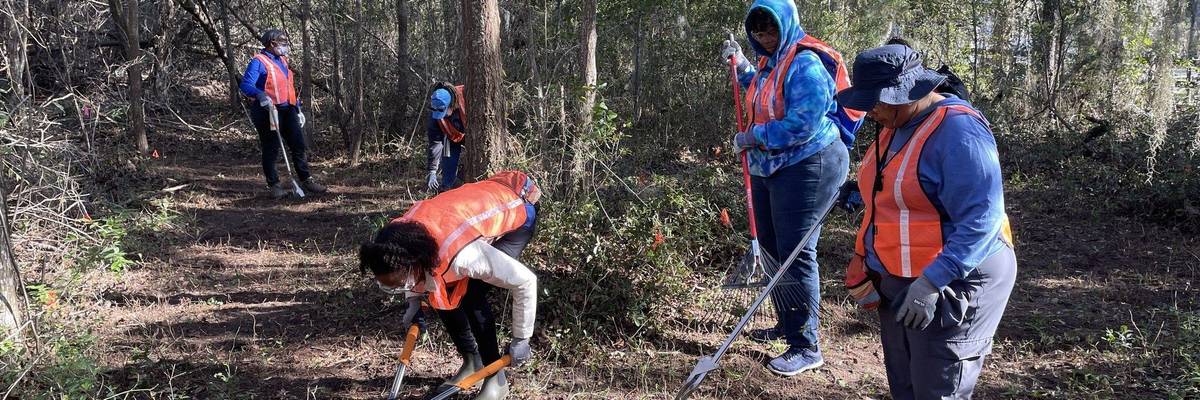
The National Park Service has encouraged people across the United States to "honor the life and legacy of Martin Luther King Jr. by serving your community" on MLK Day, including by joining cleanup efforts at national parks.
National Park Service Grants Free Access on Trump's Birthday—And Ends It for Juneteenth, MLK Day
Critics have ripped the decisions as "truly disgusting" and "literally the sort of thing dictators do."
"Why is MLK Day not worthy of a fee-free day anymore?"
That's what Kati Schmidt, communications director for the National Parks Conservation Association, wondered in an email to SFGATE, which reported Thursday on the National Park Service's recently announced free admission days for 2026.
"That has become a day of service throughout the country as well as celebrating an American hero who has several park units celebrating his legacy," Schmidt noted of the federal holiday honoring Rev. Martin Luther King Jr. each January.
In addition to MLK Day, three other previously free days were left off the US Department of the Interior's announcement last week about "resident-only patriotic fee-free days." Visitors will now have to pay park fees on National Public Lands Day, the anniversary of the Great American Outdoors Act—which President Donald Trump signed in 2020—and Juneteenth.
cool that the official position of the administration appears to be that black people don’t really count as americans
[image or embed]
— jamelle (@jamellebouie.net) December 5, 2025 at 8:20 AM
In 2021, Congress passed and then-President Joe Biden signed legislation designating Juneteenth as a federal holiday to commemorate the end of slavery in the United States. After returning to the White House in January, Trump declined to recognize it on this past June 19.
As SFGATE reported:
"This policy shift is deeply concerning," said Tyrhee Moore, the executive director of Soul Trak Outdoors, a nonprofit that connects urban communities of color to the outdoors. "Removing free-entry days on MLK Day and Juneteenth sends a troubling message about who our national parks are for. These holidays hold profound cultural and historical significance for Black communities, and eliminating them as access points feels like a direct targeting of the very groups who already face systemic barriers to the outdoors."
Moore told SFGATE that his organization works to push back against "these kinds of systemic attempts that disguise exclusion as administrative or political decisions."
"Policies like this reinforce inequalities around access and visibly show how systems can create obstacles that keep communities of color from feeling welcomed in public spaces," he said.
Olivia Juarez, public land program director at the advocacy group GreenLatinos, said in a statement that "we condemn the omission of the Reverend Dr. Martin Luther King Jr.'s birthday, Juneteenth, National Public Lands Day, and the anniversary of the Great American Outdoors Act from the list of free entrance days."
"The Great American Outdoors Act permanently funded the Land and Water Conservation Fund, which enhances outdoor recreation access for all people from national public lands to neighborhood parks," she pointed out. "These observances are patriotic days that celebrate freedom and safety in the outdoors. They should be celebrated as such by removing a simple cost barrier that can make parks more accessible to low-income households."
Other critics have ripped the free day decisions as "truly disgusting" and "literally the sort of thing dictators do."
Journalist Jennifer Schulze said: "I love our national parks but don't go on his birthday. Find a state park to visit instead."
Along with the free admission changes, the Trump administration is under fire for putting the president's face on the new "America the Beautiful" annual passes—a display that may be illegal—and for hiking prices for foreign visitors to national parks.
Utah-based Juarez and GreenLatinos California state program manager Pedro Hernández both denounced price hikes for noncitizens—a move that notably comes as the administration pursues Trump's promise of mass deportations.
"By imposing higher fees on people without state-issued ID," Hernández said, "the Trump administration is advancing a xenophobic policy that disproportionately harms vulnerable populations like international students, newly arrived immigrants, and families seeking asylum."
"This approach eviscerates the true meaning of public lands and sends a clear, exclusionary message that our most cherished national parks have become yet another pay-to-play system," he added. "People should be welcomed—not priced out from our public lands."
We are at a crossroads
This country and this world are at a monumental crossroads. In a few short weeks, US voters will have an opportunity to beat back the forces of fascism and confront the billionaires who are rigging the economy, our media system, and our democracy, making it increasingly impossible for ordinary people to get by. We’re not just talking about the election. We’re talking about what must be done once these fascist elements are vanquished from power. We need a bolder set of solutions than what either major party has so far been willing to offer and a working-class movement ready to fight like hell for it. Trump didn't emerge from nowhere. The conditions that fueled MAGA authoritarianism were created by decades of radical neoliberal economic policies and a corrupt political system dominated by corporate interests. They slashed taxes on the super-rich, promising that the benefits would trickle down. They said giveaways to the corporate titans would make life more affordable for the rest of us. It was all bullshit. And when a bitter, betrayed populace searches for someone to blame, right-wing demagogues have little trouble finding scapegoats. People know when they're being lied to, but you won't hear any of this from the corporate media. Only independent journalism—powered and funded by people who believe in building a better world—can deliver truly trustworthy daily news. Our Fall Campaign is underway, and we need your help. To power our newsroom through the rest of the year, we need to raise $125,000 by midnight on October 31. So if you share our vision, please contribute whatever you can to sustain our work. |
"Why is MLK Day not worthy of a fee-free day anymore?"
That's what Kati Schmidt, communications director for the National Parks Conservation Association, wondered in an email to SFGATE, which reported Thursday on the National Park Service's recently announced free admission days for 2026.
"That has become a day of service throughout the country as well as celebrating an American hero who has several park units celebrating his legacy," Schmidt noted of the federal holiday honoring Rev. Martin Luther King Jr. each January.
In addition to MLK Day, three other previously free days were left off the US Department of the Interior's announcement last week about "resident-only patriotic fee-free days." Visitors will now have to pay park fees on National Public Lands Day, the anniversary of the Great American Outdoors Act—which President Donald Trump signed in 2020—and Juneteenth.
cool that the official position of the administration appears to be that black people don’t really count as americans
[image or embed]
— jamelle (@jamellebouie.net) December 5, 2025 at 8:20 AM
In 2021, Congress passed and then-President Joe Biden signed legislation designating Juneteenth as a federal holiday to commemorate the end of slavery in the United States. After returning to the White House in January, Trump declined to recognize it on this past June 19.
As SFGATE reported:
"This policy shift is deeply concerning," said Tyrhee Moore, the executive director of Soul Trak Outdoors, a nonprofit that connects urban communities of color to the outdoors. "Removing free-entry days on MLK Day and Juneteenth sends a troubling message about who our national parks are for. These holidays hold profound cultural and historical significance for Black communities, and eliminating them as access points feels like a direct targeting of the very groups who already face systemic barriers to the outdoors."
Moore told SFGATE that his organization works to push back against "these kinds of systemic attempts that disguise exclusion as administrative or political decisions."
"Policies like this reinforce inequalities around access and visibly show how systems can create obstacles that keep communities of color from feeling welcomed in public spaces," he said.
Olivia Juarez, public land program director at the advocacy group GreenLatinos, said in a statement that "we condemn the omission of the Reverend Dr. Martin Luther King Jr.'s birthday, Juneteenth, National Public Lands Day, and the anniversary of the Great American Outdoors Act from the list of free entrance days."
"The Great American Outdoors Act permanently funded the Land and Water Conservation Fund, which enhances outdoor recreation access for all people from national public lands to neighborhood parks," she pointed out. "These observances are patriotic days that celebrate freedom and safety in the outdoors. They should be celebrated as such by removing a simple cost barrier that can make parks more accessible to low-income households."
Other critics have ripped the free day decisions as "truly disgusting" and "literally the sort of thing dictators do."
Journalist Jennifer Schulze said: "I love our national parks but don't go on his birthday. Find a state park to visit instead."
Along with the free admission changes, the Trump administration is under fire for putting the president's face on the new "America the Beautiful" annual passes—a display that may be illegal—and for hiking prices for foreign visitors to national parks.
Utah-based Juarez and GreenLatinos California state program manager Pedro Hernández both denounced price hikes for noncitizens—a move that notably comes as the administration pursues Trump's promise of mass deportations.
"By imposing higher fees on people without state-issued ID," Hernández said, "the Trump administration is advancing a xenophobic policy that disproportionately harms vulnerable populations like international students, newly arrived immigrants, and families seeking asylum."
"This approach eviscerates the true meaning of public lands and sends a clear, exclusionary message that our most cherished national parks have become yet another pay-to-play system," he added. "People should be welcomed—not priced out from our public lands."