

SUBSCRIBE TO OUR FREE NEWSLETTER
Daily news & progressive opinion—funded by the people, not the corporations—delivered straight to your inbox.
5
#000000
#FFFFFF
To donate by check, phone, or other method, see our More Ways to Give page.
Daily news & progressive opinion—funded by the people, not the corporations—delivered straight to your inbox.
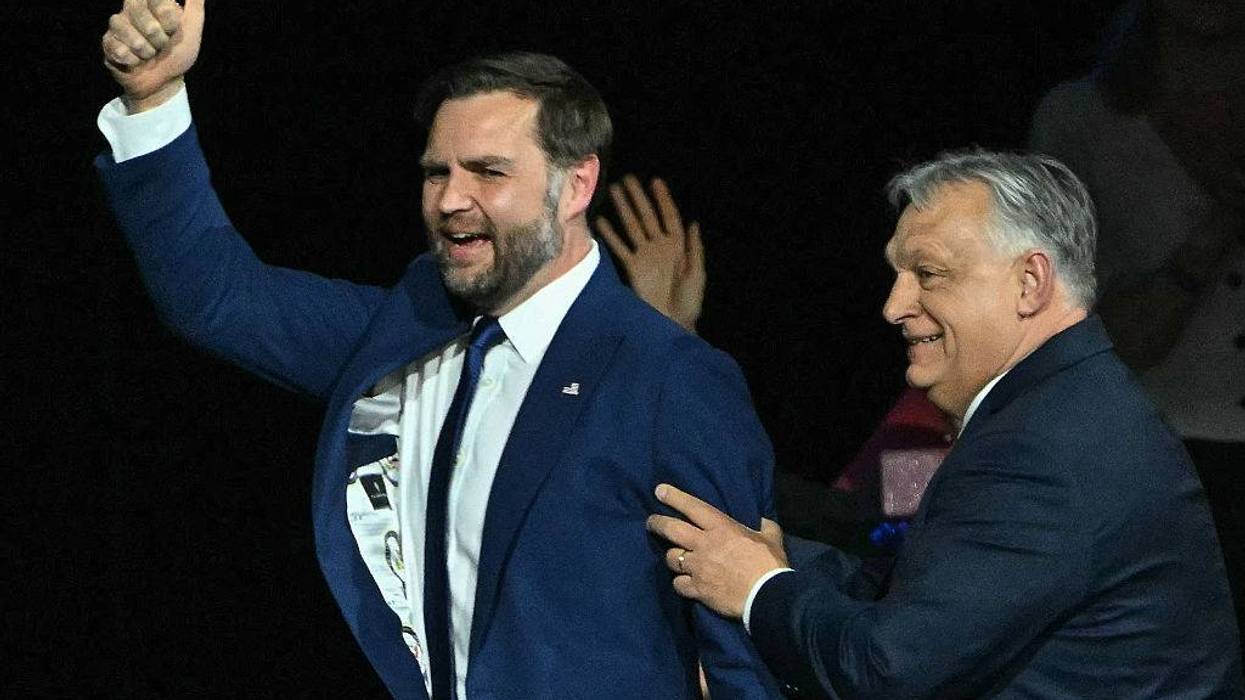
Vance had followed Trump into Orbán’s abyss, and now Trump is taking him on another losing journey.
As Prime Minister of Hungary for 16 years, Viktor Orbán became a beacon for the right and one of President Donald Trump’s favorite authoritarian role models. A self-described populist, Orbán’s conquest of democracy’s three pillars—the media, institutions of higher education, and the justice system—became Trump’s template.
Another Orbán characteristic attracted Trump: His regime consistently ranked No. 1 as the most corrupt country in the European Union. He abused political power for self-enrichment. He installed friends and family members in positions of influence and power that made him (and them) wealthy. He used his majority in the legislature to enhance his power. A persistent critic of Ukraine, Orbán also enjoyed the support of Russian President Vladimir Putin.
Sound familiar?
Trump embraced and praised Orbán, which meant that his Vice President JD Vance embraced and praised him too.
In 2016, Vance had called himself a “Never Trump Guy” and wrote a New York Times op-ed titled, “Mr. Trump Is Unfit For Our Nation's Highest Office." But he reversed course in 2021 when he ran for the US. Senate and sought successfully to gain Trump’s endorsement.
As a junior senator, Vance could have refrained from voicing an opinion about Orbán. But ambition required otherwise. In a February 2024 interview with European Conservative, Vance was well aware of Trump’s views as he lobbied to become the vice-presidential pick on the Republican ticket. He held out Trump’s Hungarian idol as an example to emulate:
The closest that conservatives have ever gotten to successfully dealing with left-wing domination of universities is Viktor Orbán’s approach in Hungary. I think his way has to be the model for us: not to eliminate universities, but to give them a choice between survival or taking a much less biased approach to teaching.
Of course, Vance—a Yale Law School graduate—knew that Orbán did not offer a “much less biased approach to teaching.” He demanded instruction centered on his view of history and the world.
In the same 2024 interview, Vance previewed what would also become some of Trump’s tactics:
And whether it’s the incentives that you put into place, funding decisions that are made, and the curricula that are developed, you really can use politics to influence culture. And we should be doing more of that on the American Right.
In a July 2024 interview on Face the Nation, Vance reaffirmed his praise for Orbán’s approach:
What I do think is on the university—on the university principle, the idea that taxpayers should have some influence in how their money is spent at these universities. It’s a totally reasonable thing. And I do think that he’s made some smart decisions there that we could learn from in the United States.
It was only the beginning of Vance’s “awakening.”
As vice president, Vance used his speech at the Munich Security Conference in February 2025 to attack many of Europe’s democracies by name—but not Hungary. He said that actors from within posed a greater threat than China or Russia: “In Britain, and across Europe, free speech, I fear, is in retreat.”
To a stone-faced audience of European leaders, Vance complained about “old, entrenched interests hiding behind ugly, Soviet-era words like ‘misinformation’ and ‘disinformation,’ who simply don't like the idea that somebody with an alternative viewpoint might express a different opinion…”
In fact, what responsible leaders don’t like is misinformation and disinformation pervading the political landscape. Orbán relied on both, as have Trump and Vance.
And Vance declared that mass immigration was Europe's most significant problem, noting record levels of foreign-born residents in Germany and increased EU immigration from non-EU countries caused by “conscious decisions” from certain European leaders.
For Trump and Vance, leaders like Orbán were the antidote to the decline of Western civilization. But heading into the April 2026 election in Hungary, Orbán was down by double digits in the polls.
On April 8, Trump dispatched Vance to Budapest where he held a rally for the embattled leader. Vance portrayed Orbán as a hero:
I’m here because of the moral cooperation between our two countries. Because what the United States and Hungary together represent under Viktor’s leadership and under President Trump’s is the defense of Western civilization… The defense of the idea that we are founded on a certain Christian civilization and Christian values that animate everything from freedom of speech to rule of law to respect for minority rights and protection of the vulnerable.
Vance continued:
Will you stand for sovereignty and democracy? Will you stand for Western civilization? Will you stand for freedom, for truth, and for the God of our fathers? Then my friends, go to the polls in the weekend, stand with Viktor Orbán because he stands for you and he stands for all these things.
In fact, Orbán stood for none of those things.
The closest Trump got to the rally was a speakerphone call via Vance’s cellphone through which he said, “I love Hungary and I love that Viktor.”
On April 12, 2026, three days after Vance’s rally for Orbán, a reckoning arrived for all three men—Orbán, Trump, and Vance. In a landslide, Hungarian voters threw Orbán out of office. The populist had become unpopular, and Hungary’s citizens reclaimed their country.
Vance had followed Trump into Orbán’s abyss, and now Trump is taking him on another losing journey. Vance is the highest-ranking Catholic in the Trump administration, and he has joined Trump in attacking the Pope.
Sometimes ambition makes a person not only blind, but also deaf and dumb.
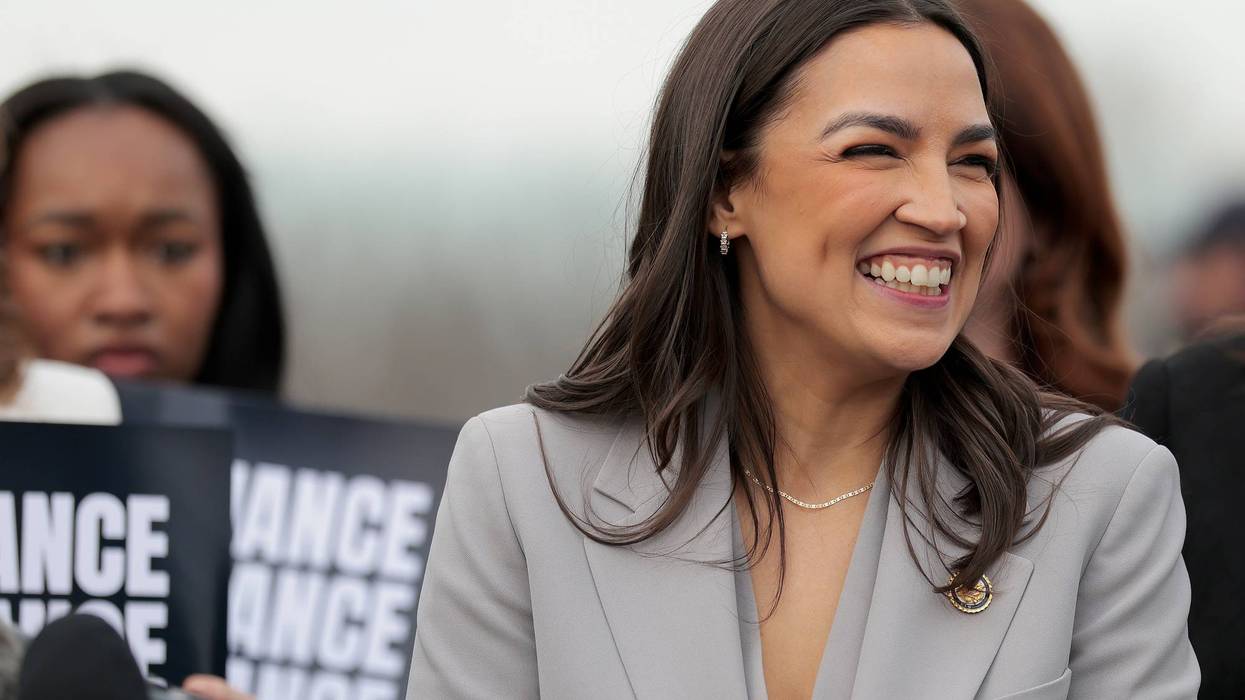
"Alexandria lives in JD Vance’s head rent-free because she won't back down from fighting for what's right," said the progressive's reelection campaign.
US Rep. Alexandria Ocasio-Cortez swiftly fired back at Vice President JD Vance on Thursday after the Republican mocked the New York Democrat for her difficulty answering a question about Taiwan during the Munich Security Conference in Germany.
Speaking during the inaugural meeting of President Donald Trump's so-called Board of Peace, Vance attempted a joke: "Thank you, Mr. President, very much for your leadership, but also for the kind words about me personally. I knew exactly what I wanted to say but then after the president said that I was so smart and that I didn't want to repeat our congresswoman who froze for 20 seconds over in Munich. Now I'm tempted, sir, just to freeze for 20 seconds and just stare at the cameras, and maybe they'll say nice things about me, like they do about Congresswoman Cortez, but I have three very brief messages."
Responding to a video clip of Vance on social media, Ocasio-Cortez said, "The only thing longer than my pause to think was their silence to his joke," with a skull emoji, generally used to convey laughing to death.
Vance previously took aim at Ocasio-Cortez during a Tuesday interview with Fox News' Martha MacCallum, who asked him to weigh in on footage from Munich last Friday, when Ocasio-Cortez was asked whether the United States should send troops to defend Taiwan in the event of a Chinese invasion.
The congresswoman began, "Um, you know, I think that, uh, this is such a, a—you know, I think that—this is a, um—this is of course, a, uh, a very long-standing, um, policy of the United States."
While Fox cut off the clip there, Ocasio-Cortez added: "And I think what we are hoping for is that we want to make sure that we never get to that point, and we want to make sure that we are moving in all of our economic, research, and our global positions to avoid any such confrontation and for that question to even arise."
Describing the congresswoman as "a person who doesn't know what she actually thinks," the vice president—who may run as Trump's successor in 2028—called her answer "embarrassing" and "the most uncomfortable 20 seconds of television I've ever seen."
"Does anybody really believe that AOC has very thoughtful ideas about the global world order or about what the United States should do with our policy in Asia or our policy Europe?" Vance added. "No, this is a person who is mouthing the slogans that somebody else gave her."
Ocasio-Cortez is seeking another term in the House of Representatives this cycle, though she has fueled speculation of a possible Senate or presidential run in 2028, including with her trip to Germany, where she argued that "working-class-centered politics" is key to defeating the "scourge of authoritarianism."
Her congressional campaign noted the attack from Vance in a Thursday email to supporters: "Did you see what JD Vance said about Alexandria? He said she's 'somebody who doesn't know what she actually thinks.' JD Vance is wrong."
It goes on to detail some of "what Alexandria thinks," including:
"Alexandria lives in JD Vance's head rent-free because she won't back down from fighting for what's right," the email adds. "But she can't do this work alone. She needs a movement alongside her."
The congresswoman wasn't alone is ridiculing Vance after he mocked her on Thursday. Journalist Mehdi Hasan said that "it's so funny that he tries to make a joke about AOC and gets no laughs."
It is "a reminder" that Ocasio-Cortez, California Gov. Gavin Newsom, "and the rest of the top-tier Dems could make mincemeat out of this guy in 2028," Hasan declared. "He has the charisma of a broken wooden chair and the humor of Elon Musk."

The implication, delivered with straight-faced solemnity in Munich, is that the US-backed campaign against leftist movements in the Cold War was a noble defense of freedom, democracy, and Christian civilization.
Much has already been written about Secretary of State Marco Rubio's damage-control mission to the Munich Security Conference, sent to cool transatlantic tensions mere weeks after President Donald Trump hinted multiple times at annexing Greenland by force. But beneath the conciliatory tone was Rubio's explicit defense of the fight against “godless communist revolutions” and “anti-colonial uprisings” throughout the world, a horrific sanitization of the US-backed dictatorships that terrorized Latin America and beyond in the last century.
Rubio painted a sweeping narrative of Western civilization under threat. “The great Western empires had entered into terminal decline,” he declared, “accelerated by godless communist revolutions and by anti-colonial uprisings that would transform the world and drape the red hammer and sickle across vast swaths of the map.”
That line is a direct homage to the doctrines of Cold Warriors Henry Kissinger and Jeane Kirkpatrick, both of whom infamously argued that right-wing dictators were acceptable allies in the fight against communism—regardless of their brutality—because they were “authoritarian” rather than "totalitarian.” Yes, even if those “communists” were democratically elected, popular, and nonviolent.
The implication, delivered with straight-faced solemnity in Munich, is that the US-backed campaign against leftist movements in the Cold War was a noble defense of freedom, democracy, and Christian civilization.
The United States can continue down the path outlined by Rubio’s speech, but it will only accelerate its decline, alienate its allies, and create the very chaos it claims to fight.
In the 1970s and 1980s, the US helped set up Operation Condor, a network that far-right dictatorships operated throughout the 1970s and 1980s as a coordinated system of state terror across South America. The Chilean intelligence service chillingly described it as “something similar to what Interpol has in Paris, but devoted to subversion.” It was, also important to mention, explicitly framed by the US government to defend Christian civilization (also called the Banzer Plan).
Rubio's Christian civilization trope is an ode to a very specific, pro-corporate, pro-authoritarian, and white-supremacist Christianity, the same ideology championed by Donald Trump's MAGA movement. This is the same ideology that colonized, enslaved, and subjugated Latin America and the Global South, through the European institutions he lifted up in his speech. Centuries later, the United States resurrected this crusade through the CIA, which funded and even armed the rise of far-right, pro-capitalist Evangelical movements, to actively oppose and dismantle the more redistributive, popular Catholic churches rooted in liberation theology.
Many of the right-wing paramilitaries and dictatorships backed by the US were explicitly Christian. They, however, killed priests who did not adhere to rigid far-right fundamentalism—Catholic groups were central to the resistance. That Evangelical fundamentalism now fuels the region's new wave of right-wing leaders, including Jair Bolsonaro, Javier Milei, Maria Corina Machado, and José Antonio Kast, who are also fanatical supporters of Israel.
The Condor system maintained a centralized database tracking guerrilla movements, left-wing parties, trade unionists, religious groups, liberal politicians, and anyone deemed an enemy of the authoritarian regimes. These designated “terrorists” were hunted across borders, tracked down, and eliminated throughout the Americas and even in Europe, including France, Spain, Italy, and Portugal.
The United States actively designed, funded, and supported this architecture of repression, and then helped cover it up. The infamous, still-open School of the Americas trained torturers, while CIA stations shared intelligence with Condor operatives. US Embassies smoothed relations with allies and propagandized local populations.
In Bolivia, the US backed Hugo Banzer after his predecessor convened a People's Assembly of proletarian sectors to usher in populist reforms. That president was later kidnapped, tortured, and assassinated by the Condor system.
In Brazil, Washington supported the neo-Nazi-backed military coup that deposed social democrat João Goulart after he attempted mild economic reforms, ushering in two decades of brutal military rule.
In Chile, the US organized against socialist president Salvador Allende, who was instituting democratic, redistributive reforms. The Nixon administration famously declared it would “make the economy scream” in Chile, and went on to support Augusto Pinochet's coup, which brought torture, disappearances, and a dictatorship that murdered thousands. Rubio and the US currently back its Pinochet-supporting, grandson-of-an-SS-lieutenant President, Jose Antonio Kast.
On the topic of the SS, the US used Nazis as part of their anti-leftist subversion campaign in the Cold War. After World War II, the US set up “ratlines,” or escape routes, for Nazis and Nazi sympathizers throughout Latin America and Europe, to escape prosecution. They ended up being key architects of the US-backed right-wing dictatorships throughout the world including in Latin America, while many even joined anti-communist death squads.
Final Solution architects Adolf Eichmann, Klaus Barbie, Josef Mengele, and countless others all left for South America with help from the US State Department, which Rubio now commands.
The US also deposed socialist governments and installed brutal right-wing regimes in the Dominican Republic, Ecuador, Haiti (multiple times), Mexico, Nicaragua (multiple times through the Somoza family), Costa Rica, Honduras (multiple times), El Salvador, and Panama.
In Guatemala, the CIA overthrew socialist president Jacobo Arbenz after he dared to enact land reform that threatened the American United Fruit Company, whose political connections apparently mattered more than Guatemalan democracy. Guatemala was ruled by brutal military dictators for decades afterward, also regimes the US supported.
Mind you, this is only in Latin America—the US did plenty more of this in Europe, Asia, and Africa. This was all less than 50 years ago, and continues to this day.
Such is the legacy that Rubio defends when he mourns the setbacks to “Western civilization” made by “anti-colonial uprisings.” We must ask, why did those uprisings occur? Is Rubio implying that opposing colonialism is bad? Most of them occurred after centuries of slavery and subjugation, some of which was inflicted by the US.
This historical whitewashing serves Rubio's contemporary objectives. The United States is currently engaged in a multi-front campaign to reshape Latin America into a bastion of pro-American right-wing populism.
The administration has waged economic war on Venezuela, and Cuba, now on the verge of total humanitarian collapse. It swayed the last election in Honduras through disinformation and threats—continuing a pattern of US intervention that began with the Obama administration's 2009 backing of a coup against socialist Manuel Zelaya. Trump's first term engineered a coup in Bolivia against socialist Evo Morales, that Rubio enthusiastically supported.
Trump’s second administration has threatened strikes on Mexico and Colombia, imposed sanctions and tariffs on Brazil, and openly and covertly supported authoritarian parties throughout the hemisphere, including the Bolsonaros in Brazil, Milei in Argentina, Nayib Bukele in El Salvador, Daniel Noboa in Ecuador, Tuto Quiroga in Bolivia, and opposition figures across the region.
There is something profoundly ignorant in Rubio's performance. He and his boss have championed authoritarian tactics, openly supported neo-Nazi politics, praised dictators abroad, and destroyed democracy and the Constitution at home. To then stand before the world to declare that America defends freedom, democracy, and Judeo-Christian principles against godless revolutionaries is a ridiculous diminution of those very principles.
As Salvador Allende put it mere hours before his death at the hands of US forces at the Palacio de la Moneda, “While they have strength and will be able to dominate us, social processes can be arrested neither by crime nor force.”
In Haiti, more than a century of US interventions, coups, and support for corrupt and violent figures has produced a humanitarian catastrophe that now generates waves of migration, while the American right has the gall to turn around and fearmonger about Haitian migrants invading the country.
As Brazilian President Luiz Inácio Lula da Silva says, “Foreign intervention can cause more damage than it seeks to prevent.” They create the migration crises that then become fodder for right-wing demagogues. They alienate Latin American populations, who increasingly view China more favorably than the United States, because while Washington offers only militarism and domination, Beijing offers infrastructure investment and trade (however problematic its own debt traps may be).
Many Latin American states would rather navigate imbalanced partnerships with China than submit to foreign invasions and coups from Washington.
The United States can continue down the path outlined by Rubio’s speech, but it will only accelerate its decline, alienate its allies, and create the very chaos it claims to fight. Or it could finally reckon honestly with its history and chart a different, humane course.
Eduardo Galeano once said, “Latin America is part of the world, which was for many years condemned to the system of power where intimidation had more strength than the vote.” By sanitizing these atrocities, Rubio is condemning Latin America and the world to that fate once again.
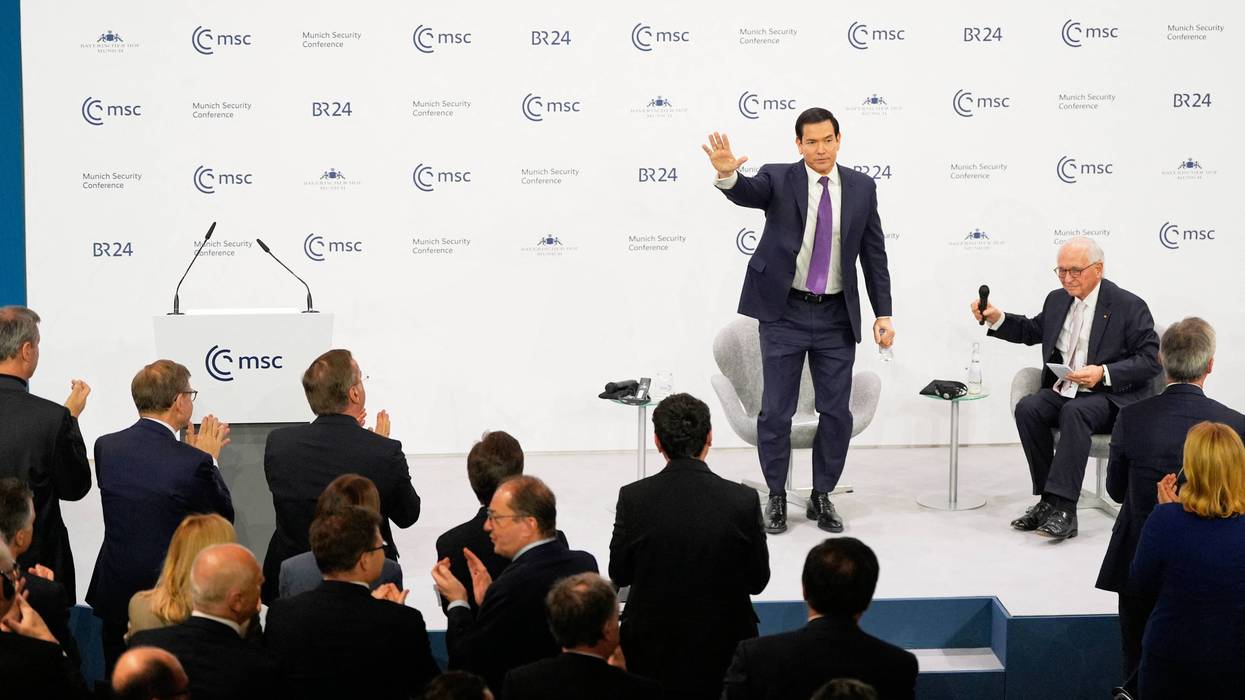
One analyst called the US secretary of state's address "one of the most revisionist and imperialist speeches I've ever seen a senior American official make, and that's saying something."
US Secretary of State Marco Rubio's defense of Western colonialism and imperial power at the Munich Security Conference and the applause his remarks received from attendees were seen as deeply unsettling in the context of the Trump administration's brazen trampling of international law, including the recent kidnapping of the president of a sovereign nation.
While Rubio gave lip service in his remarks to multilateral cooperation with Europe in what he called the global "task of renewal and restoration," he made clear the US would carry out its agenda alone if needed and accused European allies of succumbing to a "climate cult," embracing "free and unfettered trade," and opening their doors to "unprecedented wave of mass migration that threatens the cohesion of our societies," echoing the rhetoric of his boss, US President Donald Trump.
Rubio lamented the decline of the "great Western empires" in the face of "godless communist revolutions and by anti-colonial uprisings that would transform the world and drape the red hammer and sickle across vast swaths of the map in the years to come"—and made clear that the Trump administration envisions a return to "the West's age of dominance."
"We in America have no interest in being polite and orderly caretakers of the West’s managed decline," said Rubio. "We do not seek to separate, but to revitalize an old friendship and renew the greatest civilization in human history."
Attendees at the Munich conference—which notably did not include representatives of Latin America at a time when the Trump administration is embracing and expanding the Monroe Doctrine—gave Rubio a standing ovation:
standing ovation for marco rubio at munich security council, set against context of dramatically lower european expectations from their relationship with the united states. pic.twitter.com/oavfBmaIs2
— ian bremmer (@ianbremmer) February 14, 2026
"Standing ovation for Rubio in Munich. Standing ovation for Netanyahu in Washington," wrote Progressive International co-general coordinator David Adler, referring to the Israeli prime minister's visit to the US capital last week. "We are ruled by a transatlantic clique of criminals and midwit minions who clap like seals when their white supremacy is laundered by the language of 'Western values.' Sick stuff."
Critics viewed the US secretary of state's speech—both the explicit words and its undertones—as a self-serving interpretation of the past and a dangerous vision of the future, and expressed alarm at the celebratory response from the Munich crowd.
Geopolitical analyst Arnaud Bertrand called Rubio's address "one of the most revisionist and imperialist speeches I've ever seen a senior American official make, and that's saying something."
"Basically the man is openly saying that the whole post-colonial order was a mistake and he's calling on Europe to share the spoils of building a new one," Bertrand wrote on social media. "When an imperial power is speaking to you of sentiments, of how much they like you and how they want to partner with you—the much weaker party—that's cause for worry, not applause."
Nathalie Tocci, a professor at the Johns Hopkins School of Advanced International Studies in Europe, compared Rubio's address to US Vice President JD Vance's openly hostile attack on European nations during his Munich speech last year.
"Rubio’s message was more sophisticated and strategic than Vance’s. But it was just as dangerous, if not more so, precisely because it lowered the transatlantic temperature and may have lulled Europe into a false sense of calm," Tocci wrote in a Guardian op-ed on Monday. "As Benjamin Haddad, France’s Europe minister, said in Munich, the European temptation may be to press the snooze button once again."
"If Europeans were comforted by a false sense of reassurance as they walked away from the packed Bayerischer Hof hotel in Munich," Tocci added, "they risk walking straight into the trap that MAGA America has laid for them."
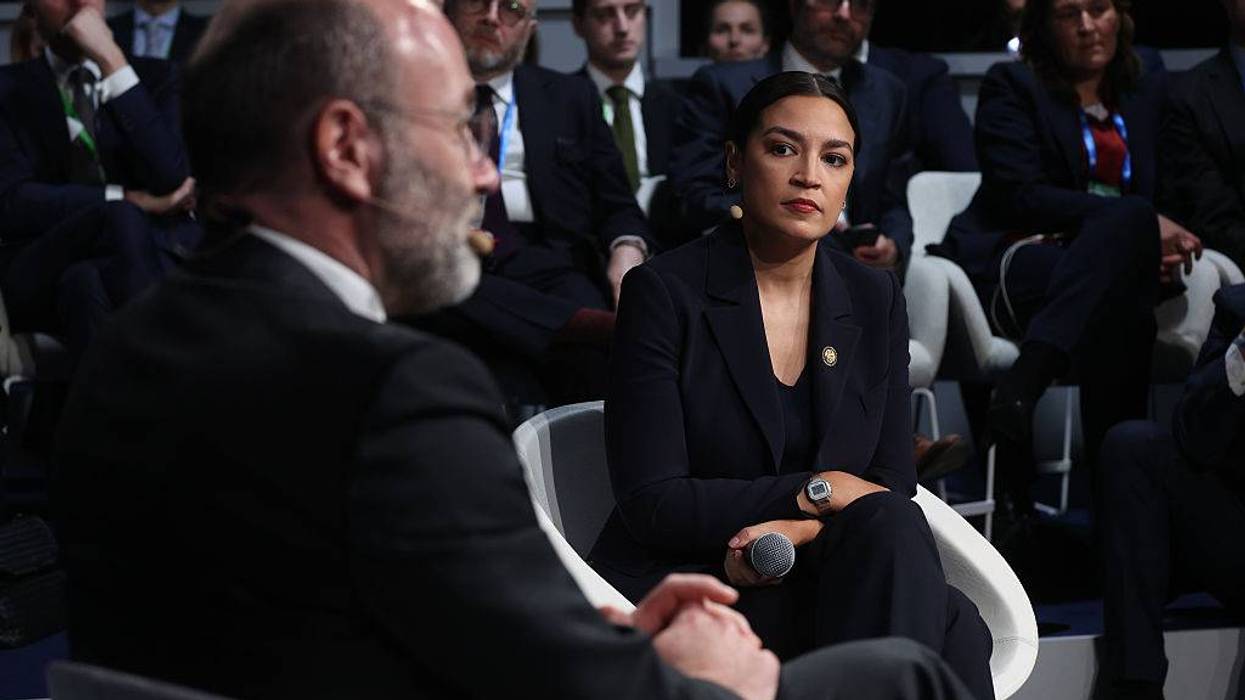
"It is of the utmost urgency that we get our economic houses in order and deliver material gains for the working class."
US Rep. Alexandria Ocasio-Cortez on Friday made a pitch for a "working-class-centered politics" as the key to defeating the kind of authoritarian populism embodied by President Donald Trump.
Speaking at a panel at the Munich Security Conference in Germany, Ocasio-Cortez (D-NY) said that decades of government failures such as the North American Free Trade Agreement (NAFTA) and the 2003 Iraq War had opened the door for demagogues such as Trump among working-class voters.
The only way to defeat this, she said, is to reorient progressive politics around social class.
"We have to have a working-class-centered politics if we are going to succeed," she said, "and also if we are going to stave off the scourge of authoritarianism, which provide political siren calls to allure people into finding scapegoats to blame for rising economic inequality, both domestically and globally."
AOC: We have to have a working class centered politics, if we are going to succeed and also if we are going to stave off the scourges of authoritarianism which provide political siren calls to allure people into finding scapegoats to blame for rising economic inequality pic.twitter.com/USqgTk3brd
— Acyn (@Acyn) February 13, 2026
Elsewhere during the panel, Ocasio-Cortez elaborated on the way economic inequality fuels the demand for authoritarian leaders.
"We're seeing, in economy across economy around the world, including in the United States," she said, "that extreme levels of income inequality lead to social instability and drives in a sense in authoritarianism, right-wing populism and very dangerous domestic internal politics. And that is a direct outcome of, not just income inequality, but the failure of democracies over decades to deliver, the failure to deliver higher wages, the failure to rein in corporations."
AOC: We’re seeing economies around the world — including in the United States — where extreme levels of income inequality lead to social instability and, in a sense, drive authoritarianism…
That is a direct outcome not just of income inequality, but of the failure of… pic.twitter.com/0EHsbyqdFK
— Acyn (@Acyn) February 13, 2026
The New York Democrat argued that the situation had grown so dire that many corporate CEOs now had more power and influence than democratically elected leaders.
"When massive corporations begin to consume the public sector and gobble up public spending, they start to call the shots," she said. "And we’re starting to see this with some members of the billionaire class throwing their weight around in domestic and global politics."
Given this situation, Ocasio-Cortez added, "it is of the utmost urgency that we get our economic houses in order and deliver material gains for the working class," or else "we will fall into a more isolated world governed by authoritarians who also do not deliver for working people."
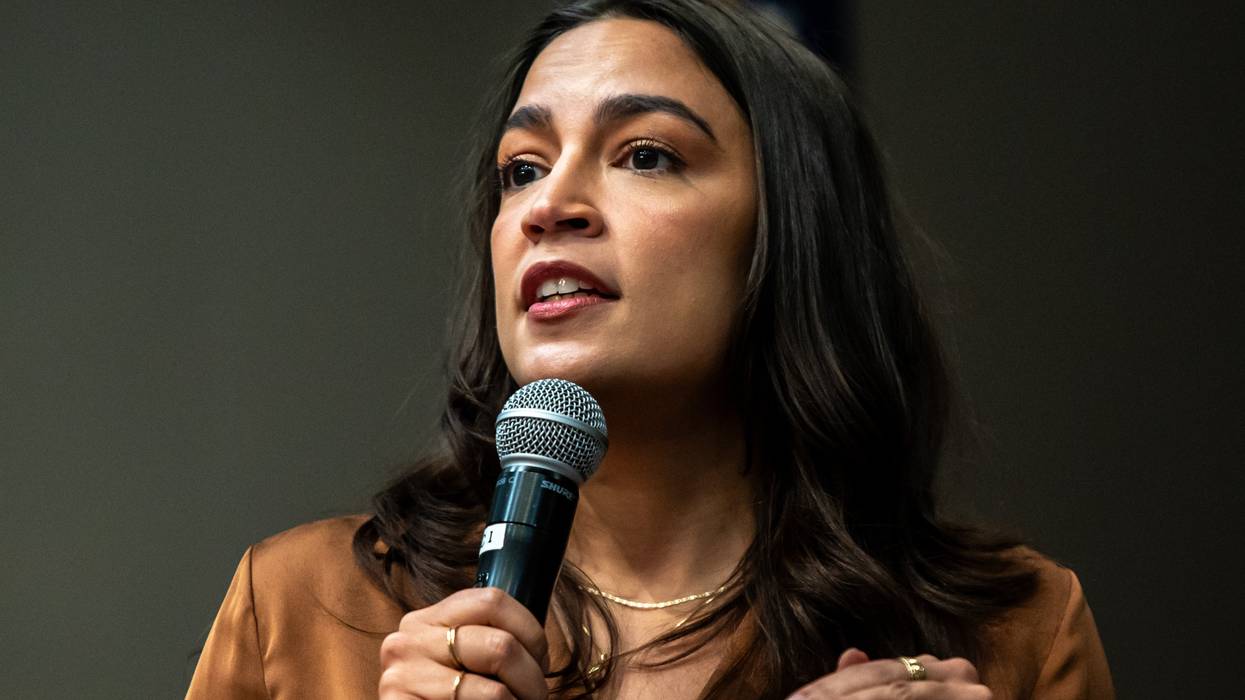
The progressive US congresswoman "is expected to decry the influence of billionaires and oligarchic interests at the expense of the working class," according to one journalist.
Amid growing speculation that Congresswoman Alexandria Ocasio-Cortez could parlay her rising clout in the Democratic Party into a run for higher office, the New Yorker is set to speak Friday at a key annual international security summit in Germany.
Ocasio-Cortez (D-NY) will address the 62nd Munich Security Conference as one of numerous representatives of the Democratic Party. In addition to other members of Congress, California Gov. Gavin Newsom and Michigan Gov. Gretchen Whitmer, two names frequently floated as possible 2028 presidential candidates, are also speaking at the conference.
According to NBC News, the democratic socialist congresswoman is slated to speak on two panels—one concerning the "future of US foreign policy" and the other about the "rise of populism."
Ocasio-Cortez is expected to offer a very different vision of US global leadership from that of President Donald Trump and Secretary of State Marco Rubio, the latter of whom will lead the American delegation in Munich.
"She is expected to decry the influence of billionaires and oligarchic interests at the expense of the working class," Washington Post reporter John Hudson said Thursday on X.
Matt Duss, executive vice president at the Center for International Policy an an informal adviser to Ocasio-Cortez, told the Washington Post Thursday that the congresswoman "brings an understanding of the way that oligarchy and corruption are part of the problem in our foreign policy and have been for a long time."
“This is an opportunity to hear from a progressive leader who represents a perspective not often heard at the Munich Security Conference,” he added.
AOC on the Munich Security Conference: I think it’s important for the world to understand—and for all of us to communicate—the full scope of who we are as Americans: that there is an alternative vision and a future that does not require a zero-sum mentality and can help people. pic.twitter.com/PsSjLDJwdD
— Acyn (@Acyn) February 12, 2026
In a separate interview with NBC News, Duss said of Ocasio-Cortez:
Trump has obviously turned the US into an antagonist of Europe. We’ve seen right-wing populism grow in Europe and around the world. Since her first days in Congress, she’s been sounding the alarm that people are hurting. Governments are failing. When people can’t find jobs or afford basic needs like housing and healthcare, they will turn to easy solutions like blaming immigrants, blaming LGBTQ people. This is driving right-wing populism.
Last year, another progressive US lawmaker, Sen. Bernie Sanders (I-Vt.), spoke at the Munich Security Conference, urging his audience to “stand tall against right-wing extremism” in a sharp rebuke of Vice President JD Vance's admonition to European leaders to accommodate far-right parties like the neo-Nazi-rooted Alternative for Germany, or AfD.
Congressional Hispanic Caucus Chair Adriano Espaillat (D-NY) welcomed Ocasio-Cortez's trip to Munich, telling NBC News: "I’ve always said that she is a national and an international voice. She’s young, articulate, clear-headed, represents not only the present but the future."
“I predict someday she will become president of the United States," Espaillat added. "I’ve called her ‘madam president’ before."
Ocasio-Cortez has faced mounting speculation and calls to consider a future primary challenge to Senate Minority Leader Chuck Schumer (D-NY) or even a White House run.
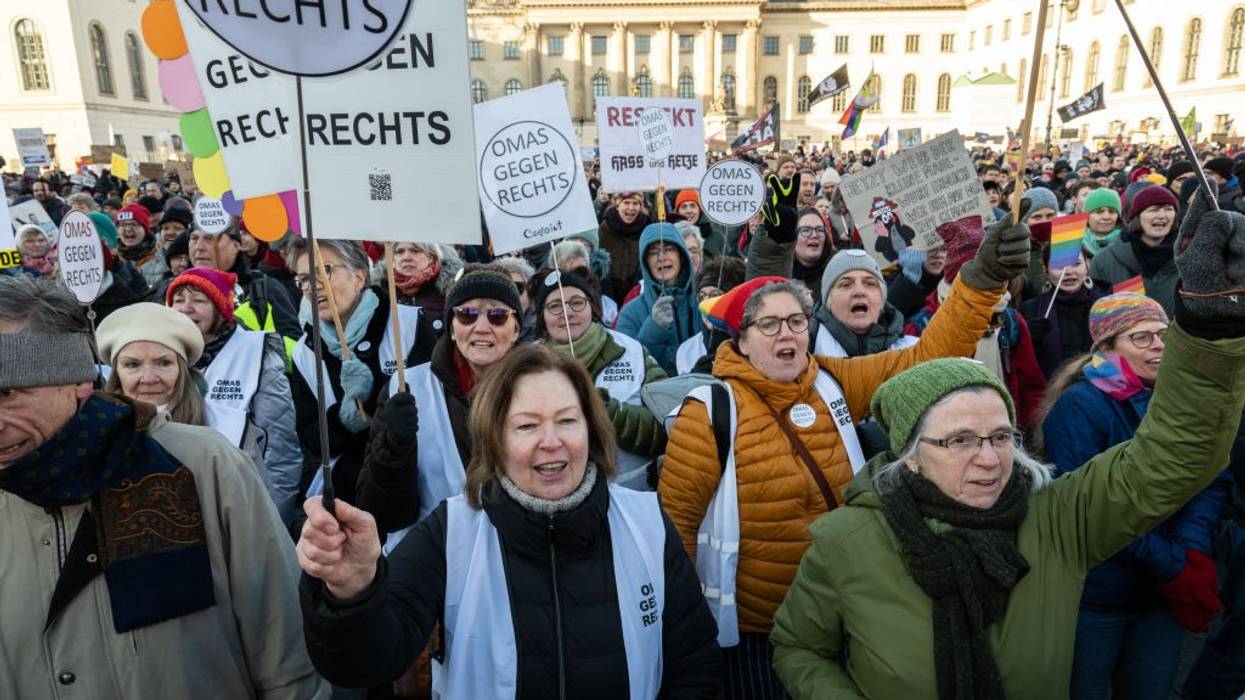
"European friends: Do not accept lectures on democracy and freedom of speech from an administration that denies the 2020 election results and is now suing and intimidating news outlets whose reporting they don't like," said U.S. Sen. Bernie Sanders.
U.S. Sen. Bernie Sanders urged Europeans on Saturday to "stand tall against right-wing extremism" after the American vice president scolded the continent's leaders for not accommodating parties like the neo-Nazi Alternative for Germany, which appears poised for a strong performance in the approaching general election.
"European friends: Do not accept lectures on democracy and freedom of speech from an administration that denies the 2020 election results and is now suing and intimidating news outlets whose reporting they don't like," Sanders (I-Vt.) wrote in a social media post after U.S. Vice President JD Vance used his address at the Munich Security Conference to blast Germany's "firewall" against Alternative for Germany, also known as AfD.
Vance's speech was praised by AfD leader Alice Weidel—with whom the vice president met on Friday—and U.S. President Donald Trump, who called his second-in-command's remarks "very brilliant" as they sparked revulsion and open condemnation from European leaders.
The Guardian's Patrick Wintour characterized Vance's speech as "a call to arms for the populist right to be able to seize power in Europe, and a promise that the 'new sheriff in town' would help them to do so."
"Right-wing extremism is not just an American phenomenon. It's worldwide."
On Sunday, around 30,000 people took to the streets of Berlin to condemn Germany's far-right and specifically AfD, which has also been embraced by U.S. billionaire Elon Musk. AFP reported that "many carried placards with slogans denouncing" AfD, "which is expected to become the second-biggest party in next Sunday's vote."
One demonstrator, identified as 71-year-old Hannelore Reiner, told AFP that in the current moment she sees "a lot of parallels to 1933, to the time before the war when Hitler's fascism came to power."
"I'm afraid history will repeat itself," she said.
Sunday's protests came a week after hundreds of thousands of people took to the streets of Munich to protest the far-right—and a week ahead of Germany's closely watched general election on February 23.
The Associated Press noted Friday that AfD's rise in Germany "has coincided with that of far-right parties in many other European countries, including Austria's Freedom Party and the National Rally in France, with which it has plenty of common ground."
"Weidel was in Budapest to visit Hungarian Prime Minister Viktor Orbán on Wednesday," the AP added.
Following last weekend's demonstrations in Munich, Sanders emphasized that "right-wing extremism is not just an American phenomenon."
"It's worldwide," the senator wrote. "We're in solidarity with our friends in Germany who are standing tall against oligarchy, authoritarianism, and racism—and the AfD, the Musk-supported party."
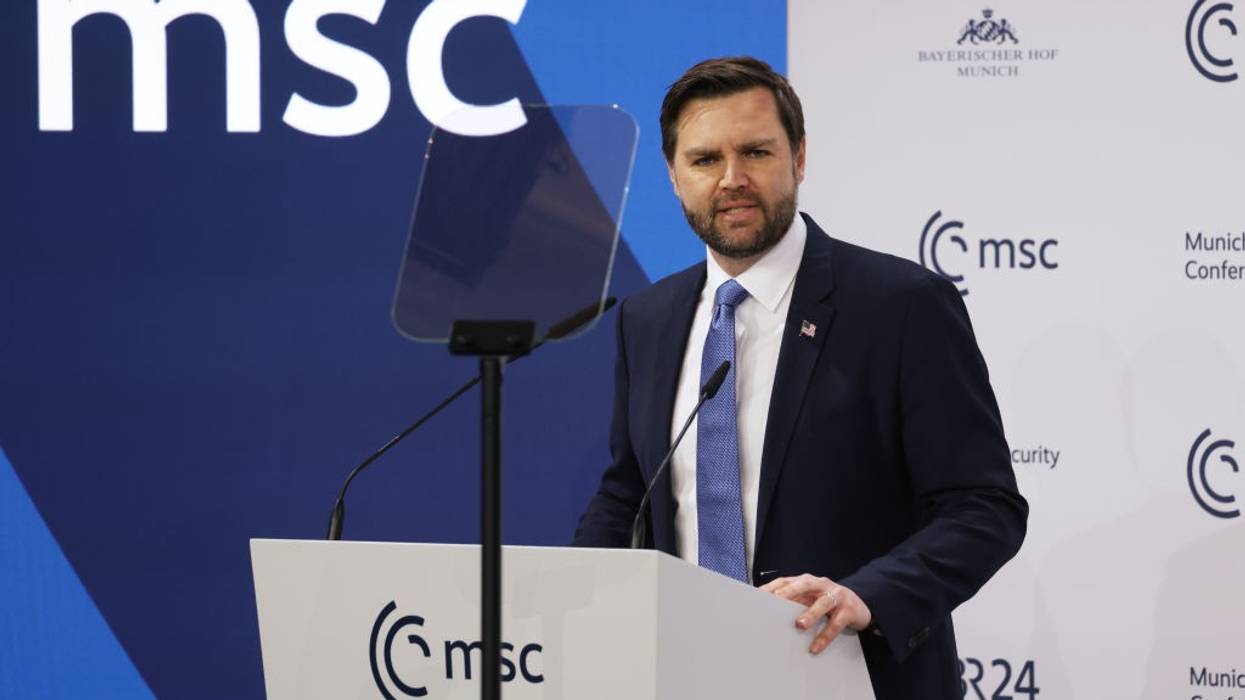
Rebuking the U.S. vice president, German Chancellor Olaf Scholz said that "a commitment to 'never again' is not reconcilable with support for the AfD."
U.S. Vice President JD Vance faced growing backlash on Saturday after scolding the European political establishment for shunning far-right parties and subsequently meeting with the leader of the neo-Nazi Alternative for Germany, just a week ahead of the country's general election.
While Vance did not explicitly mention Alternative for Germany, or AfD, during his remarks Friday at the Munich Security Conference, he declared that "there is no room for firewalls"—a reference to mainstream German political parties' refusal to work with AfD or include it in governing coalitions.
The Guardian reported that "a whisper of 'Jesus Christ' and the squirming in chairs could be heard in an overflow room" during the U.S. vice president's remarks, which he delivered a week after hundreds of thousands took to the streets of Munich to protest far-right extremism.
Following his speech, Vance met with AfD leader Alice Weidel, who praised the vice president's Munich address as "excellent" in a post on X—a social media platform owned by billionaire Elon Musk, who has also expressed support for AfD as he works to dismantle agencies throughout the U.S. government.
Reuters reported that Weidel—whose grandfather was a Nazi judge appointed directly by Adolf Hitler—met with Vance at his hotel "for about 30 minutes and discussed the Ukraine war, German domestic policy, and freedom of speech."
Vance was the highest-ranking U.S. official to ever meet with the leader of the AfD, which is seen as the most extreme of Europe's far-right parties.
On Saturday, German Chancellor Olaf Scholz rebuked Vance and said that "we will not accept outsiders intervening in our democracy," even "friends and allies."
"Never again fascism, never again racism, never again aggressive war," Scholz said in his speech at the Munich Security Conference. "That is why an overwhelming majority in our country opposes anyone who glorifies or justifies criminal National Socialism."
"A commitment to 'never again' is not reconcilable with support for the AfD," said Scholz.

His comments came after the defense secretary made clear the Trump administration opposes NATO membership for Ukraine and thinks that returning to the country's "pre-2014 borders is an unrealistic objective."
After phone calls with Russia and Ukraine's leaders on Wednesday, U.S. President Donald Trump claimed on social media that settlement talks will begin immediately, nearly three years into the Kremlin's invasion of the neighboring nation.
Trump said on his Truth Social platform that during the "lengthy and highly productive phone call" with Russian President Vladimir Putin, the pair discussed a wide range of issues and agreed that "we want to stop the millions of deaths taking place in the War with Russia/Ukraine." (Although the estimates for civilian and troop deaths since February 2022 vary, they aren't in the millions.)
"We agreed to work together, very closely, including visiting each other's Nations. We have also agreed to have our respective teams start negotiations immediately," wrote the U.S. president in his post. "I have asked Secretary of State Marco Rubio, Director of the CIA John Ratcliffe, National Security Adviser Michael Waltz, and Ambassador and Special Envoy Steve Witkoff, to lead the negotiations which, I feel strongly, will be successful."
"I want to thank President Putin for his time and effort with respect to this call, and for the release, yesterday, of Marc Fogel," Trump added, referring to an American teacher whose imprisonment in Russia was widely seen as "essentially a hostage-taking situation."
Later, Trump told reporters that he expects his first meeting with Putin to happen in Saudi Arabia, "not in the too distant future."
As of September, the U.S. Congress had appropriated or made available nearly $183 billion to help Ukraine respond to the 2022 Russian invasion. This week Trump said Ukraine should reward the United States with $500 billion worth of precious minerals in exchange for its military support.
After a subsequent call with Ukrainian President Volodymyr Zelenskyy on Wednesday, Trump posted: "The conversation went very well. He, like President Putin, wants to make PEACE. We discussed a variety of topics having to do with the War, but mostly, the meeting that is being set up on Friday in Munich, where Vice President JD Vance and Secretary of State Marco Rubio will lead the Delegation. I am hopeful that the results of that meeting will be positive. It is time to stop this ridiculous War, where there has been massive, and totally unnecessary, DEATH and DESTRUCTION. God bless the people of Russia and Ukraine!"
Vance and Rubio will travel to Germany for the Munich Security Conference, which is scheduled to begin on Friday. Ahead of that summit, the Ukraine Defense Contact Group on Wednesday held a meeting at NATO headquarters in Brussels, where U.S. Defense Secretary Pete Hegseth delivered headline-making opening remarks.
The U.S. president "intends to end this war by diplomacy and bringing both Russia and Ukraine to the table," said Hegseth. "We want, like you, a sovereign and prosperous Ukraine. But we must start by recognizing that returning to Ukraine's pre-2014 borders is an unrealistic objective. Chasing this illusionary goal will only prolong the war and cause more suffering."
"The United States does not believe that NATO membership for Ukraine is a realistic outcome of a negotiated settlement. Instead, any security guarantee must be backed by capable European and non-European troops," he continued. "To be clear, as part of any security guarantee, there will not be U.S. troops deployed to Ukraine."
Anatol Lieven, director of the Quincy Institute for Responsible Statecraft's Eurasia Program, explained that "in practice, Hegseth's statement also rules out European troops for Ukraine. Russia has made clear that it will accept only troops from genuinely neutral countries as peacekeepers, and European leaders have stated that they would only deploy their own troops if given a cast-iron assurance by the U.S. that America would come to their aid if attacked—an assurance that Hegseth has just ruled out."
Lieven also wrote:
In his statement to the other NATO defense ministers, Hegseth repeatedly stressed the words "realistic" and "realistically." Realistically, it was obvious for years before the Ukraine War that NATO countries would never fight to defend Ukraine; and on the eve of the invasion, the Biden administration and every other NATO government refused to give Ukraine a timetable for membership. Yet at the same time, they preserved the public illusion that Ukraine would one day join NATO, and they refused to negotiate a treaty of neutrality with Moscow.
Since the failure of the Ukrainian counter-offensive in 2023, 16 months ago, it has been obvious that Ukraine could not regain its lost territories, but Western officials went on committing themselves publicly to this outcome and rejecting territorial compromise. Something in the region of a quarter of a million human beings have now died so that Western establishments could continue to propagate these illusions. It is time to let them go, and we should be grateful to Hegseth for saying so.
Progressive critics of the U.S. policy in Ukraine have long argued that Trump's predecessor, former President Joe Biden, was not leveling with the American people when it came to the likely outcomes in Ukraine and that his failure to foster the conditions for peace talks or a negotiated settlement meant the fighting would drag on without end.
Trump's supposed quest for securing peace in Russia and Ukraine contrasts with his unpopular imperialistic ambitions in other cases—he's recently
proposed U.S. takeovers of Canada, Greenland, the Gaza Strip, and the Panama Canal.
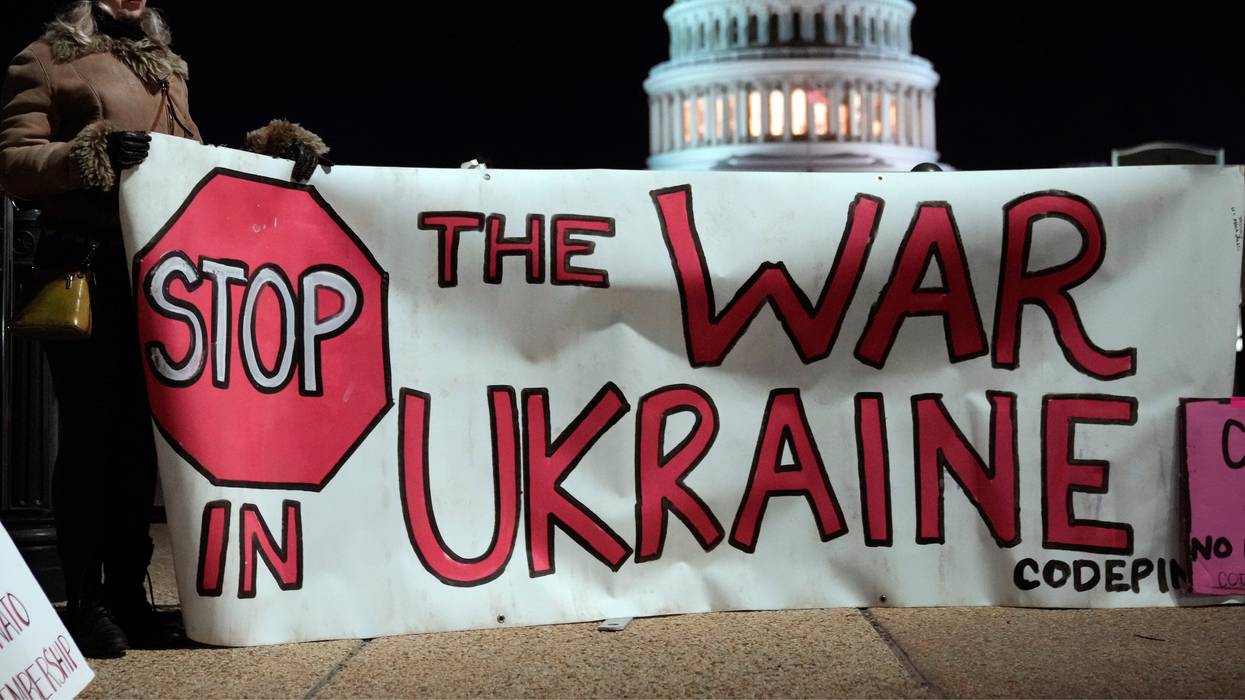
"We need Congress to take a stand and push for urgent diplomatic efforts to end the war."
Peace advocates from across the United States plan to convene in Washington, D.C. on Tuesday for a lobby day during which they'll call on lawmakers to push for a ceasefire and diplomatic talks in Ukraine, as the Biden administration responds to pressure to provide the Ukrainians with fighter jets.
"We need to stop rubber-stamping tens of billions of dollars for weapons for an unwinnable proxy war between the United States and Russia," said co-organizer Ann Wright, a retired Army colonel and State Department diplomat. "It's time for Congress to reassert its constitutional authority over matters of war and peace, and call for negotiations, not escalation."
Days before the one-year mark of the Russian invasion, the campaigners will begin by delivering a letter to the offices of House Speaker Kevin McCarthy (R-Calif.) and House Minority Leader Hakeem Jeffries (D-N.Y.) and will then visit the offices of lawmakers who sit on the House Armed Services Committee.
Organizers say they will ask representatives to publicly call on President Joe Biden to "pursue urgent diplomatic efforts" to end the war as quickly as possible, as progressives in Congress did last October with a letter they were then forced to retract under pressure, and as Joint Chiefs of Staff chairman General Mark Milley also urged shortly thereafter.
They will also call on lawmakers to support legislation to end military support for the war, oppose the sending of fighter jets to Ukraine, and request a briefing by the White House on efforts to promote peace talks.
"We need to stop rubber-stamping tens of billions of dollars for weapons for an unwinnable proxy war between the United States and Russia."
The lobby day is being organized as leaders meet at the Munich Security Conference in Germany, where Western leaders in recent days said they were prepared to support Ukraine "as long as necessary," as German Chancellor Olaf Scholz said.
Scholz told CNN anchor Christiane Amanpour Friday that discussions of "when, in which month, the war will end" are "not really a very good idea."
French President Emmanuel Macron also said that France and its allies are "ready for a prolonged conflict."
The U.S. has so far declined to send fighter jets to Ukraine, but it did agree to send more than two dozen Abrams tanks to the country last month, marking "a serious escalation," according to U.K.-based group Stop the War Coalition.
Britain and France have signaled that they're open to sending fighter planes, as Ukrainian President Volodymyr Zelenskyy has requested, and a bipartisan group of American lawmakers on Friday wrote to President Joe Biden asking him to send F-16 jets.
Gen. Christopher Cavoli, the top U.S. general in Europe, told a group of U.S. legislators last week that American F-16s would help Ukraine win the war.
Doing so would necessitate either training Ukrainians to fly the planes, which could take months, or sending "volunteer [U.S.] veterans," Konstantinos Zikidis, an aerospace engineer at the Hellenic Air Force in Greece, told Al Jazeera last month.
The latter option would likely be seen by Russian President Vladimir Putin as a major escalation, wing commander Thanasis Papanikolaou told the outlet.
"The Russians will try to present that NATO is directly involved in the Ukraine war, and will threaten nuclear war," he said.
In Munich on Saturday, Vice President Kamala Harris said support for supplying the Ukrainians with weapons remains high among the U.S. public, although the issue now polls at 48%, according to an Associated Press/NORC poll released last week, compared to 66% last May.
"We cannot continue to fuel a war that creates such daily suffering and risks becoming a nuclear confrontation," said Medea Benjamin, peace activist and co-founder of CodePink, ahead of the lobby day. "We need Congress to take a stand and push for urgent diplomatic efforts to end the war."