"If your argument is that Trump is an authoritarian danger to democracy but sure, let's follow him into another war, you are a complete fraud."
Sen. Bernie Sanders' (I-Vt) No War With Iran Act, which has just seven co-sponsors, would prohibit use of federal funds for an attack on Iran. A separate Senate bill introduced by Sen. Tim Kaine (D-Va.) would also block Trump from waging war on Iran absent congressional approval, while a similar measure put forth in the House by Republican Congressman Thomas Massie of Kentucky and Democratic Rep. Ro Khanna of California has drawn the support of 15 Democratic colleagues.
Meanwhile, under relentless pressure from the American Israel Public Affairs Committee (AIPAC)—which spent over $100 million in the 2024 election cycle on largely successful efforts to oust progressive opponents of Israel's war on Gaza—dozens of congressional Democrats have voiced support for Israel's unprovoked and illegal attack on Iran, which has killed or wounded around 2,000 people and prompted Iranian retaliation that has left hundreds of Israelis dead or injured.
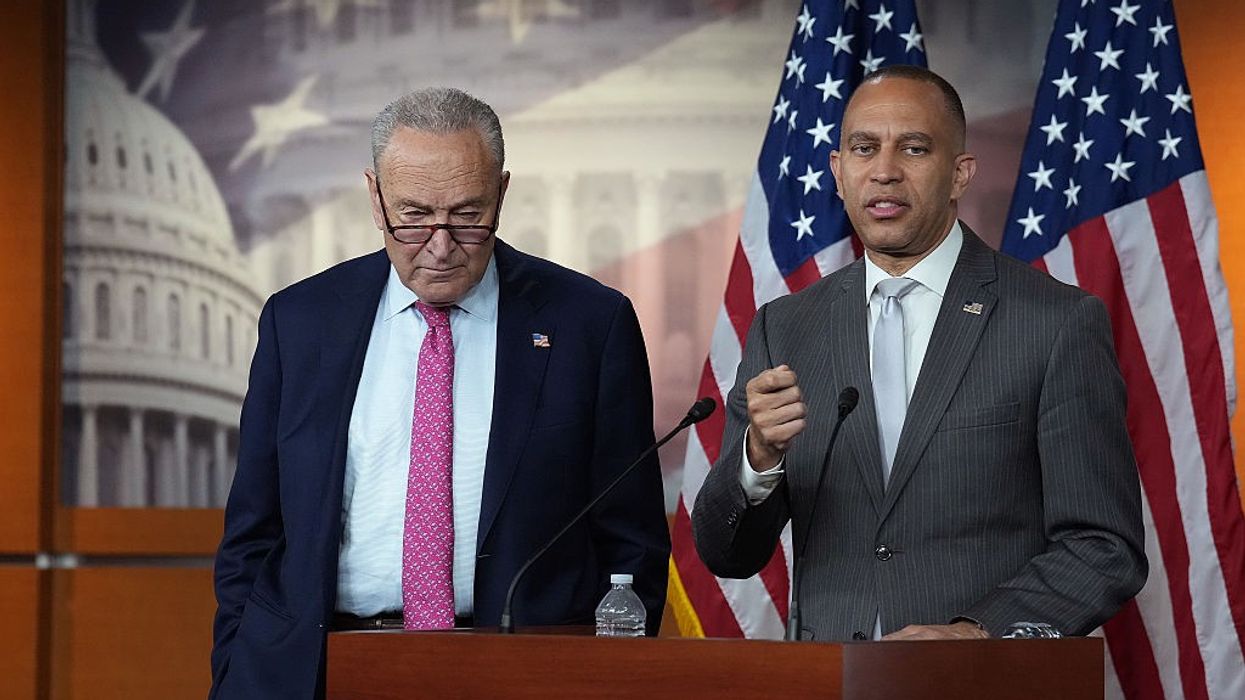
On Wednesday, Rep. Brad Sherman (D-Calif.) introduced a resolution praising and expressing support for Israel's so-called "preemptive" war on Iran. Sherman's measure is backed by more than a dozen Republican lawmakers and a pair of Democrats, Reps. Josh Gottheimer (D-N.J.) and Shri Thanedar (D-Mich.). Senate Minority Leader Chuck Schumer (D-N.Y.) and House Minority Leader Hakeem Jeffries (D-N.Y.) have both also publicly backed Israel.
"This is now defining for the Democratic Party," Khanna asserted in the face of his party's ambivalence. "Are we going to criticize the offensive weapons for Netanyahu and the blank check? Are we going to stand up with clarity against the strikes on Iran? Are we going to actually be the party of peace, or are we going to be just another party of war?"
Other Democrats, including but by no means limited to Sen. John Fetterman of Pennsylvania, Rep. Ritchie Torres (D-N.Y.), and Rep. Greg Landsman (D-Ohio)—who have collectively raked in more than $2.2 million in campaign cash from the pro-Israel lobby, according to Track AIPAC—have voiced support for attacking Iran.
"The Democratic Party has an AIPAC problem," Our Revolution executive director Joseph Geevarghese told Common Dreams Thursday. "Too many of its leaders seem more afraid of crossing a powerful lobbying group than they are of dragging the U.S. into another costly regime change war."
"It's embarrassing that some problematic far-right figures are speaking out more forcefully against direct military action than the so-called leaders of the opposition," he added. "Much like [former President] Joe Biden's indefensible handling of the genocide in Gaza, this is yet another example of Democrats squandering their credibility with young, progressive, and independent-leaning voters."
RootsAction national director Norman Solomon—author of War Made Easy: How Presidents and Pundits Keep Spinning Us to Death—told Common Dreams Thursday that "current members of Congress, in effect, belong to a war party or a peace party—and it has nothing to do with whether they have a 'D' or an 'R' after their names."
"Many Democrats in Congress—who were silent while Trump killed the Obama-era nuclear deal during his first term and then President Biden refused to revive it—are now trying to score partisan points against Trump without clearly and emphatically opposing any U.S. direct attack on Iran, let alone opposing Israel's immense war crime of launching an aggressive war on Iran," he added.
Like Solomon, progressive economist and Columbia University professor Jeffrey Sachs noted that "there are warmongers in both parties, and peacemakers in both parties."
"An antiwar coalition is possible but needs to be bipartisan," he told Common Dreams.
Some of the most vocal opponents of a U.S. attack on Iran—a country that hasn't started a war since the mid-19th century when it was the Persian Empire, but has endured U.S. regime change and destabilization efforts for 70 years—have been Iranian Americans.
"There is deep frustration and disappointment across our community with the Democratic Party's overall reluctance to meet the moment with the urgency and moral clarity it demands," Isabella Javidan, communications manager at the National Iranian American Council (NIAC), told Common Dreams Thursday.
"While some lawmakers are thankfully backing War Powers Resolutions to prevent unauthorized U.S. military involvement, too many Democrats are either silent or hedging, despite an illegal and catastrophic assault that has already killed hundreds of civilians in Iran and dragged the U.S. to the brink of war," Javidan continued.
"This isn't just about diplomacy or restraint, it's also about preventing history from repeating itself," Javidan added. "The U.S. has been here before, and we know what happens when political leaders fail to speak out against reckless, one-sided escalations. Many in our community are alarmed that, despite the human toll, there's an absence of strong Democratic leadership publicly opposing the warpath being laid out by Netanyahu and endorsed by some in Congress."
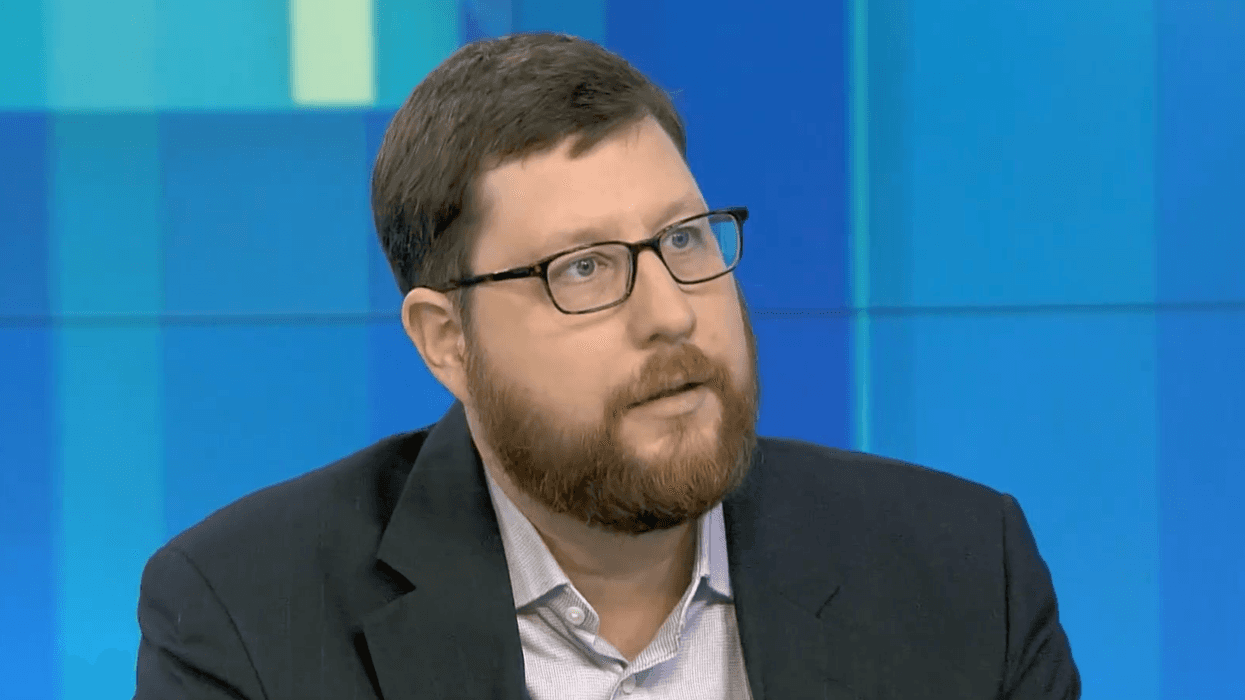
Referring to the recent U.S. intelligence assessment which, like several before it, concluded that Iran is not seeking nukes, Branko Marcetic lamented in a Jacobin article published Wednesday that "pro-war officials, both Democrat and Republican, have simply decided to pretend this never happened."
In a separate piece for Responsible Statecraft, Marcetic noted that even progressive Democratic Sen. Ron Wyden of Oregon referenced "Iran's nuclear ambitions."
Ironically, much of Trump's 2016 foreign policy platform involved excoriating the Bush administration's lies about Iraq's nonexistent quest for weapons of mass destruction.
"Trump is now a fingernail's length away from doing exactly what he bashed Bush for doing in order to kickstart his political ascent," Marcetic wrote for Jacobin.
Matt Duss, executive vice president at the Center for International Policy and a former senior foreign policy adviser to Sanders, said on social media that "any Democrat who can't stand up and speak out now against the Trump-Netanyahu regime change war should not even consider running in 2028. You're not who this country needs."
"Seriously," Duss continued, "if your argument is that Trump is an authoritarian danger to democracy but sure, let's follow him into another war, you are a complete fraud."
"Any Democrat who can't stand up and speak out now against the Trump-Netanyahu regime change war should not even consider running in 2028."
Duss quipped, "I'll be accepting apologies from everyone who insisted we needed to welcome Bill Kristol in our coalition," referring to the "never-Trump" neoconservative co-founder of the Project for the New American Century, who has been an Iran hawk for decades.
There's a politically expedient motivator for eschewing war on Iran—it's unpopular among Democrats, Independents, and Republicans. An Economist/YouGov poll published earlier this week found that 60% of all respondents oppose U.S. involvement in the war, while just 16% supported military action and 24% were unsure. A slim majority of 2024 Trump voters don't want war with Iran and slightly more Republican respondents than Democrats support U.S. negotiations with Iran.
"What this all boils down to," said Solomon, "is the imperative for all of us to demand that the U.S. not engage in any military action against Iran and insist that Israel halt its war of aggression—and that the negotiations between the U.S. and Iran for a new nuclear deal be resumed and completed for an agreement."
"As constituents, we need to let all elected officials know that pursuit of peace is essential—and anything less is an insane push toward nuclear annihilation," he added.
Disclosure: The author of this article recently served as the co-chair of San Francisco Berniecrats, an Our Revolution affiliate.