

SUBSCRIBE TO OUR FREE NEWSLETTER
Daily news & progressive opinion—funded by the people, not the corporations—delivered straight to your inbox.
5
#000000
#FFFFFF
To donate by check, phone, or other method, see our More Ways to Give page.
Daily news & progressive opinion—funded by the people, not the corporations—delivered straight to your inbox.
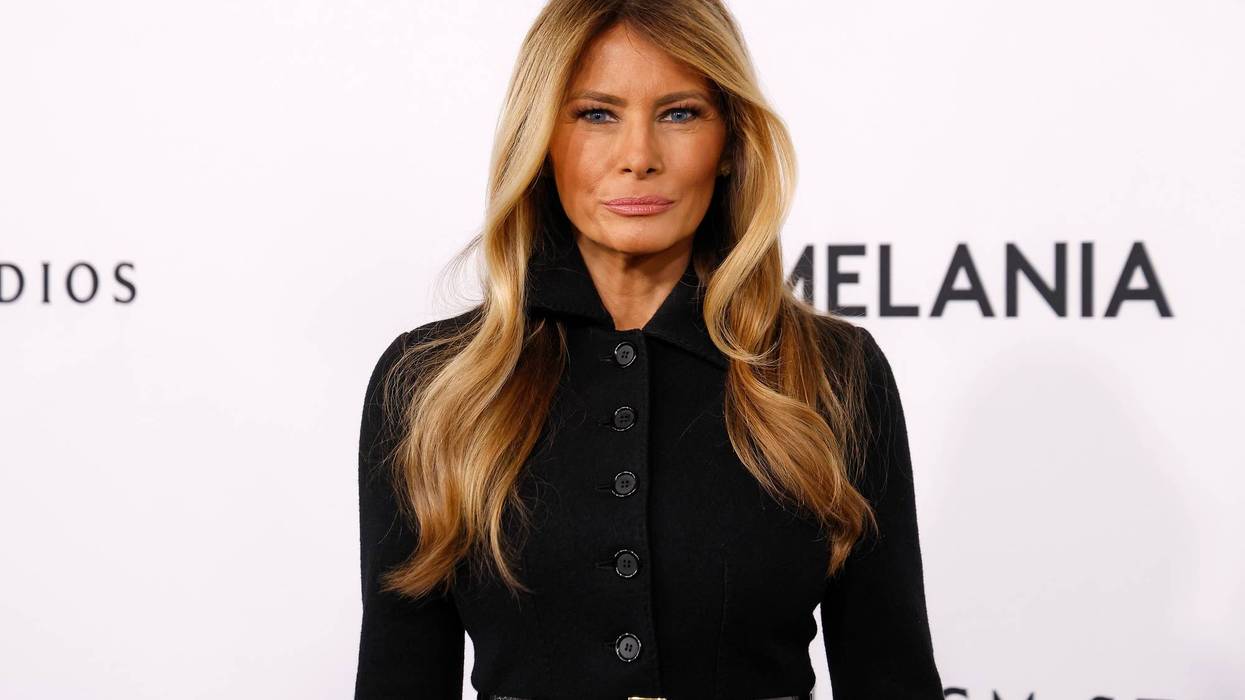
If America still had a Department of Justice, Jeff Bezos would be indicted for bribery of a public official pursuant to 18 U.S. Code § 201, which criminalizes offering or giving anything of value to a public official with the intent to influence their official actions.
I haven’t seen it. I hope you don’t, either.
This, from one of the kinder reviews:
“Across some 104 minutes, the first lady delivers these blatantly scripted and meaningless narrations with all the conviction of someone who just woke up from a two-hour nap and can’t remember what day it is.”
Manohla Dargis of The New York Times sees a “glossy, curiously impersonal” portrait of a woman who “rarely drops her Sphinxlike deadpan.” Nick Hilton of The Independent calls the first lady a “scowling void of pure nothingness in this ghastly bit of propaganda.” Guardian critic Xan Brooks says it “doesn’t have a single redeeming quality” and compares it to a “medieval tribute to placate the greedy king on his throne.”
Not since The Washington Post music critic Paul Hume observed that Margaret Truman’s singing voice in Constitution Hall in 1950 was “flat a good deal of the time” has a performance by a member of a sitting president’s family generated such averse reviews.
Yet because the The Washington Post is now owned by the man who spent $75 million on the movie ($40 million to make it, $35 million to promote it), I somehow doubt The Post will crap on it. (At least Monica Hesse, in her review for The Post, had the honesty to confess that “if you suspect I have come here today to trash a movie about the wife of a notoriously thin-skinned, anti-journalist president, which was bankrolled by the company owned by the man who also pays my salary—NOT TODAY, SATAN. Do you think I’m a moron?”)
My purpose today is less to highlight this inane excuse for a film than to talk about its real excuse—allowing Jeff Bezos to give a big fat bribe to the president of the United States.
Why would Bezos bribe him? Please.
Bezos, one of the richest men in the world, owns Amazon and many other businesses that depend on the whims of the sociopath in the Oval Office. (Trump sold the idea of the documentary to Bezos when he dined at Mar-a-Lago in December 2024, just after the election, according to the The Wall Street Journal.)
Bezos’s Amazon Web Services has a $1 billion agreement with the General Services Administration for cloud services, which presumably Bezos would like renewed. His rocket company, Blue Origin, has over $2.3 billion in contracts from the U.S. Space Force.
Several of Bezos’s companies are subject to potential tariffs on goods from China. Amazon is under the cloud of a major antitrust lawsuit brought by the Federal Trade Commission (when the FTC was still independent—before it came under the putative control of the Oval Office). The trial is expected in 2027.
And so on.
Friends, when the history of this sordid period of America is written—assuming it’s not written by historians trying to curry favor with a future fascist regime—I hope the leaders of American business are condemned to the hellfire they deserve for helping destroy American democracy.
The outer ring of hell will be reserved for CEOs who stayed silent so as not to rile the narcissist-in-chief.
Jamie Dimon of JPMorgan Chase will reside here because, notwithstanding his assumed role as spokesman for American business, Dimon has uttered no criticism of Trump other than to suggest, in the vaguest possible terms, that Trump’s attack on the Federal Reserve’s independence “is probably not a great idea.”
The middle ring will be reserved for business leaders who surrendered to Trump’s extortionist demands for personal payoffs.
The Ellisons, père Larry (the world’s third-richest person) et fils David, will be there, along with Shari Redstone and the board of Paramount, for paying Trump $16 million to settle his utterly baseless lawsuit against CBS.
Also in this middle ring will be Bob Iger, CEO of Disney (which owns ABC) and Debra OConnell, the president of ABC News Group and Disney Entertainment Networks, for giving Trump $15 million to settle his equally spurious lawsuit against ABC News.
In the inner ring, where hell fires burn especially hot, will be business leaders who went beyond acquiescing to Trump’s extortion and decided to pay him big fat bribes.
Elon Musk, the world’s richest man, will have pride of place here, after spending a quarter of a billion dollars getting Trump elected.
Tim Cook, CEO of Apple, will get a spot here for lavishing on Trump a custom-designed glass plaque mounted on a 24-karat gold base.
We’ll also find here the CEOs who coughed up $300,000 each for Trump’s ballroom — including crypto magnates Cameron and Tyler Winklevoss, oil tycoon Harold Hamm, Blackstone’s Stephen Schwarzman, and every Big Tech mogul.
But Jeff Bezos, with his $75 million bribe of Trump, will deserve a special place in the innermost ring of hell.
The $40 million he paid Melania Trump’s production company is at least $35 million more than the cost of typical high-end documentaries. (By way of comparison, Magnolia Pictures and CNN Films produced “RBG,” a documentary about the late Supreme Court justice Ruth Bader Ginsburg, for around $1 million.)
Melania Trump pocketed more than 70 percent of that $40 million—or more than $28 million—the Journal reported.
The additional $35 million Bezos shelled out for marketing “Melania” is 10 times what other high-profile documentaries spend on marketing. The promotional budget for “RBG” was about $3 million. (To be sure, Melania Trump is no Ruth Bader Ginsburg, so I suppose you might argue that Melania needed a larger promo budget. But this much larger?)
All this, at a time when Bezos is slashing the newsroom at the Post—it’s heart and soul—in order to “economize.” Forget the inner ring. Bezos deserves to be at the center of the inferno.
The promo money apparently worked, at least in the U.S., where opening-weekend ticket sales for “Melania” totaled $7 million.
But let’s be realistic. A $35 million promotional budget will get people into theaters to see paint drying.
If all goes well—given that opening weekend is usually about 25 percent of total box office and that movie houses pocket half — Amazon could end up with about $14 million on its $75 million investment. A pittance.
Yet this was never a financial investment. It was an investment in kissing Trump’s derriere. As Ted Hope, who was instrumental in starting Amazon’s film division, wondered aloud to The New York Times: “How can it not be equated with currying favor or an outright bribe? How can that not be the case?”
Of course it’s an outright bribe.
If America still had a Department of Justice, Bezos would be indicted for bribery of a public official pursuant to 18 U.S. Code § 201, which criminalizes offering or giving anything of value to a public official with the intent to influence their official actions. Penalty: imprisonment for up to 15 years.
(Also note: TheU.S. Constitution lists taking a bribe as an impeachable offense for a president.)
There’s a statute of limitations for criminal prosecution of such bribes: Prosecution must begin within five years of the deed.
So, my friends, if America gets a true Justice Department starting in January of 2029, Bezos’s inferno may become a reality.
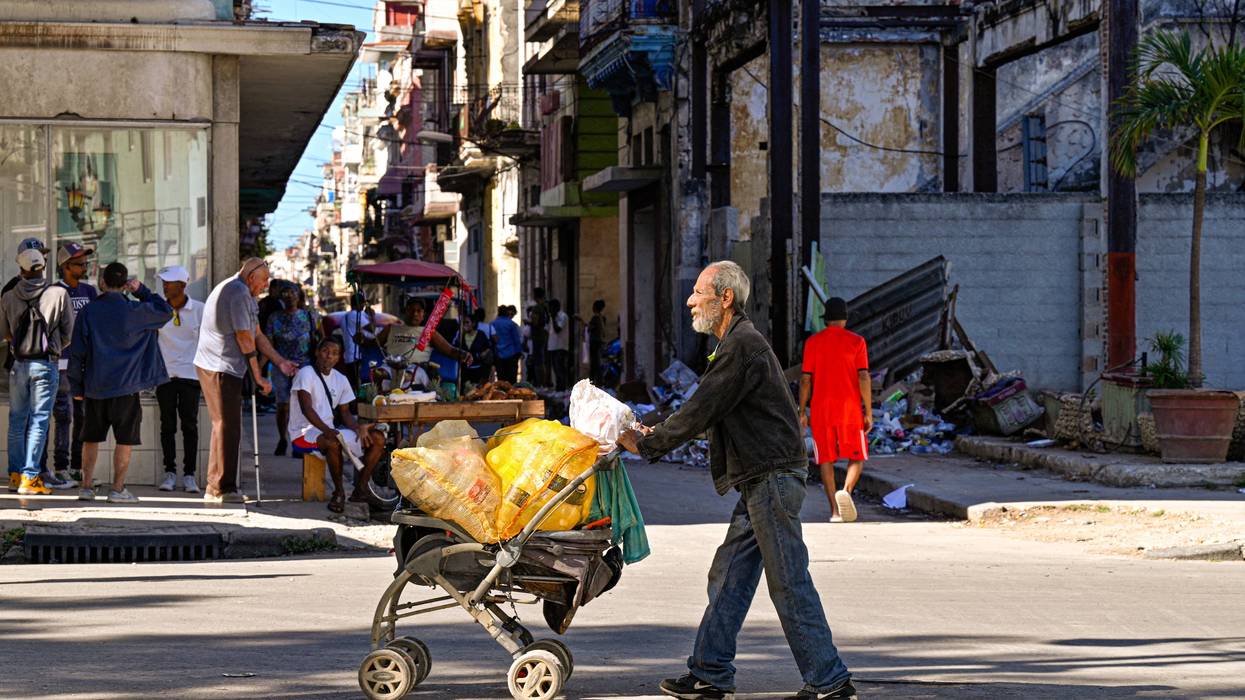
The US embargo, as well as new sanctions ordered by Trump, is partly rooted in leftover Cold War ideology and geopolitical posturing, but largely appears to reflect personal vendetta and financial gain.
The Trump administration’s latest threat to impose secondary tariffs on any nation selling oil to Cuba represents a dramatic and catastrophic tightening of the six-decade-long, deliberate chokehold the United States has maintained on Cuba’s access to essential resources. This act of collective punishment against the Cuban people, for alleged crimes the US government has scarcely attempted to substantiate, will be felt across every aspect of daily life.
According to Trump’s January 29 executive order, this latest escalation in economic warfare is framed as a response to the “unusual and extraordinary threat” the Cuban government allegedly poses to US national security. The order revives familiar Cold War language, including references to an obsolete Soviet-era listening station outside Havana, alongside sweeping allegations of harboring terrorism, fomenting regional instability, and engaging in hostile activity. While these all-too-familiar claims remain largely unfounded, debating the rhetoric is ultimately beside the point when the underlying policy objective is stated plainly by the Administration. “We would love to see the regime there [in Cuba] change,” Secretary of State Marco Rubio told the Senate Foreign Relations Committee last week, dispelling whatever ambiguity might have remained.
Sanctions have been a blunt, heavy-handed, and ultimately unsuccessful weapon of US policy toward Cuba. As the State Department admitted in 1960, they were intended to “bring about hunger, desperation, and the overthrow of government.” Enforced unilaterally and extraterritorially, US sanctions restrict not only Cuba’s ability to import and export goods, but also the willingness and feasibility of third countries to engage in trade with the island nation. In practice, sanctions function as a blockade encompassing food, medicine, and life-saving medical equipment.
Cuba’s remaining energy access has rapidly unraveled amid the US government’s latest military escalation in the region. Following the US kidnapping of Venezuelan President Nicolás Maduro and the Trump administration’s effective seizure of Venezuela’s oil sector, President Trump declared on Truth Social that “there will be NO MORE OIL OR MONEY GOING TO CUBA—ZERO.”
While restrictions on oil are often portrayed through images of rolling blackouts and hours-long diesel lines, the full humanitarian and economic consequences are far more severe.
In the weeks since Venezuelan supplies were abruptly cut off, Mexico became Cuba’s last remaining external source of fuel. In 2025, Mexico had already surpassed Venezuela as Cuba’s main oil supplier, exporting roughly 12,300 barrels per day, or about 44 percent of the island’s crude imports. Following the imposition of the tariff, Trump has effectively cut off that lifeline. Mexican President Claudia Sheinbaum has neither denied reports that shipments were halted amid fears of reprisals nor downplayed her government’s efforts to explore alternatives to support the island. Beneath the geopolitical headlines, Cubans already living with the cascading impacts of prolonged blackouts now face an acute energy crisis. Estimates suggest the country has no more than two weeks of oil reserves at current demand, making widespread power outages inevitable and pushing essential services to the brink of collapse.
The international community has long condemned the United States’ cruel and anachronistic policies toward Cuba. For more than 33 years, the United Nations General Assembly has overwhelmingly voted to call for an end to the US economic embargo. In November 2025, Alena Douhan, UN Special Rapporteur on the negative impact of unilateral coercive measures, likewise urged the US government to end sanctions and economic restrictions that isolate Cuba from international cooperation and financial systems, and instead to “settle disputes in accordance with the principles and norms of international law.” In the formal report, Douhan underscored the human toll on Cubans: shortages of fuel, electricity, water, food, medicine, and essential machinery, combined with the emigration of skilled workers, are inflicting “severe consequences for the enjoyment of human rights, including the rights to life, food, health, and development.”
While restrictions on oil are often portrayed through images of rolling blackouts and hours-long diesel lines, the full humanitarian and economic consequences are far more severe. Fuel powers irrigation pumps and farm machinery, electricity keeps processing plants and refrigeration running, and diesel moves food from fields to markets and ports. Energy and fuel shortages constrain farm-level production and disrupt processing, preservation, and distribution, delaying or reducing food availability and causing perishable goods to spoil. The result is serious losses for both markets and households. Reporting from the Food and Agriculture Organization (FAO) underscores a global pattern, including in Cuba, where energy shortages directly trigger food insecurity, disrupting production, milling, and distribution networks.
Cuba’s limited access to foreign currency and global markets further compounds these pressures. Rising transport costs, canceled shipping contracts, and banking restrictions delay even UN technical assistance projects, including food aid. Diplomatic missions, humanitarian organizations, and individuals regularly report difficulties in sending essential goods—and face the risk of losing Electronic System for Travel Authorization (ESTA) status simply for working in Cuba. Cuban enterprises also struggle to pay for certifications or purchase goods from US companies, forcing longer and more expensive alternative routes. For example, the World Food Program has faced delays in procuring and shipping fortified foods to Cuba in recent years, in part because companies are unwilling to send shipments to Cuban ports. In another striking case, only 9 of 518 requests from the Cuban agricultural sector for tractors, motors, batteries, forklifts, and spare parts were approved in 2022, as foreign suppliers feared US retribution.
Since 2000, food and agricultural products have technically been exempt from the US trade embargo on Cuba—a concession often cited by officials to argue that sanctions do not target the Cuban population. In practice, however, this exemption is largely illusory. Under the Trade Sanctions Reform and Export Enhancement Act, Cuba is prohibited from purchasing US food on credit; all transactions must be paid in cash and in advance, before shipment. For a country with chronic foreign exchange shortages and virtually no access to international credit, this is punitive. Additionally, because Cuba remains on US sanctions watch lists, foreign banks face legal and financial risk for facilitating transactions. The result is that Cuba has almost no access to trade credit, short-term financing, or conventional loans that most countries rely on to import food. Even when food is legally available, cash-only prepayment forces the government to divert scarce hard currency from other essential needs or to forgo imports entirely. This is not a neutral or humanitarian exception, but a structural barrier that both intensifies and contributes to Cuba’s domestic challenges, including limited access to credit for producers, volatile food prices, and inadequate infrastructure for distributing agricultural goods. Under Trump’s latest measure, many Cubans will struggle even more to secure even their most basic food needs—a crisis that has been building steadily over the past year.
The public health risks of these new restrictions are also grave. Cuba’s health care system is already under immense pressure from chronic energy shortages. Pharmaceutical plants struggle to operate, power outages threaten the spoilage of critical medications and vaccines, and despite government priority afforded to ambulances and mobile medical units, fuel shortages remain a consistent challenge. Hospitals have been forced to make impossible choices, prioritizing ICUs and operating rooms over general wards. Across the country, patients have gone without oxygen, dialysis treatments have been interrupted, and have been forced to rely on cellphone flashlights during prolonged blackout caused by a lack of oil for generators.
As early as the late 1990s, public health experts at the American Public Health Association warned that Cuba’s comparatively sophisticated and comprehensive healthcare system was “being systematically stripped of essential resources” due to US sanctions. Their year-long study concluded that the embargo had led to a significant rise in suffering, and even deaths, and placed severe strain on healthcare infrastructure by limiting access to electricity, oil, diesel, and gasoline.
Energy shortages also threaten Cubans’ access to water. Outages directly disrupt pumps that supply households in the capital, and without fuel and reliable transportation, emergency cistern deliveries are severely limited. Once more, US sanctions compound these shortages through long-standing restrictions on water treatment chemicals and spare parts for infrastructure, resulting in serious reductions in the availability of safe drinking water and elevated risks of waterborne diseases.
Ultimately, Trump’s latest tariff is not an abstract “coercive” policy—it is a deliberate attack designed to destabilize life for ordinary Cubans. It functions as a state-sanctioned mechanism of harm, forcing citizens to shoulder the costs of political pressure. While the Cuban government may try to adapt through rationing, subsidies, or resource reallocation, ordinary people are facing the life-altering consequences of scarcity and energy insecurity.
The Cuban government has responded with fierce condemnation. On January 30th, President Miguel Díaz-Canel wrote on social media that Trump’s action “exposes the fascist, criminal, and genocidal nature” of the administration, which has “hijacked the interests of the American people for purely personal gain.” Cuban Foreign Minister Bruno Rodríguez also denounced the measure, calling it part of a broader US strategy to dominate the hemisphere. He wrote, the US seeks to “submit them [the Americas’ to its dictates, deprive them of their resources, mutilate their sovereignty and deprive them of their independence,” and warned that “every day there is new evidence showing that the only threat to peace, security and stability in the region…is the one exerted by the US government against the peoples and nations of our America.”
In essence, the US is inciting chaos by restricting basic necessities of life—supposedly to stop the Cuban government from “incit[ing] chaos by spreading communist ideology across the region.” The policy is partly rooted in leftover Cold War ideology and geopolitical posturing, but largely appears to reflect personal vendetta and financial gain.
The consequences, regardless, are unmistakably humanitarian–and Trump himself seems unconcerned. “It doesn't have to be a humanitarian crisis,” he told reporters on Saturday, January 31, dressed in a tuxedo aboard Air Force One, adding, “I think, you know, we'll be kind.” The Cuban people bear the full brunt of that ‘kindness.’

The president's diminished mental state increases the danger he might impulsively order a civilization-ending nuclear strike all by himself.
Most Americans probably don't know that the US President has the absolute legal power to launch a potentially humanity-ending nuclear first strike against anyone anywhere at any moment without the permission or even advice of anyone at all--Not Congress, not military leaders, not his Cabinet, not anyone else.
An angry, impulsive or simply demented President could initiate the destruction of human life on earth with no legal constraints. If that doesn't worry you, it should.
We came close to nuclear war during the 1962 Cuban Missile crisis under President Kennedy. President Reagan's son Ron believes that the President suffered from dementia during the final year of his term. Many question whether President Biden was fully mentally competent during the last months of his term.
But Donald Trump's diminished mental state increases the danger he might impulsively order a civilization-ending nuclear strike all by himself. He appears to have moved from just being a narcissistic, power hungry, ignorant bully to having dementia. Could Trump get so angry at another world leader like the Prime Minister of Norway or Switzerland that he would order not just the annexation of Greenland or high tariffs on Swiss Chocolate but a nuclear strike? I don't know how likely that is, even for Trump, but it's no longer unthinkable.
The unilateral power for any President to launch a nuclear first strike must be legally curtailed and the power to remove a mentally disabled President from office must be strengthened. Neither Republicans nor Democrats should want one person alone to have to power to order the destruction of humanity.
Congress must pass a bill outlawing the first use of nuclear weapons. Sen. Ed Markey and Rep. Ted Lieu have introduced the "Restricting First Use of Nuclear Weapons Act" multiple times since 2017, most recently in January 2025 with 26 co-sponsors in the House and 7 in the Senate. The bill was referred to Committee, where so-far no discussion or hearings have been held.
A "No First Use" statute could be short and sweet:
"(a) It shall be the policy of the United States that nuclear weapons may only be used in direct retaliation for a nuclear attack against the United States or its allies. (b) The President shall not authorize, order, or direct the non-retaliatory use of nuclear weapons. (c) No member of the Armed Forces shall execute, implement, or otherwise carry out an order for such use."
This is something both parties should support. Whether you're a Republican or a Democrat, you should not want one person alone to launch a civilization-ending nuclear war.
For most of American history, there was no Constitutional means to remove a mentally or physically disabled President other than the high bar of impeachment. Following President Kennedy's assassination, the 25th Amendment to the Constitution was enacted to set up a Constitutional procedure to transfer Presidential powers.
Under Section 4, the President may be removed and replaced by the Vice President if the President cannot perform his duties for any reason including mental incapacity such as cognitive or psychological impairment. If the Vice President and a majority of the Cabinet send a written declaration to Congress that the President cannot discharge his duties, the Vice President immediately becomes Acting President. If the President disagrees in writing, the Cabinet and Vice President have 4 days to respond. If within 21 days 2/3 of both the Senate and House approves, the Vice President remains President. If not, the original President is restored to office.
But the 25th Amendment is badly flawed. Among other things, the Cabinet members have been appointed by the President and are unlikely to revoke his powers. And if they were to consider it, the President could simply fire them before they voted.
That's why the drafters of the 25th Amendment included an alternative mechanism: Congress may pass a law designating another body other than the Cabinet to determine the President's fitness for office
In 2020, to implement the intent of the 25th Amendment, the House passed "The Commission on Presidential Capacity to Discharge the Powers and Duties of Office Act" authored by Rep. Jamie Raskin. The bill did not target any specific President. It would have set up a 17-member bipartisan panel of physicians and former executive branch officers to evaluate the President's fitness for office. To prevent partisanship, half the members would be appointed by Republicans and half by Democrats. While it passed the House, the bill did not pass the Senate.
Under present circumstances, it's time to modernize and enact the bill. The republic should not have to improvise during a Presidential medical emergency or cognitive decline.
Conservative New York Times columnist Ross Douthat wrote several years ago that
"[From the perspective of the Republican leadership’s duty to their country, and indeed to the world that our imperium bestrides, leaving a man this witless and unmastered in an office with these powers and responsibilities is an act of gross negligence, which no objective on the near-term political horizon seems remotely significant enough to justify."
Regardless of your partisan leanings, it's time to act to limit the President's unilateral power to launch a nuclear first strike and to use the 25th Amendment to remove a mentally impaired President. In that event, J.D. Vance would become President, which shouldn't bother Republicans. And for Democrats, it would still be better than allowing a mentally declining Trump to remain in power, even if Vance's values are as reactionary as Trump's And even if it doesn't pass, it would put the issue of the President's mental health and the danger of a unilateral nuclear first strike front and center.
Outlawing the President's unilateral first nuclear strike right could even become one of the demands of contemplated general strike.
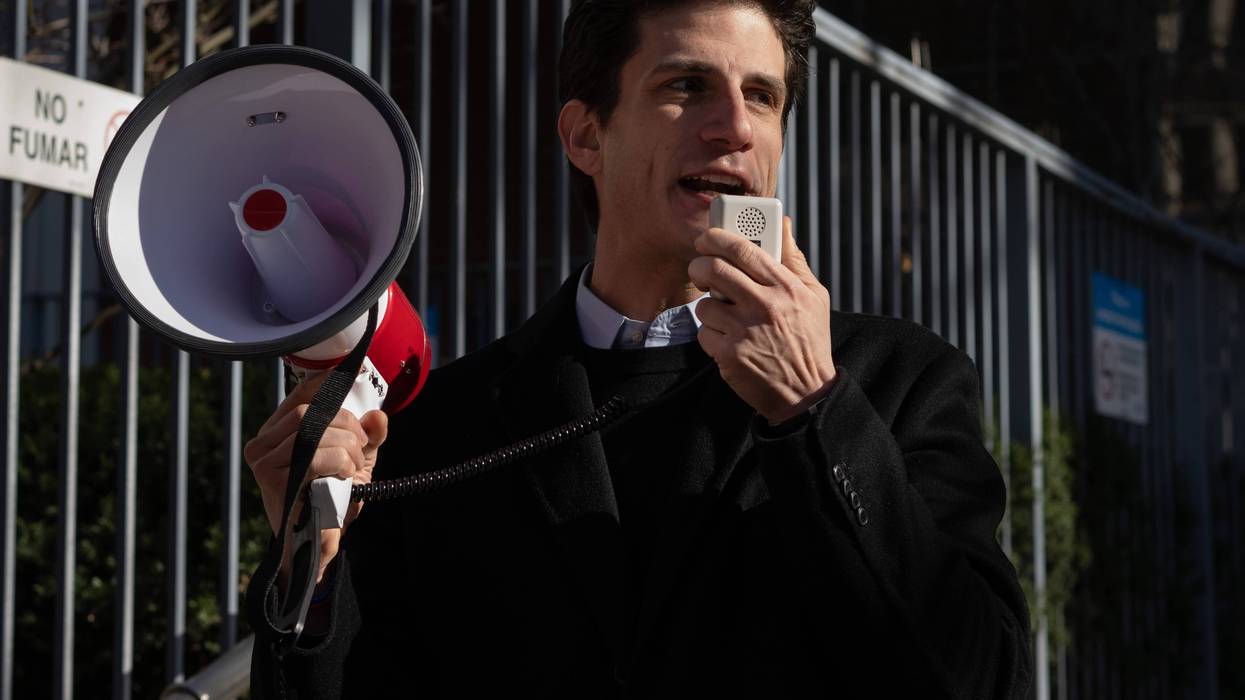
Kennedy's niece, Maria Shriver said, "since the name-change" to honor Trump "no one wants to perform there any longer."
The descendants of former President John F. Kennedy are denouncing President Donald Trump's order to shutter the Kennedy Center and calling bullshit on his reasons for doing so.
On Sunday, Trump abruptly announced on Truth Social that beginning on July 4, the performing arts center in Washington, DC, which he recently renamed after himself, would shut down for two years for “Construction, Revitalization, and Complete Rebuilding.”
Trump said the decision was based on input from a group of "many Highly Respected experts," who said the center was "tired, broken, and dilapidated" and needed to be shut down for a facelift.
However, the family of the center's namesake said it has more to do with the recent pullout of talent in protest after it became the "Trump-Kennedy Center" last year and the president began asserting control over its programming, which included the world premiere of a hagiographic documentary about his wife, First Lady Melania Trump, this weekend.
In a post on social media, JFK's niece, Maria Shriver, gave what she said was a "translation" of Trump's comments about the center's sudden closure.
She suggested the president meant to say: "It has been brought to my attention that due to the name change (but nobody's telling me it's due to the name change), but it's been brought to my attention that entertainers are canceling left and right, and I have determined that since the name change no one wants to perform there any longer."
Speaking as Trump, she continued: "I've determined that due to this change in schedule, it's best for me to close this center down and rebuild a new center that will bear my name, which will surely get everybody to stop talking about the fact that everybody's canceling... right?"
Among those who have pulled out of planned performances at the center are the Washington National Opera, Lincoln composer Philip Glass, the Broadway show Hamilton, the actress and producer Issa Rae, and several others—many of whom directly cited Trump's takeover as their reason.
Kennedy's grandson, Jack Schlossberg, who is running for Congress as a Democrat in New York, was even more direct in his condemnation.
"Trump can take the Kennedy Center for himself. He can change the name, shut the doors, and demolish the building. He can try to kill JFK," he wrote. "But JFK is kept alive by us now rising up to remove Donald Trump, bring him to justice, and restore the freedoms generations fought for."