SUBSCRIBE TO OUR FREE NEWSLETTER
Daily news & progressive opinion—funded by the people, not the corporations—delivered straight to your inbox.
5
#000000
#FFFFFF
To donate by check, phone, or other method, see our More Ways to Give page.

Daily news & progressive opinion—funded by the people, not the corporations—delivered straight to your inbox.
While the world celebrated football at its highest level during the World Cup, one small village has been left without the field that connected generations to the game.
In the middle of the global celebration of football, when stadiums are full, screens are glowing, and millions are watching the World Cup, a small Palestinian village near Bethlehem experienced something very different.
Battir lost its only football field.
For most of the world, football is entertainment. In Battir, it is something else entirely—it is space, identity, and a rare place where young people can breathe beyond the pressures of daily life.
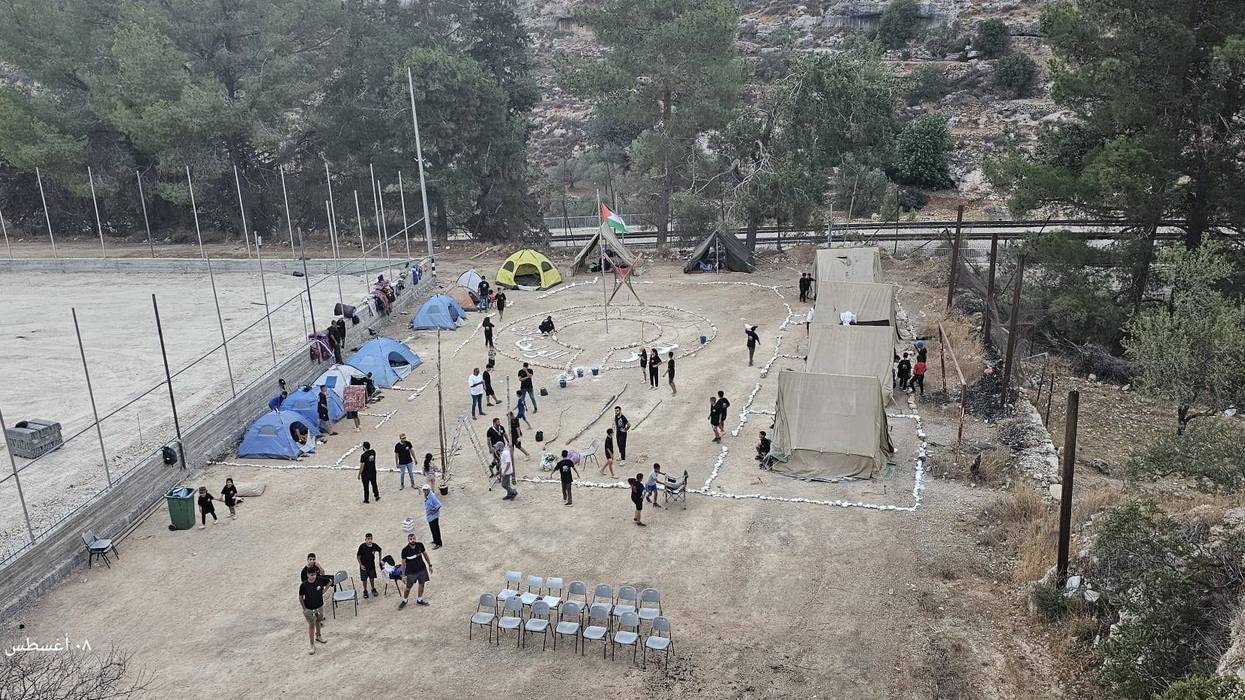
The field was not a stadium. It had no grandstands, no giant screens, and no professional facilities. It was a simple community pitch. Yet for generations of children and young people in Battir, it meant everything. It was where they played after school, where friendships were built, where confidence grew, and where dreams quietly took shape.
Football, in its global form, is about glory, competition, and spectacle. But in places like Battir, it is about something more basic: the right to play, the right to gather, and the right to feel normal for a moment.
The field itself was not new. It had existed since the early 1980s and had served the village for more than four decades.
I grew up playing there.
One of my earliest memories is returning home covered in mud after a rainy afternoon match, exhausted but happy. Like many children around the world, I fell in love with football while watching my first FIFA World Cup in 1982, when Spain hosted the tournament. The game became part of my childhood, and the field became part of my life.
Football accompanied me through school, university, and adulthood. Between 2009 and 2016, while serving as secretary of Battir Sports Club, I helped organize annual Ramadan football tournaments on the same field. These competitions brought together local teams and became cherished community events. The field also welcomed visitors from abroad and served as a meeting point where sport connected people across cultures and backgrounds.
For many years, residents hoped to improve the field. In 2022, Battir Sports Club, Battir Municipality, and members of the local community launched a project to rehabilitate the existing facility. The goal was not to build a completely new football ground, but to upgrade a long-standing community space with artificial turf, lighting, changing rooms, and basic infrastructure. The vision was simple: to provide a safe and dignified place where both boys and girls could participate in sport.
For a village that had waited decades to improve its only football field, the project represented hope.
That hope came to an abrupt end on June 30, 2026, when Israeli authorities demolished the field following orders that halted rehabilitation works. What disappeared that day was not merely a construction project. It was a community space that had shaped the lives of generations.
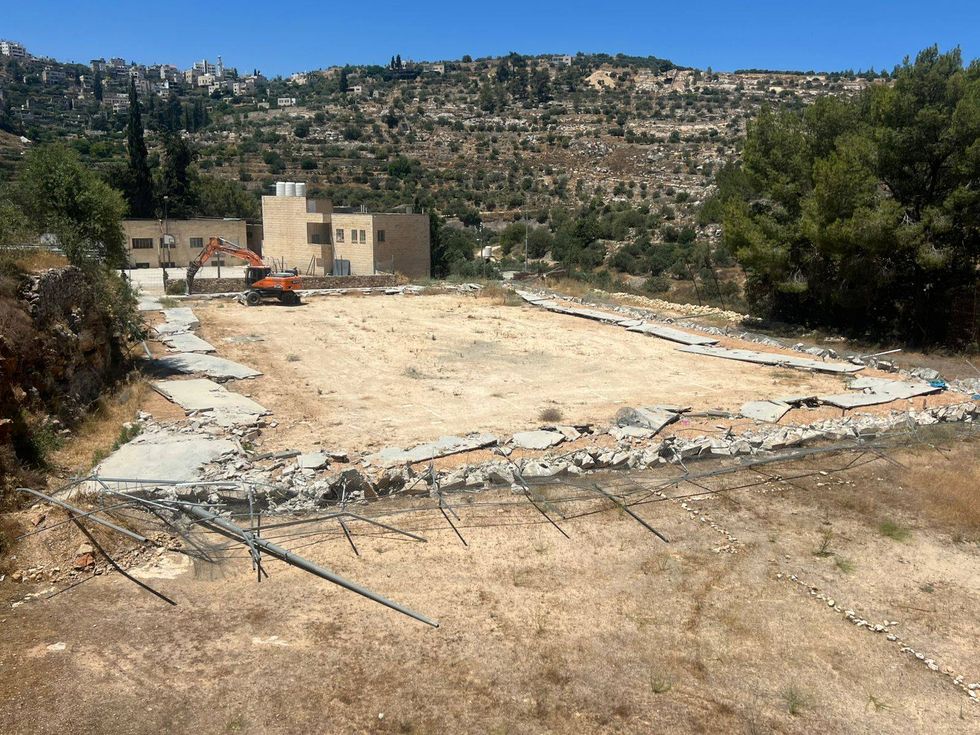
The demolition did not make international headlines. There were no cameras, no commentary panels, and no countdown clocks. But for the children and young people who used the field, the loss was immediate and deeply felt. A place once filled with movement, laughter, and possibility became empty ground.
In a place like Battir, there are few alternatives. There are no nearby facilities waiting to replace what was lost. When one space disappears, it is not easily replaced. It simply vanishes from everyday life.
The timing is difficult to ignore. While the world celebrated football at its highest level during the World Cup, one small village has been left without the field that connected generations to the game.
Football, in its global form, is about glory, competition, and spectacle. But in places like Battir, it is about something more basic: the right to play, the right to gather, and the right to feel normal for a moment.
What remains now is not only an empty field, but also a question that lingers in the community: Where do the children go next?
This is not just a story about a football field. It is a story about how everyday spaces shape childhood, how communities invest hope in shared places, and how quickly those places can disappear.
And it is a reminder that while the World Cup shows us football at its peak, there are places where the game survives only in memory—and in the hope that one day it might return.
Will there be any tributes for the 567 Palestinian footballers reportedly killed in Gaza since October 2023?
The world has united for the 2026 FIFA World Cup. Stadiums have been filled with songs, flags, and the shared joy that football uniquely creates. Millions celebrate the beauty of a sport that claims to unite humanity across borders, languages, and politics.
But with the final game approaching, a question hangs heavily over the tournament: Will there be any tributes for the 567 Palestinian footballers reportedly killed in Gaza since October 2023?
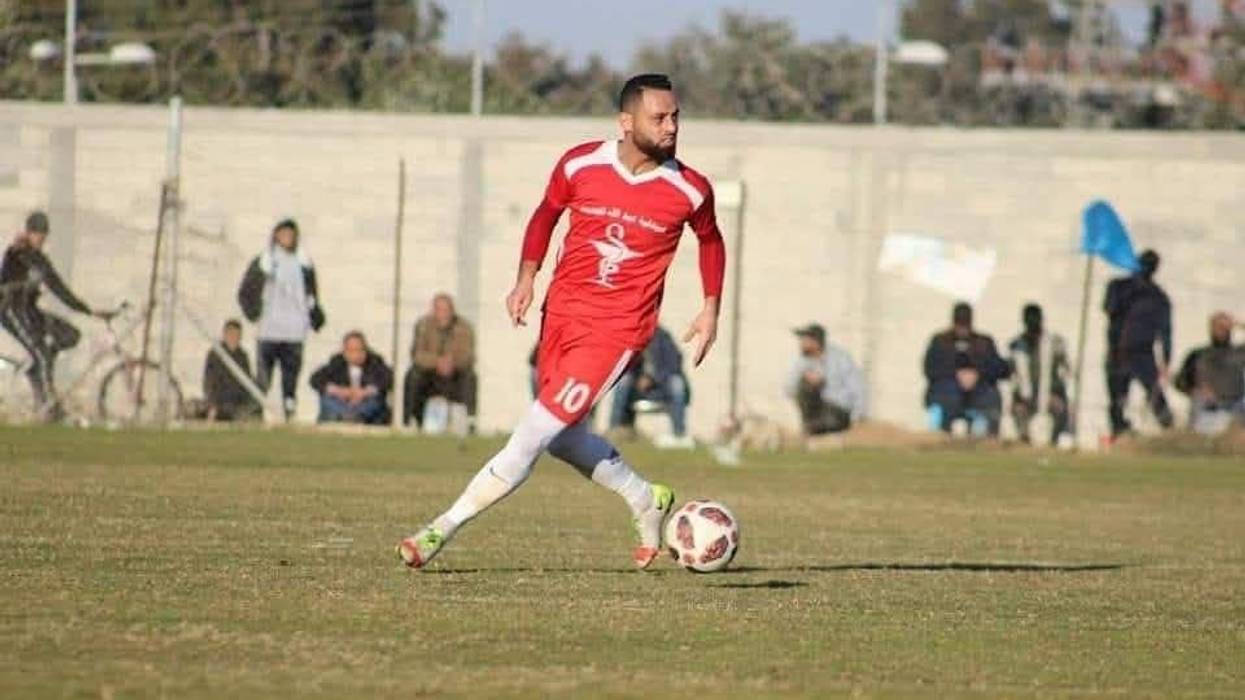
The latest name on that list is Saleem Al-Ashqar, a Palestinian goalkeeper from Al-Qarara, near Khan Younis. He was 32 years old. According to reports, he was not on a battlefield. He was riding a motorcycle, searching for cooking gas. He had married only months earlier, in January 2026, and was waiting for the birth of his first child. Israeli forces shot and killed him.
In February 2022, following Russia's invasion of Ukraine, FIFA acted with remarkable speed. Within days, Russia was suspended from international competition and excluded from World Cup qualification. The decision came from widespread recognition that sport could not be separated from a major violation of international law and human suffering. FIFA described it as necessary to protect the integrity of football and to stand against violence.
When the final whistle blows at the 2026 World Cup, millions of people will celebrate the beauty of the game. They should also remember those who were denied the chance to keep playing it.
But if that principle applied to Russia, why does it not apply consistently elsewhere?
For nearly three years, international organizations, human rights groups, United Nations experts, and legal bodies have documented immense civilian suffering in Gaza. Tens of thousands of Palestinians have been killed. Homes, schools, hospitals, universities, and cultural institutions have been destroyed. The sporting sector has not been spared. Football fields have become rubble, sports facilities have been damaged and destroyed. Coaches, referees, administrators, and players have lost their lives. Despite all of this, the Israel Football Association remains a full FIFA member.
The consequences of this selectivity are devastating for Palestinian footballers. Their deaths rarely make international headlines. Their names are seldom known beyond their communities. The destruction of Gaza's sporting infrastructure receives little attention compared with transfer rumors, sponsorship deals, and tournament news.
Imagine a World Cup qualifying group in which half the players were dead. Imagine a national league where stadiums no longer exist. Imagine trying to explain to a child why their favorite goalkeeper will never play again because he was killed while searching for fuel to cook a meal.
Football is built on memory. Every World Cup honors the past as we remember legends who lifted trophies decades ago. Stadiums regularly hold moments of silence for victims of disasters, terrorism, and war. We place black armbands on captains’ sleeves because the sport understands that you cannot simply ignore loss.
Now that 567 footballers are gone, will we have a moment of silence? Will giant screens display their names? Will commentators mention that an entire generation of Palestinian players was cut down before it had the chance to compete? Or will the tournament proceed as though those lives never existed?
Tributes matter because they acknowledge humanity. They tell grieving families that the world saw their loved ones and that their deaths are not being erased.
If FIFA is unwilling to suspend the Israel Football Association, it should at the very least publicly recognize the Palestinian footballers who have been killed and commit to rebuilding the sporting infrastructure that has been destroyed. Their silence is a choice, and it speaks volumes.
When the final whistle blows at the 2026 World Cup, millions of people will celebrate the beauty of the game. They should also remember those who were denied the chance to keep playing it. The empty seats belong to them.
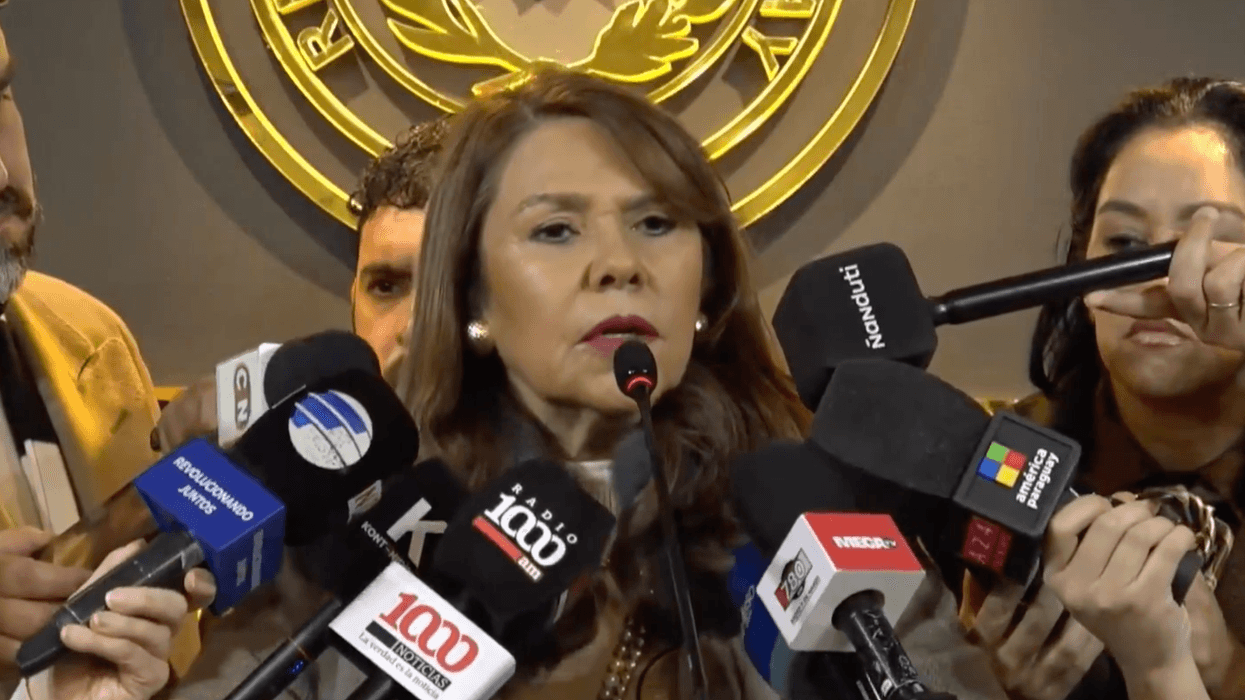
"I will not apologize," said 62-year-old Sen. Celeste Amarilla. "I come from a generation when gays were beaten up and calling someone a little Black shit was common."
A Paraguayan senator on Tuesday partially retracted her racist rant against French soccer superstar Kylian Mbappé but refused to apologize as French prosecutors weigh hate crime charges and officials in both countries condemned her remarks.
Prosecutors in Paris are considering charges of incitement to hatred or violence, or aggravated public insult, against right-wing Paraguayan opposition Sen. Celeste Amarilla, after the French Football Federation filed a complaint calling the "racist remarks" of the lawmaker "totally abject and unacceptable."
France eliminated Paraguay from the FIFA World Cup on Saturday, beating the South American side 1-0 in the Round of 16 match in Philadelphia, with Mbappé scoring a game-winning penalty kick in the 70th minute.
Following the unusually physical match—some observers accused Paraguay of being sore losers and playing dirty—Mbappé refused to shake Paraguayan goalkeeper Orlando Gill's hand.
An incensed Amarilla then took to X to call Mbappé a "colonized Cameroonian, pretending hard to be French, resentful, newly rich, arrogant, and ugly."
In a second post, the senator said Mbappé "didn't even learn to write; instead of mother's milk, he suckled on coconuts, and the most educated things he heard were the chimpanzees."
Mbappé was born in Paris and grew up just outside the French capital in Bondy.
Amarilla also cheered racist posts by other X users and asked "permission" to use one comment asking, "What kind of 'dark' thing can you ask someone who ran from lions so as not to be eaten?"
While many Paraguayans rushed to Amarilla's defense in the name of their national, sporting, and even racial honor, the country's Foreign Ministry released a statement saying the nation's government "deplores and rejects" her remarks, which it said are "contrary to the values and principles that inspire peaceful coexistence and respect for the human dignity that our country promotes."
Paraguayan Vice President Pedro Alliana also weighed in, asserting Monday that "football is an expression of fraternity" that "should unite people," and "there is no room for any type of discrimination" in the sport.
Mbappé responded directly to Amarilla on social media, saying, "You are a despicable woman and unworthy of your position."
"You do not represent Paraguay, that country which has sweated passion and honor throughout the competition," the French captain and Real Madrid superstar wrote. "Through your recklessness and your brazen racism, the entire world has already forgotten the journey and the historic effort that your players accomplished during this World Cup, making way for an incompetent woman who gives the worst possible image of her country."
French President Emmanuel Macron posted on social media: "Another goal for Kylian Mbappé. Against racism this time. All my support. When words defile, our values respond—dignity, respect, fraternity."
Amarilla subsequently posted a screed attacking what she called Mbappé's "arrogance" and "contempt."
"My posts were written in the heat of the moment," she claimed. "That mixed-race blood—a beautiful blend of Indigenous and Spanish blood flowing through my veins—was boiling while you mocked those great Paraguayan players who fought as equals until the very end of the match, and that's why I wrote those messages."
During Amarilla's youth, Paraguay committed genocide against the Aché, Ayoreo, Guaraní, and other Indigenous peoples under the US-backed dictatorship of Gen. Alfredo Stroessner.
"Soon afterward, however, I regretted responding with the same insults that I myself receive," Amarilla continued in a conciliatory twist. "I, too am looked down upon for being brown-skinned and Latina; they call us 'sudacas.' I regretted it and deleted the post. I realized I was repeating patterns that I hate. I understand that it may have hurt you, because it is humiliating."
"Now I demand that you also retract your words and apologize to me," she added.
Speaking at a Tuesday morning press conference, Amarilla again defended her actions, which she said were rooted in her Generation X upbringing, declaring, "I will not apologize."
🗣️ Celeste Amarilla: “I come from a generation where calling someone a “little Black sh*t” was common.
Watch out for Paraguayans. We put Dinho behind bars for corruption.
Don't underestimate me, I can file charges against you.”
She’s disgusting, bro. 🤮 pic.twitter.com/yAw55G0hSP
— 10 (@Kylian) July 7, 2026
"I'm nearly 62 years old and grew up in a society where gays were beaten and where calling someone a little Black shit was the most common thing," the senator said. "I come from that generation, so now I'm trying to build a different Celeste Amarilla, that's capable of co-existing with others."
"Have patience," she added. "I'm trying."