SUBSCRIBE TO OUR FREE NEWSLETTER
Daily news & progressive opinion—funded by the people, not the corporations—delivered straight to your inbox.
5
#000000
#FFFFFF
To donate by check, phone, or other method, see our More Ways to Give page.
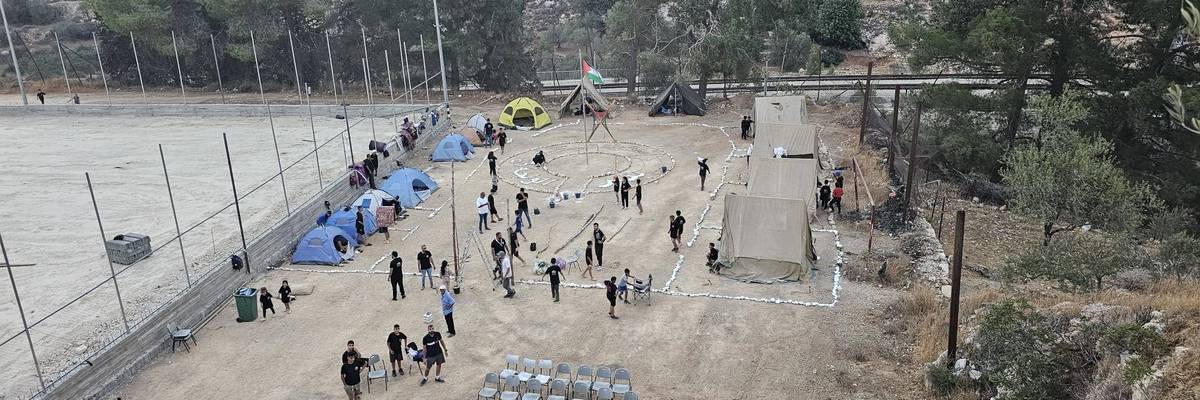
In the middle of the global celebration of football, when stadiums are full, screens are glowing, and millions are watching the World Cup, a small Palestinian village near Bethlehem experienced something very different.
Battir lost its only football field.
For most of the world, football is entertainment. In Battir, it is something else entirely—it is space, identity, and a rare place where young people can breathe beyond the pressures of daily life.
The field was not a stadium. It had no grandstands, no giant screens, and no professional facilities. It was a simple community pitch. Yet for generations of children and young people in Battir, it meant everything. It was where they played after school, where friendships were built, where confidence grew, and where dreams quietly took shape.
Football, in its global form, is about glory, competition, and spectacle. But in places like Battir, it is about something more basic: the right to play, the right to gather, and the right to feel normal for a moment.
The field itself was not new. It had existed since the early 1980s and had served the village for more than four decades.
I grew up playing there.
One of my earliest memories is returning home covered in mud after a rainy afternoon match, exhausted but happy. Like many children around the world, I fell in love with football while watching my first FIFA World Cup in 1982, when Spain hosted the tournament. The game became part of my childhood, and the field became part of my life.
Football accompanied me through school, university, and adulthood. Between 2009 and 2016, while serving as secretary of Battir Sports Club, I helped organize annual Ramadan football tournaments on the same field. These competitions brought together local teams and became cherished community events. The field also welcomed visitors from abroad and served as a meeting point where sport connected people across cultures and backgrounds.
For many years, residents hoped to improve the field. In 2022, Battir Sports Club, Battir Municipality, and members of the local community launched a project to rehabilitate the existing facility. The goal was not to build a completely new football ground, but to upgrade a long-standing community space with artificial turf, lighting, changing rooms, and basic infrastructure. The vision was simple: to provide a safe and dignified place where both boys and girls could participate in sport.
For a village that had waited decades to improve its only football field, the project represented hope.
That hope came to an abrupt end on June 30, 2026, when Israeli authorities demolished the field following orders that halted rehabilitation works. What disappeared that day was not merely a construction project. It was a community space that had shaped the lives of generations.
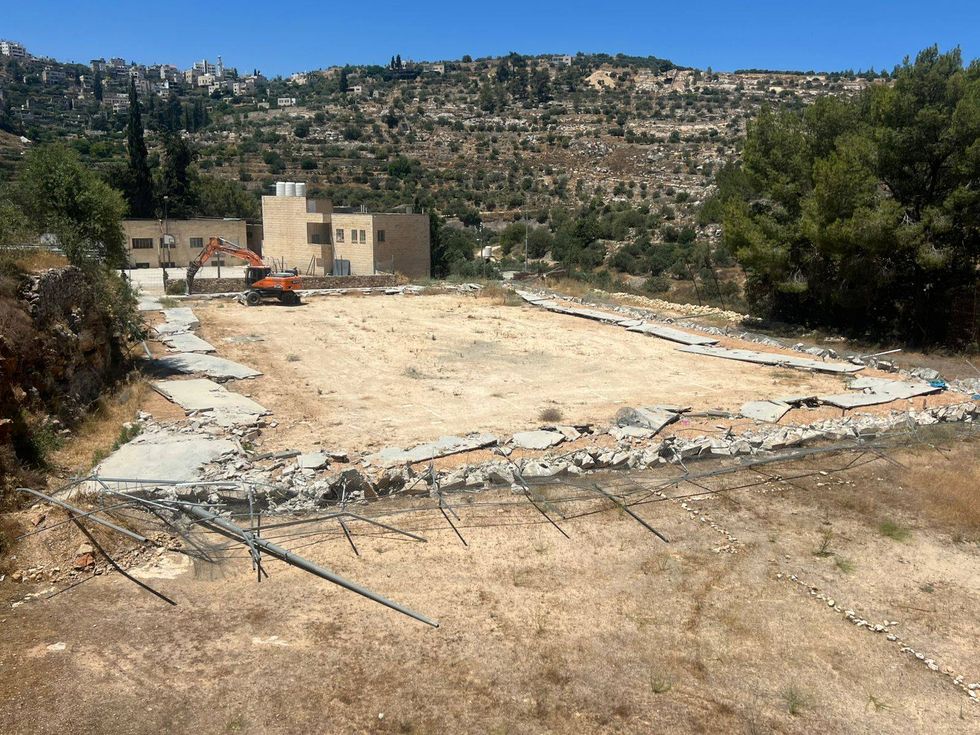 Battir Football Field is demolished. (Photo by Mahmoud Al-Butmeh)
The demolition did not make international headlines. There were no cameras, no commentary panels, and no countdown clocks. But for the children and young people who used the field, the loss was immediate and deeply felt. A place once filled with movement, laughter, and possibility became empty ground.
In a place like Battir, there are few alternatives. There are no nearby facilities waiting to replace what was lost. When one space disappears, it is not easily replaced. It simply vanishes from everyday life.
The timing is difficult to ignore. While the world celebrated football at its highest level during the World Cup, one small village has been left without the field that connected generations to the game.
Football, in its global form, is about glory, competition, and spectacle. But in places like Battir, it is about something more basic: the right to play, the right to gather, and the right to feel normal for a moment.
What remains now is not only an empty field, but also a question that lingers in the community: Where do the children go next?
This is not just a story about a football field. It is a story about how everyday spaces shape childhood, how communities invest hope in shared places, and how quickly those places can disappear.
And it is a reminder that while the World Cup shows us football at its peak, there are places where the game survives only in memory—and in the hope that one day it might return.
In the middle of the global celebration of football, when stadiums are full, screens are glowing, and millions are watching the World Cup, a small Palestinian village near Bethlehem experienced something very different.
Battir lost its only football field.
For most of the world, football is entertainment. In Battir, it is something else entirely—it is space, identity, and a rare place where young people can breathe beyond the pressures of daily life.
The field was not a stadium. It had no grandstands, no giant screens, and no professional facilities. It was a simple community pitch. Yet for generations of children and young people in Battir, it meant everything. It was where they played after school, where friendships were built, where confidence grew, and where dreams quietly took shape.
Football, in its global form, is about glory, competition, and spectacle. But in places like Battir, it is about something more basic: the right to play, the right to gather, and the right to feel normal for a moment.
The field itself was not new. It had existed since the early 1980s and had served the village for more than four decades.
I grew up playing there.
One of my earliest memories is returning home covered in mud after a rainy afternoon match, exhausted but happy. Like many children around the world, I fell in love with football while watching my first FIFA World Cup in 1982, when Spain hosted the tournament. The game became part of my childhood, and the field became part of my life.
Football accompanied me through school, university, and adulthood. Between 2009 and 2016, while serving as secretary of Battir Sports Club, I helped organize annual Ramadan football tournaments on the same field. These competitions brought together local teams and became cherished community events. The field also welcomed visitors from abroad and served as a meeting point where sport connected people across cultures and backgrounds.
For many years, residents hoped to improve the field. In 2022, Battir Sports Club, Battir Municipality, and members of the local community launched a project to rehabilitate the existing facility. The goal was not to build a completely new football ground, but to upgrade a long-standing community space with artificial turf, lighting, changing rooms, and basic infrastructure. The vision was simple: to provide a safe and dignified place where both boys and girls could participate in sport.
For a village that had waited decades to improve its only football field, the project represented hope.
That hope came to an abrupt end on June 30, 2026, when Israeli authorities demolished the field following orders that halted rehabilitation works. What disappeared that day was not merely a construction project. It was a community space that had shaped the lives of generations.
Battir Football Field is demolished. (Photo by Mahmoud Al-Butmeh)
The demolition did not make international headlines. There were no cameras, no commentary panels, and no countdown clocks. But for the children and young people who used the field, the loss was immediate and deeply felt. A place once filled with movement, laughter, and possibility became empty ground.
In a place like Battir, there are few alternatives. There are no nearby facilities waiting to replace what was lost. When one space disappears, it is not easily replaced. It simply vanishes from everyday life.
The timing is difficult to ignore. While the world celebrated football at its highest level during the World Cup, one small village has been left without the field that connected generations to the game.
Football, in its global form, is about glory, competition, and spectacle. But in places like Battir, it is about something more basic: the right to play, the right to gather, and the right to feel normal for a moment.
What remains now is not only an empty field, but also a question that lingers in the community: Where do the children go next?
This is not just a story about a football field. It is a story about how everyday spaces shape childhood, how communities invest hope in shared places, and how quickly those places can disappear.
And it is a reminder that while the World Cup shows us football at its peak, there are places where the game survives only in memory—and in the hope that one day it might return.
In the middle of the global celebration of football, when stadiums are full, screens are glowing, and millions are watching the World Cup, a small Palestinian village near Bethlehem experienced something very different.
Battir lost its only football field.
For most of the world, football is entertainment. In Battir, it is something else entirely—it is space, identity, and a rare place where young people can breathe beyond the pressures of daily life.
The field was not a stadium. It had no grandstands, no giant screens, and no professional facilities. It was a simple community pitch. Yet for generations of children and young people in Battir, it meant everything. It was where they played after school, where friendships were built, where confidence grew, and where dreams quietly took shape.
Football, in its global form, is about glory, competition, and spectacle. But in places like Battir, it is about something more basic: the right to play, the right to gather, and the right to feel normal for a moment.
The field itself was not new. It had existed since the early 1980s and had served the village for more than four decades.
I grew up playing there.
One of my earliest memories is returning home covered in mud after a rainy afternoon match, exhausted but happy. Like many children around the world, I fell in love with football while watching my first FIFA World Cup in 1982, when Spain hosted the tournament. The game became part of my childhood, and the field became part of my life.
Football accompanied me through school, university, and adulthood. Between 2009 and 2016, while serving as secretary of Battir Sports Club, I helped organize annual Ramadan football tournaments on the same field. These competitions brought together local teams and became cherished community events. The field also welcomed visitors from abroad and served as a meeting point where sport connected people across cultures and backgrounds.
For many years, residents hoped to improve the field. In 2022, Battir Sports Club, Battir Municipality, and members of the local community launched a project to rehabilitate the existing facility. The goal was not to build a completely new football ground, but to upgrade a long-standing community space with artificial turf, lighting, changing rooms, and basic infrastructure. The vision was simple: to provide a safe and dignified place where both boys and girls could participate in sport.
For a village that had waited decades to improve its only football field, the project represented hope.
That hope came to an abrupt end on June 30, 2026, when Israeli authorities demolished the field following orders that halted rehabilitation works. What disappeared that day was not merely a construction project. It was a community space that had shaped the lives of generations.
Battir Football Field is demolished. (Photo by Mahmoud Al-Butmeh)
The demolition did not make international headlines. There were no cameras, no commentary panels, and no countdown clocks. But for the children and young people who used the field, the loss was immediate and deeply felt. A place once filled with movement, laughter, and possibility became empty ground.
In a place like Battir, there are few alternatives. There are no nearby facilities waiting to replace what was lost. When one space disappears, it is not easily replaced. It simply vanishes from everyday life.
The timing is difficult to ignore. While the world celebrated football at its highest level during the World Cup, one small village has been left without the field that connected generations to the game.
Football, in its global form, is about glory, competition, and spectacle. But in places like Battir, it is about something more basic: the right to play, the right to gather, and the right to feel normal for a moment.
What remains now is not only an empty field, but also a question that lingers in the community: Where do the children go next?
This is not just a story about a football field. It is a story about how everyday spaces shape childhood, how communities invest hope in shared places, and how quickly those places can disappear.
And it is a reminder that while the World Cup shows us football at its peak, there are places where the game survives only in memory—and in the hope that one day it might return.