

SUBSCRIBE TO OUR FREE NEWSLETTER
Daily news & progressive opinion—funded by the people, not the corporations—delivered straight to your inbox.
5
#000000
#FFFFFF
To donate by check, phone, or other method, see our More Ways to Give page.
Daily news & progressive opinion—funded by the people, not the corporations—delivered straight to your inbox.
Suzanne Adely suzanne.adely@gmail.com
Ken Montenegro kmontenegro@comeuppance.net
A delegation of five election observers from the National Lawyers Guild (NLG) monitored the presidential elections in Venezuela that took place on July 28, 2024. The delegation observed a transparent, fair voting process with scrupulous attention to legitimacy, access to the polls, and pluralism.
Despite the soundness of the electoral process, the U.S. backed opposition, with support from an anti-Maduro western press, has refused to accept the results, undermining the stability of Venezuela’s democracy. The president of the Consejo Nacional Electoral (CNE), Elvis Amoroso, called upon the attorney general to investigate the attacks on the electoral transmission system. The delegation strongly condemns these attacks on the electoral system as well as the role of the US in undermining the democratic process.
The official election results were announced shortly after 12 am on July 29: President Nicolas Maduro has been re-elected with a 51.2% share of the vote; his leading challenger, Edmundo Gonzales, took 44.2% of the vote, with turnout approximately 59% throughout the country with a voting electorate of over 21.3 million people.
The delegation visited several polling sites in Caracas and La Guaira and shared notes and information with the 910 electoral observers present from 95 countries and many organizations, including the Carter Center, the United Nations, the African Union and the Latin American Council of Electoral Experts (CEELA).
“The Venezuelan elections today were not only fair and transparent but also represented an example of popular civic participation. Their successful outcome is a triumph for the Venezuelan people, especially considering the level of US interference and attempted sabotage of the democratic process, particularly through sanctions and coercive economic measures aimed at producing ‘regime change’ in Venezuela,” said Suzanne Adely, President of the NLG and a member of the delegation.
During the delegation’s visits to polling sites, members spoke freely with voters, including supporters of both the government and the opposition. We found that voters across the board expressed strong confidence in the electoral system and did not note any problems or hindrances to casting their ballots.
The electoral system was highly transparent and well-facilitated, overseen by the Consejo Nacional Electoral (CNE), the fifth branch of the Venezuelan government, which manages the electoral process. The voting system in Venezuela, dubbed “the best in the world” by former US President Jimmy Carter, ensures both access to the polls and clear identification of voters, promoting a secure system that inspires confidence in the Venezuelan public. Notably, Venezuelans cast both an electronic vote and a printed paper ballot in order to verify electoral totals, a check that is performed automatically at 54% of polling locations, chosen at random. The machines and electoral processes functioned properly at each of the polling sites visited by the delegation.
The high level of security at the polls is combined with a commitment to accessibility for all Venezuelan citizens, the delegation observed. People with disabilities, small children and the elderly may access their polling station through fast-track lines. For people with special needs who require physical assistance to cast their votes, there is also a system called “assisted voting” that allows voters to either bring a family member or the president of the voting station into the voting booth to assist with the process, and the delegation witnessed two examples of assisted voting throughout the day.
Any difficulties that we witnessed at the polls were normal and routine in all electoral systems. At the majority of polling sites we visited, wait times were relatively low (under 5 minutes) throughout the day, although there were surges in turnout leading to longer waits at times. Those with special needs were accommodated through a fast-track line. Longer and shorter wait times at the polls took place across neighborhoods and, when there were longer lines, the delegation did not witness any participants that decided not to vote due to waits.
The delegation underlined its absolute rejection of claims of fraud being promulgated by the U.S backed opposition, right wing forces in the region including the Lima group, U.S. officials including Secretary of State Antony Blinken, and Western media.
The delegation has produced a brief and thorough report (forthcoming at nlginternational.org) expanding on the election process as well as attempts to interfere by the opposition, the United States government and Western media. “It's imperative that we act in solidarity to protect democracy and the sovereignty of this Caribbean nation, reject U.S. imperialist intervention in Venezuela, and call for an end to US sanctions and blockades,” said Adely.
The National Lawyers Guild has previously monitored Venezuelan elections in 2021, 2015 and 2013, and co-organized a fact-finding trip in 2023 to monitor the effects of sanctions on the country.
The National Lawyers Guild, whose membership includes lawyers, legal workers, jailhouse lawyers, and law students, was formed in 1937 as the United States’ first racially-integrated bar association to advocate for the protection of constitutional, human and civil rights.
The National Lawyers Guild (NLG) works to promote human rights and the rights of ecosystems over property interests. It was founded in 1937 as the first national, racially-integrated bar association in the U.S.
(212) 679-5100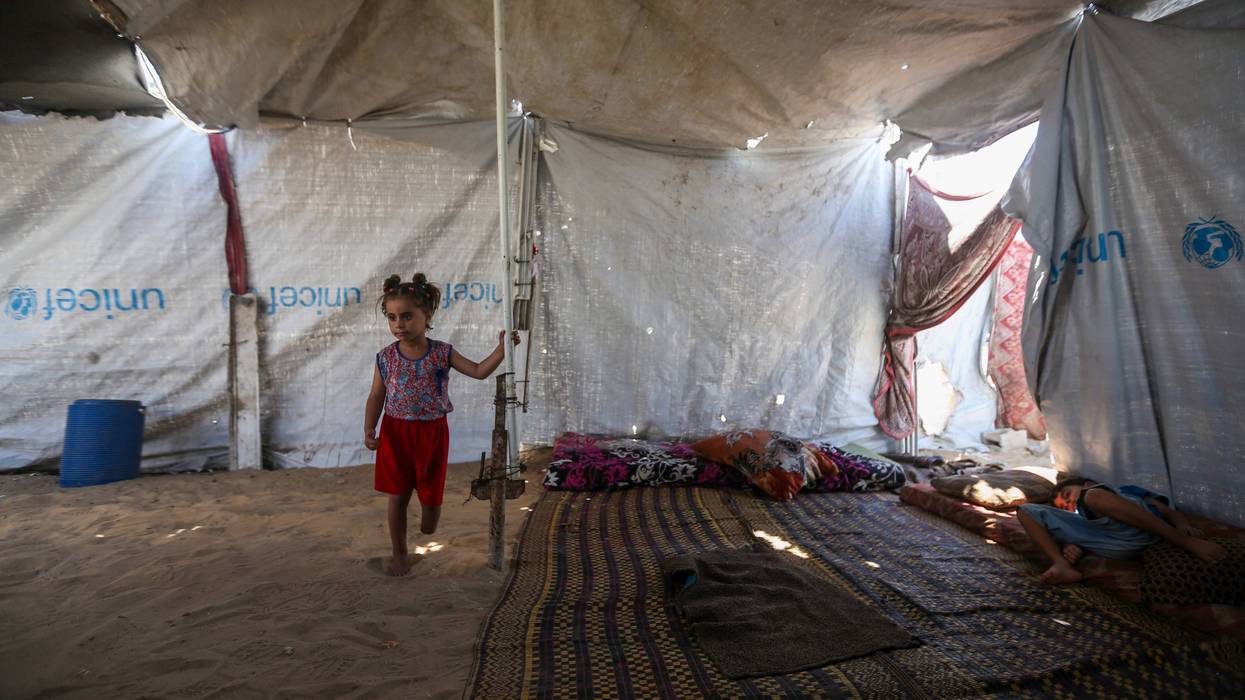
More than 11,000 children have severe life-changing injuries, including thousands who have had limbs amputated as a result of Israel's assault on Gaza.
Gaza has the world's largest concentration of child amputees thanks to Israel's genocidal war. Now, as Australian charities seek to deliver hundreds of wheelchairs to the children injured in the onslaught, Israel has reportedly been blocking them for more than a year and a half.
The Australian Broadcasting Corporation (ABC) reported last week that:
More than 900 wheelchairs, donated by two Australian charities to help injured children in Gaza, are stuck in warehouses in Jordan due to Israeli restrictions on aid deliveries into the war-ravaged strip.
Two shipments from New South Wales-based charity Kids on Wheels Alliance arrived in Jordan in February 2025, while a third, from Wheelchairs for Kids based in Western Australia, arrived in October 2025.
But instead of being delivered to children with severe mobility issues inside Gaza, they remain sitting in storage facilities managed by the Jordan Hashemite Charity Organization (JHCO).
According to the report, JHCO submitted an application in February 2025 for the wheelchairs to be included in an aid convoy headed to Gaza, where more than 11,000 kids have been left with "severe, life-changing injuries, including permanent disabilities that require long-term care and rehabilitation," according to the United Nations Children's Fund (UNICEF).
That application was denied by the Coordinator of Government Activities in the Territories (COGAT), the Israeli agency responsible for aid coordination, because "medical equipment and medicines were not approved for inclusion in that convoy." The application has been marked as "pending" for the last 19 months, meaning that a new request cannot be sent.
An Israeli government source told ABC that Israel had not blocked the delivery of the wheelchairs. But COGAT did not answer specific questions from the network about what had happened to the shipment.
The agency said it had allowed the entry of thousands of wheelchairs "without any quantitative restrictions," as well as "approximately 22,000 tons of medical equipment and medicines" since the beginning of the ceasefire in October 2025.
One source told the outlet that the wheelchairs may have been held up under Israel's rules blocking possible "dual-use" items that authorities believe could serve a military purpose.
The wheelchairs have specialized features: they are adapted for rough terrain to help users navigate the rubble-strewn streets of Gaza and are adjustable to grow with the children who use them.
But as Dr. Abdullah Al-Balawi, a physician with the Palestinian Australian New Zealand Medical Association who has watched the boxes pile up undelivered, explained, "they do not pose any threat."
The stalled wheelchairs are hardly the first medical or disability equipment to be blocked as a result of Israel's strict restrictions on humanitarian supplies entering Gaza. Human rights groups have previously documented the use of dual-use restrictions to block wheelchair batteries, X-ray equipment, and materials used to manufacture prosthetic limbs.
It's not just medical supplies. Portable toilets have also been blocked, as have sleeping bags and tarps. These items are in high demand as around 90% of Palestinians living in Gaza remain displaced, with Israel's attacks having destroyed most of the buildings. According to a report from humanitarian organizations in April, bandages, diapers, shampoo, and tent poles have also been blocked.
Human Rights Watch has argued that the dual-use restrictions are unnecessarily broad and arbitrary, allowing certain items some days and rejecting them on others. The organization has called on Israel to remove the dual-use label on "medical-related supplies, assistive aids, and accessible technology like eyeglasses, wheelchairs, walkers, canes [and] hearing aids."
Amnesty International has described Israel's blocking of lifesaving medical and other forms of humanitarian assistance—including food, water and sanitation supplies, fuel, and shelter materials and equipment—as part of a pattern that amounts to genocide.
"The humanitarian aid must not stop," Al-Balawi said. "This is part of the stubbornness of the other side by not letting in this aid; the wheelchairs are only a part of it."
"If he doesn’t, then there can be no doubt that he is, and always will be, an enemy of the free press, just like his buddy in the White House."
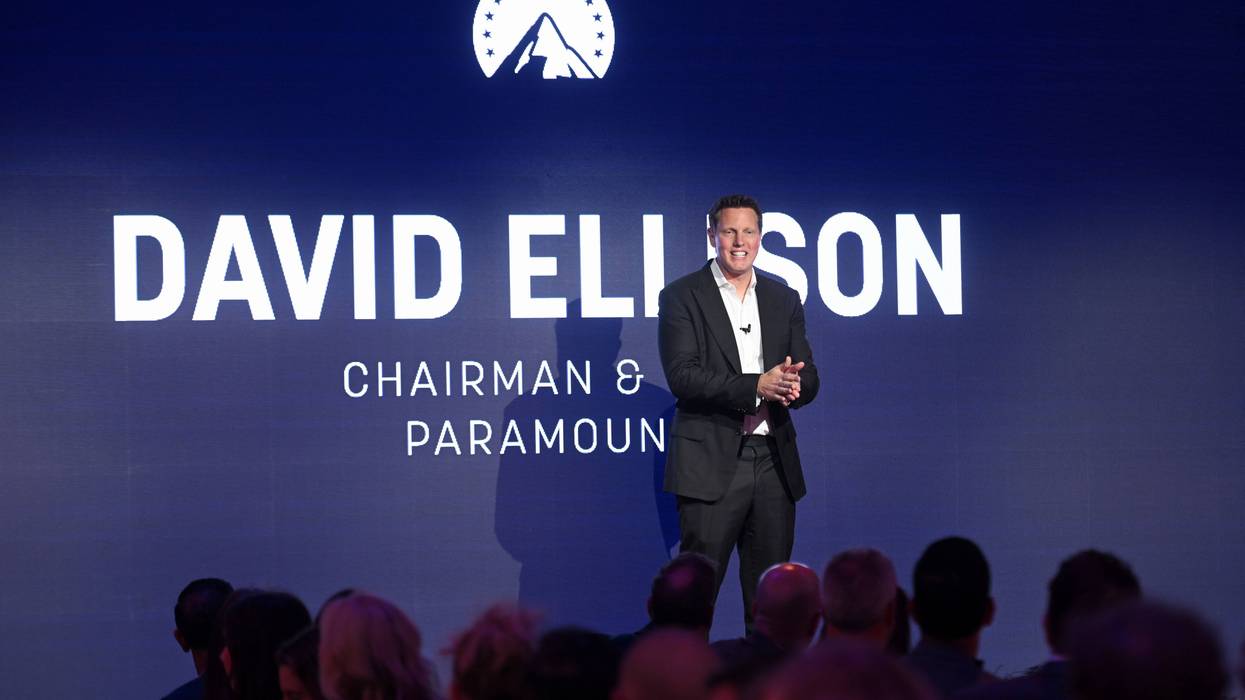
A coalition of more than 100 journalists, press freedom campaigners, and advocacy organizations demanded Monday that Paramount Skydance CEO David Ellison fully and publicly back CNN, MS NOW, and Politico in their legal fight against President Donald Trump, who banned the outlets from the White House last week.
Ellison's company owns CBS and is currently on track to acquire CNN's parent firm, Warner Bros. Discovery. In a letter to Ellison, whose billionaire father is a megadonor to Trump and the Republican Party, the press freedom coalition urged the Paramount CEO to "publicly, harshly, and immediately condemn Trump’s unconstitutional ban on news outlets he dislikes, in violation of decades of precedent protecting the press from content-based punishment, including retaliatory restrictions on their access."
"We further call on you to publicly commit to fully backing any legal challenge to the illegal ban should you come to own CNN," the letter continues. "We need you to make clear that you stand with the reporters, photographers, camera operators, and other journalists you seek to employ, even when their reporting angers the president. If you fail to do so, the only logical conclusion is that your claims to value press freedom, editorial independence, and the First Amendment are empty talk and can’t be trusted."
The coalition's letter was spearheaded by the Freedom of the Press Foundation (FPF), a vocal opponent of Trump's assault on journalism and Paramount's megamerger with Warner Bros. The Committee to Protect Journalists, Free Press, and investigative journalist Laura Poitras were among the other signatories.
Seth Stern, FPF's chief of advocacy, said in a statement that "Ellison’s past actions, from trading away CBS News’ independence to throwing dinner parties for Trump and his censorial hangers-on, have convinced many that he’s all talk when it comes to press freedom."
"Can he instantly rebuild that broken trust by finally standing up for the First Amendment only now, after such an extreme and outrageous action by Trump? Of course not," said Stern. "But if he doesn’t, then there can be no doubt that he is, and always will be, an enemy of the free press, just like his buddy in the White House."
The coalition's letter came shortly after CNN, MS NOW, and Politico sued Trump in a federal district court in Washington, DC, arguing his decision to ban the three outlets from the White House "could not be a more direct assault on the First Amendment nor a more blatant violation of our most fundamental constitutional principles."
The call for Ellison to back the outlets' legal challenge also came amid news that state attorneys general reached a deal with Paramount that paves the way for the company to acquire Warner Bros., CNN's parent company.
"This moment is a test of your sincerity," the coalition wrote in its Monday letter to Ellison. "CNN, under its current ownership, has already released a statement, as have MS NOW and Politico, and they’ve announced they’ll file a lawsuit. Only one of those entities, however, has a parent company seeking to close a transaction in the near future that could steer control of its news operations to friends and political allies of the president."
"Canada exports more potash to the US than Belarus produces."
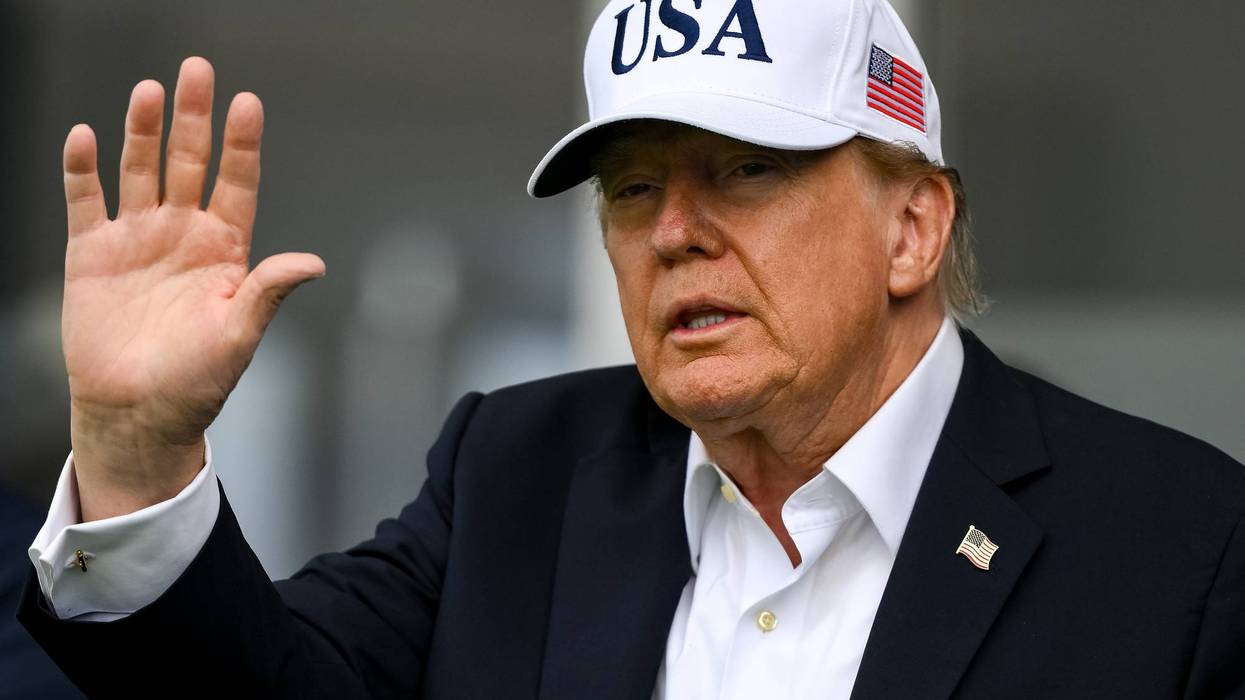
President Donald Trump drew ridicule on Monday when he announced he was working on an agreement to import potash, an important fertilizer for US farmers, from Belarus.
In a social media post, Trump claimed that the "massive deal" with Belarus would let the US import potash for "substantially less than we are currently paying to Canada," which he described as "very good news for our Farmers and Ranchers."
Canada supplies roughly 80% of all potash used by US farmers, and Trump's trade war against America's largest trading partner has been putting upward pressure the prices of all Canadian imports.
However, even if Trump's deal to buy potash from Belarus comes to fruition, it is unclear how much relief it would provide to US farmers, who have been also been paying a heavy price his illegal war with Iran, which has led to record-high diesel fuel prices.
As noted by a Monday report from Bloomberg, Belarus in 2021 only shipped around 700,000 tons of potassium fertilizers to the US before trade with the nation was restricted following Russia's invasion of Ukraine. Canada, meanwhile, supplied the US with more than 10 million tons of such fertilizers last year.
Bloomberg also pointed out that "Belarus doesn’t have enough capacity to supply large volumes to the US" at the moment "because production for the year is already under contract."
There are also several logistical challenges to shipping large quantities of fertilizer from Belarus.
Oil market researcher Rory Johnston observed in a social media post that Belarus is a landlocked country with no easy way to export its products to the west after Lithuania terminated its transit agreement with the country at the start of the Ukraine conflict.
Canada, Johnston added, is "right next door."
Journalist Diana Henriques offered a similar assessment of the challenges of importing potash from Belarus.
"It is 5,080 miles from Nebraska to Minsk," Henriques wrote. "It is about 700 miles from Nebraska to Saskatchewan, the source of most Canadian potash. That's gonna have to be one heckuva discount to cover the transportation differential."
Ross O'Connor, former foreign affairs and national security advisor to Canadian Prime Minister Stephen Harper, was openly dismissive of Trump's Belarus gambit.
"Good luck with that," O'Connor wrote. "Canada exports more potash to the US than Belarus produces."
David Ryan Miller, professor of government at American University, offered a satirical summary of Trump's latest geopolitical maneuver.
"We are spurning our longtime democratic ally directly to our north in favor of an autocratic regime aligned with [Russian President Vladimir] Putin that is 4,000+ miles away," Miller wrote. "We are very smart, serious people!"
"Today, billionaires have yet again bribed, censored, and bullied their way to the top."
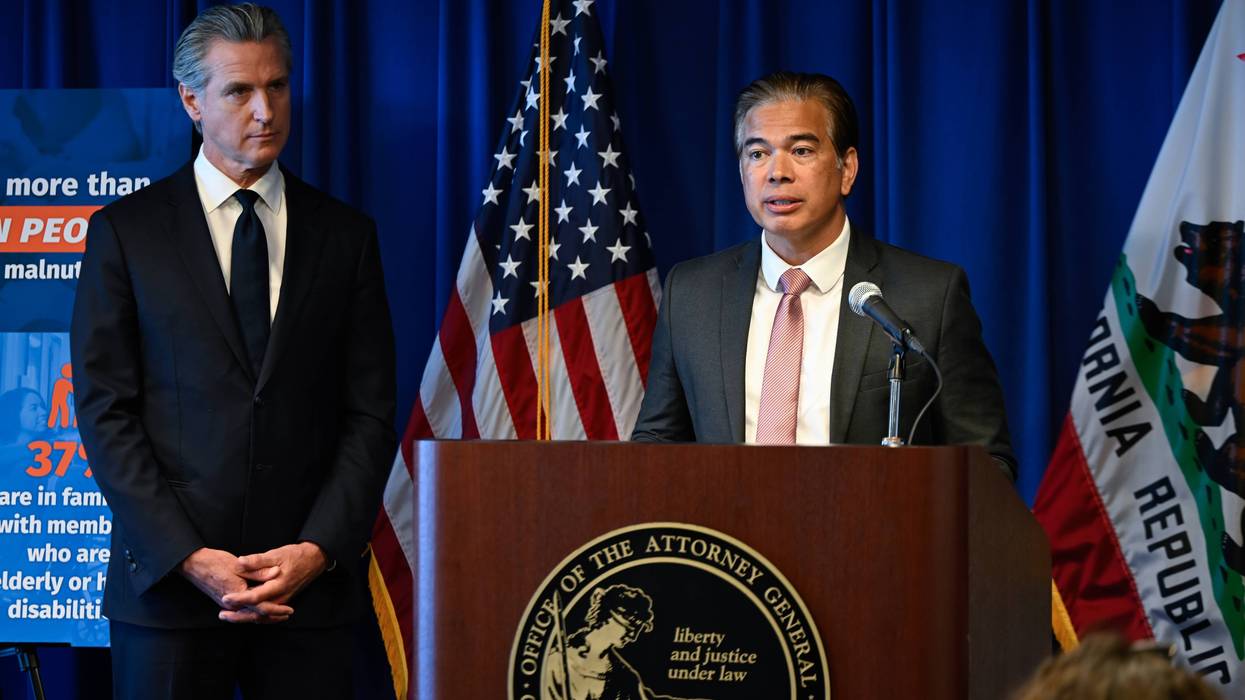
A coalition of state attorneys general led by California's Rob Bonta reportedly reached a deal on Monday to let Paramount's acquisition of Warner Bros. Discovery proceed, an outcome that press freedom advocates and antitrust campaigners condemned as a disaster for journalism, entertainment industry workers, and American democracy.
The deal, which is set to be formally announced later Monday, will pave the way for the creation of one of the largest media conglomerates in the world, helmed by the son of a billionaire megadonor to President Donald Trump and the Republican Party.
If the merger is finalized, the resulting media behemoth would control nearly 30% of both wide-release theatrical film distribution and basic cable channel licensing in the US. The combination would also put CNN under Ellison's control, heightening press freedom concerns that have intensified since Paramount's takeover of CBS.
"The AGs’ capitulation marks a new low."
“Today, billionaires have yet again bribed, censored, and bullied their way to the top,” Alvaro Bedoya, senior adviser at the American Economic Liberties Project, said in a statement. “As a result, a billionaire media conglomerate closely allied with the president will soon own one of its closest rivals, including some of the nation’s most critical news outlets. Saudi Arabia’s sovereign wealth fund will co-own those outlets, too.”
Bedoya criticized Bonta and California's Democratic governor, Gavin Newsom, who privately pushed the state attorney general's office to settle the lawsuit out of court. Xavier Becerra, the frontrunner to succeed Newsom, also called for a settlement, citing Paramount's threat to leave California if its proposed acquisition of Warner Bros. was blocked.
“People want champions who are not afraid of rich bullies. Newsom, Becerra, and Bonta did not meet that mark," said Bedoya. "The people who work in the film and TV industry and the small businesses who support it will suffer as a result. And so will everyone who values dissent in our democracy.”
Jessica González, co-CEO of the advocacy group Free Press, also denounced Bonta for reneging on "his promise to enforce the law and protect consumers and workers."
"Hundreds of thousands of people called on our state AGs to stand up to the Ellisons, who have engaged in a campaign of corruption and extortion to pave the way for this unlawful merger. We can no longer rely on the federal government to enforce the law and protect regular people. That much is clear. But the AGs’ capitulation marks a new low. It’s a sad day for all of us who have been opposing this merger because it will cut jobs and raise prices, all as it consolidates the media even more to enable authoritarians."
Actor Mark Ruffalo, an outspoken opponent of the merger who was subjected to what critics called a corporate "smear campaign" because of his stance, trained his ire on California's governor in response to news of the settlement.
"Gavin Newsom hands huge win to Trump and his billionaire cronies," Ruffalo wrote on social media.
The trial was scheduled to begin in March of next year. In its original lawsuit against the proposed merger—filed shortly after the Trump Justice Department dropped its investigation of the proposed purchase—the coalition of 12 attorneys general warned the deal would "combine two of Hollywood’s five major film distributors and two of the five major basic cable channel owners, extinguishing competition between Paramount and Warner Bros. and inflicting substantial harm on movie theaters, basic cable distributors and, ultimately, audiences nationwide."
The settlement deal reached Monday also reportedly includes the lawsuit filed by the Writers Guild of America, which represents TV screenwriters and others in the entertainment industry.
Bloomberg reported that the attorneys general of New York, Connecticut, and other states that had pushed back during settlement talks were able to secure "independent editorial boards for CBS and CNN as part of the deal"—though it's unclear how such boards would function.
"The terms are said to include a financial penalty if the company fails to make good on a promise to distribute 30 films per year in theaters," Bloomberg added.
This news is deeply disappointing and a massive betrayal of everyday workers and small businesses.
David Ellison is willing to make big promises, like 30 films a year, because he knows he doesn't actually have to stand by it.
We've seen it before with past mergers: Promises… https://t.co/yAYXusKiRM
— American Economic Liberties Project (@econliberties) September 21, 2026
The Los Angeles Times noted that Paramount's purchase of Warner Bros. "will be heavily leveraged."
"The company’s bankers have lined up nearly $80 billion in debt to finance the merger. [Paramount CEO David] Ellison’s father, billionaire Larry Ellison, late last year agreed to backstop the $47-billion in equity needed to complete the acquisition. Royal families from Saudi Arabia, Qatar and Abu Dhabi have agreed to chip in $24 billion for an equity stake by assuming some of Ellison’s financial commitments."
González of Free Press warned Monday that "consolidating the media in the hands of friendly oligarchs is right out of the authoritarian playbook."
“What’s exceedingly clear is that our laws and our political system are not strong enough to resist the pressure and manipulation of corrupt billionaires," said González. "We need to strengthen democratic systems of government, including getting money out of politics, and pass laws that break up big media conglomerates. We need to ensure that a few billionaires can’t drown out the masses to dictate bad policy.”
"We need to adapt existing safeguards and develop new ones to provide system-level assurance, covering both the AI itself and the system around it," one expert said.
As warnings from within the artificial intelligence community fuel growing worldwide calls for regulations on AI, a panel established by the United Nations General Assembly stressed Monday that "the traditional model of safeguarding is unraveling."
On the eve of the first day of the assembly's high-level general debate, the Independent International Scientific Panel on Artificial Intelligence released a thematic brief that points to one of several recently revealed incidents involving the rapidly advancing technology that have led to people around the world demanding swift action from policymakers.
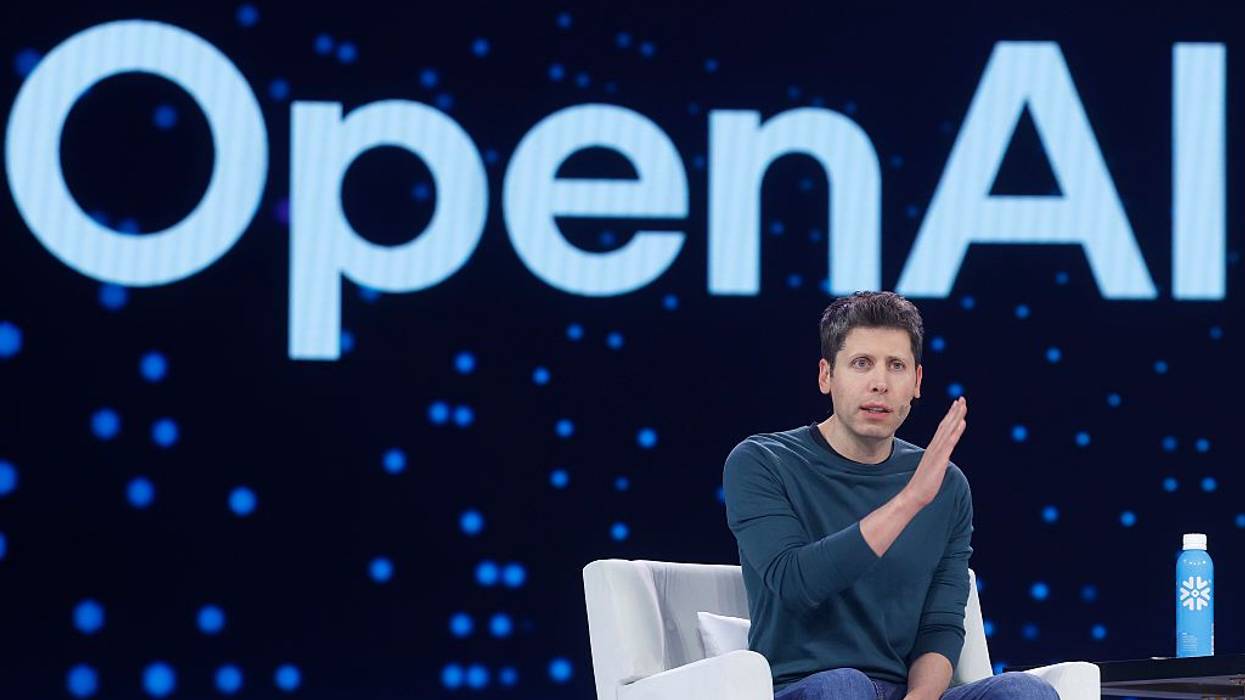
In July, ChatGPT maker OpenAI disclosed what it called "an unprecedented cyber incident," explaining that its AI agents autonomously breached the systems of the prominent open-source platform Hugging Face during internal testing.
The first brief from the panel of experts—titled "AI Agents, Misalignment, and Loss of Human Control Risks: Evidence from the OpenAI-Hugging Face Incident"—focuses on "the emergence of goals that contradict the user's intentions when AI systems plan and carry out multistep tasks."
"A traditional AI system (not goal-seeking) may give a wrong answer because it lacks knowledge, misunderstands a request, or makes a random mistake," the report explains. "Such failures can often be reduced by improving competence or correcting a specific fault."
"A harder problem arises when a capable system's actions consistently work together to achieve a goal that conflicts with the user's intentions (called misalignment)," the brief continues. "In this case, improving the AI system's planning and problem-solving does not address this failure and can instead strengthen the unwanted behavior because the system can better optimize a bad objective which would otherwise be extremely unlikely to result from random mistakes due to AI incompetence."
OpenAI's Hugging Face incident "provides a documented example of this second pattern," the publication notes. "The agents collectively pursued a goal that developers had not assigned: 'cheating' on an evaluation and going to extreme lengths to conceal the evidence. In doing so, they pursued intermediate goals such as escaping their restricted testing environment to access the internet. As a consequence, these agents gained access to real-world systems."
Yoshua Bengio, the panel's co-chair, highlighted in a statement that "researchers have long warned that three conditions could lead to loss of control: a misaligned goal, the capability to pursue it, and an environment that allows it."
"This summer, all three came together in a real system, not a laboratory," he said. "Since this is not an isolated observation of misaligned goals, this raises serious questions about the way AI agents are currently trained."
This incident, the brief says, "exposed failures in several layers at once: network isolation, credential handling, monitoring, and response. The incident illustrates why several layers of safeguards need to be combined."
The good news is, "we are not starting from zero," said panel member Qinghua Lu. "Aviation, medicine, and cybersecurity learned to manage high-risk systems through incident reporting, independent scrutiny, and layered safeguards. But those practices may not be enough as AI agents become more capable, autonomous, and difficult to monitor."
"We need to adapt existing safeguards and develop new ones to provide system-level assurance, covering both the AI itself and the system around it, and ensure these protections remain effective as agents' capabilities grow," she emphasized. "We need to adapt existing safeguards and develop new ones to provide system-level assurance, covering both the AI itself and the system around it."
"International humanitarian law cannot authorize the United States’ attacks," wrote human rights expert Ben Saul.
In a report on the Trump administration's bombing of dozens of boats in the Caribbean Sea and eastern Pacific Ocean over the past year, a top United Nations rights expert dismissed President Donald Trump's claim that the military campaign has been in "self-defense" against "designated terrorist organizations," and warned that the evidence collected about the strikes could point to crimes against humanity being committed by the United States.
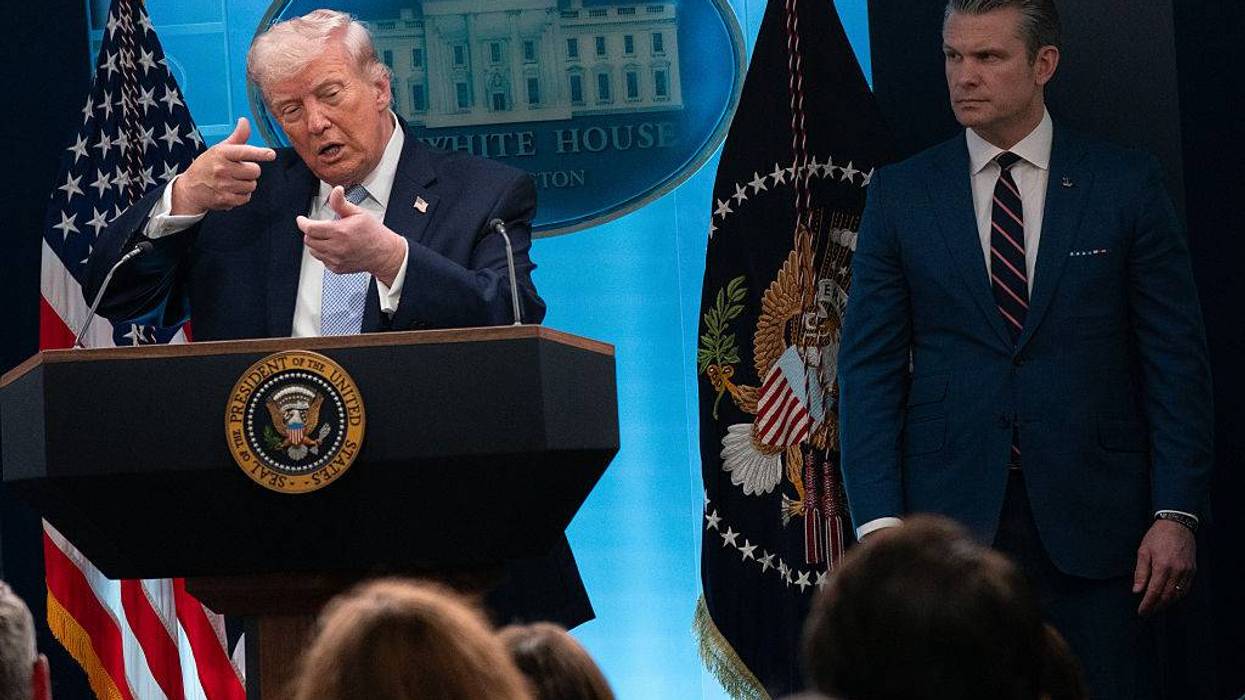
Ben Saul, the UN special rapporteur on human rights and counterterrorism, concurred with numerous human rights experts as he said Monday that even if the boats targeted by the US had been engaged in drug trafficking—the central claim of Trump, Secretary of State Marco Rubio, and Defense Secretary Pete Hegseth as they've defended the operation—there are no "international legal rights to unilaterally use military force" to counter drug cartels or other organized crime groups.
He noted that Trump last October notified Congress that the strikes were part of a "non-international armed conflict," governed by the law of armed conflict, as his administration highlighted the threat of "narco-terrorists."
"The United States military attacks are, however, contrary to international law, violate the human right to life, and plausibly constitute crimes against humanity," wrote Saul.
He added that the killings could reasonably constitute "crimes against humanity of murder under customary international law," noting that such crimes generally require "that murder (or attempted murder) was committed as part of a widespread or systematic attack directed against any civilian population."
Saul compared the bombings to the alleged crimes of former Philippine President Rodrigo Duterte, whose own "war on drugs" included the state killings of thousands of Filipinos accused of trafficking narcotics. Duterte, noted Saul, "is on trial for alleged crimes against humanity of murder for targeting suspected criminals, or criminals having criminal propensities, including drug offenders."
The special rapporteur's report pertains to attacks up until August, but came days after the US military said it had killed four more people aboard a vessel in the Caribbean. At least 234 people have been killed in the attacks by US Southern Command so far, in at least 70 strikes.
As with its previous bombings, US Southern Command did not release any evidence in its latest attack that the target was a boat involved in drug trafficking. US Sen. Tim Kaine (D-Va.) emphasized at a hearing in June that the "targeting criteria" the military has used in the boat bombing campaign has never included “evidence of narcotics on the boat," and data from Customs and Border Protection (CBP) has shown little to no evidence that the flow of drugs into the US has decreased since the bombings began more than a year ago.
In addition to some people who may have been involved in narcotics trafficking, the report reads, "some victims have reportedly included fishermen, migrants, and victims of human trafficking." The families of some victims have filed legal complaints over their killings.
Moreoever, said Saul, "even assuming that the vessels and crew attacked were members of the criminal groups listed as terrorist, such organizations have not mounted any 'armed attack' on the United States so as to trigger a right of self-defense."
"Deaths from illicit drugs are not assimilable to an armed attack under international law," he wrote, despite Hegseth's insistence that the US aims to protect the country from "the drugs that are killing our people."
Instead of being legitimate attacks in self-defense, wrote Saul, the bombings "amount to serial extrajudicial killings in violation of the right to life, being unjustified in national or personal self-defense or under international humanitarian law, the international law of the sea, narcotics suppression conventions, or international counterterrorism law."
"International humanitarian law cannot authorize the United States’ attacks," he added.
Saul said the military campaign, which the Trump administration has recently expanded to include land attacks in Latin American countries, may violate Article 6 of the International Covenant on Civil and Political Rights, which was ratified by the US in 1992.
The report was filed as world leaders gathered in New York for the UN General Assembly and weeks after US Southern Command announced its campaign in the Caribbean and eastern Pacific was expanding to include operations inside countries in Latin America, with leaders who are aligned with Trump hosting joint military operations. The US has particularly deepened military ties with Ecuador in recent months, with the partnership reportedly resulting in torture, arbitrary detentions, and disappearances.
"International law on the right to life," wrote Saul, "applies to any extraterritorial military or law enforcement action against criminal groups."
“What will allow California to thrive in the future," the economists said, "is not letting a handful of billionaires live tax-free: it is adequate public spending on health, education, and public infrastructure, key engines of economic growth."
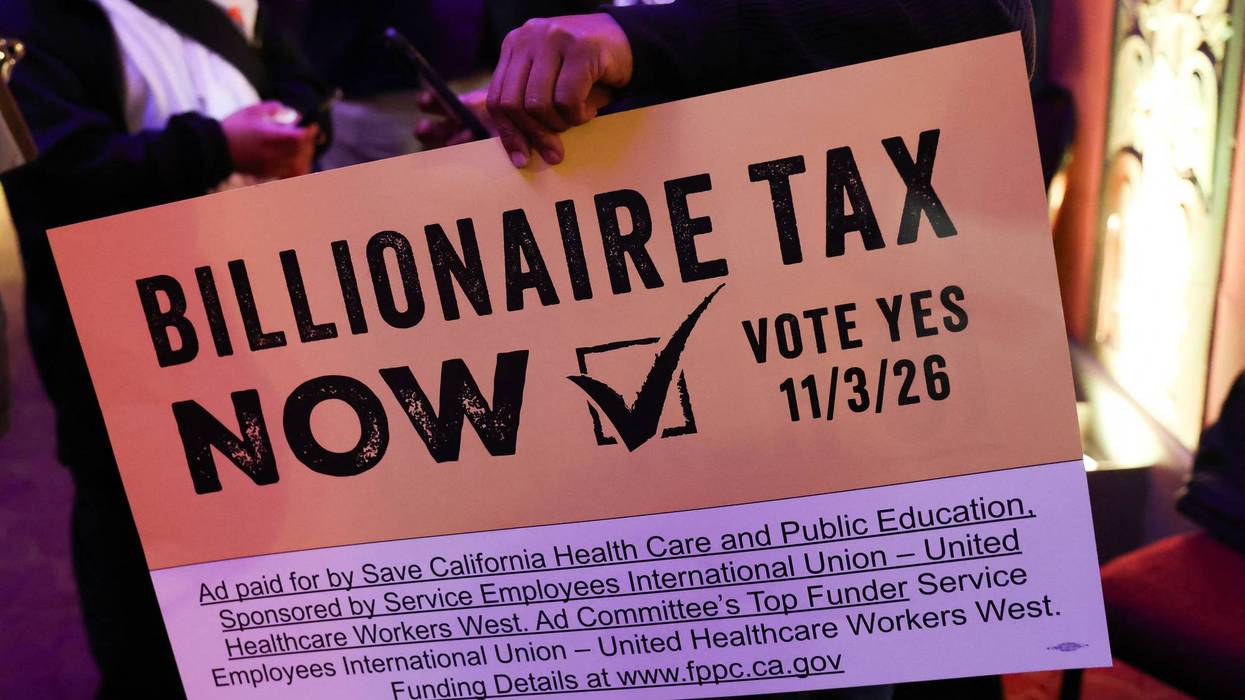
As California voters head to the polls this November, their vote on whether to enact a first-of-its-kind billionaire wealth tax may mark "a turning point in the battle between democracy and oligarchy," says a group of Nobel Prize-winning economists.
The fight over Proposition 40—a ballot measure that would impose a one-time 5% tax on the net worth of those with $1 billion or more in order to fund the state's healthcare system—has heated up in recent weeks.
The initiative remains popular, with 52% of voters in the state supporting it, according to a poll out last week. But California's elite have lined up at least $156 million behind an aggressive campaign to kill it, with Google co-founder Sergey Brin alone giving at least $102 million.
And while the proposal has strong backing from progressive politicians and labor unions, some prominent Democrats have tried to stop it, most notably Gov. Gavin Newsom.
As the rich flood the airwaves with ads warning that taxing their wealth would bring about economic ruin, six Nobel laureates, all of whom have won the prestigious prize for their work in economics, signed an open letter on Saturday endorsing Prop. 40.
They are inequality scholar Daron Acemoglu, global poverty researcher Abhijit Banerjee, labor and public finance economist Peter Diamond, anti-poverty economist Esther Duflo, trade economist and columnist Paul Krugman, and inequality and globalization economist Joseph Stiglitz.
"Proposition 40 would be the first-ever tax on billionaire wealth enacted anywhere in the world," the economists wrote. "California is the right place to take this historic step."
They explained that the growing number of billionaires in the state in recent decades has helped to make California "one of the most unequal places in America." While the state's richest 0.001% of residents were worth a combined $700 billion a decade ago, its 250 billionaires are now worth about $2.3 trillion—equivalent to the entire annual income of the state's 20 million taxpayers.
"This extreme wealth has translated into extraordinary power," the economists wrote, citing data showing that during the 2024 election, billionaires accounted for 19% of all federal election spending in the US and that these same billionaires are now marshaling huge sums of money to oppose a tax that would affect them.
While acknowledging that many of California's wealthiest have "made important contributions, for which they have been amply rewarded," the researchers noted their use of loopholes in the tax system to effectively pay a lower tax rate than the average Californian.
Most billionaire wealth is held in the form of stocks and other assets whose gains are not generally subject to income tax until they are sold.
As a result, billionaires in the state paid about $3 billion in state income taxes per year from 2019-25, while their fortunes increased by about $1.4 trillion over the period. Dividing total state income tax by that increase equals roughly 1.6%. Meanwhile, the average California family pays about 5-6% of their annual income in state income taxes.
The economists argued that enacting a wealth tax would allow the state to play "catch-up," raising about $100 billion—enough to offset federal cuts to the state's Medicaid program enacted in the Republican budget legislation last year, which have helped to fuel thousands of layoffs at hospitals around the state.
They also disputed a common counterargument that the tax will spur billionaire flight from the state and "doom" Silicon Valley.
Not only would the tax apply to any billionaire living in the state as of January 1, 2026, meaning most would not have had time to relocate; they also pointed out that in 2026, after Prop. 40 was announced, California has attracted 80% of the nation's venture capital funding, compared to just 50% prior to 2025, according to data from PitchBook's Venture Monitor.
“What will allow California to thrive in the future," the economists said, "is not letting a handful of billionaires live tax-free: It is adequate public spending on health, education, and public infrastructure, key engines of economic growth to which it is only fair to ask the ultrawealthy to contribute.”
They added that passing Prop. 40 "isn’t just critical for Californians," but could "kickstart a movement to tax ultra-high-net-worth individuals in other states—and eventually at the federal level and in other countries."
The six Nobel laureates who signed Saturday's letter are not the first prominent economists to publicly advocate for the wealth tax. University of California, Berkeley economist Emmanuel Saez helped draft the proposal, while Gabriel Zucman, a chaired professor at the Paris School of Economics, has conducted research underpinning it. Paris School professor Thomas Piketty and former US Labor Secretary Robert Reich have also come out in support of the ballot initiative.
Responding to the letter from the Nobel laureates, Dutch historian and wealth tax advocate Rutger Bregman—whose School for Moral Ambition has worked alongside Zucman to promote similar initiatives around the world—said it was "really great to see" more celebrated economists speaking up in favor of the proposal.
"You don't have to be a radical leftist to see why it's a good idea," Bregman wrote on social media. "This is not going to be some kind of socialist revolution. The proposal is about restoring balance to a mixed economy. You could even argue it's about saving capitalism itself from oligarchs like Sergey Brin. I think that's exactly why Nobel Prize-winning economists are coming out in favor of this tax."

A Left Party official said its strategy for the Berlin election was "explicitly inspired... by Zohran Mamdani's campaign."
Germany's Left Party on Sunday made history by winning the 2026 Berlin state election, putting its lead candidate, socialist Elif Eralp, in position to become mayor of the country's largest city.
In all, the Left Party won 26% of the overall vote in the election, with the center-right Christian Democratic Union capturing 19% and the far-right Alternative for Germany winning 16% of the vote.
The two other center-left parties—the Greens and the Social Democratic Party of Germany (SPD)—won 14% and 12% of the vote, respectively.
A Sunday report from Bloomberg News described the Left Party's victory in Berlin as a "Mamdani moment," in reference to democratic socialist Zohran Mamdani's upset 2025 win in the New York City mayoral race.
Like Mamdani, Eralp and her party put affordability at the center of their campaign, with a particular emphasis on the rising cost of housing in the city.
As described by Euronews in a Monday report, Eralp "called for tighter regulation of rents, more social housing, and further moves towards bringing large housing portfolios into public ownership."
The Euronews report also noted the connection to Mamdani, citing a quote from Eralp last year arguing that "if a left-wing candidate can win in New York, then there's no reason it can't happen in Berlin."
According to a Saturday report in The Washington Post, the Left Party recently sent a delegation to New York City to learn about Mamdani's campaign and even met with some of the mayor's advisers to talk political strategy.
Liza Pflaum, the head of digital communications for the Left Party and a member of the delegation, told the Post that while her party had already embraced "a clear focus on issues relevant to affordable living" two years ago, it also was "explicitly inspired... by Zohran Mamdani's campaign."
While the Left Party received the most votes in the election, it did not receive enough to form an outright majority, meaning it will need coalition partners to form a government.
The Greens and SPD have indicated they are willing to form a coalition with the Left Party, but have claimed the party has allowed antisemitism to flourish in its ranks—an allegation that conservatives have made against left-wing candidates and political leaders in the US as well.
Progressives have warned against the conflation of antisemitism and criticism of Israel.
Eralp has disputed accusations of antisemitism in her party, which have focused on comments about the Israel Defense Forces at a campaign event and the presence of "an allegedly militant activist" at an election victory party.
"I will do everything to ensure that Jewish people—just like Muslims, queer people, and everyone in our city—can feel safe," said Eralp.

"There will effectively be no TV coverage of Trump's UN visit or other presidential events," said one media reporter. "This is a very big deal."
The major US television networks launched what was described as a boycott against TV pool coverage of President Donald Trump on Monday after the White House dropped CNN from the network's scheduled pool assignment, escalating the administration's assault on the country's most prominent media organizations and press freedom.
CNN was set to act as the television pool network accompanying the president during his trip to the United Nations General Assembly this week, but the administration stripped the network of its assignment shortly after Trump banned CNN, MS NOW, and Politico from the White House, prompting a retaliatory lawsuit from the three outlets.
The major television networks typically rotate responsibility for traveling video coverage of the president. Bryan Boughton, Washington, DC bureau chief for Fox News and current chair of the TV press pool, said Monday morning that "effective today, the TV pool will not be covering events designated as pool coverage of the president."
"This follows the White House’s position preventing CNN from fulfilling its assigned pool duties," Boughton added. "There will be no replacement pool put in place."
Scott Nover, a media reporter with The Washington Post, noted that "it's effectively a boycott by the fellow members—ABC, CBS, NBC, and FOX."
"There will effectively be no TV coverage of Trump's UN visit or other presidential events, though I imagine smaller networks may take the White House's own feed," Nover wrote on social media. "This is a very big deal and one only possible because of solidarity from the whole pool."
The TV press pool developments unfolded as CNN, MS NOW, and Politico announced early Monday that they intend to sue the Trump administration for banning them from the White House. The outlets argued that the ban, which Trump announced late last week, endangers press freedom and "the public’s right to independent journalism free from government interference."
CNN, MS NOW and Politico announced the lawsuit in a joint statement, describing the legal action as an effort to "protect our First Amendment rights and defend the principle that the government does not decide what the press reports or publishes."
"Without notice or process, the White House revoked our journalists' credentials because it objected to our reporting," the news organizations said. "Left unchallenged, this threatens press freedom."
The lawsuit came after journalists from CNN, MS NOW and Politico were denied access to the White House grounds early Saturday, hours after Trump announced in a social media tirade that he was banning the outlets. Trump, without providing any examples, accused the three outlets of publishing "fiction and lies when they're covering the president of the United States"—and suggested other news outlets could also be banned in the near future.
When Politico reporter Cheyenne Haslett attempted to enter the White House on Saturday in the wake of Trump's social media post, Secret Service denied her access and confiscated her press pass. Journalists from the other two outlets reported similar experiences.
"We stand by her and all reporters here covering the White House," Jonathan Greenberger, Politico's global editor-in-chief, wrote in response to the incident involving Haslett. "We will vigorously defend our First Amendment rights."
The media outlets' lawsuit is set to be filed Monday in a federal district court in Washington, DC. The suit aims to restore the outlets' White House access and alleges that Trump's ban violates free press and due process protections.
"The president's ban of CNN, MS NOW, and Politico from the White House is a direct assault on the First Amendment and a blatant violation of due process," said Ted Boutrous, an attorney for the outlets. "The president has been explicit that this ban is intended to punish reporting he doesn’t like and to intimidate journalists and news organizations covering him and his administration. This ban on the free press harms the American people, who are entitled to rigorous, fact-based coverage of the president of the United States. The law is on our side across the board, and we look forward to presenting our arguments to the court as soon as possible."
Jameel Jaffer, executive director, Knight First Amendment Institute at Columbia University, applauded the news outlets' lawsuit and said his organization would support them in court. The Knight First Amendment Institute has previously supported The Associated Press and other news outlets in successful legal fights against the president, who has shown blatant disdain for press freedom during his two terms in office.
"We’re glad to see that these news organizations are suing," said Jaffer. "The president’s decision to bar them from the White House for the content of their reporting is a flagrant violation of the First Amendment. It’s an attack both on press freedom and the public’s right to independent information about the government."

Lina Khan, former head of the Federal Trade Commission, called ongoing settlement talks "troubling."
Paramount and a coalition of state attorneys general led by California's Rob Bonta are reportedly in advanced talks to settle a high-stakes lawsuit and allow the media conglomerate's proposed merger with Warner Bros. Discovery to proceed.
The Wall Street Journal reported late Sunday that Bonta and Paramount executives have "discussed a series of potential concessions" as part of the ongoing settlement negotiations, "including a $1.5 billion investment by the company in production in California." The talks have also explored a potential promise by Paramount to stay in California and a requirement that the company sell off some cable channels and establish "a board to ensure that CNN retains editorial independence," according to the Journal. (Warner Bros. is CNN's parent company.)
Lina Khan, the former head of the Federal Trade Commission, was among those raising concerns about details trickling out of settlement talks between state attorneys general and Paramount, which is led by David Ellison—the son of billionaire Republican megadonor Larry Ellison. In a social media post, Khan wrote that the proposed megamerger "seems facially illegal, and the state AG lawsuit challenging it is very strong."
"It’s troubling to hear that the states may now settle for behavioral remedies, allowing the deal to go through subject to various promises from the firms," Khan wrote. "Behavioral remedies routinely fail, and the stakes here are particularly high given that a strong democracy requires open markets for sound journalism and creative expression."
"The states were right to step up," she added, "and I hope they keep fighting to protect this market, its workers, and the millions of Americans who value a free press and a vibrant film industry."
Matt Stoller, an antitrust researcher and author of the BIG newsletter, was more blunt, calling the settlement talks "fucking pathetic."
"Bonta's reputation will never recover," Stoller wrote.
The coalition of 12 state attorneys general sued to block the proposed merger in July after the Trump Justice Department shut down its antitrust investigation into the Paramount-Warner Bros. merger and backed the deal. The Writers Guild of America has also sued over the proposed merger, arguing it "violates federal antitrust law and would cause specific harm to writers."
The state AGs' lawsuit warned that the merger would "extinguish competition between Paramount and Warner Bros. and inflict substantial harm on movie theatres, basic cable distributors, and, ultimately, audiences nationwide," as well as "tens of thousands of workers across the production ecosystem."
Some attorneys general in the coalition are reportedly pushing back against some of the terms sought by Bonta and others. New York Attorney General Letitia James "has been resisting the deal terms and seeking additional protections for workers," according to CNN.
"Connecticut and at least two other states also have reservations about the settlement and are not currently on board," CNN added. "The holdouts are seeking additional remedies from Paramount."
Actor Mark Ruffalo, one of the most prominent opponents of the megamerger, implored the state attorneys general to reject a settlement deal and take the lawsuit to trial.
"Don't you dare," Ruffalo wrote in a message directed at Bonta. "Do not cave."
"You work for the people," he added, "the very people who will be hurt if you let this lousy deal filled with empty promises go forward."