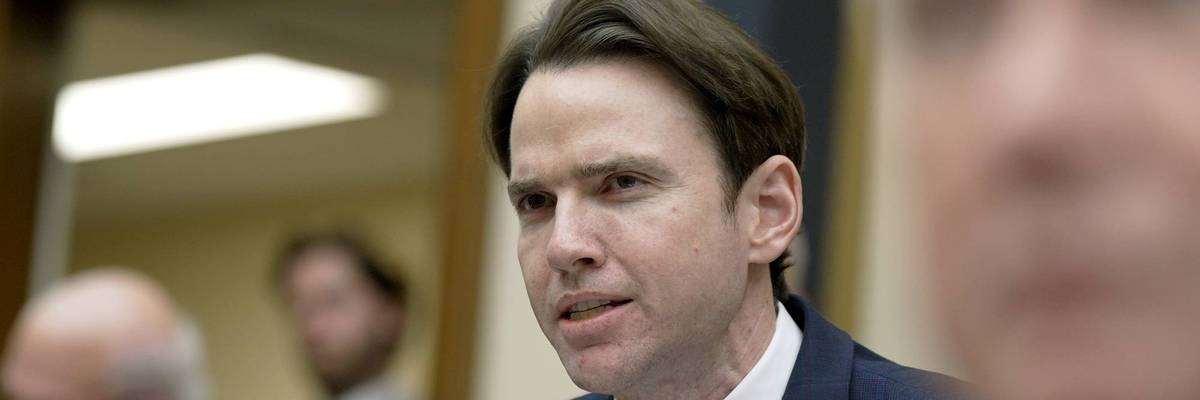
US Rep. Kevin Kiley (R-Calif.) speaks during a House Judiciary Committee hearing on January 22, 2026, in Washington, DC.
Republican Unveils Bill to Let Billionaires Escape Proposed Wealth Tax in California
California's roughly 200 billionaires have more than $2 trillion collectively. Rep. Kevin Kiley said it's "unfair" to tax 5% of it to fund healthcare coverage for 3.4 million people at risk of losing it.
As Sen. Bernie Sanders barnstorms California to champion a proposed wealth tax on billionaires, a Republican congressman has joined the tech and crypto tycoons trying to stop the proposition in its tracks.
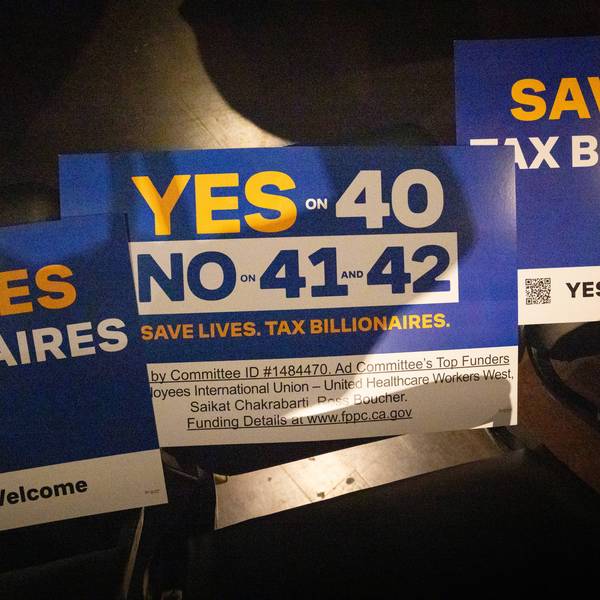
Service Employees International Union (SEIU) United Healthcare Workers West, the union that launched the effort, is currently working to gather nearly 900,000 signatures by April get the proposal on the ballot.
If they're successful, Californians will have the chance to vote this November for a one-time 5% tax on people in the state with more than $1 billion, which is projected to raise about $100 billion over the next few years to support healthcare spending gutted by President Donald Trump.
Proponents of state or local tax increases on the rich have often had to face fears that their proposals will backfire, leading CEOs to flee the state to protect their riches.
Indeed, several of the state's billionaires have signaled that they may leave the state or pull assets if they are required to pay the tax—including Meta CEO Mark Zuckerberg, Google co-founders Larry Page and Sergey Brin, Oracle CEO Larry Ellison, and PayPal co-founder Peter Thiel.
California's proposal, however, avoids this problem by requiring any billionaire who resided in the state as of January 1, 2026, to pay the one-time tax, even if they move.
Rep. Kevin Kiley (R-Calif.) on Wednesday announced plans to introduce legislation that would protect these billionaires from any plans to "confiscate" their wealth if they decide to flee.
The bill prohibits California and any other state that may try something similar from imposing a retroactive tax on individuals who no longer reside there.
“California’s proposed wealth tax is an unprecedented attempt to chase down people who have already left as a result of the state’s poor policies,” Kiley said. “As a result, many of our state’s leading job creators are leaving preemptively. No state should be allowed to reach back in time and impose a new tax on someone who no longer lives there. That is fundamentally unfair.”
Proponents of the tax argue that the unequal distribution of wealth it's meant to address is quite a bit more "unfair" than a tax hike on the state's richest would be—especially after Trump's One Big Beautiful Bill Act last year handed a historically large tax break to the wealthiest 1% of Americans, while social services for the poor were cut across the board.
"Last year alone, after receiving the largest tax break in history, the 938 billionaires in America became $1.5 trillion richer," Sanders shouted to a booing crowd at a rally in Los Angeles on Wednesday.
He emphasized that the roughly 200 billionaires in California are collectively worth more than $2 trillion and that paying just a single 5% tax on their wealth would protect healthcare for more than 3.4 million people facing coverage losses due to federal Medicaid cuts.
Billionaires in the state have marshaled huge war chests and hired seasoned campaign veterans to promote rival ballot measures aimed at undercutting the wealth tax.
One committee, backed by Brin, has already raised $35 million from industry barons around the state, according to Politico. Crypto mogul Chris Larsen has dumped $2 million into Brin's committee and spent $5 million more to create his own.
Another committee is staffed by consultants associated with Democratic California Gov. Gavin Newsom—a likely 2028 presidential frontrunner who has also come out against the tax, warning that it would cause too great a drain on California's state treasury.
In remarks on the House floor introducing his bill, Kiley claimed that "$1 trillion has exited California simply in anticipation of this policy," though in reality, many billionaires have merely claimed they were preparing to leave without actually having done so yet.
Christopher Marquis and Nick Romeo explained in TIME on Wednesday that while this "tax-and-flee story" often spreads whenever a tax hike is proposed, it is "based on biased or sloppy arguments where anecdote replaces systematic evidence, correlation poses as causation, and every modest redistributive proposal is framed as an existential threat to prosperity."
They wrote that:
Discussion should not focus on whether one billionaire makes a threat, but on what the data show across years, across the tax base, and after real policy changes. According to the data analysis firm Altrata, there were over 33,000 New Yorkers worth $30 million or more as of 2025. Quoting some famous ones on either side of the issue makes for a good headline—but bad reasoning.
We should look instead to systematic studies, like this one by the Fiscal Policy Institute, which found no significant out-migration by residents of New York State in response to tax increases in either 2017 or 2021; the latter increase is estimated to raise approximately $3.6 billion annually.
Sanders said billionaires "lie a lot," noting that some wealthy New Yorkers pledged to flee the city if Zohran Mamdani—who also pledged to hike taxes on the rich—was elected mayor, threats that have largely not materialized.
"I'm sure these guys don't want to pay a few billion dollars more in taxes. But for them, in many ways, that is pocket change," Sanders said. "What they are saying is 'If you stand up to us... If you think it's more important that children get healthcare than that we get massive tax breaks, we are going to punish you... We're going to move. We're going to shut down businesses here.'"
He added: "All that the folks in California are saying is that at a time when the very rich are becoming phenomenally richer, when the very rich have been given a massive tax break by Donald Trump, when millions of people in this state are struggling to be able to afford healthcare, maybe billionaires should start paying their fair share of taxes."
We are at a crossroads
This country and this world are at a monumental crossroads. In a few short weeks, US voters will have an opportunity to beat back the forces of fascism and confront the billionaires who are rigging the economy, our media system, and our democracy, making it increasingly impossible for ordinary people to get by. We’re not just talking about the election. We’re talking about what must be done once these fascist elements are vanquished from power. We need a bolder set of solutions than what either major party has so far been willing to offer and a working-class movement ready to fight like hell for it. Trump didn't emerge from nowhere. The conditions that fueled MAGA authoritarianism were created by decades of radical neoliberal economic policies and a corrupt political system dominated by corporate interests. They slashed taxes on the super-rich, promising that the benefits would trickle down. They said giveaways to the corporate titans would make life more affordable for the rest of us. It was all bullshit. And when a bitter, betrayed populace searches for someone to blame, right-wing demagogues have little trouble finding scapegoats. People know when they're being lied to, but you won't hear any of this from the corporate media. Only independent journalism—powered and funded by people who believe in building a better world—can deliver truly trustworthy daily news. Our Fall Campaign is underway, and we need your help. To power our newsroom through the rest of the year, we need to raise $125,000 by midnight on October 31. So if you share our vision, please contribute whatever you can to sustain our work. |
As Sen. Bernie Sanders barnstorms California to champion a proposed wealth tax on billionaires, a Republican congressman has joined the tech and crypto tycoons trying to stop the proposition in its tracks.
Service Employees International Union (SEIU) United Healthcare Workers West, the union that launched the effort, is currently working to gather nearly 900,000 signatures by April get the proposal on the ballot.
If they're successful, Californians will have the chance to vote this November for a one-time 5% tax on people in the state with more than $1 billion, which is projected to raise about $100 billion over the next few years to support healthcare spending gutted by President Donald Trump.
Proponents of state or local tax increases on the rich have often had to face fears that their proposals will backfire, leading CEOs to flee the state to protect their riches.
Indeed, several of the state's billionaires have signaled that they may leave the state or pull assets if they are required to pay the tax—including Meta CEO Mark Zuckerberg, Google co-founders Larry Page and Sergey Brin, Oracle CEO Larry Ellison, and PayPal co-founder Peter Thiel.
California's proposal, however, avoids this problem by requiring any billionaire who resided in the state as of January 1, 2026, to pay the one-time tax, even if they move.
Rep. Kevin Kiley (R-Calif.) on Wednesday announced plans to introduce legislation that would protect these billionaires from any plans to "confiscate" their wealth if they decide to flee.
The bill prohibits California and any other state that may try something similar from imposing a retroactive tax on individuals who no longer reside there.
“California’s proposed wealth tax is an unprecedented attempt to chase down people who have already left as a result of the state’s poor policies,” Kiley said. “As a result, many of our state’s leading job creators are leaving preemptively. No state should be allowed to reach back in time and impose a new tax on someone who no longer lives there. That is fundamentally unfair.”
Proponents of the tax argue that the unequal distribution of wealth it's meant to address is quite a bit more "unfair" than a tax hike on the state's richest would be—especially after Trump's One Big Beautiful Bill Act last year handed a historically large tax break to the wealthiest 1% of Americans, while social services for the poor were cut across the board.
"Last year alone, after receiving the largest tax break in history, the 938 billionaires in America became $1.5 trillion richer," Sanders shouted to a booing crowd at a rally in Los Angeles on Wednesday.
He emphasized that the roughly 200 billionaires in California are collectively worth more than $2 trillion and that paying just a single 5% tax on their wealth would protect healthcare for more than 3.4 million people facing coverage losses due to federal Medicaid cuts.
Billionaires in the state have marshaled huge war chests and hired seasoned campaign veterans to promote rival ballot measures aimed at undercutting the wealth tax.
One committee, backed by Brin, has already raised $35 million from industry barons around the state, according to Politico. Crypto mogul Chris Larsen has dumped $2 million into Brin's committee and spent $5 million more to create his own.
Another committee is staffed by consultants associated with Democratic California Gov. Gavin Newsom—a likely 2028 presidential frontrunner who has also come out against the tax, warning that it would cause too great a drain on California's state treasury.
In remarks on the House floor introducing his bill, Kiley claimed that "$1 trillion has exited California simply in anticipation of this policy," though in reality, many billionaires have merely claimed they were preparing to leave without actually having done so yet.
Christopher Marquis and Nick Romeo explained in TIME on Wednesday that while this "tax-and-flee story" often spreads whenever a tax hike is proposed, it is "based on biased or sloppy arguments where anecdote replaces systematic evidence, correlation poses as causation, and every modest redistributive proposal is framed as an existential threat to prosperity."
They wrote that:
Discussion should not focus on whether one billionaire makes a threat, but on what the data show across years, across the tax base, and after real policy changes. According to the data analysis firm Altrata, there were over 33,000 New Yorkers worth $30 million or more as of 2025. Quoting some famous ones on either side of the issue makes for a good headline—but bad reasoning.
We should look instead to systematic studies, like this one by the Fiscal Policy Institute, which found no significant out-migration by residents of New York State in response to tax increases in either 2017 or 2021; the latter increase is estimated to raise approximately $3.6 billion annually.
Sanders said billionaires "lie a lot," noting that some wealthy New Yorkers pledged to flee the city if Zohran Mamdani—who also pledged to hike taxes on the rich—was elected mayor, threats that have largely not materialized.
"I'm sure these guys don't want to pay a few billion dollars more in taxes. But for them, in many ways, that is pocket change," Sanders said. "What they are saying is 'If you stand up to us... If you think it's more important that children get healthcare than that we get massive tax breaks, we are going to punish you... We're going to move. We're going to shut down businesses here.'"
He added: "All that the folks in California are saying is that at a time when the very rich are becoming phenomenally richer, when the very rich have been given a massive tax break by Donald Trump, when millions of people in this state are struggling to be able to afford healthcare, maybe billionaires should start paying their fair share of taxes."
As Sen. Bernie Sanders barnstorms California to champion a proposed wealth tax on billionaires, a Republican congressman has joined the tech and crypto tycoons trying to stop the proposition in its tracks.
Service Employees International Union (SEIU) United Healthcare Workers West, the union that launched the effort, is currently working to gather nearly 900,000 signatures by April get the proposal on the ballot.
If they're successful, Californians will have the chance to vote this November for a one-time 5% tax on people in the state with more than $1 billion, which is projected to raise about $100 billion over the next few years to support healthcare spending gutted by President Donald Trump.
Proponents of state or local tax increases on the rich have often had to face fears that their proposals will backfire, leading CEOs to flee the state to protect their riches.
Indeed, several of the state's billionaires have signaled that they may leave the state or pull assets if they are required to pay the tax—including Meta CEO Mark Zuckerberg, Google co-founders Larry Page and Sergey Brin, Oracle CEO Larry Ellison, and PayPal co-founder Peter Thiel.
California's proposal, however, avoids this problem by requiring any billionaire who resided in the state as of January 1, 2026, to pay the one-time tax, even if they move.
Rep. Kevin Kiley (R-Calif.) on Wednesday announced plans to introduce legislation that would protect these billionaires from any plans to "confiscate" their wealth if they decide to flee.
The bill prohibits California and any other state that may try something similar from imposing a retroactive tax on individuals who no longer reside there.
“California’s proposed wealth tax is an unprecedented attempt to chase down people who have already left as a result of the state’s poor policies,” Kiley said. “As a result, many of our state’s leading job creators are leaving preemptively. No state should be allowed to reach back in time and impose a new tax on someone who no longer lives there. That is fundamentally unfair.”
Proponents of the tax argue that the unequal distribution of wealth it's meant to address is quite a bit more "unfair" than a tax hike on the state's richest would be—especially after Trump's One Big Beautiful Bill Act last year handed a historically large tax break to the wealthiest 1% of Americans, while social services for the poor were cut across the board.
"Last year alone, after receiving the largest tax break in history, the 938 billionaires in America became $1.5 trillion richer," Sanders shouted to a booing crowd at a rally in Los Angeles on Wednesday.
He emphasized that the roughly 200 billionaires in California are collectively worth more than $2 trillion and that paying just a single 5% tax on their wealth would protect healthcare for more than 3.4 million people facing coverage losses due to federal Medicaid cuts.
Billionaires in the state have marshaled huge war chests and hired seasoned campaign veterans to promote rival ballot measures aimed at undercutting the wealth tax.
One committee, backed by Brin, has already raised $35 million from industry barons around the state, according to Politico. Crypto mogul Chris Larsen has dumped $2 million into Brin's committee and spent $5 million more to create his own.
Another committee is staffed by consultants associated with Democratic California Gov. Gavin Newsom—a likely 2028 presidential frontrunner who has also come out against the tax, warning that it would cause too great a drain on California's state treasury.
In remarks on the House floor introducing his bill, Kiley claimed that "$1 trillion has exited California simply in anticipation of this policy," though in reality, many billionaires have merely claimed they were preparing to leave without actually having done so yet.
Christopher Marquis and Nick Romeo explained in TIME on Wednesday that while this "tax-and-flee story" often spreads whenever a tax hike is proposed, it is "based on biased or sloppy arguments where anecdote replaces systematic evidence, correlation poses as causation, and every modest redistributive proposal is framed as an existential threat to prosperity."
They wrote that:
Discussion should not focus on whether one billionaire makes a threat, but on what the data show across years, across the tax base, and after real policy changes. According to the data analysis firm Altrata, there were over 33,000 New Yorkers worth $30 million or more as of 2025. Quoting some famous ones on either side of the issue makes for a good headline—but bad reasoning.
We should look instead to systematic studies, like this one by the Fiscal Policy Institute, which found no significant out-migration by residents of New York State in response to tax increases in either 2017 or 2021; the latter increase is estimated to raise approximately $3.6 billion annually.
Sanders said billionaires "lie a lot," noting that some wealthy New Yorkers pledged to flee the city if Zohran Mamdani—who also pledged to hike taxes on the rich—was elected mayor, threats that have largely not materialized.
"I'm sure these guys don't want to pay a few billion dollars more in taxes. But for them, in many ways, that is pocket change," Sanders said. "What they are saying is 'If you stand up to us... If you think it's more important that children get healthcare than that we get massive tax breaks, we are going to punish you... We're going to move. We're going to shut down businesses here.'"
He added: "All that the folks in California are saying is that at a time when the very rich are becoming phenomenally richer, when the very rich have been given a massive tax break by Donald Trump, when millions of people in this state are struggling to be able to afford healthcare, maybe billionaires should start paying their fair share of taxes."