

SUBSCRIBE TO OUR FREE NEWSLETTER
Daily news & progressive opinion—funded by the people, not the corporations—delivered straight to your inbox.
5
#000000
#FFFFFF
To donate by check, phone, or other method, see our More Ways to Give page.
Daily news & progressive opinion—funded by the people, not the corporations—delivered straight to your inbox.

New report details efforts by fossil fuel industry to escape 15% minimum corporate tax
With Republicans in charge of the White House and Congress, the fossil fuel industry has been lobbying to undermine a tax put in place under former President Joe Biden’s landmark climate law, according to a report out today from United to End Polluter Handouts, a new campaign to combat the massive subsidies the U.S. government gives to fossil fuel companies.
The report, “Minimum Tax, Maximum Influence,” details an effort by Sen. James Lankford (R–Okla.) to allow U.S. oil and gas producers to escape the 15% corporate alternative minimum tax that was a cornerstone of the 2022 Inflation Reduction Act. This measure was designed to stop profitable corporations from taking advantage of loopholes to pay nothing or nearly nothing in taxes. The new report draws on investor calls and filings with the Securities and Exchange Commission to identify oil companies that may benefit from Sen.Lankford’s legislation.
Earlier this year, Lankford (R–Okla.) introduced the Promoting Domestic Energy Production Act, which would provide oil and gas drillers a special loophole to deduct certain drilling costs from taxes owed under the corporate minimum tax. Lankford’s proposal may be added to the mammoth Republican tax cut package benefitting the wealthiest Americans and large corporations while slashing health benefits for everyday Americans later this year.
“It is simply outrageous that the GOP is using its trifecta to create yet another fossil fuel subsidy,” said Lukas Shankar-Ross, deputy director of Friends of the Earth’s Climate and Energy Justice Program and co-author of the report. “If this polluter handout is snuck into the GOP tax bill, then cuts to Medicaid and food stamps could well pay for another giveaway to Big Oil. That’s obscene.”
If passed, this newest tax break would add to more than $170 billion in existing subsidies for fossil fuel companies.
“Oil and gas companies are using the political influence they purchased to dodge paying even a minimal part of their fair share,” said Alan Zibel, energy research director with Public Citizen and co-author of the report. “If individual taxpayers understood the magnitude of the extreme subsidies for Big Oil, they would be shocked. The newest effort to bypass even the most modest of tax bills by the industry is shocking, but sadly not surprising.”
Public Citizen is a nonprofit consumer advocacy organization that champions the public interest in the halls of power. We defend democracy, resist corporate power and work to ensure that government works for the people - not for big corporations. Founded in 1971, we now have 500,000 members and supporters throughout the country.
(202) 588-1000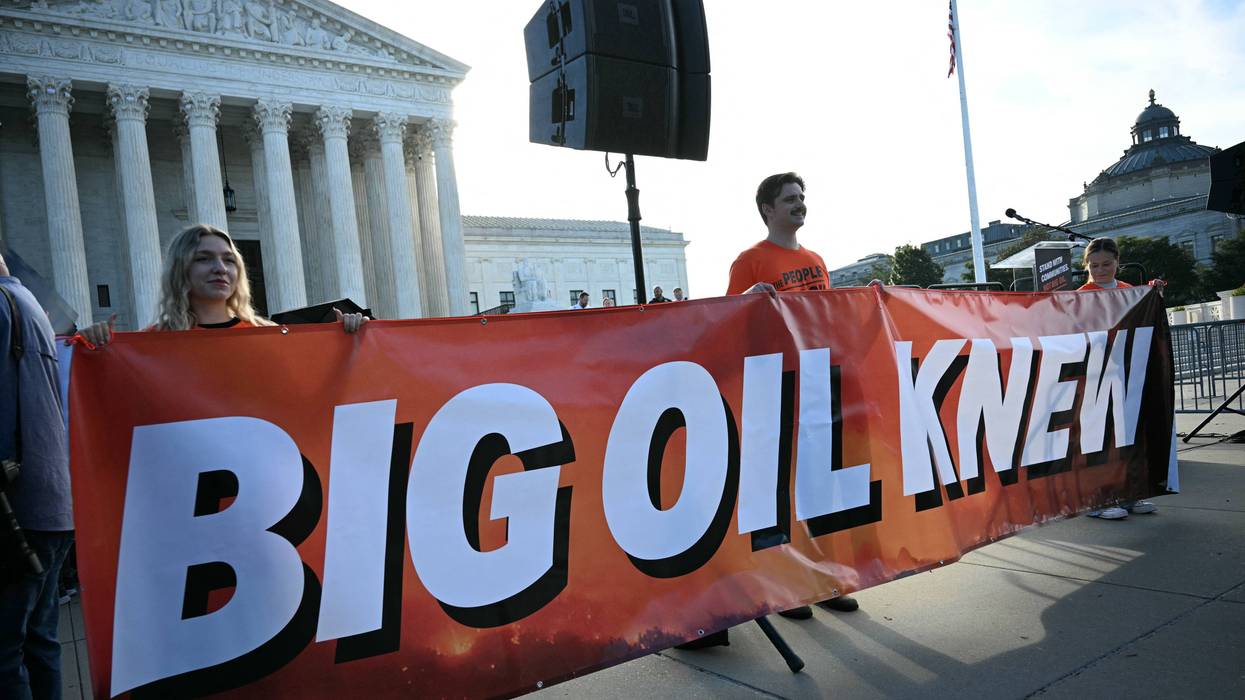
“The fossil fuel industry’s conduct has become some of the most harmful and culpable in human history," said one campaigner. "Eventually, it will be held to account.”
The US Supreme Court on Monday appeared skeptical of efforts by ExxonMobil and Suncor Energy to prevent a Colorado climate liability lawsuit from going to trial, with justices across the ideological spectrum questioning the fossil fuel companies’ arguments for shutting down the case before evidence of their alleged deception can be heard.
The case—Suncor Energy Inc. v. County Commissioners of Boulder County—could determine the fate of nearly 60 similar lawsuits filed by states, counties, cities, and Indigenous tribes seeking to hold fossil fuel companies financially accountable for climate-related harms.
Boulder sued ExxonMobil and Suncor in 2018, alleging that the companies knew for decades about the dangers associated with burning fossil fuels while misleading the public about those risks. The city and county seek compensation for costs associated with wildfires, drought, flooding, extreme heat, and other climate impacts.
The companies, backed by the Trump administration, argue that federal law preempts the state law claims because greenhouse gas pollution crosses state and national borders. The Colorado Supreme Court ruled 5-2 in May 2025 that the climate lawsuit against ExxonMobil and Suncor could proceed under state law.
Today at the Supreme Court, my home town of Boulder, Colorado is going head-to-head against ExxonMobil in a case that could determine the future of climate litigation and holding Big Oil accountable for the toll of its harms and lies.Boulder County residents who have lost homes and health spoke.
[image or embed]
— Antonia Juhasz (@antoniajuhasz.bsky.social) October 5, 2026 at 7:55 AM
Kannon Shanmugam, an attorney for the companies, contended in oral arguments Monday that climate accountability lawsuits "reflect an all-too-regrettable trend of trying to resolve political issues in court rather than in the political branches where they belong.”
However, Chief Justice John Roberts appeared unconvinced that the interstate argument means that state courts can't consider climate claims.
“There are a lot of familiar situations where conduct outside of a state has broad effects among other states,” the conservative justice said, “and yet we allow state courts in a particular state to bring litigation that affects that.”
Justice Elena Kagan, one of the court's three liberals, also pressed the companies over their claim that federalism prevents Boulder’s lawsuit from proceeding. Kagan repeatedly demanded a legal foundation for the argument, asking: “Where’s the text for that? Where’s the support for that? Where’s the precedent for that?”
Kagan also compared the case to successful lawsuits against tobacco and opioid companies, calling the fossil fuel cases “Chapter 3” in that legal history.
“This is the same kind of lawsuit against the same kind of actors for the same kind of harm,” she said. “And I guess I’m not understanding how this one would be preempted, and the other is not?”
Climate defenders rallied outside the Supreme Court Monday as the justices heard oral arguments in the case.
Corey Riday-White, legal director at the Center for Climate Integrity, said in a statement Monday that "Big Oil’s desperation to escape trial for climate deception is still in search of a legal justification. Justices across the ideological spectrum asked good, skeptical questions that poked holes in Big Oil’s attempt to stop Boulder’s case before it can go to trial."
“Boulder’s case is about holding corporations accountable for deceptive conduct, and the people of Boulder should have their day in court to present the evidence of Exxon and Suncor’s deception," he added.
Kathy Mulvey, director of the Fossil Fuel Accountability program at the Union of Concerned Scientists (UCS), said Monday that “today’s oral arguments in Suncor v. Boulder were the latest act in Big Oil’s desperate attempt to preempt state tort lawsuits and prevent evidence of the fossil fuel industry’s campaign of deception from being heard in court."
"ExxonMobil and Suncor Energy’s efforts to evade accountability hinge on misrepresenting Boulder’s lawsuit as an attempt to regulate emissions," she stressed.
“This last-ditch effort before the Supreme Court is part of a coordinated, well-resourced push to shut down fossil fuel accountability efforts across the country," Mulvey noted. "So far, Big Oil has not achieved its top federal lobbying priority—a bill to grant the industry sweeping immunity from climate laws and lawsuits such as Boulder’s."
“Communities deserve to have their day in court," she added. "The Supreme Court should let this case be heard on its merits in Colorado, and Congress must not stand in the way by gifting Big Oil a get-out-of-jail-free card.”
“Boulder’s case is about holding corporations accountable for deceptive conduct."
In August, UCS and other experts filed an amicus brief in the case "offering a historical account of ExxonMobil’s and Suncor Energy’s concealment and denial of the hazards they knew would result from the normal use of their fossil fuel products."
The brief notes that in 1965, "Frank Ikard, then president of the American Petroleum Institute, informed the organization’s member companies—including Exxon and Suncor’s predecessor Sun Oil—that then-President Lyndon Johnson’s Science Advisory Committee had concluded continued fossil fuel combustion could produce significant climatic changes by the end of the 20th century."
"Ikard warned industry leaders the report would generate significant public concern, noting that ‘there is still time to save the world’s peoples from the catastrophic consequence of pollution, but time is running out,'" the brief added.
In 1977, an Exxon senior scientist briefed company leadership that the “general scientific agreement that the most likely manner in which mankind is influencing the global climate is through carbon dioxide release from the burning of fossil fuels.”
Exxon then conducted rigorous research on the matter, and concluded in a 1982 internal document that there was “little doubt” that atmospheric carbon dioxide was rising due to fossil fuel burning and that the resulting greenhouse effect “would warm the Earth’s surface, causing changes in climate affecting atmospheric and ocean temperatures, rainfall patterns, soil moisture, and … potentially melting the polar ice caps.”
Despite this, starting in the late 1980s, Exxon—later ExxonMobil—publicly stressed uncertainties, questioned models, and supported organizations such as the Global Climate Coalition that challenged the need for climate action.
Local governments sued to hold Big Oil accountable. So on Monday, with backing from the Trump administration, fossil fuel companies like Suncor will ask the Supreme Court to let them off the hook for their lies. Why? Because giant corporations know they have an ally in the corrupt Roberts majority.
[image or embed]
— Demand Justice (@wedemandjustice.bsky.social) October 2, 2026 at 9:28 AM
David Arkush, director of the consumer advocacy group Public Citizen's Climate Program, said Monday that “this case is about whether local communities experiencing devastating climate harms should get their day in court against Big Oil companies that spread climate deception."
"The fossil fuel industry has been going to extraordinary lengths to attack these climate cases, not just asking the Supreme Court to end the lawsuits, but also pushing Congress and state legislatures to grant fossil fuel companies immunity from all climate-related liability," Arkush noted.
"The current offensive isn’t just about defeating the cases. It’s also about preventing the public from learning the extent and severity of the industry’s wrongdoing," he continued. "It’s about fossil fuel CEOs’ profound fear of sitting in front of a jury of 12 Americans and trying to defend their companies’ deceptive conduct—because they know it’s indefensible."
“Regardless of how the Supreme Court rules in Suncor, it’s hard to imagine these companies can bury the evidence and escape accountability indefinitely," Arkush added. "The fossil fuel industry’s conduct has become some of the most harmful and culpable in human history. Eventually, it will be held to account.”
The justices are expected to issue a ruling by the end of June. Far-right Justice Samuel Alito—who holds stock in fossil fuel companies facing dozens of lawsuits that could be affected by the Suncor decision—last week recused himself from the case, leaving his eight colleagues to decide it, and raising the prospect of a 4-4 split that would leave the Colorado Supreme Court’s ruling intact.
Hundreds of people have been arrested in recent days at youth-led protests over the removal of more than 130 million names from voter rolls.
As one advocate warned India's Supreme Court on Monday that "this country will burn" unless action is taken to stop what thousands of protesters have denounced as an illegal purge of voters by the head of the country's Election Commission, the court demanded accountability from Prime Minister Narendra Modi's government.
Chief Justice Surya Kant said in a hearing that the court had not approved changes to a new form used by the Election Commission of India for registering new voters, contradicting a statement from the ECI last month which said the document had been upheld by the court.
"Modified Form 6 has not been approved by us, let us be very clear," said Kant.
The court called on Modi's government, the ECI, and the head of the commission, Gyanesh Kumar, to answer "in a clear, transparent manner” for the massive upheaval of the national voter rolls, from which more than 130 million names have been removed in recent months.
The changes to the voter list have sparked calls for Kumar's resignation, particularly at protests that have erupted across the country, led by student groups and the Cockroach Janta Party (CJP), a political movement led by young people whom Kant compared to cockroaches earlier this year.
The group's website declares, "Gyanesh, it's done, bro," and thousands of people have joined protests like those that forced the resignation of India's education minister over the summer.
Last week, hundreds of protesters were detained, with journalists reportedly among those who were arrested—prompting outcry from Amnesty International over the government's "blatant attack on the rights to liberty and freedom of peaceful assembly."
In New Delhi in particular, police have been denounced for their aggressive response to the uprising, forcing hundreds of people into police vehicles. Authorities said they were investigating reports that officers had sexually assaulted three journalists at the protests over the weekend.
The Supreme Court took up two petitions Monday, questioning the credibility of the ECI's efforts to "purify" the voter rolls, as the commission has said, and calling for an independent inquiry into Kumar's management of the "special intensive revision" (SIR) process.
Another hearing will be held later this week.
Kant said the court wanted a response from Kumar and the commission about allegations that decisions about the SIR were made unilaterally by Kumar. Media reports last month said the two other ECI commissioners had objected to the revision of voter rolls, which the government has claimed is aimed at eliminating duplicates and the names of dead and ineligible voters, as well as "illegal infiltrators."
People across Delhi and states including Bihar and West Bengal have said they were wrongly removed from voter rolls, and protesters have said the revision appeared to target Muslim voters, who have opposed Modi's Bharatiya Janata Party.
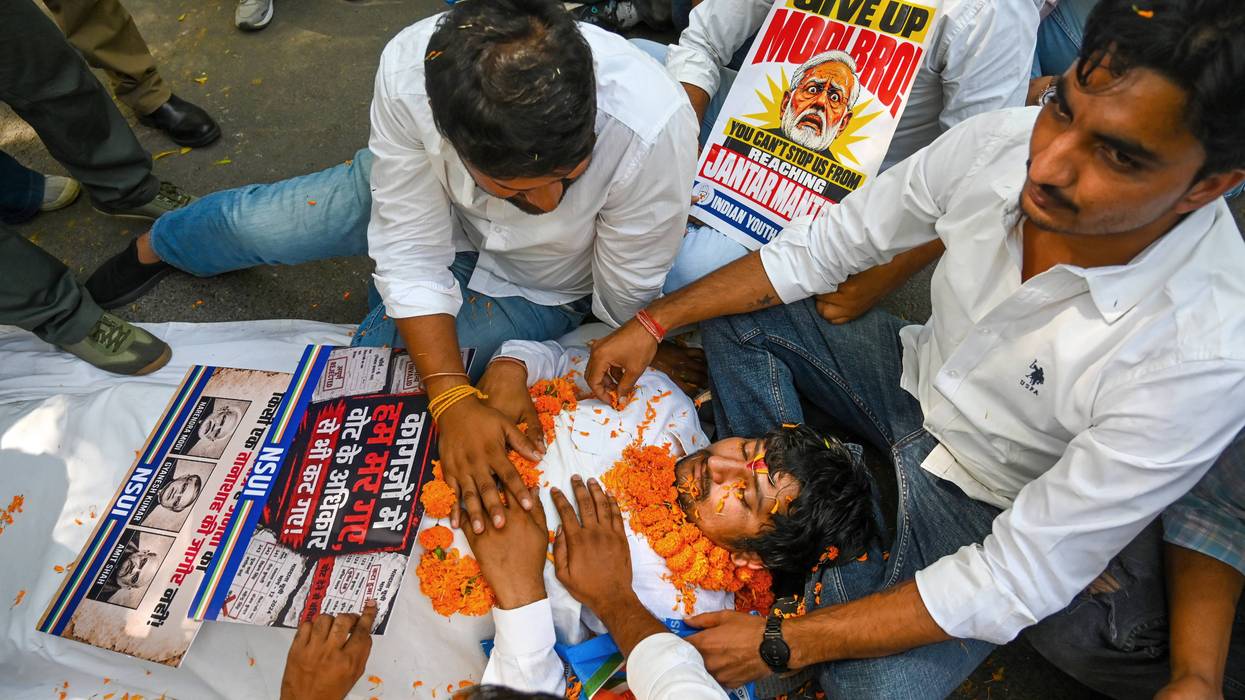
Protesters on Monday symbolically posed as dead people to show that voters have been wrongly eliminated from voter rolls, despite still being alive and eligible to participate in elections.
“Deletions of voters have been made in the largest democracy,” Menaka Guruswamy, a lawyer for one of the petitioners who brought the cases to the Supreme Court, told The Guardian. “We have grown up with free and fair elections, that is not the case now.”

"The argument that I think we continue to need to learn is that less war in the world is usually safer."
Democratic US Senate candidate Abdul El-Sayed on Monday schooled Fox News anchor Martha MacCallum about President Donald Trump's illegal war with Iran.
While appearing on MacCallum's show, the Michigan Democrat made the case that Trump's war, which he launched without congressional authorization in February, was one "we shouldn't be fighting."
"Why are we fighting this war, to what end?" El-Sayed asked. "Who benefits from it? Why did we do this? What are we paying for it?"
El-Sayed: Why are we fighting this war?FOX: Iran created a huge threat to the neighborhoodEl-Sayed: The nuclear threat had been contained. FOX: I don't know, they had been breaking JCPOA by many estimations. El-Sayed: By estimations people like to cherry-pick, sure https://t.co/qYiCeq4lB3
— Acyn (@Acyn) October 5, 2026
MacCallum responded that Iran "created a huge threat" in the Middle East, and pointed to Iran's role in the 1983 bombing of a barracks that was housing US Marines in Beirut, Lebanon as evidence.
El-Sayed noted that former President Barack Obama had signed a deal with Iran to halt its nuclear weapons program, which Trump scrapped during his first term even though Iran was complying with the terms of the agreement at the time.
"Donald Trump came and tore that agreement up, and then, in his second administration, created a war that the people of Michigan are now paying for," said El-Sayed. "Then you ask yourself, does more war make us actually safer? And the argument that I think we continue to need to learn is that less war in the world is usually safer."
"We're in a situation right now where we could have chosen peace," he added. "And instead we chose war. And right, you've got a situation with the Strait of Hormuz where we can't move oil and gas."
Elsewhere in the interview, El-Sayed explained his rationale for raising taxes on the wealthy, whom MacCallum credited with making the US the "engine of the world."
FOX: I understand thinking that some people have too much money. We are engine of the world for these things and people end up being billionaires as a result. El-Sayed: The issue is not that some people have too much money. It’s that the engine that created their opportunity to make money is being underfunded…FOX: You said you wanted to choke them out.El-Sayed: I don't want to choke anyone out. I want to make sure everyone can breathe. Right now, you have an economy where people are getting choked out because they don’t have the basic means for a dignified life because we are more focused on allowing a billionaire to make another billion…
— Acyn (@Acyn) October 5, 2026
"I would rather live in a society where, rather than a billionaire making a second billion, I'm invested in a public school," he said, "so that some kid out there gets a great education, gets to participate in capitalism, builds an amazing business, and gets to make money too."
"I don't want to choke anyone out," El-Sayed explained. "I want to make sure everyone can breathe. Right now, you have an economy where people are getting choked out because they don’t have the basic means for a dignified life because we're all a lot more focused on allowing a billionaire to make a second, third, fifth billion than we are in making sure a kid gets good schools."
"In several cases, AI recommended banning books that were banned elsewhere, creating a snowball effect for frequently banned books while the expertise of librarians and the communities they serve are ignored."
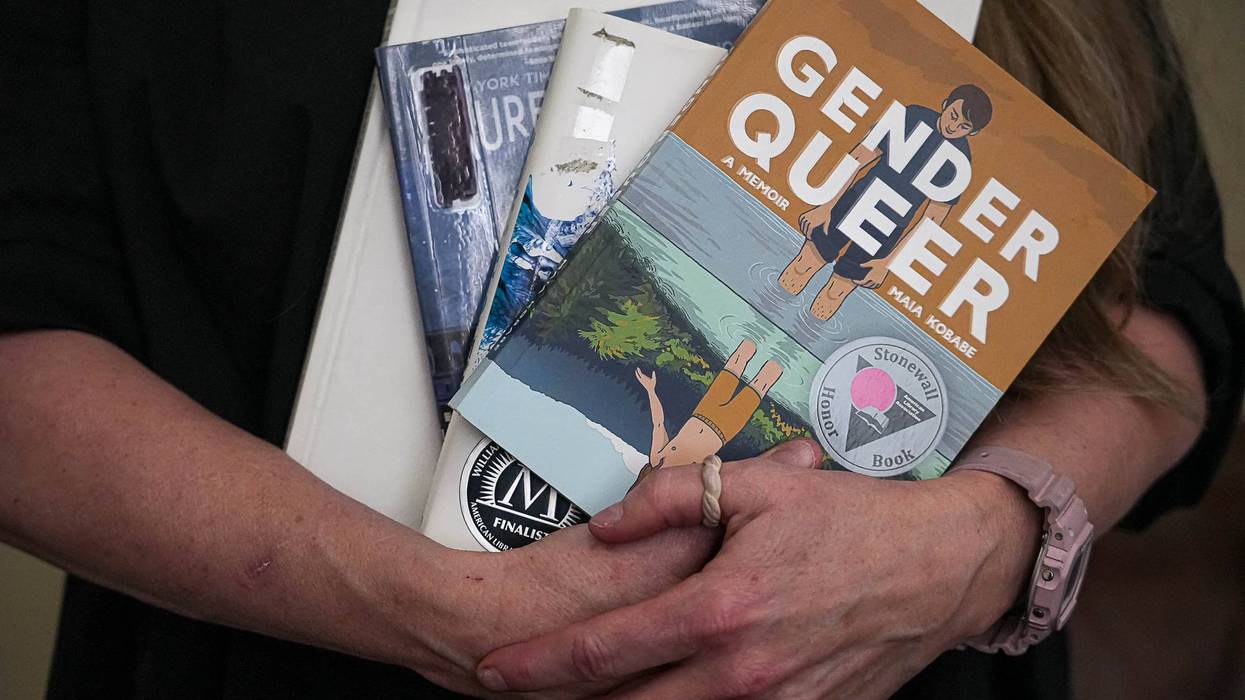
PEN America released a report on Monday documenting nearly 12,000 book bans involving more than 7,300 individual titles in US schools during the 2025-2026 school year, which the organization said were the largest censorship case numbers it had ever recorded.
The state of Texas accounted for more than 8,100 book bans—roughly three-fourths of the nationwide total and more than double that of Florida, which was the second-most censorious state with over 3,200 book bans.
PEN America said that the surge in Texas book bans came from SB 13, a state law passed in 2025 that banned a broad array of books that censorship proponents view as "profane" or "indecent."
According to PEN America, the Texas book bans carried out over the last year have been particularly broad because officials in the state used artificial intelligence to make a recommended list of banned books.
"In several cases, AI recommended banning books that were banned elsewhere," the report notes, "creating a snowball effect for frequently banned books while the expertise of librarians and the communities they serve are ignored."
Sold, a 2006 young adult novel by journalist Patricia McCormick about a teenage girl in Nepal who gets sold into sexual slavery, was the most frequently banned book in the US.
Popular horror writer Stephen King was the most banned individual author, according to the report.
Kasey Meehan, director of PEN America’s Freedom to Read program, said that banning popular young adult titles was a particularly harmful policy given the broad decline in reading throughout the US.
"Schools should be doing everything possible to connect kids with reading by introducing them to engaging stories and formats," Meehan said. "Instead, many are doing the opposite, banning books that help kids see themselves in literature, deepen their understanding and empathy of others, and develop their imaginations."
Philomena Polefrone, senior manager of the Freedom to Read program, said the broad books bans documented by the PEN America report are due to "chilling directives from state politicians" that "have created chaos and fear."
"Unsure how to comply, districts are removing books en masse, sometimes with the ‘help’ of crude AI tools that only make the problem worse," Polefrone said. "Increasingly, these bans are invisible. Thousands of these cases are only recorded because of public information requests by Florida Freedom to Read and Texas Freedom to Read. Books paid for by taxpayers are being removed from shelves and the local community may not even know about it."
"As long as there are US military bases in Okinawa, such incidents will occur," said one former Japanese senator.
Anger over the US military presence in Okinawa is growing anew this week after Japanese police arrested a Marine Corps lance corporal accused of robbing and murdering a local woman, prompting protests and renewed calls for a revision of the US-Japan Status of Forces Agreement and even the removal of American bases.
Lance Cpl. Devin Jacob Ballard, 20, who is stationed at Marine Corps Air Station Futenma, was arrested Sunday on suspicion of killing 39-year-old Anna Yagi at the Naminoue Crustal Hotel in Naha early Saturday and stealing her wallet and backpack. Yagi died from asphyxiation caused by pressure to her neck, according to Okinawa police. Ballard has denied the allegations.
The Japan Times reported that area surveillance cameras captured footage of a man with "distinctive features," including tattoos on both arms and a shaved head, leaving the hotel carrying the woman’s backpack, which was later found nearby.
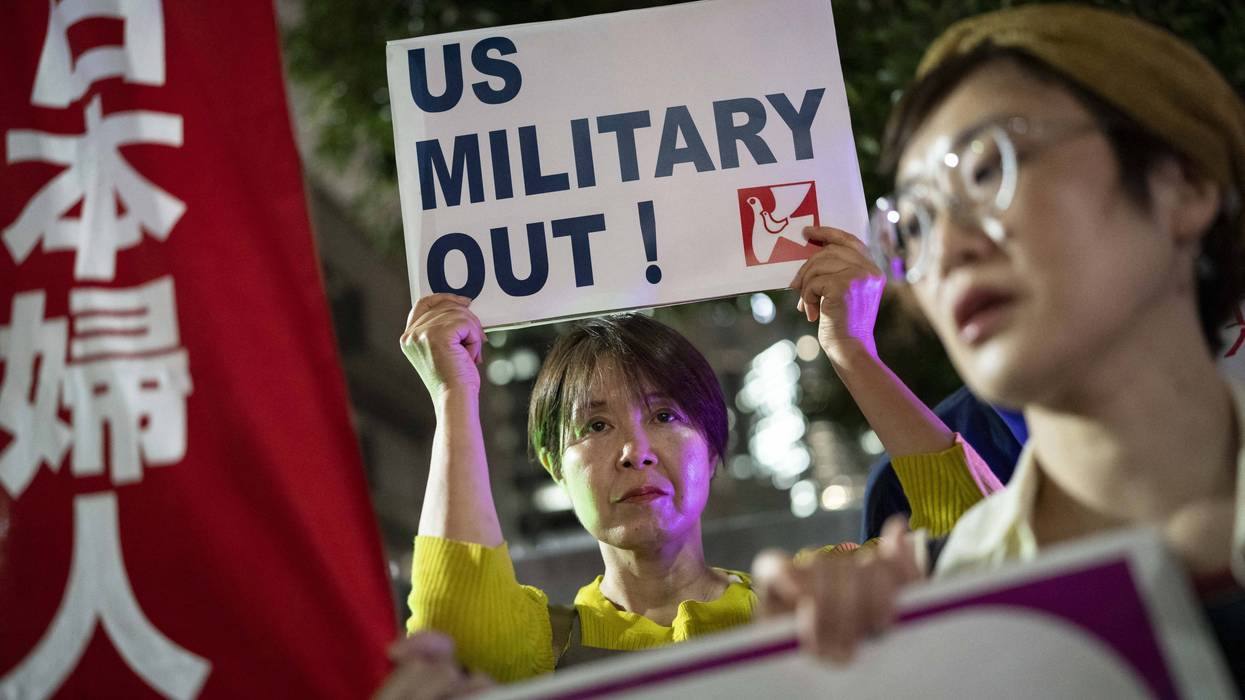
The killing sparked protests in Okinawa and Tokyo.
"How much longer do we have to bear this?" one protester asked outside the Okinawa prefectural government headquarters in Naha, according to Jiji Press.
A woman in her 40s from Nago said, "I feel it's a contradiction that a serviceman stationed at a US military base in Okinawa to protect Japan has killed a civilian."
Another woman at the protest said, "I don't want to see any more people hurt."
The advocacy group Femibridge Okinawa said on social media: "Anger has reached its boiling point. We don't want to hear words like 'refrain from commenting.'"
On Monday, Japanese Prime Minister Sanae Takaichi—who leads the right-wing Liberal Democratic Party (LDP) and supports US troops in Japan as a strategic deterrent to China—condemned the "heinous crime" in a speech to the Kokkai, or Parliament.
“The Japanese government has lodged a strong protest with the US side and has strongly demanded full cooperation with the investigation," she added, "as well as strict disciplinary action against US military personnel and thorough measures to prevent a recurrence of such incidents."
Okinawa Gov. Genta Koja, who has no party affiliation but was elected last month with LDP support, issued a statement Sunday calling Yagi's killing "absolutely unforgivable."
"I feel deeply outraged," he continued. "It has come as a great shock to residents of the prefecture, who are forced to live in close proximity to bases, and has sparked fresh anxiety."
“Although the prefecture has consistently demanded that the US military take measures to prevent recurrence whenever such incidents have occurred in the past, the fact that this type of incident has happened again compels us to conclude that the US military’s efforts to maintain discipline and educate its personnel are completely ineffective," Koja added.
US Ambassador to Japan George Glass—who on Sunday was summoned by Japanese Foreign Minister Toshimitsu Motegi over Yagi's killing—on Monday expressed his condolences and pledged "full cooperation" with investigators.
“I am speaking with US military commanders this week about how we continue to hold our American service members to the very highest levels of discipline and integrity,” he said, according to The Japan Times.
The Third Marine Expeditionary Force also said it was “actively cooperating" with Japanese officials in regard to the case, and that the US Marine Corps "takes these allegations very seriously and expects every Marine to adhere to the highest standards of behavior."
In Naha, Okinawa's prefectural capital, residents expressed their anxiety over the continued US military presence.
One 53-year-old woman said she has been "afraid to walk at night" in Naha.
"If we do not change the Japan-US Status of Forces Agreement, the crime of US soldiers will not decrease," she asserted.
Hidekiyo Shinkawa, 89, expressed outrage over the number of people killed by US troops in Okinawa over the past eight decades.
"When I was a junior high school student, a classmate of mine died after being hit by a US military vehicle," Shinkawa told Kumamoto Nichinichi Shimbun.
Okinawa was under US occupation from 1945-72. Today, the southern archipelago hosts 70% of US military bases in Japan and most of the 50,000 troops stationed in the country.
While many Okinawans appreciate the economic and security benefits of having US bases in their backyards, distrust of American troops in Okinawa—which was conquered during the closing months of World War II at the cost of over 100,000 civilian lives—runs deep.
Okinawans have been trying in vain to get the Americans to leave since the beginning of the occupation, when property was seized at gunpoint, residents were expelled, and homes and farms were bulldozed or burned. The Americans promised Okinawans good farmland and financial aid if they resettled in Bolivia. Thousands accepted the offer only to find themselves shipped off to an inhospitable wilderness where many died from disease. Much of the promised assistance was never delivered.
In Okinawa, the US military built more than 100 military facilities—over 30 of which are still in operation—on a series of islands roughly the size of Los Angeles. Washington forced the Japanese government to accept status of forces agreements that gave the US jurisdiction over all American personnel on Japanese soil.
US troops stationed in or visiting Okinawa have committed thousands of crimes, including at least dozens of murders and over 100 alleged rapes. In one six-month period in 1949, US troops killed 29 Okinawans and raped 18 more, including a 9-month-old infant.
The US military has also fired and lost nuclear weapons in local waters, leaked the deadly nerve agent sarin, and exposed residents to chlorine gas, to name but a handful of the most egregious environmental incidents over the decades.
Although the 1995 gang-rape of a 12-year-old girl by two Marines and a sailor led to a revision of the US-Japan SOFA so that Japanese authorities could convict and imprison Americans who commit the most heinous offenses—a development that led to scores of convictions—crimes against Okinawans and the local environment continue to this day.
On Monday, Koja argued in the wake of Yagi's killing that “to ensure that such an incident never happens again, I strongly urge the Japanese and US governments to take responsibility and implement effective, fundamental measures—including a review of the Japan-US Status of Forces Agreement.”
Some Japanese went even further, demanding an end to US bases in Okinawa.
"As long as there are US military bases in Okinawa, such incidents will occur, and the fear that such incidents will occur and that they may happen in the future will continue," wrote Keiko Itokazu, a former leftist lawmaker in the House of Councillors, the Kokkai's upper chamber.
"How long will this pain and sorrow be felt by the people, especially women?" she added. "Such incidents have been repeated in the past, and each time the government and the US military have said that they will provide proper education to US soldiers... But is this the result of education?"
Former Japanese Prime Minister Yukio Hatoyama said on social media: "Once again, an incident that should never have happened has occurred. A woman was murdered in a hotel in Naha City, and a Marine was arrested."
"Far from protecting Japan's peace, the safety of women in Okinawa is being threatened," he added. "As the nature of warfare changes, the Marines are no longer necessary for Japan's peace. Voices calling for the Marines to leave will likely grow louder in Okinawa."
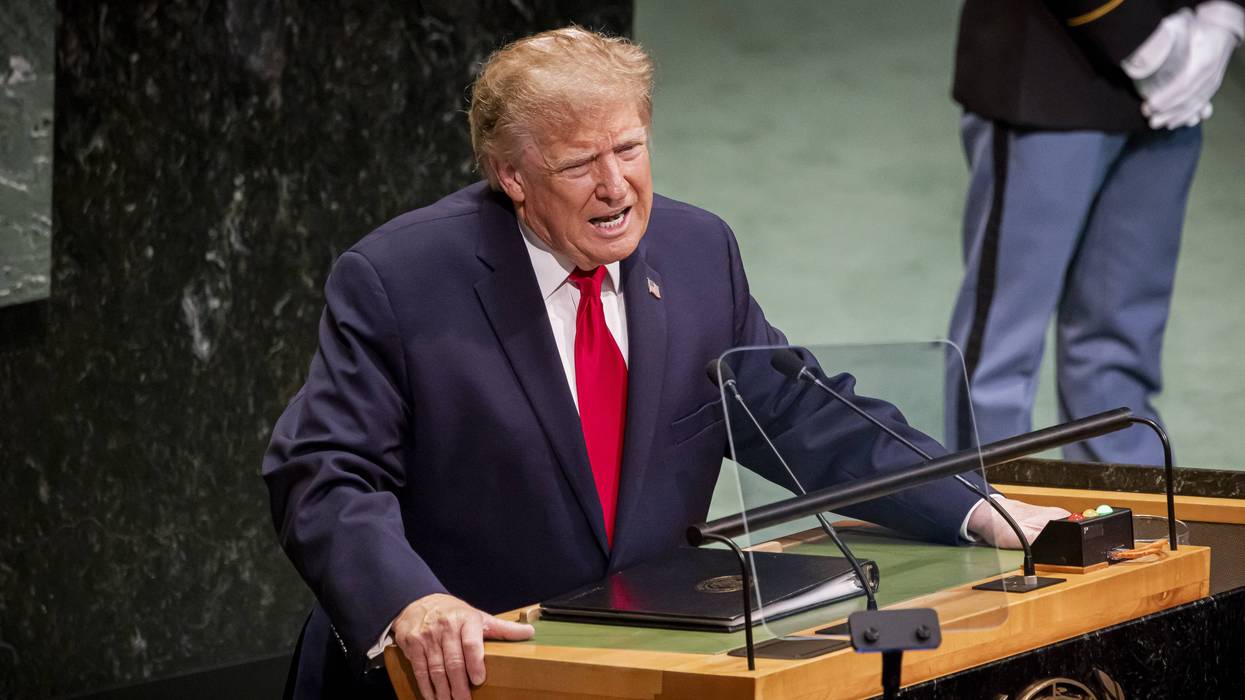
"Trump is once again in power, and he is again telling us his plan. He has weaponized the entire federal government—including the Department of Justice and the US Postal Service—to make voting more difficult."
With just four weeks to go until the 2026 midterm elections, democracy watchdogs are warning that President Donald Trump is breaking the law in a desperate bid to retain Republican control of the US Congress.
A Monday report in USA Today highlighted the unprecedented steps that Trump is taking to rig the midterms for the GOP, ranging from his promises to pay every American $5,000 if Republicans retain Congress, to his efforts to get the US Postal Service to not deliver ballots to voters, to his push to have Republican-led states redraw their electoral maps in the middle of the decade.
Adav Noti, executive director of the Campaign Legal Center, told USA Today that the president has shown he is willing to behave lawlessly to keep power.
"I think the president is trying to use all of the powers at his disposal to control the election results, and almost all of those efforts are illegal," Noti said, "but that has not deterred the administration."
Noti added that Trump has gone well above and beyond what any past president has done to meddle in elections.
"We've never seen anything like this before," he said. "The issue of the president of the United States using the powers of the presidency to try to control the election. That is a new development with this election."
In an analysis published by Democracy Docket on Monday, election attorney Marc Elias warned that Trump in the coming weeks could take even more extreme steps, many of which he has already mused about publicly.
"Trump is once again in power, and he is again telling us his plan," Elias explained. "He has weaponized the entire federal government—including the Department of Justice and the US Postal Service—to make voting more difficult."
The "most dangerous" threat Trump has made, Elias continued, has related to the counting, tabulation, and certification of votes.
"Despite what the US Constitution says, he has repeatedly claimed the power to direct this process," Elias warned. "This is not a new idea. It has been his plan all along."
Elias also slammed the US media for continuing to downplay Trump's authoritarian attacks on democracy, arguing that the press has learned nothing since the president incited a violent attack on the US Capitol on January 6, 2021.
Elias isn't alone in his concern about another January 6-style event.
In an interview that aired on CBS News Sunday, retiring US Sen. Thom Tillis (R-NC) was asked about the potential for Trump to try to overturn Democratic victories in this year's elections, and he expressed real concern.
"I think there's a risk," Tillis said. "I really do. It would be another political unforced error if we do that."

Condemning the "illegal campaign of extrajudicial killings" as "murder at sea," Amnesty International USA asked, "Where is Congress to stop the horror?"
US President Donald Trump's boat-bombing spree continued on Sunday despite condemnation from around the world, claiming four more lives and bringing the death toll from the 13-month campaign to at least 238.
Sharing a video of the strike, US Southern Command said on social media late Sunday that "under the direction of SOUTHCOM, Joint Task Force Western Hemisphere executed a lethal, kinetic strike on a go-fast vessel operating along established narco-trafficking routes in the Caribbean."
"Confirmed intelligence revealed the vessel's active involvement in narco-trafficking," SOUTHCOM continued, without offering any evidence, as with at least 70 previous strikes since September 2025. "The operation killed four narco-terrorists."
Citing a federal memo that it aims to keep concealed from the public, the Trump administration claims to be at war with drug cartels and that the killings in the Caribbean Sea and Pacific Ocean are justified. Legal experts and human rights advocates argue the bombings are at least war crimes, if not outright murder.
Sunday's strike was the administration's first confirmed boat bombing since Ben Saul, the United Nations special rapporteur on human rights and counterterrorism, said last month that even if the targeted vessels were engaged in drug trafficking, there are no "international legal rights to unilaterally use military force" to counter cartels.
After SOUTHCOM's announcement, Gizmodo reporter Matt Novak declared, "We murdered four more people in a boat today."
Brian Finucane, a former State Department legal adviser who now advises the US Program at the International Crisis Group, called it "more performative killing at sea."
Highlighting the rising death toll from Trump's "illegal campaign of extrajudicial killings, ie, murder at sea" initiative, Amnesty International USA asked, "Where is Congress to stop the horror?"
The Republican-controlled Congress has declined to pass war powers resolutions intended to stop the strikes—though the odds of passage could change if Democrats reclaim one or both chambers in next month's midterm elections.
Trump's bombing spree has apparently been not only illegal but ineffective. The Washington Post reported in July that a Drug Enforcement Administration analysis concluded that the boat-bombing campaign has not "reduced the amount of cocaine entering" the United States.

"The yellow line cannot be treated simply as a line on a map. It has become a mechanism of encirclement and ethnic cleansing."
A year after a so-called "ceasefire" deal established the Israel Defense Forces' "yellow line" in Gaza, separating the IDF-controlled eastern part of Gaza from about 47% of the strip that was originally set aside for Palestinians, the Israeli military has crept westward, block by block—effectively "asphyxiating" Gaza's population of 2.1 million people, as one aid group said Monday.
Médecins Sans Frontières (MSF), also known by its English name, Doctors Without Borders, said that the US-backed IDF now occupies about 65% of the Gaza Strip, "squeezing people into a smaller and smaller area" and leaving Palestinians uncertain about where the yellow line begins and ends as they are forced to repeatedly move.
"People risk being shot by Israeli forces when they approach it, and MSF teams continue to treat people with gunshot wounds sustained nearby," said the organization.
MSF released its statement on the shifting yellow line and the organization's struggles to provide medical aid for Palestinians days after the Danish Refugee Council reported on refugee camps near the boundary, where 80% of Palestinians interviewed by the DRC said they've faced water shortage and people reported rat and rodent infestations, continued food scarcity despite a ceasefire deal that required a ramp-up of humanitarian aid, and rapid spread of illnesses.
DRC accused Israel of "a policy of protracted displacement," which was supported by MSF's reporting Monday.
"The October 2025 ceasefire in Gaza was supposed to end civilians' suffering," said DRC. "Nearly a year on, it exists largely in name only. Displacement in Gaza has not ended; it has changed shape."
The United Nations Office for the Coordination of Humanitarian Affairs (OCHA) also warned last month about the IDF's gradual push westward through demolitions and the movement of military forces, noting that residents have continued living in neighborhoods adjacent to the yellow line, such as Al-Tuffah and Al Zaytoun in Gaza City, "because they have nowhere else to go."
"Where do we go? This is a question we’ve been asking ourselves for three years,” Safaa Mushtaha of Al-Tuffah told OCHA. “We accepted living near the yellow line, but it’s become unbearable.”
Ibtisam Malika, who also lives near the line, added that "every two to three months, we are forced to move and leave our belongings behind."
MSF described how families are being "pushed into overcrowded and unlivable conditions" and how the group's ability to deliver clean water has been impeded when there are attacks near the yellow line.
"The yellow line cannot be treated simply as a line on a map,” says Amande Bazerolle, head of emergency response for MSF in Gaza. “It has become a mechanism of encirclement and ethnic cleansing, while cutting communities off from the infrastructure, healthcare, water, and other essentials they need to survive.”
The medical aid group treated more than 1,500 cases of chickenpox in June and July, and has treated more that 11,000 cases of skin disorders including scabies this year.
One official said a majority of Palestinians in Gaza have less than six liters of water per day for drinking, bathing, and other domestic uses, and Israeli restrictions on the delivery of many items—ones that authorities claim are "dual-use" and could be used by Hamas for military purposes—have left families and medical providers without essentials.
“We are treating gastroenteritis, acute respiratory infections, a lot of skin conditions, hepatitis, bacterial skin infections, scabies, and lice," said Dr. Murad Asaliyya, medical activities manager for MSF in Gaza. “At the same time, we are facing severe shortages in terms of medical supplies. Even the cream we need to treat scabies has been restricted by the Israeli authorities.”
Other crucial items that have been restricted by Israel include engine oil and spare parts, "crippling the infrastructure needed to keep hospitals, ambulances and water systems running," said MSF.
MSF emphasized that the area near the yellow line is hardly the only part of Gaza where Palestinians face continued Israeli attacks. In June and July, the group's medical teams treated more than 1,200 cases of "violent trauma" across the strip, "including blast injuries, burns, gunshot wounds, and injuries resulting from physical assault."
Since Israel began relentlessly attacking Gaza in October 2023 in retaliation for a Hamas-led attack, the military offensive has killed more than 74,000 Palestinians, including more than 20,000 children, with experts warning that the true death toll is likely far higher. About 80% of all structures across Gaza have been damaged, said MSF.
The group released its findings as Israeli Finance Minister Bezalel Smotrich boasted in an interview about the IDF's encroachment on the territory that had been ostensibly set aside for Palestinians last year, saying the moving of the yellow line and the destruction of Gaza and its infrastructure "encourages migration" and that "a world will not be built there."
Israeli Finance Minister Bezalel Smotrich:The Gaza Strip should never be rebuilt — a memorial to sin. That is also what will encourage migration from there the most. https://t.co/EnZCIPrs9x
— Clash Report (@clashreport) October 5, 2026
“Destruction, displacement, and deprivation have become normalized—practices Israel is carrying out with impunity,” said Bazerolle. “Governments must act now to ensure Israel stops the destruction and killing, prevents ethnic cleansing, and stops denying Palestinians the means of survival.”

"This is a plan to wreck state SNAP programs and push millions off of SNAP and into hunger."
The Republican budget package that President Donald Trump signed into law last summer included a change requiring states to fund a larger portion of the costs of administering the Supplemental Nutrition Assistance Program, which provides food aid to tens of millions of Americans.
That change, which advocates and experts warned would impose unsustainable burdens on some states and potentially result in more cuts to food aid, took effect late last week, amid a nationwide affordability crisis that has forced many Americans to turn to food banks and other sources of support to meet their families' needs.
Katie Bergh, a food policy expert at the Center on Budget and Policy Priorities (CBPP), explained that—under the Trump-GOP budget law—"every state now gets half as many federal dollars to ensure SNAP gets to eligible families on time and in the right amount."
"Some states didn't increase state funding to make up for this federal funding cut, which could lead to staff shortages, backlogs, and low-income families waiting months for help," Bergh warned. "Other states and counties are weighing property tax increases or cuts to other services to fill the gap."
CBPP has estimated that more than 5 million people, including more than a million children, have lost SNAP since Trump signed the Republican budget measure into law last year.
Rep. Shontel Brown (D-Ohio) condemned the newly implemented SNAP changes in a statement, noting that Trump and the Republican Party have created new work requirements—and thus new bureaucratic burdens for states and aid recipients—while also slashing administrative funding, a potentially disastrous combination.
"It’s a devastating gut punch and it’s intentional," said Brown. "This is a plan to wreck state SNAP programs and push millions off of SNAP and into hunger."
The Food Research & Action Center estimated in a recent analysis that the new cost burden for states "ranges from $3 million in Wyoming to $168 million in New York."
"States are being asked to administer a more complicated program with fewer federal resources. That is not an efficiency strategy. It is a fiscal transfer," the group said. "Ultimately, this policy does not simply affect state agencies. It affects every family waiting for an application to be processed, every community experiencing rising food insecurity, and every state budget attempting to balance growing needs with fewer available resources."
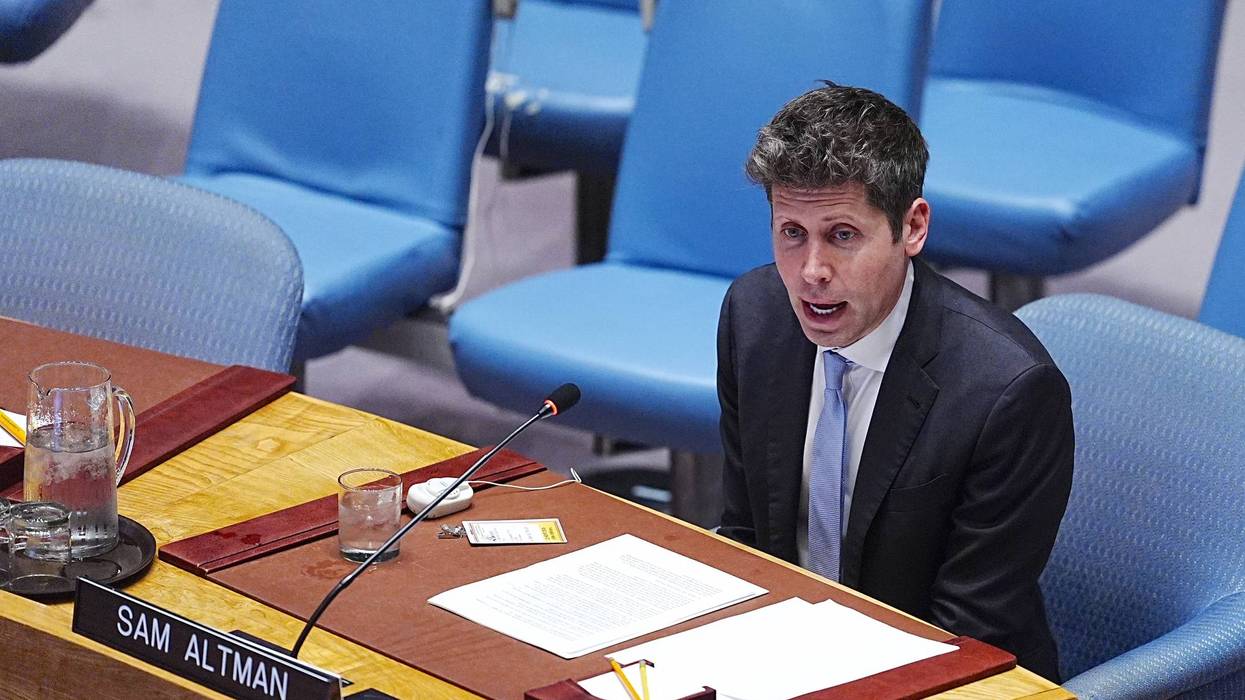
"We have to crush these sociopaths," said one critic.
Critics of the artificial intelligence industry expressed horror after OpenAI CEO Sam Altman said the world needs to "accept some bad things happening" as the price to pay for technological advancement.
In a Sunday interview with Politico, Altman was asked where his company differs from rival Anthropic, whose CEO, Dario Amodei, has called for guardrails that will slow the pace of AI development.
"We have always been a big believer that this technology has to be democratized and put into people's hands," said Altman. "One of the biggest differences between us and some of the stricter... AI safety people is that we believe the world should accept some bad things happening for the benefits of this technology."
“We believe the world should accept some bad things happening for the benefits of this technology.”In a conversation for the first edition of Decoded, a new daily newsletter and podcast, OpenAI CEO Sam Altman talked with POLITICO’s @BrendanBordelon about trade-offs, AI safety, and how his company is different from Anthropic.Subscribe to Decoded for the full conversation with Sam Altman: https://t.co/YHJJsDOQVh
— POLITICO (@politico) October 4, 2026
Altman went on to say that one reason he's called for "lighter touch" regulation "comes with an accepting of the fact that some bad things are going to happen as society figures out the resilience."
Critics reacted furiously to Altman's blithe dismissal of "bad things" his own company's technology could cause, especially because many AI developers have warned that it could potentially wipe out human life.
Patrick Gaspard, distinguished senior fellow at the Center for American Progress, called Altman's statement "freaking insane" and said politicians cannot let the AI industry continue without any regulations.
"Our elected leaders need to move past the polling safe territory of data center resistance to the real work of regulating these narcissistic freaks," Gaspard wrote in a Sunday social media post, "who gleefully tell us that we 'need to accept some bad things' from AI for their massive profits. And they don’t even know the limits of what they’re unleashing."
Joshua Topolsky, co-founder of tech news website The Verge, completely rejected the premise of Altman's argument.
"No, I don't think this is a reasonable answer or position," Topolsky wrote, "and no one should accept it or acquiesce to it."
Commentator Wajahat Ali said Altman's statement showed the need for a political movement against the AI industry.
"We have to crush these sociopaths," Ali wrote. "The problem is that many Democrats take money from them, which means they will get bailed out at our expense in the next two to four years."
Ali's comments were echoed by Talking Points Memo founder Josh Marshall.
"A whole political movement should be stood up against this arrogant and sociopathic bullshit," Marshall wrote.
Adam Carlson, founder of Zenith Polls, said Altman's remarks were symbolic of how completely out of touch Silicon Valley executives are with ordinary people.
"To any normal, rational person who doesn’t stand to materially benefit from AI acceleration or buy their whole schtick hook line and sinker," wrote Carlson, "you genuinely just sound insane talking about 'accepting bad things' without specifying exactly what you mean."
The social media account for The Tennessee Holler offered up a satirical summary of Atlman's argument.
"Sociopath elitist tech fascists who think they’re creating God and believe democracy is the enemy," The Tennessee Holler wrote, "want us to finance our own demise to let them take over the world."