SUBSCRIBE TO OUR FREE NEWSLETTER
Daily news & progressive opinion—funded by the people, not the corporations—delivered straight to your inbox.
5
#000000
#FFFFFF
To donate by check, phone, or other method, see our More Ways to Give page.


Daily news & progressive opinion—funded by the people, not the corporations—delivered straight to your inbox.

Keane Bhatt (Sanders) Keane_Bhatt@sanders.senate.gov
Rachel Cohen (Warner) 202-306-3278
Heather Fluit (Jones) press@jones.senate.gov
Maria McElwain (Blumenthal) 202-224-6452
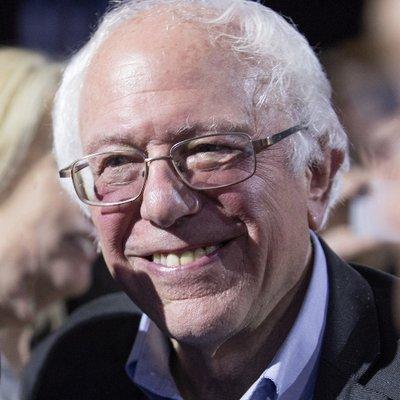
Senators Bernie Sanders (I-Vt.), Mark R. Warner (D-Va.), Doug Jones (D-Ala.) and Richard Blumenthal (D-Conn.) today introduced the Paycheck Security Act to cover the wages and benefits of employees of affected businesses and non-profits until the economic and public health crisis is resolved.
Applauded by Senate Minority Leader Chuck Schumer (D-N.Y.) and Senate Finance Committee Ranking Member Sen. Ron Wyden (D-Ore.) upon its introduction, the Paycheck Security Act would act to avert mass layoffs, stem catastrophic unemployment levels, and prevent irreversible business losses, prevent millions from losing their health insurance, and provide resources for firms to rehire laid-off and furloughed workers and restore their health care benefits.
"This unprecedented crisis demands an unprecedented legislative response," said Sen. Sanders. "We cannot continue to allow tens of millions of Americans to lose their jobs, income, and health insurance during this horrific pandemic. In order to avoid another Great Depression, Congress must act boldly and aggressively to ensure that every American worker receives their paycheck and health insurance until this crisis is over. The Paycheck Security Act we are introducing today will provide the urgent financial assistance that working families and small businesses desperately need to pay their bills and make ends meet."
"Without aggressive action to help workers keep their jobs and businesses stay open, we risk an economic disaster that could take decades to repair," said Sen. Warner. "Right now nearly 39 million Americans are out of work due to the coronavirus. This is hitting working class folks particularly hard, with 40 percent of all workers making under $40,000 out of work right now. We need to be thinking big and helping people who have lost their jobs. Our proposal will create a national paycheck security program for American workers and help businesses keep their lights on during the darkest days of this crisis. Paycheck security means the federal government would help cover the payroll expenses for rank-and-file workers who have been furloughed or laid off because of the coronavirus, so that families can avert financial calamity and workers can stay connected to employers and health benefits while we get through this crisis."
"As Americans continue to struggle through the health and economic crisis we're facing, Congress needs to continue to provide relief to workers and small businesses - the lifeblood of our economy. The Paycheck Security Act would direct economic relief to American workers who are suffering by helping employers maintain their payroll," Sen. Jones said. "Our legislation is exactly the type of big, bold approach that we need to take, given the scale of this crisis. If we can provide the resources that businesses need to tide them over until it is safe to re-open, we can keep more folks safe and help keep workers on the payroll and receiving vital benefits like health insurance. I urge my colleagues on both sides of the aisle to include this in the next relief package, so that we can continue to help the people in Alabama and throughout our country who need it most."
"Instead of allowing businesses to go into free fall and trying to pick up the pieces later, we're proposing a guardrail at the edge of the precipice. Our plan gives workers the steady comfort of a consistent paycheck from an employer they can go back to when the crisis abates. And we're offering business the ability to hold onto those workers, so they can start up again as easily as possible. If we fail to take aggressive relief measures now, we'll kneecap our future recovery," said Sen. Blumenthal.
"I am supportive of this strong proposal which builds upon the Paycheck Protection Program and Employee Retention Tax Credit," said Senate Democratic Leader Chuck Schumer (D-N.Y.).
"Our country is facing a once-in-a-lifetime economic crisis with nearly 1 in 5 Americans unemployed. The response must meet the moment. In addition to significantly expanding payroll support, we must support small businesses that are being crushed and need cash to cover bills and replace inventory when they reopen. Without additional help many small businesses will not survive this crisis and it will take far longer to climb out of this economic ditch. This legislation would keep more employees on payroll and deliver critical help to the smallest, most vulnerable businesses," said Finance Committee Ranking Member Sen. Ron Wyden (D-OR).
Since the COVID-19 pandemic began, nearly 39 million workers have filed for unemployment. More than 20 million people lost their jobs in the month of April alone, the most in a single month on record. An estimated 27 million people have already lost their employer-provided health insurance coverage, and millions more could lose coverage before this crisis is over. The unemployment rate is likely close to 20 percent, and could exceed the depths of the Great Depression in the coming months.
The pandemic has also devastated small businesses and sole proprietors. A recent study found that more than 100,000 small businesses have already closed permanently as a result of the health and economic crisis. Another recent survey showed that 52 percent of small businesses expect to go out of business within the next six months. Allowing millions of small and independent businesses to fail will have a devastating impact on the economy and will make the road to recovery longer and harder.
Other countries have avoided the massive job losses seen in the United States primarily because their governments have adopted programs to keep workers on payroll and attached to their employers until this crisis is over. In addition to preventing mass layoffs, the Paycheck Security Act provides small and mid-sized businesses with the funds they need to pay for rent, mortgages, utilities and other operating costs until they can reopen safely and sales begin to recover.
Read a comprehensive bill summary here.
Bill text can be found here.
"You thought it was bad when Iran throttled the Strait of Hormuz?... The Houthis have already proven they can keep the Red Sea closed despite a year of US Navy skirmishing," said one journalist.
The Houthis on Saturday took credit for launching a ballistic missile at Israel, opening a new front in the war US President Donald Trump illegally started with Iran nearly one month ago.
As reported by Axios, the attack by the Houthis signals that the Yemen-based militia is joining the conflict to aide Iran, which has been under aerial assault from the US and Israel for the past four weeks.
Although the Houthi missile was intercepted by Israeli defenses, it is likely just the opening salvo in an expanding conflict throughout the Middle East.
Axios noted that while the Houthis entered the war by launching an attack on Israel, they could inflict the most damage on the US and its allies in the region by shutting down the strait of Bab al-Mandeb in the Red Sea.
"Doing that," Axios explained, "would dramatically increase the global economic crisis that has been created due to the war with Iran" and its closure of the Strait of Hormuz, which has sent global energy prices skyrocketing.
Sky News international correspondent John Sparks reported on Saturday that the Houthis' entrance into the war shows that "this crisis is expanding, it is escalating."
'This crisis is expanding and escalating.'
Houthi rebels in Yemen have confirmed they launched a missile at Israel, marking the Iran-backed group's first involvement in the war.
@sparkomat reports live from Jerusalem
https://t.co/Leuc4SnGfG
📺 Sky 501 and YouTube pic.twitter.com/TmlyFHkCZN
— Sky News (@SkyNews) March 28, 2026
Sparks argued that the Houthis' decision to fire a missile at Israel signals that "the geographical spread of this conflict is expanding," adding that "the Houthis have shown the ability to attack shipping in the Red Sea and the waters around the Arabian Peninsula."
Sparks said that even though Trump and Secretary of State Marco Rubio "have been projecting confidence" about having the war under control, "it's not playing out that way... on the ground."
Danny Citrinowicz, senior researcher at the Institute for National Security Studies, argued that the Houthis' main value to Iran isn't launching strikes on Israel, but their ability to increase economic pressure on the US.
Citrinowicz also outlined ways the Houthis could further drive up the global price of energy.
"This raises a key question: whether the Houthis will escalate further by targeting Saudi infrastructure and shipping lanes more directly, or whether they will preserve this capability as an additional lever of pressure as the conflict evolves," he wrote. "With each passing day of the conflict, particularly in light of its expanding scope against Iran, the likelihood of this scenario materializing continues to grow. It is increasingly not a question of if, but when."
Journalist Spencer Ackerman similarly pointed to the Houthis' ability to cause economic havoc as the biggest concern about their entrance into the conflict.
"You thought it was bad when Iran throttled the Strait of Hormuz?" he asked rhetorically. "The Houthis have already proven they can keep the Red Sea closed despite a year of US Navy skirmishing."
"Messiah complexes, talk of revenge, and the use of force against journalists are just symptoms of what's been happening to the army over the past three years," said one Israeli journalist.
Soldiers in the Israel Defense Forces on Friday were caught on camera assaulting and detaining a crew of CNN journalists while they were reporting from the occupied West Bank.
A video of the incident posted on social media by CNN Jerusalem correspondent Jeremy Diamond shows the CNN crew walking near the Palestinian village of Tayasir, which in recent days has come under assault from Israeli settlers who established an illegal outpost in the area.
The crew are then accosted by armed members of the IDF, who order them to sit down. After the crew complies with their commands, the soldiers come to seize the journalists' cameras and phones that are being used to record the incident.
A soldier then puts CNN photojournalist Cyril Theophilos in a chokehold and forces him to the ground. Writing about the assault later, Theophilos said that the soldier "pushed and strangled me," adding that this kind of violence "is just a symptom of the IDF's actions in the West Bank."
According to Diamond, the CNN crew were subsequently detained for two hours. During that time, Diamond wrote, it became clear that the ideology of the Israeli settlers movement was "motivating many of the soldiers who operate in the occupied West Bank" and that the Israeli military regularly acts "in service of the settler movement."
For instance, one IDF soldier acknowledged during conversations with the CNN crew that the settler outpost near Tayasir was unlawful under both international and Israeli law, but insisted "this will be a legal settlement... slowly, slowly."
The soldier also said he wanted to exact "revenge" on local Palestinians for the death of 18-year-old Israeli settler Yehuda Sherman, who was killed last week by a Palestinian driver. Palestinians who witnessed Sherman's killing have said that the driver was trying to stop Sherman from stealing sheep.
The IDF issued an apology to CNN over the incident, insisting that "the actions and behavior of the soldiers in the incident are incompatible with what is expected of IDF soldiers."
However, this apology was deemed insufficient by Barak Ravid, global affairs correspondent for Axios.
"Apologies are not enough," he wrote on social media. "There is a need for clear accountability. 99.9% of the time there is zero accountability."
The soldiers' actions also drew condemnation from Haaretz reporter Bar Peleg, who argued that problems in the IDF have only grown worse under the far-right government led by Prime Minister Benjamin Netanyahu.
"Messiah complexes, talk of revenge, and the use of force against journalists are just symptoms of what's been happening to the army over the past three years," Peleg said. "The chief of staff and the commanding general can write another thousand letters and wave flags all they want, but the process already seems irreversible."
Palestinian human rights activist Ihab Hassan argued that incidents like the one captured by CNN are all too common for the IDF.
"The Israeli army arrests and assaults journalists, while settlers who commit horrific crimes against Palestinian civilians enjoy total impunity," he wrote. "This is state-backed terrorism."
"Today’s news isn’t an anomaly," said leaders of the Democratic Women's Caucus and Congressional Black Caucus, "it is a part of a coordinated and sustained strategy to undermine and erase women and people of color."
In what's being called an "exceedingly rare" move, US Defense Secretary Pete Hegseth is blocking the promotion of two Black and two female colonels to one-star generals,
The New York Times reported Friday that some senior US military officials are questioning whether Hegseth acted out of animus toward Black people and women after the defense secretary blocked the promotion of the four officers despite the repeated objections of Army Secretary Daniel Driscoll, who touted what the Times called the colonels' "decadeslong records of exemplary service."
Military officials told the Times that Hegseth's chief of staff, Lt. Col. Ricky Buria, got into a heated exchange with Driscoll last summer over the promotion of another officer, Maj. Gen. Antoinette Gant—a combat veteran of the US invasions and occupations of Afghanistan and Iraq—to command the Military District of Washington, DC.
Such a promotion would have placed Gant in charge of numerous events at which she would likely be seen publicly with President Donald Trump. According to multiple military officials, Buria told Driscoll that Trump would not want to stand next to a Black female officer.
Pete Hegseth looked at a list of qualified officers and decided Black leaders and women had to go.That’s not leadership. It’s discrimination in plain sight.And every Republican who stays silent is complicit.
[image or embed]
— Rep. Norma Torres (@normajtorres.bsky.social) March 27, 2026 at 10:10 AM
A shocked Driscoll reportedly replied that "the president is not racist or sexist," an assessment that flies in the face of countless racist and sexist statements by the president, both before and during both of his White House terms.
Buria called the officials' account of his exchange with Driscoll "completely false."
White House Press Secretary Karoline Leavitt declined to discuss the matter beyond saying that Hegseth is “doing a tremendous job restoring meritocracy throughout the ranks at the Pentagon, as President Trump directed him to do.”
Military officials told the Times that one of the Black colonels whose promotion was blocked by Hegseth wrote a paper nearly 15 years ago historically analyzing differences between Black and white soldiers' roles in the Army. One of the female colonels, a logistics officer, was held back because she was deployed in Afghanistan during the US withdrawal whose foundation was laid by Trump during his first term. It is unclear why the two other colonels were denied promotions.
Although more than 40% of current active duty US troops are people of color, military leadership remains overwhelmingly comprised of white men. Hegseth, who declared a "frontal assault" on the "whores to wokesters" who he said rose up through the ranks during the Biden administration, told an audience during a 250th anniversary ceremony for the US Navy that "your diversity is not your strength."
Hegseth has argued that women should not serve in combat roles, although he later walked back his assertion amid pushback from senators during his confirmation process. Still, since Trump returned to office, every service branch chief and 9 of the military’s 10 combat commanders are white men.
Leaders of the Democratic Women's Caucus and Congressional Black Caucus issued a joint statement Friday calling Hegseth's blocking of the four colonels' promotions "outrageous and wrong."
"The claim that Hegseth’s chief of staff told the army secretary Trump would not want to stand next to a Black female officer at military events is racist, sexist, and extremely concerning," wrote the lawmakers, Reps. Yvette Clarke (NY), Teresa Leger Fernández (NM), Emilia Sykes (Ohio), Hillary Scholten (Mich.), and Chrissy Houlahan (Pa.).
"Time and time again, Trump and his administration have shown us exactly who they are—attacking and undermining Black people and women in the military, public servants, and women in power," the congressional leaders asserted. "It is clear they are trying to erase Black and women’s leadership and history."
"Today’s news isn’t an anomaly, it is a part of a coordinated and sustained strategy to undermine and erase women and people of color," their statement said.
"We've long known that Pete Hegseth is an unfit and unqualified secretary of defense appointed by Trump," the lawmakers added. "So it is absurd, ironic, and beyond inappropriate that he of all people would deny these promotions to officers with records of exemplary service. America's servicemembers deserve so much better.”
Sen. Jack Reed (D-RI), ranking member of the Senate Armed Services Committee, also issued a statement reading, "If these reports are accurate, Secretary Hegseth's decision to remove four decorated officers from a promotion list after having been selected by their peers for their merit and performance is not only outrageous, it would be illegal."
"Denying the promotions of individual officers based on their race or gender would betray every principle of merit-based service military officers uphold throughout their careers," Reed added.
Several congressional colleagues weighed in, like Sen. Tammy Duckworth (D-Ill.), a decorated combat veteran who lost her legs when an Iraqi defending his homeland from US invasion shot down the Blackhawk helicopter she was piloting. Duckworth said on Bluesky: "He says he wants to bring meritocracy back to our military. He says he has our warfighters' backs. But here he is, the most unqualified SecDef in history, denying troops a promotion that their fellow warfighters decided they've earned. Hegseth is a disgrace to our heroes."
Other observers also condemned Hegseth's move, with historian Virginia Scharff accusing him of "undermining national security with his racism and misogyny," and City University of New York English Chair Jonathan Gray decrying the "gutter racist" who "should be hounded from public life for the damage he’s caused."