

SUBSCRIBE TO OUR FREE NEWSLETTER
Daily news & progressive opinion—funded by the people, not the corporations—delivered straight to your inbox.
5
#000000
#FFFFFF
To donate by check, phone, or other method, see our More Ways to Give page.
Daily news & progressive opinion—funded by the people, not the corporations—delivered straight to your inbox.
Christina DiPasquale, 202.716.1953, christina@fitzgibbonmedia.com
An unprecedented network of advocacy organizations, labor unions, tech companies and environmental groups have initiated ten days of coordinated action aimed at halting the controversial "Fast Track" legislation introduced by Senator Max Baucus (D-MT) and Congressman Dave Camp (R-MI) earlier this month in an effort to ratify the Trans-Pacific Partnership (TPP) without a full Congressional debate. The "10 Days to Stop Fast Track" campaign will run from January 22-31.
More than 60 organizations are working together to oppose the Bipartisan Congressional Trade Priorities Act of 2014, which threatens to remove the ability of Congress and the public to meaningfully debate trade agreements like the TPP and ensure necessary protections for basic rights.
Read over 50 reasons to oppose Fast Track here: https://StopFastTrack.com
View photos of actions across the country here: https://StopFastTrack.com/#photos
Participants include: reddit, AFL-CIO, Sierra Club, Fight for the Future, Imgur, Communications Workers of America, BoingBoing, Corporate Accountability International, the Machinists Union IAMAW, Electronic Frontier Foundation, MoveOn, Rainforest Action Network, United Students for Fair Trade, Organic Consumers Association, Popular Resistance, ThoughtWorks, Sea Shepherd, Citizens Trade Campaign, 350.org, Demand Progress, Progressive Democrats of America, OpenMedia, GMO Action Alliance, Free Press, Public Citizen's Global Trade Watch, Jobs With Justice, and more than 30 other groups.
Groups from across the political spectrum have condemned the TPP for its lack of transparency, and are now uniting to stop the Fast Track bill in the House of Representatives (HR 3830) and in the Senate (S 1900). Stopping Fast Track is the key to preventing the TPP from undermining democratic decision-making and negatively impacting communities in the U.S. and worldwide.
The StopFastTrack.com site lists logos from dozens of organizations allowing groups to articulate -- in their own words -- why they each oppose Fast Track.
"10 Days to Stop Fast Track" launched yesterday with a full day of rallies, Congressional office visits and other events across the country coordinated by the Communications Workers of America [See photos here] with support from the MoveOn National TPP team. Other groups have many actions planned during the 10-day period, including more on the ground protests, a Twitter Storm during the State of the Union, and a national call-in day on January 29th. The 10 days will culminate with an Inter-Continental Day of Action on January 31st, marking the anniversary of the passage of NAFTA, which will see hundreds of protests and events across North America.
Below are statements from several organizations participating in the 10 Days to Stop Fast Track. For a complete list, go to https://StopFastTrack.com.
For interviews, please contact Christina DiPasquale at 202.716.1953 or christina@fitzgibbonmedia.com.
AFL-CIO
"It is past time for the United States to get off the corporate hamster wheel on trade. Fast Track renews the undemocratic "trade promotion" process and completely fails to provide the transparency, accountability and oversight necessary for the far-reaching trade and investment agreements that the administration is negotiating," said Richard Trumka, president of the AFL-CIO. "It is ironic that this year, which marks the 20th Anniversary of NAFTA, the supporters of that failed model are bringing forward a fast track trade promotion bill to bring us more of the same."
BoingBoing
"There is only one reason to negotiate an Internet treaty in secret: because you want to break the Internet," said Cory Doctorow, co-editor of BoingBoing. "Moving copyright and Internet regulation out of the UN and into a series of smoke-filled rooms is a blinking red sign flashing WARNING CORRUPTION WARNING CORRUPTION for all to see. Congress must debate each substantive point in TPP, rather than abdicating its duties to the USTR."
Communications Workers of America:
"Trade agreements are no longer just about tariffs and quotas," said Communications Workers of America President Larry Cohen. "They are about the food we eat, the air we breathe, the jobs we hold. We cannot abdicate this process to non-elected representatives. We cannot let foreign policy objectives trump domestic concerns and in the process unravel our own democracy instead of strengthening others."
Corporate Accountability International:
"If Congress approves Fast Track, it's not just delegating its trade authority to the White House, it's effectively signaling its tacit approval to the largest corporate-driven trade agreement in U.S. history before even seeing it," said Jesse Bragg, spokesperson for Corporate Accountability International. "The TPP is a corporate wish list disguised as a trade agreement. The question we need to ask is: 'Do we really want to blindly approve an agreement devised by the likes of Walmart, Big Tobacco, and Chevron without even being able to amend it?'"
Electronic Frontier Foundation
"As long as the U.S. trade office treats corporate insiders as the only relevant voice in policymaking, as long as elected lawmakers are largely shut out, and as long as Internet users' concerns are considered as an after-thought (if they are considered at all), the entire trade negotiation process is undemocratic and illegitimate," said Mara Sutton, Global Policy Analyst at the EFF. "For the U.S. Trade Representative to ask for fast track authority against this backdrop is audacious, and for Congress to even consider it is irresponsible."
Fight for the Future
"Decisions that affect our most basic rights should never be made in secret," said Tiffiniy Cheng, co-director of Fight for the Future who initiated the StopFastTrack.com effort. "The Trans-Pacific Partnership would lead to a more expensive and censored Internet, and the Fast Track bill is nothing more than an anti-democratic attempt to ram it through Congress without proper debate or public scrutiny."
LabelGMOs
"We oppose Fast Track because we want our government to follow the Constitution," said Pamm Larry of LabelGMOs.org. "We believe in food sovereignty for all people and are taking a strong stand against corporate control of our food supply."
MoveOn National TPP Organizing Team
"Trade - the instrument that drives the global economy - is arguably the most influential force in determining standards of living for people the world over," notes MoveOn Regional Organizer Elizabeth Warren, coordinator for the MoveOn National TPP Team. "Driving down wages hurts everyone. Our economy can't thrive when workers don't earn enough to buy things. Any responsible trade agreement should include a mandated living wage for workers in every country - to address the problem of trade deficits and level the playing field. But it can't happen unless Congress retains its power to review, invite public comment, and revise trade agreements before they vote on them," she said. "MoveOn councils rallied when we learned about TPP. We recognized that as written it would hand multinational corporations even more rights, and accelerate the global race to the bottom. Fast Track for the TPP would circumvent the normal legislative process, prevent Congress from making changes, and shut down public debate on a whole host of issues having a direct and lasting impact on our lives," she added. "Our representatives need to know that a vote for Fast Track is a vote against democracy itself- a vote that their constituents will surely remember this fall."
OpenMedia
"We oppose Fast Tracking TPP Internet censorship because it will make the Internet more policed, expensive, and censored," said Steve Anderson, Executive Director of OpenMedia.org. "Over 125,000 people around the world have sent a message to TPP decision makers at https://openmedia.org/censorship."
Organic Consumers Association
"Congress shouldn't give President Obama fast-track trade promotion authority. Corporations like Monsanto are pushing the President to use secret, fast-tracked trade deals to force factory farming practices on the rest of the world, practices that include genetic engineering, treating poultry with chlorine and dosing animals with ractopamine," said Ronnie Cummins, International Director of the Organic Consumers Association. "GMO labels are on the trade deal hit list, too. In fact, 'Mandatory Labeling of Foods Derived from Genetic Engineering' is specifically listed in the U.S. Trade Representative's 2013 Report on Technical Barriers to Trade. Over 17,000 OCA members have sent letters to Congress through our website."
"We oppose Fast Track for the TPP because it's an undemocratic agreement that threatens the open Internet," said Erik Martin, general manager of reddit.
Sierra Club
"Across the country, Sierra Club members and supporters are ready to stand up for responsible trade that doesn't threaten American jobs, our air and water, and our climate," said Michael Brune, Sierra Club executive director. "The Sierra Club strongly opposes fast track. This bill not only undermines our democracy, it puts American families and our future at risk."
Sea Shepherd
The TPP has since its inception been kept in the shadows, negotiated without the public eye out of sight from the general public. Sea Shepherd supports the importance of biodiversity and open consultative dialogue for any trade agreements," said Omar Todd, CTO of Sea Shepherd. "The emphasis of these agreements must balance both economic and environmental priorities. Humanity's lust for commercialisation and unbridled growth, at the expense of our life support system, may cause us to fall off the precipice as a species."

"A board loaded with defense contractors and one draft-dodging war hawk will decide the future of the US military," said one observer. "What could possibly go wrong?"
US Defense Secretary Pete Hegseth announced Wednesday that three men—none of whom have served in the military and two who make billions of dollars from it—will help lead a new Pentagon project on the “future of warfare," even as he moves to eliminate hundreds of senior armed service leadership position, including many generals and admirals.
Hegseth unveiled Project Meridian during his “State of the Force” address at Marine Corps Base Quantico in Virginia. The 120-day initiative will examine emerging technologies that the Department of Defense believes will be critical in future warfare.
"America's best minds" will be brought together to “reimagine what warfare will look like in the future,” Hegseth said.
To that end, the defense secretary said that "Project Meridian will be co-led by three of our nation's best minds, Elon Musk, Palmer Luckey, and Newt Gingrich."
Musk, the world's wealthiest human, is already deeply involved in US national security infrastructure through SpaceX—the recipient of billions of dollars in Pentagon contracts—and other businesses. He was previously part of the administration as the de facto leader of the Department of Government Efficiency.
Luckey, who like Musk is a major Trump donor, is the co-founder of defense technology company Anduril Industries. Last year, he said that Anduril planned to produce “large numbers" of cruise missiles, fighter jets, and other artificial intelligence-powered weapons systems.
“If we have to fight Iran, and China, and Russia all at the same time, we are screwed,” Luckey said in pushing for more arms production.
Gingrich is a former Republican speaker of the House of Representatives who had been pushing for war with Iran since at least 2005. Like President Donald Trump, he has been accused of dodging the draft during the Vietnam War by receiving numerous deferments; in Trump's case for bone spurs, and for Gingrich because he was a student and a father.
"Those three great Americans are going to be joined by a team of senior leaders, hand-picked private sector leaders, and subject matter experts from across our nation's unmatched innovation, academic, and policy ecosystems," said Hegseth—whose Senate confirmation last year was so contentious due to concerns about him being unfit for office that it required a tie-breaking vote by Vice President JD Vance.
The defense secretary also announced the creation of an Autonomous Warfare Command—or Autowarcom—"a new four-star combatant command with service-like authorities built to scale autonomous and robotic capabilities across the joint force."
The appointments come as Hegseth simultaneously pursues a major reduction in the military’s senior leadership. He announced Wednesday that the Pentagon would eliminate 20% of its roughly 800 general and admiral positions by January—doubling a previously announced 10% reduction. Hegseth described the cuts as necessary to eliminate “redundant force structure” and “unnecessary bureaucratic layers.”
The reductions follow the removal or early departure of more than two dozen senior military and civilian defense officials since Hegseth became defense secretary.
The contrast has drawn criticism from lawmakers and military observers, who expressed alarm at the prospect of removing experienced officers while handing an influential role in planning future war to warfare technology executives and a hawkish former lawmaker who is no longer accountable to the public.
"Interesting. A board loaded with defense contractors and one draft-dodging war hawk will decide the future of the US military," NewBlue USA executive Marty Taylor said on social media. "What could possibly go wrong?"
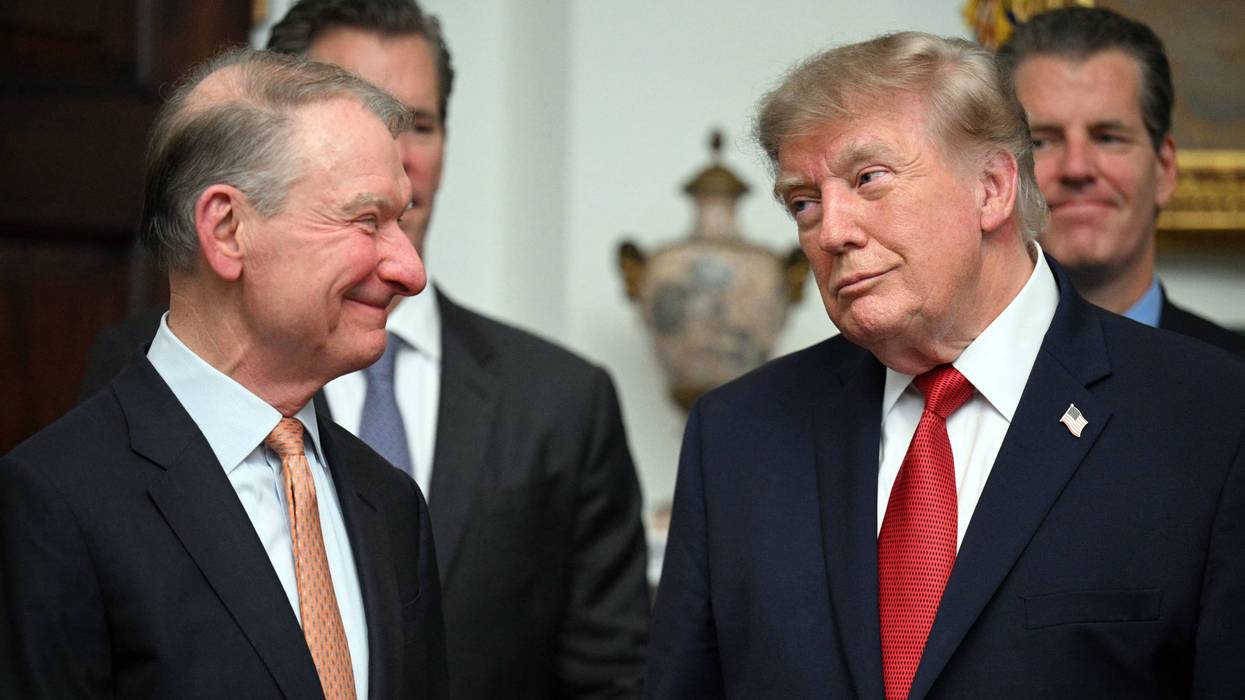
"The Trump SEC is seeking to bail out the struggling private equity and private credit industry with hardworking Americans' retirement savings."
The US Securities and Exchange Commission on Wednesday proposed policies that SEC Chair Paul Atkins framed as an effort to promote private market investments by retail investors—or everyday Americans—while also "protecting those investors from bad actors and fraud," but critics accused the Republican-dominated federal agency of serving Wall Street at the expense of the public.
"Chair Atkins talks about the 'responsible retailization' of the private markets, but the rules the SEC proposed today are irresponsible," declared Benjamin Schiffrin, director of securities policy for the nonprofit Better Markets. "The SEC is supposed to protect retail investors from risky private market assets. Instead, it is encouraging investors saving for college and retirement to direct their savings to private market investments that do not offer greater returns but that do offer less disclosure and more limited legal recourse when harmed."
"Although hedge funds may charge fees based on performance to their investors, the SEC has long prohibited investment advisers from charging retail investors performance-based fees," Schiffrin explained. "This protects them from arrangements that might encourage advisers to take undue risks with retail client funds to increase their compensation. Yet the SEC's proposed rules would make such arrangements permissible. This change would eliminate a limitation on the ability of private funds that charge performance-based fees to sell to retail investors and would incentivize advisers to push retail clients into risky private funds that have performance-based fees."
The new rules would also make it easier to sell interval funds, which "hold complex and illiquid assets and charge high fees," Schiffrin noted. "Given that many interval funds have faced heightened redemption requests from existing investors seeking to exit these funds in recent months, now hardly seems like the time to further expose retail investors to these funds."
“Perhaps most troublingly, the SEC expands the categories of individuals who qualify as so-called 'accredited investors' to whom private market assets may be sold," he continued. Specifically, the agency said it is considering letting individuals with some certificates or licenses—such as certified public accountants, research analysts, and financial analysts and planners—qualify.
"Accredited investors are supposed to be institutions and individuals with enough assets to bear the risk of loss inherent in private market assets," Schiffrin stressed. "Now, the SEC would allow individuals to qualify as accredited investors without regard to their ability to lose money in the private markets."
The expert also highlighted the timing of these proposals, pointing to the agency's Monday statement that "reminded the private funds industry of its obligations regarding valuing assets and providing disclosure to investors," which Schiffrin said was "obviously intended to provide cover for the SEC's desired expansion of the private markets."
"Having previously downplayed the turmoil in the private credit markets, continued redemption requests by private credit investors forced the SEC to acknowledge that private market assets are particularly risky and to reassure investors it was not asleep at the switch," he said. "Yet the statement begs the question of why the SEC would seek to expose retail investors to the private markets at the same time it acknowledges the risks that private market assets pose even to institutional investors."
"The answer is that the SEC has lost its way," he concluded. "Its agenda is now the financial industry's agenda, and private funds need access to retail investors and their savings as institutional investors increasingly pull back from private markets. So the proposed rules the SEC issued today have nothing to do with 'democratizing access' to the private markets and everything to do with allowing the financial industry to prey on unsuspecting retail investors."
The SEC chair said Wednesday that the agency's latest moves "complement efforts undertaken pursuant to" President Donald Trump's August 2025 executive order on Democratizing Access to Alternative Assets for 401(k) Investors—which Schiffrin warned last year "exemplifies the administration's determination to prioritize the interests of Wall Street over the interests of Main Street and retail investors."
"Let's be clear: Neither 401(k) plan sponsors or 401(k) plan participants—regular, hardworking Americans—are asking to replace stocks and bonds in their 401(k)s with risky private assets," Schiffrin said at the time. "Instead, the private funds industry needs a way to get its hands on the $12 trillion in Americans' retirement accounts to boost its profits and make up for the fact that institutional investors are fleeing the private markets due to mediocre returns, higher fees, and more risk."
Despite such criticism of Trump's order, the US Department of Labor unveiled its related proposal in March. Jim Baker, executive director of the nonprofit Private Equity Stakeholder Project, pointed to the pending DOL policy in a Wednesday statement responding to the SEC action.
"With the proposed rules, combined with the DOL's 401(k) rule, the Trump SEC is seeking to bail out the struggling private equity and private credit industry with hardworking Americans' retirement savings," he said. "Private equity funds have lagged public markets while charging much higher fees, and institutional investors are pulling back from the asset class. These rules risk shifting more financial risk onto workers who rely on their retirement savings for long-term security."
"Private equity firms are already under pressure from a backlog of unsold assets and declining distributions to investors," Baker emphasized. “At the same time, policymakers are giving private equity access to retirement savers' 401(k) plans, raising serious questions about whether these investment risks are being shifted onto everyday retirement savers."
"Retirement accounts exist to provide security, not to bail out private market investments by shifting liquidity risk onto workers when markets turn," he added. "At a minimum, the SEC should hold private equity to the same disclosure and transparency standards expected of publicly traded stocks, mutual funds, and [exchange-traded funds], including clear reporting on what funds are investing in, the fees and expenses retirement savers are paying, the amount of debt funds are using, and how these investments are actually performing compared with stocks."
Key members of Congress also responded to the SEC's Wednesday proposals. While Republicans on the US Senate Banking, Housing, and Urban Affairs Committee welcomed the push to expand the accredited investor definition, which aligns with Chair Tim Scott's (R-SC) Empowering Main Street in America Act, Ranking Member Elizabeth Warren (D-Mass.) was critical.
"Today, the SEC proposed a new rule that would override decades-old protections for Americans' retirements to allow Wall Street to start charging high, private equity-level fees on lower-cost retail funds," Warren said. "Americans already struggling to save in Trump's economy shouldn’t be used as piggy banks to boost the profits of Trump’s Wall Street buddies."

"We won't let them destroy the wildest place in Texas without a fight," the Center for Biological Diversity vowed.
The Trump administration on Wednesday allowed a temporary pause on border construction in and around Big Bend National Park in Texas to expire, prompting renewed vows from conservationists and other opponents to fight the contentious project in court.
Laiken Jordahl, the national public lands advocate at the Center for Biological Diversity (CBD), posted a court document stating that US Customs and Border Protection (CBP)k "will lift the pause on ground-disturbing activities" related to the Department of Homeland Security's (DHS) plan to build border barriers and other destructive infrastructure across one of the most remote and environmentally sensitive stretches of the US-Mexico border.
The government said Tuesday in a court filing that CBP is “actively considering adjustments” to the project “that would reduce its scope and avoid or minimize potential impacts, based on input received from the National Park Service and other stakeholders."
However, those possible changes did not assuage opponents of the project, who span the political spectrum.
“We are disappointed, and urge the Department of Homeland Security to extend this pause,” Emily Thompson, executive director of the Coalition to Protect America’s National Parks, said Wednesday. “Continuing with construction of border barriers, roads, and associated infrastructure inside Big Bend National Park will do unprecedented damage to the park.”
Thompson continued:
Big Bend National Park stands out for its unique desert landscape. With more nesting bird species than any other national park, towering canyon walls, and the largest international dark sky reserve in the entire world, Big Bend is an integral addition to our nation’s natural heritage. The Trump administration's plan to build a border wall through the park threatens all of this, heightening flood risk, inundating the skies with lights, and cutting off migration patterns for wildlife. Building in Big Bend would be mutilating an extraordinary landscape at a massive cost to the taxpayer—with little ultimate benefit.
Bob Krumenaker, chair of Keep Big Bend Wild and a former Big Bend National Park superintendent, asserted that “border security already works" in the park "without the need for intrusive construction."
"The Border Patrol, the National Park Service, and local sheriffs already operate an effective surveillance system with ground and aerial patrols and unobtrusive, wireless sensors," he noted. "The rugged terrain, huge distances, and harsh desert weather in the national park and in Mexico across the Rio Grande make this the least active section of the entire southern border for illegal crossings."
CBD and other plaintiffs are already seeking a preliminary injunction in federal court. US District Judge Kathleen Cardone—an appointee of former President George W. Bush—is scheduled to hear testimony and evidence Friday in El Paso on the request to halt construction while the groups' lawsuit proceeds. The plaintiffs argue that the Trump administration unlawfully waived dozens of federal laws to accelerate construction.
Indigenous peoples and their advocates have criticized DHS for waiving laws, including the Native American Graves Protection and Repatriation Act and the Archaeological and Historic Preservation Act, to enable the project's construction.
In a statement issued Wednesday, CBD described some of the damage already done by construction in service of Trump's deadly immigration crackdown:
Bulldozers started tearing into Big Bend National Park near the iconic Santa Elena Canyon in early August and were documented plowing new routes for vehicle barriers into both the east and west sides of Mariscal Mountain. Contractors have stockpiled heavy equipment across the Big Bend region, where staging yards have been cleared, worker camps built, and water wells drilled.
"We'll be in court... in El Paso demanding a permanent halt to the destruction," CBD said. "We won't let them destroy the wildest place in Texas without a fight.
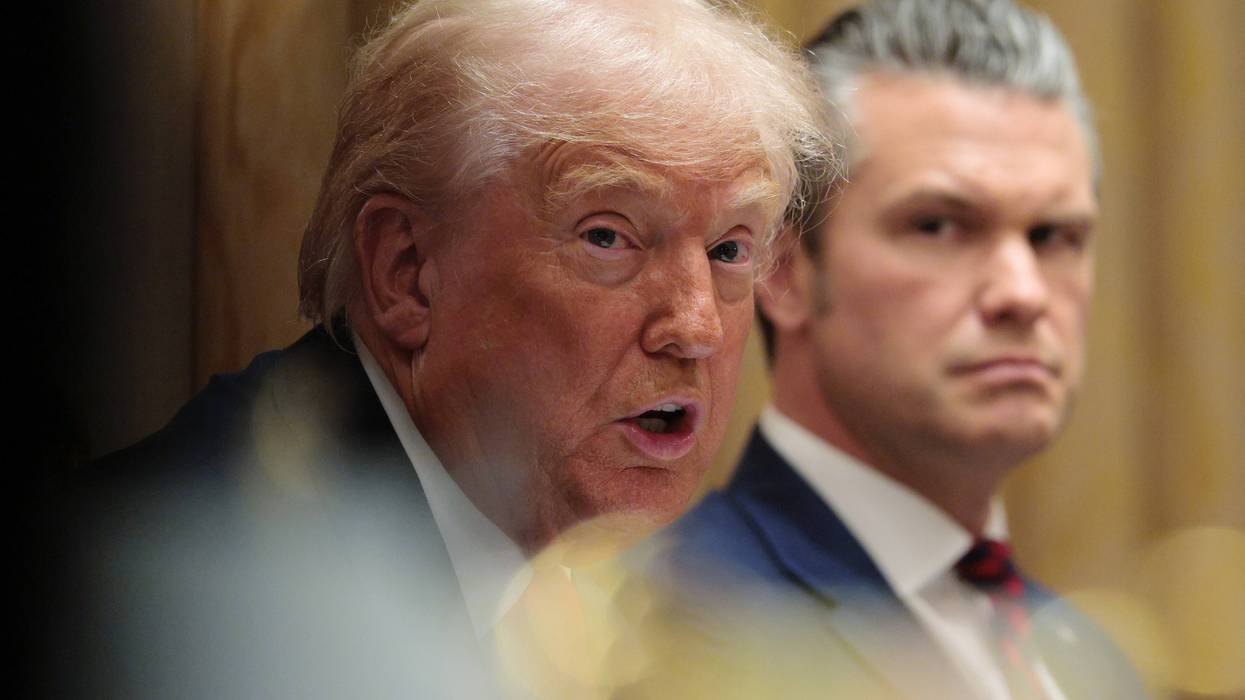
“No president can arbitrarily assassinate people from the sky based on their sole say-so,” said one legal expert.
A key memo from the Office of Legal Counsel at President Donald Trump's Department of Justice has underpinned the administration's yearlong campaign of bombing boats in the Caribbean Sea and eastern Pacific Ocean, and the White House has been adamant that the document should be kept secret.
But on Wednesday, Judge Paul Engelmayer in the US District Court for the Southern District of New York rejected the administration's rationale for keeping the memo hidden, saying that the Department of Defense and US Southern Command have adopted its contents as its "working law" while conducting 70 strikes on boats and killing at least 234 people who officials claimed, without evidence, were "narco-terrorists."
After the ACLU and the Center for Constitutional Rights (CCR) filed a Freedom of Information Act request calling for the release of the 40-page memo, the administration argued it needed to remain secret to protect confidential deliberations and attorney-client communications.
Engelmayer noted that administration officials have repeatedly cited the memo in public statements to explain why it was bombing dozens of boats that it claimed were operated by drug cartels—which experts and family members of some of the victims have called into question.
“The agency defendants cannot claim surprise from this consequence of the executive branch’s repeated public statements embracing the OLC memo—and it only—as setting out the legal parameters for the boat strikes,” Engelmayer wrote.
Jeffrey Stein, staff attorney with the ACLU's National Security Project, called the order "a huge step in the right direction of ensuring that the government does not get to summarily execute people based on secret law."
“The public deserves to know how our government is justifying the cold-blooded murder of hundreds of civilians," said Stein.
The judge ordered the administration to turn the memo over to him so he can determine whether it should be released to the public. He also ordered officials to provide information about who has seen the memo and how they have used it, and called on the administration to provide details on whether the memo could be protected from public view as a "closely held presidential advice document."
Engelmayer gave the administration until October 14 to comply with the order.
The boat strikes have been carried out as part of Trump's stated push to defeat drug cartels in Latin America. Sen. Tim Kaine (D-Va.) has pointed out that there is little evidence the administration is ensuring it is targeting drug boats, as the presence of drugs on a boat has not been identified as "targeting criteria" for the operation in congressional briefings. Some victims have been identified as fishermen and other people who had little, if any, involvement with drug trafficking.
Beyond that, legal experts say that even if the 234 victims were drug traffickers, the boat bombings constitute extrajudicial killings and violations of international law—something Trump himself appeared to brag about last week when he said at the United Nations General Assembly that "we don’t waste our time" addressing alleged drug crimes in the court system.
“No president can arbitrarily assassinate people from the sky based on their sole say-so,” said Baher Azmy, legal director for CCR. “If the OLC opinion seeks to dress up the obvious illegality of these serial murders in legalese to provide Trump cover, the public needs to see that analysis and ultimately hold accountable all those who facilitate murder in the United States’ name.”

"The past almost four years have seen Brazil accomplish a great deal in terms of bringing people out of poverty, creating jobs, curbing hunger, and raising standards of living."
An analysis released Wednesday documents some of the major economic gains that Brazil has made over the past four years during the third term of President Luiz Inácio Lula da Silva, who is currently in a close battle for reelection against rival Flávio Bolsonaro.
The analysis, published by the US-based Center for Economic and Policy Research (CEPR), finds that, between 2022 and 2025, the Brazilian economy grew by a cumulative 8.9%, easily outpacing the average rate of growth in other South American countries.
This growth has been coupled with a drop in the unemployment rate, which has fallen from more than 9% in the second quarter of 2022 to just 5.4% in the second quarter of 2026.
Both poverty and food insecurity fell dramatically in the first two year's of Lula's term, the analysis finds, and in 2025, "Brazil was removed from the Food and Agriculture Organization’s Hunger Map after chronic undernourishment fell below 2.5%."
CEPR's report also gives credit to Lula's policies for improved economic conditions, including a new minimum wage law, an expanded maternity leave program, and increased average payments to low-income families given through the Bolsa Família program.
The economy during Lula's term is far from perfect, however, and the report flags high interest rates set by Brazil's central bank as a key factor in raising consumers' borrowing costs and increasing the rate of household delinquency.
CEPR also noted the negative impact of online betting apps, which Lula has pledged to ban starting next month, on Brazilian workers.
"Brazilian households lost an estimated R$62.5 billion (US$11.2 billion) to online betting in 2025," the report says, "while some 802,000 Bolsa Família households spent more than 2% of their income on betting in January 2025."
Jake Johnston, CEPR's director of international research, said that "the past almost four years have seen Brazil accomplish a great deal in terms of bringing people out of poverty, creating jobs, curbing hunger, and raising standards of living."
"This was done," Johnston added, "despite the lingering impact of the Covid pandemic, external economic shocks that affected the global economy, and excessively high interest rates."
The first round of Brazil's presidential election is set to take place on Sunday, and recent polls show Lula with a narrow lead over Bolsonaro, son of former Brazilian President Jair Bolsonaro, who is still serving a criminal sentence for efforts to instigate a coup after his loss in the 2022 election.
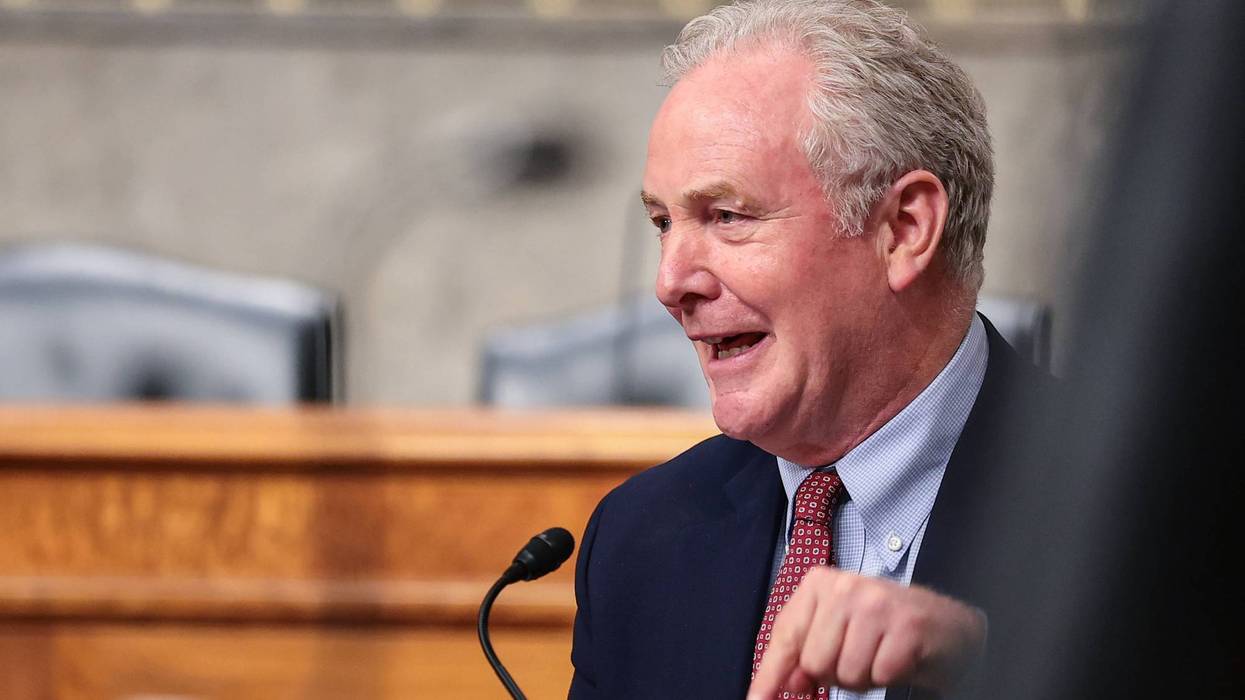
"This measure was a ruse, promoted by House Speaker Mike Johnson, to make it appear that congressional Republicans were tackling an ethical quagmire when, in fact, it would have accomplished very little."
Democrats in the Senate have blocked what they described as a loophole-laden Republican-led bill to ban members of Congress from purchasing stocks.
Sen. Tom Cotton (R-Ark.) blasted his Democratic colleagues on Wednesday after they declined to give the votes necessary to advance the bill—known as the Stop Insider Trading Act—past the Senate filibuster.
"The Democrats who blocked it went back on their word to protect their own wallets—they should be ashamed of themselves," Cotton said.
But Democrats described the bill, which passed the Republican-controlled House of Representatives in July, as a sham. Sen. Dick Durbin (D-Ill.) said the bill "does not adequately ban congressional stock trading," and described it as "meaningless messaging."
While the bill would have prohibited members of Congress, their spouses, and dependent children from buying stocks, it would not have required them to divest the hundreds of millions of dollars worth of stock they already own.
It also would have exempted President Donald Trump and other executive branch employees. During his second term in office, Trump has made around 30,000 securities trades since returning to office. Bloomberg estimated, based on public disclosures, that he'd made more than 21,000 trades worth between $600 million and $1.86 billion in 2025 alone.
The bill passed by House Republicans also attached a national photo ID requirement for voting as well as additional identification requirements for vote-by-mail, which voting rights advocates argued could disenfranchise millions of eligible voters who do not possess a valid photo ID.
"This measure was a ruse, promoted by House Speaker Mike Johnson (R-La.), to make it appear that congressional Republicans were tackling an ethical quagmire when, in fact, it would have accomplished very little," said Craig Holman, government affairs lobbyist for Public Citizen.
Democrats have argued that the watered-down Republican proposal was meant to sap momentum from stronger bills, amid broad public demand for a stock trading ban.
Holman noted that "there was serious legislation to stop congressional insider trading, but Johnson would not bring up any of the serious proposals for a floor vote."
A bipartisan bill that has stalled in the House would have required members of Congress to divest stock they currently own. Meanwhile, the GOP-controlled House Rules Committee blocked a Democratic proposal that would have made the president and vice president subject to the ban.
"Let’s be clear: I support a total ban on Congress members trading stock," said Sen. Chris Van Hollen (D-Md.) on Wednesday. "But Republicans are trying to package a fraudulent version of that with a bill to disenfranchise American voters."
"This is politics at its worst," he said. "Put a real ban on the floor if you’re serious."
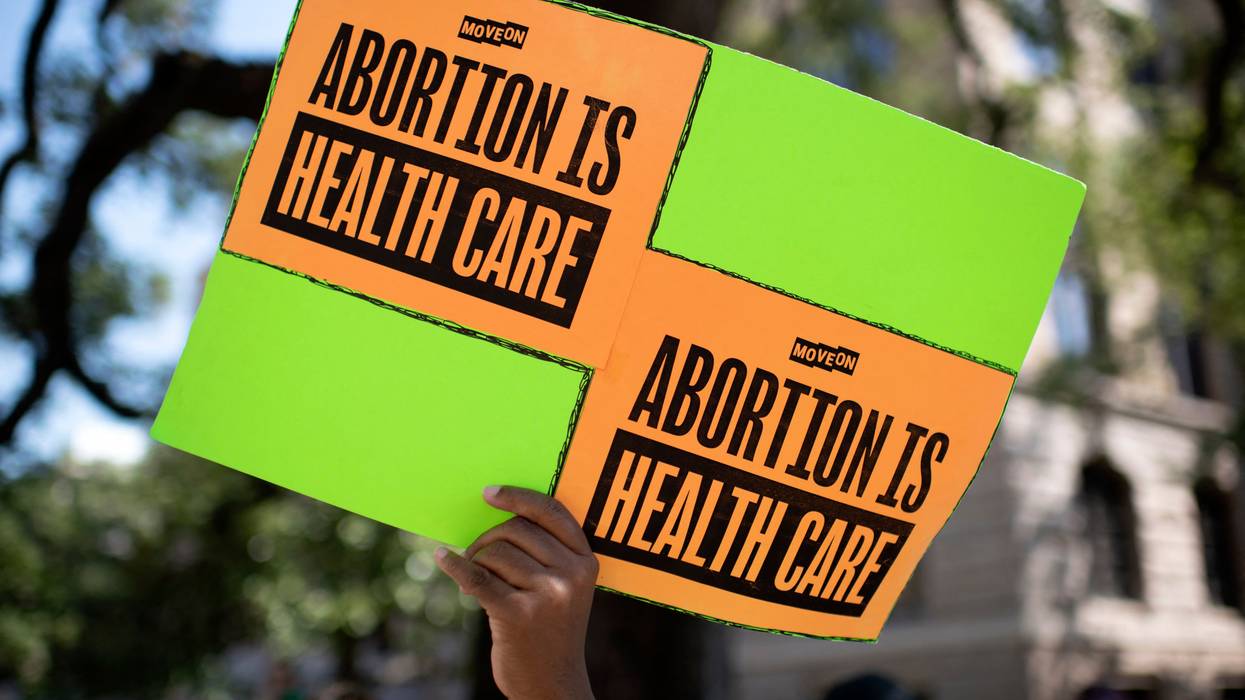
"Everyone, no matter who they are, where they live, how much money they make, or how they get their insurance, deserves access to abortion care without barriers."
On Wednesday, reproductive rights groups marked half a century of abortion care being "baselessly set apart from all other healthcare," with coverage for abortions blocked in government-funded healthcare plans like Medicaid, which about 16 million women of reproductive age rely on.
"Our constituents have suffered the consequences," said the Congressional Reproductive Freedom Caucus, chaired by Reps. Diana DeGette (D-Colo.) and Ayanna Pressley (D-Mass.).
For 50 years, the Hyde Amendment—proposed by the late Rep. Henry Hyde (D-Ill.), who expressed his wish to prevent "anybody having an abortion" and said blocking federal funds within the Medicaid program from being used for care was the best way to do so—has stopped hundreds of thousands of people from obtaining abortion care, and has been called by anti-abortion groups "one of the greatest achievements of the pro-life movement to date."
The Reproductive Freedom Caucus denounced the budget rider that has been reeimplemented in appropriations bills every year since 1976 as "a dangerous, racist, and classist abortion ban. An abortion ban for the working class and people of color, who disproportionately receive health insurance through the federal government."
The caucus noted that more than 200 House Democrats have supported efforts to repeal the amendment, and advocacy groups on Wednesday called on Congress to pass the Equal Access to Abortion Coverage in Health Insurance (EACH) Act, which would permanently repeal the Hyde Amendment.
"Without solutions like the EACH Act, the Hyde Amendment will continue to force people with low incomes to struggle for the care they need or carry a pregnancy against their will," said the National Women's Law Center (NWLC). "Everyone, no matter who they are, where they live, how much money they make, or how they get their insurance, deserves access to abortion care without barriers."
In addition to low-income people who rely on Medicaid, said the National Network of Abortion Funds (NNAF), the Hyde Amendment blocks abortion care for Indigenous people who use the Indian Health Service, people in federal prisons, disabled people, military service members and their families, and federal employees, among others.
Twenty-nine states follow Hyde Amendment restrictions, which include "exceptions" for pregnancies resulting from rape or incest or cases in which a pregnant person's life is at risk. Twenty-one states use state funds to cover abortion care, but nearly half of US women of reproductive age who use Medicaid live in states that either ban abortion care or bar them from getting abortions using the federally funded healthcare plan.
NNAF highlighted the network's decades of work to counter the Hyde Amendment by ensuring people who need abortions can access funding, which abortion funds across the country obtain through grassroots donations as they also advocate to end the Hyde Amendment.
"By the 1990s—less than two decades after Hyde first passed—28 abortion funds had formed across the country. Twenty-two of those funds started the National Network of Abortion Funds (NNAF) in 1993," said NNAF. "We joined together to build strategic power and end the Hyde Amendment. Today, our network has nearly 100 member abortion funds, and our fight against Hyde continues."
"The fierce abortion funds in our network have raised money, arranged travel, connected folks to clinics, provided practical support, and fought restrictions in their states and communities," the group added. "Despite endless challenges, their tireless work has built power for our collective goal: Make abortion accessible for all."
Abortion funds have helped people obtain care across the country, but the NWLC emphasized that the Hyde Amendment has still left hundreds of thousands of women with no choice but to pay for abortions out of pocket—often pushing them to delay care while they gather funds or to carry a pregnancy to term when they don't want to or can't afford to become a parent.
"While abortion costs vary by location, facility, and stage of pregnancy, the median out-of-pocket costs in 2023 were $563 for medication abortion, $650 for first-trimester procedural abortion, and $1,000 for second-trimester abortion care," said NWLC. "Those costs account for just the procedure itself, not additional expenses. And yet, nearly half of American families cannot afford the true cost of living... So, when the Hyde Amendment denies someone abortion care, the compounding costs can push people further into a struggle to survive and meet basic needs."
Dr. Jamila Perritt, president and CEO of Physicians for Reproductive Health, remembered Rosie Jimenez, a 27-year-old mother and aspiring teacher who died in 1977, almost exactly a year after the Hyde Amendment was passed, after being denied Medicaid coverage for an abortion.
“Hyde has harmed generations of people seeking abortion care," said Perritt. "Women like Rosie Jimenez, the first known person to die because of Hyde Amendment restrictions, should still be here. No one, no matter what insurance they have access to or who they are, should be denied abortion care, full stop."
Stateline reported Tuesday that with weeks to go until the midterm elections and President Donald Trump's approval rating plummeting to record lows, anti-abortion groups are increasingly concerned that a Democratic majority could repeal the amendment, which it came close to doing in 2022.
“If there becomes a pro-abortion majority in Congress, then Hyde is going to be one of the first things to go, probably, especially because it’s been in the spotlight more recently,” Gavin Oxley, spokesperson for Americans United for Life, told Stateline. Particularly since Trump told Republicans to be "a little flexible" on the Hyde Amendment when the party was pushing to end subsidies under the Affordable Care Act, Oxley said "there are some Republicans who may not be as committed to protecting Hyde.”
Perritt expressed hope that Congress could pass the EACH Act, which now "has the highest amount of support... ever seen with over 200 co-sponsors."
"As a DC-based OB-GYN and abortion provider, I see patients burdened with the cost of abortion care, forcing them to choose between basic living needs and lifesaving healthcare," she said. "The Hyde Amendment is a zero-sum constraint that is not about patients’ health and autonomy, but instead about punishing people for making informed decisions about their bodies, families, and futures. Enough is enough."
"We do not need another Hyde Amendment anniversary," said Perritt. "We need to repeal the Hyde Amendment for good.”
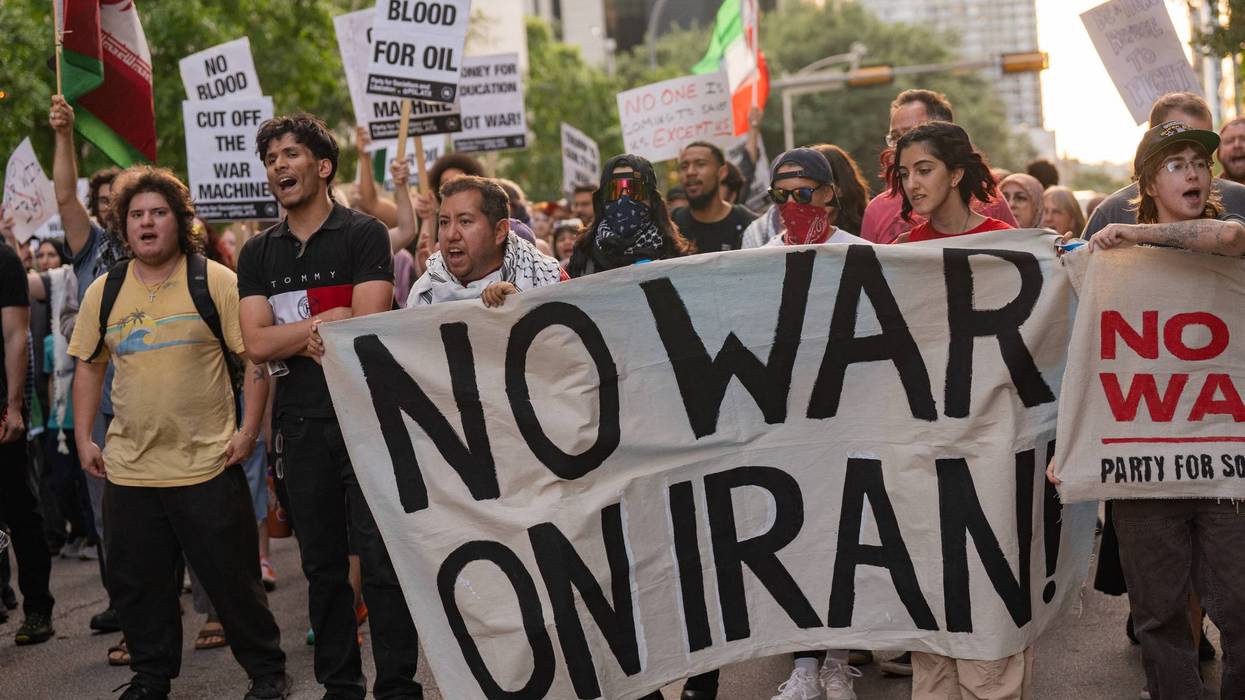
"This is a self-inflicted wound, it's a choice, and it can be undone."
A group of experts says that President Donald Trump's illegal war with Iran, which has been massively expensive and has made Americans less safe, shows the need for a radical overhaul of US foreign policy.
Scholars at the Political Economy Research Institute (PERI) at the University of Massachusetts on Wednesday are holding a webinar to present ideas for reducing the US military footprint and using the savings to invest in programs that will directly benefit working-class Americans.
In a video posted on social media ahead of the webinar, PERI experts advocated for making major changes to US foreign policy, which they argued has left the country overstretched.
"The Iran War costs us billions while making us less safe," says a message accompanying the video on PERI’s social media account. "By reining in military spending and taxing the wealthy to pay their fair share, we can fund critical services like universal preschool, infrastructure investments, and Medicare for All."
The Iran War costs us billions while making us less safe.
By reining in military spending and taxing the wealthy to pay their fair share, we can fund critical services like universal preschool, infrastructure investments, and medicare for all. pic.twitter.com/daOFLyWHEr
— PERI (@PERIatUMass) September 30, 2026
Lindsay Koshgarian, program director of the National Priorities Project (NPP), made the case that the US can no longer enforce a policy of "maintaining dominance over the entire world."
"We have endless wars in the Middle East, a war of choice with Iran at the moment," said Koshgarian. "Clearly, something is broken about our foreign policy. It's extremely costly and, in fact, it actually makes us less safe."
Koshgarian then outlined her plan for what she described as "a smaller, safer military" that would slash US presence overseas and generate between $200 billion to $500 billion of savings per year.
Heidi Peltier, senior researcher at the Watson School of International and Public Affairs at Brown University, pointed to Trump's request for an "astronomical" $1.5 trillion military budget to argue that America's priorities have become completely warped.
"The money is there," Peltier said. "The question really is, what are our priorities?"
Peltier's research aims to "demilitarize" federal spending by reducing the annual US Department of Defense budget by 10%, which would free up $100 billion more to spend on domestic priorities.
Aaron Medlin, professor of international studies at Boston College, pointed to the ways Trump's illegal war had made the price of energy more expensive and was inflicting economic pain on working-class Americans.
Medlin said that his work focuses on raising taxes on the wealthy by taxing income generated from owning assets at the same rate as income generated from working, while also imposing a minimum tax on fortunes over $100 million, and small levies on stock, bond, and derivatives trades.
In total, Medlin estimates that the proposed tax package would raise more than $2 trillion annually.
"The United States is just becoming unaffordable for a huge share of Americans," he said. "This is a self-inflicted wound, it's a choice, and it can be undone."
The experts' proposals for reducing the US military footprint and taxing extreme wealth came on the same day that petroleum industry analyst Patrick De Haan estimated that Americans have now spent over $75 billion more on gasoline since the start of the Iran War.
When higher gas prices are combined with rising rates for diesel, the Costs of War Project at Brown's Watson Institute estimates that Americans have spent an extra $121.7 billion.

After more than six months, 329,000 people in Lebanon remain displaced from their homes by Israel's occupation, one-third of whom are children.
Israel's latest assault on Lebanon is inflicting widespread hunger, death, and injury on children across the country, according to a report out Wednesday from the United Nations Children's Fund.
Children go to bed hungry in at least one in five households, according to a survey conducted by UNICEF in July, while nearly a third are going without needed healthcare because their families are unable to afford it. Four in five households, the report says, have found it harder to afford basic necessities.
Nearly 17,000 people have been killed or injured since March. Among them are 261 children who've been killed and 1,056 who've been injured—and 12% of those injured now live with a disability.
Around 100,000 children are at risk of losing access to education. At least 436 schools have been damaged across the country, including 37 that were completely destroyed.
“Children and young people in Lebanon are being asked to bear a burden no child should have to carry,” said UNICEF Lebanon Representative Marcoluigi Corsi, who noted the report's finding that 770,000 children have suffered psychological distress over the past six months due to repeated exposure to violence, loss, and displacement.
Lebanon was already in the midst of an economic crisis that left many families poor. But the situation has grown markedly more severe since March, when Israel launched an ongoing occupation of southern Lebanon that has displaced more than 1.1 million people and unleashed punishing airstrikes across the country, including in densely populated civilian areas.
More than 329,000 of those displaced have yet to go home, and around one-third are children. Despite a ceasefire announced in April, Israeli officials have said that those ordered to leave their homes will not be allowed to return until they deem northern Israel "safe" from attacks by the militant group Hezbollah.
Israeli forces have systematically razed dozens of villages and farms in southern Lebanon, destroying tens of thousands of homes. As Al Jazeera reported earlier this week, Israel has predominantly demolished Shia villages while telling Christian villages they'll be spared so long as they stay neutral.
According to a June report by Amnesty International, about 6% of Lebanese territory is effectively under a "don't come back" order from Israel with residents barred indefinitely from returning home. Amnesty said the forced displacement and prevention of return in parts of southern Lebanon constitute unlawful transfer, a war crime.
Some Israeli leaders have discussed annexing the occupied portion of Lebanon and moving in Israeli settlers.
Earlier this week, Bezalel Smotrich—the Israeli finance minister who has overseen a historic surge of violent settlement expansion in the West Bank—said that he would "very much like to annex at least… up to the Litani [River] in Lebanon," extending the country's border into southern Lebanon.

"If it comes to pass, this deal would bulldoze America’s most important wildlife law," said one campaigner.
A bipartisan Senate proposal to overhaul federal permitting rules drew fierce opposition Wednesday from environmental and wildlife advocates, who warn that the legislation could significantly weaken the Endangered Species Act and other key protections in service of boosting President Donald Trump's pro-fossil fuel and artificial intelligence agenda.
Senate negotiators—chiefly Democrats Martin Heinrich (NM) and Sheldon Whitehouse (RI) and Republicans Shelley Moore Capito (W.Va.) and Mike Lee (Utah)—reportedly reached an agreement Monday on the text of a sweeping permitting package intended to speed construction of energy and infrastructure projects.
While the full legislative text of the “Bipartisan American Affordability and Jobs Act of 2026" had not been publicly released as of Wednesday, reported provisions have prompted alarm among conservation groups, who warn that the proposal would weaken endangered species protections, shift federal authority and responsibility to states, limit scientific review and judicial oversight, and exempt some projects from key environmental consultations.
“If it comes to pass, this deal would bulldoze America's most important wildlife law,” Defenders of Wildlife president and CEO Andrew Bowman said Wednesday. “We can build the infrastructure America needs without sacrificing the wildlife we have a responsibility to protect and that Americans cherish. Development should not come at the expense of science, accountability, or the ability of America’s most imperiled wildlife to survive.”
Oil Change International called the proposal "a blatant giveaway to Big Oil and Big Tech."
“This ‘dirty deal’ threatens to raise electricity prices for working families by accelerating the buildout of energy-guzzling AI data centers and liquefied natural gas export projects," said Oil Change International US campaigns manager Collin Rees. "Our recent research shows that the Trump administration’s support for reckless AI development and greater gas exports drives up energy costs for households."
Brett Hartl, government affairs director at the Center for Biological Diversity (CBD), said that “this is a climate kill shot that condemns our most vulnerable communities to suffer decades more fossil fuel pollution."
"It’s absurd to ensure our planet chokes with greenhouse gases, gut endangered species protections, and eviscerate the Clean Water Act for what seems to be a nearly meaningless victory against Trump’s war on offshore wind,” Hartl continued. "The minor benefits for renewable energy corporations are massively dwarfed by the gifts to the fossil fuel industry."
"If this grotesque legislation becomes law, the paltry increases in renewable energy will be instantly devoured by AI data centers," he added. "The only winners here are Elon Musk, Mark Zuckerberg, tech oligarchs, and the shareholders of fossil fuel companies.”
According to CBD:
Today’s package contains numerous provisions that lock in thousands of fossil fuel projects, including oil and gas pipelines, [liquefied natural gas] export terminals, and expanded fossil fuel drilling onshore and offshore approved by President Trump over the past two years. It also ensures that future fossil fuel pipelines and methane gas-generated electricity can never be challenged in court.
Additional provisions gut parts of the Clean Water Act, including the Section 401 authority of states to protect their rivers and streams from the impacts of building pipelines and the [Environmental Protection Agency's] Section 404(c) permit veto authority, which has been used to stop projects like the Pebble Mine in Alaska.
The legislation weakens the National Historic Preservation Act and Tribal consultations, leaving most Tribal nations with no meaningful way to protect their sovereignty when faced with potential fossil fuel projects on their lands.
Furthermore, CBD noted, "the legislation guts the Endangered Species Act by allowing states to take over the Section 7 consultation process with minimal safeguards, turning one of the law’s strongest provisions into a state-run rubber stamp of dangerous projects."
The Western Environmental Law Center described the proposal as a “five-alarm fire,” warning that it could weaken the Clean Water Act, Endangered Species Act, [National Environmental Policy Act], and other safeguards.
“The permitting deal is a betrayal of public lands, water, and wildlife, and environmental justice values that Westerners depend on,” said Erik Schlenker-Goodrich, the group's executive director, who warned that the measure could ultimately “hobble the ability of future administrations to enact an ambitious climate and conservation agenda.”
Hartl called out Democrats Heinrich and Whitehouse for "giving away our most cherished environmental laws based on fantastical models that project a renewable energy utopia."
"They’re rewarding a ruthless fossil fuel industry that will always put its quarterly profits ahead of a livable planet and future generations,” he said. "Trump promised fossil fuel companies that he’d do everything in his power to assist them in his second term, and Sen. Heinrich and Sen. Whitehouse seem hell-bent on helping Trump fulfill that promise."
Bowman contended that "Congress should be looking for ways to make permitting more efficient rather than a Trojan horse to weaken the Endangered Species Act."
“Efficiency and conservation are not opposing goals," he added. "A durable permitting bill should deliver both. Congress should not lock in permanent damage to the Endangered Species Act simply to get a deal today.”