SUBSCRIBE TO OUR FREE NEWSLETTER
Daily news & progressive opinion—funded by the people, not the corporations—delivered straight to your inbox.
5
#000000
#FFFFFF
To donate by check, phone, or other method, see our More Ways to Give page.
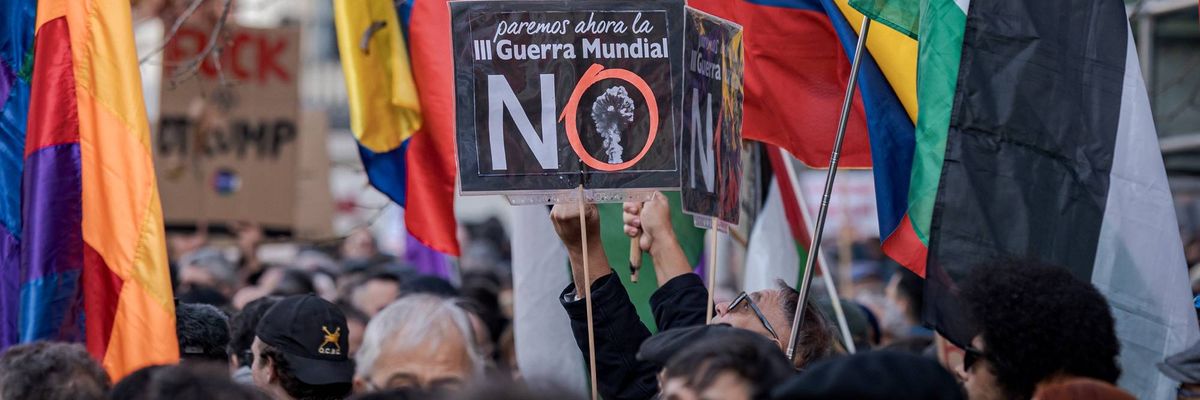
Protests broke out at US diplomatic outposts across the globe Saturday and Sunday following the Trump administration's deadly attack on Venezuela and abduction of the nation's president, brazen violations of international law that—according to the American president—were just the start of a sustained intervention in Venezuela's politics and oil industry.
Demonstrators took to the streets of Brussels, Madrid, Ankara, Mexico City, Los Angeles, and other major cities worldwide to voice opposition to the US assault on Venezuela and Trump administration officials' pledge to "run" the country's government for an unspecified period of time, a plan that Venezuelan leaders have publicly met with defiance.
The US Mission to Mexico—one of several Latin American countries Trump threatened in the aftermath of the attack on Venezuela—warned in an alert issued Saturday that "a protest denouncing US actions against Venezuela continues to take place in front of the US Embassy in the Polanco neighborhood of Mexico City."
"Protestors have thrown rocks and painted vandalism on exterior walls," the alert read. "Social media posts about the protest have included anti-American sentiment. Embassy personnel have been advised to avoid the area."
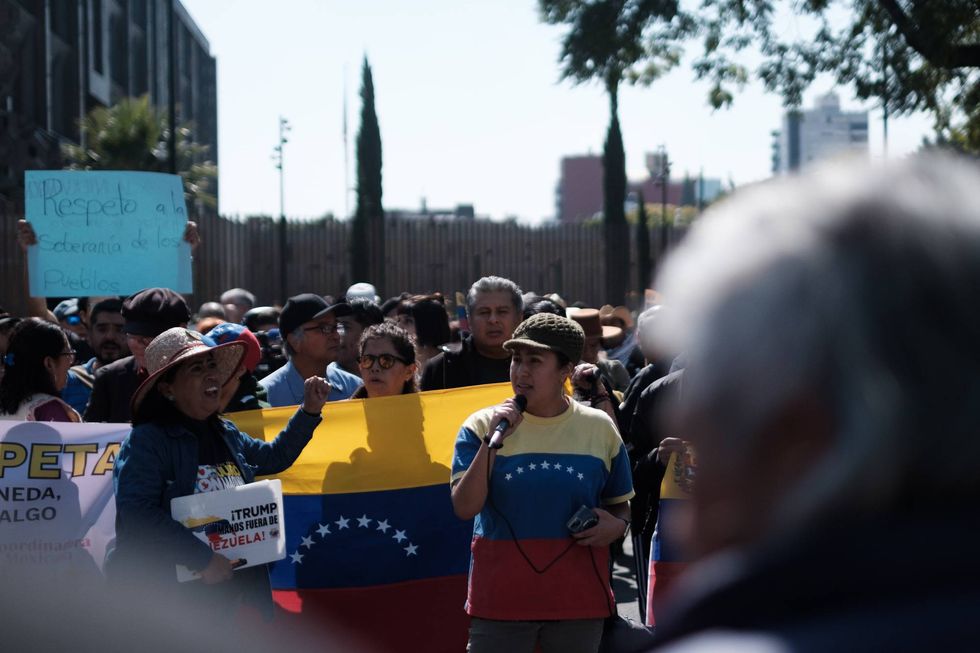 Social and political organizations mobilized to the US Embassy in Mexico City, Mexico on January 3, 2026. (Photo by Miguel M. Caamano/NurPhoto via Getty Images)
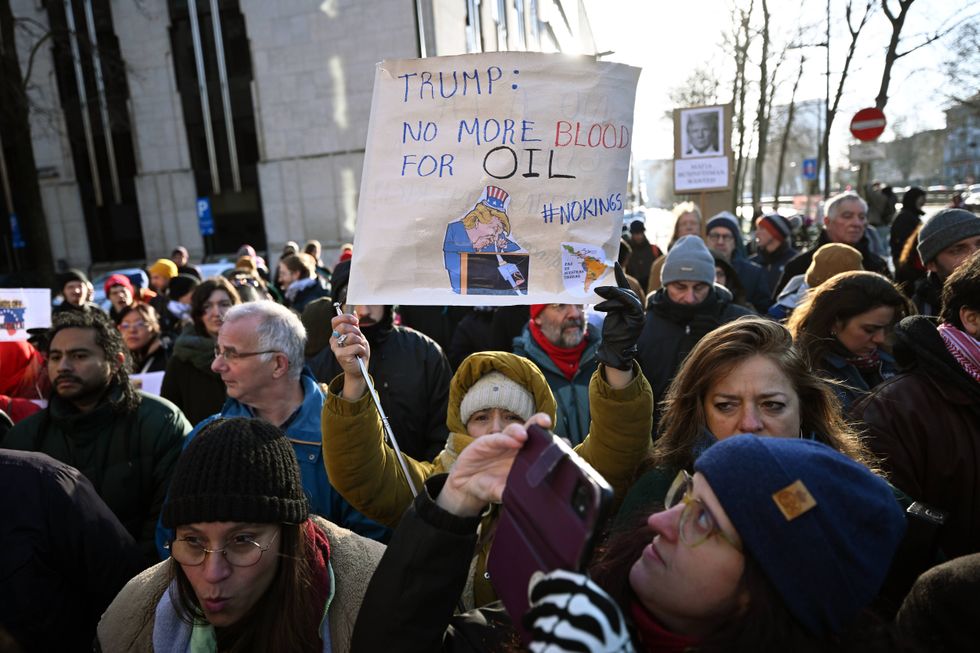 Hundreds gather in front of the US Embassy in Brussels, Belgium on January 4, 2025. (Photo by Dursun Aydemir/Anadolu via Getty Images)
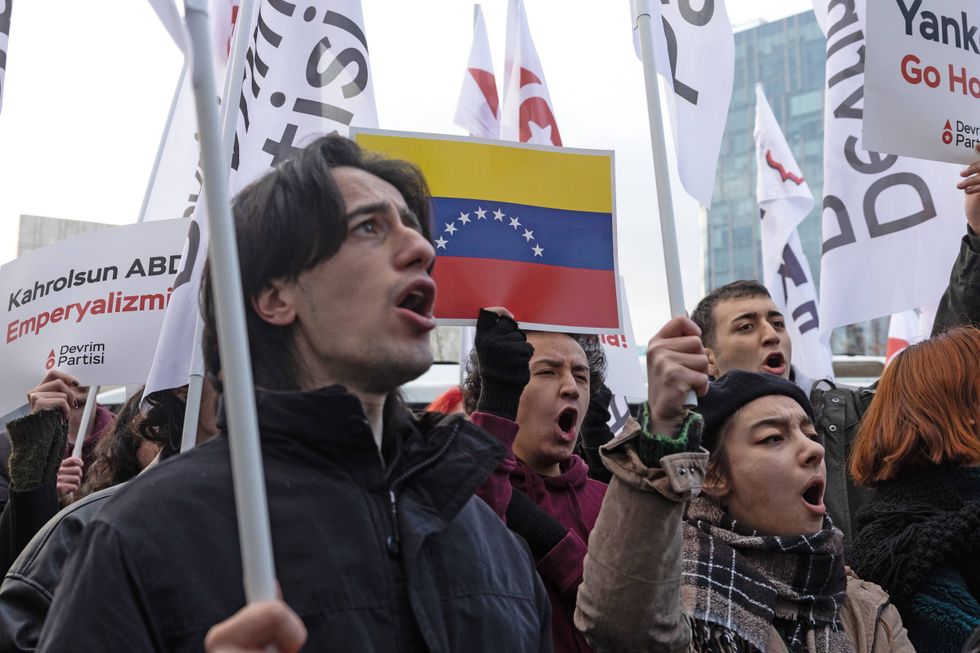 Demonstrators hold posters and chant slogans during a protest in front of the US Embassy on January 4, 2026 in Ankara, Turkey. (Photo by Serdar Ozsoy/Getty Images)
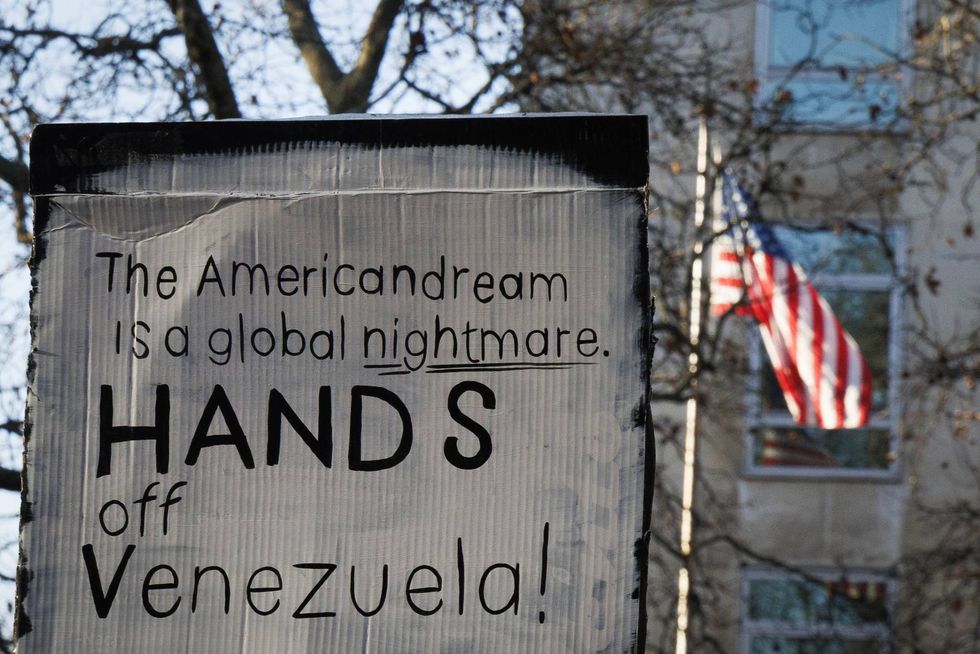 A photograph taken on January 4, 2026 shows an anti-war placard in Brussels during a demonstration against the US attack on Venezuela. (Photo by Nicolas Maeterlinck/Belga/AFP via Getty Images)
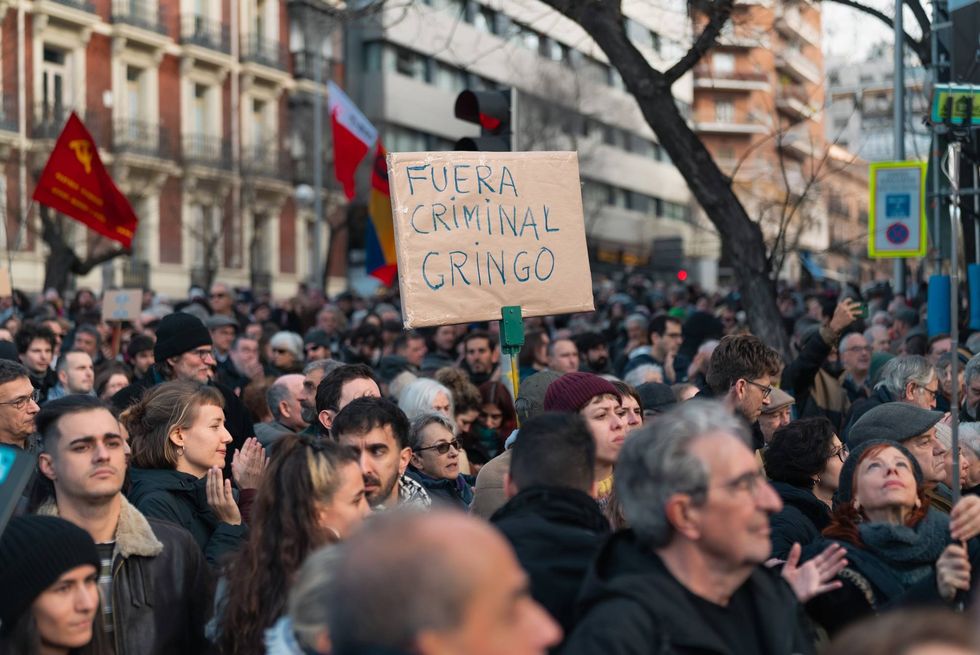 Protesters gather during a demonstration in front of the US Embassy on January 4, 2026 in Madrid, Spain. (Photo by Olmo Blanco/Getty Images)
The global demonstrations came as some world leaders, including top European officials, faced backlash for failing to adequately condemn—or condemn at all—the US attack on Venezuela and continued menacing of a sovereign nation.
Ursula von der Leyen, president of the European Commission, said she supports "a peaceful and democratic transition," without mentioning or denouncing the illegal abduction of Venezuelan President Nicolás Maduro and US bombings that reportedly killed at least 40 people, including civilians.
Greek Prime Minister Kyriakos Mitsotakis declared that "this is not the time to comment on the legality of the recent actions" as protesters gathered in Athens in opposition to the US assault.
"If you still believe that the European Union cares about international law, then look no further," wrote Progressive International co-general coordinator David Adler, pointing to Mitsotakis' statement.
"We are outraged, but this moment demands more than outrage. It demands organized, coordinated resistance."
Mass protests and demands for international action to halt US aggression proliferated amid ongoing questions about how the Trump administration intends to carry out its stated plan to control Venezuela and exploit its oil reserves—objectives that experts say would run afoul of domestic and international law.
US Secretary of State Marco Rubio, who played a central role in planning the Venezuela attack and has been chosen by Trump to manage the aftermath, said Sunday that the administration intends to keep in place a military "quarantine" around the South American nation—including the massive naval force amassed in the Caribbean in recent months—to pressure the country's leadership to bow to US demands.
"That's a tremendous amount of leverage that will continue to be in place until we see changes, not just to further the national interest of the United States, which is number one, but also that lead to a better future for the people of Venezuela," Rubio said in a television interview.
Rubio also suggested the president could deploy US troops to Venezuela and dodged questions about the legal authority the Trump administration has to intervene in the country. The administration has not sought congressional authorization for any of its attacks on vessels in the Caribbean or Venezuela directly.
US Rep. Greg Casar (D-Texas), chair of the Congressional Progressive Caucus, said Sunday that "in recent history, we've tried 'running' multiple countries in Latin America and the Middle East. It's been a disaster for us, and for them, every single time."
"Congress must pass a War Powers Resolution to get our military back to defending the US, instead of 'running' Venezuela," Casar added.
Progressive Democrats of America echoed that demand, saying in a statement that "this is militarized authoritarianism."
"We must act to stop it now, before it spreads to enflame the entire region, if not the entire globe, in a dangerous, unnecessary conflict," the group added. "We are outraged, but this moment demands more than outrage. It demands organized, coordinated resistance."
Protests broke out at US diplomatic outposts across the globe Saturday and Sunday following the Trump administration's deadly attack on Venezuela and abduction of the nation's president, brazen violations of international law that—according to the American president—were just the start of a sustained intervention in Venezuela's politics and oil industry.
Demonstrators took to the streets of Brussels, Madrid, Ankara, Mexico City, Los Angeles, and other major cities worldwide to voice opposition to the US assault on Venezuela and Trump administration officials' pledge to "run" the country's government for an unspecified period of time, a plan that Venezuelan leaders have publicly met with defiance.
The US Mission to Mexico—one of several Latin American countries Trump threatened in the aftermath of the attack on Venezuela—warned in an alert issued Saturday that "a protest denouncing US actions against Venezuela continues to take place in front of the US Embassy in the Polanco neighborhood of Mexico City."
"Protestors have thrown rocks and painted vandalism on exterior walls," the alert read. "Social media posts about the protest have included anti-American sentiment. Embassy personnel have been advised to avoid the area."
Social and political organizations mobilized to the US Embassy in Mexico City, Mexico on January 3, 2026. (Photo by Miguel M. Caamano/NurPhoto via Getty Images)
Hundreds gather in front of the US Embassy in Brussels, Belgium on January 4, 2025. (Photo by Dursun Aydemir/Anadolu via Getty Images)
Demonstrators hold posters and chant slogans during a protest in front of the US Embassy on January 4, 2026 in Ankara, Turkey. (Photo by Serdar Ozsoy/Getty Images)
A photograph taken on January 4, 2026 shows an anti-war placard in Brussels during a demonstration against the US attack on Venezuela. (Photo by Nicolas Maeterlinck/Belga/AFP via Getty Images)
Protesters gather during a demonstration in front of the US Embassy on January 4, 2026 in Madrid, Spain. (Photo by Olmo Blanco/Getty Images)
The global demonstrations came as some world leaders, including top European officials, faced backlash for failing to adequately condemn—or condemn at all—the US attack on Venezuela and continued menacing of a sovereign nation.
Ursula von der Leyen, president of the European Commission, said she supports "a peaceful and democratic transition," without mentioning or denouncing the illegal abduction of Venezuelan President Nicolás Maduro and US bombings that reportedly killed at least 40 people, including civilians.
Greek Prime Minister Kyriakos Mitsotakis declared that "this is not the time to comment on the legality of the recent actions" as protesters gathered in Athens in opposition to the US assault.
"If you still believe that the European Union cares about international law, then look no further," wrote Progressive International co-general coordinator David Adler, pointing to Mitsotakis' statement.
"We are outraged, but this moment demands more than outrage. It demands organized, coordinated resistance."
Mass protests and demands for international action to halt US aggression proliferated amid ongoing questions about how the Trump administration intends to carry out its stated plan to control Venezuela and exploit its oil reserves—objectives that experts say would run afoul of domestic and international law.
US Secretary of State Marco Rubio, who played a central role in planning the Venezuela attack and has been chosen by Trump to manage the aftermath, said Sunday that the administration intends to keep in place a military "quarantine" around the South American nation—including the massive naval force amassed in the Caribbean in recent months—to pressure the country's leadership to bow to US demands.
"That's a tremendous amount of leverage that will continue to be in place until we see changes, not just to further the national interest of the United States, which is number one, but also that lead to a better future for the people of Venezuela," Rubio said in a television interview.
Rubio also suggested the president could deploy US troops to Venezuela and dodged questions about the legal authority the Trump administration has to intervene in the country. The administration has not sought congressional authorization for any of its attacks on vessels in the Caribbean or Venezuela directly.
US Rep. Greg Casar (D-Texas), chair of the Congressional Progressive Caucus, said Sunday that "in recent history, we've tried 'running' multiple countries in Latin America and the Middle East. It's been a disaster for us, and for them, every single time."
"Congress must pass a War Powers Resolution to get our military back to defending the US, instead of 'running' Venezuela," Casar added.
Progressive Democrats of America echoed that demand, saying in a statement that "this is militarized authoritarianism."
"We must act to stop it now, before it spreads to enflame the entire region, if not the entire globe, in a dangerous, unnecessary conflict," the group added. "We are outraged, but this moment demands more than outrage. It demands organized, coordinated resistance."
Protests broke out at US diplomatic outposts across the globe Saturday and Sunday following the Trump administration's deadly attack on Venezuela and abduction of the nation's president, brazen violations of international law that—according to the American president—were just the start of a sustained intervention in Venezuela's politics and oil industry.
Demonstrators took to the streets of Brussels, Madrid, Ankara, Mexico City, Los Angeles, and other major cities worldwide to voice opposition to the US assault on Venezuela and Trump administration officials' pledge to "run" the country's government for an unspecified period of time, a plan that Venezuelan leaders have publicly met with defiance.
The US Mission to Mexico—one of several Latin American countries Trump threatened in the aftermath of the attack on Venezuela—warned in an alert issued Saturday that "a protest denouncing US actions against Venezuela continues to take place in front of the US Embassy in the Polanco neighborhood of Mexico City."
"Protestors have thrown rocks and painted vandalism on exterior walls," the alert read. "Social media posts about the protest have included anti-American sentiment. Embassy personnel have been advised to avoid the area."
Social and political organizations mobilized to the US Embassy in Mexico City, Mexico on January 3, 2026. (Photo by Miguel M. Caamano/NurPhoto via Getty Images)
Hundreds gather in front of the US Embassy in Brussels, Belgium on January 4, 2025. (Photo by Dursun Aydemir/Anadolu via Getty Images)
Demonstrators hold posters and chant slogans during a protest in front of the US Embassy on January 4, 2026 in Ankara, Turkey. (Photo by Serdar Ozsoy/Getty Images)
A photograph taken on January 4, 2026 shows an anti-war placard in Brussels during a demonstration against the US attack on Venezuela. (Photo by Nicolas Maeterlinck/Belga/AFP via Getty Images)
Protesters gather during a demonstration in front of the US Embassy on January 4, 2026 in Madrid, Spain. (Photo by Olmo Blanco/Getty Images)
The global demonstrations came as some world leaders, including top European officials, faced backlash for failing to adequately condemn—or condemn at all—the US attack on Venezuela and continued menacing of a sovereign nation.
Ursula von der Leyen, president of the European Commission, said she supports "a peaceful and democratic transition," without mentioning or denouncing the illegal abduction of Venezuelan President Nicolás Maduro and US bombings that reportedly killed at least 40 people, including civilians.
Greek Prime Minister Kyriakos Mitsotakis declared that "this is not the time to comment on the legality of the recent actions" as protesters gathered in Athens in opposition to the US assault.
"If you still believe that the European Union cares about international law, then look no further," wrote Progressive International co-general coordinator David Adler, pointing to Mitsotakis' statement.
"We are outraged, but this moment demands more than outrage. It demands organized, coordinated resistance."
Mass protests and demands for international action to halt US aggression proliferated amid ongoing questions about how the Trump administration intends to carry out its stated plan to control Venezuela and exploit its oil reserves—objectives that experts say would run afoul of domestic and international law.
US Secretary of State Marco Rubio, who played a central role in planning the Venezuela attack and has been chosen by Trump to manage the aftermath, said Sunday that the administration intends to keep in place a military "quarantine" around the South American nation—including the massive naval force amassed in the Caribbean in recent months—to pressure the country's leadership to bow to US demands.
"That's a tremendous amount of leverage that will continue to be in place until we see changes, not just to further the national interest of the United States, which is number one, but also that lead to a better future for the people of Venezuela," Rubio said in a television interview.
Rubio also suggested the president could deploy US troops to Venezuela and dodged questions about the legal authority the Trump administration has to intervene in the country. The administration has not sought congressional authorization for any of its attacks on vessels in the Caribbean or Venezuela directly.
US Rep. Greg Casar (D-Texas), chair of the Congressional Progressive Caucus, said Sunday that "in recent history, we've tried 'running' multiple countries in Latin America and the Middle East. It's been a disaster for us, and for them, every single time."
"Congress must pass a War Powers Resolution to get our military back to defending the US, instead of 'running' Venezuela," Casar added.
Progressive Democrats of America echoed that demand, saying in a statement that "this is militarized authoritarianism."
"We must act to stop it now, before it spreads to enflame the entire region, if not the entire globe, in a dangerous, unnecessary conflict," the group added. "We are outraged, but this moment demands more than outrage. It demands organized, coordinated resistance."