SUBSCRIBE TO OUR FREE NEWSLETTER
Daily news & progressive opinion—funded by the people, not the corporations—delivered straight to your inbox.
5
#000000
#FFFFFF
To donate by check, phone, or other method, see our More Ways to Give page.
Daily news & progressive opinion—funded by the people, not the corporations—delivered straight to your inbox.
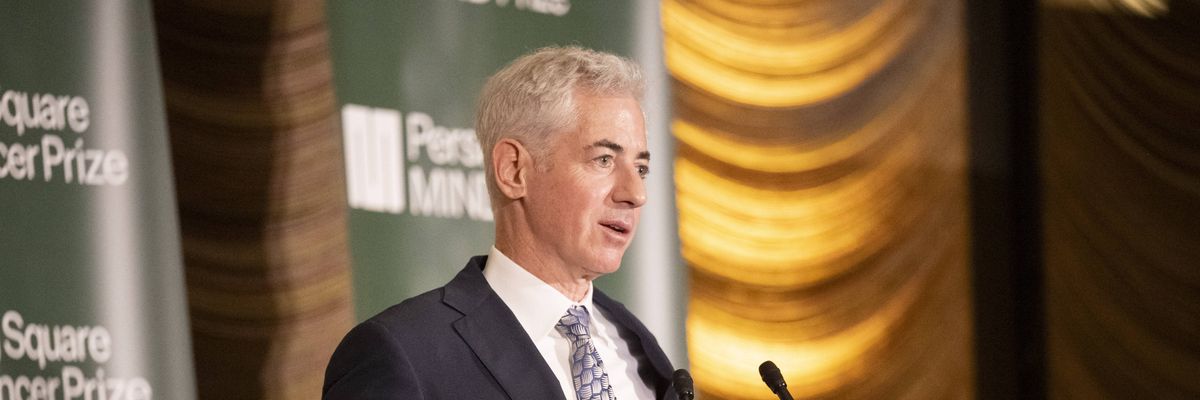
Billionaire hedge fund manager Bill Ackman attends an event on May 22, 2025 in New York.
"Asking the handful of wealthiest Californians to contribute less than the annual appreciation on their fortunes to mitigate these crises is a small, reasonable, and administrable request," argued a group of experts.
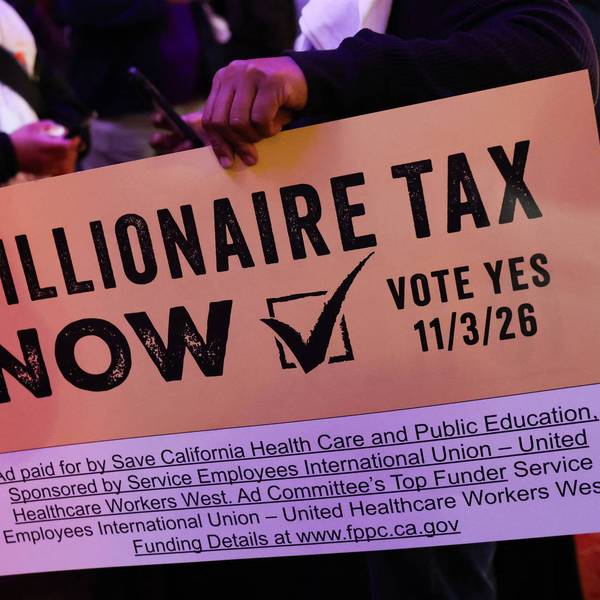
Billionaire outrage against a proposed one-time wealth tax on the richest Californians reached a fever pitch in recent days as organizers began the process of gathering the hundreds of thousands of signatures needed to get the initiative on the November ballot.
Without providing specifics, billionaire Bay Area investor Chamath Palihapitiya claimed in a social media post that he knows people "with a collective net worth of $500 billion" who "scrambled and left California for good yesterday" to avoid the potential 5% wealth tax, which would apply to billionaires living in California as of January 1, 2026. (The evidence for significant billionaire tax avoidance via physical relocation is virtually nonexistent.)
Palihapitiya characterized the proposed ballot initiative, which is aimed at raising revenue to avert a healthcare crisis spurred by federal Medicaid cuts, as an "asset seizure tax."
Bill Ackman, a billionaire hedge fund manager who lives in New York, similarly described the proposed tax as "an expropriation of private property."
The Jeff Bezos-owned Washington Post, meanwhile, published a hostile editorial on Thursday denouncing the proposed tax and mocking its supporters, including Service Employees International Union-United Healthcare Workers West (SEIU-UHW).
"Many progressives think of taxation the way teenage boys think about cologne: If some is good, more must be great," the editorial reads. "California, already reeks of overtaxation, but it’s thinking about trying out its most potent scent yet: a wealth tax. Just a whiff has some of the state’s wealthiest residents fleeing."
The Wall Street Journal reported that "the firms of two high-profile California investors issued announcements on New Year’s Eve about establishing new offices out of state, without saying anything about the proposed Golden State tax."
"Tech investor Peter Thiel’s investment firm, Thiel Capital, said it signed a lease in December for office space in Miami," the newspaper added. "The office will 'complement Thiel Capital’s existing operations in Los Angeles,' the company said."
Supporters say the response from billionaires and other opponents of the proposed tax—including California Gov. Gavin Newsom, who is helping raise money to fight the initiative—badly misses the mark. According to organizers, most billionaires see larger capital gains increases in months than the amount they would pay if California voters approved the tax.
“Asking those who have benefited most from the economy to contribute more—particularly to stabilize healthcare systems under direct threat—is not radical. It is reasonable,” Suzanne Jimenez, the chief of staff of SEIU-UHW, told the Journal.
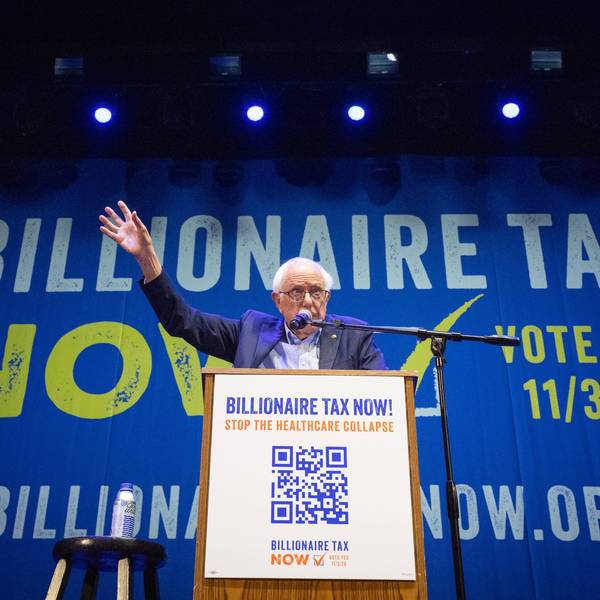
Earlier this week, as Common Dreams reported, US Sen. Bernie Sanders (I-Vt.) endorsed the proposed wealth tax, which proponents say would raise roughly $100 billion in revenue from around 200 California billionaires. Under the proposal, most of the resulting revenue would be allocated to a Billionaire Tax Health Account, while the rest would go toward an account to fund food assistance and education.
A new expert analysis of the proposal, authored by some of those involved in drafting the initiative, argues that the one-time tax is urgent because "decisions at the federal level have put—and will put—California's healthcare system, education system, and broader economy under severe stress."
"Asking the handful of wealthiest Californians to contribute less than the annual appreciation on their fortunes to mitigate these crises is a small, reasonable, and administrable request," the experts write. "And that is all that this ballot measure does."
Dear Common Dreams reader, It’s been nearly 30 years since I co-founded Common Dreams with my late wife, Lina Newhouser. We had the radical notion that journalism should serve the public good, not corporate profits. It was clear to us from the outset what it would take to build such a project. No paid advertisements. No corporate sponsors. No millionaire publisher telling us what to think or do. Many people said we wouldn't last a year, but we proved those doubters wrong. Together with a tremendous team of journalists and dedicated staff, we built an independent media outlet free from the constraints of profits and corporate control. Our mission has always been simple: To inform. To inspire. To ignite change for the common good. Building Common Dreams was not easy. Our survival was never guaranteed. When you take on the most powerful forces—Wall Street greed, fossil fuel industry destruction, Big Tech lobbyists, and uber-rich oligarchs who have spent billions upon billions rigging the economy and democracy in their favor—the only bulwark you have is supporters who believe in your work. But here’s the urgent message from me today. It's never been this bad out there. And it's never been this hard to keep us going. At the very moment Common Dreams is most needed, the threats we face are intensifying. We need your support now more than ever. We don't accept corporate advertising and never will. We don't have a paywall because we don't think people should be blocked from critical news based on their ability to pay. Everything we do is funded by the donations of readers like you. When everyone does the little they can afford, we are strong. But if that support retreats or dries up, so do we. Will you donate now to make sure Common Dreams not only survives but thrives? —Craig Brown, Co-founder |
Billionaire outrage against a proposed one-time wealth tax on the richest Californians reached a fever pitch in recent days as organizers began the process of gathering the hundreds of thousands of signatures needed to get the initiative on the November ballot.
Without providing specifics, billionaire Bay Area investor Chamath Palihapitiya claimed in a social media post that he knows people "with a collective net worth of $500 billion" who "scrambled and left California for good yesterday" to avoid the potential 5% wealth tax, which would apply to billionaires living in California as of January 1, 2026. (The evidence for significant billionaire tax avoidance via physical relocation is virtually nonexistent.)
Palihapitiya characterized the proposed ballot initiative, which is aimed at raising revenue to avert a healthcare crisis spurred by federal Medicaid cuts, as an "asset seizure tax."
Bill Ackman, a billionaire hedge fund manager who lives in New York, similarly described the proposed tax as "an expropriation of private property."
The Jeff Bezos-owned Washington Post, meanwhile, published a hostile editorial on Thursday denouncing the proposed tax and mocking its supporters, including Service Employees International Union-United Healthcare Workers West (SEIU-UHW).
"Many progressives think of taxation the way teenage boys think about cologne: If some is good, more must be great," the editorial reads. "California, already reeks of overtaxation, but it’s thinking about trying out its most potent scent yet: a wealth tax. Just a whiff has some of the state’s wealthiest residents fleeing."
The Wall Street Journal reported that "the firms of two high-profile California investors issued announcements on New Year’s Eve about establishing new offices out of state, without saying anything about the proposed Golden State tax."
"Tech investor Peter Thiel’s investment firm, Thiel Capital, said it signed a lease in December for office space in Miami," the newspaper added. "The office will 'complement Thiel Capital’s existing operations in Los Angeles,' the company said."
Supporters say the response from billionaires and other opponents of the proposed tax—including California Gov. Gavin Newsom, who is helping raise money to fight the initiative—badly misses the mark. According to organizers, most billionaires see larger capital gains increases in months than the amount they would pay if California voters approved the tax.
“Asking those who have benefited most from the economy to contribute more—particularly to stabilize healthcare systems under direct threat—is not radical. It is reasonable,” Suzanne Jimenez, the chief of staff of SEIU-UHW, told the Journal.
Earlier this week, as Common Dreams reported, US Sen. Bernie Sanders (I-Vt.) endorsed the proposed wealth tax, which proponents say would raise roughly $100 billion in revenue from around 200 California billionaires. Under the proposal, most of the resulting revenue would be allocated to a Billionaire Tax Health Account, while the rest would go toward an account to fund food assistance and education.
A new expert analysis of the proposal, authored by some of those involved in drafting the initiative, argues that the one-time tax is urgent because "decisions at the federal level have put—and will put—California's healthcare system, education system, and broader economy under severe stress."
"Asking the handful of wealthiest Californians to contribute less than the annual appreciation on their fortunes to mitigate these crises is a small, reasonable, and administrable request," the experts write. "And that is all that this ballot measure does."
Billionaire outrage against a proposed one-time wealth tax on the richest Californians reached a fever pitch in recent days as organizers began the process of gathering the hundreds of thousands of signatures needed to get the initiative on the November ballot.
Without providing specifics, billionaire Bay Area investor Chamath Palihapitiya claimed in a social media post that he knows people "with a collective net worth of $500 billion" who "scrambled and left California for good yesterday" to avoid the potential 5% wealth tax, which would apply to billionaires living in California as of January 1, 2026. (The evidence for significant billionaire tax avoidance via physical relocation is virtually nonexistent.)
Palihapitiya characterized the proposed ballot initiative, which is aimed at raising revenue to avert a healthcare crisis spurred by federal Medicaid cuts, as an "asset seizure tax."
Bill Ackman, a billionaire hedge fund manager who lives in New York, similarly described the proposed tax as "an expropriation of private property."
The Jeff Bezos-owned Washington Post, meanwhile, published a hostile editorial on Thursday denouncing the proposed tax and mocking its supporters, including Service Employees International Union-United Healthcare Workers West (SEIU-UHW).
"Many progressives think of taxation the way teenage boys think about cologne: If some is good, more must be great," the editorial reads. "California, already reeks of overtaxation, but it’s thinking about trying out its most potent scent yet: a wealth tax. Just a whiff has some of the state’s wealthiest residents fleeing."
The Wall Street Journal reported that "the firms of two high-profile California investors issued announcements on New Year’s Eve about establishing new offices out of state, without saying anything about the proposed Golden State tax."
"Tech investor Peter Thiel’s investment firm, Thiel Capital, said it signed a lease in December for office space in Miami," the newspaper added. "The office will 'complement Thiel Capital’s existing operations in Los Angeles,' the company said."
Supporters say the response from billionaires and other opponents of the proposed tax—including California Gov. Gavin Newsom, who is helping raise money to fight the initiative—badly misses the mark. According to organizers, most billionaires see larger capital gains increases in months than the amount they would pay if California voters approved the tax.
“Asking those who have benefited most from the economy to contribute more—particularly to stabilize healthcare systems under direct threat—is not radical. It is reasonable,” Suzanne Jimenez, the chief of staff of SEIU-UHW, told the Journal.
Earlier this week, as Common Dreams reported, US Sen. Bernie Sanders (I-Vt.) endorsed the proposed wealth tax, which proponents say would raise roughly $100 billion in revenue from around 200 California billionaires. Under the proposal, most of the resulting revenue would be allocated to a Billionaire Tax Health Account, while the rest would go toward an account to fund food assistance and education.
A new expert analysis of the proposal, authored by some of those involved in drafting the initiative, argues that the one-time tax is urgent because "decisions at the federal level have put—and will put—California's healthcare system, education system, and broader economy under severe stress."
"Asking the handful of wealthiest Californians to contribute less than the annual appreciation on their fortunes to mitigate these crises is a small, reasonable, and administrable request," the experts write. "And that is all that this ballot measure does."