

SUBSCRIBE TO OUR FREE NEWSLETTER
Daily news & progressive opinion—funded by the people, not the corporations—delivered straight to your inbox.
5
#000000
#FFFFFF
To donate by check, phone, or other method, see our More Ways to Give page.
Daily news & progressive opinion—funded by the people, not the corporations—delivered straight to your inbox.
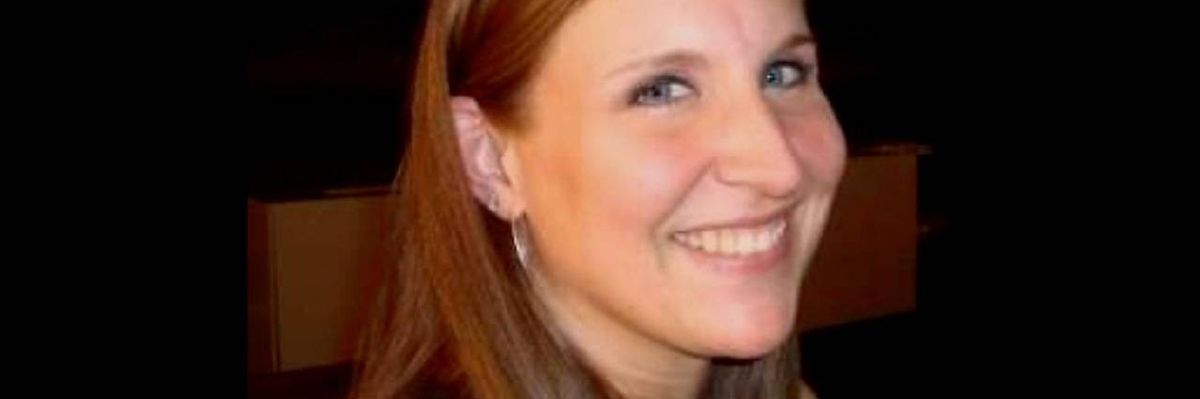
Brooke Shoemaker has served five years of an 18-year sentence after a stillbirth. On December 22, 2025, an Alabama judge threw out her conviction and ordered a new trial.
"I'm hopeful that my new trial will end with me being freed, because I simply lost my pregnancy at home because of an infection," said Brooke Shoemaker, who has already spent five years in prison.
While Brooke Shoemaker and a rights group representing her in court are celebrating this week after an Alabama judge threw out her conviction and ordered a new trial, her case is also drawing attention to the dangers of "fetal personhood" policies.
"Laws and judicial decisions that grant fetuses—and in some cases embryos and fertilized eggs—the same legal rights and status given to born people, such as the right to life, is 'fetal personhood,'" explains the website of the group, Pregnancy Justice. "When fetuses have rights, this fundamentally changes the legal rights and status of all pregnant people, opening the door to criminalization, surveillance, and obstetric violence."
Since the US Supreme Court's Dobbs v. Jackson Women's Health Organization ruling ended the federal right to abortion in 2022, far-right activists and politicians have ramped up their fight for fetal personhood policies. Pregnancy Justice found that in the two years after the decision, the number of people who faced criminal charges related to their pregnancies hit its highest level in US history.
Shoemaker's case began even earlier, in 2017, when she experienced a stillbirth at home about 24-26 weeks into her pregnancy. Paramedics brought her to a hospital, where she disclosed using methamphetamine while pregnant. Although a medical examiner could not determine whether the drug use caused the stillbirth—and, according to Pregnancy Justice, "her placenta showed clear signs of infection"—a jury found her guilty of chemical endangerment of a minor. She's served five years of her 18-year sentence.
"After becoming Ms. Shoemaker's counsel in 2024, Pregnancy Justice filed a petition alongside Andrew Stanley of the Samford Law Office requesting a hearing based on new evidence about the infection that led to the demise of Ms. Shoemaker's pregnancy, leading the judge to agree with Pregnancy Justice's medical witness and to vacate the conviction," the rights group said in a Monday statement.
Lee County Circuit Judge Jeffrey Tickal wrote in his December 22 order that "should the facts had been known, and brought before the jury, the results probably would have been different."
Shoemaker said Monday that "after years of fighting, I'm thankful that I'm finally being heard, and I pray that my next Christmas will be spent at home with my children and parents... I'm hopeful that my new trial will end with me being freed, because I simply lost my pregnancy at home because of an infection. I loved and wanted my baby, and I never deserved this."
Although Tickal's decision came three days before Christmas, the 45-year-old mother of four remained behind bars for the holiday last week, as the state appeals.
"While we are thrilled with the judge's decision, we are outraged that Ms. Shoemaker is still behind bars when she should have been home for Christmas," said former Pregnancy Justice senior staff attorney Emma Roth. "She was convicted based on feelings, not facts. Pregnancy Justice will continue to fight on appeal and prove that pregnancies end tragically for reasons far beyond a mother's control. Women like Ms. Shoemaker should be allowed to grieve their loss without fearing arrest."
AL.com reported Tuesday that "Alabama is unique in that it is one of only three states, along with Oklahoma and South Carolina, where the state Supreme Court allows the application of criminal laws meant to punish child abuse or child endangerment to be applied in the context of pregnancy."
However, similar cases aren't restricted to those states. Pregnancy Justice found that in the two years following Dobbs, "prosecutors initiated cases in 16 states: Alabama, California, Florida, Idaho, Kentucky, Mississippi, Nebraska, New Mexico, Ohio, Oklahoma, Pennsylvania, South Carolina, South Dakota, Texas, Wisconsin, and Wyoming. While prosecutions were brought in all of these states, to date, the majority of the reported cases occurred in Alabama (192) and Oklahoma (112)."
This is fantastic news!!I wrote in my book how the medical examiner ruled the cause of the stillbirth "undetermined," but the coroner (who lacks medical training) instead listed cause of stillbirth as mom's meth usage on the fetal death certificate.
[image or embed]
— Jill Wieber Lens (@jillwieberlens.bsky.social) December 30, 2025 at 12:25 PM
"Prosecutors used a variety of criminal statutes to charge the defendants in these cases, often bringing more than one charge against an individual defendant," the group's report continues. "In total, the 412 defendants faced 441 charges for conduct related to pregnancy, pregnancy loss, or birth. The majority of charges (398/441) asserted some form of child abuse, neglect, or endangerment."
"As has been the case for decades, nearly all the cases alleged that the pregnant person used a substance during pregnancy," the report adds. "In 268 cases, substance use was the only allegation made against the pregnant person. In the midst of a wide-ranging crisis in maternal healthcare and despite maternal healthcare deserts across the country, prosecutors or police argued that pregnant people's failure to obtain prenatal care was evidence of a crime. This was the case in 29 of 412 cases."
When the publication was released last year, Pregnancy Justice president Lourdes A. Rivera said in a statement that "the Dobbs decision emboldened prosecutors to develop ever more aggressive strategies to prosecute pregnancy, leading to the most pregnancy-related criminal cases on record."
"This is directly tied to the radical legal doctrine of 'fetal personhood,' which grants full legal rights to an embryo or fetus, turning them into victims of crimes perpetrated by pregnant women," Rivera argued. "To turn the tide on criminalization, we need to separate healthcare from the criminal legal system and to change policy and practices to ensure that pregnant people can safely access the healthcare they need, without fear of criminalization. This report demonstrates that, in post-Dobbs America, being pregnant places people at increased risk, not only of dire health outcomes, but of arrest."
Dear Common Dreams reader, It’s been nearly 30 years since I co-founded Common Dreams with my late wife, Lina Newhouser. We had the radical notion that journalism should serve the public good, not corporate profits. It was clear to us from the outset what it would take to build such a project. No paid advertisements. No corporate sponsors. No millionaire publisher telling us what to think or do. Many people said we wouldn't last a year, but we proved those doubters wrong. Together with a tremendous team of journalists and dedicated staff, we built an independent media outlet free from the constraints of profits and corporate control. Our mission has always been simple: To inform. To inspire. To ignite change for the common good. Building Common Dreams was not easy. Our survival was never guaranteed. When you take on the most powerful forces—Wall Street greed, fossil fuel industry destruction, Big Tech lobbyists, and uber-rich oligarchs who have spent billions upon billions rigging the economy and democracy in their favor—the only bulwark you have is supporters who believe in your work. But here’s the urgent message from me today. It's never been this bad out there. And it's never been this hard to keep us going. At the very moment Common Dreams is most needed, the threats we face are intensifying. We need your support now more than ever. We don't accept corporate advertising and never will. We don't have a paywall because we don't think people should be blocked from critical news based on their ability to pay. Everything we do is funded by the donations of readers like you. When everyone does the little they can afford, we are strong. But if that support retreats or dries up, so do we. Will you donate now to make sure Common Dreams not only survives but thrives? —Craig Brown, Co-founder |
While Brooke Shoemaker and a rights group representing her in court are celebrating this week after an Alabama judge threw out her conviction and ordered a new trial, her case is also drawing attention to the dangers of "fetal personhood" policies.
"Laws and judicial decisions that grant fetuses—and in some cases embryos and fertilized eggs—the same legal rights and status given to born people, such as the right to life, is 'fetal personhood,'" explains the website of the group, Pregnancy Justice. "When fetuses have rights, this fundamentally changes the legal rights and status of all pregnant people, opening the door to criminalization, surveillance, and obstetric violence."
Since the US Supreme Court's Dobbs v. Jackson Women's Health Organization ruling ended the federal right to abortion in 2022, far-right activists and politicians have ramped up their fight for fetal personhood policies. Pregnancy Justice found that in the two years after the decision, the number of people who faced criminal charges related to their pregnancies hit its highest level in US history.
Shoemaker's case began even earlier, in 2017, when she experienced a stillbirth at home about 24-26 weeks into her pregnancy. Paramedics brought her to a hospital, where she disclosed using methamphetamine while pregnant. Although a medical examiner could not determine whether the drug use caused the stillbirth—and, according to Pregnancy Justice, "her placenta showed clear signs of infection"—a jury found her guilty of chemical endangerment of a minor. She's served five years of her 18-year sentence.
"After becoming Ms. Shoemaker's counsel in 2024, Pregnancy Justice filed a petition alongside Andrew Stanley of the Samford Law Office requesting a hearing based on new evidence about the infection that led to the demise of Ms. Shoemaker's pregnancy, leading the judge to agree with Pregnancy Justice's medical witness and to vacate the conviction," the rights group said in a Monday statement.
Lee County Circuit Judge Jeffrey Tickal wrote in his December 22 order that "should the facts had been known, and brought before the jury, the results probably would have been different."
Shoemaker said Monday that "after years of fighting, I'm thankful that I'm finally being heard, and I pray that my next Christmas will be spent at home with my children and parents... I'm hopeful that my new trial will end with me being freed, because I simply lost my pregnancy at home because of an infection. I loved and wanted my baby, and I never deserved this."
Although Tickal's decision came three days before Christmas, the 45-year-old mother of four remained behind bars for the holiday last week, as the state appeals.
"While we are thrilled with the judge's decision, we are outraged that Ms. Shoemaker is still behind bars when she should have been home for Christmas," said former Pregnancy Justice senior staff attorney Emma Roth. "She was convicted based on feelings, not facts. Pregnancy Justice will continue to fight on appeal and prove that pregnancies end tragically for reasons far beyond a mother's control. Women like Ms. Shoemaker should be allowed to grieve their loss without fearing arrest."
AL.com reported Tuesday that "Alabama is unique in that it is one of only three states, along with Oklahoma and South Carolina, where the state Supreme Court allows the application of criminal laws meant to punish child abuse or child endangerment to be applied in the context of pregnancy."
However, similar cases aren't restricted to those states. Pregnancy Justice found that in the two years following Dobbs, "prosecutors initiated cases in 16 states: Alabama, California, Florida, Idaho, Kentucky, Mississippi, Nebraska, New Mexico, Ohio, Oklahoma, Pennsylvania, South Carolina, South Dakota, Texas, Wisconsin, and Wyoming. While prosecutions were brought in all of these states, to date, the majority of the reported cases occurred in Alabama (192) and Oklahoma (112)."
This is fantastic news!!I wrote in my book how the medical examiner ruled the cause of the stillbirth "undetermined," but the coroner (who lacks medical training) instead listed cause of stillbirth as mom's meth usage on the fetal death certificate.
[image or embed]
— Jill Wieber Lens (@jillwieberlens.bsky.social) December 30, 2025 at 12:25 PM
"Prosecutors used a variety of criminal statutes to charge the defendants in these cases, often bringing more than one charge against an individual defendant," the group's report continues. "In total, the 412 defendants faced 441 charges for conduct related to pregnancy, pregnancy loss, or birth. The majority of charges (398/441) asserted some form of child abuse, neglect, or endangerment."
"As has been the case for decades, nearly all the cases alleged that the pregnant person used a substance during pregnancy," the report adds. "In 268 cases, substance use was the only allegation made against the pregnant person. In the midst of a wide-ranging crisis in maternal healthcare and despite maternal healthcare deserts across the country, prosecutors or police argued that pregnant people's failure to obtain prenatal care was evidence of a crime. This was the case in 29 of 412 cases."
When the publication was released last year, Pregnancy Justice president Lourdes A. Rivera said in a statement that "the Dobbs decision emboldened prosecutors to develop ever more aggressive strategies to prosecute pregnancy, leading to the most pregnancy-related criminal cases on record."
"This is directly tied to the radical legal doctrine of 'fetal personhood,' which grants full legal rights to an embryo or fetus, turning them into victims of crimes perpetrated by pregnant women," Rivera argued. "To turn the tide on criminalization, we need to separate healthcare from the criminal legal system and to change policy and practices to ensure that pregnant people can safely access the healthcare they need, without fear of criminalization. This report demonstrates that, in post-Dobbs America, being pregnant places people at increased risk, not only of dire health outcomes, but of arrest."
While Brooke Shoemaker and a rights group representing her in court are celebrating this week after an Alabama judge threw out her conviction and ordered a new trial, her case is also drawing attention to the dangers of "fetal personhood" policies.
"Laws and judicial decisions that grant fetuses—and in some cases embryos and fertilized eggs—the same legal rights and status given to born people, such as the right to life, is 'fetal personhood,'" explains the website of the group, Pregnancy Justice. "When fetuses have rights, this fundamentally changes the legal rights and status of all pregnant people, opening the door to criminalization, surveillance, and obstetric violence."
Since the US Supreme Court's Dobbs v. Jackson Women's Health Organization ruling ended the federal right to abortion in 2022, far-right activists and politicians have ramped up their fight for fetal personhood policies. Pregnancy Justice found that in the two years after the decision, the number of people who faced criminal charges related to their pregnancies hit its highest level in US history.
Shoemaker's case began even earlier, in 2017, when she experienced a stillbirth at home about 24-26 weeks into her pregnancy. Paramedics brought her to a hospital, where she disclosed using methamphetamine while pregnant. Although a medical examiner could not determine whether the drug use caused the stillbirth—and, according to Pregnancy Justice, "her placenta showed clear signs of infection"—a jury found her guilty of chemical endangerment of a minor. She's served five years of her 18-year sentence.
"After becoming Ms. Shoemaker's counsel in 2024, Pregnancy Justice filed a petition alongside Andrew Stanley of the Samford Law Office requesting a hearing based on new evidence about the infection that led to the demise of Ms. Shoemaker's pregnancy, leading the judge to agree with Pregnancy Justice's medical witness and to vacate the conviction," the rights group said in a Monday statement.
Lee County Circuit Judge Jeffrey Tickal wrote in his December 22 order that "should the facts had been known, and brought before the jury, the results probably would have been different."
Shoemaker said Monday that "after years of fighting, I'm thankful that I'm finally being heard, and I pray that my next Christmas will be spent at home with my children and parents... I'm hopeful that my new trial will end with me being freed, because I simply lost my pregnancy at home because of an infection. I loved and wanted my baby, and I never deserved this."
Although Tickal's decision came three days before Christmas, the 45-year-old mother of four remained behind bars for the holiday last week, as the state appeals.
"While we are thrilled with the judge's decision, we are outraged that Ms. Shoemaker is still behind bars when she should have been home for Christmas," said former Pregnancy Justice senior staff attorney Emma Roth. "She was convicted based on feelings, not facts. Pregnancy Justice will continue to fight on appeal and prove that pregnancies end tragically for reasons far beyond a mother's control. Women like Ms. Shoemaker should be allowed to grieve their loss without fearing arrest."
AL.com reported Tuesday that "Alabama is unique in that it is one of only three states, along with Oklahoma and South Carolina, where the state Supreme Court allows the application of criminal laws meant to punish child abuse or child endangerment to be applied in the context of pregnancy."
However, similar cases aren't restricted to those states. Pregnancy Justice found that in the two years following Dobbs, "prosecutors initiated cases in 16 states: Alabama, California, Florida, Idaho, Kentucky, Mississippi, Nebraska, New Mexico, Ohio, Oklahoma, Pennsylvania, South Carolina, South Dakota, Texas, Wisconsin, and Wyoming. While prosecutions were brought in all of these states, to date, the majority of the reported cases occurred in Alabama (192) and Oklahoma (112)."
This is fantastic news!!I wrote in my book how the medical examiner ruled the cause of the stillbirth "undetermined," but the coroner (who lacks medical training) instead listed cause of stillbirth as mom's meth usage on the fetal death certificate.
[image or embed]
— Jill Wieber Lens (@jillwieberlens.bsky.social) December 30, 2025 at 12:25 PM
"Prosecutors used a variety of criminal statutes to charge the defendants in these cases, often bringing more than one charge against an individual defendant," the group's report continues. "In total, the 412 defendants faced 441 charges for conduct related to pregnancy, pregnancy loss, or birth. The majority of charges (398/441) asserted some form of child abuse, neglect, or endangerment."
"As has been the case for decades, nearly all the cases alleged that the pregnant person used a substance during pregnancy," the report adds. "In 268 cases, substance use was the only allegation made against the pregnant person. In the midst of a wide-ranging crisis in maternal healthcare and despite maternal healthcare deserts across the country, prosecutors or police argued that pregnant people's failure to obtain prenatal care was evidence of a crime. This was the case in 29 of 412 cases."
When the publication was released last year, Pregnancy Justice president Lourdes A. Rivera said in a statement that "the Dobbs decision emboldened prosecutors to develop ever more aggressive strategies to prosecute pregnancy, leading to the most pregnancy-related criminal cases on record."
"This is directly tied to the radical legal doctrine of 'fetal personhood,' which grants full legal rights to an embryo or fetus, turning them into victims of crimes perpetrated by pregnant women," Rivera argued. "To turn the tide on criminalization, we need to separate healthcare from the criminal legal system and to change policy and practices to ensure that pregnant people can safely access the healthcare they need, without fear of criminalization. This report demonstrates that, in post-Dobbs America, being pregnant places people at increased risk, not only of dire health outcomes, but of arrest."

