SUBSCRIBE TO OUR FREE NEWSLETTER
Daily news & progressive opinion—funded by the people, not the corporations—delivered straight to your inbox.
5
#000000
#FFFFFF
To donate by check, phone, or other method, see our More Ways to Give page.
Daily news & progressive opinion—funded by the people, not the corporations—delivered straight to your inbox.
Governments gathering for International Monetary Fund and World Bank meetings "have a clear responsibility," said a 350.org leader. "End this illegal war, stop the flow of destruction, and make the profiteers pay."
As the Spring Meetings of the International Monetary Fund and World Bank Group were held in Washington, DC during a two-week ceasefire between the United States, Israel, and Iran, over 130 civil society groups this week urged global governments to "secure a permanent end to the wars in South West Asia and break the chains of fossil fuel dependence."
The joint statement was coordinated by Fight Inequality Alliance and 350.org, which has been advocating for a windfall profits tax on oil and gas giants since the US and Israel launched their illegal war on Iran in late February, and the Iranian government responded by restricting traffic through the Strait of Hormuz, which sent fossil fuel prices soaring worldwide.
"While people struggle to afford food, fuel, and basic necessities, fossil fuel companies are profiting massively from the chaos. The IMF itself has warned of the risk of a global recession," said 350.org managing director Savio Carvalho in a statement.
"Governments gathering in Washington have a clear responsibility: End this illegal war, stop the flow of destruction, and make the profiteers pay," Carvalho argued. "Taxing windfall oil and gas profits could provide immediate relief to families and invest in the clean, affordable energy systems we urgently need. They profit, we pay. It's time to fix it now: no bombs, no barrels."
A permanent end to the war—which has killed people across the region—is the first demand of the open letter. The second is a windfall profits tax on fossil fuel giants, with the revenue being used "to guarantee public services, and provide immediate support to families and precarious workers hit hardest by soaring food and fuel prices."
Martha Tukahirwa, Fight Inequality Alliance's Africa coordinator, explained that "while thousands are killed in the war in Iran, millions of people across Africa are being crushed by soaring fuel prices that have made even the simplest meal unaffordable. In Nigeria, diesel has surged over 60%. In Malawi, the poorest households are forced to choose between cooking and eating."
"In Zimbabwe, the cost of public transport has soared, making it impossible for working people to earn a living," Tukahirwa continued. "This is no accident—fossil fuel companies and commodity traders are reaping massive profits from this crisis while our governments stand idle. Tax these obscene profits and redirect the money to shield our people from hunger and hardship. The time for half measures is over, the time for bold action is now."
The letter's third demand is to "make food and energy secure for all." The war has impacted the availability of not only fuel but also fertilizer. The coalition called on governments to "invest public money in sustainable local farming and homegrown renewable energy, and stop harmful handouts to weapons, fossil fuels, and fossil fertilizer."
The groups—which also include ActionAid International, Corporate Europe Observatory, Council of Canadians, Friends of the Earth International, GreenFaith, Greenpeace Japan, Make Polluters Pay, Oxfam in the Pacific, War on Want, and more—called for urgently rolling out "renewable energy solutions for farms, homes, schools, and clinics to protect them from this and future energy crises."
Rev. Fletcher Harper, executive director of GreenFaith, said that "our faiths call us to make peace with people and the planet alike, and to hold the powerful to account. Letting fossil fuel giants pocket windfalls while families struggle is a moral failure. Taxing windfall profits to provide energy relief is not radical. It is basic justice."
The fourth and final demand is to cancel debt payments for Global South countries, and agree to fairer debt rules. The coalition stressed that "after paying interest to Wall Street lenders, bankers, and rich governments, many Global South countries have no money left over to protect their people from this crisis."
As part of the debt demand, the coalition also urged governments to "support informal workers, farm laborers, women, and older people, and guarantee universal access to healthcare, education, and public transport."
David Archer, head of programs and Influencing at ActionAid, pointed to civil society's push for a United Nations treaty for restructuring sovereign debt.
"Billions of people across the Global South are living in countries already facing a debt crisis. This war will make their lives even harder, leading to rising prices and rising interest rates," Archer said. "We need urgent action to cancel debt and to take the power over debt away from the IMF and rich countries—through developing a UN Framework Convention on Sovereign Debt."
"Great credit to the people and state legislators of Maine for being at the forefront of a large and swelling national movement to put a halt to the reckless, unchecked explosive growth of hyperscale AI data centers."
Democratic Maine Gov. Janet Mills is facing pressure to sign what would be the nation's first statewide moratorium on artificial intelligence data centers after state legislators passed the bill on Tuesday.
The Maine House of Representatives approved the bill 79-62, and then the state Senate sent it to Mills' desk with a 21-13 vote.
"The bill, LD 307, would create a limitation on data centers with electric loads of at least 20 megawatts by preventing the state, local governments, and quasi-governmental agencies from issuing permits or other approvals until November 2027," according to the Portland Press Herald. "In the meantime, a new Data Center Coordination Council—also created in the bill—would get time to study the centers' potential impact in Maine and issue policy recommendations."
In addition to calling for a national moratorium on constructing new AI data centers, the advocacy group Food & Water Watch (FWW) has fought for related proposals in not only Maine but also California, Michigan, New Jersey, New York, Ohio, and Pennsylvania.
"Great credit to the people and state legislators of Maine for being at the forefront of a large and swelling national movement to put a halt to the reckless, unchecked explosive growth of hyperscale AI data centers," Mitch Jones, FWW's managing director of policy and litigation, said in a Tuesday statement.
"These massive facilities suck up unimaginable amounts of water and electricity, and wreak havoc on the everyday Americans in nearby communities that are forced to foot the bills for this irresponsible, profit-hungry industry," Jones stressed. "Gov. Mills should listen to the people and legislators of Maine, and sign this smart, nation-leading bill into law immediately."
However, as Maine Public detailed on Monday:
Mills has said the measure needs to have an exemption for a proposed $550 million project at the former Androscoggin paper mill in Jay to get her support.
"The people of Jay need those jobs, with appropriate guardrails on preserving water resources, electricity resources, local generation and all those things," Mills told reporters during an event in Bangor last week.
Mills' office did not respond to an email Monday asking if the governor intends to veto the bill.
After the votes on Tuesday, The Washington Post similarly noted that legislators had rejected an amendment for the exception sought by Mills, and a spokesperson for the governor "did not immediately respond to a query about whether she plans to approve the legislation."
Mills is locked in an intense US Senate primary race with combat veteran and oyster farmer Graham Platner, who has been leading her in various polls. While the governor has released attack advertisements targeting her opponent, Platner has largely focused on his platform—which prioritizes the needs of the working class—and Sen. Susan Collins, the Republican trying to keep her seat in November.
The latest storm continues a trend of "unprecedented battering" by Category 4s and 5s for US territories.
Super Typhoon Sinlaku slammed into the Northern Mariana Islands on Tuesday, causing severe damage to the US-controlled territories that are home to roughly 50,000 people.
According to a Tuesday report from The Associated Press, the typhoon that struck the islands of Tinian and Saipan was the strongest storm recorded so far this year, delivering sustained winds of up to 150 miles per hour.
Saipan Mayor Ramon "RB" Jose Blas Camacho told the AP he was concerned about how the storm's severity was hindering local rescue operations.
"It’s so difficult for us to respond with this heavy rain, heavy wind to rescue people," he said. "Objects are just flying left and right.”
Marko Korosec, a storm chaser and weather forecaster, analyzed satellite images of the storm and predicted the Northern Mariana Islands would be hit with "violent, destructive winds, catastrophic storm surges, giant waves, and flooding rain."
"The damage," he wrote, "will be extreme."
An analysis of the storm written by hurricane scientist Jeff Masters and published by Yale Climate Connections projected that "damage from Sinlaku will be severe on both islands."
Masters also said Sinlaku was just the latest in what he described as an "unprecedented" number of Category 4 and Category 5 typhoons over the last decade, which he attributed to "a combination of natural variability and climate change."
"Beginning in 2017, the US has gotten absolutely hammered by high-intensity Category 4 and 5 hurricanes," Masters explained. "Seven have hit the continental US, one has hit Puerto Rico, and now two have hit the Northern Mariana Islands. That's as many US Cat 4 and Cat 5 landfalls as had occurred in the prior 57 years."
Later in his analysis, Masters pointed out that 10 of the 13 strongest tropical typhoons to make landfall in the last 80 years have occurred since 2006.
A Washington Post analysis of the typhoon published Tuesday noted that it's "unusually early" for a superstorm of this caliber to form in the Pacific, warning it "may be a sign of what's to come" this season.
"The season is expected to be anomalously active because of a burgeoning El Niño, which induces a warming of water temperatures," explained the Post. "That helps air to rise, generating more, and stronger, storms."
The Post added that Sinlaku is "the last in rare set of triplet cyclones that formed this month," which it said is an "unusual pattern" that is "also contributing to a burst of winds that is expected to greatly boost the odds of a super El Niño later this year, pushing warm water west-to-east across the Pacific."
"Ultimately, if this rule is finalized, human health will suffer, and taxpayers will be left with the cost of cleaning up their rivers and drinking water."
Amid mounting calls for the removal of US Environmental Protection Agency Administrator Lee Zeldin, the EPA chief on Thursday announced proposed changes to coal ash rules, which critics blasted as another gift to polluters at the expense of public health.
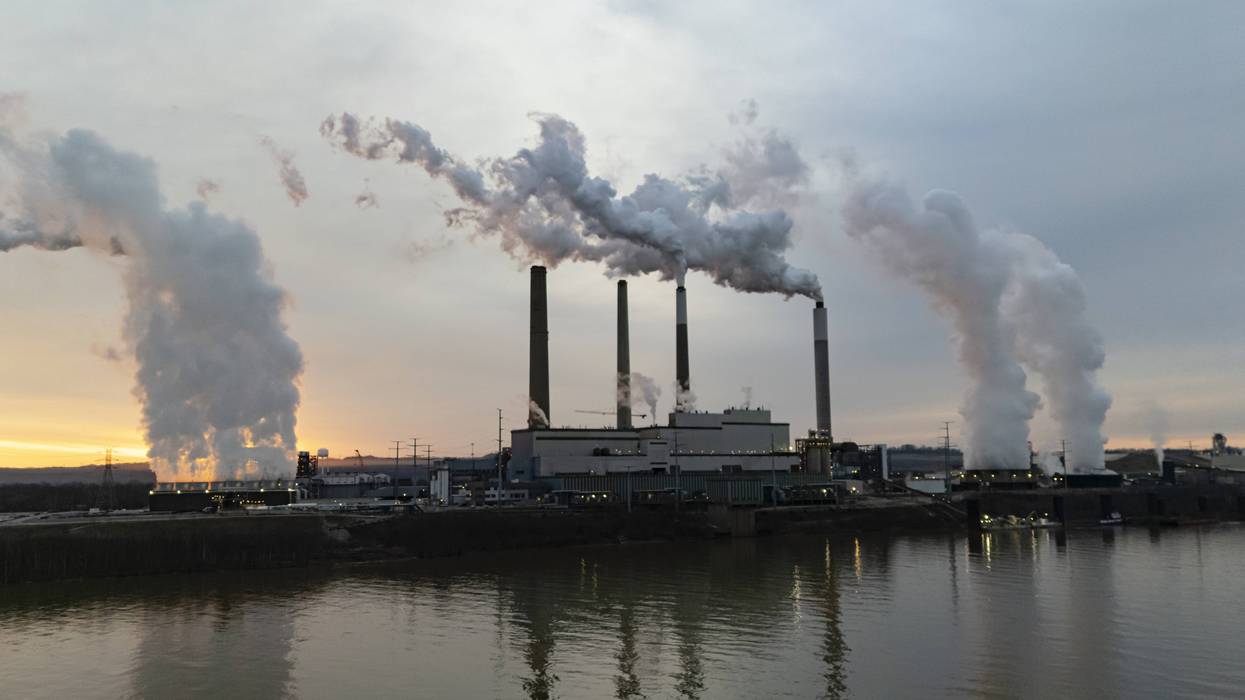
Officially called coal combustion residuals (CCR), "coal ash—the toxic byproduct of burning coal—contains hazardous pollutants, including arsenic, boron, cadmium, chromium, lead, radium, and selenium, which are linked to serious health harms such as cancer, heart disease, and brain damage, among other lasting impacts," noted the Natural Resources Defense Council (NRDC).
Specifically, as The Associated Press reported, the EPA "proposed easing standards for monitoring and protecting groundwater near some coal ash sites, rolling back rules forcing the cleanup of entire coal properties instead of just places where ash was dumped. The revisions would also make it easier to reuse coal ash for other purposes."
While Zeldin claimed the "commonsense changes to the CCR regulations reflect EPA's commitment to restoring American energy dominance, strengthening cooperative federalism, and accommodating unique circumstances at certain CCR facilities," Environmental Protection Network's Marc Boom responded that "letting companies avoid cleaning up waste sites that may be leaching toxic metals into groundwater and nearby waterways, while weakening protections and accountability, is not common sense."
"EPA's top priority should be protecting people's health, not sacrificing it for corporate expediency," argued Boom, senior director of public affairs at the group, which is made up of former agency staff. "EPA may call these safeguards 'impractical,' but anyone living downstream of coal ash sites holding thousands of tons of waste knows that requiring cleanup and monitoring is a necessary and basic standard."
NRDC senior attorney Becky Hammer called the pending rollback just "the latest in a long, long, line of Trump administration giveaways to fossil fuels industries," which have also included repealing EPA rules that targeted chemical pollution from coal-fired power plants, declaring a national energy emergency, and scrapping the 2009 "endangerment finding" that underpins all federal climate regulations.
Other advocacy organizations were similarly critical of Thursday's announcement. Daniel Estrin, Waterkeeper Alliance's general counsel and legal director, pointed out that "coal ash is contaminating water at nearly every active and retired coal plant in the US."
"By gutting these safeguards, EPA is abandoning its duty to protect impacted communities by allowing preventable contamination of our rivers, lakes, streams, and groundwater," he said. "The longer the coal industry is allowed to delay closing and cleaning up its toxic waste sites, the more difficult and costly it becomes to fix the damage. By failing to enforce the law, EPA is letting polluters continue harming people and wildlife without accountability."
Like Estrin and Hammer, Earthjustice senior counsel Lisa Evans framed that proposal as "yet another handout to the coal power industry at the expense of our health, water, and wallets," and warned of the dangers of delaying closure and cleanup. She said that "ultimately, if this rule is finalized, human health will suffer, and taxpayers will be left with the cost of cleaning up their rivers and drinking water."
Although "the Trump administration just took a sledgehammer to the health protections in place for toxic coal pollution," Evans added, "Earthjustice has successfully defended these safeguards in court and will do so again."
Nick Torrey, senior attorney at the Southern Environmental Law Center, which has secured commitments to clean up over 270 million tons of coal ash in US communities, similarly said that "doing the bidding of industrial polluters instead of protecting ordinary families and clean water is shameful, but we are ready to keep fighting against coal ash pollution."
"Letting coal-burning utilities set the agenda has been a disaster for communities across the South, resulting in coal ash spills and hundreds of families forced to live on bottled water for years under the threat of coal ash pollution," Torrey highlighted. "The Trump administration and coal ash polluters want to take us back to the bad old days of arsenic, lead, and mercury from coal ash contaminating our water."
In addition to facing a flurry of lawsuits over policies prioritizing the climate-wrecking fossil fuel industry—whose campaign cash helped President Donald Trump return to the White House last year—the administration has recently been hit with demands to remove Zeldin from more than 160 advocacy groups and nearly 300 health experts.
"This EPA's actions to put polluters first, at the expense of our health, are dangerous and will be deadly," states the health experts' open letter, organized and released Thursday by the Climate Action Campaign. "Administrator Zeldin has abandoned his sworn duty and must be held accountable for his agenda."