

SUBSCRIBE TO OUR FREE NEWSLETTER
Daily news & progressive opinion—funded by the people, not the corporations—delivered straight to your inbox.
5
#000000
#FFFFFF
To donate by check, phone, or other method, see our More Ways to Give page.
Daily news & progressive opinion—funded by the people, not the corporations—delivered straight to your inbox.

In advance of the next round of the Regional Comprehensive Economic Partnership (RCEP) negotiations starting in Perth, Australia, this Sunday, the international medical humanitarian organization Doctors Without Borders/Medecins Sans Frontieres (MSF) is warning that current proposals in this trade agreement could severely restrict access to affordable medicines for millions of people around the world.
In advance of the next round of the Regional Comprehensive Economic Partnership (RCEP) negotiations starting in Perth, Australia, this Sunday, the international medical humanitarian organization Doctors Without Borders/Medecins Sans Frontieres (MSF) is warning that current proposals in this trade agreement could severely restrict access to affordable medicines for millions of people around the world. Text from a leaked chapter on intellectual property shows that Japan and South Korea have made proposals that go beyond what international trade rules require, undermining access to affordable generic medicines and making it harder for patients and treatment providers like MSF to access affordable, lifesaving medicines.
"Proposals in the RCEP negotiations are trying to introduce intellectual property measures far tougher on access to medicines than what is required under international trade rules," said Leena Menghaney, South Asia head of MSF's Access Campaign. "If accepted, the agreement would restrict access to affordable generic medicines for people in many countries that will be part of the agreement--including Indonesia, Thailand, Myanmar, Cambodia, and Laos--and for the millions of people around the world who rely on lifesaving affordable generic medicines from India."
The measures that would harm access to affordable medicines are especially worrisome given India is one of the countries included in the RCEP negotiations. India, often known as the "pharmacy of the developing world," for its wide-scale production of generic medicines, supplies lifesaving affordable medicines needed to treat communicable and non-communicable diseases in developing countries. Two-thirds of all the drugs MSF purchases to treat HIV, tuberculosis, and malaria are generic medicines from India.
"Many of the intellectual property provisions that have been tabled mirror those in the Trans-Pacific Partnership agreement (TPP), considered the worst trade deal ever for access to medicines," said Brian Davies, East Asia head for MSF's Access Campaign. "Countries that did not join the TPP--particularly India and key members of the Association of Southeast Asian Nations (ASEAN)--will be pushed to adopt similar standards in the RCEP negotiations."
In Perth, India will be under increasing pressure to roll back some of the hard-fought protections for access to medicines that have been secured by its negotiators in past trade agreements. They have stood firm against the most harmful provisions--such as extended patent terms and data exclusivity--which had been proposed but rejected both in the India-Japan Comprehensive Economic Partnership Agreement, and the ongoing negotiations for an EU-India Free Trade Agreement.
One of the most damaging measures is data exclusivity, which gives companies monopoly rights on drugs by restricting the use of clinical trial data by drug regulators when approving generic drugs or "biosimilar" versions of drugs and vaccines. Data exclusively would act like a patent to block the entry of more affordable generic medicines to the market, even for drugs that are already off patent, or do not deserve a patent to begin with. Other clauses harmful to access to medicines remain on the table, including extending patent terms, and introducing controversial aspects of intellectual property enforcement without the safeguards needed to prevent abuse and protect access to medicines.
"If the measures in this agreement prevent people from getting the generic medicines they need, the health consequences for any delay or interruption of treatment for many diseases, like HIV, could be serious," said Dr. Greg Elder, medical coordinator for MSF's Access Campaign. "Ninety- seven percent of the HIV medicines MSF uses to treat 230,000 people living with the disease are generics sourced from India. The reality is, without generic medicines, we wouldn't be able to treat as many people as we do. We urge Indian and ASEAN negotiators to make sure the terms of any trade agreement reached do not impede the supply of generic medicines upon which we and so many people in developing countries rely."
RCEP is being negotiated by 16 countries, including India, China, Japan, South Korea, Australia and New Zealand, and 10 ASEAN members--Brunei, Cambodia, Indonesia, Malaysia, Myanmar, Singapore, Thailand, Philippines, Laos, and Vietnam.
Doctors Without Borders/Medecins Sans Frontieres (MSF) is an international medical humanitarian organization created by doctors and journalists in France in 1971. MSF's work is based on the humanitarian principles of medical ethics and impartiality. The organization is committed to bringing quality medical care to people caught in crisis regardless of race, religion, or political affiliation. MSF operates independently of any political, military, or religious agendas.
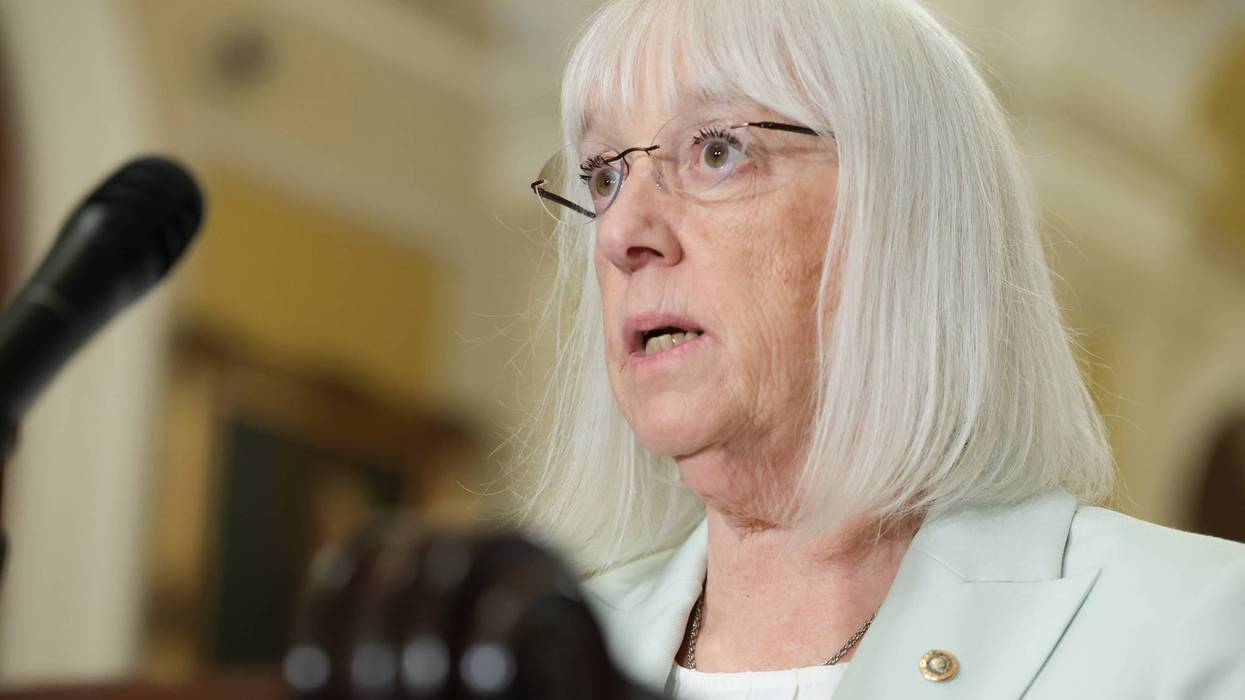
"If Trump had simply done nothing... some of these families would have ended up saving as much as $15,000 a year," said Sen. Patty Murray.
In what Democratic Sen. Patty Murray described as a “slap in the face to moms and dads,” Republicans have blocked her proposed resolution to restore a rule that could have saved low-income parents thousands of dollars per year on childcare before the Trump administration axed it.
Under a rule that went into effect earlier this month, the Department of Health and Human Services (HHS) rescinded a Biden-era rule that capped families’ copayments at 7% of their household income for the Child Care and Development Fund (CCDF), which helps about 994,000 low-income families pay for childcare so parents can work, attend school, or participate in job training.
The program is administered at the state level, and under the abandoned rule that was enacted in 2024, all states were required to begin phasing in the 7% cap, which is considered a federal affordability benchmark.
Under the Trump policy change, states will not be required to cap parents' copayments as long as they continue to use a sliding scale based on income level and don't present a "barrier” to receiving assistance, though it's not specified what that means.
As of March 2026, 19 states had not lowered their maximum copayment to 7%.
An April analysis by the Center for American Progress found that, by eliminating the federal cap, families in 10 states that have not enacted it would lose between $450 and more than $15,000 in potential annual savings, depending on how high their state sets the threshold.
In Ohio, which caps copayments at 27% of household income, families could lose up to $15,482 in annual savings under the maximum copayment. In Vermont, which caps copayments at 14.9% of household income, families could lose up to $11,712.
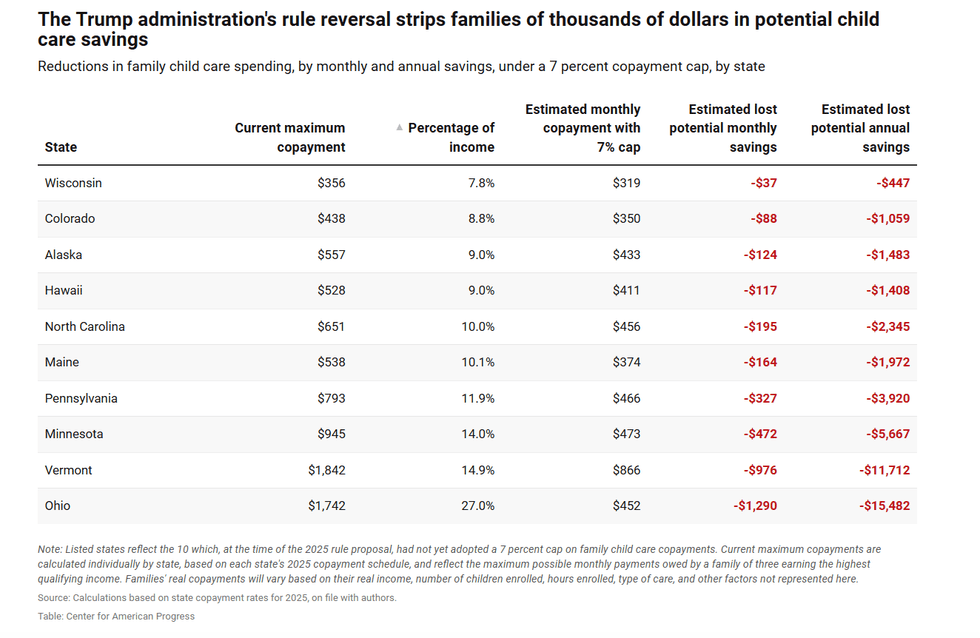 (Graphic from the Center for American Progress)
Murray (D-Wash), the former chair of the Senate Committee on Health, Education, Labor, and Pensions (HELP), introduced a resolution last month under the Congressional Review Act, which would have nullified the administration's elimination of the 7% cap.
It also would have restored other Biden-era requirements that were reversed under the same rule, including requirements that states pay childcare providers based on enrollment rather than attendance, pay them in advance, and use grants and contracts to fund childcare for infants, children with disabilities, and those in underserved communities.
In a speech on the Senate floor before the resolution came to a procedural vote on Thursday, she told her colleagues bluntly, “You are either voting to lower childcare costs or to increase them.”
She challenged the senators who planned to vote against the resolution to “go home and tell the parents in your state you voted to raise their childcare bill,” adding that “you cannot call yourself pro-family while voting to make it more expensive to raise one.”
In a party-line vote on Friday, the bill was blocked from advancing by a margin of 52-47, with every Republican voting against it except for Sen. Mitch McConnell (R-Ky.), who is absent after being hospitalized in June.
After the vote failed, Murray described it as an example of Republicans taking money away from American families struggling to afford the basics of life while pushing for lavish spending on war and tax cuts for corporations and the wealthy.
“How about instead of a $1.5 trillion war budget, we make sure every working family in America can afford childcare?” Murray said. “If Trump had simply done nothing, and left the 7% cap in place, some of these families would have ended up saving as much as $15,000 a year for their family.”
According to a Century Foundation analysis of Bureau of Labor Statistics data, childcare costs increased by 5% from August 2024 to August 2025 and now average more than $13,000 per child per year across age groups.
Trump has been surprisingly open about the fact that, under his control, and in direct contrast with his campaign promises, the federal government is prioritizing spending on his war in Iran instead of providing government subsidies for Americans’ basic needs, including daycare.
"We’re fighting wars. We can’t take care of daycare," he said during a speech in April. "You gotta let a state take care of daycare, and they should pay for it too. It’s not possible for us to take care of daycare, Medicaid, Medicare, all these individual things.”
“Trump says we can’t afford childcare. But he is wrong,” said Murray, who has co-introduced legislation to expand federal childcare subsidies and cover nearly all costs for low-income families. “The truth is we can’t afford to ignore childcare.”
"I am trying to see how this operation differs from a classic organized crime protection racket. I see little distinction."
A Thursday report in The Wall Street Journal revealed new details on President Donald Trump's attempts to shake down major corporate donors to fund his assorted vanity projects, including the construction of his luxury White House ballroom and his presidential library.
According to the Journal, Trump employs a fundraiser named Meredith O’Rourke whose job is to hound corporations into sending money to the president's projects.
O'Rourke's work is so important to the president, the Journal added, that he asks her for updates on her progress in raking in corporate cash almost nightly.
"Trump asks O’Rourke which companies and donors have cut checks and which haven’t, and for how much," the Journal reported. "He often asks her to make much larger financial requests than she was planning—for some donors the ask is $5 million, for others it is $50 million. And the president gives her names to call, often including people who have recently met with him, according to people with knowledge of the calls."
The Journal estimated that Trump has raised more than $800 million from corporate donors throughout his second term, and the newspaper found that it appeared to be entirely legal.
"No laws prohibit presidents from raising unlimited sums of money for nonprofits, like the ones used for the ballroom and his presidential library, his super PAC, or political issue committees," the Journal explained. "For most of these types of transactions, public disclosure of donors isn’t required and reporting on spending is infrequent."
Regardless of technical legality, many critics called the president's actions deeply corrupt, especially since many of the companies being shaken down for cash have business before the federal government.
" Donald Trump is the most corrupt president in our nation’s history," wrote Sen. Elizabeth Warren (D-Mass.) in reaction to the Journal's report.
Adam Serwer, staff writer at The Atlantic, joked that Trump technically "can’t be bought" because "he is subscription based."
"You have to keep bribing him forever," Serwer quipped.
Eric Rauchway, historian at the University of California, Davis, noted the Journal's reporting that O'Rourke will sometimes try to persuade corporate donors by telling them that "the boss wants this money," which he likened to a mafia extortion scheme.
"Guys, 'the boss wants this money' is not 'fundraising,'" wrote Rauchway, "it's a Piranha Brothers operation."
Scott Horton, contributing editor at Harper's, made a similar analogy.
"I am trying to see how this operation differs from a classic organized crime protection racket," Horton wrote. "I see little distinction."
Amanda Carpenter, writer and editor at Protect Democracy, argued that Trump wasn't the only party meriting criticism here, as the corporations who give in to his demands deserve blame as well.
"If a politician is selling access and favors, CEOs aren’t off the hook," she observed. "They don’t get to just pay to play. It’s not a free pass to bribe and extort and corrupt our economy. There are many legal tools to track that on the private side and hold them account for their end of these dirty deals."

"We need to massively step up our response," said one senior UN official, while another stressed that "Ebola feeds on delay, fear, and hunger."
As the official death toll from the Ebola epidemic in the Democratic Republic of Congo topped 1,500, United Nations officials called for a dramatic expansion of humanitarian assistance to combat what's now the fastest-spreading outbreak of the deadly disease ever recorded.
The DRC's Health Ministry on Friday confirmed more than 3,400 infections and at least 1,556 deaths since the outbreak was declared in May. The ministry said the fatality rate during the current epidemic is 44%.
The epidemic is caused by the rare Bundibugyo strain of the Ebola virus, which has spread across multiple DRC provinces, with the vast majority of cases concentrated in Ituri Province. Unlike the Zaire strain from previous outbreaks, there is currently no approved vaccine or treatment for the Bundibugyo virus.
The current epidemic has killed more people faster than any previous outbreak, including in 2014-16, when more than 28,000 infections and over 11,000 deaths were reported.
"In the last 24 hours, 50 people have died of Ebola in the Democratic Republic of the Congo and the number of cases is growing exponentially, doubling every 20 days,” senior United Nations aiEbola coordinator Julien Harneis said during a Wednesday press conference in New York.
“So, in support of the government, I'm calling that we step up, across the response, the United Nations, nongovernmental organizations, member states,” Harneis continued. "We need to massively step up our response, be it in terms of supplies, specialized supplies like personal protective equipment, staff, specialized medical staff, and logistics as well.”
Harneis spoke at the press conference with acting UN World Food Program Executive Director Carl Skau, who said that "Ebola feeds on delay, fear, and hunger."
“Stopping this outbreak requires all hands on deck and communities at the center," he continued. "Food assistance is frontline Ebola containment. It helps families stay home, supports safe isolation, builds trust with communities, and keeps health teams moving. We know what works; what we need now is the speed and resources to scale it before this outbreak outruns the response.”
Skau noted that around 10 million people are suffering from acute food insecurity in the eastern DRC, with 3 million of those in an Integrated Food Security Phase Classification (IPC)-designated "emergency"—one step away from famine.
“You cannot force people to choose between hunger and health,” he said.
Compounding the crisis, a growing number of Ebola patients are dying outside of treatment centers. Officials said that more than 60% of recent Ebola deaths have occurred in communities, increasing the risk of further transmission through unsafe caregiving and burial practices.
Health workers also continue to endure attacks by armed groups, which have forced aid organizations to suspend operations in some of the hardest-hit areas of the epidemic.
Some experts also pointed to US President Donald Trump’s ideologically driven decision to withdraw the US from the World Health Organization, his administration’s dismantling of the US Agency for International Development, and reduced funding for the US Centers for Disease Control and Prevention’s global public health efforts as adversely affecting the response to the current Ebola epidemic, especially when compared with outbreaks in 2014 and 2019.
Meanwhile, health officials in neighboring Uganda this week declared an end to the country's Bundibugyo outbreak after no new cases were reported for a month. Twenty people were infected, and three died, in Uganda.

"This White House-Wall Street-Trump-Business feedback loop represents the depraved essence of insider trading," said the Maryland Democrat.
"Are you helping the president sell people advance access to market-moving information?"
That's the opening line of a Thursday letter that US House Judiciary Committee Ranking Member Jamie Raskin (D-Md.) sent to Kevin McGurn, interim CEO of President Donald Trump's Trump Media & Technology Group (TMTG) Corp.
TMTG runs Trump's Truth Social platform and earlier this month announced plans to launch "Truth API" by August 1. API, or application programming interface, lets software applications talk to each other. Critics have warned that the new endeavor will give Wall Street firms faster access to posts by the president and other top accounts.
"Trump Media's target market for buyers of this service is 'high-frequency and algorithmic trading firms,' which would each pay a
handsome $100,000 monthly subscription fee," Raskin wrote. "Nearly half of each fee would go directly into the pocket of Donald Trump, who owns roughly 41% of the company's shares through a trust that he continues to control."
"Put another way, Trump Media will soon be selling early access to President Trump's so-called 'Truth' missives to the most sophisticated investment firms in the world," he stressed. "This insider-information scheme will enable Wall Street to profit from the president's frequent market-moving posts on major businesses and cash in on swings in stock prices caused by the president's buying and selling (or pumping and dumping, if you prefer) of publicly traded stocks to unwitting retail investors."
As Investopedia pointed out Thursday: "In recent months Trump has posted about new developments in the Iran War, which is particularly important for buyers and sellers of futures contracts who are trying to ascertain where oil prices are headed. Over the past year, he has also posted about tariff policy, government investments in publicly traded companies, and other corporate news developments."
Additionally, as Raskin highlighted, "Trump has promoted over 20 companies on his Truth Social account shortly after purchasing the companies’ stocks, including government contractors where the Trump administration exerted substantial ability to move markets in those companies' favor. Donald Trump Jr.'s investment firm, 1789 Capital, has posted a staggering 200% investment return since his father's return to the White House, with the president recently admitting that his oldest sons are coventurers in his corruption."
Once the new service is up and running, "whenever President Trump uses Truth Social to announce that a ceasefire is imminent, or prematurely leaks US jobs data, his customers will now be able to front-run the market using their privileged access to his social media posts, leaving retail investors, pension plans, and retirement accounts irreparably disadvantaged," he warned. "This is precisely the type of harm that federal securities laws are designed to prevent."
Concerns about TMTG's plans led Democratic Sens. Elizabeth Warren (Mass.) and Adam Schiff (Calif.) to demand that US Securities and Exchange Commission Chair Paul Atkins launch an investigation. The senators wrote to the Trump-nominated SEC leader on Tuesday that the current administration "is the most corrupt in the nation's history," and the company's "new service threatens to undermine the integrity of capital markets."
In the meantime, Raskin—a constitutional scholar who managed Trump's historic second impeachment—is conducting his own probe of what he called a "reverse Robin Hood scheme," arguing that "this White House-Wall Street-Trump-Business feedback loop represents the depraved essence of insider trading." The congressman is demanding a lengthy list of records from the CEO of Trump's company by August 13.
"The president of the United States should be using the office to 'take care' that laws are enforced and to advance the public interest," he said, nodding to the US Constitution. "Instead, President Trump is, once again, using it to enrich in spectacular fashion himself, his family, and corporate cronies while also destroying the integrity of financial markets in the process."
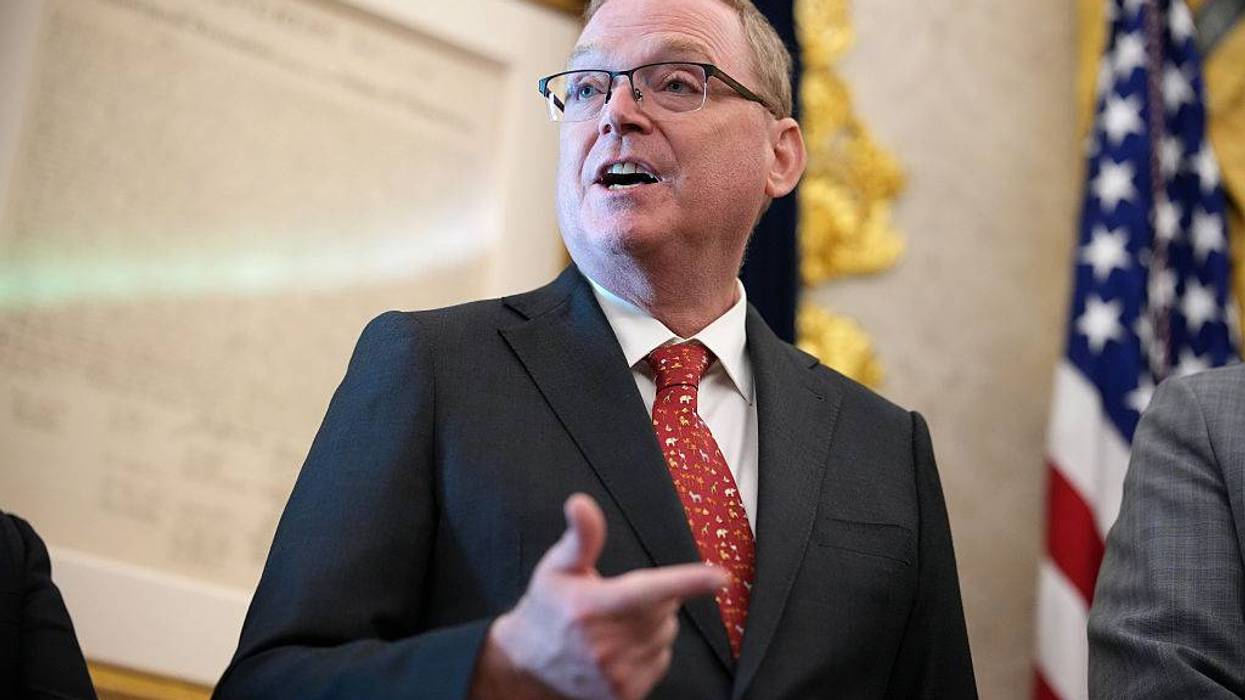
"The disdain this administration has for the very people living in rural America who helped bring it to power is staggering," wrote one critic.
National Economic Council Director Kevin Hassett on Friday drew sharp criticism after he claimed that energy-devouring artificial intelligence data centers are "good for towns" across the US.
During an appearance on Fox Business, Hassett made the case that Americans should welcome data centers into their communities because they would supposedly deliver real economic benefits.
"Data centers are very good for towns, because they create so many jobs and bring people in with high incomes that can buy houses and stuff like that," said Hassett. "So if you take a sleepy town that hasn't seen much in the last 20, 30 years and put a data center there, there are gonna be a whole bunch of happy residents in that town."
Hassett: "Data centers are very good for towns, because they create so many jobs and bring people in with high incomes that can buy houses and stuff like that. So if you take a sleepy town that hasn't seen much in the last 30 years and put a data center there, there are gonna be… pic.twitter.com/K1gymIK2Bw
— Aaron Rupar (@atrupar) July 31, 2026
A March Gallup poll found that 71% of Americans were opposed to building AI data centers in their local areas, with 48% registering strong opposition.
In the poll, many Americans cited concerns about data centers' uses of local water and electricity resources as their primary reason for opposition, as well as general concerns about their impact on the environment and the local quality of life.
Additionally, data centers have not proven to be a significant source of job creation in communities where they are built because their systems are so automated that they require very little staff to maintain.
Trump administration critics were quick to slam Hassett for peddling such outright falsehoods about data centers.
"Every single thing he says here is a lie," remarked Ben Collins, CEO of the satirical news website The Onion. "A Potemkin Village Imaginarium."
Jeffrey Vagle, professor at the Georgia State University College of Law, similarly saw little connection between Hassett's description of data centers and reality.
"Has Hassett ever been inside a data center?" Vagle asked. "He should do so then put together an employee per square foot analysis to compare with other businesses. Data centers are largely automated, operating with very few actual employees, none of them executives."
Vagle's analysis was echoed by journalist Philip Bump, who wondered "what high-paying long-term jobs do they pretend exist" when AI data centers move in.
"A data center isn't a place where execs come and do Big Deals," Bump explained. "Go to the server room at your workplace; are there lots of rich people in there spending money?"
Democratic pollster Stephen Clermont sarcastically encouraged Hassett to speak more about the purported virtues of data centers.
"The White House needs to keep with this messaging and keep using Hassett as a surrogate," Clermont wrote. "The Forgotten Man will be forgotten no more in the data center utopia."
Liberal Fox News personality Jessica Tarlov similarly argued that Hassett's happy talk about data centers could be good for Democrats.
"Take the opening Democrats!" she wrote. "Americans hate data centers. The utility bills. The noise. The pollution."
Glenn Elliott, former Democratic US Senate candidate in West Virginia, argued Hassett's pitch for data centers showed what the Trump administration really thinks of its core voting base.
"The disdain this administration has for the very people living in rural America who helped bring it to power is staggering," Elliott wrote.

"It can't be overstated how flippant and arrogant Stevens comes off when questioned about $60 million in super PAC spending for her in this race," said one observer.
With just days to go until the Michigan US Senate primary election, Rep. Haley Stevens, the preferred candidate of several Democratic establishment figures, suggested this week that campaign finance—a top issue in her race against former public health official Abdul El-Sayed—is a niche interest held by "educated" people and not working families, and appeared eager for voters and the press to stop asking her about the roughly $60 million outside groups have poured into the race on her behalf.
"It seems like we got the campaign finance zoomies," the Michigan Democrat told reporters at an event with business leaders in Lansing on Wednesday, appearing mystified at the suggestion that ordinary voters would be interested to know her position on super political action committees, which can raise unlimited money from corporations and other groups and individuals to support a candidate's run, and her significant backing from a super PAC affiliated with the increasingly unpopular American Israel Public Affairs Committee (AIPAC).
"My opponent has done a great job talking about campaign finance. It’s an educated issue,” Stevens said, according to a report from Michigan Advance Thursday. “I even had someone who’s got a law degree asking me about some of the campaign finance stuff today. That’s totally fine, but you know what else? These families on paid leave? They need affordable daycare. They need good public schools to go.”
Journalist David Sirota of The Lever said that in what amounts to Steven's "final argument" ahead of the election, the candidate suggested that pro-Israel and other groups' attempt to "buy her a Senate seat—is merely an esoteric 'educated issue' that has nothing to do with corrupt lawmakers creating corrupt policies fueling the affordability crisis."
As Mother Jones reported Friday, about half of the super PAC spending on Stevens' behalf has come from United Democracy Project, which is affiliated with AIPAC, while a large chunk comes from the super PACs A Stronger Michigan and Center Forward.
Those groups have received millions of dollars from PhRHMA, a trade group representing pharmaceutical firms, and UnitedHealth Group—both key players in the for-profit healthcare industry that's raised household costs for families across the country in recent years, with UnitedHealth slashing care expenses for nursing home patients and unlawfully using an artificial intelligence algorithm to deny coverage to people with Medicare Advantage. El-Sayed has notably made Medicare for All a key priority of his campaign.
"The outside spending picture for El-Sayed looks much different," reported Mother Jones. "The biggest individual donor to Fighting for Michigan—El-Sayed’s main outside backer—is the candidate’s father-in-law, a nephrologist at a Detroit hospital who had given $300,000 as of July 15. Overall, the super PAC has expended about $2.8 million—less than one-tenth of what has been spent against El-Sayed by the United Democracy Project alone."
Stevens attempted to shift the focus to her opponent's support from his father-in-law at her meeting with the Lansing Regional Chamber on Wednesday, after she was asked about the record-breaking outside spending in the race by a business leader in the very first question of the event.
But another attendee brought up the issue again later, noting she had not specifically addressed concerns about the groups whose spending her campaign is benefiting from and asking whether she would back a bill proposed by Sen. Bernie Sanders (I-Vt.), an El-Sayed supporter, to abolish super PACs.
Stevens was noncommittal once again, suggesting concerns about super PACs are part of "campaign platform" favored by Sanders.
"He’s in the independent party," she added. "I haven’t talked to him about it. I’m not trying to do any division.”
Stevens did allow that she "would love a constitutional amendment to get rid of money in politics and maybe make our elections shorter" and said she had spoken to Republicans about such a proposal.
But one observer said Stevens' overall message that the financing of her campaign is an issue only voters with "a law degree" are interested in was "flippant and arrogant."
Stevens has benefited from millions in AIPAC-backed super PAC spending as public approval has plummeted regarding the powerful pro-Israel lobby and the United States' funding of Israel's military, after nearly three years of the Israel Defense Forces' assault on Gaza and Prime Minister Benjamin Netanyahu's push for the US to join in attacking Iran—a conflict that has also had a direct impact on working families' household budgets as gas prices have soared.
On Thursday, Stevens took direct aim at El-Sayed, a Muslim, for his focus on AIPAC during the campaign, addressing him in a lengthy post on X in which she said, "Everyone in America understands you want to blame all of your problems on Jewish Americans."
The remark was widely condemned as "race-baiting," and interpreted as one that conflated Jewish Americans with the pro-Israel lobby.
"When someone points out AIPAC is spending $50 million, it’s presented as 'blaming Jewish Americans,'" said podcast host Adam Johnson. "I hate this shit so much, it’s gross, it’s bad faith, it’s sleazy, and it’s more manipulative, crybully smarm."

"Saw a rat on the rails at Tasker-Morris and it has my vote."
Pennsylvanians aren't just sick of Sen. John Fetterman. Nearly 6 in 10 say that if he came up for reelection today, they'd sooner check the box for literally anybody else.
That's according to a PennLive/Bravo Group poll released Wednesday, in which just 40% of likely voters in Pennsylvania said they'd vote for their Democratic senator, compared with 58% who said they'd choose an unspecified "someone else."
While he was elected in 2022 as a progressive in the mold of Sen. Bernie Sanders (I-Vt.), Fetterman's transition into a left-punching Fox News talking head over the past four years has made him abysmally unpopular within his own party.
After watching Fetterman enthusiastically cheer Israel’s genocidal war in Gaza, block efforts to halt President Donald Trump’s illegal wars in Venezuela and Iran, defend the honor of US Immigration and Customs Enforcement (ICE) as agents killed several US citizens and immigrants, and mock the idea of lowering Americans’ healthcare costs, just 19% of Democrats in his home state said they approved of him compared to 69% who disapproved, according to a Quinnipiac poll released earlier this month.
Republicans, meanwhile, are loving him: 77% said they approve of how he's handling his job.
Fetterman is now publicly flirting with a party switch, citing the rising number of Democrats who have voted to restrict arms to Israel as the primary reason.
“If our party ever becomes, and just makes it official, the anti-Israel party, that’s when I would leave because that’s been a moral clarity for me,” Fetterman said earlier this month. “That’s our special ally, you know?”
But Fetterman's pariah status among Democrats doesn't mean he can be easily cast out.
With the strong possibility that Democrats could hold a narrow Senate majority after November's midterms, Fetterman is setting himself up to be de facto king of the Senate with the power to near-singlehandedly dictate policy in the vein of the conservative former Sens. Joe Manchin (D-WV) and Kyrsten Sinema (D-Ariz.) during the Biden years.
Fearing the party’s resident “ogre,” as US Senate candidate Abdul El-Sayed recently called him, may break ranks in the next Congress, Senate Minority Leader Chuck Schumer (D-NY) has spent the week trying to make nice. As Semafor reported on Friday:
Chuck Schumer showered John Fetterman with praise this week, declaring him a “very good member,” liked and respected by colleagues in Democrats’ “big tent party.”
Fetterman was grateful for the shoutout and has repeatedly shot down the idea he’d switch caucuses in the Senate. But he’s still not sure he fits with where his party is going.
“I truly appreciate the leader’s nice words,” Fetterman told Semafor on Thursday. He added that “I don’t know if the Democratic Party is ‘big tent’ enough for proud, pro-Israel supporters that also strongly reject the warped mutation of” democratic socialists now rising in their ranks.
Fetterman, who has long struggled with his mental and physical health and expressed apathy about fulfilling basic senatorial tasks like showing up to votes and committee hearings, has not yet committed to running for reelection in 2028.
Even if he did, it's hard to imagine him faring well in a Democratic primary where most voters would sooner vote for a rat they saw crawling through a SEPTA station, as one social media user put it.
An effort by progressive groups to "primary Fetterman" is already underway, and as the left swaggers from recent victories over the establishment, names like the Berniecrat Rep. Summer Lee (D-Pa.) are being bandied about as possible replacements.
And despite his current status as a GOP darling, it's unclear if they'd choose a turncoat over the genuine article. While his foreign policy record would make Dick Cheney blush, Fetterman has not yet gone full-MAGA on some load-bearing issues like LGBTQ+ rights and gutting social programs.
Having immolated any goodwill on the left, Fetterman appears to lack a clear constituency.
Meanwhile, according to the new poll, those who want him gone really want him gone: 30% of Pennsylvanians surveyed said they'd "definitely" vote for someone else and 29% said they'd "probably" vote for someone else. By comparison, just 12% said they'd "definitely" vote for Fetterman again, while 28% said they "probably" would.
Isi Breen, a former communications official for Rep. Ilhan Omar (D-Minn.), remarked on social media, "I literally have never seen an elected official losing so badly to 'literally anyone else.'"

"No matter what they call themselves, prediction markets like Kalshi are gambling platforms, plain and simple," said New York Attorney General Letitia James.
The state of New York on Friday announced it was suing online prediction market Kalshi for operating as "an illegal gambling operation."
In a complaint filed with the New York State Supreme Court, New York Attorney General Letitia James alleged that Kalshi was running an unlicensed gambling business "in flagrant disregard" of the Empire State's "constitution, penal laws, and other statutes."
The complaint notes that, among other things, Kalshi allows users as young as 18 years old to place bets on its platform, while New York state law limits legalized gambling to persons aged 21 or older.
"New York’s gambling laws protect children from underage betting and help combat gambling addiction," said James in her announcement of the lawsuit. "No matter what they call themselves, prediction markets like Kalshi are gambling platforms, plain and simple. By ignoring our laws, Kalshi is running an illegal operation and harming New Yorkers in the process. We are taking them to court to uphold our laws and protect New Yorkers."
James' lawsuit asks the court to permanently bar Kalshi from operating inside the state unless it obtains a license from the New York State Gaming Commission; ordering it to "produce an accounting of all bets placed, monies lost by customers in connection with its gambling business"; and forcing it to pay assorted "restitution, disgorgement, damages, and penalties" for its assorted violations of the law.
New York Gov. Kathy Hochul, in a statement supporting the lawsuit against Kalshi, accused the company of ignoring state gambling laws, "which exist to protect consumers, prevent problematic gambling, deliver funding for critical public services, and ensure that every company plays by the same rules."
Minnesota state Rep. Emma Greenman (D-63B), who earlier this year authored legislation to ban prediction markets in her state, said that teenagers getting hooked on gambling apps is becoming a major problem.
“We’re seeing studies come out that say [the companies] are targeting 18- to 21-year-olds,” said Greenman, “and we are seeing gambling starting younger and younger.”
President Donald Trump's administration, however, has regularly worked to quash state governments' efforts to regulate online prediction markets such as Kalshi and Polymarket.
Specifically, the administration has stacked the Commodity Futures Trading Commission (CFTC) with prediction market and sports betting industry insiders who have been pursuing legal action against any states attempting to clamp down on the online gambling platforms.
Earlier this year, CFTC Chair Michael Selig warned states against trying to regulate prediction markets, which he said would “circumvent the clear directive of Congress.”
“Our message to Wisconsin is the same as to New York, Arizona, and others,” said Selig. “If you interfere with the operation of federal law in regulating financial markets, we will sue you.”

"While Americans suffer from high prices and the Iran war imposes tens of billions of dollars of new costs on the American public, the oil industry wins big."
ExxonMobil and Chevron repeated $26.5 billion in combined profits in the second quarter of 2026 as US President Donald Trump's illegal war on Iran drove up gas prices around the world, punishing consumers at the pump while boosting oil companies' bottom lines.
Chevron on Friday announced $12 billion in profits for the second quarter—its highest quarterly profit in six years—while Exxon posted $14.5 billion. Exxon touted its "industry-leading shareholder distributions," which "totaled $9.4 billion, including $4.3 billion of dividends and $5.1 billion of share repurchases."
Reuters noted that the two companies' results "mirrored those of European oil majors TotalEnergies and Shell, which also posted banner second-quarter profits buoyed by higher oil prices."
The oil giants' earnings came weeks after a Harris survey found that 95% of Americans believe the US is facing an affordability crisis, with gas and groceries at the top of the list of "unaffordable goods and services." The current national average price for a gallon of gas is $4.1.
"The pattern is consistent: While Americans suffer from high prices and the Iran war imposes tens of billions of dollars of new costs on the American public, the oil industry wins big," a group of Democratic senators wrote in a recent letter. "President Trump has made the calculus explicit in his own words. When it comes to families facing increasing prices in the context of the Iran war, he said: ‘I don’t think about Americans’ financial situation.'"
Sierra Club said Thursday that Big Oil's wartime profits are "paid by you," and called for a "windfall profits tax to recover a portion of the excess profits oil companies rake in during a global crisis and return that money to the people who paid higher prices."
"At the same time as oil and gas companies are preparing for a multibillion-dollar payday, they are working with the Trump administration to block investment in clean energy sources that would make American families more energy independent," the group added. "It's time to make polluters pay."
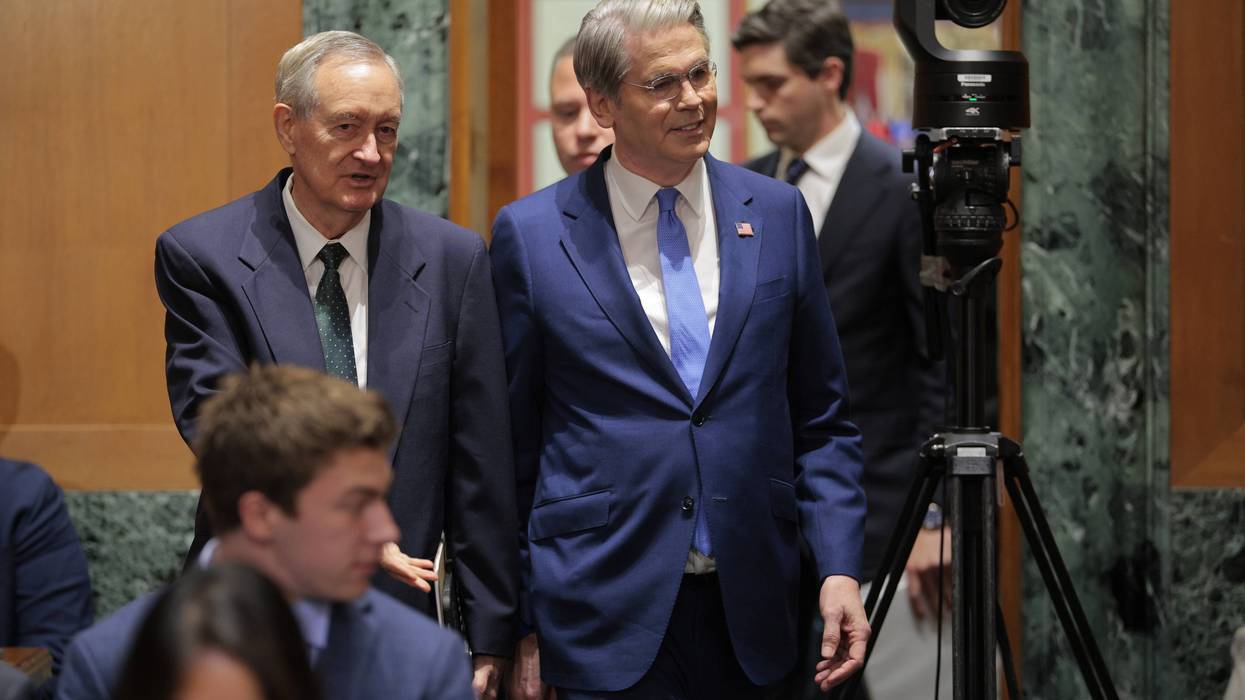
"Trump’s sweetheart audit immunity deal is perhaps the most brazenly corrupt action taken by a president in American history," said one top Senate Democrat.
Republicans on the Senate Finance Committee voted Thursday to block a Democratic amendment that would have prohibited the Internal Revenue Service from giving sweeping tax audit immunity to President Donald Trump, his family, and their businesses.
If passed, the amendment would have nullified a central element of the deal that the US Justice Department cut with the IRS in May to settle Trump's $10 billion lawsuit against the tax agency. Experts have argued that such broad audit immunity is unlawful, and Democrats have warned the agreement could leave the IRS with no recourse if Trump decided to dodge taxes on the billions of dollars he has pocketed during his second stint in the White House.
Democrats on the Finance Committee sought to attach their amendment to bipartisan legislation aimed at streamlining tax administration. The amendment failed in a 13-14 vote along party lines, and the bipartisan bill passed out of committee 26-1—with Sen. Elizabeth Warren (D-Mass.) the lone opponent. Warren told Politico that she "cannot support a bill that rubber stamps Donald Trump’s corruption."
"Senate Republicans blocked Democrats' proposal to end Donald Trump's IRS sweetheart deal," Warren wrote on social media following Thursday's vote. "This deal gives him FULL IMMUNITY from audits on tax returns he's filed. It's corruption on steroids."
The vote on the Democratic amendment came as Trump's attorney general nominee, Todd Blanche, remained stalled in the Senate, in large part due to the Justice Department's failure to commit to sufficient limitations on the IRS audit immunity deal, which Blanche signed.
Blanche, who is currently the acting attorney general, testified during a Senate confirmation hearing earlier this month that the IRS audit immunity deal is "not forward-looking," but a key Republican said this week that the Justice Department has not yet provided sufficient written commitments to limit the immunity agreement.
Blanche reportedly met with the two Senate GOP holdouts—John Cornyn of Texas and Thom Tillis of North Carolina—on Thursday in an effort to hash out a deal to advance his nomination. Trump, who has aggressively avoided taxes throughout his career and broke with political tradition by refusing to voluntarily release his federal income tax returns, threatened on Thursday to pull Blanche's nomination until Cornyn and Tillis leave the Senate next year, having lost reelection.
The New York Times summarized the IRS immunity deal, should it survive legal and political scrutiny:
First, the IRS has to drop any inquiries, whether civil audits or criminal investigations, it was pursuing into Mr. Trump, his family members, their companies, or 'affiliated individuals.' Second, the IRS can’t start any new investigations into tax returns that this potentially large pool of people and companies has already filed.
That means that any tax maneuver the Trumps have already used, whether the IRS was already auditing it or not, is now off limits. The agency typically has three years after someone files a tax return to assess more in taxes. So there are potential audits of Mr. Trump and his family that the IRS could have initiated—claims that 'could have been asserted,' in the language of Mr. Blanche’s order—that it is now not supposed to. But the next tax return that Mr. Trump files could, theoretically, still be eligible for an audit.
“Trump’s sweetheart audit immunity deal is perhaps the most brazenly corrupt action taken by a president in American history, and Congress must permanently put a stop to the unchecked greed on display,” Sen. Ron Wyden (D-Ore.), the ranking member of the Senate Finance Committee, said earlier this week. “Elected officials cannot look taxpayers in the eye and ask them to play by a set of rules that the president of the United States is exempt from."