SUBSCRIBE TO OUR FREE NEWSLETTER
Daily news & progressive opinion—funded by the people, not the corporations—delivered straight to your inbox.
5
#000000
#FFFFFF
To donate by check, phone, or other method, see our More Ways to Give page.


Daily news & progressive opinion—funded by the people, not the corporations—delivered straight to your inbox.

Brett Fleishman, 350.org, (970) 376-5041
As the California State Assembly Committee on Public Employees, Retirement, and Social Security prepares to review S.B. 185, the California Federation of Teachers (CFT), the Alliance of Nurses for a Health Environment (ANHE), and Tom Steyer, have all endorsed the bill.
ANHE's endorsement is accompanied by a joint letter from a wide range of health organizations. The letter speaks to the severe threat that fossil fuel investments and use have on human and environmental health.
"At every juncture coal creates health hazards - as it is extracted from the earth and when it is combusted for energy. Coal-fired power produces a wide range of unhealthy pollutants and increases the risk of childhood asthma and an array of other diseases in those who live in close proximity to power plants," said Barbara Sattler, professor in the Public Health Program of University of San Francisco, and a member of ANHE. "By divesting from coal, California will be sending a strong signal regarding our trajectory towards healthier energy sources and better health for the people of California."
![]() We Interrupt This Article with an Urgent Message! Common Dreams is a not-for-profit news service. All of our content is free to you - no subscriptions; no ads. We are funded by donations from our readers. ![]() Our critical Mid-Year fundraiser is going very slow - only 612 readers have contributed so far. We must meet our goal before we can end this fundraising campaign and get back to focusing on what we do best.


![]() |
Prominent unions, including SEIU 1000 and the California Faculty Association, have already backed fossil fuel divestment. Joining them is the California Federation of Teachers, representing 120,000 members working at every level of the educational system.
"As educators committed to building a better world and a brighter future for our students and our communities, we cannot continue to have our pension funds invested in something that devastates our environment and threatens the future of our students," said Jim Miller, political director of CFT affiliate AFT Local 1931, and a professor at San Diego City College. "It is crucial that the Assembly approves this bill to divest from coal and goes further to consider full fossil fuel divestment. Indeed, considering the long term costs for our children and the natural world, it should be a moral imperative."
These recent endorsements come just days after the June Teachers' Retirement Board meeting where Tom Steyer urged CalSTRS to divest coal holdings. Steyer notes the "unique moral authority" of the pension fund, and argues that all fossil fuel investments are indeed a bad bet. The committee will vote on the bill next Wednesday, June 24.
The campaign for S.B. 185 is part of a growing worldwide push to divest the financial holdings of universities, religious institutions, pension funds, and other investors from fossil fuel companies.
For more information on S.B. 185, visit: https://focus.senate.ca.gov/climate.
350 is building a future that's just, prosperous, equitable and safe from the effects of the climate crisis. We're an international movement of ordinary people working to end the age of fossil fuels and build a world of community-led renewable energy for all.
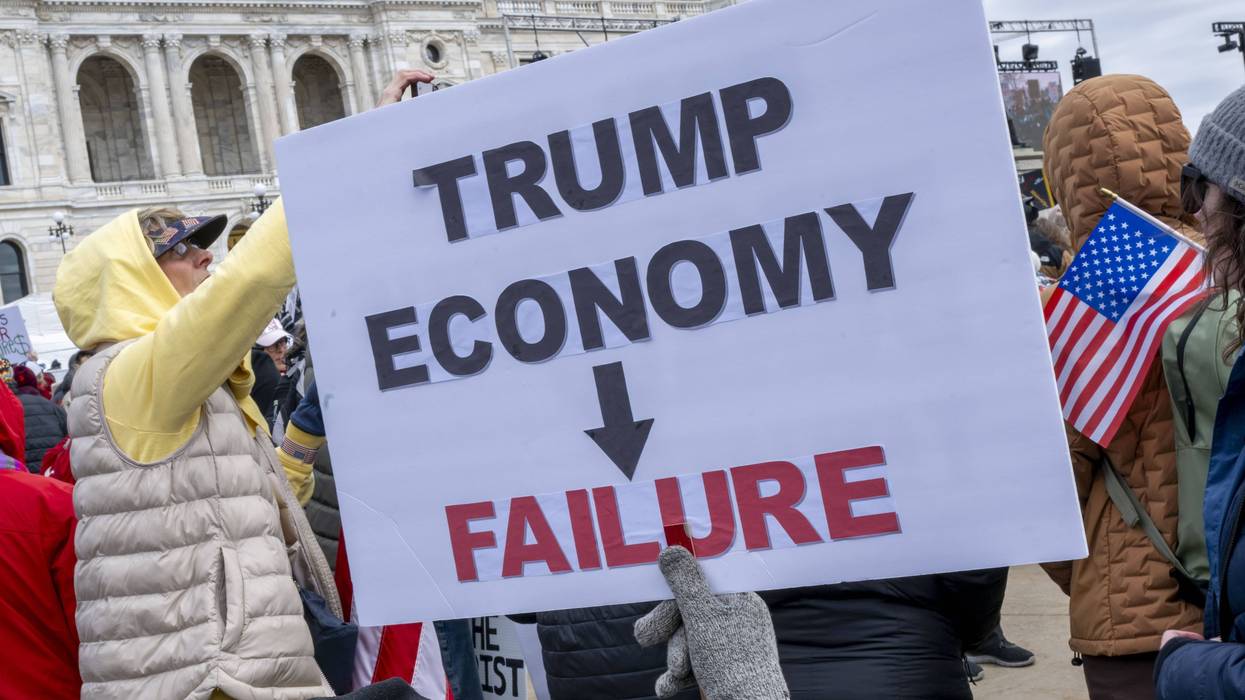
"The latest jobs data show how President Trump's mismanagement of the economy—both domestically and internationally—is harming workers at home," said another expert.
As US Labor Secretary Lori Chavez-DeRemer on Friday declared that "America's economic comeback is on full display" and the country's "workers are winning again" due to what the business press and top newspapers called a "strong" March jobs report, some economists stressed the importance of looking beyond the topline figure and one month of data.
The US Bureau of Labor Statistics announced that employers added 178,000 jobs last month, with gains in construction, healthcare, and transportation and warehousing, and declines in the federal government. The unemployment rate fell slightly to 4.3%, with 7.2 million people officially jobless.
"Folks, today's jobs report is not good," declared Heidi Shierholz, president of the think tank Economic Policy Institute (EPI). She pointed to average job growth over the past two months, the reason for the drop in unemployment ("people leaving the labor force"), slowing wage growth, and the fact that "the effects of our war in Iran aren't even in these numbers yet."
EPI senior economist Elise Gould further explained those points on social media. Although the report "came in stronger than expected... much of the gain was a bounce back to February declines (now a loss of 133,000 jobs)," she said. "As a result, average monthly growth the last two months was only 22,500 jobs."
As far as the unemployment rate ticking down, "it's important to note that this happened for the 'wrong' reasons as both the labor force participation and the share of the population with a job also ticked down," Gould continued. "Job gains were strongest in healthcare as striking workers returned to work."
"Attacks on the federal workforce continue," she highlighted, with the sector down 18,000 jobs in March and 352,000 positions since January 2025, when President Donald returned to power. "The vital services federal employees provide cannot be done without these essential workers. The cost of these losses are only just beginning."
"Manufacturing rose 15,000 jobs in March, but still has a huge deficit since Trump took office. Since January 2025, the manufacturing sector has lost 82,000 jobs," the economist noted. "Wage growth has been slowing for the last few months, particularly driven by slower growth for production and nonsupervisory workers, roughly the lower 82% of the workforce."
Gould added that "we don't have the inflation data yet to show real wage changes in March, but slowing nominal wage growth coupled with rising prices from the Iran war almost surely means real wages will suffer, contributing to worsening affordability."
Trump and Israel launched their war on Iran at the end of February, and the new data is from the middle of March, so "the impact of the war and higher fuel prices will be limited" in this report, as Center for Economic and Policy Research co-founder Dean Baker acknowledged. "April could look considerably worse."
Breyon Williams, chief economist at another think tank, Groundwork Collaborative, said that "beyond today's headline bounce, the labor market continues to deteriorate under Trump's economic mismanagement: Hiring has ground to a halt, paychecks are shrinking, and workers are giving up on finding a job altogether. A single month of modest gains can't reverse the damage that the president has inflicted on working families."
A former senior Labor Department official who's now chief of policy programs at The Century Foundation, Angela Hanks, similarly asserted that "the latest jobs data show how President Trump's mismanagement of the economy—both domestically and internationally—is harming workers at home."
"While the topline rate does not yet reflect the war's impact on the job market, wage growth has stalled, and oil prices are skyrocketing, resulting in higher prices for consumers and threatening to weaken the job market," she noted. Specifically, according to a Thursday report from Democratic members of the congressional Joint Economic Committee, Americans spent an extra $8.4 billion at the gas pump in the first month of Trump's war.
"Families are already under tremendous pressure from rising prices, slowing job growth, and mounting debt as they struggle to make ends meet, and not seeing help on the way," said Hanks. "Families and workers across the country deserve leadership that puts them first and works to make living a fulfilling life affordable for everyone. Instead, they're stuck with leaders in Washington more focused on needless and damaging wars and slashing the safety net to pay for them."
After passing a 2025 budget package that gave the rich more tax breaks by slashing over $1 trillion from the safety net, including food assistance and Medicaid—which is expected to leave millions of Americans without health insurance—congressional Republicans are considering more healthcare cuts to fund Trump's war. The Pentagon has asked for at least $200 billion for Iran, and more broadly, the president wants an unprecedented $1.5 trillion in military spending for the next fiscal year.
The Amazon mega-facility has consistently failed to meet job creation expectations, reported a Virginia-based business publication.
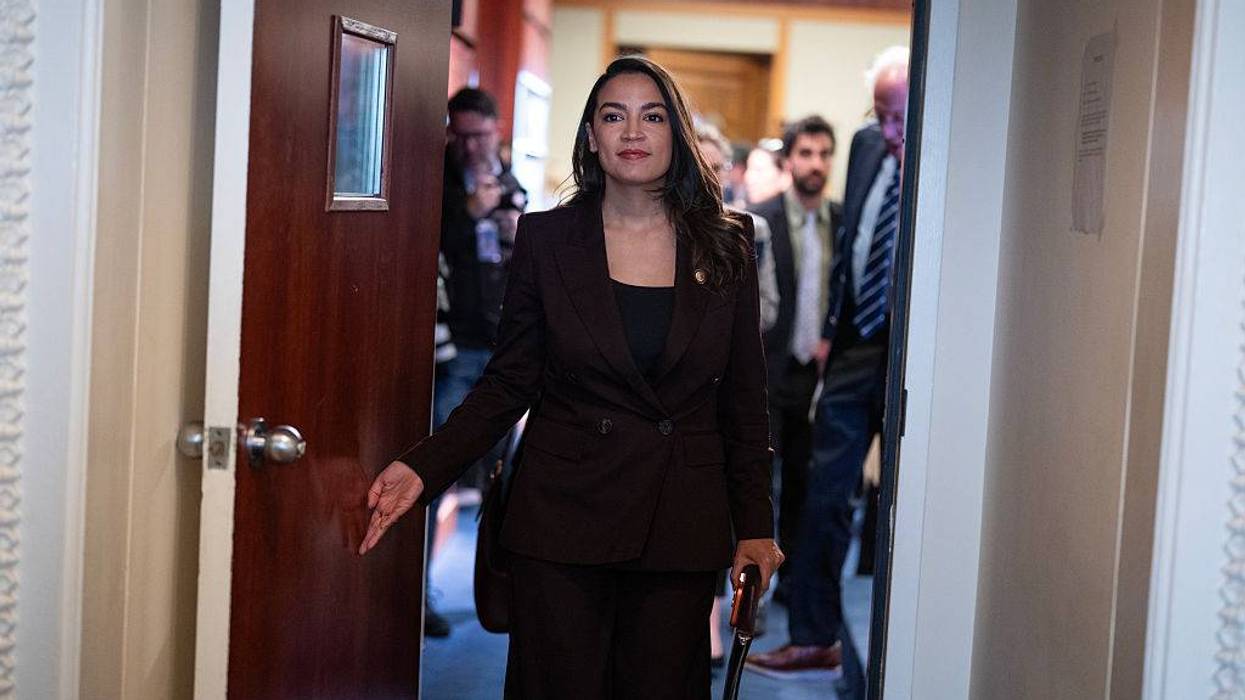
Although Rep. Alexandria Ocasio-Cortez took criticism from some mainstream media pundits after she helped rally public opinion against the construction of Amazon's HQ2 in Long Island City, new data revealed this week has seemingly vindicated her skepticism of the project.
Virginia Business reported on Thursday that a filing submitted to the Virginia Economic Development Partnership this week showed that Amazon created no jobs at its HQ2 in Arlington County last year, and thus "will not seek a state payment" under the state's workforce grant incentives.
Last year, reported Virginia Business, Amazon requested more than $6.4 million through the grant program for adding just under 293 jobs in 2024.
"The hiring slowdown follows earlier signs that Amazon’s HQ2 buildout has fallen short of initial expectations," Virginia Business explained. "The company originally projected it would create 10,000 jobs by 2024, but hiring totals fell well short of that mark. The company currently has nearly 8,500 employees who work out of HQ2."
In 2018, Ocasio-Cortez (D-NY) joined with local activists to oppose the construction of HQ2 in Long Island City, and they pointed to the billions of dollars in tax incentives offered by New York City and New York state as an example of wasteful corporate welfare being given to one of the world's richest companies.
Amazon canceled its plans to build HQ2 in New York in February 2019, prompting Ocasio-Cortez to take a victory lap.
"Anything is possible," the then-freshman congresswoman wrote in a social media post. "Today was the day a group of dedicated, everyday New Yorkers and their neighbors defeated Amazon’s corporate greed, its worker exploitation, and the power of the richest man in the world."
Amazon would subsequently move construction of HQ2 to Virginia after being offered hundreds of millions in potential tax incentives, but it delayed construction of the facility in 2023, which again led Ocasio-Cortez to declare vindication.
"When I opposed this Amazon project coming to New York because it was a scam of public funds, the whole power establishment came after us," she wrote. "Billboards went up in Times Square denouncing me. Powerful pols promised revenge. Op-eds and CEOs insulted my intelligence. In the end, we were right."
Soaring energy costs caused by the illegal war of choice are driving up food costs and taking a toll on regional GDP, while soaring prices for US consumers could affect upcoming midterm elections.
Soaring energy prices caused by the US-Israeli war of choice on Iran is driving up global food prices while shrinking the economies of Gulf Arab states targeted in Iranian counterstrikes, according to a pair of reports published this week by United Nations agencies.
On Friday, the UN Food and Agriculture Organization (FAO) published its latest Food Price Index (FFPI), which measures the monthly change in international costs of a basket of basic grocery items. The FFPI rose 2.4% over February levels.
"Price indices across all commodity groups—cereals, meat, dairy, vegetable oils, and sugar—rose to varying degrees, reflecting not only underlying market fundamentals but also responses to higher energy prices linked to the conflict escalation in the Near East," FAO said in a statement.
"If the conflict stretches beyond 40 days with high input costs with current low margins, farmers will have to choose: Farm the same with fewer inputs, plant less, or switch to less intensive fertilizer crops," said FAO Chief Economist Máximo Torero.
"Those choices will hit future yields and shape our food supply and commodity prices for the rest of this year and all of the next," Torero added.
As CNBC's Garrett Downs reported Thursday:
Food faces a number of new inflationary pressures due to the Iran war and the closure of the Strait of Hormuz. The increase in oil costs is raising the price of diesel, necessary for farmers and the trucks and railroads that carry food across the country. Fertilizer is also being choked by the closure of the strait. And even plastic, a petrochemical product that’s commonly used in food packaging, could also contribute to higher checkout costs.
“The price of food is going to move quite a lot,” Kjetil Storesletten, an economist and professor at the University of Minnesota, told Downs. “If you put those things together, that it’s a big chunk of the price of producing food and that the price increased a lot, it suggests that all of the increased price in fertilizer is going to be passed through to food.”
@fao.org Food Price Index rose in March for 2nd month in a row largely due to conflict in the Near East.Pressure on fertilizer supplies & elevated energy prices add uncertainty to markets despite a comfortable global food supply situation.FAO Chief Economist @maximotorero.bsky.social explains.
[image or embed]
— Food and Agriculture Organization of the United Nations (@fao.org) April 3, 2026 at 9:39 AM
Meanwhile, the UN Development Program (UNDP) earlier this week unveiled an assessment suggesting that the war may cost affected Mideast economies between 3.7% and 6% of their collective gross domestic product (GDP) and push as many as 4 million people into poverty.
"The escalation has exposed structural vulnerabilities of the Arab states region and underscored a stark reality that even a short-lived shock can generate profound, widespread, and persistent socioeconomic impacts across the Arab states region," UNDP said.
"While the current military escalation remains geographically concentrated, its impacts are propagating through interconnected systems—trade corridors, energy markets, financial flows, and logistics networks—transforming a localized escalation into a systemic regional shock," the agency added.
Last month, the UN World Food Program warned that the US-Israeli war on Iran and its associated impacts on the global economy could push 45 million more people around the world into acute hunger this year.
In the United States, experts warn that as the war drags on, grocery prices will continue to rise, posing a political risk to Republicans who, along with President Donald Trump, campaigned on promises to immediately lower the cost of key consumer items including food and gasoline—which now averages over $4 per gallon, up from $3.10 on the day the president returned to the White House.
Democratic members of the Joint Economic Committee released a report Thursday showing that higher pump prices have cost Americans $8.4 billion over the first month of the Iran War.
Democrats are looking to capitalize on consumer angst and Republicans' broken promises—not only on prices but also on "no new wars"—in the upcoming midterm elections.
“Our messaging is affordability and accountability,” Rep. Jared Huffman (D-Calif.) told CNBC on Thursday. “It’s a pretty tailored message, pretty narrowly focused, and on both of those pillars, Trump is making our arguments even more compelling.”
As Trump seeks an unprecedented $1.5 trillion in military spending for the next fiscal year, Rep. Vicente Gonzalez (D-Texas) argued that voters have had enough.
“It just pisses them off more,” he said of Trump's broken promises. "When people hear that, they’re like, ‘Hey, I can’t pay for groceries and you want to go pay for a war in the Middle East?’ I think that’s going to be a tough sell.”