

5
#000000
#FFFFFF
To donate by check, phone, or other method, see our More Ways to Give page.
Daily news & progressive opinion—funded by the people, not the corporations—delivered straight to your inbox.
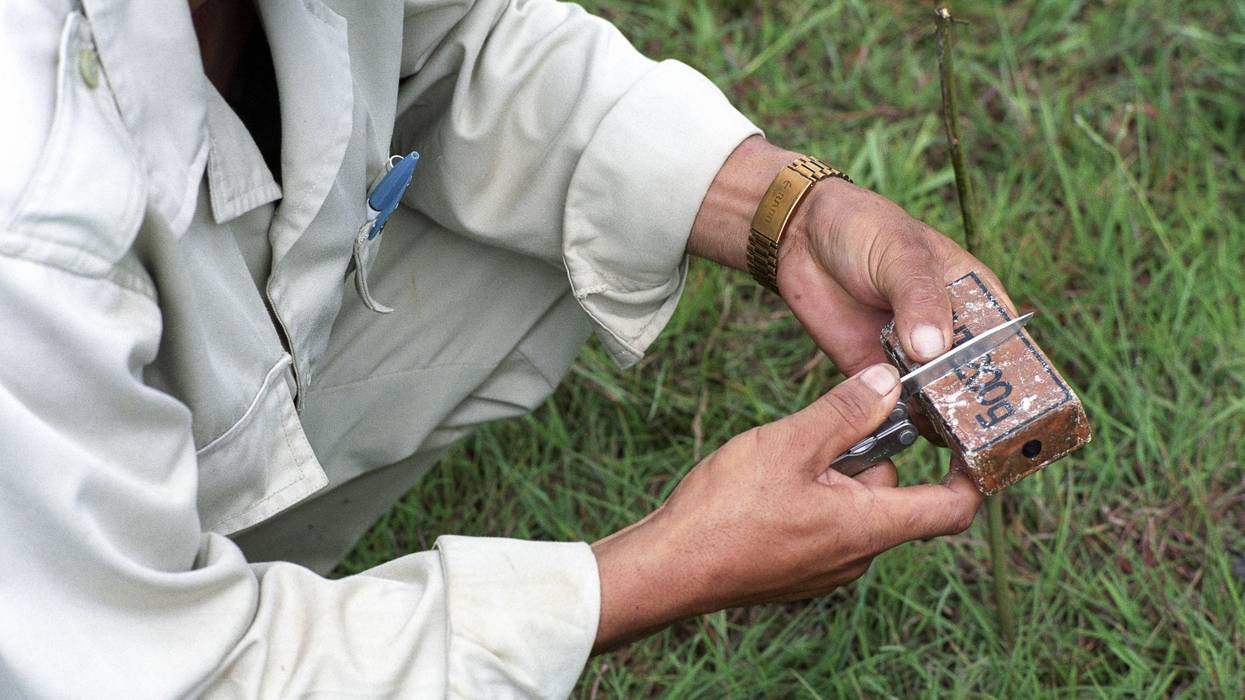
This Earth Month, as we reflect on the power we hold, we should recognize that some of the most profound acts of environmental stewardship begin not with planting or preservation, but with making the ground safe enough to stand on.
During the 1960s, America was deep in the throes of the US War in Vietnam. In addition to student protests of the war, there were also “teach-ins”—gatherings that questioned not just the war, but the systems behind it, on campuses all across the country. This anti-war movement inspired the start of another; the fight for environmental protection, giving birth to Earth Month in 1970.
Earth Month is not only a moment of reflection about sustainability and the protection of the environment; it is a test of what we choose to do with what we know. This year’s theme, “Our Power, Our Planet,” asks us to consider where power truly lives. In Laos and Ukraine, the answer is clear: It lives in the land and its people.
Land feeds families and shapes culture. It determines whether a child grows up with stability or scarcity. In Laos, more than 70% of the population depends on agriculture. Golden green glutinous, or “sticky,” rice fields stretch across the country, joined by cassava, coffee, and vegetables that sustain both households and local markets. In Ukraine, fertile black soil has long made the country a cornerstone of the global food system, feeding more than 400 million people through exports of wheat, corn, barley, and sunflower seed.
In both countries, the land carries a hidden burden.
Safe land means farmers can plant without fear, invest in their futures, and pass on their livelihoods to the next generation.
Between 1964 and 1973, the US dropped at least 2.5 million tons of ordnance on Laos, with nearly a third failing to detonate. Today, unexploded ordnance litters every province, leaving a quarter of villages affected. Fertile ground is laced with danger.
Ukraine is now becoming all too familiar with this reality. Over four years into Russia’s full-scale invasion, over a quarter of its land is estimated to be contaminated with explosive remnants of war. Just like in Laos, their legacy will endure for generations.
For farmers, this threat is daily life.
In Ukraine, images circulate of tractors moving steadily through fields under gray skies, in rain, even under fire. There is a kind of grim humor in the idea that farmers will cultivate their land no matter the obstacle. Beneath the dark humor of those internet memes is a gritty determination to survive.
In Laos, that risk has been a constant for decades.
Mae Tao Seesom was just in her early 20s during the war in Laos. She remembers having to hide in caves to avoid danger. Unable to farm their land, she and fellow villagers had to harvest what grew in the forest.
Decades after the war, in 2019, Mae Tao Seesom was cooking for her grandchildren when a cluster bomb exploded under her fire. Luckily, no one was injured. This time.
In Ukraine, Oksana Lukiyanchuk’s newly inherited farm is only 35 kilometers from the front lines; she moved to her own farm in 2021 to generate a livelihood for her young family and a legacy to pass on to her newborn son. Only months later, Russia invaded.
The war has drained her workforce; she now works her land with just one hired hand. Under constant threat of drones, Oksana continues to build her business; as a fifth-generation farmer, her ties to the soil here keep her from leaving. This sense of belonging emanates widely among Ukrainian farmers, and is the reason many continue to risk everything to grow on these front lines.
What lies beneath the soil does more than threaten lives; it constrains entire economies.
In Laos, farmers often avoid deep plowing or expanding irrigation for fear of what they might uncover. The result is lower yields and lost potential. Infrastructure—from roads to schools to clinics—cannot move forward without clearance. Decades after the last bombs fell, vast areas of land remain unused.
Ukraine now stands at the beginning of a similar economic struggle. Agriculture is one of its largest sectors, with consequences far beyond its borders. Smaller farms face labor shortages as workers are drawn into military service. Larger producers race to maintain supply chains under constant disruption.
Yet, this is not a story of helplessness. It is a story of leadership.
In Laos, unexploded ordnance clearance has become a national priority, embedded in its development strategy and backed by decades of commitment. Progress has been steady: Casualties have declined, and more land is made safe each year. National institutions, international organizations, and local communities work in concert, ensuring that clearance efforts reach those most in need.
In Ukraine, that same sense of urgency has taken root with remarkable speed. Organizations like Fondation Suisse de Déminage hire hundreds of explosive ordnance risk educators to meet farm staff where they are—at farmers markets, in schools, and on their land—to ensure everyone living in hazardous areas knows the threat of these weapons. As the country develops new landmine technology, this risk education saves lives now, and will remain necessary for decades on.
While the risks of demining are immediate, so are the returns.
Safe land means farmers can plant without fear, invest in their futures, and pass on their livelihoods to the next generation. It allows roads to be built, markets to grow, and communities to thrive. It restores not only productivity, but dignity.
This is why demining is not simply a humanitarian effort. It is one of the most direct and effective investments in development. It strengthens food systems, reduces poverty, and builds resilience all at once.
It is also achievable.
The experience of Laos shows that progress, while gradual, is real. With sustained commitment, improved technology, and strong partnerships, contamination can be reduced, lives can be saved, and land can be returned to those who depend on it.
Ukraine’s future is not yet written. But the path ahead is clearer because others have walked it before.
If land is life, then clearing land is renewal.
This Earth Month, as we reflect on the power we hold, we should recognize that some of the most profound acts of environmental stewardship begin not with planting or preservation, but with making the ground safe enough to stand on.
In Laos and Ukraine, that work is already underway—unceasingly, by the people, and with extraordinary courage.
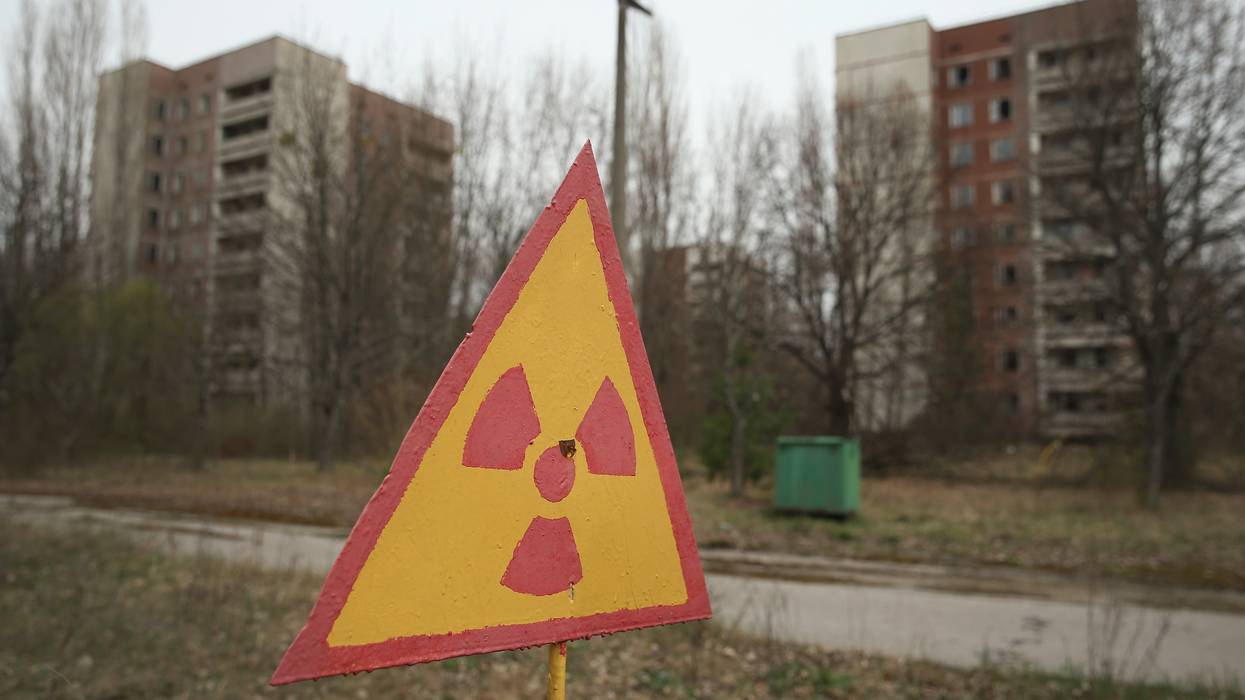
"Nuclear power stations have inherent risks," said an official at Greenpeace Ukraine. "In a world at war, with massive geopolitical tension and climate extremes, those risks are increasing."
The continuing conflict between Russia and Ukraine is once again raising concerns about a nucelar disaster in the region on the 40th anniversary of the catastrophic accident at the Chernobyl power plant.
Reuters reported on Monday that a Ukrainian drone the struck a transport department at the Zaporizhzhia Nuclear Power Plant, which has been under Russian control since March 2022, shortly after its armed forces invaded Ukraine.
The Russian government said that an employee at the Zaporizhzhia plant was killed in the attack, and International Atomic Energy Agency Director General Rafael Mariano Grossi reiterated in a social media post that "strikes on or near [nuclear power plants] can endanger nuclear safety and must not take place."
Russia has also engaged in dangerous attacks around nuclear power infrastructure over the last four years, and a report released this month by Greenpeace Ukraine found that the New Safe Confinement (NSC) at Chernobyl, which contains the ruins of the plant's reactor unit 4, was significantly compromised after being struck by a high-explosive warhead from a Russian drone last year.
"The Russian drone strike... destroyed the main functions of the [NSC]," the report states. "The impact of the drone on the northwest side of the NSC caused an opening... which penetrated both the outside and inside arch shells. Critical structural elements of the NSC have been deformed and damaged including the Main Crane System, making their load-bearing capability impossible to assess."
The drone strike also burned the membrane layer inside the NSC, which has taken out the ability to control humidity at the site and could lead to accelerated corrosion of the NSC's steel components.
"The NSC was designed to last 100 years on the basis that its low humidity control was maintained," notes the report. "Accelerated corrosion may reduce the 100-year design life of the structure if humidity control is not restored by 2030."
Greenpeace Ukraine nuclear expert Shaun Burnie described the damage done to the NSC as "a Russian-made war crime," and lamented it will mean "years of repairs and further delays before the sarcophagus can be safely dismantled."
Polina Kolodiazhna, senior campaigner from Greenpeace Ukraine, said on Sunday that Russia's invasion of Ukraine had added new urgency for her country to end its dependence on nuclear power given the massive environmental and human risks.
"Nuclear power stations have inherent risks, and those risks are escalating," Kolodiazhna said. "Russia, for the first time in the history of warfare, has systematically attacked and occupied nuclear plants, showing how they can be used as military and political tools. In a world at war, with massive geopolitical tension and climate extremes, those risks are increasing."
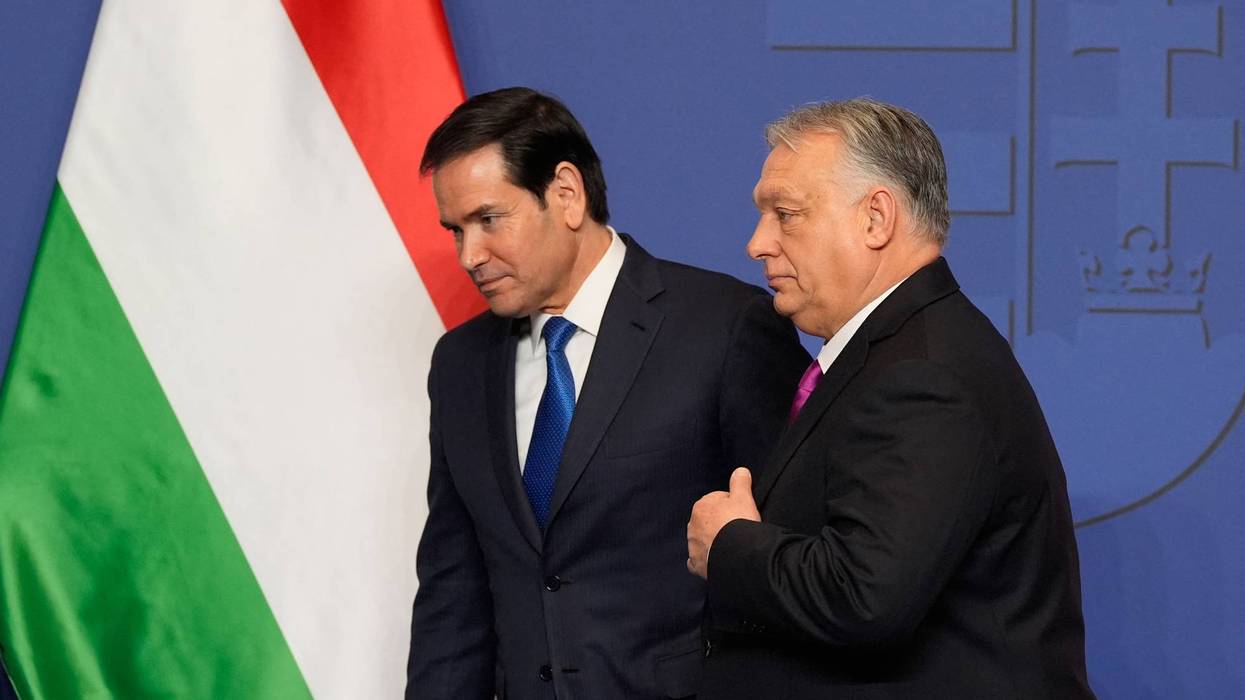
"It’s time to take the gloves off and fight for our future," the democratic socialist congresswoman asserted.
As US Secretary of State Marco Rubio heaped praise upon Viktor Orbán as he seeks a sixth term as Hungary's increasingly autocratic prime minister, progressive Congresswoman Alexandria Ocasio-Cortez on Monday implored democracy defenders to "take the gloves off and fight for our future."
Visiting Budapest, the Hungarian capital, on the last leg of a three-country tour of Europe, Rubio pressed the Trump administration's thumb on the proverbial scale of Hungary's April election with a ringing endorsement of Orbán, telling him that President Donald Trump "is deeply committed to your success."
That's a glaring departure from a 2019 warning from lawmakers including then-Sen. Rubio (R-Fla.) to Trump that democracy had "significantly eroded" in Hungary as Orbán consolidated control over the electoral process, judiciary, and press. Now, Rubio says Orbán's success is "essential and vital" to US national interests.
"From Orbán to Trump, the rise of far-right movements is tightly coordinated and transcends borders," Ocasio-Cortez said on Facebook in response to Rubio's visit. "So too should be our international defense of democracy and the fight for working people. From policy to tactics, it’s time to take the gloves off and fight for our future."
Although Hungary openly flouted a US ban on importing oil, natural gas, or coal from Russia amid President Vladimir Putin's ongoing invasion and occupation of Ukraine, Trump recently granted Budapest a one-year exemption from sanctions.
And while Venezuelan President Nicolás Maduro's pursuit of an independent foreign policy—which included close relations with Russia and China—was cited as a reason for the US invasion of Venezuela and abduction of Maduro, Rubio said that Orbán's increasingly close ties with Moscow and Beijing are a matter of Hungarian sovereignty.
“We’re not asking any country in the world to isolate themselves from anybody,” Rubio said, although that's exactly what the Trump administration reportedly ordered Venezuela's interim government to do to China, Russia, Iran, and Cuba.
“There’s no reason to sugarcoat it. I’m going to be very blunt with you," Rubio told reporters Monday, adding that Trump and Orbán "have a very, very close personal relationship and working relationship, and I think it has been incredibly beneficial to the relationship between our two countries.”
Speaking Friday at the Munich Security Conference in Germany, Ocasio-Cortez accused Trump of trying to usher in an "age of authoritarianism."
“We have to have a working-class-centered politics if we are going to succeed,” she said, “and also if we are going to stave off the scourges of authoritarianism, which provides political siren calls to allure people into finding scapegoats to blame for rising economic inequality, both domestically and globally.”
Ocasio-Cortez—whose increasingly high profile has sparked speculation of a possible run for higher office—also slammed the "hypocrisies" of US foreign policy, “whether it is kidnapping a foreign head of state, whether it is threatening our allies to colonize Greenland, whether it is looking the other way in a genocide, hypocrisies are vulnerabilities, and they threaten democracies globally."
"This is a moment where we are seeing our presidential administration tear apart the transatlantic partnership,” she added. “What is happening is indeed very grave, and we are in a new era, domestically and globally."