SUBSCRIBE TO OUR FREE NEWSLETTER
Daily news & progressive opinion—funded by the people, not the corporations—delivered straight to your inbox.
5
#000000
#FFFFFF
To donate by check, phone, or other method, see our More Ways to Give page.


Daily news & progressive opinion—funded by the people, not the corporations—delivered straight to your inbox.
"We cannot take those protections for granted," said Michigan Attorney General Dana Nessel, who helped to legalize same-sex marriage nationwide a decade ago.
In one of vanishingly few US Supreme Court rulings protecting equal rights, the majority-conservative court on Monday rejected efforts to overturn the decade-old precedent of marriage equality.
Without issuing a comment, the court denied an appeal from Kim Davis, the former Kentucky county clerk who was ordered to pay $360,000 in compensation after she refused to issue a marriage license to a same-sex couple in defiance of the precedent set by the 2015 Obergefell v. Hodges decision.
Amid a flurry of rulings that have rolled back sexual and reproductive freedom in other realms—including for the LGBTQ+ community—the court's refusal to hear Davis' appeal was considered a small but still invigorating victory.
“The bar is in hell,” wrote Minnesota Gov. Tim Walz on social media. “But this is a win for decency and compassion.”
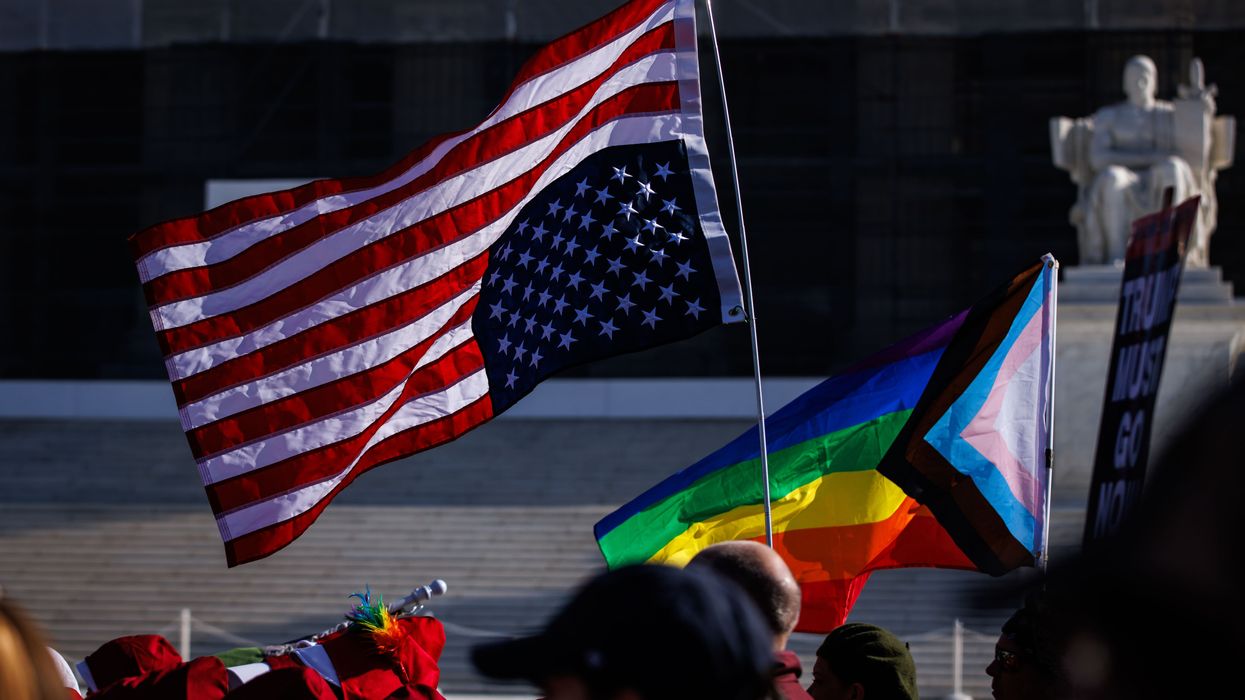
The ruling came as a relief to advocates for equal rights, who long feared that marriage equality might soon become the next target as the conservative movement grows increasingly hostile to the LGBTQ+ community.
In 2022, as the court's right-wing majority overturned the right to an abortion in the Dobbs v. Jackson Women's Health Organization case, the archconservative Justice Clarence Thomas signaled in a concurring opinion that it should be the start of efforts to fully revise the court's recognition of "substantive due process," that is, the recognition of rights not explicitly granted by the US Constitution.
He questioned not just the right of same-sex couples to marry, but the court’s entire recognition of the right to privacy established by the 1965 Griswold v. Connecticut ruling, which has been the basis for rulings against bans on homosexual relationships and the right to contraception.
Thomas was one of the four conservative justices who dissented from the majority's ruling in Obergefell. Two others—Chief Justice John Roberts and Justice Samuel Alito—also still serve on the court. The other three conservative justices who have been appointed since, all by President Donald Trump during his first term—Neil Gorsuch, Brett Kavanaugh, and Amy Coney Barrett—have remained relatively coy on how they’d rule if marriage equality were to come back up, though they have sided with conservatives in cases that pitted religious liberty against discrimination protections for LGBTQ+ people.
In 2023, the six conservatives ruled that a Christian web designer was allowed to decline services to same-sex weddings, overturning a Colorado law that banned discrimination against gay people. Notably, the designer who brought the case had not actually been asked to design a website for any gay couple, but the court's right-wing majority accepted her case regardless.
This apparent zealousness to intervene in favor of discrimination appeared to be a red flag, but as Harvard University law professor Noah Feldman wrote for Bloomberg, Monday's ruling "is best read as a signal that the conservative majority has little interest in revisiting gay marriage," even as "the conservative constitutional revolution at the Supreme Court remains underway."
He notes that just four justices are required for a case to be heard by the court. And while it has aggressively rolled back the rights of transgender people, ended affirmative action, and recognized unprecedented executive authority for President Donald Trump, when it comes to same-sex marriage, "their silence is noteworthy."
Public support for marriage equality has grown considerably in the decade since Obergefell. In July 2015, a month after the court legalized same-sex marriage nationwide, 58% of Americans said in a Gallup poll that they agreed that same- sex couples should have the same rights as opposite-sex pairs. That number ballooned to a high of 71% in 2023, and even as attacks on LGBTQ+ people have ratcheted up intensely within the conservative movement, support for marriage equality remains stubbornly steady—68% of Americans still say gay marriages should be valid.
Michigan Attorney General Dana Nessel, who represented two of the plaintiffs in the 2015 case, said that while she welcomes the court's decision Monday not to erode the hard-won rights of gay people further, advocates should not become complacent.
"I am relieved for today’s decision reaffirming same-sex couples’ continued right to dignity and protection under the law, but we cannot take those protections for granted," Nessel said in a news release. “Members of this Supreme Court have already told us they are willing to overturn Obergefell. It’s only a matter of time before they do.”
Her state of Michigan is one of more than two dozen in which same-sex marriage would become illegal or face restrictions if Obergefell is overturned. She said that Monday's decision "allows us a reprieve, an opportunity to bring our state Constitution into alignment with the protections our residents are entitled to and have enjoyed for more than a decade. Now is the time to act."
"The majority's failure to respect the right to marriage in this country consigns U.S. citizens to rely on the fickle grace of other countries' immigration laws."
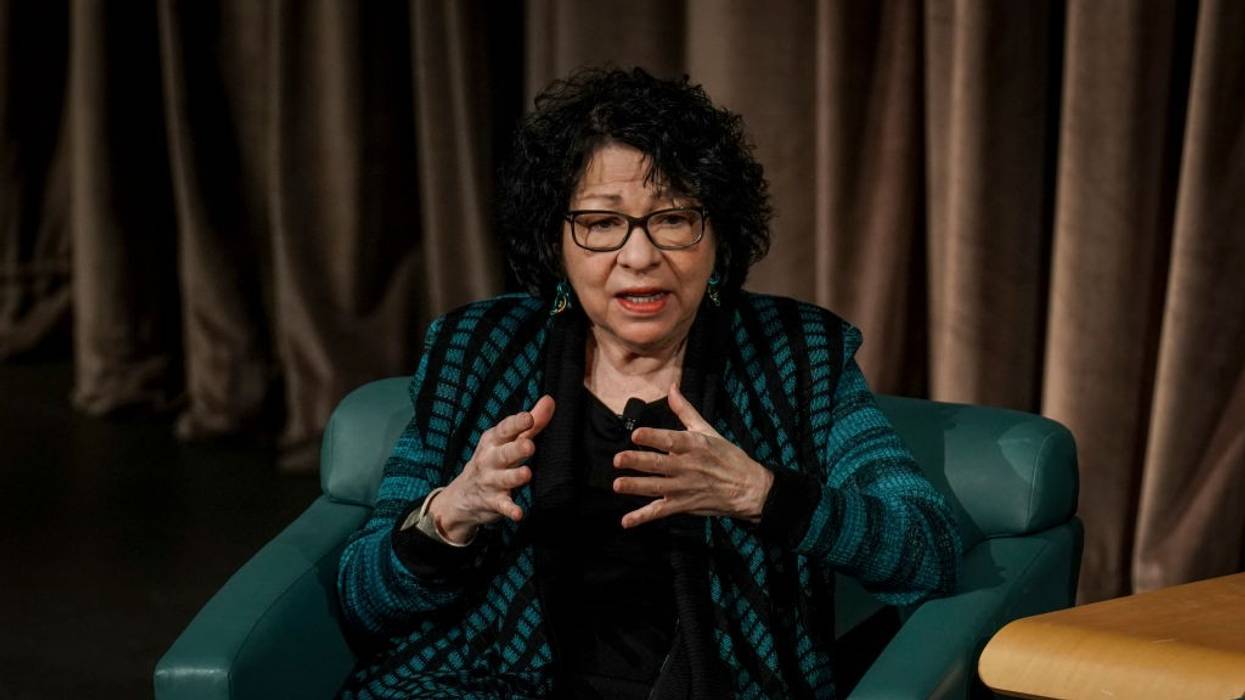
U.S. Supreme Court Justice Sonia Sotomayor warned Friday that her right-wing colleagues' finding that American citizens have no right to have their foreign spouses admitted to the United States will disproportionately harm same-sex couples—and could foreshadow a future reversal of federal LGBTQ+ marriage equality.
The justices ruled 6-3 along ideological lines in Department of State v. Muñoz that Sandra Muñoz, a civil rights attorney and U.S. citizen, "does not have a fundamental liberty interest in her noncitizen spouse being admitted to the country."
As Courthouse News Service explained:
[Muñoz] argued that her right to live with her noncitizen husband, Luis Ascencio-Cordero, in the United States was implicit in the "liberty" protected by the Fifth Amendment, and that denying his visa request deprived her of that liberty and violated her due process rights.
The consular officer who denied her husband's application violated her right to due process by not disclosing the reason her husband was deemed "inadmissible,'" which opens the officer's decision to judicial review, despite visa denials normally being unreviewable.
Muñoz later found out during litigation in federal court that the decision was based on the officer's finding that Ascencio-Cordero's tattoos were associated with the transnational gang MS-13 and his concern that he would commit crimes upon entering the country.
In her dissent, Sotomayor cited Obergefell v. Hodges, the landmark 2015 ruling legalizing same-sex marriage nationwide.
"The right to marry is fundamental as a matter of history and tradition," Sotomayor wrote. "The majority today chooses a broad holding on marriage over a narrow one on procedure."
Sotomayor contended that her conservative colleagues were committing the "same fatal error" in "requiring too 'careful [a] description of the asserted fundamental liberty interest'" as they did in Dobbs v. Jackson Women's Health Organization, the 2022 ruling that erased half a century of federal abortion rights.
"The majority's failure to respect the right to marriage in this country consigns U.S. citizens to rely on the fickle grace of other countries' immigration laws to vindicate one of the 'basic civil rights of man' and live alongside their spouses," she added. "Same-sex couples may be forced to relocate to countries that do not recognize same-sex marriage, or even those that criminalize homosexuality."
" Obergefell rejected what the majority does today as 'inconsistent with the approach this court has used in discussing fundamental rights' of 'marriage and intimacy'," Sotomayor opined. "The burden will fall most heavily on same-sex couples and others who lack the ability, for legal or financial reasons, to make a home in the noncitizen spouse's country of origin."
Sotomayor's assertion that the majority's decision erodes
LGBTQ+ marriage protections follows far-right Justice Clarence Thomas' suggestion in Dobbs that the high court should reexamine the right to same-sex marriage—and even the abolition of laws banning sexual relations between adults of the same sex—at some future date.
"While there is no doubt that the legalization of marriage for LGBTI couples is a key milestone for Thailand, much more must be done to guarantee full protection," said one campaigner.
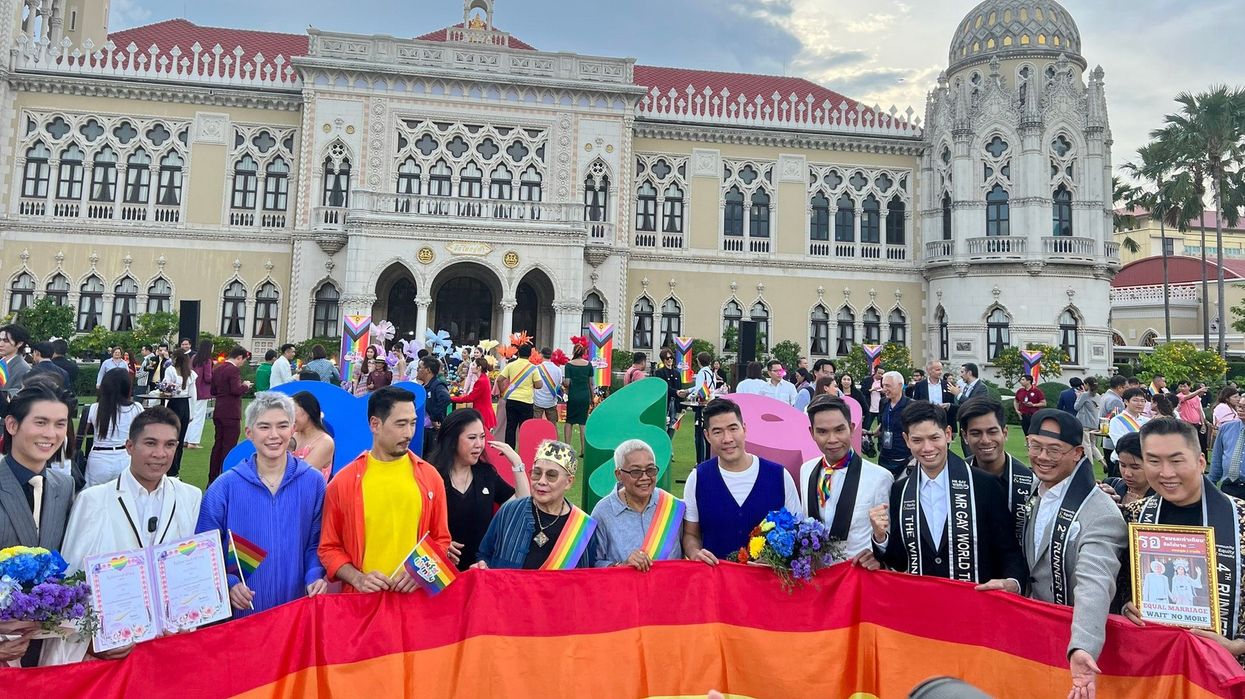
LGBTQ+ advocates around the world on Tuesday cheered the Thai Senate's passage of a bill legalizing same-sex marriage, a move that—if approved by the country's king as expected—would make Thailand the first country in Southeast Asia to do so.
The Bangkok Post reported Thai senators voted 130-4, with 18 abstentions, in favor of a bill to legalize same-sex marriages in the country of 72 million people. The Thai House of Representatives overwhelmingly approved the legislation in March. The legislation would become law if it passes further review by the Senate and the Constitutional Court and is approved by King Rama X. Royal assent is a formality that will almost certainly be granted.
"The bill represents a monumental step forward for LGBTQ+ rights in Thailand," Panyaphon Phiphatkhunarnon, founder of the advocacy group Love Foundation, told CNN.
Plaifa Kyoka Shodladd, an 18-year-old activist, told The New York Times that "after 20 years of trying to legalize this matter, finally, love wins."
In Asia, only Nepal and Taiwan have achieved same-sex marriage equality. Thailand would become the 39th nation to legalize same-sex marriage worldwide.
Legalization "would underscore Thailand's leadership in the region in promoting human rights and gender equality," said the Thai Civil Society Commission of Marriage Equality, Activists, and LGBTI+ Couples.
Amnesty International Thailand researcher Chanatip Tatiyakaroonwong said in a
statement: "Thailand has taken a historic step towards becoming the first country in Southeast Asia to legalize marriage for LGBTI couples. This landmark moment is a reward for the tireless work of activists, civil society organizations, and lawmakers who have fought for this victory."
"While there is no doubt that the legalization of marriage for LGBTI couples is a key milestone for Thailand, much more must be done to guarantee full protection of LGBTI people in the country," Chanatip continued. "LGBTI people in Thailand continue to face many forms of violence and discrimination, including but not limited to technology-facilitated gender-based violence, which often targets human rights defenders."
"Thai authorities must build on the momentum and take further steps that protect the rights and ensure the participation of LGBTI people and organizations," Chanatip added.
Thailand's imminent legalization of same-sex marriage equality stands in contrast with the hundreds of pieces of anti-LGBTQ+ legislation proposed or passed mostly in Republican-controlled state legislatures in the United States.
Advocates are also worried about the future of LGBTQ+ rights at the national level, as U.S. Supreme Court Justice Clarence Thomas suggested in Dobbs v. Jackson Women's Health Organization—the ruling that erased half a century of federal abortion rights—that the high court could reconsider cases including Obergefell v. Hodges, which in 2015 legalized same-sex marriage nationwide.
The problem for defenders of marriage equality and gay rights is that the moderate Obergefell majority has been supplanted by an ultra-right super majority.
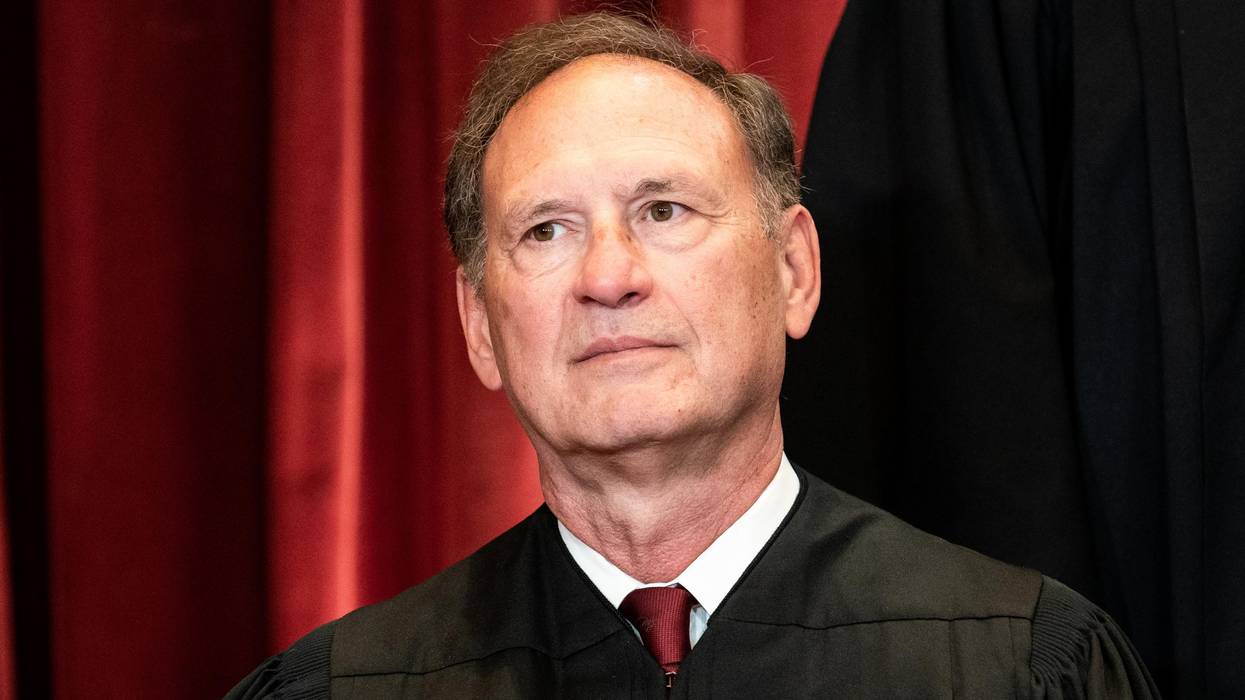
Samuel Alito may not be the most corrupt member of the Supreme Court—that distinction goes to Clarence Thomas—but he is easily its most openly homophobic, misogynistic, and histrionic. His latest meltdown came in an unusual “written statement” (the functional equivalent of a dissenting opinion) issued on February 20 in a case on jury selection that the court declined to accept for full review, called Missouri Department of Corrections v. Finney. Alito used the statement not only to set forth his deeply flawed legal reasoning on jury selection, but as an opportunity to reiterate his longstanding critique of the constitutional right to same-sex marriage, a stance that has aligned him closely with the Christian nationalist movement that has taken over the Republican Party.
Jean Finney, the plaintiff in the case, is a longtime employee of the Department of Corrections (DOC) and a lesbian who, court records state, “presents herself as masculine.” She sued her employer, alleging the agency had created a hostile work environment and retaliated against her after she began dating a male co-worker’s former wife. During jury selection in her 2021 trial, her attorney asked prospective jurors a question that went to their capacity to be fair and impartial: “How many of you went to a religious organization growing up where it was taught that people that are homosexuals shouldn’t have the same rights as everyone else because it was a sin with what they did?”
The question was designed to identify individuals who would be prejudiced against Finney, and was one any competent lawyer would have raised. The trial judge subsequently excused two prospective jurors, one a pastor’s wife, who answered that according to the Bible, homosexuality is a sin. The jury returned a verdict in Finney’s favor, awarding her $275,000 in damages.
It is religious doctrine, not the Constitution, that drives Alito’s jurisprudence.
The DOC appealed, but the Missouri Court of Appeals affirmed the judgment, holding the jurors had been properly dismissed for cause, not because of their Christian faith—that would have been unconstitutional—but because of their views on homosexuality.
After the Missouri Supreme Court declined to review, the DOC filed a petition with the U.S. Supreme Court. All nine justices, including Alito, rejected the petition.
Normally, the high court’s rejection would have been expressed in a one-sentence order. But Alito deemed it necessary to pen a five-page written statement complaining about the disposition. Although he agreed that the DOC had not properly preserved the jurors’ dismissal as an issue for appeal, he explained that, but for this technicality, he would have voted to grant the petition. His reasoning, however, was off the rails and holds dangerous implications for the future of marriage equality and gay rights.
“In this case,” Alito wrote, “the court below reasoned that a person who still holds traditional religious views on questions of sexual morality is presumptively unfit to serve on a jury in a case involving a party who is a lesbian. That holding exemplifies the danger that I anticipated in Obergefell v. Hodges… (2015), namely, that Americans who do not hide their adherence to traditional religious beliefs about homosexual conduct will be ‘labeled as bigots and treated as such’ by the government.”
Obergefell, which recognized same-sex marriage as a constitutional right under the 14th Amendment, is one of the few progressive opinions issued by the Supreme Court this century. However, only two of the justices who comprised the court’s slender five-member majority in that case—Sonia Sotomayor and Elena Kagan—remain on the bench. Three of the dissenters—Alito, Thomas, and Chief Justice John Roberts—also remain.
A brief survey of the dissenting opinions in Obergefell illustrates the depth of conservative opposition to the constitutional right to same-sex marriage. In his dissent, Roberts wrote: “The majority’s decision is an act of will, not legal judgment. The right it announces has no basis in the Constitution or this court’s precedent.”
Thomas noted in his: “The Court’s decision today is at odds not only with the Constitution, but with the principles upon which our Nation was built. Since well before 1787, liberty has been understood as freedom from government action, not entitlement to government benefits.”
None protested as vociferously as Alito, who argued the issue of same-sex marriage should be deferred to the states. He wrote:
Today’s decision usurps the constitutional right of the people to decide whether to keep or alter the traditional understanding of marriage. The decision will also have other important consequences. It will be used to vilify Americans who are unwilling to assent to the new orthodoxy… I assume that those who cling to old beliefs will be able to whisper their thoughts in the recesses of their homes, but if they repeat those views in public, they will risk being labeled as bigots and treated as such by governments, employers, and schools.
Since then, Alito has embarked on a mission to reverse Obergefell. As he argued in his infamous 2022 majority decision in Dobbs v. Jackson Women’s Health Organization, the landmark abortion case, the states should decide the fate of same-sex unions.
In 2020, he joined Thomas in a wildly emotional dissent from the court’s refusal to take up an appeal filed on behalf of Kim Davis, the former Rowan County, Kentucky, clerk who refused to issue licenses for gay marriages. The same year, in a speech delivered online to the Federalist Society, Alito complained that America is no longer “inclusive enough to tolerate those with unpopular religious beliefs” and that “religious liberty is fast becoming a disfavored right.”
As Linda Greenhouse observed in a 2022 column for The New York Times, it is religious doctrine, not the Constitution, that drives Alito’s jurisprudence. In a similar vein, New Yorker staff writer Margaret Talbot described Alito in a 2022 essay as a leading figure in the “crusade against a secular America,” animated by anger and an abiding sense of aggrievement.
The problem for defenders of marriage equality and gay rights is that the moderate Obergefell majority—which included Breyer, Kennedy, and Bader Ginsburg—has been supplanted by an ultra-right super majority. There is no telling when a new direct challenge to Obergefell will reach the Supreme Court. But sooner or later, one will. A majority of states still have bans on gay marriage on their books. Some, like Tennessee, which recently enacted a law permitting public officials, including judges, to refuse to perform same-sex marriages, could offer anti-gay litigants a direct path.
It took 49 years for the court to overrule Roe v. Wade. Obergefell, which has been the law for a mere nine, is far more vulnerable. Samuel Alito is eager to dispatch it to the dustbin.
"Overturning Obergefell is on their bucket list," said one journalist.
Trial attorneys in the U.S. frequently stop potential jurors from serving on cases based on their stated biases, but U.S. Supreme Court Justice Samuel Alito indicated on Tuesday that he was disturbed by a case out of Missouri in which three people were eliminated from a jury after expressing homophobic views—and suggested the high court should reconsider marriage equality to prevent such outcomes.
The Supreme Court declined to take up Missouri Department of Corrections v. Jean Finney, with none of the justices dissenting. But Alito appeared reluctant in his agreement with the other eight justices and released a five-page statement saying the case "exemplifies the danger that I anticipated in Obergefell v. Hodges," the 2015 case in which the court ruled 5-4 that same-sex couples in the U.S. had the same right to marry as heterosexual couples.
The case out of Missouri on Tuesday centered on Jean Finney, who said she faced discrimination at the state Department of Corrections (DOC) after she began a relationship with another woman.
During her court case, Finney's lawyer questioned potential jurors about their views on same-sex couples to ensure they didn't harbor a bias against the plaintiff.
The lawyer asked the potential jurors, "How many of you went to a religious organization growing up where it was taught that people that are homosexuals shouldn't have the same rights as everyone else because it was a sin with what they did?"
Three people were eliminated from consideration after stating they believed homosexuality to be a sin.
The jury ultimately sided with Finney in her case, and the state DOC asked for a re-trial, claiming the potential jurors' 14th Amendment right to equal protection under the law had been violated.
After the state Supreme Court declined to take up the case, Missouri Attorney General Andrew Bailey, a Republican, asked the U.S. Supreme Court to review it.
The case, said Alito in his statement, showed that "Americans who do not hide their adherence to traditional religious beliefs about homosexual conduct will be 'labeled as bigots and treated as such' by the government."
The Obergefell ruling "made it clear that the decision should not be used" to discriminate against people for their religious views, wrote Alito, "but I am afraid that this admonition is not being heeded by our society."
Alito's comments come less than two years after Supreme Court Justice Clarence Thomas, also a member of the court's right-wing majority, signaled that the court should reconsider a number of rulings, including Obergefell and a case that guaranteed the right to contraception, following its overturning of Roe v. Wade.
Both Alito and Thomas dissented in Obergefell, arguing the ruling had no basis in the U.S. Constitution. In defense of a Kentucky clerk who refused to issue marriage licenses to gay couples in 2020, the two justices said the decision must be overturned to protect Americans from Obergefell's "cavalier treatment of religion."
"Overturning Obergefell is on their bucket list," said journalist Annika Brockschmidt of the right-wing justices.
At Slate, journalist Mark Joseph Stern noted on Tuesday that Alito's "sudden concern with the striking of a juror due to bias is especially jarring in light of his persistent cold shoulder toward those who faced openly racist juries."
In 2022, the court's right-wing majority rejected an appeal from Kristopher Love, a Black man who was sentenced to death by a jury that included at least one member who believed people of some races "tend to be more violent than others."
"In theory, the equal protection clause bars racism in jury selection," wrote Stern. "In practice, this Supreme Court regularly declines to enforce this guarantee—most often, when a Black defendant faces the death penalty—with Alito's assent."
June 26 was a pretty good day for civil rights: the Supreme Court guaranteed the right for same-sex couples to marry by a 5-4 majority in Obergefell v. Hodges.
True to form, the conservatives dissented, drawing upon arguments from strict construction and original intent. Clarence Thomas served up one particular flavor: "Since well before 1787, liberty has been understood as freedom from government action, not entitlement to government benefits." The presumption being that the benefits of marriage are somehow a government give-away, like those apocryphal Obama cell phones.
This is the same strange logic that led Andrew Johnson to veto the Civil Rights Act of 1866 on the grounds that guaranteeing equal rights for all Americans, regardless of race or former status as slaves, constituted granting African Americans "special" rights. In protecting the rights of the freedpeople, Johnson argued, the bill established "safeguards which go infinitely beyond any that the General Government has ever provided for the white race. In fact, the distinction of race and color is by the bill made to operate in favor of the colored and against the white race."
Of course this is not the case. Freedom is not a government give-way, it's a government guarantee.
Marriage has been many things over many years, but in our day it is foremost a contract that imparts particular benefits and responsibilities. The government has no compelling interest in impeding that contract, only prejudicial ones. Repeat: The case for same-sex marriage is not a reach. For the government to stand aside and let people do what they will is entirely in line with old-school liberalism, and even what passes for modern libertarianism.
It may indeed be right that, as Thomas writes, "government cannot bestow dignity, and it cannot take it away." But it sure can mess with your ability to enjoy the basic benefits of the society around you, as Thomas's own examples (slavery, Japanese internment) deftly illustrate. (Great example of reactionary mentality masquerading as race pride.)
Oppressive policies such as segregation and internment may or may not degrade their victims in their own minds, but that is not the point. The point is that these are state-sponsored efforts to try to make that degradation succeed. By Thomas's warped interpretation of African American history, slavery was just fine, for even if the state practiced and championed the institution, the slaves' sense of self could never be obliterated. It is not the consequence on the psyche of the oppressed that matters, it is the states' intention and practice of oppression that requires remedy.
Antonin Scalia may not like it, but "normal" changes (sometimes remarkably rapidly), and same-sex marriage is the new normal. Thankfully, what was acceptable in 1787 or 1866 may not be acceptable now, and vice versa. The Constitution is not a stone tablet. As attests what happened in 1972, when Title IX was created to protect women's rights, the protections guaranteed by the Fourteenth Amendment adapt to the times.
If we're going by original intent, then the original intent of the Fourteenth Amendment was flexibility. The Fourteenth Amendment was created not just to protect the rights of freed slaves, but to let the national government protect the rights of all threatened minorities, far into the future.
It's worth a read - at least, of the critical Section I.
All persons born or naturalized in the United States, and subject to the jurisdiction thereof, are citizens of the United States and of the State wherein they reside. No State shall make or enforce any law which shall abridge the privileges or immunities of citizens of the United States; nor shall any State deprive any person of life, liberty, or property, without due process of law; nor deny to any person within its jurisdiction the equal protection of the laws.
You don't hear anything at all about the actual rights that are protected, do you? That's because the intent of the amendment was much broader than that.
The amendment does specify who rights belong to, for it defines federal and state citizenship -- clearly, and really for the first time. That dealt with problem number one, for if the oppressed (in this case, freed slaves) had the rights of citizens, they themselves could invoke the full force of the law on their own behalf. Good old American individualism and small-government mentality.
But there was a second problem the framers also had to address. The original Constitution severely constrained the power of the federal government to impair the individual liberties of American citizens -- that's the Bill of Rights, and particularly the Fifth Amendment. At the time, this all fit nicely with the political ideology of the revolution: liberty was thought kept safest when distributed far from central government, in the states.
But what happened when the states themselves acted against individual liberties? In a contest between state and federal government, which would prevail? To put it another way: the Constitution (through the Bill of Rights) protects individual liberties against the unjust exercise of federal power; what, though, would protect individual rights against the unjust exercise of state power?
In asserting the primacy of federal over state authority, the 39th Congress crafted a sweeping reconceptualization of federal-state relations, making the federal government the ultimate and final arbiter in cases where individual rights are infringed upon by the power of government.
So let's imagine going back in time (cue wavy-screen-time-machine effect), so we can be there at the birth of the thing.
An ongoing problem did indeed spark the creation of the Fourteenth Amendment. This was the plight of four million bondspersons now free, who were being subjected to virtual re-enslavement not simply by their former masters, but by the states of what had been the Confederacy. When former planters and their representatives returned to southern statehouses just after the Civil War, the states immediately passed a series of debilitating black codes, which strictly limited blacks' political participation, their access to the political process, and their paths to economic mobility.
The Civil Rights Act of 1866 sought to remedy this by defining American natives as citizens, and extending to all in the southern states equal rights of federal citizenship.
The immediate purpose of the Fourteenth Amendment was to ensure the constitutionality of the Civil Rights Act, so that any southern-controlled Congress of the future could not repeal it. James Garfield proposed to "lift that great and good law above the reach of political strife, beyond the reach of the plots and machinations of any party, and fix it in the serene sky, in the eternal firmament of the Constitution, where no storm of passion can shake it and no cloud can obscure it." What happened to the Fourteenth in the courts of the late 1800s mocked such high-minded hopefulness (more on this in a little), but it does signal the framers' deep and lasting purposes. The framers viewed their work as repairing a flaw in the original Constitution.
They didn't change the Constitution to pass a law; they passed the law because they had fixed the Constitution.
They posed their solution in broad and principled terms precisely because they realized that the specific case they confronted could come up again and again in other guises, whenever states sought to undermine liberty. Despite Andrew Johnson's objection, the amendment did not promote the interests of one special group - what was termed "class legislation" back in the day. It was meant to clearly establish the principles that granted Congress the ability to step in and protect the rights of any group targeted by the states for unequal treatment.
To be sure, there was a cost to framing the amendment in terms of broad principles, for such general language could be interpreted in many ways, some contrary to the original spirit and purpose of the amendment. This is exactly what happened in the last quarter of the nineteenth century and the first quarter of the next, when the Supreme Court began eviscerating the amendment's role in protecting freedpeople's rights. Instead, the court transformed it into a tool for corporations to resist government regulation. No conservatives at that time complained about original intent.
This process went stunningly far. In 1896, the Supreme Court ruled that in being compelled to sit in a segregated streetcar Homer Plessy had not had his civil rights violated. Why not? Because according to the majority opinion, the Fourteenth Amendment "could not have been intended to abolish distinctions based upon color, or to enforce social, as distinguished from political, equality, or a commingling of the two races upon terms unsatisfactory to either." A rather profound misreading of the amendment's original intent, no? Again, conservatives didn't complain.
But the very vagueness that permitted such atrocious misreadings is now serving its purpose exactly as intended. As with the framers of the original Constitution, the framers of the Fourteenth understood that they were making rules not just for their day, but to serve the following generations as well. And they knew that those who followed would likely need their creation for new purposes. They knew they were crafting a broad protection of liberty, and they did not care to specify the conditions under which it should operate, because that was the job of the generations to follow. Their job was simply to secure Congress the right to step in whenever the states impaired the rights of individuals. That's the whole purpose of the powerful Section I.
So though they clearly sought to root out an existing evil against the freedpeople, the framers of the amendment explained it as having broad application. Foremost among these men was Ohio Congressman John Bingham, who put the question simply to Congress: "whether you will give by this amendment of the people of the United States the power, by legislative enactment, to punish officials of States for violation of the oaths enjoined upon them by their Constitution?"
The Congressmen debating the measure clearly thought about its wide application. They wondered if it might be used by married women to argue for expanded rights to property, and they anticipated (and affirmed) that the amendment would create naturalized citizens of everyone native-born, regardless of their heritage. William Pitt Fessenden of Maine went so far as to suggest that Bingham had not even proposed the measure to support the Civil Rights Act of 1866. "During all the discussion in the committee that I heard," he stated, "nothing was ever said about the civil rights bill in connection with that. It was placed on entirely different grounds."
When asked directly if the amendment were not intended solely to protect the rights of freed slaves, Bingham replied that "it is proposed as well to protect the thousands and tens of thousands and hundreds of thousands of loyal white citizens of the United States whose property, by State legislation, has been wrested from them under confiscation, and protect them also against banishment." (This was a reference to Confederate treatment of Union loyalists.) He also suggested that it would apply to states that violated the rights of blacks from antebellum-era racial prohibitions in nominally "free" states such as Indiana and Oregon.
Moreover, Bingham understood Congress to be undertaking a work of long-term constitutional significance. The Fourteenth Amendment constituted a redemptive effort to fix a fundamental flaw in the original plan of government. When South Carolina had sought to nullify federal law back in 1833, Bingham argued, Congress had "looked in vain for any grant of power in the Constitution" to support the civil rights of South Carolinians who dissented from their state's policy.
In fixing this flaw, the new amendment would clarify the issue not just in the present. Forever after, it would "protect by national law the privileges and immunities of all the citizens of the Republic and the inborn rights of every person within its jurisdiction whenever the same shall be abridged or denied by the unconstitutional acts of any State."
This long-term security was needed, Bingham believed, for the Confederacy had demonstrated just how much damage could be wrought in the name of states' rights. The Civil War's untold losses in lives and property had made this clear. The nation now demanded "something in the shape of a security for the future against the recurrence of the enormous evils under which the country has labored for the last four years." This echoed the language of the Joint Committee on Reconstruction, on which Bingham served, which asserted the government's duty "to secure itself against similar wrongs in the future." The framers understood themselves to have provided an ongoing solution for a general problem (the states' interference with individual liberties) that might arise at any time in the future.
In Obergefell v. Hodges, the majority ruled sagely, and completely within the original intent of the framers of the Fourteenth Amendment. The rights its confers are not government give-aways or special favors. They are a bold assertion of the federal government's responsibility to secure the liberties of minorities singled out for state-sponsored prejudice.
If, as Clarence Thomas and his strict constructionist colleagues assert, we should consider original intent, then we cannot do better than the words of the amendment's most important framer. According to Bingham, those who wrote, championed, and passed the Fourteenth Amendment sought nothing more than "the care of the Republic, not only for the present, but for all the hereafter."