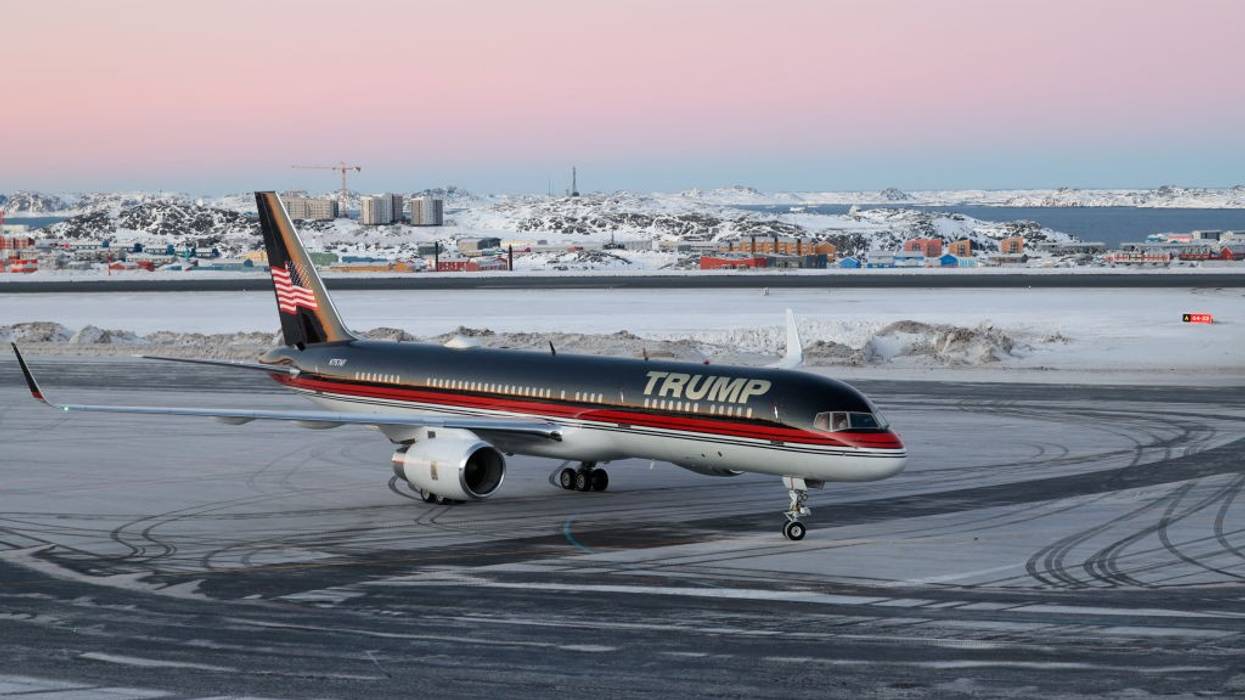
It was a stunt of MAGA proportions. Don Jr. was arriving in Greenland on behalf of his father who, along with his new buddy Elon Musk, had announced a desire to seize that vast Arctic landmass from Denmark through strong will or even, potentially, by force. There’s been plenty of speculation as to why Trump wants to make Greenland, the largest island on this planet, a new territory of the United States. And yes, his inflated ego is undoubtedly part of the reason, but an urge for geopolitical dominance also drives Trump’s ambitions.
Let’s assume that Trump’s fascination with Greenland is unrelated to fossil fuels or military installations. If so, that leaves one other obvious possibility: Greenland’s expansive reservoir of minerals.
His fascination with Greenland can be traced back to his first administration when, in late 2019, he signed the 2020 National Defense Authorization Act establishing the U.S. Space Force. “There are grave threats to our national security,” he said shortly after signing the bill. “American superiority in space is absolutely vital. The Space Force will help us deter aggression and control the ultimate high ground.”
The following year, the U.S. government renamed Greenland’s Thule Air Base, the Department of Defense’s northernmost outpost since 1951, Pituffik Space Base. According to the official United States Space Force Website, the “Top of the World vantage point enables Space Superiority… Pituffik SB supports Missile Warning, Missile Defense, and Space Surveillance missions.” As such, it’s a key military asset for NATO and the United States. Denmark, a founding member of NATO and the country that has long controlled Greenland, had no problem with Trump’s Space Force operation taking root on that island’s soil.
Some have argued that Trump’s obsession is related to the Pituffik Space Base and Greenland’s strategic importance for U.S. power, given its proximity both to Europe and to the melting Arctic. Yet, given that the U.S. Space Force already operates there with NATO’s and Denmark’s blessing, it’s hard to understand why this would be the case.
So, what gives? Do you wonder whether Trump has his sights set on exploiting Greenland’s natural resources? A few small problems there: It has no accessible oil. Tapping its sizable natural gas reserves—mostly parked beneath massive sheets of glacial ice—would be challenging, if not impossible, and certainly not profitable. Even pipelines and other infrastructure would be difficult to build and maintain in its icy climate. Besides, the U.S. already has the world’s fourth–largest natural gas reserves.
Let’s assume that Trump’s fascination with Greenland is unrelated to fossil fuels or military installations. If so, that leaves one other obvious possibility: Greenland’s expansive reservoir of minerals, deposits crucial to making the gadgets we use and producing the green technologies that Trump appears to oppose.
Trump’s Green Energy Paradox
As soon as President Trump took office, his administration began issuing executive orders in hopes of dismantling and disrupting environmental initiatives put in place by the Biden administration. One of its first actions included canceling former President Joe Biden’s electric vehicle mandate, which requested that 50% of all autos sold in the U.S. be electric by 2030 (though it wasn’t binding).
“We will revoke the electric vehicle mandate, saving our auto industry and keeping my sacred pledge to our great American auto workers,” Trump boasted during his inaugural address. “In other words, you’ll be able to buy the car of your choice.”
Of course, from their batteries to their engines, Biden’s push for electric vehicles would require a plethora of critical minerals, ranging from copper to graphite, cobalt to lithium. So, too, would other clean energy projects the Biden administration supported, from home energy storage systems to the deployment of solar panels. Given Donald Trump’s battle over electric vehicles, you might assume he would prefer to keep such minerals in the ground. Yet, like much of Trump’s bombast, his ploy to reverse Biden’s mandate had ulterior motives.
Trump wants to hamper renewables’ growth while increasing the domestic production of those minerals. If that seems incongruous, that’s because it is.
Like Biden’s executive order, Trump’s doesn’t automatically change existing regulations. All emissions policies remain in place, and no rules have been altered that would require congressional approval. In many instances, such executive orders are essentially aspirational. Tax credits for electric vehicles remain active, but the federal government, as under Biden, doesn’t require automakers to sell a certain number of electric cars.
This isn’t to say that Trump doesn’t want to alter such standards. However, doing so would require outfits like the Environmental Protection Agency and the National Highway Traffic Safety Administration to propose changes and then provide time for public feedback. Bureaucracy can run slow, so during Trump’s first term, such changes took over two years to implement.
Moreover, despite his war on electric vehicles, Trump has shown no sign of any eagerness to slow the mining of critical minerals on federal lands. In fact, his advisers want to do away with nettlesome environmental reviews that have gotten in the way of such mining. He is going all in, looking to ramp up not just oil, coal, and natural gas production but also uranium and critical minerals. After taking office, one of his first actions was to sign an executive order declaring a “National Energy Emergency,” which specifically called for expanding critical mineral development.
“The energy and critical minerals… identification, leasing, development, production, transportation, refining, and generation capacity of the United States are all far too inadequate to meet our Nation’s needs,” reads the order. “We need a reliable, diversified, and affordable supply of energy to drive our nation’s manufacturing, transportation, agriculture, and defense industries and to sustain the basics of modern life and military preparedness.”
Energy experts disagree. The U.S. is not experiencing an energy emergency and hasn’t for decades. Gas prices are at a three-year low, and the country remains the world’s largest oil producer and natural gas exporter. In reality, Joe Biden’s oil and gas approvals outpaced those in Trump’s first term, even if he also halted some further oil and gas exploration on public lands. After initial excitement from oil and gas companies, insiders admit that Trump’s emergency declaration isn’t going to cause a production ramp-up anytime soon. Those companies are, of course, in it to make money, and overproduction would lead to significant price drops, resulting in lower profits for shareholders and company executives.
If that’s the situation for fossil fuels, when it comes to critical and rare earth minerals, Trump wants to hamper renewables’ growth while increasing the domestic production of those minerals. If that seems incongruous, that’s because it is.
He wants to boost U.S. mining of critical minerals because he knows that China, his archnemesis, is leading the global charge for their acquisition. Trump doesn’t seem to understand that it’s hard to stimulate investment in critical minerals if the future appetite for the technologies they support remains uncertain. As a result of his battle against electric vehicles, manufacturing expectations are already being slashed.
While he may not comprehend how contradictory that is or even care, he certainly understands that the U.S. depends on China for many of the critical minerals it consumes. Around 60% of the metals required for renewable technologies come directly from China or Chinese companies. Trump’s tariffs on China have even worried his buddy (and electric car producer) Elon Musk, who’s been working behind the scenes to block additional tariffs on graphite imports. Chinese graphite, an essential component of the lithium-ion batteries in his Teslas, may face new tariffs of as high as—and no, this is not a misprint—920%. Such pandemonium around imports of critical minerals from China may be the true factor driving Trump’s impetus to steal Greenland from the clutches of Denmark.
Trump and Musk also know critical minerals are big business. In 2022 alone, the top 40 producers brought in $711 billion. Total revenue grew 6.1% between 2022 and 2023, exceeding $2.15 trillion. That number is set to jump to $2.78 trillion by 2027.
Eco-Colonialism
Greenland’s Indigenous Inuit people, the Kalaallit, account for 88% of that island’s population of 56,000. They have endured vicious forms of colonization for centuries. In the 12th century, Norwegians first landed in Greenland and built early colonies that lasted 200 years before they retreated to Iceland. By the 1700s, they returned to take ownership of that vast island, a territory that would be transferred to Denmark in 1814.
In 1953, the Kalaallit were granted Danish citizenship, which involved a process of forced assimilation in which they were removed from their homes and sent to Demark for reeducation. Recently uncovered documents show that, in the 1960s, Danish authorities forcibly inserted intrauterine devices (IUDs) in Kalaallit women, including children, which post-colonial scholars describe as a “silenced genocide.”
In other words, the colonization of Greenland, like that of the United States, was rooted in violence and still thrives today through ongoing systemic oppression. The Kalaallit want out. In 2016, 68% of Greenlanders supported independence from Denmark, and today, 85% oppose Trump’s neocolonial efforts to steal the territory.
Like the billionaires around him, he desires it all—the oil, the gas, and the critical minerals essential for the global energy transition, while China is pushed aside.
“Greenland is ours. We are not for sale and will never be for sale,” said the island’s prime minister, Múte Egede, who leads the democratic socialist Inuit Ataqatigiit party, which won 80% of the votes in the last general election. Even though Greenlanders are Danish citizens, the territory is self-governing.
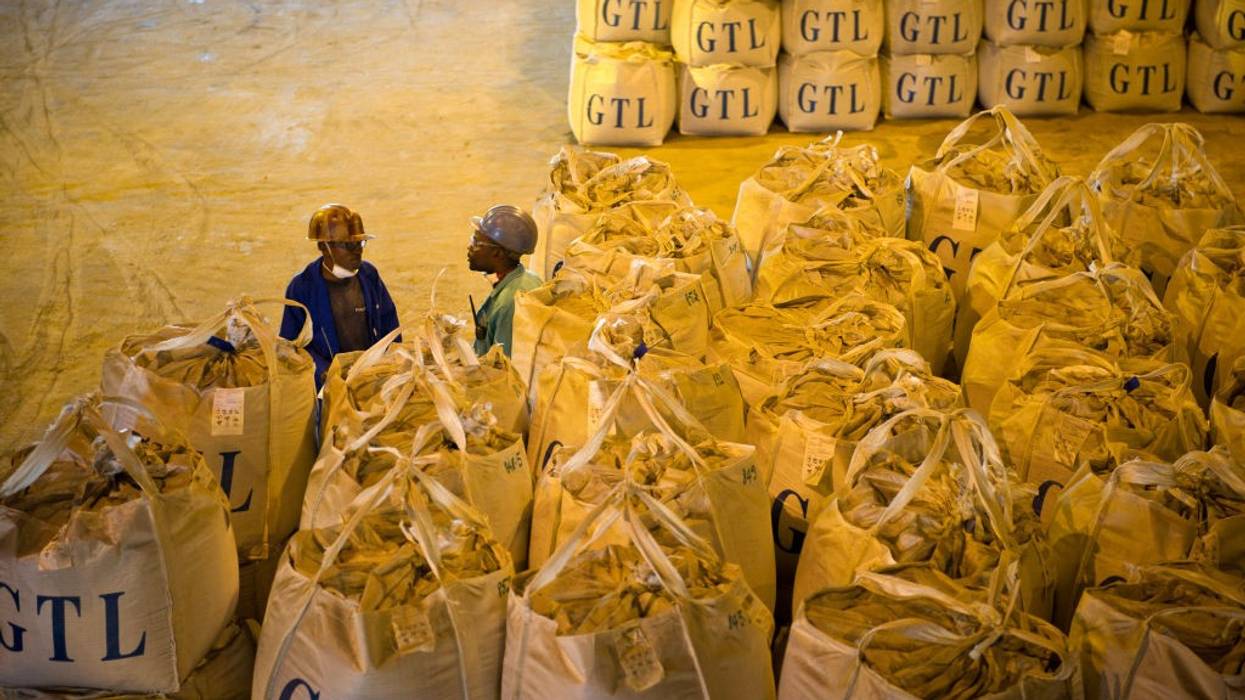
This brings us back to what this imperialist struggle is all about. The island is loaded with critical minerals, including rare earth minerals, lithium, graphite, copper, nickel, zinc, and other materials used in green technologies. Some estimates suggest that Greenland has 6 million tons of graphite, 106 kilotons of copper, and 235 kilotons of lithium. It holds 25 of the 34 minerals in the European Union’s official list of critical raw materials, all of which exist along its rocky coastline, generally accessible for mining operations. Unsurprisingly, such enormous mineral wealth has made Greenland of interest to China, Russia, and—yep—President Trump, too.
“Greenland is an incredible place, and the people will benefit tremendously if, and when, it becomes part of our Nation,” Trump wrote on Truth Social. “We will protect it, and cherish it, from a very vicious outside World. MAKE GREENLAND GREAT AGAIN!”
Right now, in this geopolitical chess game, graphite might be the most valuable of all the precious minerals Greenland has to offer. The Amitsoq graphite project in the Nanortalik region of southern Greenland could be the most significant prize of all. Considered to be pure, the “spherical” graphite deposit at the mine there may prove to be the most profitable one in the world. Right now, GreenRoc Mining, based in London, is trying to fast-track work there, hoping to undercut China’s interest in Greenland’s resources to feed Europe’s green energy boom. The profits from that mine could exceed $2 billion. Currently, spherical graphite is only mined in China and is the graphite of choice for the anodes (a polarized electrical device) crucial to lithium-ion battery production.
“This is Not a Joke”
Despite President Trump’s attempt to put the brakes on EV growth in the U.S., sales are soaring across the planet. In 2024, EV sales rose 40% in China and 25% globally. Such growth comes with obstacles for manufacturers, which will need a steady stream of minerals like graphite to keep the assembly lines moving. It’s estimated that 100 new graphite mines alone will need to come online by 2035 to meet current demand.
Such a reality is, no doubt, well understood by Elon Musk, the co-founder and CEO of Tesla. Musk benefits from his very close relationship with Donald Trump, overseeing the Department of Government Efficiency (which isn’t an actual department but an office inside the White House) and would certainly benefit if the U.S. came to control Greenland.
“If the people of Greenland want to be part of America, which I hope they do, they would be most welcome!” Musk recently wrote on his platform X.
Musk is not the only one with potential interests in Greenland. Trump’s pick for Commerce Secretary, Howard Lutnick, has a financial stake in the territory, though he’s promised to divest. Lutnick’s investment firm, Cantor Fitzgerald, backs Critical Metals Corporation, which is set to start mining in Greenland for rare earth minerals as soon as 2026.
Like Musk, Lutnick will significantly influence Trump’s approach to the island, even if he officially divests. Trump has also dispatched Ken Howery, a billionaire tech investor, co-founder of PayPal, and buddy of Musk, to be the next U.S. ambassador to Denmark. Howery has told friends he’s excited about his post and the possibility of brokering a deal for the U.S. to acquire Greenland.
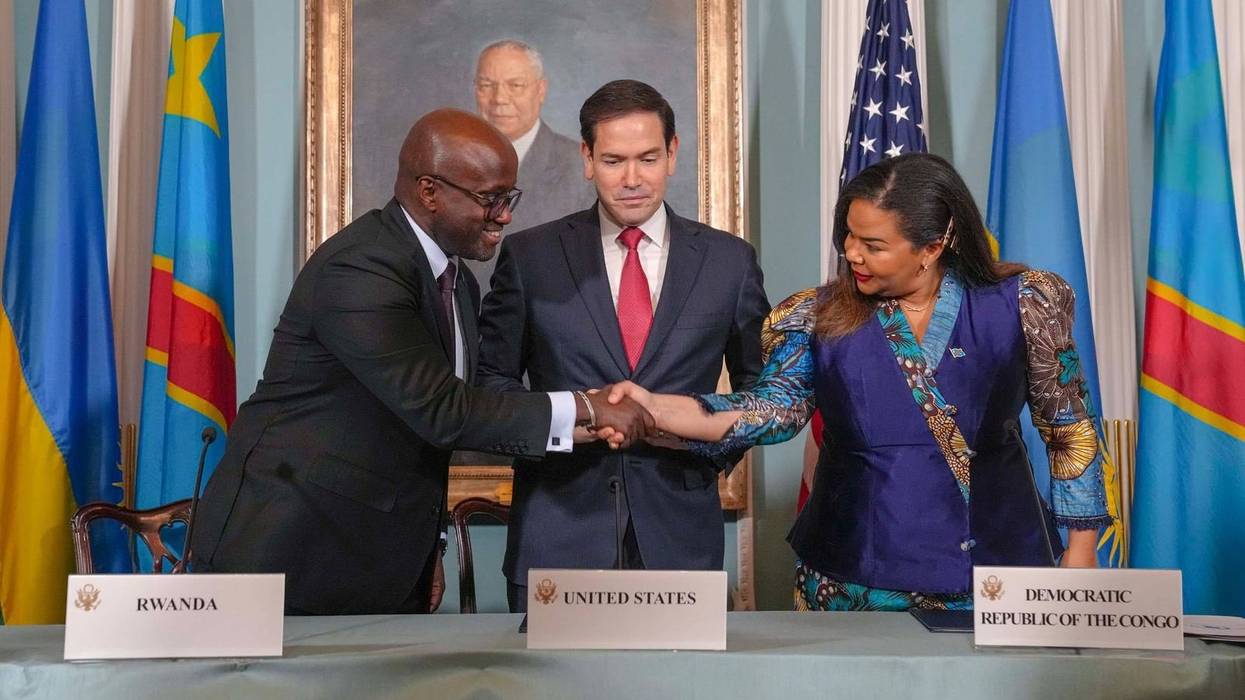
Marco Rubio, the new secretary of state, insists that Trump isn’t bullshitting when it comes to Greenland. “This is not a joke,” he said. “This is not about acquiring land for the purpose of acquiring land. This is in our national interest and it needs to be solved.”
Greenland and its resources are merely the latest potential casualty of Trump’s quest for global domination and his fear of China’s economic power. His interest in the green energy sector does not signify a change of heart regarding the dangers of climate chaos or the value of renewables but rather a drive for global financial supremacy. Like the billionaires around him, he desires it all—the oil, the gas, and the critical minerals essential for the global energy transition, while China is pushed aside. Regarding the Kalaallits and their aspirations, he could care less.