
SUBSCRIBE TO OUR FREE NEWSLETTER
Daily news & progressive opinion—funded by the people, not the corporations—delivered straight to your inbox.
5
#000000
#FFFFFF
To donate by check, phone, or other method, see our More Ways to Give page.


Daily news & progressive opinion—funded by the people, not the corporations—delivered straight to your inbox.
As spying becomes big business, more people are mobilizing to resist mass surveillance.
For many, Labor Day signifies a time of transition, the end of summer and the return to business as usual, whether it be school or work. But the holiday weekend was born out of a more radical past, and at a place charged with a history of protest and free expression.
On September 5, 1882, more than 10,000 workers sacrificed a day’s pay to march on Union Square and demand an eight-hour workday and an end to child labor. The success of their protest paved the way for Labor Day to become a federal holiday in 1894.
Initially a gated garden enclave for New York’s wealthiest, architects Frederick Law Olmsted and Calvert Vaux redesigned Union Square in 1872 as an open plaza for public assembly and patriotic demonstration.
By the beginning of the 20th century, Union Square became the epicenter of radical American politics, a setting for protests by anarchists and socialists. Noted activist Emma Goldman frequently used the public plaza to challenge government censorship and advocate for women’s reproductive rights and free speech.
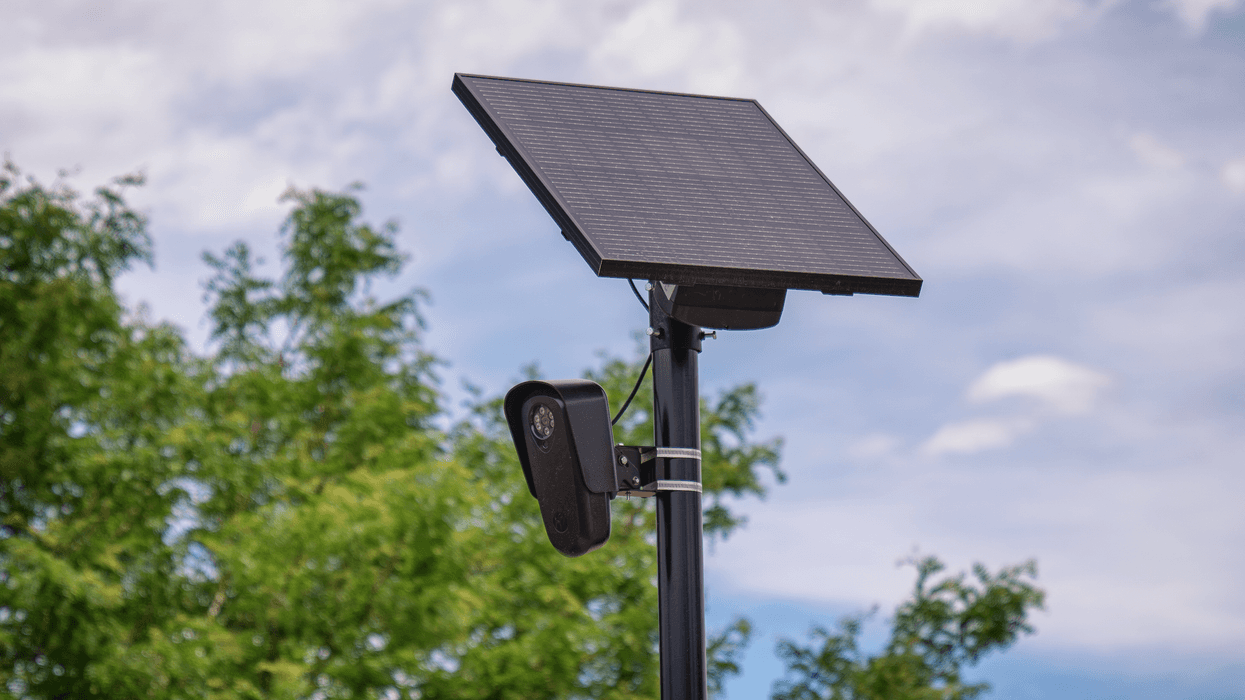
Today, however, Union Square has been fenced in by a barricade of a different sort. Ringing the plaza is a spiky array of cameras, installed on streetlights by a New York Police Department seeking to surveil New Yorkers and anyone else who happens by the square.
The cameras include automatic license-plate recognition technology, which captures data on every car that passes the square down Broadway or across busy 14th Street.
Whether you’re driving to the grocery store for a quart of milk or attending a local No Kings protest, odds are that law enforcement has recorded, processed, and archived your activities for future reference.
Such setups are so ubiquitous to cities and major intersections that they’re easy to dismiss as normal features of a busy streetscape. But that’s changing.
The company that produces many of these surveillance cameras—Flock Group Inc.—has become a focus of concern among activists, advocates, and people of every political stripe who don’t want law enforcement documenting and archiving their every activity.
But Flock is not alone. Surveilling everyday Americans is now a multibillion-dollar business that’s growing fast.
Flock has struck license-plate reading camera contracts with 7,000 law-enforcement agencies, accounting for 40% of all such departments nationwide. There are more than 130,000 of these cameras deployed across 49 states, likely at a busy intersection or gathering point near you.
Whether you’re driving to the grocery store for a quart of milk or attending a local No Kings protest, odds are that law enforcement has recorded, processed, and archived your activities for future reference.
The philosophy behind such mass surveillance is that authorities need to capture data on everyone’s movements to identify those few who step out of line. It’s as though you need to know the habits of every blade of grass in the haystack to cull out the one wayward needle.
If that’s not disturbing enough, there have also been extensive reports of abuse, including local police officers deploying department surveillance technology to stalk romantic interests—including strangers—while innocent people have been thrown in jail based on a misread license plate or an inaccurate biometric scan.
“The constant and ongoing surveillance of people in public places raises serious First and Fourth Amendment concerns,” says Jenna Ruddock, Free Press’ advocacy director. “Even decisions about where to install these cameras map onto well-established practices of racist policing, aside from the fact that facial-detection technology has an alarming track record when attempting to identify people of color.”
Still, more major tech companies are getting in on the expanding surveillance business. Powerful artificial intelligence companies are marketing AI-enabled video analytics with facial-recognition capacities for real-time threat detection (think Minority Report).
And while Meta doesn’t directly market its Ray-Ban smart glasses to law enforcement, local police departments and immigration agencies have been buying them in bulk via Amazon.
For its part, Amazon is chasing multimillion-dollar contracts to provide law enforcement with cloud infrastructure for data storage, analytics, and biometric systems, including more than $250 million from the Department of Homeland Security to host many of the databases and systems used to track, monitor, and deport immigrants.
Though he once promised that he wouldn’t allow anyone to use company technology to harm people, Google CEO Sundar Pichai is now seeking to profit from mass surveillance. The company is already doing business with Immigration and Customs Enforcement while vying with Amazon and other tech giants for government cloud-computing contracts. Google is also under contract to provide the tech at the center of federal projects to upgrade the “virtual wall” that surveils US borders.
As more cameras sprout up in more locations, the movement to oppose such government spying is spreading. Dozens of cities across the country have cut ties with Flock over their residents’ data-privacy concerns. People have flocked to public hearings and city council meetings to pressure local elected officials to turn the cameras off. Some have taken matters into their own hands, covering nearby Flock and other surveillance cameras with trash bags—or even cutting down camera-attached light poles with electric saws.
DeFlock, an anti-surveillance activist group, has been mapping locations of Flock and other cameras nationwide. (This author used this tool to identify the many non-Flock surveillance cameras surrounding Union Square).
In August, privacy advocates organized the DeFlock National Week of Action, which featured a series of protests, town halls, and informational events to oppose automated license-plate readers and other mass surveillance technology.
The pushback against local surveillance cameras is occurring alongside the fast-spreading movement to stop the unchecked construction of data centers. There’s a common culprit in both popular uprisings: the unholy alliances struck between Big Tech and government. Others are rightfully suspicious of the billionaire class pushing the rapid, reckless development of advanced AI and surveillance tools without first seeking the consent of surrounding communities.
In Union Square on a recent Monday, I asked local busker Lawrence Kidwell whether he knew what all of the nearby police cameras were about. “The NYPD just wants to listen to my music,” he said.
Perhaps. But the cameras are also in place to discourage other forms of expression and muzzle voices of dissent. Something that Union Square has long welcomed may become lost to the new deprivations of the surveillance state.
This piece was originally published at Pressing Issues.
Though National Guard troops now outnumber police officers in the capital, Reuters found they’ve been involved in just over 1% of criminal cases in the city, and most of them have been for minor offenses.
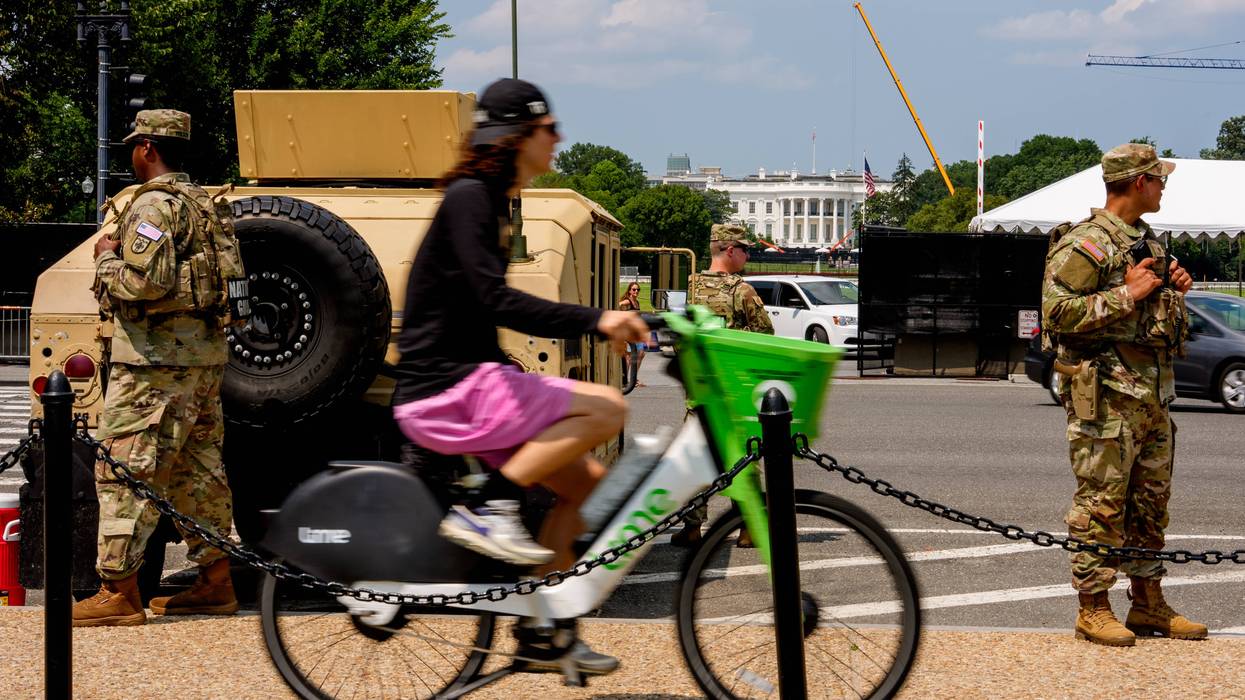
It's been about a year since President Donald Trump began his military occupation of Washington, DC. But while costing taxpayers millions of dollars per day, a new investigation reveals that his National Guard deployments have done almost nothing to stop violent crime.
Crime in DC was already at its lowest level in decades when Trump sent in the troops last August, as was the case in many of the cities that came under unprecedented federal occupation.
But while Trump claimed that these soldiers—who can only detain suspects but must call police officers to make arrests—were the only force capable of saving DC from "crime, bloodshed, bedlam, and squalor," a Reuters investigation out Wednesday found that they’ve had a role in responding to only a tiny fraction of criminal cases.
Since their arrival last August, National Guard members have been mentioned in only about 1.3% of the criminal cases filed in the Superior Court of the District of Columbia, which handles nearly all the city's criminal prosecutions.
And though Trump has repeatedly credited his troops with protecting residents from being murdered and mugged, charging documents show that his soldiers "mostly responded to minor incidents in neighborhoods that are wealthier, whiter, and less dangerous than the rest of the capital."
Many of the cases where troops intervened, Reuters found, were to stop offenses like subway fare evasion and shoplifting.
Reuters said it "could find no reference in court records to soldiers doing any kind of law enforcement in the neighborhoods where about 82% of the city’s 859 murders occurred over the past five years."
The investigation describes a pattern of soldiers simply standing around while crimes occurred and waiting for police to arrive. In one instance, police officers arrived to arrest a man stomping on a woman outside a nightclub.
According to one of the officers who responded to the scene, "There was approximately 15 National Guard members in the area on routine patrol who did not take any action.”
In another case, soldiers called emergency services after finding a man who'd been stabbed in an upscale waterfront area. But believing him to have only been intoxicated, they left him lying on the ground without performing emergency measures.
They only realized once the police arrived that he'd been "stabbed so severely his intestines were spilling out." He died two hours later after being brought to the hospital.
The administration has portrayed the mere presence of troops as a "deterrent" against crime. But violent crime in the city has actually risen slightly in the year since they arrived. Data from the Metropolitan Police Department (MPD) shows 1,712 violent crimes in 2026 versus 1,645 at the same point in 2025—a 4% increase.
Meanwhile, the grassroots group Free DC has been documenting hostile encounters between guard troops and city residents. The group has cataloged several instances in which troops have detained people, including those protesting their presence, with what it says was “absolutely no cause.”
"They harass people a lot more than they are actually doing police work,” said the Rev. Norman Nixon, the pastor of the Union Temple Baptist Church, who spoke with Reuters.
DC now has over 4,500 troops patrolling the streets. Despite lacking the ability to perform many ordinary police functions, they now outnumber the city’s police force, and maintaining the National Guard's presence is costing more each day.
According to a report from the nonpartisan Niskanen Center, a deployed Guard member costs around $607 per day, compared with about $384 for an MPD officer. The Trump administration has estimated that keeping the Guard deployed until the end of Trump's term in 2029 will cost about $1.4 billion.
The troops also played a role in the administration’s campaign to remove homeless people from DC and help federal agents dismantle encampments last summer as part of what Trump described as a war against “vagrancy.”
Last year, researcher Hanna Homestead of the National Priorities Project estimated that the deployments, which then cost an estimated $1.1 million per day, was costing four times as much as it would to provide an affordable housing unit for every homeless person in the city, which was pegged at about $257,000 per day.
The Defense Department has since estimated that the cost of the deployments was nearly $1.7 million per day. But that was before the number of troops doubled.
Applying Homestead's methodology today would mean that deploying the National Guard is now nearly 9-10 times as costly as providing housing for the Washington, DC's homeless population, all while providing little apparent benefit to public safety.
"I can think of many other ways that federal resources could have been invested to make the nation’s capital safer," said Clinique Chapman, the CEO of the DC Justice Lab, in a letter to the editor of the Washington Post earlier this summer.
“For what it costs to deploy the Guard in [the] US for just six days,” Chapman said, taxpayers could have instead paid for the annual cost of running trauma recovery centers in each ward to help crime survivors heal and connect them to treatment and support.
For five days of the expenditure, the US could fund a mental health crisis response program like Denver's, which responds to hundreds of calls for service each month and reduces arrests, for one year.
For 41 days of what the National Guard deployment costs, the District could fund a year of living-wage jobs and pay the rent on a one-bedroom unit for every US resident returning home from the Bureau of Prisons.
ACLU-DC executive director Monica Hopkins emphasized that the point of the deployments was never to improve the lives of DC residents or enhance public safety, but a “political prop.”
"The Pentagon’s acknowledgment that the deployment will continue until 2029 confirms what we’ve said all along—there is no real emergency here," she said in a statement to mark the one-year anniversary of the deployment. "As was true one year ago, armed military troops are not needed and are not wanted on our streets."
"Because the nation's capital is not legally recognized as a state, extremist politicians have used DC as a testing ground for anti-democratic orders," she added. "We cannot let military deployment on the streets of the United States become normal or acceptable as a part of daily life here or anywhere else."
"'Just comply' means women are being told to surrender to potential kidnappers, and hope they turn out to be government agents."
As US Immigration and Customs Enforcement deals with the fallout of two fatal shootings, President Donald Trump's border czar Tom Homan has said the deaths were the fault of victims who did not "comply" with agents.
"It comes down to one simple fact. These people failed to comply with law enforcement," Homan said on Monday outside the White House. "All they had to do was simply comply. If they did, they'd be alive today."
Questions remain about the extent to which the two men killed earlier this month—Lorenzo Salgado Araujo in Texas and Johan Sebastián Guerrero in Maine—defied ICE agents leading up to their arrests, and the Department of Homeland Security's (DHS) initial narrative that the two men attempted to attack agents with their vehicles has been undercut by video and eyewitness evidence.
Meanwhile, legal experts have noted that failure to comply with law enforcement on its own is not a justification for deadly force under DHS guidelines or the guidelines of any other law enforcement agency, and the Supreme Court has repeatedly ruled that lethal force must be reserved for situations where suspects pose an immediate danger.
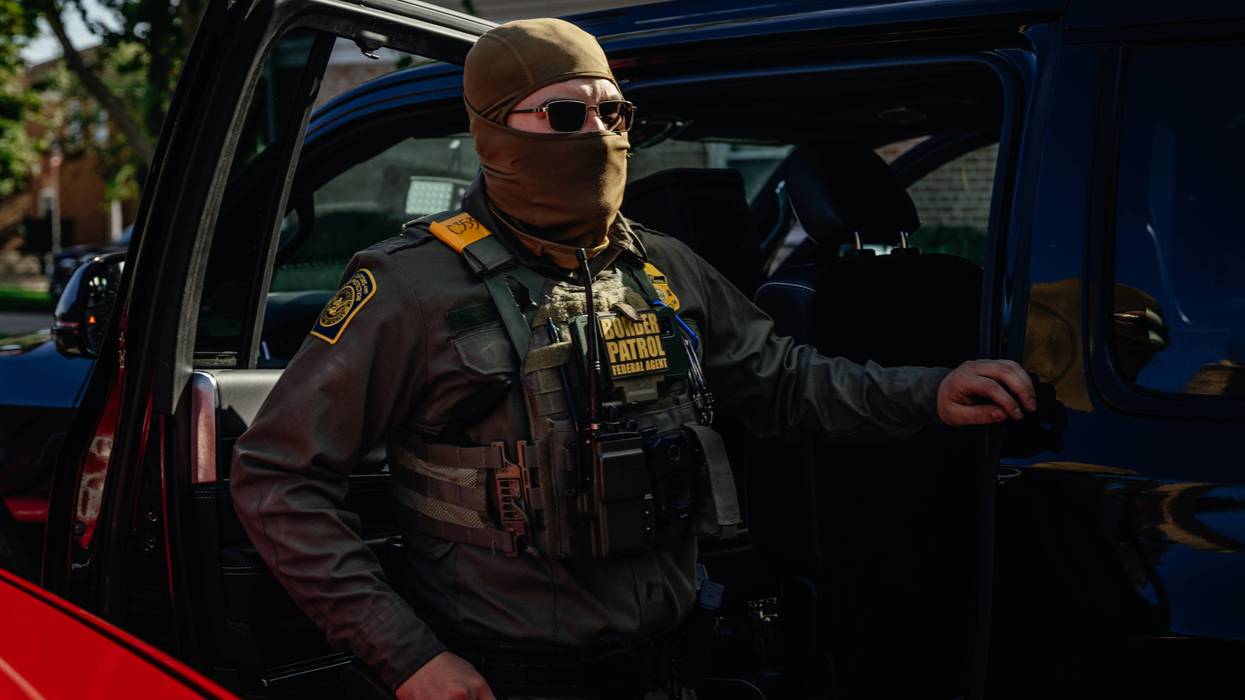
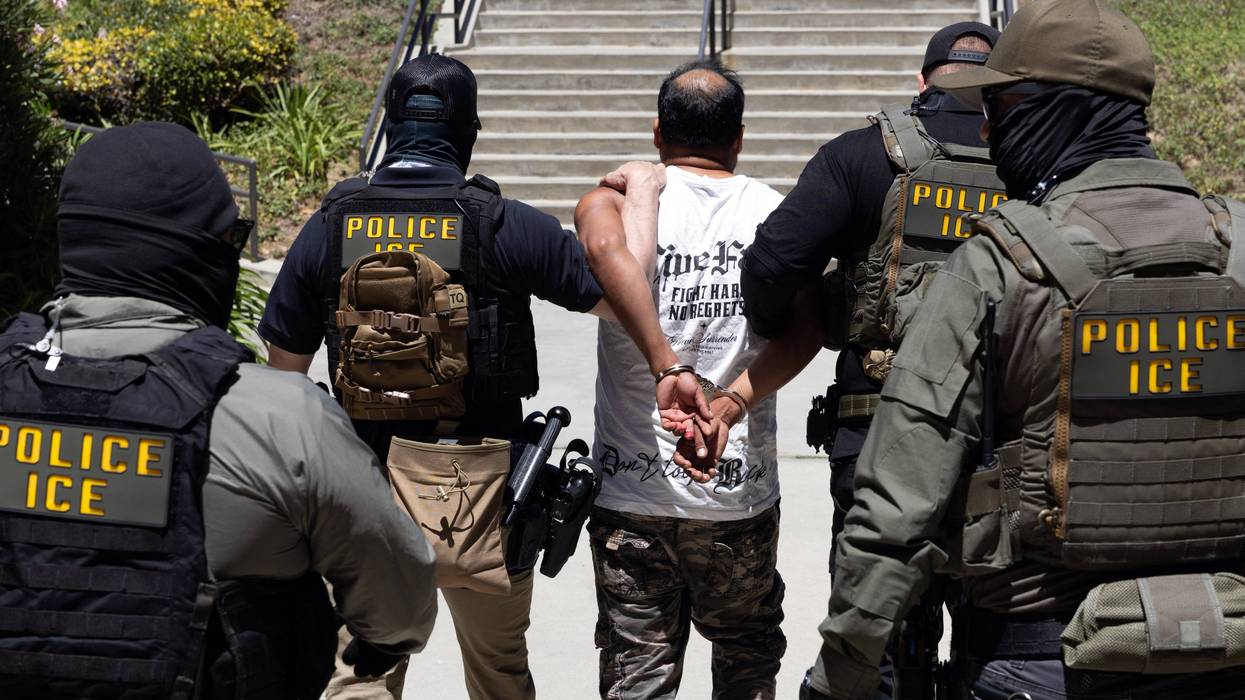
ICE critics have further pointed out that the agency’s unprecedented tactics under the second Trump administration—the use of unmarked cars, the refusal to self-identify, and the use of excessive force without clear justifications—make compliance impossible in many cases.
A prominent social media user known as Jesus Freakin' Congress, who catalogs ICE abuses on her account for more than 50,000 followers, drew attention to a case out of Schaumburg, Illinois, as "an example of what [Homan] wants you to comply with."
The video, filmed by Instagram user Mari Elena months earlier and posted this week, shows what she believed to be agents in unmarked vehicles following her as she attempted to leave a parking lot before a gray SUV suddenly cut her off as she approached an intersection.
"I saw what appeared to be ICE agents in a parking lot and began recording them from a distance," she explained in the post. "After they noticed I was recording, several of their vehicles drove past me. Because I was alone, I decided to leave the parking lot. As I was leaving, four ICE vehicles surrounded my vehicle in the middle of the road."
Video shows the gray SUV sitting motionless in front of Mari as she honked repeatedly. She had nowhere to go without hitting either the curb or the vehicle in front of her. After blocking her for over a minute, the vehicle drove through the intersection, allowing Mari to leave.
At no point did any of the vehicles activate their emergency lights to indicate that they were law enforcement or that she was being detained.
Jesus Freakin' Congress noted the difficulty this posed for Mari, who "wasn’t even 100% sure" that the men boxing in her car were ICE agents.
Imagine being a woman, alone in your car. A group of cars you cannot clearly identify as law enforcement, start following you. They don’t turn on emergency lights. They don’t clearly identify themselves. And one of them cuts you off and [is] blocking your vehicle from being able to drive away.
What are you supposed to think is happening? Because from your perspective, it looks like you are being kidnapped by random people.
And that is the terrifying part of what ICE is doing. They are creating situations where people have no idea whether the people surrounding them are legitimate law enforcement officers, or strangers attempting to abduct, or rob them. And Tom Homan’s answer to being kidnapped, or robbed, is… “Just comply.”
Don’t try to drive away. Don’t defend yourself. Don’t try to escape. Just calmly allow unidentified people, in unmarked vehicles, to follow you, box you in, and potentially kidnap or rob you… Because if they happen to be ICE agents, and you react like a normal person who believes they are being kidnapped, you could be assaulted, detained, or even shot. Do you understand how dangerous and insane that is?!?
“Just comply” means women are being told to surrender to potential kidnappers, and hope they turn out to be government agents. And if they don’t? Tom Homan says it’s their fault for not complying.
Although Mari was not able to confirm that the vehicles boxing her in were driven by ICE agents, her case represents the type of scenario in which Homan demands people to simply "comply."
Since it became commonplace for faceless agents to prowl the streets, there have been numerous documented cases of people impersonating immigration agents in order to kidnap, rob, and sexually assault victims.
The FBI itself put out a bulletin last year urging agents to identify themselves to prevent confusion. However, there is no evidence that DHS has implemented those guidelines.
According to a report from Wired on Wednesday, the Trump administration has sued at least five states, as well as the city of Philadelphia, in order to block laws that would stop agents from wearing masks during operations.
Witnesses say that in the incident that led to Salgado's shooting, agents did not identify themselves as law enforcement before the encounter escalated. ICE has not produced evidence that agents identified themselves before shooting Guerrero in Maine. In both cases, the men killed were not the targets of ICE's operations.
In the wake of Homan's demands that those approached by immigration agents "comply", legal experts have warned that ICE's tactics are creating fear that compels people to do the exact opposite.
"ICE and other federal immigration agents have made quick compliance difficult or impossible," Hiroshi Motomura, professor of immigration and citizenship law at the UCLA School of Law, told HuffPost. "Many agents aren't identifying themselves in any trustworthy way."
"It's only natural for people to not comply as quickly as officers might like," he continued. "In these moments of apprehension and fear, some officers seem to be escalating into violence."