

SUBSCRIBE TO OUR FREE NEWSLETTER
Daily news & progressive opinion—funded by the people, not the corporations—delivered straight to your inbox.
5
#000000
#FFFFFF
To donate by check, phone, or other method, see our More Ways to Give page.
Daily news & progressive opinion—funded by the people, not the corporations—delivered straight to your inbox.
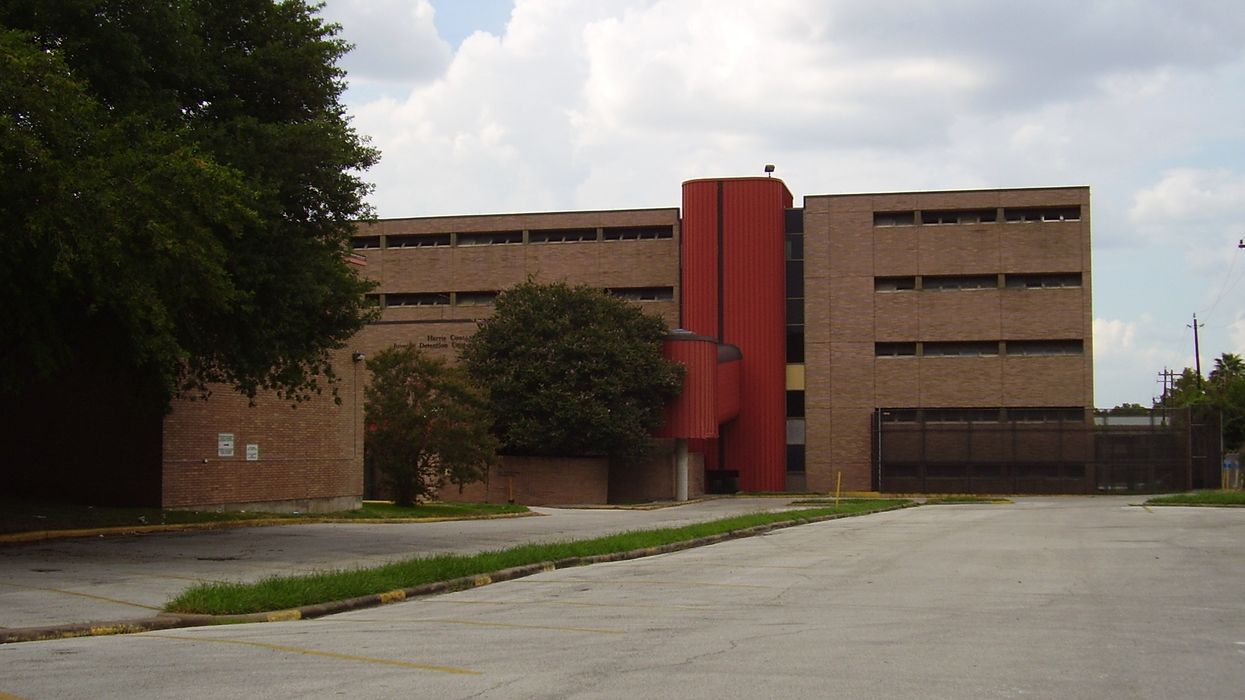
From conventional therapy to culturally relevant initiatives and healing-based, trauma-informed programming, youth can grow in a healthy manner through a sustainable relationship with community-based caregivers.
The currently popular “tough on crime” narratives touted by local, state, and federal policymakers—as evidenced by the attacks on mayors of sanctuary cities at recent congressional hearings—pose a risk that the United States will revert to a dangerous place that will harm marginalized communities for decades to come.
The nation’s stability is directly tied to the stability of this country’s younger generations. As a 25-year veteran of Juvenile Diversion programs in Denver, I took an early retirement to lead a nonprofit that works with young people referred through deflection, a pre-citation or pre-arrest intervention that connects young people to resources without criminalizing their behavior.
The goal is to make my old job obsolete.
Something must change. Community based organizations and legal advocates are already seeking solutions and are floating reform initiatives across the country.
During the past three decades, I have been deeply involved in community organizing, while simultaneously working full time inside the Juvenile Justice Industrial Complex where I have heard the internal systemic whisperings while also seeing how those systemic policies affect the communities they serve in real time.
On any given day, there are about 27,600 youth in detention centers in the U.S., representing a 75% decline since the year 2000. Juvenile crime rates plummeted between 1994-2020 by 78%. There is an obvious correlation between the drop in youth in detention and the decrease in crime. Reducing involvement in the juvenile justice system reduces juvenile crime.
The troubling national trend of rolling back justice reform efforts is raising alarms among advocates, as seen in Washington state where they are repurposing adult detention centers to create more juvenile lock-ups. And in North Carolina, legal expert Jake Sussman criticized policies leading to youth isolation, stating, “We are only aggravating any existing problems by placing these very vulnerable kids in isolation.”
Recently, I witnessed a 10-year-old stand behind his mother in Denver’s municipal juvenile court, clutching her jacket sleeve, struggling to understand how he came to be paraded before a judge for age-appropriate behavior. He tossed a pencil behind his back that grazed a teacher’s leg. Sitting in the intake room, his feet did not even touch the floor.
A 2024 study clearly spells out the damage that this one experience in the juvenile justice system will have on this child’s life as he grows up, carrying the trauma of this day and the burden of heightened scrutiny that will come from being placed on juvenile diversion. The study highlights the fact that young offenders often experience polyvictimization, developmental trauma, and complex PTSD, emphasizing the need for trauma-informed approaches within juvenile justice systems.
The National Center for Youth Law published a report in January detailing the extensive harm that tickets inflict on students everywhere, which unveils specifically how Lakewood, a large Denver suburb, has vastly overcriminalized students through the municipal court system.
Many municipal courts in the country, like Cleveland, New Orleans, and Denver, function in much the same manner as Lakewood. Children are ticketed for low-level offenses not worthy of a district-level charge, often by a police officer at their own school.
Ticketed students are siphoned into diversion programs that require them to miss school (and their parents to miss work) so they can show up for a court appearance. That experience is followed by another missed day of school and work to show up for a highly invasive intake interview.
Finally, the student is required to participate in costly classes that range from $60-$150 for one class, which is designed to address and correct criminogenic thinking in adults, at the family’s expense.
Students are required to complete rigorous community service assignments that can include dozens of hours of work. In Colorado for instance, a child is not permitted to perform community service hours without a parent present. So once again, a child’s ticket jeopardizes their parent’s employment.
Something must change. Community based organizations and legal advocates are already seeking solutions and are floating reform initiatives across the country such as the Colorado Youth Justice Collaborative, MILPA Collective, and Denver Healing Generations.
Ideally, healing a young person happens at home and within their own school and community. Some children are not able to have these positive resources.
In the school environment, alongside school discipline matrix reforms is a push for what has been termed deflection. The proposed deflection policies are what advocacy organizations nationwide tout as a means of avoiding harming a child through the juvenile justice system. The goal is to send the young person to an organization for services within their community directly from the point of contact with law enforcement instead of formally charging them.
There are bills in Colorado Judiciary Subcommittees that would begin to codify these policies and lead to a refreshing approach to addressing problematic behavior in young people. The City of Longmont, Colorado has had an 86% success rate already with its Deflection program as it routed youth away from the justice system.
Similarly, Cambridge, Massachusetts has a program that serves as a model for expansion into more cities.
From conventional therapy to culturally relevant initiatives and healing-based, trauma-informed programming, youth can grow in a healthy manner through a sustainable relationship with community-based caregivers. This is an investment in the future of America where healthy young people become healthy adults. That is a net positive for everyone.
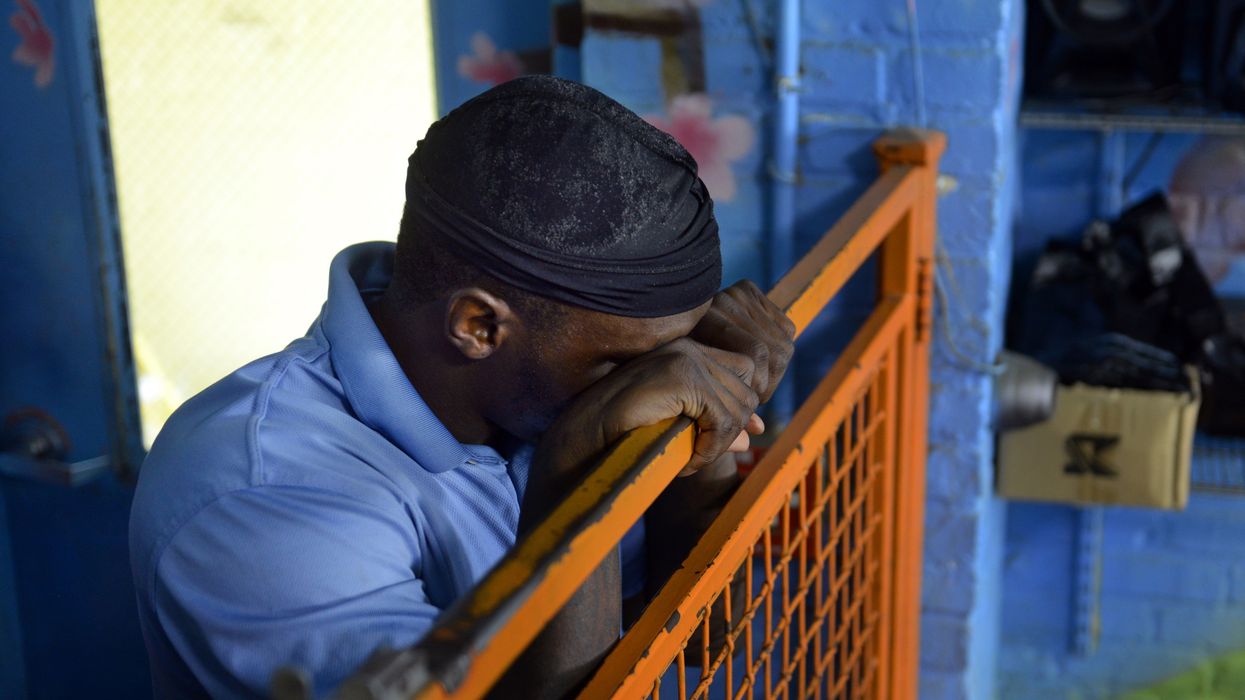
When policymakers strip away funding for education and job training, it is not just setting up individuals for failure—it is ensuring a future where entire communities remain trapped in cycles of poverty and incarceration.
Imagine being sentenced to prison as a juvenile. You enter a world not designed to rehabilitate you, but to warehouse you alongside adults who have long since given up hope. The promise of education and job training is nonexistent, or at best, a fleeting privilege reserved for a select few.
You serve your time, only to return to a society that has already made up its mind about your worth. You are ready to rebuild your life, but the structures necessary to support that transition—education, employment, and rehabilitation programs—are crumbling around you.
With recent cuts to the federal workforce and over $600 million slashed from vital teacher training grants, that already fragile path to redemption is further dismantled. The reality for those reentering society after incarceration is bleak.
The stakes are clear: Either invest in people, ensuring they have the tools needed to succeed post-incarceration, or continue to sabotage their futures before they even have a chance to rebuild.
According to the Bureau of Justice Statistics, in 2021, there were 2,250 juveniles 17 and younger held in adult jails and prisons. That number has been declining as the Prison Policy Initiative states that as of 2019, on any day there were 48,000 youth detained.
There are distinct disparities in detention as the Sentencing Project reports that in 2021, the white placement rate in juvenile facilities was 49 per 100,000 youth. The Black youth placement rate was 228 per 100,000, tribal youth were at a rate of 181 per 100,000, and Latino youth were a rate of 57 per 100,000.
A steady job is the cornerstone of successful reintegration, yet the opportunities available to newly-released youth are scarce. “The latest available data from the National Longitudinal Survey of Youth found that 20% of reentering young people born between 1980 and 1984 were unemployed in the first year following their release” the Center for American Progress found.
“In the 12th full year after release, that number grew to 26%. According to further analysis of these data, young adults with criminal legal histories worked an average of only 35.8 weeks in the first full year after their release,” the survey shows.
Many young people report they are met with application questions that force them to disclose their past, immediately placing them at a disadvantage. For those who manage to find employment, wages are often low, and the stigma of their past follows them like a shadow.
Nonprofit organizations such as The Doe Fund, Homeboy Industries, and Defy Ventures that work tirelessly to provide job training, legal aid, and mentorship are facing funding cuts that threaten their survival. Without these crucial programs, the cycle of recidivism tightens its grip, and the promise of a second chance fades further from reach.
These grants help create educators who specialize in reaching marginalized communities, including those affected by incarceration. Without these resources, the pipeline to education, a key factor in breaking the cycle of incarceration, is severely weakened. If education is the key to opportunity, then these cuts are slamming the door shut on those who need it most.
A recent report on predictions for youth justice funding programs says, “One major hurdle is the inconsistent allocation of funds across different states and communities. Disparities in funding can lead to unequal access to essential services, leaving some youth without the support they need to succeed.”
With federal cuts prompted by an executive order to end all Diversity, Equity, and Inclusion initiatives, youth justice funding may be on the chopping block.
But this issue of resources for youth extends beyond those directly impacted by incarceration. A society that fails to rehabilitate and reintegrate its formerly incarcerated citizens is a society that fosters instability.
Families remain fractured, communities suffer from economic stagnation, and the cost of recidivism far outweighs the investment in successful reintegration. When policymakers strip away funding for education and job training, it is not just setting up individuals for failure—it is ensuring a future where entire communities remain trapped in cycles of poverty and incarceration.
When the pillars necessary for reentry—education, employment, and support—are removed, research shows the fear, anxiety, and hopelessness experienced by those returning home are not just personal struggles; they are systemic failures.
Instead of pulling away crucial funding, policymakers, elected officials, nonprofit funders, philanthropists, advocates, and community leaders must expand access to education and workforce development, particularly for those who have served their time and are ready to contribute to society.
The stakes are clear: Either invest in people, ensuring they have the tools needed to succeed post-incarceration, or continue to sabotage their futures before they even have a chance to rebuild. It’s time to reject policies that leave the most vulnerable behind and instead fight for a future where second chances are more than just empty promises.
Americans "overwhelmingly support" shuttering all of the country's juvenile prisons and replacing them with community-based rehabilitation and prevention programs, according to a poll announced Thursday by Youth First, a new campaign to close youth prisons nationwide.
"We believe that youth prison model should be abandoned and replaced with more humane and less costly alternatives to incarceration," Liz Ryan, president of Youth First, said during a Thursday press conference.
Among other proposals to reform the system, 83 percent of poll respondents agreed with Youth First's argument that states should invest in alternatives to incarceration. A whopping 89 percent agreed with the group's proposal to design new forms of treatment that include family members. The support held across party lines: 79 percent of Democrats, 71 percent of Republicans, and 81 percent of independents agreed with the group's suggestions for reform.
Youth First argues that the current system "isn't safe, isn't fair, and doesn't work" and advocates for a new model of treatment for youth convicted of crimes, including involving the family in a treatment plan that emphasizes rehabilitation and prevention. The group also argues for closing incarceration facilities and using the savings to fund new community-based programs.
Support for Youth First's reform proposals was robust even among those who have been victims of crime and those who have family members who have been victims, the poll found. Crime victims do not support the "tough on crime" rhetoric and punishment-based programs that were touted by U.S. politicians in recent decades, which were responsible for the corresponding dramatic rise in juvenile incarceration rates, the group said.
Da'Quon Beaver, an advocate with youth prison reform groups Just Children and RISE for Youth in Richmond, Virginia, described his own experience as an incarcerated child during Thursday's press conference. He was tried as an adult at age 14 and sentenced to 48 years--which meant he spent his most formative years in multiple maximum security juvenile prisons, he said.
"My experience at these prisons--they are prisons, it doesn't matter what softer names they give them," Beaver said, "anything you can imagine happening at adult prisons is happening at these juvenile prisons."
Beaver described mentally ill children being placed in isolation units instead of treatment, legally-mandated school hours being called off for days at a time because of "lack of security staff," and kids doing nothing for 12 hours a day but sitting in a tiny windowless room watching "a box TV with about four channels." This is not to mention the violence, the ever-present threats of sexual assault, and the prevalent use of chemical and physical restraints by correctional officers in youth detention centers, also cited by Youth First in its reform initiative.
Youth First also announced the release of an online mapping tool that allows visitors to explore the racial disparities of youth incarceration--children of color are incarcerated at far higher rates than white children charged with the same crime, the data showed. Its mapping tool also brings to light the surprising number of enormous detention centers built for children in the 19th century that are still in use today.
The group said a bipartisan coalition of governors from Connecticut, Illinois, and Virginia has also recently committed to closing some of the old, outdated facilities in their states.
Beaver attested that the "things we're doing aren't just wrong because we're doing them to kids, they're wrong because we're doing them to humans."
Officer Ben Fields had not a moment's hesitation in putting a black girl in a chokehold to yank her from her desk chair, slam her to the ground, and throw her across her classroom. The video of this assault has gone viral and has rightly prompted outrage from white people.
Here's the thing: The suspension, expulsions, beating, and arresting of black students in the U.S. is closer to the rule than the exception when childish behaviors occur at school. The national statistics on how often school discipline involves authorities physically attacking students isn't available. But we do have data on the disproportionately high rates of out-of-school suspensions, expulsions, and referrals to the criminal justice system that black children experience in our schools daily.
Here are some recent stories illustrating the data:
Honor student Kiera Wilmot, a black high school sophomore, was arrested for conducting a science experiment that had been going viral on the internet by putting household cleaner and a piece of aluminum foil in a bottle and making smoke. She was charged with two felonies.
A 14-year-old black student from Texas was choked by a school police officer "for his own safety," during a lunch-room tussle with another student.
A 12-year-old black boy was arrested for engaging in a staring contest with a white student, who while giggling, told the teacher that she felt "intimidated" though she had started the game.
Dontradrian Bruce, a black high school student who earned all A's and B's, held up three fingers-the number of his football jersey- in a photo taken by his science teacher as he completed a successful science project. Dontradrian was suspended for 21 days, accused of making a gang sign.
Kyle Thompson's school principal said that Kyle was such a great kid, he wished his school was full of Kyle Thompson's. Yet when this 14-year-old black student declined to show his teacher a note he had written, the child was led from school in handcuffs, barred from all public schools in the state for a year and is spending a year under house arrest.
The criminalization of black children starts almost the moment that the child leaves her mother's door. According to a recent report from the National Education Association, black children represent only 18% of pre-schoolers, but they make up nearly half of all pre-school suspensions. Anecdotal evidence is sometimes even more horrifying than the data itself:
Joah was 3 years old and his mother received a call from the school that he hit a staff member on the arm, was deemed "a danger to the staff," and suspended. He was suspended 5 times that year.
A little 5-year-old black child in Mississippi was required to wear black shoes as part of the school's dress code. The family didn't have black shoes for him and his mother colored in some white and red sneakers with black magic marker. He was nabbed by the cops at school and sent home in the back of a police vehicle.
Due to a spike in crime by juveniles in the 1990s, social scientist John Delulio propagated a myth of the rise of "superpredators." These superpredators were to be "radically impulsive, brutally remorseless elementary school youngsters who pack guns instead of lunches" and "have absolutely no respect for human life." This false panic paved the way for Zero Tolerance policies that over-criminalized childish behaviors in schools. Consequently, we've seen expulsions and suspensions almost double since then. The Vera Institute reports that about 2 million secondary school students are now suspended annually. Compare that to just 3 million students graduating high school that same year.
Black and Latino students are suspended and expelled at much higher rates than white students. Black students in middle school are suspended at a rate almost four times more often than white youth and three times more likely than white youth for the same infractions overall. Particularly alarming is that over 70% of all students receiving school-related arrests and referrals to law enforcement are black or Latino.
The consequences of both this excessive criminalizing of children and the racial bias in harsh punishments are extreme. The Kirwan Institute cites studies showing that a single suspension in the first year of high school doubles the dropout chance for that child. Children who experience expulsions are three times more likely to end up in the juvenile justice system. Once caught within the juvenile system, the psychological and economic consequences can have a lasting and burdensome impact on children while simultaneously decreasing their educational and financial opportunities and increasing the chances of re-incarceration. People incarcerated as youth are nearly 70% more likely to be in jail again by age 25 than youth who were not referred to juvenile detention.
The current discipline policies in our schools undoubtedly criminalize our children and criminalize them with a bias, especially against black youth. When officers like Ben Fields react to a child who won't relinquish her cell phone with excessive violence and arrest, he is potentially condemning her before she has even had the chance to grow up. Right now, our school policies assume black kids are criminals, and we should beat 'em up, kick 'em out, and lock 'em up.
Are you outraged yet?
Solitary confinement is pretty horrible for anybody, but it's especially horrible for a child. It is psychological torture.
-- Bryan Stevenson, Founder and Executive Director of the Equal Justice Initiative, author of Just Mercy
When you go over the three years that he spent [in jail] and all the horrific details he endured, it's unbelievable that this could happen to a teenager in New York City. He didn't get tortured in some prison camp in another country. It was right here!
-- Paul V. Prestia, Kalief Browder's lawyer to The New Yorker
Before I went to jail, I didn't know about a lot of stuff, and, now that I'm aware, I'm paranoid. I feel like I was robbed of my happiness.
-- Kalief Browder to Jennifer Gonnerman, staff writer for The New Yorker
Nobody of any age should be held in jail without a trial for three years. No child or adolescent should be held in an adult jail. No child or youth should be housed in facilities where those entrusted to care for them violently assault them. Yet, a 16-year-old accused of stealing a backpack was kept in one of the most violent adult jails in the United States, Rikers Island in New York City, for three years without a trial. This was morally scandalous and inhumane. Even worse, he spent more than two years of that time in solitary confinement, locked up alone except to go to the shower, the recreation area, the visit room or the medical clinic. This was torture. The suicide of 22-year-old Kalief Browder on June 6, barely two years after his release and return home, was the final horror in his tragic and brutal journey into the depths of the adult criminal justice system in New York City and state.
At Rikers, Kalief was cruelly beaten by juvenile gangs, and beaten by a guard as he was calmly walking from solitary confinement to the shower. This violent abuse was caught on video and made public in April by an investigative reporter from The New Yorker. Other alleged abuses were not: The cruel guards who denied him meals, medical care, trips to the shower and extended his time in solitary confinement by making up disciplinary problems.
It should surprise no one that a teenager subjected to this continuous torture; a teenager who maintained his innocence and just wanted his right to a day in court to prove it; a teenager who turned down plea deals repeatedly although it would have meant he could go home immediately; a teenager with no history of mental illness before Rikers Island tried to commit suicide while held in solitary confinement for two of his three years there. It is beyond shameful that he was held without a trial, without being proven guilty and because he was a poor young Black male. This travesty was and is preventable and must be prevented for all youths at risk of such abuse.
If New York Governor Andrew Cuomo and state legislators act immediately before this state legislative session ends June 17, 2015 to raise the age of criminal responsibility, as 48 states have done, more tragedies and suffering like Kalief Browder's might be avoided. And youths still at Rikers might have reduced suffering and pain.
Kalief Browder's cruel and unjust treatment began May 15, 2010, when he was picked up with a friend in the Bronx. He shared his story later with a reporter from The New Yorker to make sure this would never happen to anyone else. Kalief was stopped for allegedly stealing a backpack earlier that evening. According to the report, he maintained his innocence and offered to let the police search his pockets. The only evidence against him was the testimony of the alleged victim he never got the chance to confront. Eyewitness identification is notoriously unreliable.
Kalief Browder was immediately funneled into the adult criminal justice system because of the unjust lottery of geography and poverty. New York remains one of only two states in our country that still automatically treats 16- and 17-year-olds as adults. More than a century ago, states began to legislate that children should be treated as children to prevent the inhumane, dangerous, and ineffective practice of putting them in adult jails. New York and North Carolina should end this practice immediately. Not one more young life should be ruined or tragically lost to Rikers preventable torture and violence.
We have long known that putting children in adult jails puts them in harm's way. The Children's Defense Fund (CDF) first documented and began advocating for changes to end these harms nearly 40 years ago after visiting 500 jails across America and publishing in 1976 our deeply disturbing findings in a report on Children in Adult Jails. We found children incarcerated with adults suffered increased rates of physical abuse, like Kalief did. Today they are 36 times more likely to commit suicide than those in juvenile facilities. In light of this evidence, it is outrageous that any state today would subject its teenagers to any adult jail especially like Rikers Island whose culture of violence is notorious. New York must stop right now.
The unjust criminalization of the poor is another reason Kalief Browder ended up at Rikers Island. His family could not afford to hire an attorney or pay the $3,000 bail to keep him home to await a trial that never took place over three long years. Being poor, Black and male, the odds were high that he would end up in the Cradle to Prison PipelineTM and suffer preventable death.
Dr. Sean Joe, the Benjamin E. Youngdahl Professor of Social Development at the Brown School of Social Work at Washington University in St. Louis, and an authority on suicidal behavior among African American males, says that among Black Americans, Black males between the ages of 15 to 24 are most likely to commit suicide. "The suicide of Kalief Browder highlights the glaring gap between the alarming psychiatric needs of black boys and men and the absence of effective treatments; a justice system that enacted psychological torture because a putative stolen backpack mattered more than the life and future of a black teen; and the importance to address the unattended psychological consequences resulting from the feverous adjudication, prosecution, and sentencing of black boys and men without regard for their mental health."
More than a thousand days after arriving at Rikers Island, Kalief Browder was abruptly released four days after his 20th birthday. He had spent most of the 17 previous months in solitary confinement. The charges against him were dismissed. It is unclear when the only evidence against him disappeared, and when and if the "victim" had returned to Mexico and could no longer be found. Two years later, after more suicide attempts and mental health hospitalizations, Kalief Browder took his life at home. He was 22-years-old.
His tragically short life has already made a difference. Mayor Bill de Blasio led New York City to ban solitary confinement for all juveniles when he heard Kalief's story. But the Governor and state legislature without another moment's delay must also take action on the age at which children can be placed in adult jails as the Governor's Commission on Youth, Public Safety and Justice recommended. No other child or youth should be at risk of Kalief Browder's fate and our nation needs to change the way we treat Black boys and men and recognize that all lives matter equally.
Albert Camus, the great French Nobel Literature Laureate, speaking at a Dominican Monastery in 1948 said: "Perhaps we cannot prevent this world from being a world in which children are tortured. But we can reduce the number of tortured children." He described our responsibility as human beings "if not to reduce evil, at least not to add to it" and "to refuse to consent to conditions which torture innocents." "I continue," he said "to struggle against this universe in which children suffer and die." And so must every one of us including our elected officials who must be held accountable. Only then will the cries of the prophets for justice and peace and America's pretentions to be a just nation become a lasting reality.
Kalief Browder was murdered, in the first degree.
The papers will say that on Saturday, Browder, 22, walked into a room in his home, took the air conditioner out of a wall and hanged himself.
But this was a premeditated murder of spirit, innocence, youth and dreams, which began in the spring of 2010 when police stopped a then-teenage Kalief on his way home. They say he stole a book bag. He tells them he didn't. They search him and find nothing. They tell him to come down to the station with them to get it all straightened out. They tell him he will go home.
For three years, Browder sat behind bars in one of the toughest detention centers in America refusing to crack. He didn't take the book bag, and he wasn't copping to it. His parents couldn't afford the $10,000 bail to get him out, so for three years he waited for his day in court--and it never came. While in jail, Browder would be abused by guards, tormented by gangs and spend some 400 days in solitary confinement, and then, one day, without a trial, he was set free.
As if setting him free would make it right. The 400 days of solitary without a trial broke his innocence and stole his youth. The true thieves that night in 2010 were the police who stopped Browder on a New York City street. That was kidnapping. The young man taken that night from his neighborhood would never return.
There was a crime here. One perpetuated by a legal system that sees black men as objects for prison; police who see young black men and women as thugs who must have done something (see McKinney, Texas); correction officers who don't see teens as children but as hardened criminals.
At 16, Browder was still young enough to believe that the adults around him weren't all corrupt. He was still young enough to believe that there was a chance he would see his classmates again, maybe take the girl he'd been eyeing to the prom, maybe still have time to walk across the stage with his graduating class. Except his reality was the jail cell where he spent 23 hours a day, with mice creeping out at night, crawling over the thin bedsheet under which his young body couldn't find rest.
He would tell HuffPost Live host Marc Lamont Hill that while in jail, he tried to commit suicide "five or six" times. That he had asked correction officers for help because he needed to speak to someone. He wasn't feeling right and wanted to be "stress-free." No one helped him.
Video of Browder's imprisonment would show two telling facts about his incarceration and his character: One video shows Browder being escorted from his cell by a correction officer, and the size difference is jarring. The visual shows the physical makeup of a grown man standing next to a child. In seconds, the video turns violent. Browder said he had only asked the officer why his cuffs were so tight, and the officer's response was to slam Browder down on the cold jailhouse floor.
A second video speaks volumes as to how hard Browder was willing to fight to make sense of it all.
While he was in jail, a gang leader spit on him. The video shows Browder's response. In a room full of kids all bigger than him, Browder walks up to the leader and punches him in the face. He delivers a few more blows before he is mobbed. On the ground, he curls himself into a ball until the kicking stops, and then he finds his way into another cell.
The gang is relentless; members threaten him through the glass square in the door of the cell. Browder doesn't back down. He checks his fists. Pats his hair down a bit and paces the small space, surely hopped up on adrenaline. One kid kicks the door in and the gang mobs him again.
When asked about the fight once on the outside, Browder stated only that if he had allowed the kid to spit on him, he would have been spit on every day.
I mention this only to illustrate that the pain Browder chose to endure that day was because for him, right was right. It was all black and white. He didn't steal the book bag, so he wasn't copping to it. He wouldn't tolerate being spit on, so he fought back.
The system is also black and white, and that is the reason it couldn't see Browder as a kid, or the book bag as a book bag. The book bag became right and Browder wrong, so without a trial, without a conviction, he was given the death penalty of three years in jail without even knowing it would be three years; just unending time in the box at the crux of manhood, too innocent to accept the gray parts that started taking shape.
No one looked at the boy in the cell or the years that had gone by and saw that he was changing, that his face had lost the fullness of his youth. In time, Browder was becoming something even he couldn't recognize anymore. No one saw the kid in pain, and in turn, by the time they let him go free, he was on the edge of manhood and the kid was off in the wind like a kite with no string, never to return home.
And I feel like I need to say this here because I have heard it mentioned too many times by some folks in the black community, and I can't let it rest: Suicide doesn't make you a punk. It isn't a testament to an absence of bravery. It is a final act of control when one is walking inside that dark place, a place that followed Browder like the mice in his cell, not allowing him rest.
He would tell the New Yorker how he felt once he was released.
"People tell me, because I have this case against the city, I'm all right," he told the magazine. "But I'm not all right. I'm messed up. I know that I might see some money from this case, but that's not going to help me mentally. I'm mentally scarred right now. That's how I feel. Because there are certain things that changed about me and they might not go back."
Kalief Browder's dreams were stolen, his youth taken one night on a New York street. His life turned into a room, barely bigger than his outstretched arms, and like a plant without sunshine, his innocence began to wither away, and there's nothing redeeming in this story. There is no silver lining. If you need something to take from this story, take this: The world can be a miserable place filled with sadness, and for some young black men, money, Rosie O'Donnell and even Jay Z can't make it right (and I'm not using their names as metaphors for mythical figures; they actually tried to make Browder's story right).
If you need a happy ending, look someplace else.
A young man who spent three years in Rikers Island prison without trial--almost two of them in solitary confinement--after being arrested at age 16 for allegedly stealing a backpack committed suicide Saturday at age 22.
Kalief Browder's case, brought to light by New Yorker journalist Jennifer Gonnerman in an October 2014 profile, helped raise awareness about New York City's dysfunctional criminal justice system. Browder claimed to have endured beatings by guards as well as other inmates--allegations supported by surveillance footage that emerged earlier this year. While in prison, he attempted suicide multiple times before prosecutors ultimately dropped the charges against him in May 2013.
"He wanted the public to know what he had gone through so that nobody else would have to endure the same ordeals," Gonnerman wrote on Sunday of Browder's desire to share his tragic story with the world. "His willingness to tell his story publicly--and his ability to recount it with great insight--ultimately helped persuade Mayor Bill de Blasio to try to reform the city's court system and end the sort of excessive delays that kept him in jail for so long."
But even as his revelations led to changes at the institutional and citywide level, Browder continued to grapple with personal trauma.
"People tell me because I have this case against the city, I'm all right," he told the New Yorker last year. "But I'm not all right. I'm messed up. I know that I might see some money from this case, but that's not going to help me mentally. I'm mentally scarred right now. That's how I feel. Because there are certain things that changed about me, and they might not go back."
As Browder's attorney Paul Prestia said in a phone interview with the LA Times on Sunday evening: "I think what caused the suicide was his incarceration and those hundreds and hundreds of nights in solitary confinement, where there were mice crawling up his sheets in that little cell. Being starved, and not being taken to the shower for two weeks at a time...those were direct contributing factors....That was the pain and sadness that he had to deal with every day, and I think it was too much for him."
Blogger Shaun King, writing at Daily Kos, was even blunter: "The state of New York is responsible for this young man's death," King wrote. "Officials [at Rikers] ruined this boy's life. Hardly old enough to drive when they locked him up, they destroyed his soul in that prison."
In The Atlantic, Ta-Nehesi Coates agreed that Browder's story is one of systemic cruelty and racism.
"The numbers which people like me bring forth to convey the problems of our justice system are decent tools," Coates wrote on Monday. "But what the numbers can't convey is what the justice system does to the individual black body."
He continued: "Kalief Browder was an individual, which is to say he was a being with his own passions, his own particular joys, his own strange demons, his own flaws, his own eyes, his own mouth, his own original hands. His family had their own particular stories of him. His friends must remember him in their own original way. The senseless destruction of this individual must necessarily be laid at the feet of the citizens of New York, because our servants did it, and it was done in our name."
Our criminal justice system in America is broken. Our so-called "tough on crime" laws have led to us being the most incarcerated nation in the developed world - disproportionately affecting minorities and some of our most already hard hit communities. A deeply disconcerting fact (pdf): the United States incarcerates a higher proportion of African Americans than South Africa did at the height of apartheid. Yet at the same time, we have some of the highest levels of violence and crime. It is clearly not an effective strategy, and is largely destructive.
Pew research has shown that if you are locking up more than 500 people per 100,000, you are actually adding to crime because we are disrupting and destabilizing so many families and communities that cannot easily recover. The national average across the US is around that rate, but there are many communities around the country that are at 2000 or even 4000 per 100,000. This is devastating to these communities. We must do better, and we can do better.
While it is encouraging to hear the swiftly growing chorus of elected leaders, from both sides of the aisle, speaking about the need for criminal justice reform -- particularly in the wake of Ferguson, Baltimore, etc. -- we have much work to do to move our federal, state and local laws away from these largely ineffective strategies towards more progressive models that can bring healing and repair to lives and to our communities.
We are seeing a plethora of cost-effective and evidence-based approaches to implementing justice in society that focus more on healing harm done, rather than simply punishing it. These approaches are proving to work better than our current methodologies. A couple of encouraging examples:
After the Longmont Community Justice Partnership (in Longmont, Colorado) implemented its Community Restorative Justice Program, recidivism rates dropped to less than 8% in its first three years (pdf). National averages can reach 65% recidivism rates, or higher.
In a West Philadelphia High School, within two years of implementing a Restorative Discipline program, incidents of assault and disorderly conduct dropped more than 65%.
The following empowering strategies and programs are proving to be quite effective in the realm of humanizing justice:
Early Intervention: Engaging at risk youth early and providing them with support needed to be successful in life can build them into strong, productive members of their communities before they fall into cycles of violence, incarceration, and despair. This can be accomplished through mentoring programs, at home family support, after school programs, and many other positive interventions.
Restorative Justice: We seek approaches to justice that provide an effective process and container for the development of understanding between offenders and victims as well as the wider community. It provides the conditions, guided by victims, for the possibility of healing, forgiveness and restoration. The nature of a restorative process guided by victims' needs allows for offenders to come to terms with the human cost of their actions and attempts to right the wrong together with all stakeholders. This often is freeing to victims, as well, and a key aspect of their own ability to move forward. In laying the foundations for empathy, restorative justice can and has radically changed lives, prevented crime and recidivism, and rebuilt communities. Working programs in the US have shown astounding success in reducing recidivism, saving time and judicial expense, while preventing incarceration and its associated costs.
Smarter Sentencing Act: The Smarter Sentencing Act would reduce a variety of mandatory minimums to reduce unjustifiable disparities in sentencing and to reduce sentences for low risk offenders.
Trauma-Informed Justice and Courts: An increasing body of evidence tells us that the majority of people in jails and prisons have experienced trauma that has scarred their minds and hearts. They may have survived rape, assault, or childhood sexual abuse, or they may have witnessed violence done to others. The experiences that trauma survivors have in the criminal justice system, far from leading them to positive changes in their lives, often add new trauma and deepen their wounds. Many will never be able to break out of the narrow trajectory that constricts their futures unless the justice system and their communities can help them to focus on the root problem: trauma, its lasting effects in human lives, and the need to begin the healing process.
Smarter Sentencing Act: The Smarter Sentencing Act would reduce a variety of mandatory minimums to reduce unjustifiable disparities in sentencing and to reduce sentences for low risk offenders.
Creating a trauma-informed environment within the juvenile justice system is especially important considering research has demonstrated that many of the youths involved in the juvenile justice system have been exposed to traumatic events.
Smarter Sentencing Act: The Smarter Sentencing Act would reduce a variety of mandatory minimums to reduce unjustifiable disparities in sentencing and to reduce sentences for low risk offenders.
Prisoner rehabilitation and re-entry support: When incarceration is necessary, it is critical that offenders are treated with essential human dignity and given the best chance possible to return to their communities as full members of society, with life skills, job skills and equal opportunities for employment. We support programs in prisons that provide life-skills, that teach inmates emotional literacy, how to better communicate, resolve conflict and deal with emotional and psychological issues. These support modalities have been shown to help transform lives.
Prisons must also be places that provide support and education to prisoners so they are able to care for themselves through productive employment upon release. Returning citizens must have access to supportive programming upon release to ease their transition and to prevent recidivism.
Community Policing: Community policing is, in essence, a collaboration between the police and the community that identifies and solves community problems. All members of the community become active allies in the effort to enhance the safety and quality of neighborhoods through communication.
Diversionary Approaches: Pre-trial and pre-charge diversion support approaches allow low risk offenders to move into programs that address their behavior without saddling them with a conviction, having life-long ramifications, or sending them to a prison where they are often driven further into a harmful lifestyle.
Juvenile Justice: The Juvenile Justice system must take into account the differences in brain development between youth and adults, and treat youth differently. The juvenile justice system needs to provide support in the community whenever possible, reserving incarceration, which is far more harmful to youth than adults, for only the most extreme cases if at all.
Mediation: Mediation is a form of alternative dispute resolution, a way of resolving disputes between two or more parties with concrete effects. Typically, a third party, the mediator, assists the parties to negotiate a settlement. Mediators use various techniques to open, or improve, dialogue and empathy between disputants, helping the parties reach an agreement.
All of the above are in play to various degrees in communities around the nation. They have not reached anywhere near the scale that is needed. Here are a few policy proposals that could help in the short term to move us more swiftly towards these approaches.
Youth PROMISE Act: The Youth Prison Reduction through Opportunity, Mentoring, Intervention, Support and Education (Youth PROMISE) Act would reduce youth violence by enabling inclusive groups of local stakeholders to determine the needs of their own communities and to address those needs with a suite of accountable, evidence based programs. It is locally controlled, accountable, saves money, and it works.
Redeem Act: The Redeem Act would make sealing and expungement simpler for people returning from incarceration, and would remove legal obstacles preventing them from accessing the social support structures critical to helping them reintegrate into society.
Second Chance Re-authorization Act: The Second Chance Act was first passed in 2007, and has used evidence based reentry programs to help those returning from incarceration reintegrate into the community. It has reduced recidivism and saved significant amounts of money.
Full Funding for Juvenile Justice Delinquency and Prevention Act: This is essential in ensuring that state juvenile justice programs offer the young people involved the supports necessary for successful rehabilitation and re-entry into their communities.
Smarter Sentencing Act: The Smarter Sentencing Act would reduce a variety of mandatory minimums to reduce unjustifiable disparities in sentencing and to reduce sentences for low risk offenders.
This "Humanizing Justice Systems Peacebuilding Cornerstone" is part of a new national initiative from The Peace Alliance entitled Be the Movement! Take a Step for Peace: In Your Life, In Our Communities, among Nations. You can learn more about humanizing Justice here, including: statistics on what is working and where the challenges are, links to great organizations and programs around the nation as well as ways you can get invovled to help make it happen.
Smarter Sentencing Act: The Smarter Sentencing Act would reduce a variety of mandatory minimums to reduce unjustifiable disparities in sentencing and to reduce sentences for low risk offenders.
It is time for us to embark on a new course forward, towards a justice that repairs harm done, instead of simply punishing. It's more sane, more effective and more humane.
"Fundamental to this process is the idea of 'collective responsibility' . . ."
The study, released earlier this year, is called: "What Can the Cook County Juvenile Court Do to Improve Its Ability to Help Our Youth? A Juvenile Justice Needs Assessment."
Compiled by two Chicago institutions, the Mansfield Institute for Social Justice and Transformation at Roosevelt University and the Institute on Public Safety and Social Justice at Adler University, it's a well-documented plea for sanity.
Its fundamental finding will hardly be a surprise to anyone involved with the juvenile justice -- or any other kind of justice -- bureaucracy. Despite the enormous investment by governments at every level in court and penal systems, they don't work. That is to say, they make matters worse:
"In 2012, there were 29,822 juvenile arrests in Cook County. . . . While court intervention is intended to reduce the likelihood of future offending, research findings suggest that, in fact, the opposite is true.
". . . when compared to youth with comparable risk factors of adverse behavior and/or delinquency histories, but no juvenile court involvement, youth who appeared in court and received mild sentences (such as counseling, community service or restitution) were still 2.3 times more likely to incur adult criminal records; youth placed on probation were 14 times more likely to incur adult records; and, youth placed in a juvenile correctional institution were 38 times more likely to have adult records."
In other words, when kids start to go astray, the official reaction -- at a cost of multi-billions of dollars a year nationally -- is to push them further astray, intensifying the suffering of all involved, and, of course, wrecking whole communities. And, since the era of "zero tolerance" and "tough on crime," matters have only gotten worse.
Bureaucracies are nothing if not self-justifying, so there's no chance of core change emerging from the system itself: no chance of awareness that the principles of punishment and domination are antithetical to healing. Yet until a certain level of awareness enters the court system, what is called juvenile justice should more accurately be called a bureaucratic war on young people -- in particular, young people of color.
According to the study, pushing teenagers into the penal system: A) disrupts their connection to school, in particular, any special-ed services they might be entitled to; B) exacerbates any mental health issues they might have, increasing their risk of suicide; and C) increases their acceptance of criminal thinking and, what is obvious to everyone except the keepers of the system, substantially increases the likelihood that they'll break the law again and be back in court.
"Furthermore," the study points out, "participants identified the paradox of not being able to receive any preventative services for themselves and/or their children without first becoming involved with the juvenile justice system."
The fundamental lack of awareness that is manifest in the Cook County juvenile justice system cannot be tweaked into sensible behavior. Change to the system must be profound. The study all but cries for "a fundamental shift of mindset."
"Specifically needed," it states, "is a universally held agreement among court personnel and all juvenile justice stakeholders about the young people they serve. This process would be aimed at creating a shift in the mindset about how young people become touched by the system in the first place, including how particular communities of young people are systematically being prepared for the prison pipeline versus productive adulthood."
The system, whether it knows it or not, fits into America's "historical context of racism and social class exclusion and oppression."
The study proceeds to envision something extraordinary: a juvenile justice system that disconnects itself from the context of racial, class and economic domination and is not merely accountable to but works in crucial partnership with the communities it serves. More and more Chicago neighborhoods, for instance, are developing restorative justice and other mentoring programs that give young people a chance to express themselves fully and build peaceful relationships with one another. Juvenile Court, instead of breaking kids' ties with their communities, should facilitate the strengthening of those ties.
"Fundamental to this process is the idea of 'collective responsibility,' that this shift will require those both inside and outside of the system taking collective responsibility and that both must come together in order for our youth to succeed.
"The philosophical shift," the study continues, "could be steeped in the concept of Ubuntu, a South African term which reflects the ideas of connection, community and caring for all. It is stated in South Africa's Interim Constitution created in 1993: 'There is a need for understanding but not for vengeance, a need for reparation but not for retaliation and need for ubuntu but not for victimization.'"
Ubuntu . . . a word and idea from tribal South Africa. I've heard it translated as: I am because you are. Desmond Tutu describes the concept as "the essence of being human. Ubuntu speaks particularly about the fact that you can't exist as a human being in isolation. It speaks about our interconnectedness. You can't be human all by yourself."
Knowing this, the court will now come to order.