SUBSCRIBE TO OUR FREE NEWSLETTER
Daily news & progressive opinion—funded by the people, not the corporations—delivered straight to your inbox.
5
#000000
#FFFFFF
To donate by check, phone, or other method, see our More Ways to Give page.
Daily news & progressive opinion—funded by the people, not the corporations—delivered straight to your inbox.
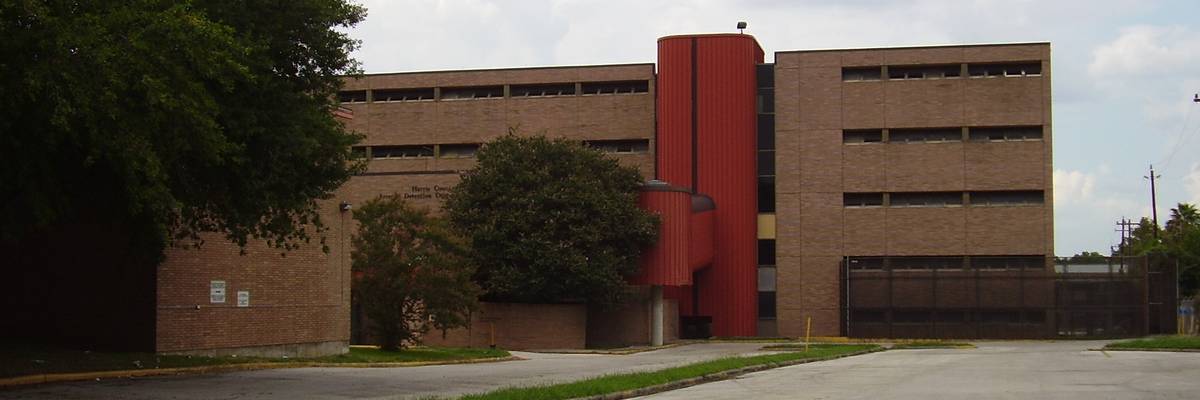
Harris County Juvenile Detention Center is shown in Houston, Texas.
From conventional therapy to culturally relevant initiatives and healing-based, trauma-informed programming, youth can grow in a healthy manner through a sustainable relationship with community-based caregivers.
The currently popular “tough on crime” narratives touted by local, state, and federal policymakers—as evidenced by the attacks on mayors of sanctuary cities at recent congressional hearings—pose a risk that the United States will revert to a dangerous place that will harm marginalized communities for decades to come.
The nation’s stability is directly tied to the stability of this country’s younger generations. As a 25-year veteran of Juvenile Diversion programs in Denver, I took an early retirement to lead a nonprofit that works with young people referred through deflection, a pre-citation or pre-arrest intervention that connects young people to resources without criminalizing their behavior.
The goal is to make my old job obsolete.
Something must change. Community based organizations and legal advocates are already seeking solutions and are floating reform initiatives across the country.
During the past three decades, I have been deeply involved in community organizing, while simultaneously working full time inside the Juvenile Justice Industrial Complex where I have heard the internal systemic whisperings while also seeing how those systemic policies affect the communities they serve in real time.
On any given day, there are about 27,600 youth in detention centers in the U.S., representing a 75% decline since the year 2000. Juvenile crime rates plummeted between 1994-2020 by 78%. There is an obvious correlation between the drop in youth in detention and the decrease in crime. Reducing involvement in the juvenile justice system reduces juvenile crime.
The troubling national trend of rolling back justice reform efforts is raising alarms among advocates, as seen in Washington state where they are repurposing adult detention centers to create more juvenile lock-ups. And in North Carolina, legal expert Jake Sussman criticized policies leading to youth isolation, stating, “We are only aggravating any existing problems by placing these very vulnerable kids in isolation.”
Recently, I witnessed a 10-year-old stand behind his mother in Denver’s municipal juvenile court, clutching her jacket sleeve, struggling to understand how he came to be paraded before a judge for age-appropriate behavior. He tossed a pencil behind his back that grazed a teacher’s leg. Sitting in the intake room, his feet did not even touch the floor.
A 2024 study clearly spells out the damage that this one experience in the juvenile justice system will have on this child’s life as he grows up, carrying the trauma of this day and the burden of heightened scrutiny that will come from being placed on juvenile diversion. The study highlights the fact that young offenders often experience polyvictimization, developmental trauma, and complex PTSD, emphasizing the need for trauma-informed approaches within juvenile justice systems.
The National Center for Youth Law published a report in January detailing the extensive harm that tickets inflict on students everywhere, which unveils specifically how Lakewood, a large Denver suburb, has vastly overcriminalized students through the municipal court system.
Many municipal courts in the country, like Cleveland, New Orleans, and Denver, function in much the same manner as Lakewood. Children are ticketed for low-level offenses not worthy of a district-level charge, often by a police officer at their own school.
Ticketed students are siphoned into diversion programs that require them to miss school (and their parents to miss work) so they can show up for a court appearance. That experience is followed by another missed day of school and work to show up for a highly invasive intake interview.
Finally, the student is required to participate in costly classes that range from $60-$150 for one class, which is designed to address and correct criminogenic thinking in adults, at the family’s expense.
Students are required to complete rigorous community service assignments that can include dozens of hours of work. In Colorado for instance, a child is not permitted to perform community service hours without a parent present. So once again, a child’s ticket jeopardizes their parent’s employment.
Something must change. Community based organizations and legal advocates are already seeking solutions and are floating reform initiatives across the country such as the Colorado Youth Justice Collaborative, MILPA Collective, and Denver Healing Generations.
Ideally, healing a young person happens at home and within their own school and community. Some children are not able to have these positive resources.
In the school environment, alongside school discipline matrix reforms is a push for what has been termed deflection. The proposed deflection policies are what advocacy organizations nationwide tout as a means of avoiding harming a child through the juvenile justice system. The goal is to send the young person to an organization for services within their community directly from the point of contact with law enforcement instead of formally charging them.
There are bills in Colorado Judiciary Subcommittees that would begin to codify these policies and lead to a refreshing approach to addressing problematic behavior in young people. The City of Longmont, Colorado has had an 86% success rate already with its Deflection program as it routed youth away from the justice system.
Similarly, Cambridge, Massachusetts has a program that serves as a model for expansion into more cities.
From conventional therapy to culturally relevant initiatives and healing-based, trauma-informed programming, youth can grow in a healthy manner through a sustainable relationship with community-based caregivers. This is an investment in the future of America where healthy young people become healthy adults. That is a net positive for everyone.
This country and this world are at a monumental crossroads. US voters have an opportunity to beat back the forces of fascism and confront the billionaires who are rigging the economy, our media system, and our democracy, making it increasingly impossible for ordinary people to get by. We’re not just talking about the election. We’re talking about what must be done once these fascist elements are vanquished from power. We need a bolder set of solutions than what either major party has so far been willing to offer and a working-class movement ready to fight like hell for it. Trump didn't emerge from nowhere. The conditions that fueled MAGA authoritarianism were created by decades of radical neoliberal economic policies and a corrupt political system dominated by corporate interests. They slashed taxes on the super-rich, promising that the benefits would trickle down. They said giveaways to the corporate titans would make life more affordable for the rest of us. It was all bullshit. And when a bitter, betrayed populace searches for someone to blame, right-wing demagogues have little trouble finding scapegoats. People know when they're being lied to, but you won't hear any of this from the corporate media. Only independent journalism—powered and funded by people who believe in building a better world—can deliver truly trustworthy daily news. If you share our vision, please contribute whatever you can to sustain our work. |
The currently popular “tough on crime” narratives touted by local, state, and federal policymakers—as evidenced by the attacks on mayors of sanctuary cities at recent congressional hearings—pose a risk that the United States will revert to a dangerous place that will harm marginalized communities for decades to come.
The nation’s stability is directly tied to the stability of this country’s younger generations. As a 25-year veteran of Juvenile Diversion programs in Denver, I took an early retirement to lead a nonprofit that works with young people referred through deflection, a pre-citation or pre-arrest intervention that connects young people to resources without criminalizing their behavior.
The goal is to make my old job obsolete.
Something must change. Community based organizations and legal advocates are already seeking solutions and are floating reform initiatives across the country.
During the past three decades, I have been deeply involved in community organizing, while simultaneously working full time inside the Juvenile Justice Industrial Complex where I have heard the internal systemic whisperings while also seeing how those systemic policies affect the communities they serve in real time.
On any given day, there are about 27,600 youth in detention centers in the U.S., representing a 75% decline since the year 2000. Juvenile crime rates plummeted between 1994-2020 by 78%. There is an obvious correlation between the drop in youth in detention and the decrease in crime. Reducing involvement in the juvenile justice system reduces juvenile crime.
The troubling national trend of rolling back justice reform efforts is raising alarms among advocates, as seen in Washington state where they are repurposing adult detention centers to create more juvenile lock-ups. And in North Carolina, legal expert Jake Sussman criticized policies leading to youth isolation, stating, “We are only aggravating any existing problems by placing these very vulnerable kids in isolation.”
Recently, I witnessed a 10-year-old stand behind his mother in Denver’s municipal juvenile court, clutching her jacket sleeve, struggling to understand how he came to be paraded before a judge for age-appropriate behavior. He tossed a pencil behind his back that grazed a teacher’s leg. Sitting in the intake room, his feet did not even touch the floor.
A 2024 study clearly spells out the damage that this one experience in the juvenile justice system will have on this child’s life as he grows up, carrying the trauma of this day and the burden of heightened scrutiny that will come from being placed on juvenile diversion. The study highlights the fact that young offenders often experience polyvictimization, developmental trauma, and complex PTSD, emphasizing the need for trauma-informed approaches within juvenile justice systems.
The National Center for Youth Law published a report in January detailing the extensive harm that tickets inflict on students everywhere, which unveils specifically how Lakewood, a large Denver suburb, has vastly overcriminalized students through the municipal court system.
Many municipal courts in the country, like Cleveland, New Orleans, and Denver, function in much the same manner as Lakewood. Children are ticketed for low-level offenses not worthy of a district-level charge, often by a police officer at their own school.
Ticketed students are siphoned into diversion programs that require them to miss school (and their parents to miss work) so they can show up for a court appearance. That experience is followed by another missed day of school and work to show up for a highly invasive intake interview.
Finally, the student is required to participate in costly classes that range from $60-$150 for one class, which is designed to address and correct criminogenic thinking in adults, at the family’s expense.
Students are required to complete rigorous community service assignments that can include dozens of hours of work. In Colorado for instance, a child is not permitted to perform community service hours without a parent present. So once again, a child’s ticket jeopardizes their parent’s employment.
Something must change. Community based organizations and legal advocates are already seeking solutions and are floating reform initiatives across the country such as the Colorado Youth Justice Collaborative, MILPA Collective, and Denver Healing Generations.
Ideally, healing a young person happens at home and within their own school and community. Some children are not able to have these positive resources.
In the school environment, alongside school discipline matrix reforms is a push for what has been termed deflection. The proposed deflection policies are what advocacy organizations nationwide tout as a means of avoiding harming a child through the juvenile justice system. The goal is to send the young person to an organization for services within their community directly from the point of contact with law enforcement instead of formally charging them.
There are bills in Colorado Judiciary Subcommittees that would begin to codify these policies and lead to a refreshing approach to addressing problematic behavior in young people. The City of Longmont, Colorado has had an 86% success rate already with its Deflection program as it routed youth away from the justice system.
Similarly, Cambridge, Massachusetts has a program that serves as a model for expansion into more cities.
From conventional therapy to culturally relevant initiatives and healing-based, trauma-informed programming, youth can grow in a healthy manner through a sustainable relationship with community-based caregivers. This is an investment in the future of America where healthy young people become healthy adults. That is a net positive for everyone.