

SUBSCRIBE TO OUR FREE NEWSLETTER
Daily news & progressive opinion—funded by the people, not the corporations—delivered straight to your inbox.
5
#000000
#FFFFFF
To donate by check, phone, or other method, see our More Ways to Give page.
Daily news & progressive opinion—funded by the people, not the corporations—delivered straight to your inbox.

'Who cares about Israel’s genocide, apartheid, and aggression?" asked one human rights expert.
The US State Department is hiding behind the war against Iran that was started by US President Donald Trump last week to justify an emergency order to ship more than 20,000 bombs—estimated at a value of $660 million—to Israel, skirting a pending approval process for the sale by Congress.
In a statement issued quietly on Friday night, the State Department said 12,000 BLU-110A/B general purpose, 1,000-pound bombs had been determined for approval, noting that Secretary of State Marco Rubio has "provided detailed justification that an emergency exists that requires the immediate sale to the Government of Israel of the above defense articles and defense services is in the national security interests of the United States, thereby waiving the Congressional review requirements under Section 36(b) of the Arms Export Control Act."
Not included in the statement, according to the New York Times, were additional parts of the sale that "include 10,000 bombs of 500 pounds each and 5,000 small-diameter bombs."
"This is an emergency of the Trump administration's own creation." —Rep. Gregory Meeks (D-N.Y.)
According to the Times:
The State Department did not mention these details in the announcement, but two current US officials and a former, Josh Paul, who worked on weapons transfers at the State Department, said they were part of the emergency sale. The current officials spoke on the condition of anonymity to discuss sensitive arms transactions.
This is the first time that the second Trump administration has formally declared an emergency, allowed under the Arms Export Control Act, to bypass Congress to sell arms to Israel. The administration has bypassed the informal approval process in Congress three times to sell arms or send weapons aid to Israel, but previously has not declared an emergency.
The push for the "emergency" arms sale comes as Israel pummels Lebanon with airstrikes, forcing an estimate 500,000 people or more in southern regions outside of Beirut to flee their homes. It also coincides with Israeli forces hitting targets in Iran alongside the US in what experts say is a wholly illegal attack on that country.
Rep. Gregory W. Meeks (D-N.Y.), ranking member of the House Foreign Affairs Committee, denounced the move by the Rubio in a Friday statement.
“Today's invocation of the Arms Export Control Act's emergency authority to bypass congressional review for two munitions cases to Israel exposes a stark contradiction at the heart of this administration's case for war," said Meeks. "The Trump administration has repeatedly insisted it was fully prepared for this war. Rushing to invoke emergency authority to circumvent Congress tells a different story. This is an emergency of the Trump administration's own creation."
Others also questioned the emergency sale, especially given Israel's record of genocide in Gaza over the last two years and its pivotal role in pushing the Trump administration toward a war of choice with Iran.
Meeks, in his statement, argued that key questions about Trump's war in Iran remain unanswered.
"What is the endgame? What preparations have been made to protect American citizens in the region? And how much will this war cost the American people?" asked Meeks. "The administration has provided no credible answers. The American people deserve answers, and Congress must demand them.”

"Trump loves putting his name on things, but this should be the only building for which he is remembered by history."
The bombing of a primary school by US-Israeli coalition forces in southern Iranian town of Minab that killed an estimated 160 or more civilians—mostly children—on February 28 should be investigated as a possible war crime, Human Rights Watch said on Saturday.
After reviewing satellite footage from before and after the strike on the Shajareh Tayyebeh school—as well as reviewing video taken in the wake of the bombing and other materials—the international human rights group said the available evidence indicates "that the attack was carried out by highly accurate, guided munitions, rather than errant weapons whose guidance or propulsion systems failed or were otherwise disrupted and randomly struck the area."
The attack on the school would be among the deadliest war crimes against civilians by US forces in years. Occurring on the first day of bombings of what President Donald Trump and US Defense Secretary Pete Hegseth dubbed Operation Epic Fury, the slaughter of schoolchildren—though the US has denied responsibility thus far—coincides with Hegseth repeatedly bragging that the US military would no longer follow "stupid rules of engagement" in the execution of its operations.
"The school was in use, and children were in attendance on the day of the attack," the group said. "Human Rights Watch found no evidence that would indicate that the school was being used for military purposes, though researchers were not able to speak to witnesses of the strikes, families of those killed, or other informed sources."
President Trump should hold Secretary Hegseth and everyone else responsible for killing Iranian children accountable, and bring this illegal, unnecessary war of choice to an end.”
According to HRW:
The United States should immediately assess its responsibility for this strike and make the findings public. If the US military carried out the strike, it should conduct a full investigation into the operational and policy failures that led it to strike a school, fully account for the civilian harm caused, hold those responsible accountable including through prosecution, and commit to changes that would ensure such failures will not be repeated in future operations.
Analyses of the bombing by various news outlets have provided strong evidence that US forces were the most likely culprits of the attack. HRW was told by an Israeli military spokesperson that it was “not aware of any [Israeli military] strikes in the area.” Hegseth said during a Wednesday press conference that the Pentagon was investigating the matter, but offered no further indication of concern in the matter.
During that same press briefing, as HRW notes in its analysis of the attack, the chairman of the Joint Chiefs of Staff, Gen. Dan Caine, said that US forces from the USS Abraham Lincoln strike group were providing “pressure” in preceding days along the “southeastern side" of the Iranian coast as he pointed to an area of a map showing coalition bombings that included Minab.
“A prompt and thorough investigation is needed into this attack, including if those responsible should have known that a school was there and that it would be full of children and their teachers before midday,” said Sophia Jones, open source researcher with the Digital Investigations Lab at Human Rights Watch. “Those responsible for an unlawful attack should be held to account, including prosecutions of anyone responsible for war crimes.”
“Allies of the US and Israel should insist on accountability for the Shajareh Tayyebeh school attack and for an end to attacks on civilian infrastructure in all of their operations across the region, before more civilians, including children, are unlawfully killed,” she added.
Human Rights Watch is not the only one demanding an independent investigation.
"This mass killing of children is unconscionable. It bears the hallmarks of a war crime," said Sen. Chris Van Hollen (D-Md.) on Friday after a New York Times investigation found that US forces were likely behind the strike. "Trump and Hegseth must answer for the US's role and they must be held accountable. People deserve the full truth. There must be an immediate and transparent investigation."
On Friday, as Common Dreams reported, another school in Iran was struck by US-Israel bombings, bringing the total number of schools hit to four in the first six days of the unprovoked military attack.
"The American people do not want their tax dollars spent on killing children in Iran, just as they did not want their tax dollars spent on killing children in Gaza," said the Council on American Islamic Relations (CAIR) in a statement. "The latest U.S.-Israel attacks on schools in Iran are blatant war crimes. So was the original slaughter of 180 schoolgirls that the Pentagon refuses to take responsibility for."
“Every child murdered or injured in these indiscriminate US-Israel bombing attacks is a sign that the Pentagon under Pete Hegseth is mimicking the tactics of the cowardly and genocidal Israeli military, which has mastered the art of bombing men, women, and children from afar," the group added. "The American people expect better from our armed forces. President Trump should hold Secretary Hegseth and everyone else responsible for killing Iranian children accountable, and bring this illegal, unnecessary war of choice to an end.”
While the war continues and Trump on Saturday said the people of Iran should expect bombing and destruction to increase not decrease over the weekend, voices for peace continued to demand a swift end to the violence and said the US president should forever be held responsible for unleashing such unnecessary bloodshed—including the specific devastation unleashed on the school in Minab.
"Trump loves putting his name on things, but this should be the only building for which he is remembered by history," said Dylan Williams, vice president for government affairs at the Center for International Policy, referencing the school where the massacre took place.
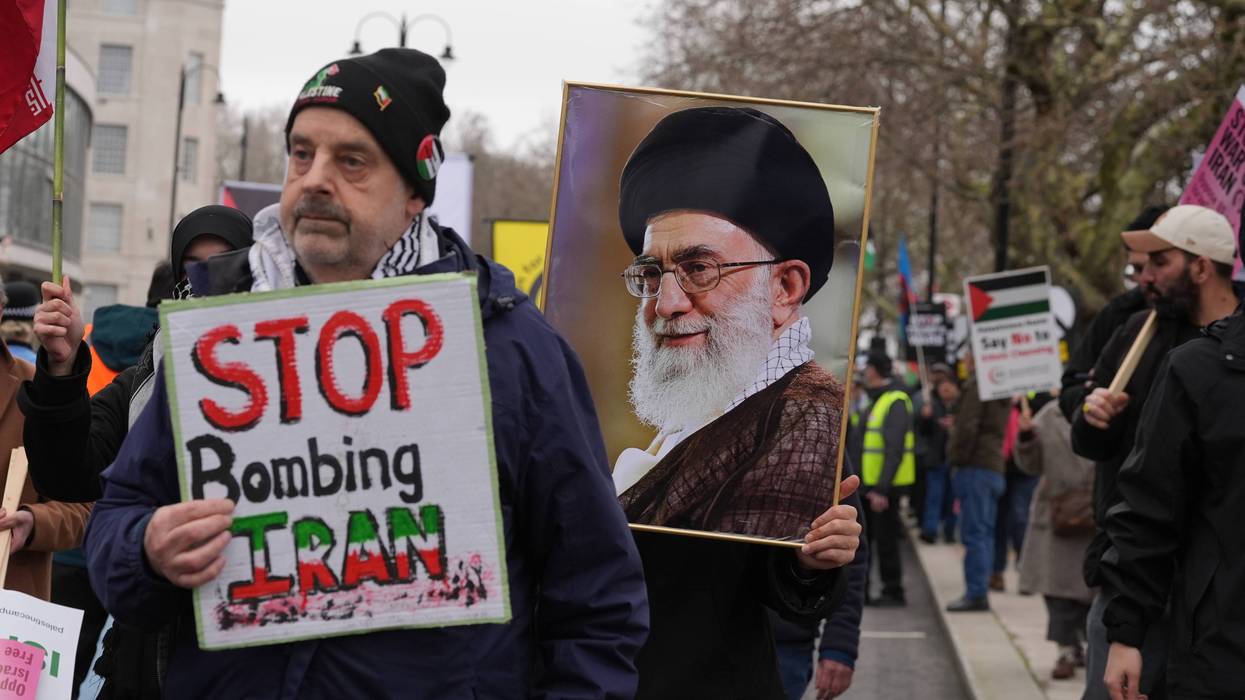
We must remember: Under international law, aggression is not just another war crime—it is the gravest crime of all. The judges at the Nuremberg Trials called aggression “the supreme international crime,” because it “contains within itself the accumulated evil of the whole.”
The United States has once again launched a war in the Middle East based on false claims about weapons of mass destruction. Like the invasion of Iraq in 2003, the US assault on Iran rests on allegations that international inspectors have already debunked. But beyond the false pretext lies an even more pressing question that few officials in Washington seem willing—or able—to answer: What is the US exit strategy from its war on Iran?
President Trump has justified the attack by claiming that Iran refuses to renounce nuclear weapons. As he prepared to launch the war, Trump repeatedly claimed, “We haven’t heard those secret words: ‘We will never have a nuclear weapon.’” Iran’s foreign minister, Abbas Araghchi, responded by reiterating Iran’s long-standing policy, stating plainly: “Iran will under no circumstances ever develop a nuclear weapon.”
After years of unprecedented inspections, the International Atomic Energy Agency (IAEA) never found evidence that Iran had an active nuclear weapons program. In 2015 the agency declared its investigation complete and subsequently monitored Iran’s compliance with the Joint Comprehensive Plan of Action (JCPOA) nuclear agreement. The IAEA repeatedly confirmed that Iran was abiding by the deal—until the United States under Donald Trump withdrew from the agreement in 2018.
Yet the endless repetition of these disproven allegations by US and Israeli politicians has served as a political pretext for “maximum pressure” economic coercion, escalating threats, and now full-scale illegal aggression against Iran.
Opposition to a war always increases over time as the real-world results become clear to more of the public. Trump has launched this war with only one in five Americans supporting it in the first place...
Under international law, aggression is not just another war crime—it is the gravest crime of all. The judges at the Nuremberg Trials called aggression “the supreme international crime,” because it “contains within itself the accumulated evil of the whole.” Those convicted of launching aggressive war were held responsible for all the horrors that followed. For that reason, the Nuremberg tribunal reserved its harshest punishment—death by hanging—for the defendants convicted of planning and waging aggressive war, while those found guilty only of war crimes or crimes against humanity received lesser sentences.
The wisdom of that distinction is borne out by the horrors taking place in Iran and neighboring countries today. In the first week of the US-Israeli bombing of Iran, they have already destroyed schools and hospitals and killed hundreds of innocent civilians. On March 2nd, President Trump said that the US plans to achieve all its goals in Iran through four or five weeks of this kind of mass slaughter.
At a Pentagon press conference a few hours earlier, Secretary of War Pete Hegseth was vaguer, saying it could take two to six weeks, and later said it could be eight weeks. But the US government is clearly under a number of pressures to end the war within a limited time frame.
First, the United States launched this war with already depleted weapons stockpiles, after expending thousands of bombs and missiles in prolonged campaigns in Yemen and sending unprecedented quantities of weapons to Ukraine, Israel and other allies since 2022.
If the war drags on for more than a few weeks, US forces will begin to run short of air-defense interceptors, cruise missiles, and other critical munitions, with Israeli air defenses expected to face shortages even sooner. The US and Israel are therefore gambling that they can destroy enough of Iran’s missiles before they themselves run out of interceptors needed to stop them.
Yet recent experience suggests this gamble is likely to fail. US bombing campaigns against Ansar Allah (the Houthis) in Yemen under both Biden and Trump failed to eliminate its missile capabilities or reopen the Red Sea to commercial shipping. Iran is a far more formidable opponent—twelve times larger than Houthi-controlled territory in Yemen, with missiles dispersed in hardened facilities across the country and mounted on mobile launchers disguised as civilian trucks. Destroying them all is highly unlikely.
Second, the longer this war drags on, the greater the shock it will deliver to the global economy. Iran has already attacked several oil tankers and closed the Strait of Hormuz, through which a fifth of the world’s oil supply normally passes. Qatar has also halted LNG shipments after Iranian drones struck a major gas facility. This removed nearly 20 percent of the world’s traded natural gas from the market and sent prices in Europe soaring.
The role of the sovereign wealth funds of the Gulf sheikdoms in global finance means that financial markets will be further impacted as they dip into those funds to make up for the lost revenue from the disruption of their oil and gas exports.
At the same time, airlines around the world have suspended flights across much of the Middle East, rerouting aircraft around the conflict zone and stranding thousands of travelers as the war ripples through global commerce. And already, in just the first week of the war, US taxpayers are being asked to shoulder another $50 billion in war spending.
Third, Trump has until now justified his illegal threats and uses of force to Americans, and especially to his MAGA base, by keeping his wars limited in scope and duration and avoiding US casualties. But he risks failing on all those counts in Iran, and reaping a predictable political whirlwind.
A University of Maryland poll at the beginning of February found that only 21% of Americans said they would approve of a US attack on Iran, with 49% opposed. Even among Republicans, only 40% were in favor.
This time, Iran understands that the only way to deter future attacks is to inflict real costs on the US.
US governments are usually able to generate support for their wars in their early stages, with help from corporate media and retired generals linked to the arms industry whom they trot out as military experts. But opposition to a war always increases over time as the real-world results become clear to more of the public. Trump has launched this war with only one in five Americans supporting it in the first place, so he knows he must either create an illusion of success or face a dire political reaction.
To make Trump’s challenge harder, he’s gone to war against a country whose leaders fully understand all these dynamics. Iran has explicitly set out to inflict hundreds of US casualties, and to expand and prolong the war beyond the limits of the US war plan. Iran’s leaders have recognized that their scripted, symbolic response to last year’s 12-day US-Israeli war, with a few fairly harmless strikes on the US Al-Udeid air base in Qatar, was not an effective deterrent to further US-Israeli aggression.
This time, Iran understands that the only way to deter future attacks is to inflict real costs on the US. Iran killed six US troops in action in the first days of the war, has inflicted serious damage on the US 5th Fleet’s base in Bahrain, and destroyed or damaged air defense radar systems at seven US bases.
On the other side, the US and Israel are trying to destroy as many of Iran’s missiles as they can before Iran can use them. As NIAC (the National Iranian-American Council) wrote on March 3rd, “The conflict is increasingly defined by sustainability - missile inventories versus interceptor stocks.”
The course of the war will depend very much on how successful each side is in achieving these goals, as the whole world watches in horror.
Yet in Washington, the most basic strategic questions remain unanswered. At Defense Secretary Pete Hegseth and General Caine’s early-morning press conference on March 2, a reporter asked the questions that should now be on everyone’s mind: “What percentage of Iranian long-strike capabilities are still in the fight? And what is our exit strategy here, and when will it be deployed?”
Hegseth appeared at a loss to answer them. He waffled and eventually fell back on the familiar claim that Iran was trying to build a nuclear weapon—Trump’s recycled weapons-of-mass-destruction narrative from the Iraq war. General Caine sidestepped the question more professionally, offering a technical explanation about the difficulty of completing bomb-damage assessments during ongoing combat.
In Washington, the most basic strategic questions remain unanswered.
But neither Hegseth nor Caine—nor any other US official—has addressed the fundamental question of an exit strategy. Since the United States has not invaded and occupied Iran, there are no US ground forces to withdraw, as there were in Iraq or Afghanistan. If US and Israeli forces begin to run low on weapons, they could simply declare victory, halt the bombing and replenish their arsenals before launching another round of attacks later.
Iran’s strategy appears designed to prevent exactly that outcome—by turning this into a war the United States will not want to repeat. That means inflicting real costs: US casualties, political backlash at home, strained relations with allies, global economic disruption and a further erosion of Washington’s standing in the world.
Even if the US is ready to end the war in a few weeks, Iran may insist on concessions, such as the lifting of illegal sanctions and US withdrawal from bases in the Persian Gulf, before it will end its attacks on increasingly indefensible US bases. Those are terms that we would encourage the US government to accept.
This would be a real exit strategy from war on Iran, not just in order to regroup and launch another bombing campaign when the US and Israel have replenished their weapons stockpiles, but to actually make peace, as Trump keeps saying he wants to do.
Israel and Iran face an existential choice between gradually destroying each other and accepting that they must learn to co-exist in the same region of the world. The United States government must decide which of those choices it will support.
When the current war is over, whatever government is in power in Iran, the United States should work to repair US-Iranian relations, and tell the Israelis that it will not take part in or support renewed Israeli aggression against Iran. That would give the people of Iran a much better chance to build the political system they want than bombing them and imposing coercive sanctions to wreck their economy.
Such a shift in US policy could finally start to unravel the whole web of illegal US and Israeli aggression and occupation that has afflicted, colonized and destabilized the Middle East for so many decades. That would be a form of regime change that people all over the region, and the world, would welcome.

"The American people do not want more war in the Middle East. No boots on the ground. No more war."
A report late Friday that US President Donald Trump is more bullish in private about putting American soldiers on the ground in Iran than he has been publicly stirred immediate condemnation among lawmakers opposed to the illegal military attack, now entering its second week of destructive and deadly operations.
"This is madness," declared Rep. Pramila Jayapal (D-Wash.) in response to NBC News reporting, which cited unnamed sources familiar with the conversations, that stated Trump "has privately expressed serious interest in deploying US troops on the ground inside of Iran."
While the White House pushed back on the contents of the reporting, Trump himself has said that he does not hold reservations about deploying ground troops if he deems it necessary.
“I don’t have the yips with respect to boots on the ground," Trump told the New York Post on Monday. "Like every president says, ‘There will be no boots on the ground.’ I don’t say it. I say, ‘probably don’t need them,’ [or] ‘if they were necessary.’”
Senate Minority Leader Chuck Schumer (D-N.Y.) also reacted to the new reporting.
" Donald Trump is hellbent on escalating his reckless war and is now considering putting US boots on the ground in Iran," said Schumer in an online statement. "The American people do not want more war in the Middle East. No boots on the ground. No more war."
Early morning on Saturday, Trump issued a fresh threat to the people of Iran, declaring in a social media post: "Today Iran will be hit very hard!"
In the same post, the US president falsely claimed that Iran had "surrendered" to neighboring countries in the region following a series of missile attacks over recent days by Islamic Revolutionary Guard Corps units on select targets in Saudi Arabia, Bahrain, the United Arab Emirates, and others.
What Trump was referring to was a video message issued by Iranian President Masoud Pezeshkian earlier in the day in which he apologized for the strikes—carried out by IRGC commanders operating independently in the wake of the killing of Supreme Leader Ayatollah Ali Khamenei in a US-Israeli strike earlier this week—and said that no further such attacks would take place “unless those countries launch an attack on us."
In his remarks, Pezeshkian rejected Trump's insistence on Friday for an "unconditional surrender" by Iran. “That we surrender unconditionally is a dream that they must take with themselves to the grave," he said. "What we adhere to are international laws and humanitarian framework."
Pezeshkian called for diplomacy to bring the war of aggression by the US and Israel to an end. "We aim to work hand‑in‑hand with our dear brothers and neighbors in the region to establish lasting peace and stability, and we hope this goal will be achieved,” he said.
However, if hostilities launched from factions in neighboring countries resumed, Pezeshkian warned, "all military bases and interests of criminal America and the fake Zionist regime on land, at sea, and in the air across the region will be considered primary targets and will come under the powerful and crushing strikes of the mighty armed forces of the Islamic Republic of Iran.”
In remarks on Thursday, after Trump previously refused to rule out boots on the ground, Iranian Foreign Minister Foreign Minister Abbas Araghch told NBC News that the country's armed forces are prepared.
“We are waiting for them,” Araghchi said. “Because we are confident that we can confront them, and that would be a big disaster for them.”
Foreign policy experts warn that Trump has created an untenable situation for himself by demanding the "unconditional surrender" as well as stating that he must personally be involved in the choosing the next leader of Iran—an overt call for regime change in a nation of 90 million people.
"No country surrenders from airpower alone," said Ryan Costello, policy director for the National Iranian American Council, a Washington DC-based think tank, on Friday. "Trump has created a trap for himself: either he backs down on his unattainable goal to dictate Iran, or he climbs up the escalation ladder, considering even more disastrous steps like boots on the ground."