

SUBSCRIBE TO OUR FREE NEWSLETTER
Daily news & progressive opinion—funded by the people, not the corporations—delivered straight to your inbox.
5
#000000
#FFFFFF
To donate by check, phone, or other method, see our More Ways to Give page.
Daily news & progressive opinion—funded by the people, not the corporations—delivered straight to your inbox.

We cannot allow these deaths to become routine, and we cannot let them disappear into statistics. Every death should force us to ask what kind of country we are becoming.
Jose Chajon-Raxon, an immigrant from Guatemala, died this August at Delaney Hall, a controversial Immigration and Customs Enforcement facility in New Jersey. His death marks more than 50 deaths in ICE custody since President Donald Trump took office last year.
Despite all the controversies, ICE keeps killing people—a sentence that should never feel normal. We should never find ourselves counting the days between deaths or waiting for the next headline. But somehow, we have.
Earlier this year it was Renee Good, then Alex Pretti. This summer it was Lorenzo Salgado Araujo and Joan Sebastián Durán Guerrero. Before them were Silviero Villegas Gonzalez and Ruben Ray Martinez. Those are only the names we know—many others will never make national news.
The day I read about Durán Guerrero’s death, I was returning home from work. I glanced at the headline and kept going. That’s what scared me the most. I wasn’t shocked that ICE had killed someone—I expected it.
No matter where you were born, what political party you belong to, or whether you support stricter immigration enforcement, no government should have the power to kill or imprison people with so little accountability.
Only later, when I stopped and read the details, did it hit me: He was shot multiple times. His 3-year-old daughter, wearing Bluey pajamas, was in the car when it happened. According to his family’s attorney, Durán Guerrero was lawfully present in the United States and had a work permit. And he wasn’t even the person ICE was looking for when he was shot.
After shooting Durán Guerrero, officers pulled him from the vehicle and handcuffed him. By then, he may already have been dead.
These are not tragic misunderstandings. These are choices.
Imagine seeing armed people in tactical gear—no body cam, their faces covered—surrounding your car. Most people would be terrified. Most people would try to get away. Durán Guerrero tried to stop, but it did not matter—the agents fired on him anyway.
ICE continues carrying out operations with masked agents in unmarked vehicles, creating confusion and fear before a single word is spoken. Immigration officers have fired on at least 30 people since President Trump returned to office. Eight of those people were killed.
Each time, the government tells us the agents acted in self-defense. Public statements quickly frame the victim as the threat. Witness testimony and video evidence often cast doubt on these accounts, but they still shift the focus away from the loss of human life and toward justifying why it happened.
Meanwhile, tens of thousands of people are still being detained every month.
In June 2026, ICE arrested more than 43,000 people, about 1,400 every day. By July, nearly 68,000 people were being held in immigration detention. The overwhelming majority of those arrested had no criminal convictions.
This includes over 6,000 children. Children who are spending their birthdays behind bars. Children who should be back in school, safe and protected. Many have been detained for 100 days or more—five times longer than the 20-day limit for detaining immigrant children.
They’re being held in facilities like Delaney and others, where human rights groups have warned repeatedly that dangerous conditions are leading to preventable deaths. ICE deaths reached their highest level in decades last year, and this year is on track to be no better.
These numbers matter. Every statistic was someone’s father, daughter, husband, neighbor, friend.
I’m afraid of how easy it has become to read another headline and move on. I know because I caught myself doing exactly that.
No matter where you were born, what political party you belong to, or whether you support stricter immigration enforcement, no government should have the power to kill or imprison people with so little accountability. No family should have to watch a loved one become another name on a growing list.
We cannot allow these deaths to become routine, and we cannot let them disappear into statistics. Every death should force us to ask what kind of country we are becoming. We cannot normalize these killings, and we cannot stop demanding justice and accountability.
We should never get used to counting ICE’s victims.
This is the first challenge against the Trump administration on protest crackdowns by an international court, and one of the first legal challenges generally.
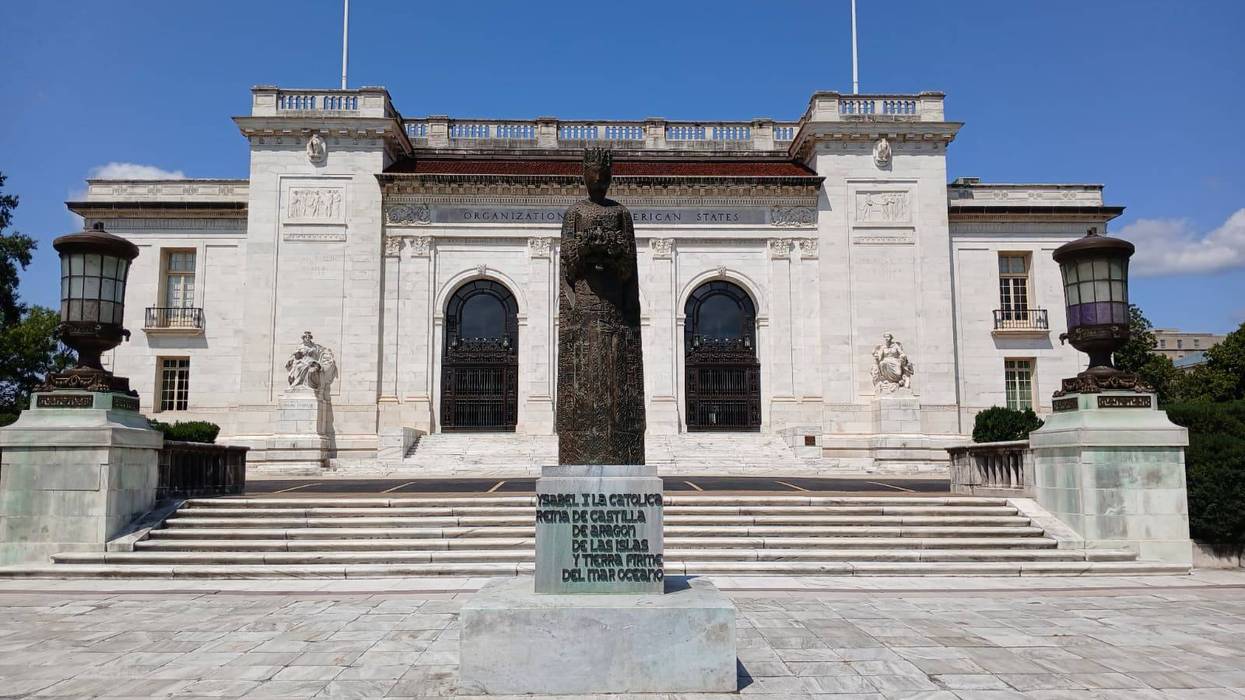
Tuesday, the Inter-American Commission on Human Rights, or IACHR, at the Organization of American States, a body historically committed to investigating crimes against humanity committed by governments in the Americas, held a hearing in Washington, DC against the Trump administration for its treatment of protests held against Immigration and Customs Enforcement, or ICE, crackdowns in the US.
The delegation, represented by Thomas Becker and Nicholas Rodelo, for the University Network for Human Rights, presented evidence of attacks of rights to free assembly and free expression by the Trump administration.
Becker has previously successfully prosecuted a civil lawsuit against former Bolivian President and US ally, Gonzalo Sanchez de Lozada, over 2003 crackdowns and extrajudicial killings of protesters.
This is the first challenge against the Trump administration on protest crackdowns by an international court, and one of the first legal challenges generally. Speakers included Antonio Romanucci, the attorney representing the family of Renee Good, and former counsel of George Floyd; Reverend David Black, who was struck in the head by federal agents at the Broadview Detention Facility; and Naureen Shah, the director of government affairs at the American Civil Liberties Union (ACLU).
Speakers and observers at the hearing argued that the commission must be empowered to investigate fully and act decisively, warning that the region is entering a new era of authoritarianism even as many of its democracies remain young and fragile.
During the hearing, video evidence and testimony were presented documenting the alleged abuses, prompting a response from State Department lawyers who argued that the incidents represented isolated cases still under investigation, that the United States has rights the commission should respect, and that the IACHR ought to focus its attention elsewhere in the hemisphere, a suggestion that drew scrutiny given that the US has faced far fewer cases before the commission than many other member states.
State Department representatives further contended that federal agents operating under significant stress could not be expected to act "perfectly," and maintained that any agents found to have violated standards would face penalties, though they were unable to answer specific questions from commissioners about ongoing cases or offer evidence of any such penalties actually being imposed, saying only that they would "write down" the questions and respond later.
The commission and the civil society delegation renewed a request—thus far denied by Washington—for an IACHR delegation to visit the United States, likely Chicago, to assess conditions on the ground.
Petitioners also singled out National Security Presidential Memorandum-7 (NSPM-7) as a central mechanism of the crackdown, arguing it chills freedom of expression by recasting protesters and dissidents, including anti-capitalist, "anti-Christian," and anti-fascist activists, as "terrorists." Blacklists of prominent leftist actors have also been compiled, with state resources used to prosecute them. "This is the new McCarthyism," the delegation added.
They pointed out that resources once dedicated to investigating internal abuse by immigration enforcement agents have instead been slashed, citing an internal FBI memo halting investigations into Department of Homeland Security officers, and that officials tasked with oversight are now regarded within the agencies as "internal adversaries" rather than watchdogs.
"These are the exact same tactics used by Latin American dictatorships from the 1970s," said Becker. "These tactics have been propped up by the US for decades, and are now coming back here, to be used against Americans," he added. The commission was created in the wake of the rise of military dictatorships in Latin America, backed by the US during the Cold War, including Augusto Pinochet in Chile, Rafael Videla in Argentina, and Hugo Banzer in Bolivia.
Becker also argued, "This is not the first time that agents backed by the US government target priests," alluding to the past abuses and killings of religious opposition leaders in Central America.
Speaking to Drop Site News, Dr. James Cavallaro, former president of IACHR and law faculty at Columbia, Stanford, and Harvard, added that "there is a conviction from those in power that they can suppress dissent" and rule through power and violence to "impose their ideology," where "opposition must be crushed."
This is the first time the commission has held any hearing of this type concerning domestic repression against the US government, which was the main force behind the founding and funding of the IACHR and the Organization of American States (OAS). “For years, the commission has heard testimony about attacks on protesters carried out by some of the region’s most repressive dictatorships. Now, it is the United States that will be called to answer for these abuses,” said Cavallaro.
The US government, including figures in the current administration like Secretary of State Marco Rubio, has historically been supportive of the IACHR and the OAS, but may see the IACHR as a new target, as it continues its campaign against international legal organizations including the International Criminal Court.
Locke Bowman, attorney for Reverend David Black, shared, "What happened to Rev. Black was emblematic of the physical abuse that ICE and CBP [Customs and Border Patrol] officers directed at conscientious folks in Chicago, Minneapolis, Portland, and elsewhere around the country who bore witness to the Trump administration's cruel immigration policies with their voices, their prayers, and their cellphone cameras."
He added: "There has been no accountability whatsoever for the officers responsible for the pervasive violations of free speech and human dignity. We turn to the Inter-American Commission to ask that the commission join us in demanding accountability."
At the hearing, the University Network for Human Rights also published a detailed report, submitted as part of its formal petition to the commission, laying out documented instances of excessive force, free expression violations, and lack of accountability tied to the crackdown on ICE protests.
The commission is now expected to weigh whether the evidence and testimony presented warrant further inquiry, including a possible on-the-ground visit to the United States, before issuing findings or referring the matter further within the inter-American human rights system.
The last hearing against the US government, sponsored by the ACLU, was held in the context of dozens of extrajudicial killings by US forces in the Caribbean and Pacific, against "drug boats," which experts say violate US and international law, violate local sovereignty, and kill civilians without due process, all without helping to solve the drug crisis. Previously, the IACHR had held proceedings in the context of detainee treatment at Guantánamo Bay, among other cases.
Speakers and observers at the hearing argued that the commission must be empowered to investigate fully and act decisively, warning that the region is entering a new era of authoritarianism even as many of its democracies remain young and fragile. Crime and migration are increasingly being used as pretexts to suspend democratic norms, enabling interference in elections; extrajudicial killings; bans on opposition parties; declared states of exception; suspended protest rights; the jailing of dissidents; militarized policing; and the dismantling of checks on military, intelligence, and presidential power.
This is the most serious test facing democracy in Latin America since the Cold War, with echoes of the Reagan-era doctrine that once propped up authoritarian allies across the region. Now, the United States is again playing that role, installing, arming, backing, and protecting governments that suppress dissent, and reaching for sanctions, tariffs, and even support for coups to keep them in power.
By rescinding policies that mandate accountability and oversight, while simultaneously purchasing privately held detention centers, the Trump administration is working to hide the abuses, death, and violence occurring at their facilities.
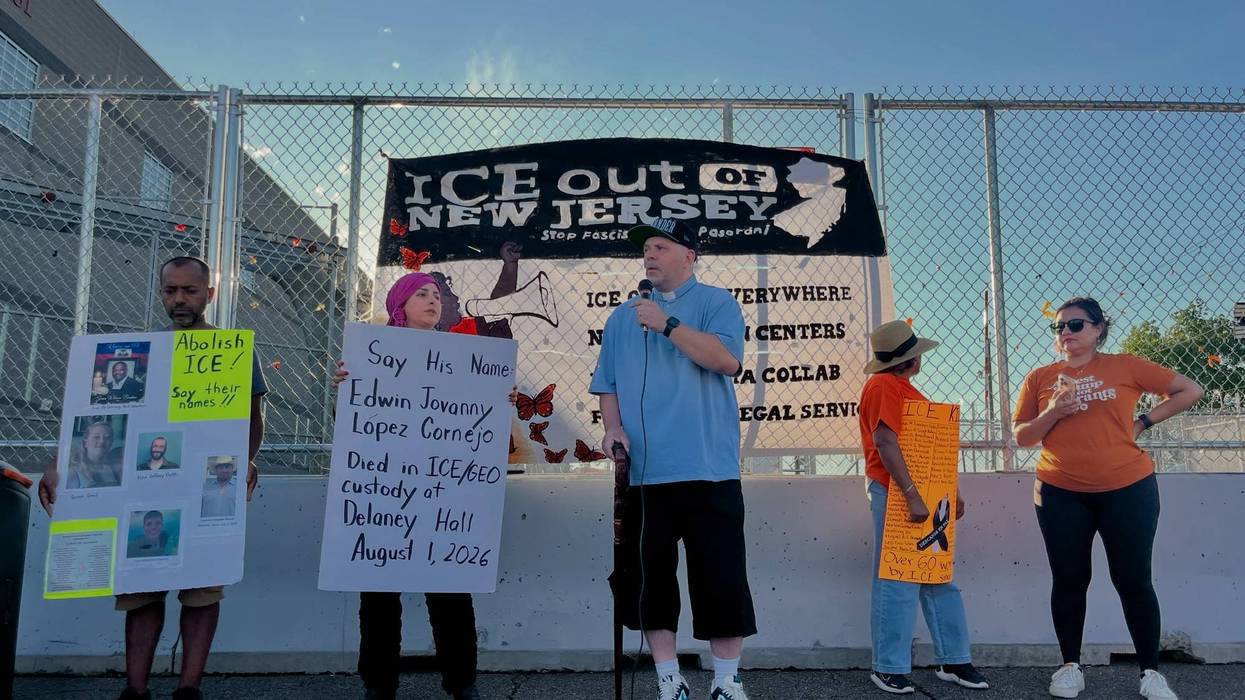
On August 1, Edwin Lopez-Cornejo, a Salvadorian migrant imprisoned at the Delaney Hall Detention Facility in Newark, died.
While Immigration and Customs Enforcement (ICE) insists that Lopez-Cornejo “received proper medical care and was seen by medical professionals” while in custody, there are reasons to be doubtful. In May, 300 detainees launched a labor and hunger strike protesting medical neglect, being fed spoiled and rotten food, and other “torturous” conditions.
In June, Gothamist reported that more than 70 detainees at Delaney Hall had filed federal lawsuits alleging medical neglect. That includes 30 who claim they were denied prescribed medications for chronic conditions such as asthma, epilepsy, diabetes, and cancer.
Lopez-Cornejo likely experienced the same. Rep. Rob Menendez (D-NJ) said he spoke with ICE officials who told him Lopez-Cornejo had expressed feeling dizzy and fatigued earlier that day. Menendez further added, “We asked certain medical questions, which ICE couldn’t give us answers to.”
Detention centers have always been deadly. Under Trump, ICE is doing everything it can to make them even more dangerous.
Lopez-Cornejo had been prescribed medication for diabetes, high blood pressure, and seizures—conditions that, if not properly treated, can lead to those symptoms as well as death. In an interview, his mother, Maria Cornejo, explained, “That is one of the reasons that I believe caused the death of my son, the negligence—that he wasn't given his medication that he had to take.”
Lopez-Cornejo is at least the 23rd person to die in ICE custody this year. In 2025, at least 33 people died in detention centers—the highest total in more than two decades according to the National Immigration Project.
Importantly, those numbers only represent the deaths that ICE has reported. During his visit to Delaney Hall on August 3, Menendez learned that another detainee had died at the detention center last month. That death was not reported because ICE agents had granted him a “discretionary release” in the middle of his medical emergency.
In June, ICE rescinded a Biden-era policy that required them to report on the deaths of detainees that occurred within 30 days of their release. ICE is now exploiting this change to obscure their death count.
And this is just the tip of the iceberg. In July, the Department of Homeland Security (DHS) purchased the Otay Mesa Detention Center and the California City Detention Facility for $1.5 billion from the private prison company CoreCivic.
According to an ICE spokesperson, these purchases were necessary because “the state’s sanctuary politicians continue to push legislation to outlaw or make private prisons financially infeasible.” Shifting ownership from CoreCivic to the federal government circumvents these measures, thereby allowing ICE to retain “crucial” detention capacity.
This, however, is not all it does. In 2025, California passed legislation that granted its Department of Justice (DOJ) oversight to regularly inspect and report on the conditions of “county, local, or private locked detention facilities in which noncitizens are being housed or detained for purposes of civil immigration proceedings.” In June 2026, the California DOJ found that conditions at Otay Mesa were overcrowded and dirty. Medical recordkeeping was “disorganized and violated PBNDS [Performance-Based National Detention Standards] requirements” which resulted in “lapses in basic care.” At California City, the department found that detainees spent “unnecessarily long periods locked down in their cells” and experienced “extremely cold temperatures, with leaks during rainy periods.” California DOJ reported that healthcare infrastructure and systems at the center were “inadequate,” including “crisis-level health care understaffing.”
By taking ownership of those detention centers, the Trump administration is placing them beyond the reach of state inspections. As Alexa Van Brunt, the Director of the Illinois office at the McArthur Justice Center, explains, inspection reports are crucial in lawsuits alleging constitutional violations. Without them, it is far more difficult to obtain evidence of ICE’s wrongdoings. “To that point,” she remarks, “it will make it more onerous to hold DHS liable.”
It is also worth emphasizing that while ownership is being transferred, CoreCivic will remain in charge of managing those facilities. Same management, same abuses, but now with less oversight—the perfect recipe for more unaccounted detainee deaths.
In July, CBS News reported that only 15 of the 45 detention centers holding 500 or more people had been inspected by ICE’s Office of Detention Oversight in the last 12 months. This follows a shift in ICE’s policies whereby dedicated facilities, which exclusively hold ICE detainees, are now inspected once a year rather than twice; and non-dedicated facilities, such as county jails, are inspected every other year.
Notably, ICE’s detention center purchases extend beyond sanctuary cities. On August 5, CoreCivic announced that ICE had purchased the Prairie Correctional Facility in Minnesota and the Midwest Regional Reception Center in Kansas for a total of $734 million. Both facilities were previously shut down—the former in 2010; and the latter in 2021 as the Biden administration shifted away from private prison contracts. CoreCivic had been struggling since last year to reopen Midwest Regional amid protest from local residents—in a famously pro-prison town that Trump won with more than 60% of the vote in 2024—and legal challenges from city officials. Now it will, despite their objections and with possibly fewer guardrails.
Officials with CoreCivic and The Geo Group—which owns Delaney Hall—have reportedly discussed selling several more sites to the Trump administration.
By rescinding policies that mandate accountability and oversight, while simultaneously purchasing privately held detention centers, the Trump administration is working to hide the abuses, death, and violence occurring at their facilities. At the same time, these purchases have been a major windfall for CoreCivic, which has used our taxpayer dollars to pay down its $600 million debt.
Detention centers have always been deadly. Under Trump, ICE is doing everything it can to make them even more dangerous. Before it's too late, Congress must act immediately to not only abolish ICE, but punish everyone involved in enacting their campaign of domestic terrorism and death.

A movement that spent years avoiding a labor identity can't afford that caution anymore.
Last month Immigration and Customs Enforcement killed Lorenzo Salgado Araujo, a father and Houston construction worker, on the way to a job site. Just six days later another ICE agent fatally shot Johan Sebastián Guerrero on his way to work, who left behind a partner and 3-year-old daughter.
When I helped organize the fight for Deferred Action for Childhood Arrivals (DACA), we put young people in caps and gowns and asked the country to see them as exceptional, college bound, English speaking, worthy of protection in a way that set them apart from the majority of undocumented people, who were not students but workers. It was a strategy built for a specific moment, and it won us what respectability politics ever can: temporary inclusion that separated us from the rest of our community. Many of us also shied away from the economic argument on principle, even though mainstream organizations were already making it, because it had become associated with more middle-of-the-road groups. We narrowed our own lane instead of widening it.
That caution has run its course. Two men were killed on their way to work within a week of each other. No amount of careful language changes it.
What's needed now is to say plainly that this happened to people doing exactly what all workers do every day, and that everyone who depends on immigrant labor, starting with employers and extending through the broader labor movement, has to decide what they owe them.
Employers, unions, and labor organizations cannot afford to look away while businesses that have relied on workers like Lorenzo and Johan for years stay quiet as their own workforce is targeted by the government.
None of this is about making immigrants prove they deserve safety by pointing to what they contribute. Nobody should have to justify their right to exist with a paycheck.
But there's a difference between demanding immigrants justify their worth and simply describing how this economy runs. Construction, hospitality, agriculture, food delivery, garment production, whole industries in this country would not function without an estimated 10 million undocumented workers, most without any union protection at all. That labor isn't a contribution to the American economy. It is the American economy.
My mother came to this country to work, and to build something for her family, and so did the workers I've spent my career organizing alongside. That desire, to work hard and provide rather than be given something, isn't unique to immigrants.
Every night, at kitchen tables across this country, whether the family is undocumented or not, people are asking each other, "How was work?"
Wanting to work and provide for the people you love is one of the most ordinary parts of being human, and there is real pride in the work itself. That labor is an identity, not just the exploitative relationship it's so often reduced to, one that wouldn't change even if our immigration status did.
I organized car wash workers in Los Angeles, in shops where owners stole wages and denied bathroom breaks because workers had no path to citizenship and no union behind them. A boss who can threaten to call ICE on one worker has leverage over the whole shop floor, and in plenty of workplaces that threat is the boss' whole labor strategy, cheaper and more effective at stopping organizing than firing people or hiring anti-union law firms ever was.
Employers have a different kind of leverage too, not the threat they can hold over a worker, but the influence of being a major employer, the kind that gets a phone call to the White House answered, or makes silence too costly to just sit on.
Last year, farmers raised alarms about the raids loudly enough that President Donald Trump's own agriculture secretary carried the message to the White House, and enforcement paused, for four days, before Stephen Miller pushed to reverse it and the raids resumed.
In Minneapolis this year, more than 60 CEOs signed a joint letter calling for "de-escalation" after federal agents killed two residents. The letter didn’t name ICE, and it didn’t ask for anything specific. The letter added to the scrutiny that was already mounting against ICE and Border Patrol after the killings of Renee Good and Alex Pretti. Within a day, the Border Patrol commander was pulled from the city. Within two days, Trump himself was using the language of de-escalation. A vague joint statement helped move that. Imagine what an actual one could do.
The choice to speak up for workers, clearly and specifically, should be harder to dodge in the days since the killings of Lorenzo and Johan.
Rather than address why agents opened fire on unarmed men on their way to work, the administration's border czar, Tom Homan, went on Fox News and warned that there would be more "bloodshed" unless Democrats who criticize ICE stop talking. Homan is trying to make silence about these ICE killings the price of safety, and to put the blame for these two deaths anywhere but on the agents who pulled the trigger.
Every employer, every union, every business owner who has ever depended on an immigrant showing up to work now has to pick a side. Either stand with the workers whose labor built their businesses and industries, or fall in line behind a White House that is driving a white nationalist agenda. There is no third option where staying silent counts as staying out of it.
The administration isn't waiting to see whether employers choose workers or fall in line. The same crackdown that's killing and deporting workers who are already here is also causing real labor shortages in construction, agriculture, and dairy, and the administration has an answer for that shortage that has nothing to do with accountability.
This year alone, it has added 65,000 new H-2B guest worker visas and, for the first time, opened dairy farms to guest workers under a program where a worker's legal status, housing, and wages all depend on the same employer. Advocates have documented what that leads to for years: wage theft, confiscated passports, and workers threatened into silence because there is nowhere else for them to go.
Formerly enslaved people fought for this same principle a century and a half ago, insisting that only full citizenship, not tolerated presence, guaranteed they wouldn't be treated as less than fully human. This summer, the Supreme Court reaffirmed that exact principle when it struck down Trump's attempt to strip citizenship from children born to undocumented parents.
If the labor and immigrant rights movements don’t make the case ourselves, loudly and now, that immigrant workers deserve full rights and not just a job, that’s the model we’ll be handed. The alternative gets built for us either way, one where people are welcome only as controllable labor and for exactly as long as an employer finds them useful.
Employers, unions, and labor organizations cannot afford to look away while businesses that have relied on workers like Lorenzo and Johan for years stay quiet as their own workforce is targeted by the government. Unions and labor advocates also have a responsibility to clearly say that worker safety does not end at the shop door. Workers have the right to get to a job and get home without risking their lives.
Two men are dead because they went to work, and the mistake the immigrant rights movement cannot afford right now is forgetting that it is also a labor movement.
The grassroots effort was a textbook example of sustained, targeted civil resistance that can undermine Trump administration policies; by chipping away at corporate supporters of programs like ICE, citizen activism can erode and stop these initiatives.
Just as a great loaf of bread requires the right ingredients to rise, a winning civil resistance campaign needs three essentials to rise up: a compelling vision, broad community engagement, and a spark for action.
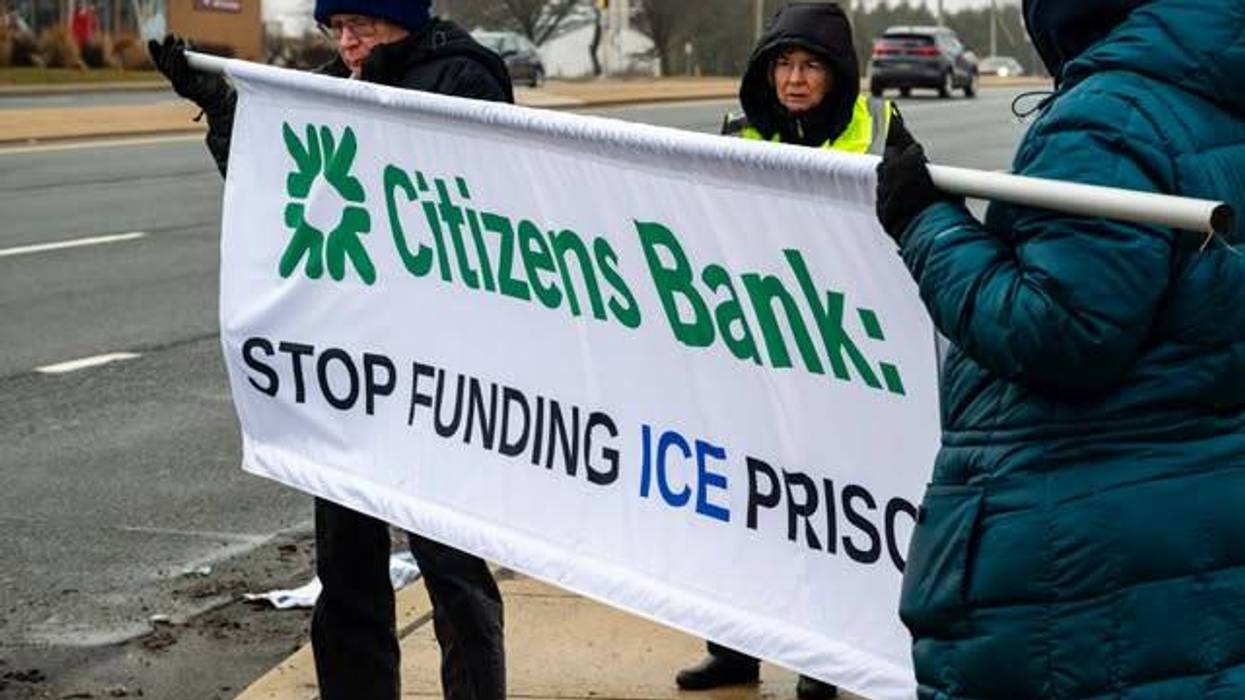
The De-ICE Citizens Bank campaign had all these ingredients, which is why it succeeded in forcing Citizens Bank to stop financing prison company giants, CoreCivic and GEO Group, operating dozens of detention centers for US Immigration and Customs Enforcement (ICE). The Rhode Island bank severed its ties in mid-July after months of protests and other targeted actions across the country.
Hundreds of rallies, faith-led actions, shareholder demands, billboard and flyover campaigns, and withering financial pressure—withdrawals totaling $380 million, with more still happening—created a tsunami of opposition the bank could not ignore.
It is a textbook example of sustained, targeted civil resistance that can undermine Trump administration policies. By chipping away at corporate supporters of programs like ICE, citizen activism can erode and stop these initiatives.
While Bank of America and a half-dozen other banks ended their relationships with private prison companies in 2019, Citizens strengthened its ties, providing more than $2.8 billion in loans and other credit to CoreCivic and GEO Group over a dozen years.
“No, Citizens Bank won’t credit you at all for its decision, but it is what it is,” MSNBC’s Rachel Maddow said, during a 10-minute segment on the campaign win in late July. “Actions have consequences, including when you work hard, when you organize, and when you decide to just never give up.
"And then the day does come when you win.”
This civil resistance story began with a single person, a woman in Texas, taking a stand. She didn’t carry a protest sign or march alone. She built a website.
Horrified by ICE’s mass incarceration campaign early last year, research-nerd activist Laura Berlin, a mother of two teenagers, built a website, boycottcitizens.org, to expose Citizens Bank’s role.
While Bank of America and a half-dozen other banks ended their relationships with private prison companies in 2019, Citizens strengthened its ties, providing more than $2.8 billion in loans and other credit to CoreCivic and GEO Group over a dozen years.
Drawing on Securities and Exchange Commission filings and other documents, the website showed Citizen’s duplicity, loan-by-loan, year-by-year. Still, the website didn’t get much attention when it was launched 13 months ago, only a dozen or so views a day in the first few months.
That all changed in January when ICE’s aggressive crackdown sparked and exploded. Just as a dozen Northeast activists were organizing their first coordinated protest day against Citizens Ban—an effort of the new De-ICE Citizens Bank Coalition—mother and poet Renee Good was gunned down January 7 by an ICE agent in Minneapolis.
Campaign interest and traffic on Berlin’s website took off. When Alex Pretti, an intensive care nurse, was shot and killed 17 days later in the same city, momentum skyrocketed.
On January 24, the campaign held three-dozen rallies in six states. By March, there were 70 protests in a dozen states. Three months later, 140 protests were organized nationwide, drawing in thousands of regular people angry about an immigration crackdown that has booked and detained more than 600,000 people, 66,000 of whom have been deported.
As protests swelled, coalition members brought new partners into the campaign. One brought in a key union group and activist students at Brown University. Others brought in faith groups. Dozens of local Indivisible groups also joined, including a Rightful Resistance group in New York City that specialized in billboard campaigns.
The Greater Boston Interfaith Organization (GBIO), a powerful faith group with deep historic ties to Citizens Bank, was an especially important partner.
The city’s pullout was a bit of a surprise, with the vote and initial withdrawal of $150 million happening in less than 24 hours. It was a clear sign that the campaign, which had swelled to 175 groups in 17 states, was now a movement.
In the early 2000s, GBIO teamed up with Citizens to offer a financial literacy program for its immigrant members around Boston. The bank also lowered fees for immigrants sending remittances to their families. “We were proud to bank with Citizens, and I was proud to be a member of the bank’s board of directors at that time,” wrote Rev. Ray Hammond, a key GBIO leader, in a recent column.
By winter 2026, the good vibes were over.
In early March, GBIO sent a letter to the bank requesting it cut financial ties with the prison companies. In April, Hammond and other shareholders confronted Citizens CEO Bruce Van Saun at the bank’s annual meeting in Providence. As Van Saun answered questions about reputation and legal risks, hundreds of protesters, young and old, sang and chanted loudly outside. They also pledged to withdraw their deposits if changes were not made.
The financial pressure campaign, "Not with Our Money, Citizens," came at a key moment. While rallies and billboards boosted awareness and sullied the bank’s reputation, the campaign now had a lever to harm the bank financially.
Within a few weeks, GBIO and the coalition had mobilized $20 million in withdrawal pledges by churches, synagogues, nonprofits, and individual customers angered by the bank’s role in bankrolling prisons. By May, GBIO had pulled $2 million of its deposits, while a similar faith organization in Ohio, the Greater Cleveland Congregations, was threatening to do the same.
Millions of withdrawals may sound like a lot, but it’s relatively small for a bank like Citizens, with $233 billion in assets. At weekly meetings, coalition members brainstormed how it could increase the financial bleeding—to turn those millions into hundreds of millions.
The answer came in June and the spark came from New Jersey. After weeks of hunger strikes and protests at GEO Group’s Delaney Hall ICE prison in Newark, municipalities started fighting back. The first blow was Jersey City’s June 7 vote to close its accounts with Citizens and pull all $276 million of its deposits.
The city’s pullout was a bit of a surprise, with the vote and initial withdrawal of $150 million happening in less than 24 hours. It was a clear sign that the campaign, which had swelled to 175 groups in 17 states, was now a movement.
One month later, Montclair, New Jersey did the same—another $91 million in deposits out the door. And other communities, including Bloomfield and Hoboken, were looking to follow suit.
Three days after Montclair’s vote, Citizens Bank called it quits. With no public fanfare, it released a statement to a Boston Globe reporter saying, “Citizens has determined that it is now appropriate to exit the credit facilities for these clients.”
The bank called it a ‘business decision,” while repeatedly downplaying the role of activists.
We know better.
As more information comes out about lives lost, communities harmed, and an economy hobbled by the loss of critical workers, previously supportive voters may turn against Trump's mass deportation agenda.
The Trump administration is doing everything it can to get rid of what it considers to be “undesirable” people.
The administration has removed temporary protected status (TPS) for more than a million people from over a dozen countries. It is sending people back to active war zones in Sudan and Somalia. It is deporting people to Myanmar, a country under a military dictatorship. In the case of Venezuela, it is returning people to a country struggling to deal with the aftereffects of an earthquake.
Some holders of this status have been in the country for a long time. Nearly 90% of the 170,000 Salvadorans who have TPS, first granted 25 years ago, participate in the US labor force, contributing over US$5 billion to the US economy.
The administration makes no exceptions in its campaign to deport anyone and everyone. Even as it has promised to fight a war on behalf of the people of Iran, it has reportedly provided information about Iranian asylum-seekers to the Iranian government. These details about their lives, such as their sexual orientation and religious beliefs, make it even more likely that they will be persecuted on return. Dozens of Russians, who don’t enjoy TPS, were flown back to Russia, where several were immediately slapped with draft notices.
The administration has tried to tout the successes of its deportation program. But the deaths of citizens and noncitizens alike have put supporters of the president on the defensive.
There is no length to which the administration won’t go to deport people, even American citizens like the children born in the United States who were kicked out of the country along with their parents. So far, the Supreme Court has blocked the administration’s attempt to overturn the “birthright citizenship” clause in the US Constitution. But President Donald Trump is still pushing his allies to take up the fight in Congress to change the law.
The administration even tried to add 2.7 million living people to the “Death Master File,” which is a database of dead people maintained by the Social Security Administration. Trump’s plan was to make life so difficult for people declared “dead” that they would self-deport or, if they showed up to dispute their “death,” to detain them in preparation for deportation. It was only because of a whistleblower that this plan didn’t go into effect.
But the most visible effort by the US government has been to target the approximately 14 million “unauthorized immigrants” who, as of 2023, constituted over 4% of the US population. Such immigrants keep the American economy afloat by picking fruit, slaughtering cows, building houses, and taking care of the elderly.
Trump’s mass deportation campaign, in other words, would wreck the US economy. The undocumented don’t take away jobs from native-born Americans because the latter generally don’t want the jobs that immigrants fill. But the administration is willing to risk economic disaster in its effort to keep America a predominantly white country.
Trump’s anti-immigrant plan has not just evicted people. It has not just locked them away in detention centers. It has killed them.
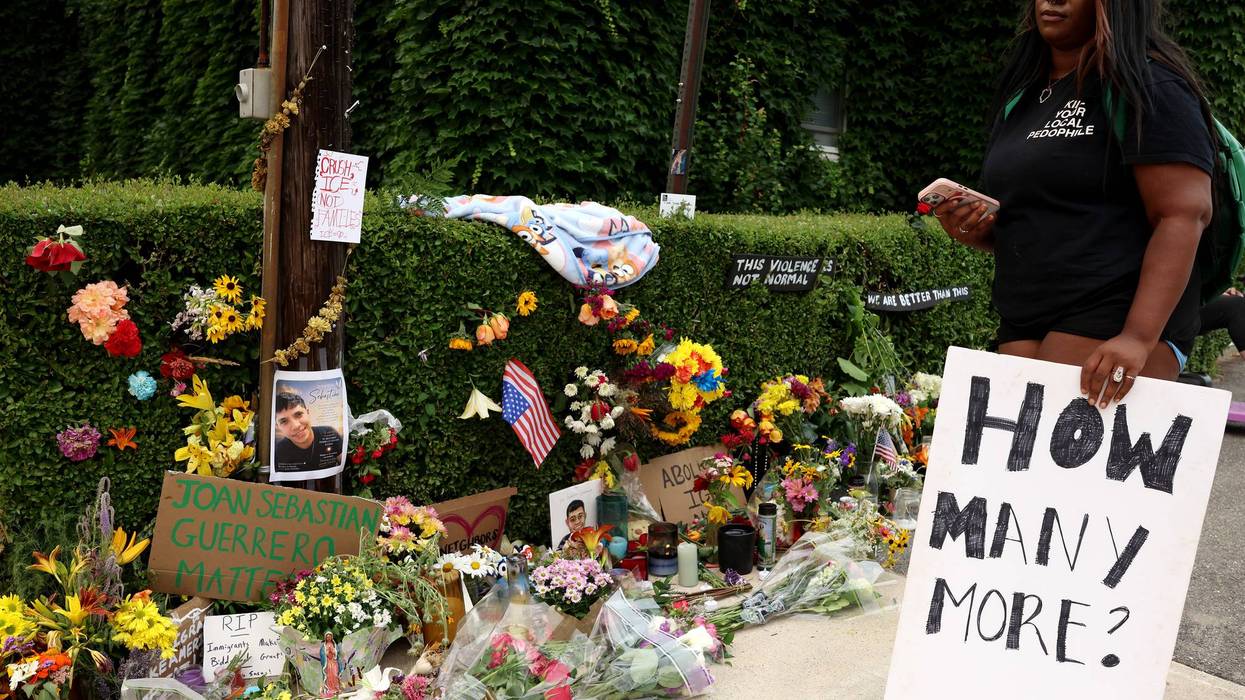
In recent weeks, Immigration and Customs Enforcement (ICE) agents were involved in two killings. Joan Sebastian Durán Guerrero, a 25-year-old Colombian national living with his wife and young daughter in a small town in Maine, was not the subject of an ICE raid, but ICE agents killed him anyway. Lorenzo Salgado Araujo, a Mexican immigrant, was a businessman and father of three on his way to work in Houston when agents stopped his car and shot him.
More than a dozen people have died in these kinds of interactions with ICE, including two US citizens—Alex Pretti and Renee Nicole Good—protesting ICE actions in Minnesota.
The number of detainees who have died in custody is even higher. Tens of thousands of people are being held in detention facilities that the Trump administration has established around the country. Despite administration claims that it is only deporting dangerous criminals, more than 70% of those detained have no prior criminal convictions.
More than 50 people have died in the detention facilities, a rate that is more than twice as high as Trump’s first term. They have died because of conditions inside the facilities or because they didn’t receive sufficient medical care. Several have died by suicide.
The Trump administration has pledged to deport a million people a year. It hasn’t quite reached that benchmark, with the administration itself claiming around 900,000 deportations as of mid-May. It has also claimed that more than 2 million people have self-deported. However, without transparent data from the Department of Homeland Security, it is difficult to verify the administration’s claims.
These numbers are critical to the administration’s approval rating. On virtually all other policies, Trump is losing popularity. Inflation numbers remain high, and the economy is failing millions of Americans. The war in Iran continues to push up gas prices. The administration is still dogged by controversies around budget cuts, corruption, anti-vaccine policies, and connections to Jeffrey Epstein. The overall approval rating for the administration is around 37%, with a large percentage of independent voters now adopting negative views of the president.
The one issue where a sizable number of Americans still approve of administration policies, however, is immigration. Compared to the economy at 33% and the war in Iran at 29%, 40% of Americans approve of his immigration policies. But even here the numbers are declining, since half of Americans supported his approach to immigration when he took office in 2025.
The administration has tried to tout the successes of its deportation program. But the deaths of citizens and noncitizens alike have put supporters of the president on the defensive. The detention and deportation of key members of communities—hard workers, religious leaders, even those espousing the same conservative family values of the administration—have led to a significant decline in anti-immigrant sentiment among Republicans.
Still, with the economy on the rocks and the war in Iran nowhere near an end, the Republicans will likely try to emphasize the “success” of the administration on immigration policy in the upcoming midterm elections in November. It will be a desperate strategy. As more information comes out about lives lost, communities harmed, and an economy hobbled by the loss of critical workers, the administration’s deportation strategy may turn out to be a failure politically as well for the president and his party.

In light of all this death, we must seriously ask ourselves: Are we, as a nation, greater because a 3-year-old girl will never know her father? Are federal agents murdering people working hard to provide for their families making any of our lives better? Are we safer because of ICE?
On July 13, an Immigration and Customs Enforcement agent in Biddeford, Maine murdered Joan Sebastian Durán Guerrero, a Colombian national authorized to work in the US. One of his neighbors described him as “an excellent person, a good father, good husband.”
The Department of Homeland Security (DHS) alleged that Guerrero “attempted to flee the scene and, fearing for public safety, an officer discharged his weapon.”
Yet, footage obtained by The New York Times shows Guerrero slowly driving in a circle as he is confronted by multiple agents—there is no evidence that he endangered anyone. One of their vehicles is clearly shown ramming into his. Afterwards, three agents surround the car with one pointing his gun at the driver’s side window. While not shown in the video, five gunshots can be heard. After the incident, there were four visible bullet holes on the front windshield.
Such excessive and unnecessary violence is the new norm. Last October, Marimar Martinez, a US citizen, was shot five times in her car. In December, Isaias Sanchez Barboza, a Mexican national, was shot at least three times. In January, Renee Nicole Good, a US citizen, was also shot three times, including one to her head. The same month, Alex Pretti, another US citizen, was shot at least 10 times in the span of five seconds.
So long as ICE exists, it will continue to kill.
This latest shooting comes less than a week after ICE agents in Houston murdered Lorenzo Salgado Araujo, a Mexican national who had lived in the US for 35 years. Here too, DHS blamed the victim. A DHS spokesperson alleged that Araujo “weaponized his vehicle in an attempt to run over an ICE law enforcement officer resulting in our officer firing his weapon in self-defense.” DHS used the same story to justify the murder of Good and shooting Martinez. As in those cases, video evidence and eyewitness accounts dispute the Trump administration’s narrative.
A week after Araujo’s death, the FBI filed a warrant application claiming that the agency has reason to believe that there were illegal drugs in the vehicle he was driving. FBI Special Agent David McNeilly alleged that he observed small plastic bags “with a white crystal-like substance” in the cargo van. The application cites probable cause for “distribution, manufacturing, or possession with intent to distribute a controlled substance and simple possession of a controlled substance.”
Domingo Garcia, the president of the League of United Latin American Citizens (LULAC) Adelante PAC, accused federal investigators of trying to “change the public discourse and prejudice a jury in Harris County.” He further remarked, “It just smells of a smear campaign and a cover up.”
Garcia is right to be suspicious. There are many documented cases of law enforcement planting drugs on victims. The Trump administration has also demonstrated time and time again that it is incapable of holding itself accountable. After shooting Martinez five times, Border Patrol agent Charles Exum was congratulated by then-Border Patrol Commander Gregory Bovino. Good and Pretti were immediately smeared as “domestic terrorists” by several members of the Trump administration, including by then-DHS Secretary Kristi Noem.
Moreover, this administration has actively sought to manipulate federal investigations into past ICE killings—this includes launching an investigation into Renee Good’s wife, Becca Good, while actively stopping probes into her murderer, Jonathan Ross. They have also intentionally delayed turning over key evidence to state prosecutors.
It is worth further emphasizing that, by DHS’ own admission, Araujo was not the target of ICE’s operation. Even if there were drugs in the van (and there is no evidence that there were), those agents did not know that. They did not kill him because of drugs; they did not kill him to protect public safety; they did not kill him in self-defense. ICE agents killed him and Guererro because they knew they could.
Guerrero and Araujo were not the only people to die in ICE-related incidents this month. On July 14, a 28-year-old man in Florida died while fleeing ICE agents.
A day prior, Jesús Manuel Arenas-Silva, a Venezuelan national, died while being transferred between detention centers in Georgia. In a press release, his sister and immigrants’ rights groups reported that, despite their repeated pleas, ICE deprived him of medication he desperately needed. Including Arenas-Silva, at least 22 people have reportedly died in ICE custody this year.
Importantly, this figure does not include the deaths of people like Nurul Amin Shah Alam and Daphy Michel. Shah Alam, a nearly blind refugee who did not speak English, was abandoned by immigration enforcement agents alone on a cold winter night in New York state. He was found dead a few days later. A state medical examiner ruled his death a homicide.
Similarly, Michel, a Haitian asylum-seeker “suffering from untreated severe mental health issues and a significant language barrier,” was arrested by ICE in late February. Agents put an ankle monitor on her, drove her 25 miles away to Pittsburg where she was then abandoned. She died of hypothermia days later. Her death was also ruled a homicide.
On June 4, ICE announced it would no longer investigate or report the deaths of those recently released from detention centers—people like Shah Alam and Michel. This rescinds a policy instituted in 2021 by the Biden administration to hold the agency accountable for releasing severely ill detainees.
This is the reality of what ICE is: an agency that kills people; an agency that intentionally lets people die; an agency without remorse or accountability. Banning traffic stops or mandating bodycams will not change this. So long as ICE exists, it will continue to kill.
In light of all this death, we must seriously ask ourselves: Are we, as a nation, greater because a 3-year-old girl will never know her father? Are federal agents murdering people working hard to provide for their families making any of our lives better? Are we safer because of ICE?
The tens of billions of our taxpayer money spent on ICE could be going to fund childcare, instead of killing parents. It could be used to fund healthcare instead of an agency that deprives medication. It could be used to meaningfully improve the lives of millions instead of agents that kill and injure innocent people.
For all our sakes, enough must finally be enough. We must abolish ICE. Punish the ICE agents who have committed these shootings. Hold every member of the Trump administration who covered their crimes and every politician who voted to fund ICE responsible for the chaos they have unleashed across our country.
Unless there is real change, it is not a matter of if, but when ICE will kill again.
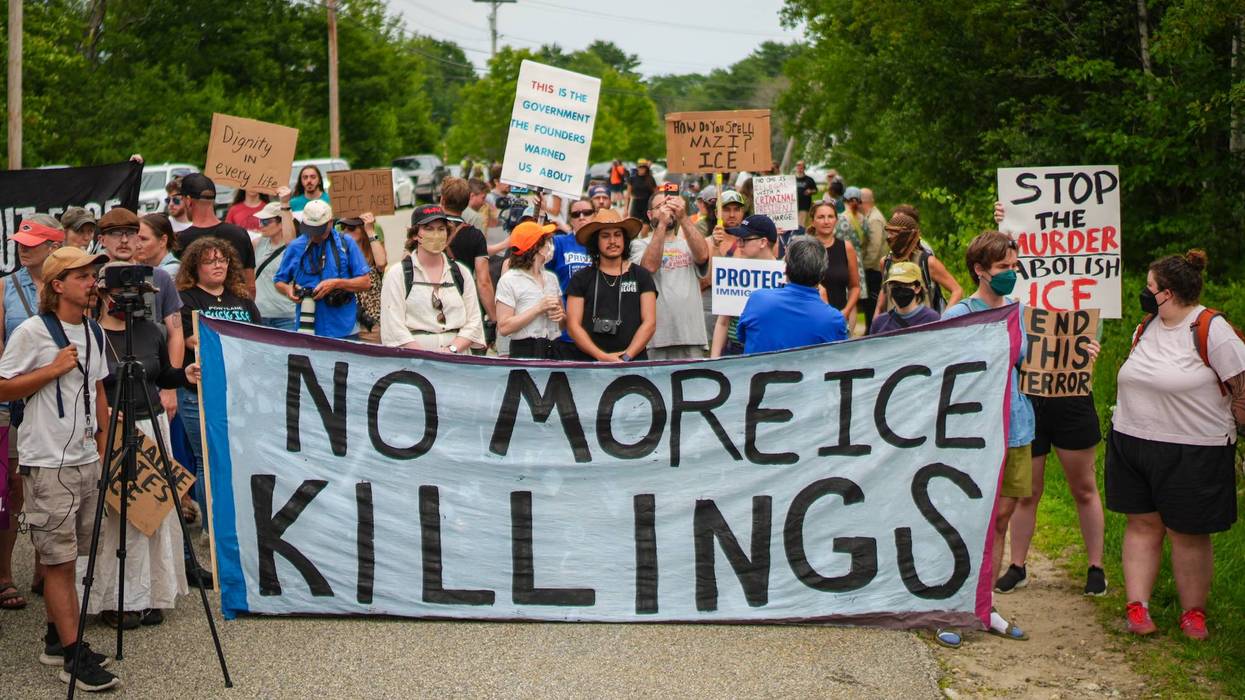
There is little point in considering DHS’ pretexts for killing on a case-by-case basis. ICE’s abuse of immigrants is not the result of individual misdeeds—it is policy.
In less than one week, Immigration and Customs Enforcement agents killed twice.
Neither victim was the man they were looking for. And each time their excuses made no sense. But the killings served a purpose: terrorizing immigrant communities, in pursuit of President Donald Trump’s white nationalist agenda.
On July 7 in Houston, masked Immigration and Customs Enforcement (ICE) agents who did not identify themselves stopped and shot to death Lorenzo Salgado Araujo, a 52-year-old Mexican national and father of three. Araujo had lived in the United States for 35 years and had applied to obtain legal status. He was on his way to work in construction.
Using its by-now familiar excuse, Homeland Security officials claimed that Araujo rammed an ICE vehicle and tried to run down ICE agents by “weaponizing” his van. The claim was disputed by witnesses, is inconsistent with the video evidence, and makes no sense.
ICE cannot be reformed because its purpose is not enforcing the law. It is terrorism for a white supremacist vision of America.
Araujo had no criminal record. Why would this law-abiding, middle-aged family man ram an ICE vehicle and try to kill ICE agents?
Six days later, in Biddeford, Maine, ICE killed again. This time they killed Johan Sebastian Guerrero, a 26-year-old Colombian man who was authorized to work in the United States.
Again, ICE claimed that Guerrero tried to run down the ICE agent. Again, no evidence supported the excuse. Twelve hours later Homeland Security abandoned the “weaponized” vehicle claim and tried another story: The ICE agent, “fearing for public safety,” shot Guerrero because he “attempted to flee the scene.”
Under Homeland Security’s account, an unmarked ICE vehicle driven by an unknown masked man attempts to stop a vehicle, the driver (who was not their intended target) tries to escape, and the agent fires. They claim, essentially, that failing to stop (if that actually even happened) amounts to “fleeing the scene”—and requires deadly force.
Johan Sebastian Guerrero was working legally at two jobs, as a cleaner and a food delivery driver. He had a wife and a 3-year-old daughter. Who can claim he was so dangerous he had to be killed?
Since Trump returned to the White House, immigration enforcement agents have killed at least 11 times, including Renee Good and Alex Pretti, as of this writing.
ICE agents routinely shoot at people in vehicles, even though official US government policy warns against the practice and says law enforcement officers should “move out of the path of the vehicle” rather than shoot. In addition, at least 49 people have died in ICE custody so far in Trump’s second term—a number that will only climb.
Brutality and violence are routine features of ICE operations, yet no ICE agent has been held responsible. In Trump’s war against immigrants, ICE agents know they may slay with impunity.
Donald Trump’s campaign of demonization and vilification sets the stage. Trump calls immigrants “animals” and “not human,” likening them to criminals or escaped mental patients. He calls them “vermin” who “infest our country,” and he embraces the Nazi theme that a despised group is “poisoning the blood of our country.”
The unrestrained brutality of ICE is a reign of terror. Killing without cause is not a problem for the Department of Homeland Security (DHS); it is a feature. ICE’s indiscriminate violence conveys that non-white immigrants, lawful or otherwise, have no place in Trump’s America.
There is little point in considering DHS’ pretexts for killing on a case-by-case basis. ICE’s abuse of immigrants is not the result of individual misdeeds—it is policy. ICE cannot be reformed because its purpose is not enforcing the law. It is terrorism for a white supremacist vision of America.
Those who reject Trump’s vision, who insist on the humanity of our neighbors, who still believe we must welcome to America’s shores those yearning to breathe free, must stand up and say No.

"We cannot turn a blind eye to the Mexicans who have died," said Mexican President Claudia Sheinbaum.
Mexican President Claudia Sheinbaum said Thursday that her government intends to pursue criminal charges over the deaths of 17 Mexican nationals in the custody of US Immigration and Customs Enforcement.
The Associated Press reported that Sheinbaum's administration will submit a request "to state prosecutors' offices and the US Department of Justice, asking them to consider criminal charges against those responsible for the deaths." The request, according to AP, "will be accompanied by civil lawsuits against the companies that operate the detention centers in an effort to put an end to human rights violations in those facilities."
Sheinbaum said her government decided to urgently move forward with its likely doomed push for accountability after an ICE agent killed Lorenzo Salgado Araujo in Houston earlier this week. Salgado Araujo, a Mexican national, had been living in the US for more than three decades.
Mexico's president called the killing "sad and regrettable," arguing that it "appears to have been targeted."
"We are going to do everything in our power, because we cannot stand silent," Sheinbaum said Thursday. "We cannot turn a blind eye to the Mexicans who have died."
According to a recent report by Physicians for Human Rights and Human Rights Watch, "the mortality rate of deaths in ICE custody is at its highest level in over a decade and has more than doubled since [US President Donald] Trump’s second term began."
"The rate is nearly four times that of the Biden administration, and more than two and a half times as high as that of the first Trump administration," the report found, noting that a record 71,000 people were in immigration detention in January 2026. "The surge in deaths is much worse than what one would expect even considering the much higher number of people in detention."
Deaths in ICE custody have drawn international alarm, with the United Nations high commissioner for human rights saying last month that "the lack of transparency and clarity surrounding the circumstances of these deaths in custody undermines accountability for them."
“I call for prompt, independent, impartial and effective investigations into all deaths in ICE custody," said Volker Türk. "Those responsible for violations of the law must be held to account, and the rights of the victims’ families to truth, justice and reparation and guarantees of non-recurrence must be upheld."
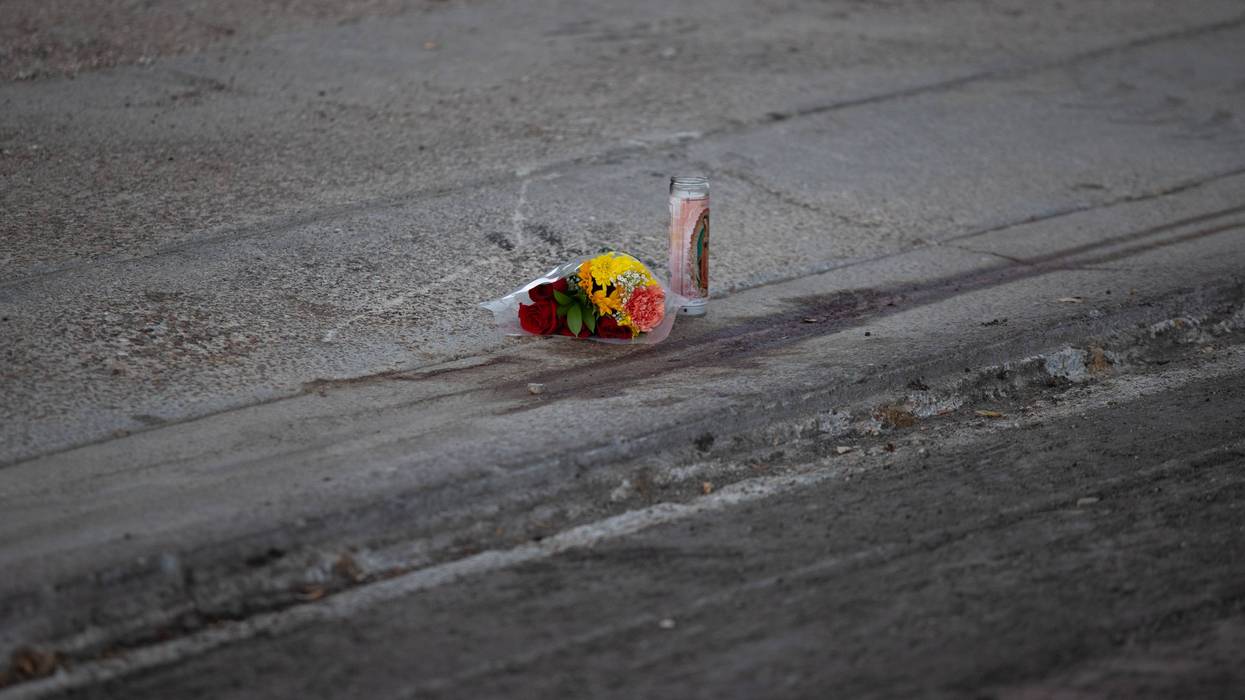
Federal agents flood our neighborhoods; a poorly trained, gun-happy immigration agent kills someone; the administration alleges, without evidence, that the victim was responsible; no proper investigation is conducted; no one is held accountable. Rinse and repeat.
On July 7, an Immigration Customs Enforcement agent shot and killed Lorenzo Salgado Araujo, a Mexican national. According to a Department of Homeland Security spokesperson, Araujo “weaponized his vehicle in an attempt to run over an ICE law enforcement officer resulting in our officer firing his weapon in self-defense.” As of the time of this writing, the agency has yet to provide any evidence.
This shooting comes days after a massive surge in ICE arrests. Between June 26 and June 30, 10,000 people were reportedly detained by immigration agents.
This is a tragic story—one that we have seen many times before.
Silverio Villegas González: On September 12, Villegas González, a Mexican national, was shot and killed by an ICE agent. This occurred during the agency’s “Operation Midway Blitz” in the Chicago area.
Araujo was not the first of ICE’s victims. So long as the agency exists, he will not be the last.
The Department of Homeland Security (DHS) alleged that the ICE agent “was hit by the car and dragged a significant distance. Fearing for his own life, the officer fired his weapon.” DHS further claimed that the agent “sustained multiple injuries.”
These were lies. Bodycam footage collected by Franklin Park police officers show the ICE agent saying he “got dragged a little bit” and describing his own injuries as “nothing major.” Surveillance video shows that Villegas González did not drive toward or hit either agent. Several eyewitnesses further refute DHS’ narrative.
Marimar Martinez: On October 4, Martinez, a US citizen, was shot five times by Border Patrol agent Charles Exum. In a statement, DHS described this as “defensive fire.” They alleged, without evidence, that Martinez and her fellow “domestic terrorists” “ambushed” and “rammed federal agents with their vehicles.” On social media, FBI Director Kash Patel posted a video—from an unrelated incident—of a black SUV aggressively ramming an agent’s truck as "proof" of Martinez’s crime.
These, too, were lies. Bodycam footage shows the agents already had their weapons drawn as one of them turned the steering wheel toward Martinez’s car. One agent can be heard saying, “It’s time to get aggressive.”
Text messages reveal the “big time” support Exum received from then-Border Patrol Commander Gregory Bovino, Border Patrol Chief Michael Banks, and then-Homeland Security Secretary Kristi Noem in the aftermath of this incident. Hours after the shooting, Bovino even offered to extend Exum’s retirement with CBP “in light of [his] excellent service in Chicago.” He added, “you have much yet left to do!”
In a group chat, Exum bragged about how he “fired 5 rounds and she had 7 holes.”
Renee Nicole Good: On January 7, Noem alleged that Good, a US citizen, “weaponize[d] her vehicle” and “attempted to run” over ICE agent Jonathan Ross. This act of so-called “domestic terrorism” justified Ross’s lethal action.
Once again, more lies. Footage captured on that day definitively showed—from multiple camera angles—that Good was turning away from Ross as he opened fire. He was never in danger.
Six months later, her murder has yet to be properly investigated. This was always the government’s plan. The day after her death, Vice President JD Vance insisted that the officer had “absolute immunity.” A few weeks afterwards, six federal prosecutors resigned over the Justice Department’s reluctance to investigate Ross. An FBI agent who had opened a civil rights investigation into Good’s death also resigned after she was ordered to reclassify it as an investigation into an assault on the ICE agent.
To these names, there are many we can add: Ruben Ray Martinez (shot and killed), Alex Pretti (shot and killed), Julio Cesar Sosa-Celis (shot), Jesus Javier Gomez Islas (shot, left permanently blind in his right eye), Keith Porter Jr. (shot and killed), Carlitos Ricardo Parias (shot).
Trump’s bigotry, Congress’ cowardice, and the Supreme Court’s blind obedience; a government devoid of checks and balances at war with its own people—this is America after 250 years.
This is the new normal of Donald Trump’s America—federal agents flood our neighborhoods. A poorly trained, gun-happy immigration agent kills someone. The administration alleges, without evidence, that the victim was responsible. No proper investigation is conducted. No one is held accountable. A family is torn apart. A community traumatized. Rinse and repeat.
We do not yet know all the details surrounding Araujo’s death. Perhaps we will never.
For now, there are two things we can take as certainties: First, any official narrative put forth by ICE, DHS, or the Trump administration cannot be trusted. They have repeatedly lied to the public, defended their killers, and blamed the victims. In their view, if you are killed by ICE, protest ICE, criticize ICE on social media, or even write a strongly worded email to ICE, then you are the criminal. You are the “domestic terrorist.”
Second, Araujo was not the first of ICE’s victims. So long as the agency exists, he will not be the last. The next victim could be anyone. Regardless of race or legal status, we are all vulnerable to Trump’s taxpayer-funded secret police.
This is the reality that we all find ourselves in—one that is nurtured and sustained by every aspect of the federal government: the Trump administration’s militarized immigration enforcement and crackdown on political dissent; a Congress that continues, despite the deaths, to provide billions to ICE and DHS; and a Supreme Court that gives ICE agents legal immunity to racially profile minorities and that paves the way for DHS to strip noncitizens of their protection status.
Trump’s bigotry, Congress’ cowardice, and the Supreme Court’s blind obedience; a government devoid of checks and balances at war with its own people—this is America after 250 years.
On Facebook, Araujo’s son, Ronaldo Salgado, wrote: “My father has been in this country for nearly 35 years, working in construction to provide for myself, my two brothers, and my mother. He was in the process of obtaining his work permit through the legal process. He was on his way to work, picking up his workers. My father did not deserve this.”
None of ICE’s victims deserved this.
We cannot allow ICE to continue tearing families apart. We cannot continue to suffer politicians and institutions that prioritize war and violence over helping the people they are meant to serve.
Despite the dangers, we must continue to protest ICE. We must advocate for progressive candidates and policies. The situation is bleak, but things will only get worse if we do nothing. The White House will not save us. The Supreme Court will not save us. Congress, as it stands, will not save us. We must save ourselves.