

SUBSCRIBE TO OUR FREE NEWSLETTER
Daily news & progressive opinion—funded by the people, not the corporations—delivered straight to your inbox.
5
#000000
#FFFFFF
To donate by check, phone, or other method, see our More Ways to Give page.
Daily news & progressive opinion—funded by the people, not the corporations—delivered straight to your inbox.
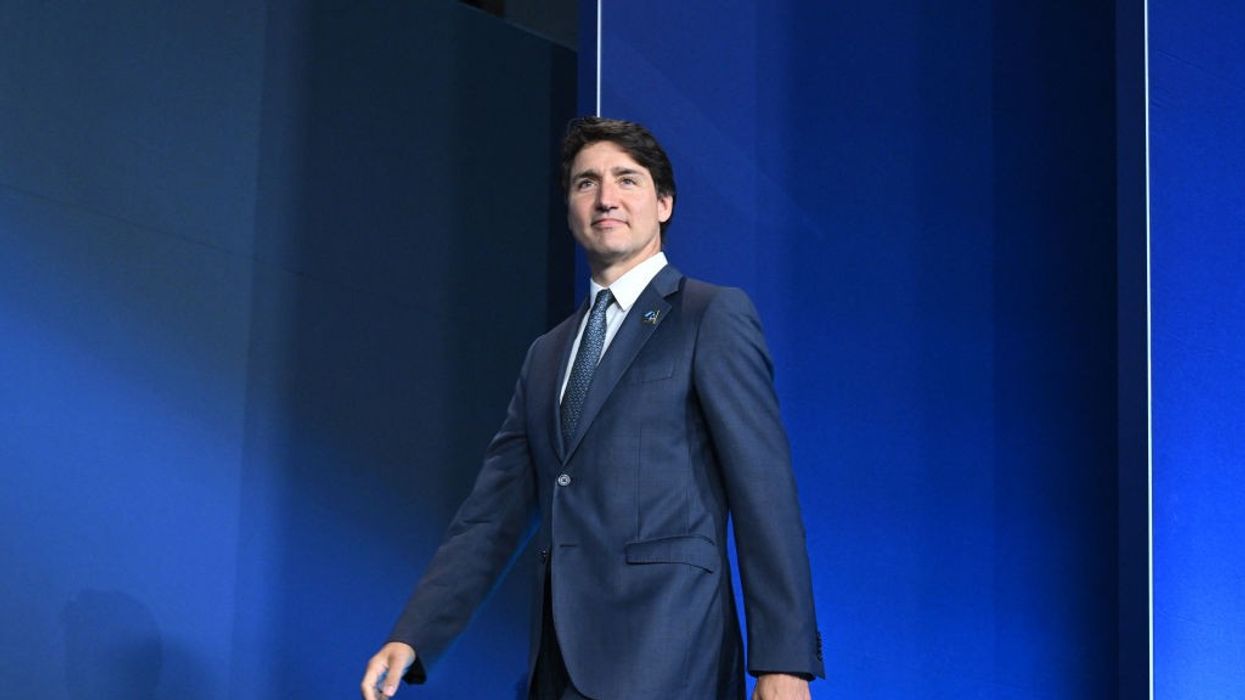
"The Liberal government's decision to undermine 9,300 Canadian rail workers with binding arbitration sends a message to big corporations: Being a bad boss pays off," said the leader of the New Democratic Party.
The Canadian government on Thursday moved to end a lockout of workers at the country's two major rail corporations by forcing the two sides into arbitration, drawing sharp criticism from the union, which is challenging the move, and left-leaning political figures, including an ally of Prime Minister Justin Trudeau.
Canadian National (CN) and Canadian Pacific Kansas City (CPKC) locked out about 9,300 engineers, conductors, and yard workers starting Thursday morning, shutting down the vast majority of the country's freight operations—a major disruption to the national economy and supplies chains across North America. The two sides had failed to reach a labor agreement after months of negotiating.
Labor Minister Steven MacKinnon made the announcement Thursday afternoon, referring the arbitration to the Canada Industrial Relations Board and ordering previous collective bargaining agreements to be extended until the CIRB process is complete. He said he expected trains to be running again within days.
The government's move was widely seen as a victory for company executives and a loss for 9,300 workers, whom worker advocates say were effectively stripped of their right to collectively bargain.
"By resorting to binding arbitration, the government has allowed CN and CPKC to sidestep a union determined to protect rail safety," Teamsters Canada Rail Conference (TCRC) president Paul Boucher said in a statement. "Despite claiming to value and honor the collective bargaining process, the federal government quickly used its authority to suspend it, mere hours after an employer-imposed work stoppage."
Teamsters Canada Rail Conference's announced Friday it would challenge the constitutionality of the government move.
Jagmeet Singh, leader of the left-leaning New Democratic Party, which Trudeau's centrist Liberal Party relies on for voting support in Parliament, was blisteringly critical of his strategic ally following the government's announcement.
"The Liberal [government's] decision to undermine 9,300 Canadian rail workers with binding arbitration sends a message to big corporations like CN and CPKC: Being a bad boss pays off," Singh wrote on social media. "Justin Trudeau's actions are cowardly, anti-worker, and proof that he will always cave to corporate greed."
The Liberal govt's decision to undermine 9,300 Canadian rail workers with a binding arbitration sends a message to big corporations like CN & CPKC:
Being a bad boss pays off
Justin Trudeau's actions are cowardly, anti-worker, & proof that he will always cave to corporate greed. pic.twitter.com/p7U1mE4hlv
— Jagmeet Singh (@theJagmeetSingh) August 22, 2024
Singh, a member of Parliament from the Vancouver metropolitan area, had warned Trudeau earlier in the week not to intervene, arguing that there was an ugly history of the Canadian government doing so in favor of industry interests. Trudeau and other government officials had said, before Thursday afternoon, that they preferred the two sides hash out their differences at the negotiating table.
However, the train stoppage led to mounting industry pressure, not just from the rail companies but also broader business interests who expressed concern about the impact on Canada's export-driven economy. Media outlets in Canada and the U.S. focused on the potential downsides of a protracted stoppage. Half of the Canada's exports are moved by rail, according to a railway industry lobby group, and more than $700 million USD worth of goods move on the country's tracks per day.
"The two major railways in Canada manufactured this crisis, took the country hostage, and manipulated the government to once again disregard the rights afforded to working-class Canadians," said Boucher, the union leader. "The TCRC is deeply disappointed by this shameful decision."
Rail operations remained in a complicated limbo on Friday as TCRC seemingly figured out how to react to the government's move. Initially, the union announced that while the CPKC work stoppage was ongoing, pending CIRB action, its CN members would resume work—and the company's trains began running across Canada at 7:00am—but later in the morning the union issued a 72-hour strike notice to CN.
The labor dispute centers on worker hours and conditions, and has parallels to a U.S. dispute in 2022, in which the U.S. government also stepped in to force a deal, angering many union leaders and working-class advocates.
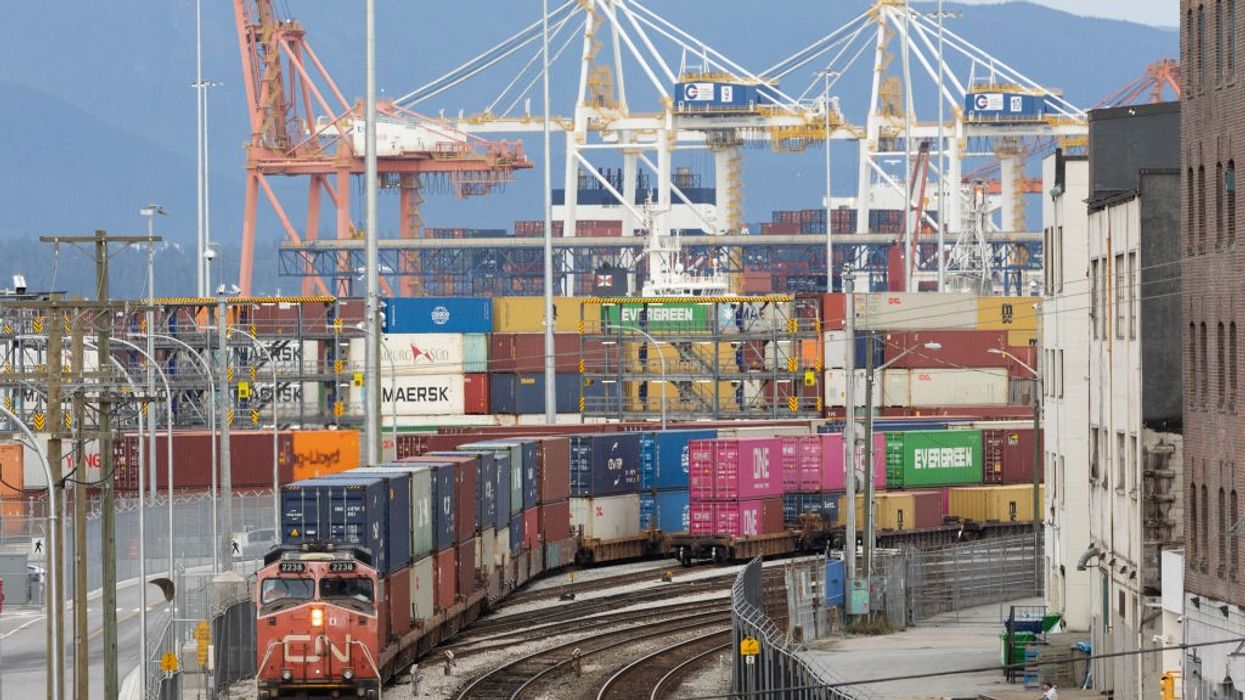
"The railroads don't care about farmers, small businesses, supply chains, or their own employees," a union president said. "Their sole focus is boosting their bottom line, even if it means jeopardizing the entire economy."
Both of Canada's major freight rail companies—key cogs in North America's supply chains—locked out workers and shut down operations on Thursday due to a labor dispute over worker hours and conditions, as a union leader said the companies were holding the Canadian economy "hostage."
The unprecedented stoppage comes with high stakes for the 9,300 affected engineers, conductors, and yard workers—and the country's export-driven economy. The two companies, Canadian National (CN) and Canadian Pacific Kansas City (CPKC), own almost all of the tracks and haul more than $700 million USD worth of goods per day.
The Teamsters Canada Rail Conference, which represents the affected workers across both companies, said the two corporations had refused many of its "good faith" offers.
"Neither CN nor CPKC has relented on their push to weaken protections around rest periods and scheduling, increasing the risk of fatigue-related safety issues," the union said in a statement.
Paul Boucher, the union's president, said that "CN and CPKC have shown themselves willing to compromise rail safety and tear families apart to earn an extra buck. The railroads don't care about farmers, small businesses, supply chains, or their own employees. Their sole focus is boosting their bottom line, even if it means jeopardizing the entire economy."
🚂 The men and women who keep our CN and CPKC trains running want decent working conditions that ensure safety for us all🚨. It’s time to give them our support.💪#Canlab pic.twitter.com/bGXQC1yuo1
— Teamsters Canada (@TeamstersCanada) August 21, 2024
Boucher said in a video statement on social media that the companies were holding Canada's economy "hostage" in an attempt to get the federal government, led by Liberal Prime Minister Justin Trudeau, to force a binding arbitration agreement on the workers, an idea that business groups such as the Canadian Chamber of Commerce support.
So far, Trudeau's government hasn't done so and has instead pressured the two sides to come to a deal.
"Millions of Canadians, of workers, of farmers, of businesses right across the country are counting on both sides to do the work and get to a resolution," Trudeau told reporters Wednesday.
The Liberals, a centrist party, rely on the votes of the smaller New Democratic Party in Parliament. NDP was founded in part by organized labor and has warned Trudeau not to force the rail employees back to work.
"For too long we have seen Liberals and Conservatives interfere in these types of labor disputes to the advantage of the employer, to the detriment of the worker," Jagmeet Singh, NDP's leader, told reporters on Monday. "That is wrong, and we will oppose that."
In 2022, the U.S. federal government did take such action in a railway labor dispute. The U.S. Congress and President Joe Biden forced railworkers into an agreement that four key unions didn't agree to—angering many working-class Americans and progressive advocates, who argued that the right to strike had been nullified by the government intervention.
Canada has previously seen such federal interventions—or the threat of them, which can force workers' hand in negotiations—but in the past, disputes have occurred with just one of the major rail companies or the other, with their contracts expiring in alternating years.
This time, the timing has allowed for an industry-wide dispute, and a larger transportation disruption, including not just freight rail but also some passenger rail services that operate on lines owned by the two companies. There are no traffic controllers on the CPKC tracks, so passenger rail can't operate, The Canadian Broadcasting Corporation reported.
The companies have used the disruption as part of the rationale for government action. CPKC openly called for binding arbitration on Thursday, saying in a statement that an agreement is "not within reach" and that the union "continues to make unrealistic demands that would fundamentally impair the railway's ability to serve our customers with a reliable and cost-competitive transportation service."
The union argues that CPKC wants to "gut the collective agreement of all safety-critical fatigue provisions" and CN is trying to extend work days in western provinces, raising what the union calls a "a fatigue-related safety risk," The Guardian reported.
CN's net income for 2023 was $4 billion USD, while CPKC's was $2.9 billion USD.
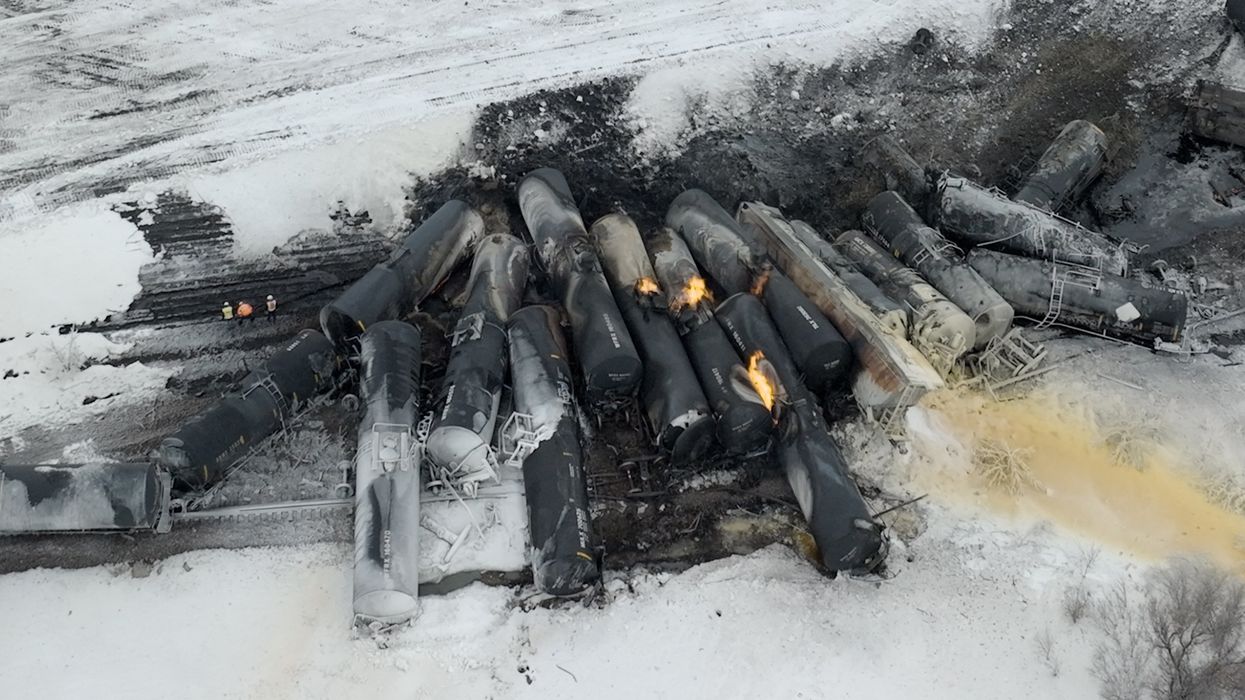
"These companies siphon billions into share buybacks, dividends, and bonuses rather than into the vital maintenance and infrastructure growth we need to build a safe, modern, and thriving rail industry," said one worker.
After at least six major freight train derailments occurred across the United States over the past week, the need for stronger rail safety rules couldn't be clearer, an interunion alliance of rail workers said Monday.
"The recent uptick in derailments across the U.S. highlights the dire need for stricter regulations on the length and weight of trains, as well as a focus on preventing unsafe operational practices such as precision scheduled railroading (PSR) which prioritizes short-term financial gains for Wall Street over the safety of communities and railroad workers," Jason Doering, a locomotive engineer and general secretary of Railroad Workers United (RWU), said in a statement.
The past week "was not a good one" for the nation's Class 1 rail carriers, RWU observed.
On Sunday, March 26, a Canadian Pacific train carrying hazardous materials careened off the tracks outside Wyndmere, North Dakota, spilling liquid asphalt and ethylene glycol and releasing propylene vapor.
Last Monday, a Union Pacific iron ore train reached 118 miles per hour as it ran away down Cima Hill in the Mojave Desert before wrecking on a curve, destroying two locomotives and 55 cars in San Bernardino County, California.
On Wednesday, a Canadian National iron ore train derailed in Butler County, Pennsylvania.
On Thursday, a BNSF train carrying ethanol and corn syrup crashed near Raymond, Minnesota, causing a fire that forced local residents to flee.
On Friday, a Norfolk Southern train went off the tracks in Irondale, Alabama.
One day ago, a train operated by the Class 2 regional Montana Rail Link—soon to be owned by BNSF—derailed on the banks of the Clark Fork River in Paradise, Montana.
"The recent uptick in derailments across the U.S. highlights the dire need for stricter regulations on the length and weight of trains, as well as a focus on preventing unsafe operational practices such as precision scheduled railroading."
"Rail workers are not surprised to see the dramatic increase in rail incidents following the widespread cuts to the industry," said locomotive engineer and RWU steering committee member Paul Lindsey.
"Each year these companies siphon billions into share buybacks, dividends, and bonuses rather than into the vital maintenance and infrastructure growth we need to grow a safe, modern, and thriving rail industry," Lindsey added.
Norfolk Southern has become the poster child for freight industry greed as the toxic aftermath of February's fiery train derailment and ensuing chemical spill and burnoff continues to unfold in East Palestine, Ohio.
Questioned last month at a U.S. Senate hearing about the ongoing public health and environmental disaster, Norfolk Southern president and CEO Alan Shaw refused to commit to giving workers seven days of paid sick leave or halting stock buybacks.
More Perfect Union has calculated that payouts to Norfolk Southern's shareholders soared by more than 4,500% over the past 20 years, from $101 million in stock repurchases and dividend bumps in 2002 to $4.7 billion in 2022.
Shaw also refused to commit to ending PSR, the profit-maximizing scheduling system that forces fewer workers to manage longer trains in less time, even though unions and progressive lawmakers argue the Wall street-endorsed model makes the U.S. rail system more dangerous and contributes to the 1,500-plus derailments seen nationwide each year.
Although Norfolk Southern epitomizes how railroad executives prioritize profits above all else, the corporation is far from alone in pushing for deregulation and implementing anti-worker, pro-investor policies.
An OpenSecrets analysis published last month found that the rail industry spent more than $713 million lobbying against enhanced rail safety rules at the federal and state levels between 2002 and 2022. Top spenders include the Association of American Railroads trade group, CSX, Union Pacific, Norfolk Southern, and BNSF's parent company Berkshire Hathaway, which is owned by billionaire Warren Buffett.
While RWU has made the case for nationalizing the railroads, it has also outlined a plan for reforms that can be quickly implemented in the absence of such a sweeping transformation. Specific provisions the alliance has called for include sufficient staffing; limits on train length and weight; adequate maintenance and inspections; and better training and employee benefits.
Last week, Sens. John Fetterman (D-Pa.), Bob Casey (D-Pa.), and Sherrod Brown (D-Ohio) introduced the Railway Accountability Act, which includes some of the measures sought by RWU and is supported by unions including the Transport Workers of America (TWU), the National Conference of Firemen & Oilers (NCFO), and the International Association of Sheet Metal, Air, Rail, and Transportation Workers-Mechanical Division (SMART-MD).
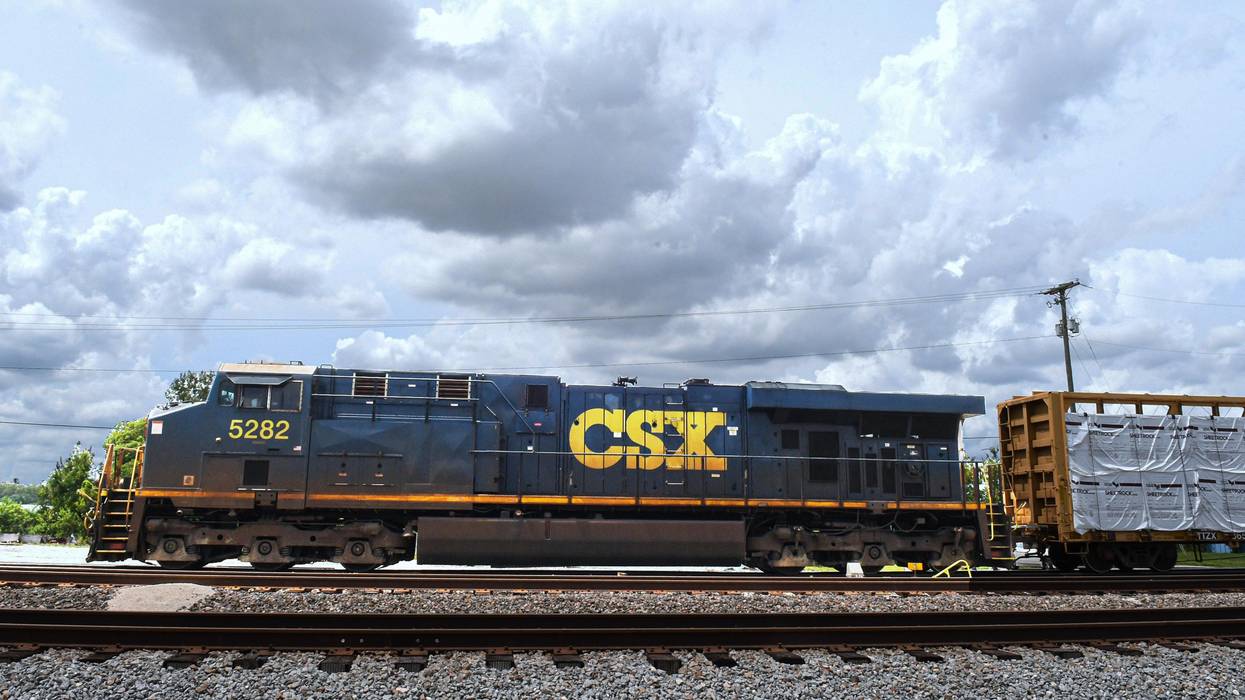
At the same time they have fought to deny sick days and other vital benefits to workers in the freight industry, rail carrier executives have been rewarding shareholders with billions of dollars in stock buybacks and dividend bumps.
"It's time for these railroad companies to start prioritizing the safety and well-being of their workers--or we'll all pay the price."
According to Railroad Operators: Bad for Workers, Good for Investors, a collection of data compiled by the Groundwork Collaborative and shared with Common Dreams on Monday, a handful of major rail companies reported more than $10 billion in buybacks and dividends over the first six months of 2022. Meanwhile, workers who try to visit a doctor amid a global pandemic continue to be disciplined, leading to higher staff turnover and soaring injury rates.
"Our research shows just how far railroad executives will go to funnel record profits to their shareholders--even if that means stagnant wages, inhumane attendance policies, and throwing our supply chain into further turmoil," Mike Mitchell, director of policy and research at Groundwork Collaborative, told Common Dreams.
Groundwork's analysis--based on recent corporate earnings calls from Union Pacific, CSX, Canadian National Railway, and Norfolk Southern--sheds new light on the dynamics underlying rail workers' ongoing fight for more safety and dignity in the workplace.
When it comes to shoveling more money to investors, Groundwork found that Union Pacific is leading the pack in 2022. Rather than using billions of dollars in revenue to improve pay and job conditions, Union Pacific gave $5 billion to shareholders through buybacks and dividends in the first six months of this year alone.
Other giants in the industry aren't far behind. CSX, for instance, funneled nearly $3 billion in buybacks and dividends to investors from January through June, while Canadian National Railway reported $2.3 billion in stock buybacks during the same time period, Groundwork noted.
Although exact figures weren't disclosed, Norfolk Southern's chief financial officer Mark George said on a July call that "shareholder distributions are up and you'll observe here the 19% higher dividend payments through six months on top of continued strong share repurchase activity."
Railroads have been enjoying record profits after decades of deregulation, consolidation, and "just-in-time" practices known as "precision railroad scheduling" transformed the industry into what Sarah Miller, executive director of the American Economic Liberties Project, describes as "another monopolized cash cow for Wall Street."
The safety of workers and communities, meanwhile, has been put in jeopardy by executives who have fired workers and increased hours, critics argue.
As Groundwork's new analysis points out, Union Pacific chief executive officer Lance Fritz told investors on a July call that the company had cut staff by a third since 2018 and said, "We've got to do some other unique and creative things with our labor unions in order to make our crews more available and more productive."
After admitting that Union Pacific's workforce "hasn't seen a raise in 2.5 or three years," Fritz praised the Presidential Emergency Board (PEB)--a panel of three arbitrators appointed by President Joe Biden earlier this summer in a bid to resolve heated contract negotiations between rail carriers and unions--and expressed hope that it would propose a "reasonable approach to wages."
He also said that Union Pacific is prepared to make further staffing cuts during an economic downturn, asserting that conductor-less trains would be "better for the conductors' quality of life."
Like Fritz at Union Pacific, CSX chief executive officer James Foote told investors on a July call that workers at his company "are not happy that they didn't get a raise for 2.5 years" and expressed hope that the PEB "puts out a recommendation that's a win-win for both sides."
CSX acknowledged that its injury rate in the second quarter "increased modestly from the near-record levels in the first quarter," only for Foote to blame the company's staffing challenges on what he described as pandemic-induced changes to "employees' work and lifestyle preferences."
"It's been somewhat of a surprise to all of us, the number of people that have dropped out after, again, going through all of the classroom training, all of the on-the-job training, and then working a few months and deciding that they don't like railroading as a profession," said Foote, just moments after stagnant wages and unsafe conditions were discussed.
Mark George, the CFO of Norfolk Southern, meanwhile, also attributed high attrition rates to a so-called "lifestyle challenge" occurring "in a very unique [labor] market where everybody is looking for talent."
He did go on to acknowledge, however, that "despite the very rich and attractive pay structure that the railroads offer, sometimes, [people would] rather work in a more predictable schedule in warehousing or in home construction, where they can be nearby where they live and not stay in hotels and also just not be on call."
Norfolk Southern's chief operating officer Cindy Sanborn said that the company is looking into "sign-on and attendance bonuses, retirement deferral, and referral incentive[s]" to boost hiring and retention, but she didn't say anything about workers' fundamental demands for sick days, paid leave, and other basic benefits revolving around better "quality of life."
Last week, labor lawyer Jenny Hunter and Terri Gerstein, director of the State and Local Enforcement Project at Harvard Law School's Labor and Worklife Program, argued in Slate that railroad companies nearly inflicted an economic catastrophe on the U.S. because they chose profit-maximization over humane workplace policies.
As the pair wrote:
It should not be controversial to say it, but: People should have sick leave so they do not have to come to work when they get sick. They should be able to take leave to attend doctors' appointments or deal with family emergencies without risking their jobs. Workers should also have regular time off, not be on call almost every day of their lives. This strike or lockout was threatened because of the railroad companies' refusal, right up until the last minute, to accept these basic human needs, and their willingness to bring an already weary country to the brink of yet another economic disaster, all in the name of ever more profits.
The United States, unlike many countries, does not have a national law guaranteeing sick leave; if we did, the railroads' attendance systems would be clearly illegal. The kind of point-based attendance systems that railroads employ can still be considered unlawful retaliation if workers lose points for taking leave that is legally protected, such as for absences guaranteed by the Family and Medical Leave Act, the Americans with Disabilities Act, or state or local sick leave laws. Apart from questions of legality, it is grossly irresponsible to punish people for unexpected illnesses ever, and especially during a pandemic.
A nationwide strike or lockout was at least temporarily averted last Thursday when the Biden White House announced a tentative agreement between rail carriers and unions that would enable workers to take days off for medical care without being punished, though just one of those days would be paid.
As a pair of unions representing tens of thousands of rail workers has stressed, however, the proposed deal still must be approved by rank-and-file members in an upcoming ratification vote.
Had it not been for Sen. Bernie Sanders' (I-Vt.) intervention last week, Senate Republicans may have succeeded in forcing rail workers to accept the PEB's original proposal, which many workers found intolerable because it excluded the sick leave benefits they sought, among other shortcomings.
Mitchell, for his part, said Monday that "it's time for these railroad companies to start prioritizing the safety and well-being of their workers--or we'll all pay the price."