

SUBSCRIBE TO OUR FREE NEWSLETTER
Daily news & progressive opinion—funded by the people, not the corporations—delivered straight to your inbox.
5
#000000
#FFFFFF
To donate by check, phone, or other method, see our More Ways to Give page.
Daily news & progressive opinion—funded by the people, not the corporations—delivered straight to your inbox.

"TikTok must make its platform safe for children and young people to socialize, learn and access information and not be harmed."
A group of digital activists is set to deliver a message to social media giant TikTok on Tuesday to clean up its "toxic and addictive" business model.
The petition, which has more than 170,000 signatures and is being circulated by human rights watchdog Amnesty International, will be delivered to TikTok's office in Dublin, Ireland by activists Mary Kate Harten and Trinity Kendi of Ireland; Abril Perazzini of Argentina; and Noe Hamon of France.
In the petition, Amnesty accuses TikTok of becoming "a space that is more and more toxic and addictive," and can potentially harm the "self-image, mental health, well-being of younger users."
Amnesty International campaigner Zahra Asif Razvi said that the petition is demanding that TikTok completely redo its business model to be built around user safety.
"These signatures represent a global demand for TikTok to replace its current business model of an app that is addictive by design with one that is safe by design," she said. "TikTok must make its platform safe for children and young people to socialize, learn and access information and not be harmed."
The human rights group says that its own research released last month shows that TikTok prioritizes user engagement over safety, and will often send young users to videos featuring "depression, self-harm and suicide content" on its platform.
Lisa Dittmer, Amnesty International's researcher on children and young people's digital rights, explained that teen users who express interest in content related to mental health can be pulled into "toxic rabbit holes" that glorify self-harm.
"Within just three to four hours of engaging with TikTok’s ‘For You’ feed, teenage test accounts were exposed to videos that romanticized suicide or showed young people expressing intentions to end their lives, including information on suicide methods," she explained. "The testimonies of young people and bereaved parents in France reveal how TikTok normalized and exacerbated self-harm and suicidal ideation up to the point of recommending content on 'suicide challenges.'"
Amnesty's petition comes one week after the American Psychological Association (APA) published research that accumulated data collected in more than 70 other studies and found that excessive use of short-form video apps such as TikTok and Instagram "is associated with poorer cognitive and mental health in both youths and adults."
The research's findings were particularly troublesome concerning the impacts on young people's cognitive development, as they found that "repeated exposure to highly stimulating, fast-paced content may contribute to habituation, in which users become desensitized to slower, more effortful cognitive tasks such as reading, problem solving, or deep learning."
The APA's study found that having the ability to swipe away from videos that don't offer instant gratification "could support a pattern of rapid disengagement from stimuli that do not provide immediate novelty or excitement," and thus "may diminish attentional control and reduce the capacity for sustained cognitive engagement, as cognitive processing becomes increasingly oriented toward brief, high-reward interactions rather than extended, goal-directed tasks."

Remaining silent any longer casts doubt on the APA’s avowed commitment to “respect and promote human rights.”
The shocking numbers of Palestinian civilians, many of them children, subjected to unimaginable horrors in Gaza—death, displacement, disease, starvation, and more—grow larger every day. And yet it seems that urgent calls for a humanitarian ceasefire still can’t be heard inside the headquarters of the American Psychological Association (APA), an organization that for years infamously failed to forcefully oppose the degrading abuse of U.S. war-on-terror prisoners and the involvement of psychologists in that abuse.
At this point, the APA has already missed the opportunity to be part of the civil society vanguard calling for a ceasefire in Gaza. Hundreds of organizations—including Amnesty International, Doctors Without Borders, Oxfam International, Save the Children, UNICEF, the United Nations General Assembly, the World Food Programme, the World Health Organization, and many other human rights groups, faith-based organizations, and labor unions—have taken that step, weeks ago.
But it’s not too late for the APA to add its voice to this movement, and to encourage other influential professional associations—organizations the public looks to for guidance on contentious issues—to do the same. After all, beyond the unrelenting destruction of Gaza that’s starkly visible for all to see, APA leaders possess a heightened awareness of the dreadful psychological consequences of seemingly unfathomable violence and the intergenerational trauma that will inevitably follow. To state the obvious, remaining silent at this time casts doubt on the APA’s avowed commitment to “respect and promote human rights.”
Hamas’s October 7th attacks that killed hundreds of Israeli civilians—with 200 more taken hostage and facing perilous prospects—were undeniably brutal and horrific. Nevertheless, these atrocities and the anguish of a grief-stricken nation do not justify the disproportionate and indiscriminate response from Israel’s government over the past three months. This is especially clear in light of public statements from Israeli officials that raise concerns of genocidal intent behind the bombardment, ground invasion, and siege of Gaza.
For example, from the very outset Israel’s Prime Minister Benjamin Netanyahu vowed “mighty vengeance” and described the conflict as “a struggle between the children of light and the children of darkness, between humanity and the law of the jungle.” Israel’s President Isaac Herzog said, “It is an entire nation out there that is responsible.” Israel Defense Forces spokesperson Daniel Hagari explained that “we’re focused on what causes maximum damage.” Israel’s Defense Minister Yoav Gallant declared, “There will be no electricity, no food, no fuel, everything is closed…we are fighting human animals.” And Giora Eiland, former head of Israel’s National Security Council, wrote that “Gaza will become a place where no human being can exist.”
Yet not only has the APA’s leadership failed to join others in calling for a ceasefire, it has also taken steps to block—or at least indefinitely postpone—the publishing of this brief statement in support of a ceasefire from the APA’s own division of peace psychologists (emphasis in original):
We, as peace psychologists, join the calls from all around the world for an immediate ceasefire in Gaza.
We join the United Nations Secretary-General António Guterres in his appeal “for an immediate humanitarian ceasefire, together with the unconditional release of hostages and the delivery of relief at a level corresponding to the dramatic needs of the people in Gaza, where a humanitarian catastrophe is unfolding in front of our eyes.”
We, as peace psychologists, remind the world that there is no military solution to the current crisis. There can be no peace without justice.
We urge leaders around the world to call for an immediate humanitarian ceasefire to end the indescribable suffering and indiscriminate killing in Gaza.
What exactly do APA leaders find problematic about this statement? Most striking is their reported concern over whether the call for a ceasefire is antisemitic. Unfortunately, this false equivalence has become a popular and manipulative silencing tactic within certain circles, spurred on by today’s extremist government in Israel and various U.S. organizations that blindly support it. But the claim that any criticism of Israel’s actions is antisemitic has consistently been rejected by serious scholars and human rights groups worldwide. For example, the Jerusalem Declaration on Antisemitism—developed two years ago by over 200 experts in the fields of Holocaust history, Jewish studies, and Middle East studies—defines antisemitism this way: “discrimination, prejudice, hostility or violence against Jews as Jews” (emphasis added). Furthermore, the declaration stresses that criticism of Israel is not inherently antisemitic.
Distinguishing opposition to Israel’s obliteration of Gaza from hostility toward Jews isn’t really hard at all.
Moving beyond abstractions, one doesn’t need to look very far for other evidence that calls for a humanitarian ceasefire are not expressions of antisemitism. Thousands of American Jews support a ceasefire and have joined Jewish organizations like Jewish Voice for Peace, If Not Now, and Rabbis for Ceasefire in demonstrations across the United States, with impassioned pleas of “Not in Our Name!” In short, distinguishing opposition to Israel’s obliteration of Gaza from hostility toward Jews isn’t really hard at all. The APA’s leadership is fully capable of recognizing the difference. Indeed, any failure to do so distracts from very real and dangerous instances of actual antisemitism—of which there are far too many—and the important fight against them.
I can only speculate as to why the APA’s leadership seems to find it so uncomfortable to publicly support a humanitarian ceasefire. Certainly, I know firsthand how, after the 9/11 terrorist attacks over 22 years ago, the APA was quick to embrace the Bush Administration’s so-called war on terror despite ominous signs that human rights and international law would be secondary considerations, at best. Is the current context yet another case where APA leaders are reticent to take a stand that could alienate powerful interests and jeopardize the organization’s prized “seat at the table”? Is the APA placing calculated expediency above its mission to apply “psychological science and knowledge to benefit society and improve lives”? And is the APA ignoring its own Resolution Against Genocide, which affirms “the basic human rights of all people for survival, equality, dignity, respect, and liberty” and calls for “awareness raising of psychologists and psychologists-in-training”?
With so many lives in the balance, I fervently hope that APA leaders will begin 2024 by carefully considering these issues and joining the call for a ceasefire.
These are questions worth asking, in part because it would seem the urgency of a ceasefire should be especially apparent to the APA as an organization with so many health professionals among its 100,000 members. As has been widely reported, Israel’s assault has included the targeting of Gaza’s entire healthcare system, which has now collapsed. Almost 500 health professionals have been injured or killed in the attacks, thousands of patients have been deprived of necessary care, most hospitals have been damaged or destroyed, and essential medical supplies are now unavailable to forestall further loss of life. During a recent visit to Al-Shifa Hospital, Gaza’s largest medical facility, a team from the World Health Organization described the emergency department there as resembling a “bloodbath.”
With so many lives in the balance, I fervently hope that APA leaders will begin 2024 by carefully considering these issues and joining the call for a ceasefire. As a start, I encourage them to recall this still timely observation from Martin Luther King Jr. about the Vietnam War, offered five months after his Invited Distinguished Address at the 1967 APA annual convention and two months before his death:
"Ultimately a genuine leader is not a searcher of consensus but a molder of consensus," declared King. "On some positions cowardice asks the question, is it safe? Expediency asks the question, is it politic? Vanity asks the question, is it popular? But conscience asks the question, is it right? And there comes a time when one must take a position that is neither safe, nor politic, nor popular but he must take it because conscience tells him it is right."
Decades of prior research by social psychologists had already identified human tendencies likely to lead to poor choices in the immediate aftermath of the 9/11 attacks. So what went wrong and where are we now?
For many Americans, the weeks and months following the attacks of September 11, 2001 were a volatile mixture of unbridled fear, staggering grief, patriotic fervor, and worldwide solidarity. We were distraught over possible future attacks, we sought ways to help those in greatest need, our country’s flag suddenly appeared everywhere, and we heard expressions of support—“We’re all Americans now!”—from around the globe.
For some of us, however, there was also a dark foreboding about how our government might respond to the carnage. And we soon learned that the new “war on terror” would be propelled by vengeance, with little respect for human rights and open disdain for international law. Indeed, the Bush Administration made this apparent that very first month, warning “Either you are with us, or you are with the terrorists”; “It’s going to be vital for us to use any means at our disposal”; and “After 9/11 the gloves come off.”
What wasn’t so clear was that my own profession—psychology—would take two sharply divergent paths during this early period, led by the American Psychological Association (APA). One was constructive, the other was not. On the high road, the APA helped to organize thousands of psychologists who offered their services pro bono to families of 9/11 victims, to rescue workers, to schools uncertain how to help fearful and traumatized children, and more. These and similar endeavors were invaluable contributions to the country’s healing and recovery.
The prospect of accountability for the perpetrators of torture and other human rights abuses seems ever elusive. Apologies and reparations from the U.S .government for the victims of torture continue to be unpaid debts.
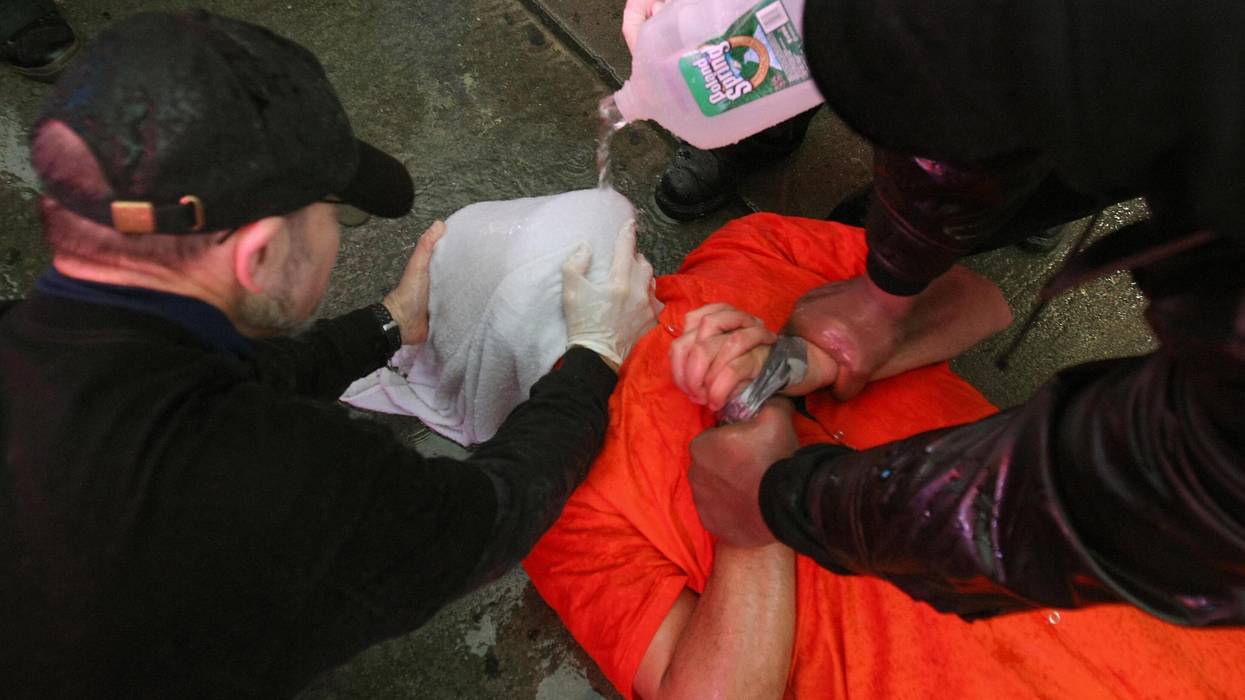
But the APA also eagerly sought out opportunities for psychologists to participate in counterterrorism efforts and expand the profession’s stature in the eyes of the U.S. military-intelligence establishment. Not long thereafter, psychologists became involved in detention and interrogation operations—at secret CIA black sites, at Guantanamo Bay, and elsewhere—that were characterized by routinized abuse and sometimes by torture. Yet for years the APA’s leadership insisted that psychologists helped to keep these operations safe, legal, ethical, and effective. They were actually none of these things, as one disturbing report after another has painfully revealed.
It doesn't take hindsight to argue a simple point: both psychological science and the profession’s ethical foundations cautioned APA leaders against rushing to embrace what President Bush had called a “crusade” that would unleash the “full wrath of the United States.” For example, decades of prior research by social psychologists had already identified human tendencies likely to lead to poor choices in the immediate aftermath of the 9/11 attacks. We opt for conformity in response to social pressure; we put aside personal reservations and obey authorities who demand our compliance; we overestimate the likelihood of dreadful but improbable events; and we’re especially susceptible to propaganda and demagoguery during times of fear and crisis. In addition, clinical psychologists had long known that cruel, inhuman, and degrading treatment or torture devastates the human mind, often leaving the victims irreparably broken and unable to ever escape nightmares and flashbacks or ever establish trusting relationships again.
Eventually, after years of outrage, protest, and mobilization from so-called dissident psychologists (I count myself among them) who opposed the APA’s accommodative stance toward the White House, Pentagon, and CIA, in 2015 the association took important steps to restore the profession’s commitment to “Do No Harm.” For instance, APA policy now prohibits psychologists from participating in national security interrogations and restricts the circumstances under which they can work at Guantanamo Bay and similar sites.
But these ethics reforms have been under attack from the day they were adopted. Powerful factions within and external to the APA—some military psychologists, the Defense Department, and defense contractors, among others—have pushed to turn back the clock. Their efforts continue today. They seek to expand the roles available to psychologists in the military-intelligence arena, even if those professional activities are designed to dispense with informed consent, to inflict harm, and to avoid monitoring by outside ethics boards.
This is cause for serious concern. Professional associations, like the APA, and other civil society organizations have crucial roles to play as guardrails in a democratic society. We give them power, privileges, and the public trust. In exchange, we count on them to stand up for human rights and oppose government misconduct. When these groups abandon these responsibilities, the consequences can be dire. History is clear about that.
Twenty-two years—a full generation—have now passed. That should be more than enough time to learn some sobering lessons. Yet apparently not. Guantanamo, a moral stain on this country, is still open. Trials for the alleged plotters of the attacks and justice for 9/11 families remain on hold, contaminated by torture-obtained evidence. The prospect of accountability for the perpetrators of torture and other human rights abuses seems ever elusive. Apologies and reparations from the U.S .government for the victims of torture continue to be unpaid debts.
As for the APA, US psychology’s most prominent voice still seems unwilling to do anything that could jeopardize its carefully nurtured ties to the military-intelligence establishment. This needs to change. The world’s largest psychological association must find the fortitude—and independence—necessary to place ethics firmly over expediency, and to insist that certain fraught activities in national security settings are off-limits for psychologists. It’s something the APA owes to the public, to current and future members of the profession, and to all who’ve been harmed by the war on terror’s tragic excesses.

"Educators cannot teach psychology and exclude an entire group of people from the curriculum," said the CEO of the American Psychological Association in response to the Florida governor's demand.
A day before the deadline Florida Gov. Ron DeSantis gave to the College Board to comply with his law restricting classroom discussions of sexual orientation and gender identity by amending its Advanced Placement class curricula, the company told the Republican governor's administration that it will not be making the demanded changes.
The Florida Department of Education ordered the College Board in May to change its Advanced Placement (AP) high school psychology course, which addresses gender identity and sexuality, saying the course had to comply with Florida's restrictions on classroom teaching through 12th grade.
DeSantis, who is running for president in 2024, gave the nonprofit company until June 16 to determine how the course had to be changed.
The College Board said Thursday that withholding information about gender dysphoria, gender identity, and sexual orientation from students studying human psychology "would break the fundamental promise of AP."
"Colleges wouldn't broadly accept that course for credit and that course wouldn't prepare students for careers in the discipline," said the company.
The American Psychological Association (APA) expressed its support for the College Board's decision to stand against DeSantis' "unconscionable demand to censor an educational curriculum and test that were designed by college faculty and experienced AP teachers who ensure that the course and exam reflect the state of the science and college-level expectations."
"Educators cannot teach psychology and exclude an entire group of people from the curriculum," APA CEO Arthur C. Evans Jr. added. "Florida is proposing to remove an important body of science from the AP curriculum and test, which will leave students unprepared to continue studying psychology in college."
Evans also directly took aim at DeSantis' numerous attempts to control students' access to information about gender identity and LGBTQ+ communities.
"This law is yet another attempt to erase LGBTQ+ people from public view based on biased thinking and irrational fear," said Evans. "Our youth need access to age-appropriate, evidence-based information regarding sexual orientation and gender identity so that they may grow up to be healthy, informed, and well-adjusted citizens. This proposal strips parents' choice and limits Florida students' options to take an important college-level course and exam that is often a required college course."
The College Board said in a statement Thursday that it is "resolute" in its decision to rebuke DeSantis "because of what we learned from our mistakes in the recent rollout of AP African American Studies."
In January, DeSantis' administration demanded that the company change its AP African American studies course due to its inclusion of Black queer studies and discussions of systemic and intersectional racism. The governor claimed the curriculum lacked "educational value."
The College Board infuriated progressives when it removed from the course plan all references to systemic racism—a move it claimed was not the result of DeSantis' demands and that the company later said it would reverse.
DeSantis' attempts to control what teachers and students can discuss have solidified his status as "the anti-education governor, and a threat to the education of the United States," said attorney Kristen Browde.
"We don't know if the state of Florida will ban this course," the College Board said after informing the state Department of Education of its decision. "To AP teachers in Florida, we are heartbroken by the possibility of Florida students being denied the opportunity to participate in this or any other AP course. To AP teachers everywhere, please know we will not modify any of the 40 AP courses—from art to history to science—in response to regulations that would censor college-level standards for credit, placement, and career readiness."

The White House also announced actions to protect children online, winning praise for the administration's "continued commitment to creating a safer, less exploitative digital media environment for young people."
As U.S. Surgeon General Dr. Vivek Murthy on Tuesday issued an advisory calling attention to "the growing concerns about the effects of social media on youth mental health," the White House unveiled federal actions to better protect children online.
"The most common question parents ask me is, 'Is social media safe for my kids?'," Murthy said in a statement. "The answer is that we don't have enough evidence to say it's safe, and in fact, there is growing evidence that social media use is associated with harm to young people's mental health."
"Children are exposed to harmful content on social media, ranging from violent and sexual content to bullying and harassment. And for too many children, social media use is compromising their sleep and valuable in-person time with family and friends," he continued. "We are in the middle of a national youth mental health crisis, and I am concerned that social media is an important driver of that crisis—one that we must urgently address."
Up to 95% of youth ages 13-17 use social media, and over a third do so "almost constantly," Murthy's advisory notes. While most platforms require users to be at least 13 years old, nearly 40% of children ages 8-12 also report using social media.
"More research is needed to fully understand the impact of social media; however, the current body of evidence indicates that while social media may have benefits for some children and adolescents, there are ample indicators that social media can also have a profound risk of harm to the mental health and well-being of children and adolescents," the advisory warns.
"We must acknowledge the growing body of research about potential harms, increase our collective understanding of the risks associated with social media use, and urgently take action to create safe and healthy digital environments that minimize harm and safeguard children's and adolescents' mental health and well-being during critical stages of development," the document adds.
Along with detailing the benefits and pitfalls of young people using social media as well as the existing scientific research and which "critical questions remain unanswered," the advisory offers recommendations for policymakers, technology companies, researchers, parents and caregivers, and youth.
As The New York Times reported Tuesday:
The advisory joins a growing number of calls for action around adolescents and social media, as experts probe what role it may play in the ongoing teen mental health crisis. Earlier this month, the American Psychological Association issued its first-ever social media guidance, recommending that parents closely monitor teens' usage and that tech companies reconsider features like endless scrolling and the "like" button.
The American Psychological Association was among top medical organizations that applauded Murthy's release, with Arthur Evans Jr., the group's CEO and executive vice president, saying that "we support the advisory's recommendations and pledge to work with the surgeon general's office to help build the healthy digital environment that our kids need and deserve."
The advisory was also welcomed by leaders at the American Academy of Family Physicians, American Academy of Pediatrics, American Medical Association, American Psychiatric Association, American Public Health Association, and National Parent Teacher Association.
"Social media use by young people is pervasive," said Susan Polan associate executive director of public affairs and advocacy at the American Public Health Association. "It can help them, and all of us, live more connected lives—if, and only if, the appropriate oversight, regulation, and guardrails are applied."
"Now is the moment for policymakers, companies, and experts to come together and ensure social media is set up safety-first, to help young users grow and thrive," Polan added. "The surgeon general's advisory about the effects of social media on youth mental health issued today lays out a roadmap for us to do so, and it's critical that we undertake this collective effort with care and urgency to help today's youth."
The White House on Tuesday announced actions at the departments of Commerce, Education, Health and Human Services, Homeland Security, and Justice that "build upon" Murthy's advisory, including the creation of a task force as well as new regulations and resources.
President Joe Biden "has made tackling the mental health crisis a top priority, and he continues to call on Congress to pass legislation that would strengthen protections for children's privacy, health, and safety online," the White House said, noting that it is Mental Health Awareness Month.
"We applaud President Biden for today's executive actions and his continued commitment to creating a safer, less exploitative digital media environment for young people," said Josh Golin, executive director of the advocacy group Fairplay. "We are particularly excited by the plans to help schools use technology in ways that support students' learning and mental health."
"We urge Congress to follow the president's lead in putting the well-being of children ahead of Big Tech's profits by passing the Kids Online Safety Act and COPPA 2.0," Golin added, referring to bills also called KOSA and the Children and Teens' Online Privacy Protection Act.
Dozens of rights groups have expressed free speech and privacy concerns about KOSA along with three other bills backed by child safety advocates: the Cooper Davis Act, Eliminating Abusive and Rampant Neglect of Interactive Technologies (EARN IT) Act, and Strengthening Transparency and Obligation to Protect Children Suffering from Abuse and Mistreatment (STOP CSAM) Act.
When COPPA 2.0 was reintroduced earlier this month, Fight for the Future director Evan Greer—who has sounded the alarm about the other legislation—said that "we think federal data privacy protections should cover EVERYONE, not just kids, but overall this is a bill that would do some good and it does not have the same censorship concerns as bills like KOSA."
The American Psychological Association (APA) on Friday voted overwhelmingly to bar its members from participating in the interrogation of U.S. prisoners on foreign soil, officially ending the association's complicity in the torture of detainees and taking the first step out of "the dark side."
All but one member of the APA's 173-person Council of Representatives voted to end the association's collusion with the CIA and other U.S. intelligence agencies in abusive interrogations as well as the so-called "noncoercive" kind now being carried out by the Obama administration.
Guantanamo Bay and Abu Ghraib military psychologist Col. Larry James cast the sole dissenting vote. There were also seven abstentions and one recusal.
The debate among members at their annual meeting in Toronto was reportedly emotional as they rehashed the bombshell internal investigation, published earlier this year, which exposed the APA's participation in the CIA's brutal methods of imprisonment and questioning. The Hoffman Report led to the swift resignations of several top APA officials, including its CEO, who stepped down in July.
Reports on the vote began circulating last week. An APA statement on July 29 recommended that its members adopt a policy prohibiting "psychologist participation in interrogation of persons held in custody by military/intelligence authorities."
The vote was met with a standing ovation. The ban states that psychologists "shall not conduct, supervise, be present at, or otherwise assist any national security interrogations for any military or intelligence entities, including private contractors working on their behalf, nor advise on conditions of confinement insofar as these might facilitate such an interrogation."
"This is an extraordinary victory because these prohibitions are clear, they're implementable, and people will be held accountable," council member Steven Reisner told the Guardian on Friday. The APA will go "from leading us into the dark side to leading us out of the dark side."
Nadine Kaslow, an APA member and head of the investigation committee, told the New York Times that the vote was "a very resounding yes." The association's president-elect, Susan McDaniel, added that it was "a tremendous step in the right direction."
Reisner also noted that the vote only prohibits psychologists from colluding in interrogations conducted in the name of national security, ignoring "domestic cruelty" carried out within the U.S. justice system. But he said he hoped the APA's decision could influence the treatment of American prisoners as well. "We have to consider that in the future," he said.
While reformers welcomed the vote, they steadfastly maintained that it was only one crucial element in fixing the APA's broken "moral compass." That includes not just its actions in aiding torture but also its suppression of would-be whistleblowers and others who objected to the association's role in the program.
APA council member Stephen Soldz, who has helped lead the charge for reform at the association, stated on Friday that there is "something profoundly wrong with the way the organization functions.... No one in leadership ever spoke up against it. Not one board member or anyone in leadership over the past 10 years said, 'This is not right.'"
Acknowledging as such in an APA statement, McDaniel added, "We have much work ahead as we change the culture of APA to be more transparent and much more focused on human rights. In addition, we will institute clearer conflict-of-interest policies going forward, all of which are aimed at ensuring that APA regains the trust of its members and the public."