
SUBSCRIBE TO OUR FREE NEWSLETTER
Daily news & progressive opinion—funded by the people, not the corporations—delivered straight to your inbox.
5
#000000
#FFFFFF
To donate by check, phone, or other method, see our More Ways to Give page.


Daily news & progressive opinion—funded by the people, not the corporations—delivered straight to your inbox.
"Our mission is clear: We must usher in a new generation in the Democratic Party, led for and by the working class, to take on billionaires and corporate power," said the head of Justice Democrats.
The progressive political action committee Justice Democrats on Tuesday launched a 50-state recruitment effort "seeking nominations of everyday, working-class people to run for Congress after a cycle of unprecedented spending from the billionaire class and right-wing super PACs in Democratic primaries."
Justice Democrats, which "helped recruit and elect members of the Squad to Congress, will recruit the next generation of primary challengers in Democratic primaries in open seats and blue districts against Democratic incumbents who are out of touch with their constituents," the group said in a statement.
As Justice Democrats spokesperson Usamah Andrabi put it in a
Politico interview published Tuesday, "There is something wrong with this party as a whole right now, and it's time to clean up shop in this Democratic Party."
Democrats are still reeling from their loss of the White House and Senate and failure to reclaim the House of Representatives in November's elections, in which numerous critics attributed Vice President Kamala Harris' defeat by Republican President-elect Donald Trump to a failure to connect with working-class voters.
"To be the party of the working class, we need more working-class leaders in power," Justice Democrats executive director Alexandra Rojas asserted Tuesday. "Leaders like the elected Justice Democrats in Congress have shown us another way of doing politics is possible and represent the promise of uniting our fractured nation into a multiracial democracy where everyone thrives and no one is left behind."
The 119th Congress is one of the richest & oldest ever. Today, we officially launch our 2026 candidate recruitment–working class communities deserve working class leaders in Congress. Nominate someone you know to take our power back from billionaires: jdems.us/nominate
[image or embed]
— Justice Democrats (@justicedemocrats.bsky.social) January 14, 2025 at 6:14 AM
"It's time to end the era of career politicians and the corrupt campaign finance laws that keep them in power," Rojas added. "Our mission is clear: We must usher in a new generation in the Democratic Party, led for and by the working class, to take on billionaires and corporate power. The Democratic Party can only win back working-class voters with real, working-class leaders."
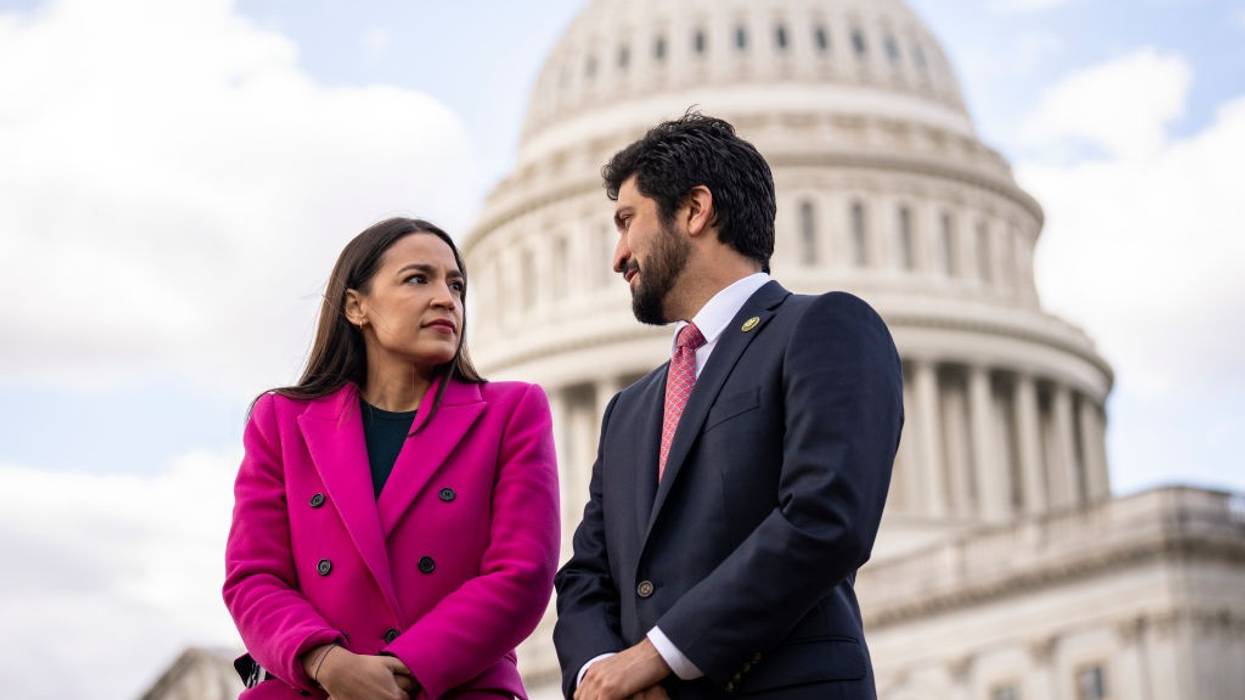
Justice Democrats currently serving in the House of Representatives are: Congressional Progressive Caucus Chair Greg Casar (Texas) and Reps. Raúl Grijalva (Ariz.), Pramila Jayapal (Wash.), Ro Khanna (Calif.), Summer Lee (Pa.), Alexandria Ocasio-Cortez (N.Y.), Ilhan Omar (Minn.), Ayanna Pressley (Mass.), Delia Ramirez (Ill.), and Rashida Tlaib (Mich.).
Other groups including Sunrise Movement have also launched efforts to push the Democratic Party in a more progressive direction, including by reviving a ban on corporate lobbyist donations to the Democratic National Committee and banning super PAC spending in Democratic primaries.
This, after special interests led by the American Israel Public Affairs Committee (AIPAC) and Wall Street-backed cryptocurrency lobbyists poured $30 million into just two Democratic House primaries to oust working-class incumbents Cori Bush (Mo.) and Jamaal Bowman (N.Y.).
Some congressional Democrats have taken these defeats as a sign that "we might have swung the pendulum too far to the left," as Rep. Ritchie Torres (D-N.Y.) told NOTUS Tuesday.
However, Justice Democrats is urging Democratic lawmakers and candidates to eschew pressure to move rightward out of fear of further losses and instead pursue policies that will win back working-class voters.
"Until party leadership leads the way to take big money out of politics, ends the billionaire influence over our elections and policies, and puts the needs of working-class people back at the center of its agenda, voters will see its populist platitudes as lip service," said the group, which vowed to "continue to lead the charge to show that with working-class voices in Congress, we can fight for universal healthcare, create millions of union jobs, end taxpayer funding for endless wars and genocide abroad, and lower costs for everyday people nationwide."
As Andrabi and Rojas wrote for Zeteo Tuesday: "A debate is taking place on how the party should move forward: Will we finally begin to be the party of the multiracial working class and embrace a new generation of leaders like the Justice Democrats in Congress? Or will we double down on becoming Republican-lite by cozying up with the wealthy elite and fall into the GOP's divide-and-conquer strategy, targeting our most vulnerable communities?"
"The choice is up to us—the everyday people our politicians are elected to serve," they added. "We can let the billionaire class and Democratic leadership handpick corporate Democrats who will do their bidding or we can recruit and empower the working class instead."
"Instead of capitulating, progressives should" build a "network of anti-occupation donors, operatives, and local community members on the ground—precisely mirroring the ideologically driven electoral infrastructure that the AIPAC network has already built."
To defeat the anti-Palestinian lobbying network that spends millions of dollars to help corporate Democrats beat left-leaning congressional candidates, progressives in the United States need not temper their criticism of Israel's brutal occupation nor Washington's role in subsidizing it, a pair of organizers wrote Monday in The Nation.
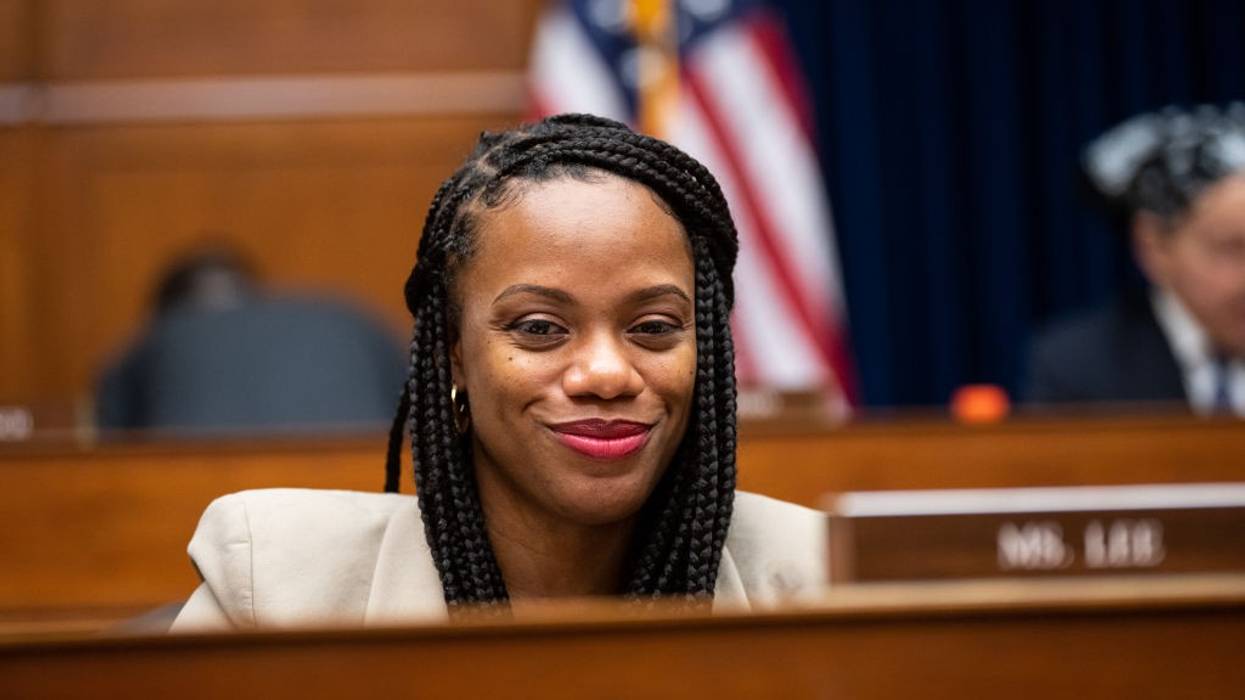
Alexandra Rojas and Waleed Shahid—respectively the executive director and communications director of Justice Democrats—argued that U.S. Rep. Summer Lee's (D-Pa.) recent victory provides "a road map for how progressive Democrats can unite to build infrastructure to elect candidates whose values will be consistent both at home and abroad."
Since the American Israel Public Affairs Committee (AIPAC) launched its super PAC, the United Democracy Project (UDP), in December 2021 as a way to legally contribute unlimited amounts of money to directly influence elections and counter mounting opposition to Israeli apartheid within the Democratic Party, the powerful anti-Palestinian lobbying group has not been shy about what journalist David Dayen calls its "perversion of the primary process."
Last year, for instance, AIPAC boasted that its Republican billionaire-funded attack ads helped topple nearly 10 left-leaning Democrats in primary races, including Jewish Rep. Andy Levin (D-Mich.), former Rep. Donna Edwards (D-Md.), and progressive champions Nida Allam in North Carolina, Nina Turner in Ohio, and Jessica Cisneros in Texas.
"The AIPAC network is spending millions of dollars precisely because it is losing the generational and partisan battle to progressive Democrats."
Despite AIPAC's best efforts to beat Lee—UDP dropped more than $2.3 million to support her corporate-friendly opponent in last May's Democratic primary and then invested substantial sums to help her Republican adversary Mike Doyle in November's midterm—the pro-working-class advocate from Pittsburgh won both contests.
"The importance of Lee's victory cannot be overstated," Rojas and Shahid wrote Monday. "It is a recent and concrete example of how a strong candidate with a well-run, community-driven campaign and large progressive coalition can overcome AIPAC’s multimillion-dollar machine."
But "as we head into another cycle of competitive Democratic primaries," the pair warned that "some Democratic operatives are suggesting that prospective candidates just get 'AIPAC's target off their back' by conceding to the anti-Palestinian spending network (made up of not just AIPAC but also Democratic Majority for Israel, Pro-Israel America, NORPAC, and others) through vague or overly conciliatory positions regarding the billions in largely unrestricted military aid that American taxpayers provide the Israeli military."
According to Rojas and Shahid:
This view was summarized in one conference call last year in which a consultant suggested to a progressive candidate: "Why don't you just tweet something about how you support Israel if you want to avoid $5 million in attack ads?” Missing from these short-term, tactical discussions about appeasing AIPAC are ideological, moral, and strategic questions regarding the Democratic Party's position on a military occupation that leading Israeli and international human rights organizations like B'tselem, Amnesty International, and Human Rights Watch all call apartheid.
"Instead of capitulating," the pair continued, "progressives should continue building off Lee’s victory by coordinating our own network of anti-occupation donors, operatives, and local community members on the ground—precisely mirroring the ideologically driven electoral infrastructure that the AIPAC network has already built."
Rojas and Shahid argued that "the AIPAC network is spending millions of dollars precisely because it is losing the generational and partisan battle to progressive Democrats."
"The AIPAC network's multimillion-dollar spending operation to punish Democrats who stray even one step away from unconditional support for the Israeli occupation makes sense considering how politically untenable such stances would be otherwise," Rojas and Shahid wrote. They pointed to a recent Gallup poll showing that for the first time, a majority of Democratic voters now sympathize with Palestinians more than with Israelis.
In addition, "as of 2019, 56% of Americans and 71% of Democrats said the United States should not 'give unconditional financial and military assistance to Israel if the Israeli government continues to violate American policy on settlement expansion or West Bank annexation,'" the pair continued.
In February, far-right Israeli Prime Minister Benjamin Netanyahu's administration retroactively authorized nine illegal settlements built without government approval in the occupied West Bank and East Jerusalem and announced its plans to erect even more. This elicited a rare rebuke from the United Nations Security Council, which said that "continuing Israeli settlement activities are dangerously imperiling the viability of the two-state solution based on the 1967 lines."
Roughly 700,000 Israelis live in illegal settlements that have been built in the occupied West Bank and East Jerusalem since Israel violently seized those Palestinian territories, along with Gaza, in 1967. Because international law prohibits occupying forces from transferring their civilian population into occupied territories, a top U.N.-appointed expert has characterized Israeli settlements as a "war crime."
"However, because of the massive political and financial power of the anti-Palestinian lobby, only 14% of Democrats in the House of Representatives have signed legislation to condition aid to Israel on ending the expansion of settlements," Rojas and Shahid lamented. "If the AIPAC network can spend unlimited money to ensure that U.S. politicians don't represent the generational shift in the Democratic Party and the evolving views of the American people, it will have nothing to worry about."
Since Netanyahu returned to power at the end of last year, his increasingly exterminationist government has killed more than 80 Palestinians and is currently trying to overhaul the judiciary to give itself even more power. Nevertheless, the Biden administration has shown no interest in making Washington's provision of $3.8 billion in annual military aid to Israel contingent on ending the unlawful annexation of Palestinian land as well as assaults on Palestinian residents.
"We must organize to align the preferences of Democratic legislators with the voters who elected them."
According to Rojas and Shahid, "AIPAC's aggressive entry into Democratic primaries signals the increasingly partisan track that the anti-Palestinian lobby is taking, mirroring Israel's rightward shift and the Democratic disavowal of groups like the NRA and more recently, Big Oil."
The pair continued:
In the last cycle, AIPAC backed over 100 insurrectionist-aligned Republicans, opposed Democrats in general elections and primaries, spent zero dollars against Republican candidates—and were largely funded by pro-Trump Republican donors Robert Kraft, Bernard Marcus, and Paul Singer. Given the generational shift taking place in the Democratic Party—led by Justice Democrats like Rashida Tlaib, Alexandria Ocasio-Cortez, Cori Bush, Jamaal Bowman, Summer Lee, and many others—it is clear that the extreme anti-Palestinian sentiment championed by AIPAC will increasingly fall along party lines, which is exactly what AIPAC's multimillion-dollar spending seeks to avoid.
Just as with Medicare for All, the Green New Deal, or criminal justice reform, we must organize to align the preferences of Democratic legislators with the voters who elected them. It is through Congress, after all, that we have the power to ensure that American taxpayers are not funding the violation of human rights and subsidizing the endless occupation of the Palestinian people. AIPAC and its largely Republican donors know that Democrats who speak out about the occupation also make the party more progressive on a range of other issues.
As political observers pointed out at the time, UDP's intervention against Lee in the general election marked the first time the super PAC spent money to boost a Republican candidate over a Democratic one, giving the lie to AIPAC's ostensible concerns about Lee and other progressives' presumed lack of loyalty to the Democratic Party. Notably, AIPAC's single-minded focus on suppressing criticism of Israeli colonialism led the group to endorse dozens of GOP extremists running for Congress last year, including election deniers, proponents of the racist "great replacement theory," and QAnon adherents.
Rojas and Shahid's argument echoed points made previously by Jewish democratic socialist Sen. Bernie Sanders (I-Vt.), who has been a vocal critic of AIPAC.
Last year, Sanders accused the group of bankrolling super PACs such as UDP "to buy elections and control this democracy."
"Why would an organization go around criticizing someone like Summer Lee for not being a strong enough Democrat when they themselves have endorsed extreme right-wing Republicans?" Sanders asked. "They are doing everything they can to destroy the progressive movement in this country."
In the words of Rojas and Shahid: "A progressive movement, and a Democratic Party that sells out Palestinians for an easy reelection, is not a movement that can be counted on to fight back for any community when they need us most. Our end goal is not winning for the sake of winning. It's winning to bring about fundamental change."
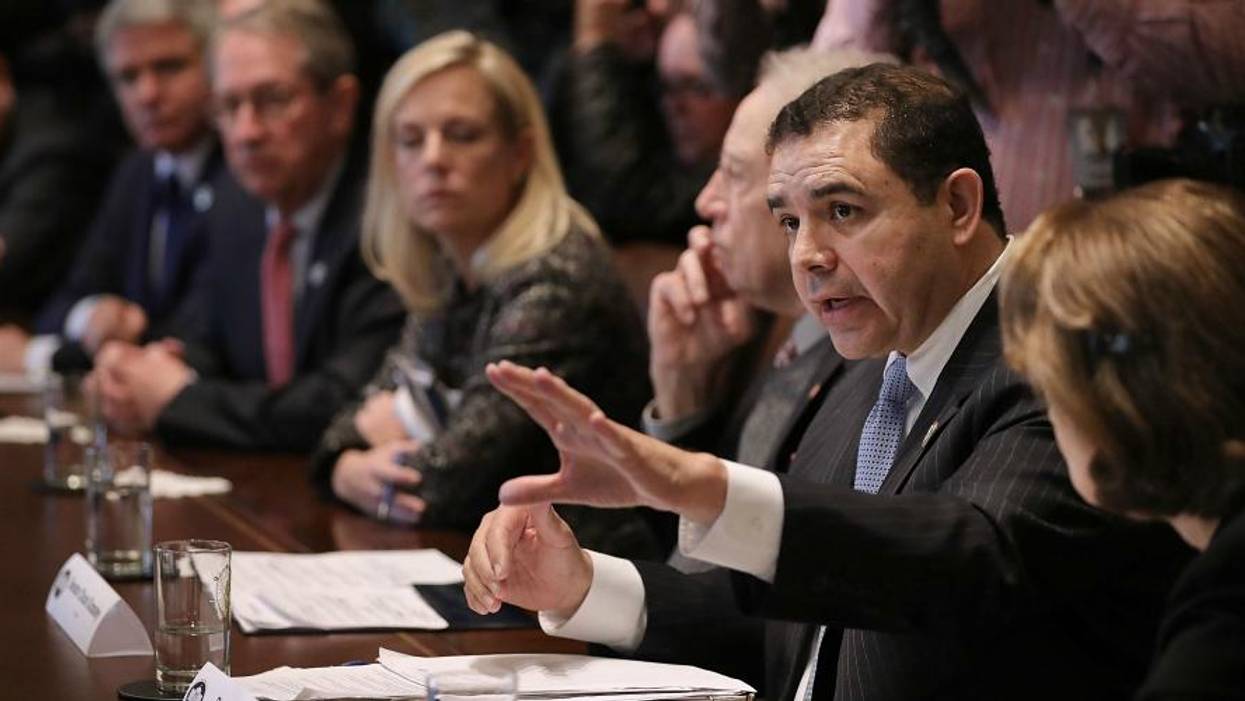
Rep. Henry Cuellar (D-Texas) supports various laws designed to thwart a woman's right to choose, helps raise money for Republicans, has received exorbitant levels of cash from the fossil fuel industry, and votes with President Donald Trump nearly 70 percent of the time--a right-wing record that earned him the dubious honor of becoming the first 2020 primary target of a grassroots group working to replace corporate Democrats with bold progressives.
"District 28 and South Texas is in a special position to lead the nation on immigration, renewable-energy, and healthcare, yet Henry Cuellar has failed to do this by instead voting with Donald Trump nearly 70 percent of the time."
--Danny Diaz
Justice Democrats--which helped Rep. Alexandria Ocasio-Cortez (D-N.Y.) topple powerful Wall Street Democrat Rep. Joe Crowley (D-N.Y.) last year--launched the Primary Cuellar Fund on Friday with the goal of recruiting a primary candidate who is committed to progressive solutions that are more in line with the interests of voters in Texas' left-leaning 28th congressional district.
"In the last election cycle, Justice Democrats revealed enormous energy in the Democratic Party primary electorate for change when Alexandria Ocasio-Cortez and [Rep.] Ayanna Pressley [D-Mass.] upset long-time incumbent Democrats who had grown out-of-touch with their deep blue districts," Alexandra Rojas, executive director of Justice Democrats, said in a statement. "We're now leading a grassroots candidate recruitment effort to find a real Democrat to run against Cuellar."
"District 28 and South Texas is in a special position to lead the nation on immigration, renewable energy, and healthcare, yet Henry Cuellar has failed to do this by instead voting with Donald Trump nearly 70 percent of the time," added Danny Diaz, a community organizer who lives in the 28th district.
Justice Democrats' new campaign against Cueller comes as several House Democrats and congressional aides--speaking to Politico both anonymously and on the record--expressed concern and outrage that Ocasio-Cortez has in the past voiced support for primary campaigns against right-wing Democrats.
While Ocasio-Cortez's spokesman told the Washington Post that the freshman congresswoman is not involved in the effort to primary Cuellar, Politico reported that some House Democrats are "annoyed" by her "threat to back primary opponents against members of their ranks she deems too moderate."
"Ocasio-Cortez and Ayanna Pressley's stunning upsets revealed that there's enormous appetite among Democrats for primary challengers to take on incumbents who are out-of-touch with their districts."
--Sean McElwee, Data for Progress
During a national strategy call last year, Ocasio-Cortez declared that "all Americans know money in politics is a huge problem, but unfortunately the way that we fix it is by demanding that our incumbents give it up or by running fierce campaigns ourselves."
According to Politico, this denunciation of lawmakers who accept corporate donations irked House Democrats.
Additionally, Rep. Emanuel Cleaver (D-Mo.) expressed fury at a report that Ocasio-Cortez is helping to recruit a primary challenger against Democratic caucus chair Rep. Hakeem Jeffries (D-N.Y.). In a tweet, Ocasio-Cortez said the report is false.
"The chances that the Democratic caucus will stand by and watch its chair get attack[ed] and people piling on him--by Democrats!--is so obscene that I think you'll find one of the strongest reactions that could possibly be anticipated," Cleaver said.
In response to Politico's story, Saikat Chakrabarti--Ocasio-Cortez's chief of staff--wrote, "The Democratic Party and the King of England have surprisingly similar reactions to democracy when their own power is threatened."
Waleed Shahid, communications director for Justice Democrats, suggested that, instead of attempting to "rein in" bold progressives like Ocasio-Cortez, Democrats should focus their anger on the members of their party who are helping Republicans win elections.
House Democrats may not like being threatened with primaries if they refuse to back progressive causes, but a survey by Data for Progress published last November found that most Democratic voters believe primaries "ensure the strongest Democrats emerge to advance" a clear and positive agenda.
"Progressives have an opportunity to strategically primary the most vile Democrats in their ranks, and Henry Cuellar should top the list," Data for Progress executive director Sean McElwee said in a statement on Friday. "Ocasio-Cortez and Ayanna Pressley's stunning upsets revealed that there's enormous appetite among Democrats for primary challengers to take on incumbents who are out-of-touch with their districts."
In a press release announcing its effort to recruit a progressive to challenge Cuellar in 2020, Justice Democrats offered the following summary of the Texas Democrat's record and positions:
"The people of District 28 need bold leadership that fights for the working class and the immigrant community, and not for corporate interest," Diaz concluded. "Henry Cuellar has a history of accepting corporate donations and working on their behalf, while ignoring the interest of working-class families in the district."
Even at first sight, it is exhilarating. The overthrow of one of the most mainstream and senior Democrats in Congress by a 28-year-old Democratic socialist with a radical program and one-tenth of his funding is, you might think, interesting enough.
But since Alexandria Ocasio-Cortez beat Joe Crowley in the Democratic primary in New York's 14th district (meaning she will almost certainly enter Congress in November), I've been interviewing some of the people who lit the fuse that caused this detonation. What has emerged is just how marginal and improbable their movement was when it began, and how quickly it is now gaining momentum. A revolution has begun in America, and it is time we understood what it means.
While the effort to find and run insurgent candidates arose from the Bernie Sanders campaign in 2016, the handful of young people who launched this movement struck out entirely on their own. They had no resources and no political standing. Neither Sanders nor any others in the old guard were prepared to support them or endorse the candidates they found.
In a way, this tiny group, Brand New Congress, which evolved into the Justice Democrats, marginalized itself. It wanted nothing to do with a traditional left it saw as being obsessed with positioning. It wanted to escape the shadow of people who seemed stuck in the 1980s, who didn't take environmental issues seriously or understand the need to challenge structural racism and gender inequality or to reach millennials trapped in terrible housing and miserable non-jobs. They were mocked, ignored and dismissed as well-intentioned but hopeless idealists. One of them told me how he was literally patted on the head by an older Democrat.
At first, it was chaotic. Most of the volunteers they recruited had little or no experience. Some turned out to be wonderful, others less so. Their original aim was to find 400 candidates to challenge both Democratic and Republican incumbents. They sought bartenders, factory workers, small-business people, community organizers, teachers, nurses - ideally, people who had never held public office before. While Democratic candidates are usually chosen on the grounds of how much money they can raise, the Justice Democrats looked for people who could not be seduced by big funders. They reasoned that if the people they met had served their communities instead of themselves, they were unlikely to sell out once they were elected.
They found plenty of brilliant potential recruits, but without mainstream support they didn't have the credibility required to convince hundreds of people to give up their lives for an improbable cause. They managed to persuade a few dozen, however, and among them was Ocasio-Cortez. They phoned her, invited her to dinner, and asked her to attend a meeting in Kentucky with other potential candidates, in the hope that they would inspire each other to run. She took her time and toured the 14th district before she agreed.
She was, as we have seen, a fantastic candidate: determined, indefatigable, brilliant at explaining complex issues simply and directly. Alexandra Rojas, the campaigns director of Justice Democrats, tells me: "She has a way of making issues that others see as radical seem simple, straightforward and pragmatic." Everyone I spoke to remarked on her grace and stability, and how she calmly absorbed the dramas that surrounded her bid. Extraordinary local campaigners combined traditional fieldwork with the big organising tactics developed during the Sanders campaign: using proliferating networks of volunteers to fill the jobs usually reserved for staffers.
Remarkable as she is, there are others like her. Cori Bush in Missouri, Jess King in Pennsylvania and Kerri Evelyn Harris in Delaware are just a few of those now fighting for Democratic nominations or seats while renouncing big money, relying instead on the enthusiasm of the communities they hope to serve.
The Justice Democrats are not expecting all these candidates to win, but hope for a few spectacular victories at the congressional elections in 2018 and 2020, not only replacing corporate, money-tainted Democrats, but flipping a couple of Republican districts as well (look out, for example, for the campaigns by Brent Welder and James Thompson in Kansas). As soon as such people take their seats in Congress, Saikat Chakrabarti, one of the core organizers, tells me the aim is to "legislate the hell out of everything like the Republicans do ... proposing the boldest, biggest ideas on day one". By 2022, using the momentum gained from a few strategic victories, they hope to run a full slate of new or re-energized candidates. The aim is to create a genuinely populist Democratic party which neutralizes Trump's brutal demagoguery and speaks to people across the political spectrum who have been alienated by the corruption and drift of mainstream politics.
Thanks in part to the Supreme Court's disastrous Citizens United ruling, which removed the caps on political spending by lobbyists, US politics is dominated by billionaires and corporations, buying the candidates and policies they want. They can't be outspent, but they can be outmanoeuvred by recruiting incorruptible people who can speak past the money. Eventually, the Justice Democrats hope, there will be enough strong and inspiring people in Congress to overthrow this ruling and purge the institutional corruption from US politics.
So far, the Democratic party has reacted in two distinct ways. Some senior figures, such as Nancy Pelosi and Tammy Duckworth, dismiss the significance of what Ocasio-Cortez has achieved. Others, such as Kirsten Gillibrand, have suddenly switched positions in response to her victory, echoing her call, for example, for the abolition of the Immigration and Customs Enforcement agency, which has been separating children from their parents on the Mexican border. Both are forms of self-preservation, but if more revolutionary candidates win their races, the second variety is likely to prevail.
By understanding how the great reversal in New York happened, we can begin to understand what this movement of outsiders might achieve. It could yet change the world.