

SUBSCRIBE TO OUR FREE NEWSLETTER
Daily news & progressive opinion—funded by the people, not the corporations—delivered straight to your inbox.
5
#000000
#FFFFFF
To donate by check, phone, or other method, see our More Ways to Give page.
Daily news & progressive opinion—funded by the people, not the corporations—delivered straight to your inbox.
"The American people are firmly against this war and will see straight through this ruse," said one campaigner.
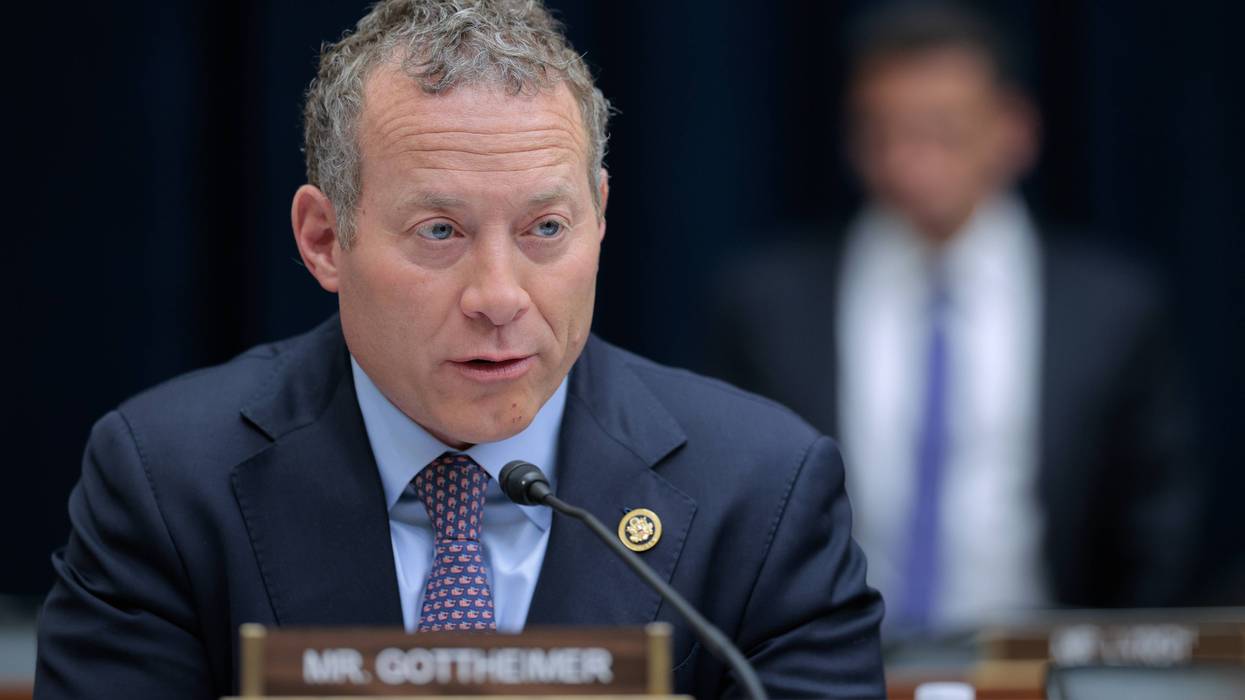
As the House of Representatives faces mounting pressure to pass Congressmen Ro Khanna and Thomas Massie's war powers resolution to end the US-Israeli assault on Iran, six right-wing Democrats on Tuesday introduced a competing bill that would give President Donald Trump a green light to keep waging war in the Middle East for the next month.
Khanna (D-Calif.) and Thomas Massie (R-Ky.) have been pushing for their H.Con.Res.38 since shortly before Trump bombed Iranian nuclear facilities last June. Trump and Israeli Prime Minister Benjamin Netanyahu's Saturday attack has ramped up demands for Congress to pass that resolution, along with S.J.Res.59, introduced last year by Sen. Tim Kaine (D-Va.).
Those resolutions, expected to receive votes this week, were already facing uphill battles in both Republican-controlled chambers, and all-but-certain vetoes if they ever made it to Trump, whose administration claims "Operation Epic Fury" is about preventing a nuclear-armed Iran, while critics around the world accuse him and Netanyahu of engaging in an illegal regime change war.
At least six US service members and hundreds of Iranians are now dead. Despite the rising death toll, the Democrats behind the new proposal—Reps. Jim Costa (Calif.), Henry Cuellar (Texas), Jared Golden (Maine), Josh Gottheimer (NJ), Greg Landsman (Ohio), and Jimmy Panetta (Calif.)—made clear that they oppose a swift end to the conflict.
"There is a concern that the Khanna-Massie war powers resolution currently requires the immediate withdrawal of US forces, even while Iran is actively targeting American troops, assets, embassies, and our allies across the region," they said in a statement. "It is vital that we allow for a safe transition, that protects our service members, embassies, and allies, not a potentially precarious withdrawal."
While proposing a 30-day window for ending the conflict—absent an authorization for the use of military force or a formal declaration of war from Congress—the six Democrats also said that "an open-ended commitment by the administration and the recent implication from the secretary of defense that ground troops may be engaged are both unacceptable."
Politico called the new measure "a sign of how some Democrats are struggling to reconcile their opposition to the Trump administration's military action with a desire to appear hawkish on national security—even in a largely symbolic capacity."
The outlet also noted that when asked about the latest proposal during a Tuesday news conference, House Minority Leader Hakeem Jeffries (D-NY) said that "our focus is on the resolution that will be on the floor this week."
"We'll continue to make the strongest possible case," Jeffries added. "There is going to be very strong Democratic support for the war powers resolution across the ideological spectrum."
Cavan Kharrazian, a senior policy adviser at the grassroots group Demand Progress, was far more critical, declaring that "of course Democrats who raced to applaud Trump's illegal war in Iran, and in one case was pardoned by him, would draft a pro-war war powers resolution meant to sabotage the real war powers resolution receiving a vote this week."
"This Trojan horse resolution attempts to give Trump a free pass to continue waging an unauthorized war in Iran for a whole month—exactly the amount of time that Trump has said he expects the war to last," he warned. "The American people are firmly against this war and will see straight through this ruse."
"Representatives need to ignore this bad-faith distraction," Kharrazian argued, "and vote for the bipartisan Khanna-Massie resolution that will actually stop this illegal war and bring our troops home."
"Henry Cuellar, the last anti-choice Democrat in the House, sold out his own community for bribes from a foreign government and oil corporation," said Sunrise Movement in condemning the Trump pardon.
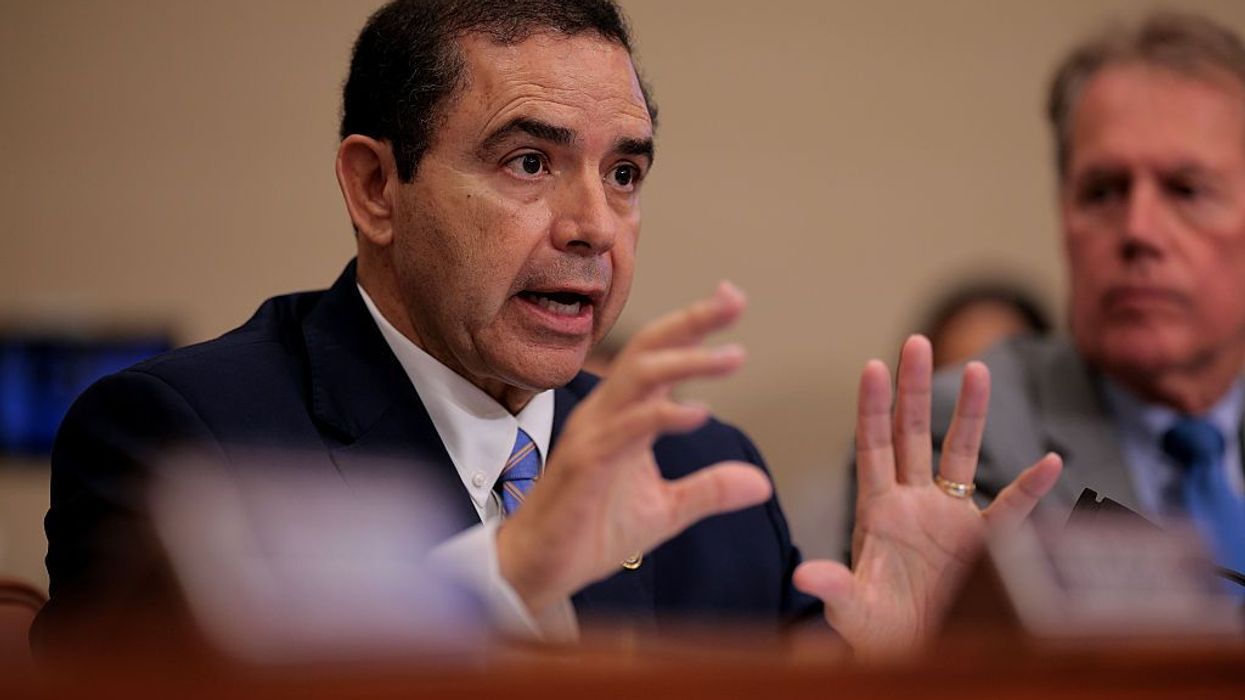
President Donald Trump on Wednesday announced that he was pardoning Democratic US Rep. Henry Cuellar, who was indicted by the Department of Justice in 2024 on charges of bribery, conspiracy, and money laundering.
In justifying the pardon, Trump baselessly claimed that the Texas lawmaker was the victim of vindictive prosecution by former President Joe Biden in supposed retaliation for Cuellar's criticisms of Biden's immigration policies.
"Henry, I don't know you, but you can sleep well tonight," Trump wrote at the end of his pardon announcement. "Your nightmare is finally over!"
According to federal prosecutors, Cuellar and his wife, Imelda Cuellar, engaged in a corrupt scheme that involved taking $600,000 worth of bribes from a fossil fuel company owned by the government of Azerbaijan in exchange for desired policy outcomes.
"The bribe payments were laundered, pursuant to sham consulting contracts, through a series of front companies and middlemen into shell companies owned by Imelda Cuellar,” prosecutors alleged in their indictment. “In exchange for the bribe payments to Imelda Cuellar, Henry Cuellar agreed to perform official acts in his capacity as a member of Congress, to commit acts in violation of his official duties, and to act as an agent of the government of Azerbaijan."
As noted by congressional reporter Jamie Dupree, Cuellar is the twelfth current or former member of Congress whom Trump has pardoned, and is the first one to receive a pardon without having been criminally convicted.
Cuellar is also just the second current or former Democratic member of Congress to receive a pardon from Trump, who also pardoned former Illinois Gov. and ex-US Rep. Rod Blagojevich, who was found guilty in 2011 on multiple corruption charges related to his attempt to sell a US Senate seat that had been vacated by Barack Obama after his election to the presidency in 2008.
Some progressives expressed revulsion at Trump's pardon of Cuellar, one of the most conservative members of the House Democratic caucus who has nonetheless been defended by party leadership despite criminal charges leveled against him.
"This is disgusting," wrote Sunrise Movement's official X account. "Henry Cuellar, the last anti-choice Democrat in the House, sold out his own community for bribes from a foreign government and oil corporation. Then he cozied up to Trump for a pardon while the Democratic establishment stood by and watched."
Melanie D'Arrigo, executive director of Campaign for New York Health, speculated that Trump pardoned Cuellar as a reward for stifling past progressive policy ambitions.
"Henry Cuellar is part of the Problem Solvers Caucus—a 'bipartisan' group where the Democrat members repeatedly undermine the Democrats' agenda to help Republicans, while taking campaign donations from Republican billionaires," she wrote. "This is a 'thank you.'"
Emma Vigeland, cohost of "The Majority Report" talk show, wondered if Trump had worked out an explicit quid pro quo with Cuellar ahead of the pardon.
"Cuellar is an anti-abortion Democrat who will likely switch parties now that Trump has gotten him out of a dozen bribery and money laundering charges," she wrote.
However, the Texas Tribune reports that Cuellar on Wednesday filed to run for reelection as a Democrat, which for now casts doubt on him switching parties as a condition of getting pardoned.
"Every single Democrat who voted for this is not taking the threat of Trump remotely seriously and should be disqualified from any leadership positions moving forward," said Georgia State Rep. Ruwa Romman.
Legislation that would have handed President-elect Donald Trump sweeping power to investigate and shutter news outlets, government watchdogs, humanitarian organizations, and other nonprofits was defeated in the House of Representatives on Tuesday after a coalition of progressive advocacy groups and lawmakers mobilized against it, warning of the bill's dire implications for the right to dissent.
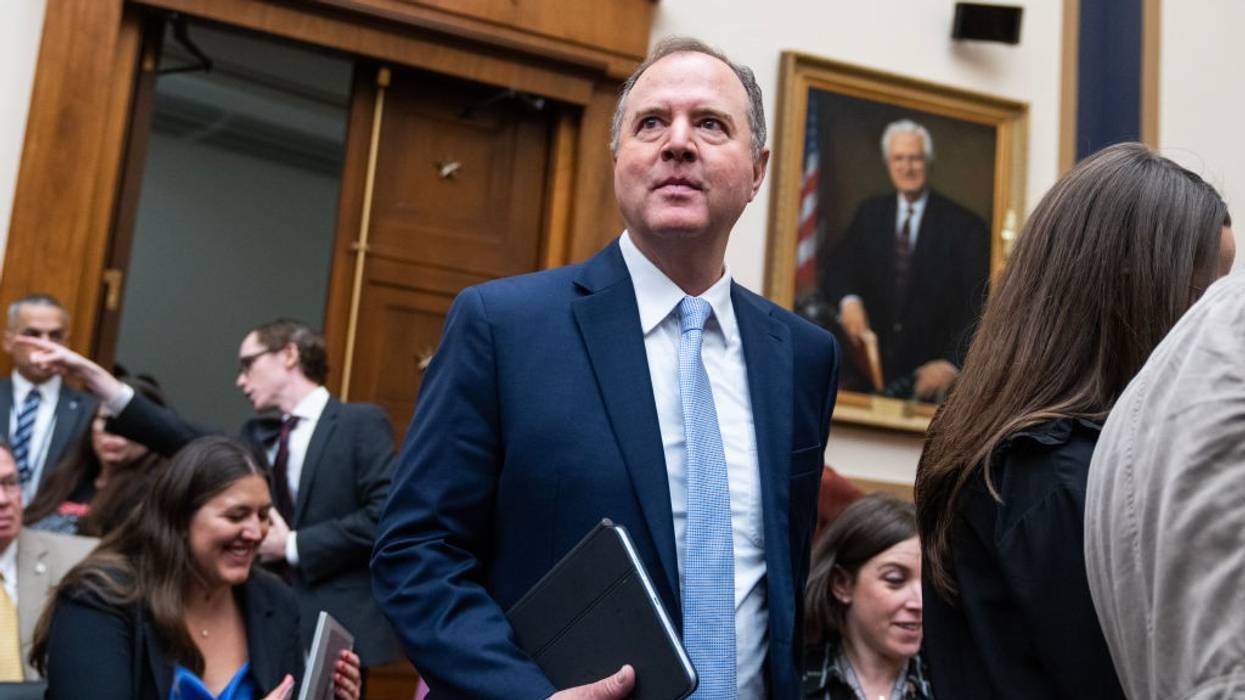
But 52 Democratic lawmakers—including Reps. Adam Schiff (D-Calif.), Henry Cuellar (D-Texas), and Ritchie Torres (D-N.Y.)—apparently did not share the grave concerns expressed by the ACLU and other leading rights groups, opting to vote alongside 204 Republicans in favor of the bill.
One Republican, Rep. Thomas Massie of Kentucky, joined 144 Democrats in voting no.
The measure ultimately fell short of the two-thirds majority needed to approve legislation under the fast-track procedure used by the bill's supporters, but progressives wasted no time spotlighting the Democrats who supported the measure.
"If you're looking for a handy list of Democrats who have no fucking clue what is about to hit and need their spines stiffened ASAP, this is a good place to start,"
wrote Leah Greenberg, co-executive director of the advocacy group Indivisible.
Rep. Rashida Tlaib (D-Mich.), who
vocally opposed the legislation, wrote that "these 52 Democrats voted to give Trump the power to shut down any nonprofit he wants."
"The NAACP, ACLU, Planned Parenthood, no organization would be safe," Tlaib added. "Shameful."
If passed, the Stop Terror-Financing and Tax Penalties on American Hostages Act would grant the Treasury Department—soon to be under the control of a Trump nominee—the authority to unilaterally strip nonprofits of their tax-exempt status by deeming them supporters of terrorism.
The bill could be revived in the next Congress, which is likely to be under full Republican control.
Kia Hamadanchy, senior policy counsel with the ACLU, told The Intercept late Tuesday that "we will continue our sustained opposition."
It is already illegal under U.S. law to provide material backing for terrorism, and the executive branch has significant authority to target groups it considers terrorist-supporting.
"This isn't just an attack on our communities; it's a fundamental threat to free speech and democracy."
The ACLU
noted ahead of Tuesday's vote that while the bill contains "a 90-day 'cure' period in which a designated nonprofit can mount a defense, it is a mere illusion of due process."
"The government may deny organizations its reasons and evidence against them, leaving the nonprofit unable to rebut allegations," the group said. "This means that a nonprofit could be left entirely in the dark about what conduct the government believes qualifies as 'support,' making it virtually impossible to clear its name."
Opponents of the bill warned that Palestinian rights organizations would be uniquely imperiled if it passed.
"This bill dangerously weaponizes the Treasury against nonprofit organizations and houses of worship—Christian, Jewish, or Muslim—that dare to support Palestinian and Lebanese human rights or criticize Israel's genocidal actions," said Robert McCaw, director of government affairs at the Council on American-Islamic Relations.
"Allowing such sweeping, unchecked power would set a chilling precedent, enabling the government to selectively target and suppress voices of dissent under the guise of national security," McCaw added. "This isn't just an attack on our communities; it's a fundamental threat to free speech and democracy."
Georgia State Rep. Ruwa Romman (D-97), a Palestinian American, echoed that sentiment following Tuesday's vote and condemned the legislation's 52 Democratic supporters.
"Every single Democrat who voted for this is not taking the threat of Trump remotely seriously and should be disqualified from any leadership positions moving forward," Romman wrote on social media. "This is no longer business as usual. To agree to give him this kind of power is beyond egregious."
"In exchange for the bribe payments to Imelda Cuellar, Henry Cuellar agreed to perform official acts in his capacity as a member of Congress," the indictment states.
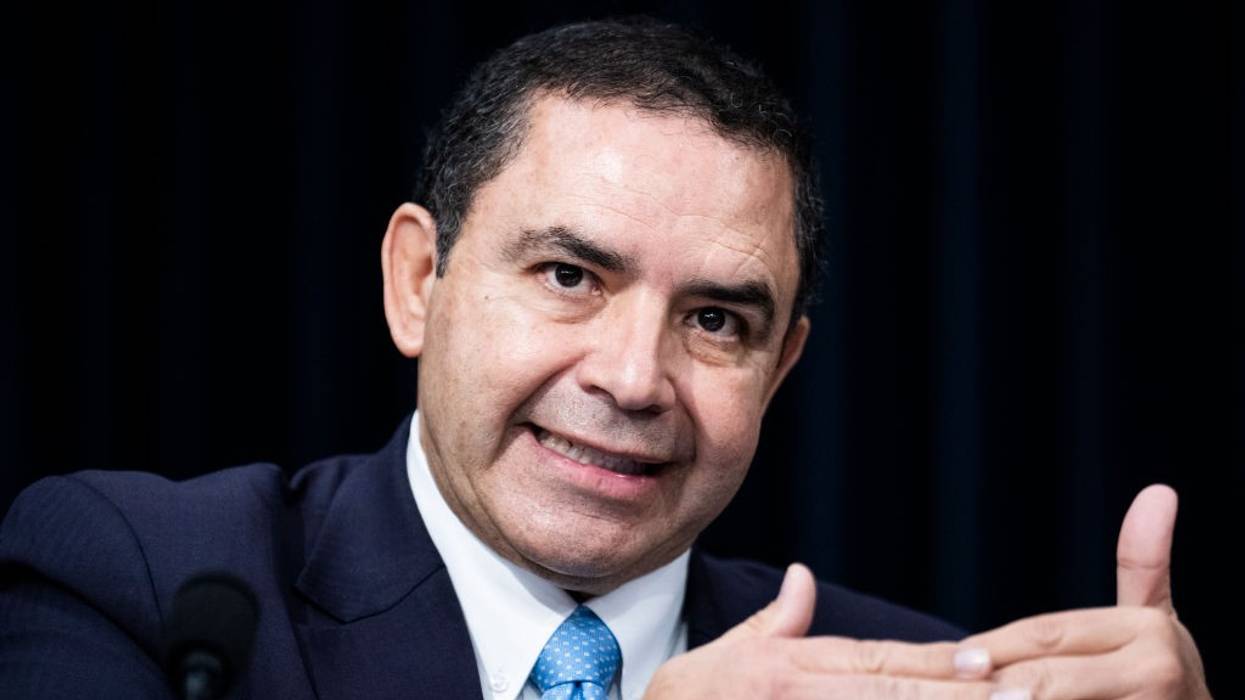
The U.S. Department of Justice confirmed Friday that Democratic Texas Congressman Henry Cuellar and his wife, Imelda Cuellar, were indicted last week for allegedly "participating in two schemes involving bribery, unlawful foreign influence, and money laundering."
According to the indictment, between at least December 2014 and November 2021, the Cuellars allegedly took approximately $600,000 in bribes from a fossil fuel company owned by the Azerbaijani government and an unnamed bank headquartered in Mexico City. The congressman, who has served on Capitol Hill for nearly two decades and is seeking reelection, previously co-chaired the Congressional Azerbaijan Caucus.
"The bribe payments were laundered, pursuant to sham consulting contracts, through a series of front companies and middlemen into shell companies owned by Imelda Cuellar," the document states. "In exchange for the bribe payments to Imelda Cuellar, Henry Cuellar agreed to perform official acts in his capacity as a member of Congress, to commit acts in violation of his official duties, and to act as an agent of the government of Azerbaijan and [the foreign bank]."
NBC News first reported early Friday that the Justice Department was expected to release the indictment, which came more than two years after a Federal Bureau of Investigation raid of the couple's Laredo home. Before the document was unsealed, the congressman claimed in a statement that his actions were "consistent with the actions of many of my colleagues and in the interest of the American people."
"I want to be clear that both my wife and I are innocent of these allegations," Cuellar said Friday. "Before I took any action, I proactively sought legal advice from the House Ethics Committee, who gave me more than one written opinion, along with an additional opinion from a national law firm."
The Cuellars "made their initial court appearance today before U.S. Magistrate Judge Dena Palermo in Houston," the Justice Departmnet said Friday. If convicted of all the charges, the 68-year-old congressman and his 67-year-old wife could face decades in prison.
Congressional Democratic leadership last year endorsed Cuellar for reelection in November, despite his opposition to abortion rights—a key issue for this cycle at all levels of politics. During the 2022 cycle, after nearly losing to progressive primary challenger Jessica Cisneros, he beat the Republican nominee, Cassy Garcia, 57% to 43%.
A spokesperson for U.S. House Minority Leader Hakeem Jeffries (D-N.Y.), Christie Stephenson, said in a Friday statement that "Henry Cuellar has admirably devoted his career to public service and is a valued member of the House Democratic Caucus. Like any American, Congressman Cuellar is entitled to his day in court and the presumption of innocence throughout the legal process."
"Pursuant to House Democratic Caucus Rule 24, Congressman Cuellar will take leave as ranking member of the Homeland Security Appropriations Subcommittee while this matter is ongoing," Stephenson added.
Cuellar isn't the only Democrat in Congress battling allegations of corruption and bribery charges. Sen. Bob Menendez (D-N.J.) and his wife, Nadine Menendez, were indicted last September and accused of accepting bribes in the form of "cash, gold, payments toward a home mortgage, compensation for a low-or-no-show job, a luxury vehicle, and other things of value."
The following month, the Justice Department accused the senator of acting as an unregistered agent for the government of Egypt. Menendez has denied wrongdoing and refused to resign. Although he is not seeking reelection as a Democrat, he has teased a possible independent run if he is exonerated.
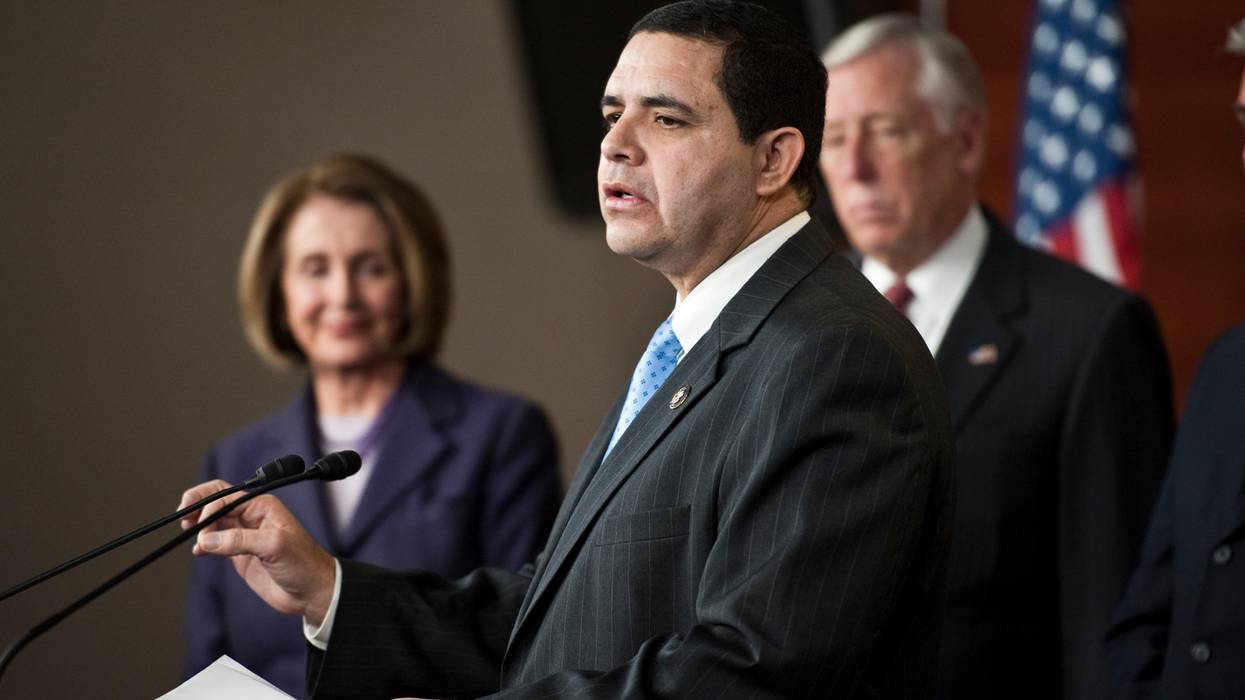
"It's galling to see leadership muster behind Cuellar, of all people at all times," said one advocate.
With well over a year before the 2024 election, and as a pro-choice immigration rights attorney is reportedly weighing a primary run, all four of the top Democratic leaders in the U.S. House on Thursday announced their support for anti-abortion rights Rep. Henry Cuellar in his reelection bid.
House Minority Leader Hakeem Jeffries (N.Y.), Democratic Caucus Chairman Rep. Pete Aguilar (Calif.), Minority Whip Rep. Katherine Clark (Mass.), and Assistant Democratic Leader Rep. James Clyburn (S.C.) all announced their endorsements of the right-wing Democrat, who has represented Texas' 28th district since 2005.
Former House Speaker Nancy Pelosi (Calif.) and former House Majority Leader Steny Hoyer (Md.) also voiced their support for Cuellar, who in addition to being the only anti-abortion rights Democrat in the House, has an "A" rating from the National Rifle Association indicating his anti-gun control views.
Wondering why the influential top Democrats are focusing on Cuellar's district at this point, advocate and political strategist Jen Bluestein called the leaders' move "galling" considering the ongoing Republican attacks on abortion rights across the country.
"If Cuellar's seen the light on women's freedom, he should say so," said Bluestein. "Loud enough for Texas women to hear."
The Texas Tribune noted that Jessica Cisneros, a staunchly pro-choice progressive who came within 300 votes of Cuellar in the 2022 House primary and also challenged him in 2020, has not ruled out another primary run next year.
Last year's primary runoff between the two candidates came shortly after a draft opinion was leaked from the U.S. Supreme Court, indicating that the right-wing majority would soon overturn Roe v. Wade, as it did in June 2022.
Clyburn angered abortion rights advocates by stumping for Cuellar two days after the leak, telling reporters that as a "big-tent party," Democrats should welcome the congressman despite his views running counter to the party's agenda. He denounced progressives' objection to the Democrats' support for Cuellar as "sophomoric."
Rep. Alexandria Ocasio-Cortez (D-N.Y.), who was among the progressives who strongly supported Cisneros last year, said at the time that in the "extremely close race," Democratic leaders' decision to back Cuellar would "be the reason why" he won.
On Thursday, writer and Ventura County, California political candidate Heather Christena Schmidt tweeted that the Democrats' endorsement of Cuellar runs counter to the party's claim that it will fight for reproductive rights.
Politics1.com tweeted that the Democrats' announcement was "clearly designed to head off a third consecutive tough primary challenge from the left" before one is even announced.

A coalition of 40 labor and social justice groups on Monday sounded the alarm over anti-worker legislation recently introduced by right-wing Democratic Congressman Henry Cuellar of Texas and two House Republicans.
"The latest attack on working people by Rep. Cuellar is proof positive that elections matter."
The Worker Power Coalition, which represents 24 million workers, took aim at the "dangerous" Worker Flexibility and Choice Act (WFCA), unveiled last month by Cuellar, along with GOP Rep. Elise Stefanik (N.Y.) and Michelle Steel (Calif.).
Experts warn the bill would gut key parts of the Fair Labor Standards Act of 1938, impacting not only gig workers employed by ride-hailing giants like Lyft and Uber or food delivery services like DoorDash but also others whose companies want to skirt minimum wage and overtime protections.
Nicole Moore, a part-time Lyft driver and the president of coalition member Rideshare Drivers United, pointed to the battle over Proposition 22 in California--an industry-backed ballot measure that enabled app-based companies to classify workers as independent contractors rather than employees but was struck down in state court.
"Uber and Lyft poured $200 million into Prop 22 in California to take away our rights to unemployment benefits, workplace safety, and sick time. All during a global pandemic. Now they're trying to do it federally," said Moore. "Legalizing the misclassification of app-based workers would deny hundreds of thousands of workers essential workplace protections, and amount to billions of dollars in corporate handouts to a multibillion-dollar industry."
Related Content

As The Hill reported:
Uber and Lyft have not publicly commented on the proposal. The companies directed The Hill to the Coalition for Workforce Innovation, a group both Uber and Lyft are members of, for comment.
Evan Armstrong, chair of the Coalition for Workforce Innovation, said the proposal provides "clarity and rules of the road for independent workers and businesses."
"The bipartisan bill strikes a balance to promote independent work while ensuring more options for benefits, support, and protections," Armstrong said in a statement.
Meanwhile, Jimmy Williams, president of the International Union of Painters and Allied Trades, another coalition member, directed criticism at Cuellar and called on Democrats in Congress to pass the Protecting the Right to Organize (PRO) Act.
"The latest attack on working people by Rep. Cuellar is proof positive that elections matter," Williams said. "Rep. Cuellar voted against the PRO Act, which would fix worker misclassification, to side with billionaire executives in Silicon Valley over his constituents."
Cuellar narrowly won a May runoff election against two-time progressive primary challenger Jessica Cisneros in Texas' 28th Congressional District.
House Speaker Nancy Pelosi (D-Calif.), House Majority Leader Steny Hoyer (D-Md.), and House Majority Whip James Clyburn (D-S.C.) faced criticism for backing to the anti-choice, anti-worker incumbent.
Justice Democrats, which supported Cisneros, highlighted in an email Monday that "Pelosi helped conservative anti-abortion Democrat Henry Cuellar win" and "now, Cuellar has a new bill with Republicans to eviscerate labor protections in America."
"Cuellar is doing the bidding of gig companies like Uber and DoorDash who exploit workers by classifying them as independent contractors," the group added. "This is a terrible bill that could pass with the support of Republicans and corporate Democrats like Cuellar. Cuellar's position on labor standards is one of the reasons Justice Democrats backed Jessica Cisneros in TX-28. But Pelosi, Cuellar, and big corporate money won."
Williams noted Monday that "Uber and Lyft are spending hundreds of millions of dollars at the state and national levels to try to ensure they don't have to play by the same rules as every other employer."
Related Content

"The House has acted: Now, the time has never been more urgent for the Senate to hold a vote for the passage of the PRO Act," Williams added.
The Democrat-controlled House approved the PRO Act in February 2020 and May 2021. However, it lacks the Republican support necessary to pass in the Senate unless Democrats kill the filibuster, which a few right-wing Democratic senators oppose.

Labor experts and advocates on Wednesday expressed disbelief and outrage as the details of an "unconscionable" new bill purporting to expand "flexibility and choice" in workplaces came to light, condemning Democratic co-sponsor Rep. Henry Cuellar for proposing the gutting of minimum wage protections.
"This bill would allow employers to trample on the rights of an untold numbers of workers."
The Worker Flexibility and Choice Act (WFCA) was originally announced by Cuellar (Texas) and his Republican co-sponsors, Rep. Elise Stefanik (R-N.Y.) and Michelle Steel (R-Calif.), on July 20, but it wasn't until Wednesday that law professor Veena Dubal shared the text of the bill on social media, describing the proposal as "terrifying."
Aiming to create a new classification for people working in the gig economy for companies like Uber, Lyft, and DoorDash, the bill would amend the Fair Labor Standards Act of 1938 by establishing "worker flexibility agreements" in which a worker "will not be treated as an employee for federal tax purposes" and "is not subject to the minimum wage and overtime protections."
The proposal would not only affect gig workers, said Dubal, who is a professor at University of California Hastings College of Law, but would "carve workers out of minimum wage and overtime protections" whenever an employer sets work schedules "using algorithms and incentives instead of providing secure hours."
In other words, said former New York Times labor reporter Steven Greenhouse, "it seems to empower any employer--not just gig companies--to tell any worker: if you want to work for me, you must agree we won't follow minimum wage or overtime rules."
Rebecca Dixon, executive director of the National Employment Law Project (NELP), noted that the bill is being backed by "the corporate lobby group the Coalition for Workforce Innovation (CWI), which was established to fight against growing workers' movements."
The proposal is an attempt to capitalize on the notion that "flexible" working hours benefit workers, Dixon said, but "because the Fair Labor Standards Act (FLSA) is already compatible with worker flexibility, it would be a fatal mistake for Congress to create a carveout for companies that demand 'worker flexibility agreements' of their workforce."
Instead of actually providing flexibility, said Dubal, "as Uber, DoorDash, and Instacart have already done to their workforce, it would empower employers to force workers to work long and hard to eke out a living."
Progressive critics of Cuellar were hardly surprised by his sponsorship of the bill, with Usamah Andrabi of the Justice Democrats noting that the anti-choice, anti-climate, pro-NRA lawmaker voted against the Protecting the Right to Organize (PRO) Act twice.
The bill intensified outrage over the support Cuellar garnered from Democratic leaders including House Speaker Nancy Pelosi (D-Calif.), House Majority Leader Steny Hoyer (D-Md.), and House Majority Whip James Clyburn (D-S.C.) earlier this year when he faced progressive immigrant rights advocate Jessica Cisneros in the Democratic primary for a second time, winning by just 289 votes.
Cuellar's bill could particularly harm Texans, Cisneros noted, considering the state's minimum wage is among the lowest in the nation.
"Texas still has a $7.25 minimum wage and Cuellar thinks working people in our district don't even deserve that," said Cisneros. "How are Democrats supposed to energize South Texans for the midterms with this?"
The proposal amounts to a "boldfaced lie," said the Transport Workers Union of America (TWU).
"If corporate interests were actually serious about workplace flexibility, you'd see them supporting the rights of their employees to have a say in what goes on in the workplace; paying people wages that keep up with the rising costs of living; and encouraging working parents to take time off to care for sick children," said John Samuelson, international president of the union.
"Instead, this dangerous piece of legislation seeks to deny all of these rights to working Americans AND forbid states and cities from taking any action to hold criminal corporations accountable," he added. "This bill would allow employers to trample on the rights of an untold numbers of workers."
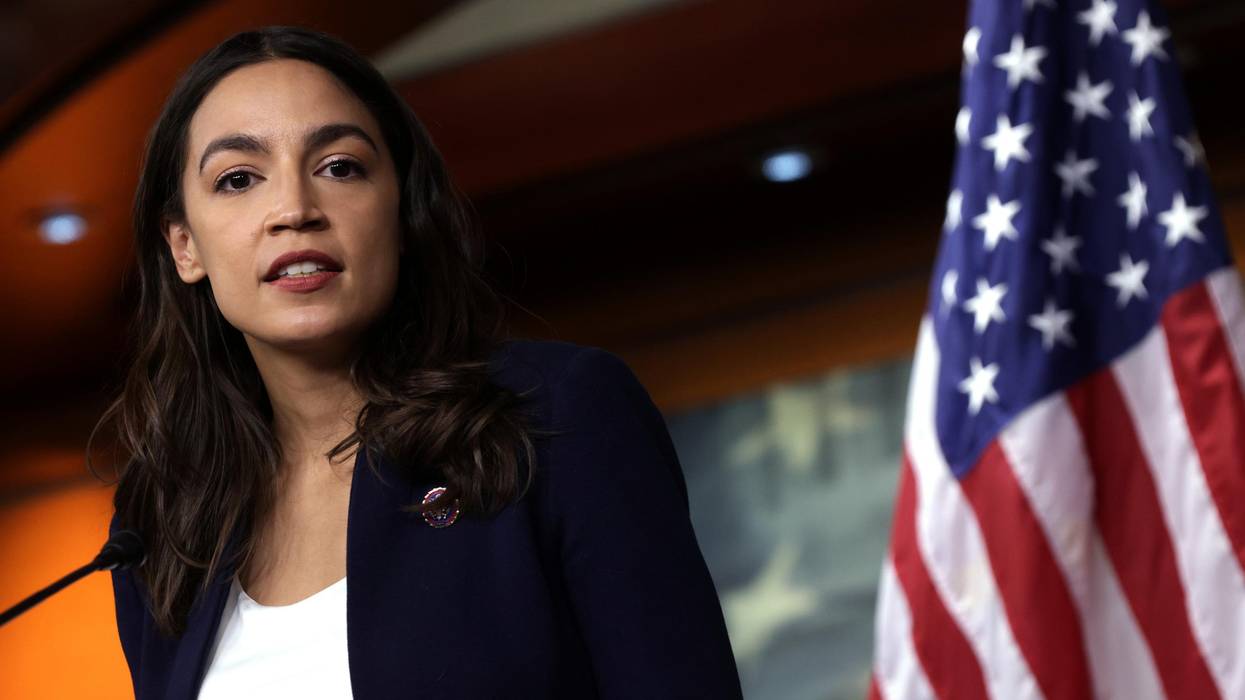
In the wake of the horrific massacre at Robb Elementary School in Uvalde, Texas on Tuesday, Democratic Rep. Alexandria Ocasio-Cortez blasted her party's leadership for supporting an incumbent in the state whose record and policy positions earned him an "A" rating from the National Rifle Association.
"On the day of a mass shooting and weeks after news of [the Supreme Court's impending decision to overturn Roe v. Wade], Democratic Party leadership rallied for a pro-NRA, anti-choice incumbent under investigation in a close primary. Robocalls, fundraisers, all of it," Ocasio-Cortez (D-N.Y.) wrote in a series of tweets.
"Congress should not be an incumbent protection racket."
The New York Democrat was referring to Rep. Henry Cuellar (D-Texas), whose campaign for a 10th term in the U.S. House was boosted by Speaker Nancy Pelosi (D-Calif.), Majority Leader Steny Hoyer (D-Md.), and Majority Whip Jim Clyburn (D-S.C.).
"Accountability isn't partisan," she added. "This was an utter failure of leadership. Congress should not be an incumbent protection racket and sadly it is treated as such by far too many. The fact is those who fail their communities deserve to lose. They don't need rescuing from powerful leaders who state they fight for gun safety, the right to choose, and more."
The New York Democrat's scathing message came as the results of Cuellar's runoff contest against progressive challenger Jessica Cisneros rolled in late Tuesday. As of this writing, Cuellar leads by fewer than 180 votes and has declared victory while Cisneros--whose campaign had the backing of Ocasio-Cortez and other progressives--noted that the race remains too close to formally call.
Given the razor-thin margins of the runoff, Ocasio-Cortez argued Tuesday that "if Cuellar wins, leadership's decision to go to the mat for a pro-NRA incumbent will be the reason why."
Cuellar and Cisneros both condemned the shooting in Uvalde, where a gunman killed at least 19 children and two teachers in the deadliest school massacre since Sandy Hook. Since that 2012 atrocity, there have been more than 3,500 mass shootings in the U.S. as Congress has repeatedly failed to pass meaningful reforms to the nation's gun laws.
"I am heartbroken over the mass shooting at Robb Elementary School," Cuellar tweeted Tuesday. "Families, the South Texas community, and the entire nation are in mourning. Let us pray for peace. Let us come together for our neighbors that need support. And let us remember the bright lives we lost today."
In response, Cuellar's critics pointed to his past donations from the NRA and favorable rating from the gun lobby, which aggressively fights even the most basic gun-safety regulations. As CNBC reported, Cuellar "has received thousands of dollars in donations from the group since he was elected to Congress over a decade ago."
"Cuellar received $6,950 in donations from the NRA Political Victory Fund during his reelection campaign [in 2018,]" the outlet noted.
In 2019, Cuellar's campaign rebuffed calls to return the NRA donations or give them to charity following mass shootings in Texas and other states that year.
Since Sandy Hook, the nation has experienced more than 3,500 mass shootings, according to the Gun Violence Archive, a nonprofit organization that tracks gun violence and defines a mass shooting as an incident in which four or more people are killed or injured.
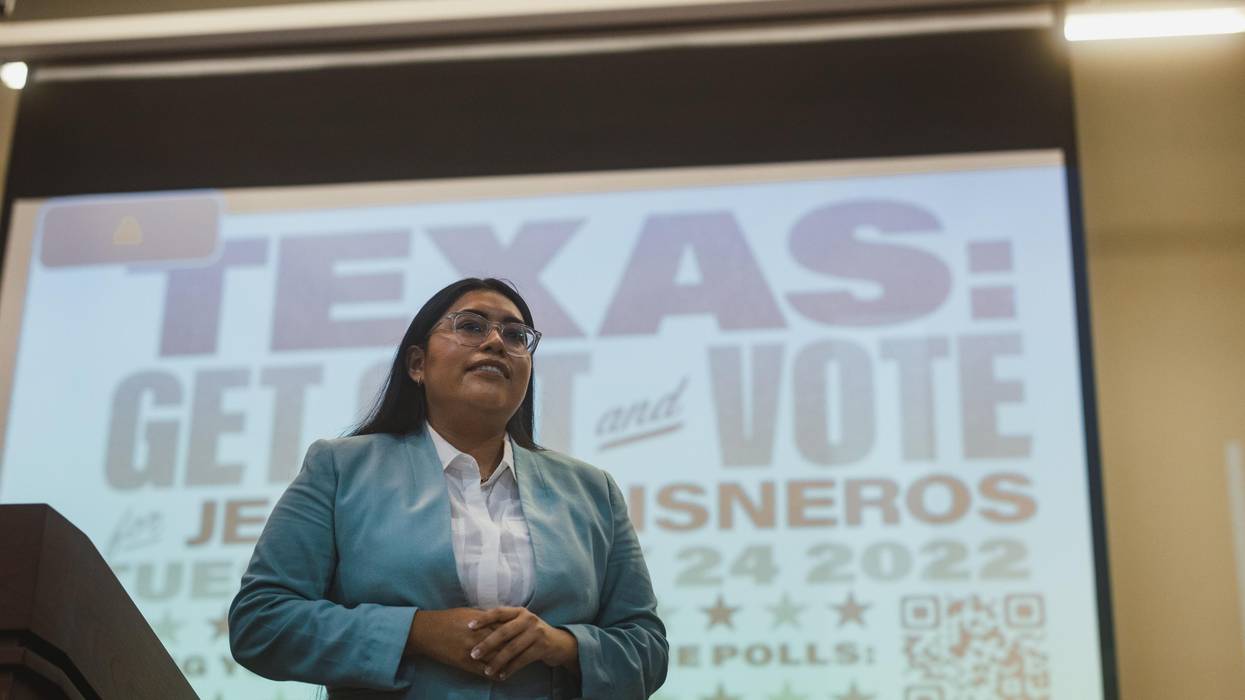
Clinging to a lead of fewer than 180 votes, nine-term Rep. Henry Cuellar declared victory early Wednesday in the closely watched Democratic primary runoff for Texas' 28th Congressional District as Jessica Cisneros, his progressive challenger, said the contest remained too close to officially call.
Cuellar, an anti-abortion Democrat with ties to the fossil fuel industry, currently leads Cisneros by a reported margin of 22,694 votes to 22,517, less than a percentage point.
"The votes are in, the margin will hold. We have won by 177 votes," the incumbent's campaign tweeted, an assessment that leading election analyst Dave Wasserman tentatively echoed.
But Cisneros, a human rights attorney backed by prominent progressive lawmakers and advocacy groups, wrote in the early hours of Wednesday morning that "this election is still too close to call, and we are still waiting for every ballot and eligible vote to be counted."
"Thank you to every single voter that came out to support our campaign," wrote Cisneros. "This fight isn't over."
Despite his right-wing policy positions and voting record on climate, abortion, immigration, and gun control--he has received an "A" rating from the National Rifle Association--Cuellar enjoyed the unwavering support of Speaker Nancy Pelosi (D-Calif.), Majority Leader Steny Hoyer (D-Md.), and Majority Whip Jim Clyburn (D-S.C.), the top three Democrats in the U.S. House.
Pelosi, who helped push Cuellar over the finish line in his first contest against Cisneros two years ago, recorded a robocall for the 2022 primary describing the Texas incumbent as "a fighter for hard-working families"--even as he opposes House Democrats' flagship labor rights bill and a $15 federal minimum wage.
Cuellar specifically expressed gratitude to Clyburn, who campaigned for the right-wing Democrat in the final stretch of the runoff race, which saw billionaire-funded super PACs such as AIPAC's United Democracy Project spend heavily against Cisneros. Cuellar's fossil fuel industry allies also pumped money into the race.
"This primary was a hard-fought battle and I'd like to thank my supporters, who were instrumental in this victory," said Cuellar, who will face Republican Cassie Garcia if his lead holds. "And of course, I could not do this without the tireless support of my wife and daughters. I also want to thank Whip Clyburn for his steadfast support."
Earlier this month, following the leak of a draft opinion indicating that the U.S. Supreme Court is set to overturn Roe v. Wade, Cisneros called on Pelosi, Hoyer, and Clyburn to drop their support for Cuellar, who has been described as one of the last remaining anti-abortion Democrats in Congress. The Democratic leaders refused to do so despite publicly touting the importance of electing pro-choice lawmakers.
Cuellar's position on gun control also came under renewed scrutiny following the massacre at an elementary school in Uvalde, Texas on Tuesday.
Cuellar has previously refused to return NRA donations in the wake of mass shootings.
"If Cuellar pulls this out," The American Prospect's Alex Sammon wrote sardonically, "national Democrats can be proud that their exceptional efforts and first action in the wake of this shooting in Uvalde that has killed at least 19 children will be to send a politician from the region with an 'A' rating from the NRA back to Congress."
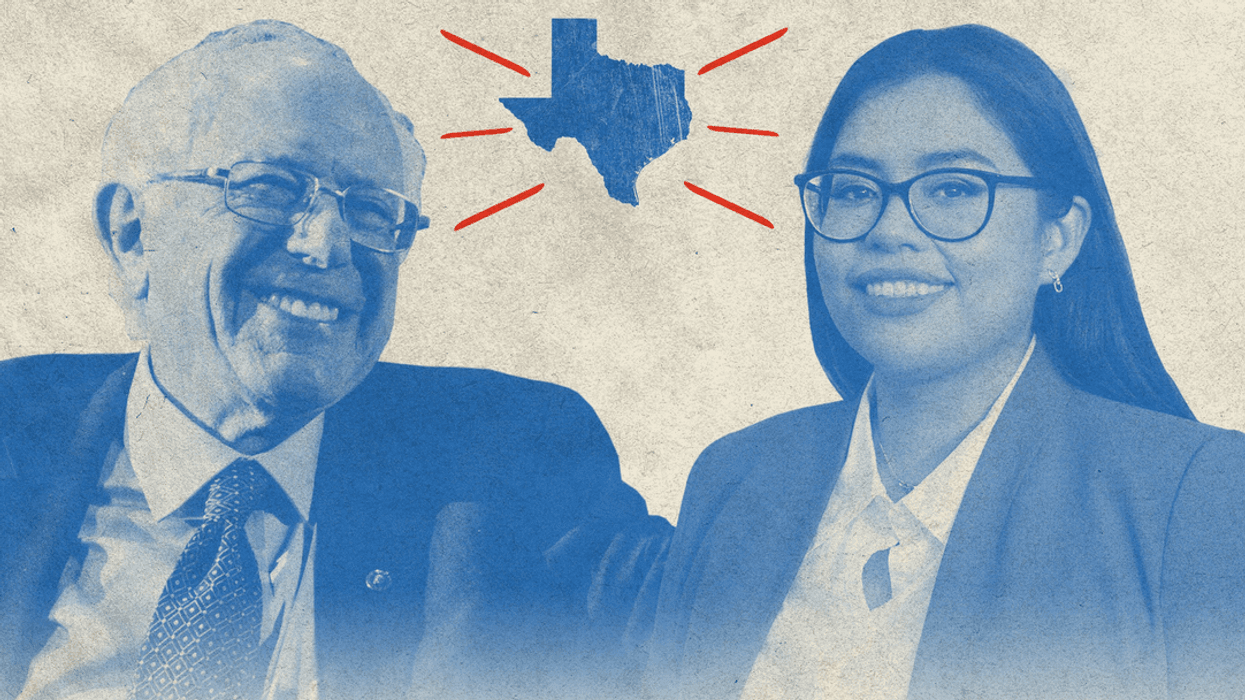
Sen. Bernie Sanders is set to rally for U.S. House candidate Jessica Cisneros on Friday as she vies to unseat Rep. Henry Cuellar, a nine-term Democrat whose opposition to abortion rights, labor legislation, and climate action has made him a top primary target for progressives.
In a social media post promoting the get-out-the-vote event, Sanders wrote that Tuesday's runoff contest is crucial because Cisneros, an outspoken supporter of Medicare for All and a Green New Deal, "is offering a bold agenda that speaks to the needs of Texas' 28th District."
The Vermont senator also noted that "her opponent, one of the very few anti-choice Democrats in Congress, is funded by over a million dollars in corporate contributions from Big Oil companies."
"She can win if we stand with her," Sanders said of Cisneros, a 28-year-old human rights attorney who fell just short of ousting Cuellar in 2020 and forced a runoff in the first round of primary voting in March.
The rally in San Antonio will come on the final day of early voting in Texas' 28th Congressional District, where progressives hope to build on primary victories in Pennsylvania and other states earlier this week.
"South Texas, let's make history and show them that when you have people power, anything is possible," Cisneros tweeted Thursday.
Cuellar's opposition to abortion rights was returned to the spotlight earlier this month following the leak of a draft opinion indicating that the U.S. Supreme Court's right-wing majority is poised to overturn Roe v. Wade, a longstanding goal of the conservative movement.
Last year, Cuellar was the only House Democrat to vote against codifying the right to abortion care into federal law. In response to the draft opinion leak, the Texas Democrat reiterated his opposition to abortion but said "there must be exceptions in the case of rape, incest, and danger to the life of the mother."
Cuellar's anti-abortion stance, his vote against pro-labor legislation, and his rejection of bold climate action--a reason he's been labeled "Big Oil's Favorite Democrat"--have not been enough to lose the support of the House Democratic leadership.
House Speaker Nancy Pelosi (D-Calif.), Majority Leader Steny Hoyer (D-Md.), and Majority Whip Jim Clyburn (D-S.C.) have endorsed Cuellar's re-election bid, raised funds for his campaign, and rallied on his behalf in the final stretch of the runoff race.
Cuellar's campaign has also benefited from massive outside spending by the United Democracy Project (UDP), a super PAC recently launched by the American Israel Public Affairs Committee (AIPAC). The super PAC's biggest funder is billionaire Haim Saban.
UDP, which has intervened against progressive candidates in a number of Democratic primary contests across the U.S., has spent more than $1.4 million against Cisneros and nearly $390,000 in support of Cuellar's campaign. The fossil fuel industry has also dumped money into Cuellar's coffers in the hopes of protecting its ally's seat.
In his video message ahead of Friday's rally in San Antonio, Sanders said he is "sick and tired of the many millions of dollars in super PAC money that is going against progressives like Jessica."
"What we're seeing," the senator continued, "is billionaires in this country who couldn't care less about working families just pouring huge amounts of money into campaigns to make sure that we do not have members of Congress who are going to fight for economic and racial and social and environmental justice."