SUBSCRIBE TO OUR FREE NEWSLETTER
Daily news & progressive opinion—funded by the people, not the corporations—delivered straight to your inbox.
5
#000000
#FFFFFF
To donate by check, phone, or other method, see our More Ways to Give page.
Daily news & progressive opinion—funded by the people, not the corporations—delivered straight to your inbox.
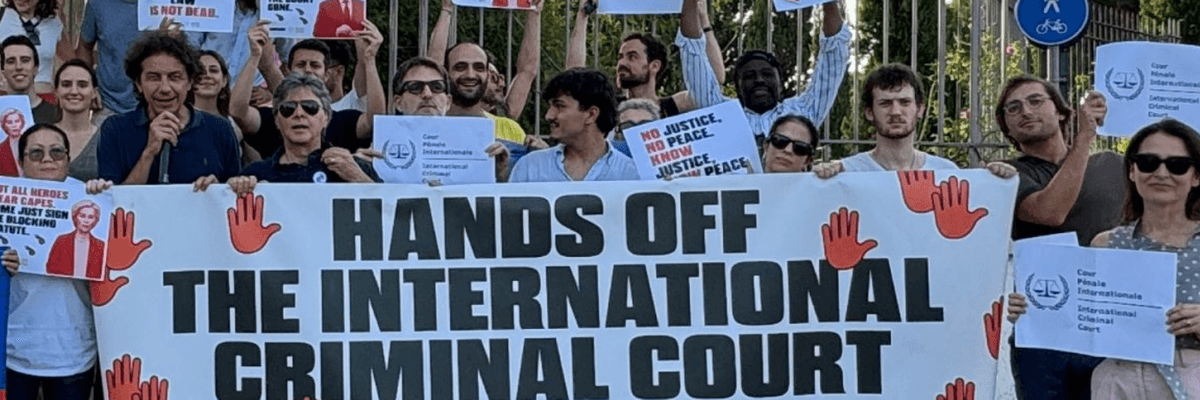
If the attack from Putin's Russia and the US Trump administration succeeds, it will produce a disaster not only for the rule of law, but for the cause of human rights.
On October 9, only hours after the announcement of the award of the Nobel Peace Prize to Navi Pillay, a former judge on the International Criminal Court, the Trump administration imposed its latest sanctions on the global judicial body. According to Secretary of State Marco Rubio, “we will ban transactions with this rogue court, cutting off their resources and crippling its ability to operate.”
When the ICC became operational in 2002, it represented a major breakthrough for the human rights groups that had campaigned for it. The new organization had the mandate to prosecute individuals for genocide, war crimes, crimes against humanity and, after 2018, the crime of aggression. Once nations ratified the ICC’s authorizing document, the Rome Statute, they took responsibility for arresting these individuals and submitting them to the court for trial. Designed to complement, rather than to replace, national criminal justice systems, the ICC could prosecute cases only when countries were unwilling or unable to do so. A total of 125 countries―nearly two-thirds of the world’s nations―have ratified the Rome Statute.
Since its founding, the ICC (headquartered in The Hague, the Netherlands) has acted to hold individual perpetrators accountable for the world’s gravest atrocities. Its actions included opening 34 cases (some with more than one suspect), holding 17 different investigations across four continents, issuing 61 arrest warrants, and, thus far, issuing 13 convictions and four acquittals.
Nevertheless, the campaign against the ICC is having a serious impact. In late July, thanks to US government pressure, Venezuela and Chad announced their withdrawal from the court’s Rome Statute.From its inception, however, US officials were wary of the ICC.
In the United States, President Bill Clinton signed the Rome Statute, but refused to present it to the US Senate for ratification, warning that it had “significant flaws,” including the inability to “protect US officials.” His successor, George W. Bush, “unsigned” the treaty in 2002 and signed US legislation authorizing military force to liberate any American nationals it held for crimes. During Donald Trump’s first term as president, he denounced the ICC before the United Nations General Assembly and imposed economic sanctions and visa restrictions on top ICC officials for any effort to investigate the behavior of US personnel in Afghanistan.
Russian officials, too, soon realized that enforcement of international law threatened them. Although, initially, the Russian government signed the Rome Statute and participated constructively in the ICC, it withdrew its signature after Ukraine appealed to the ICC in 2014 and 2015 to investigate Russian war crimes in Ukraine. The ICC did initiate a preliminary inquiry that, after the full-scale Russian invasion of 2022 and Russia’s murder of Ukrainian civilians and prisoners of war in Bucha, expanded into a formal investigation. In 2023, the ICC issued arrest warrants for Russian President Vladimir Putin and Commissioner for Children’s Rights Maria Lvova-Belova for the kidnapping of thousands of Ukrainian children.
Denying any wrongdoing in Bucha, the Russian government also dismissed the charge of kidnapping as “outrageous.” Dmitry Medvedev, deputy chair of the Russian Security Council, threatened a Russian hypersonic missile attack upon the ICC headquarters.
Meanwhile, the assault on the ICC escalated. Although US President Joseph Biden scrapped Trump’s sanctions on the court and authorized sharing information with it during investigations of Russian atrocities in Ukraine, he and numerous officials of other nations denounced the ICC’s November 2024 war crimes arrest warrant for top Israeli officials. Israeli Prime Minister Benjamin Netanyahu assailed what he called “the antisemitic decision” of the ICC and said that Israel refused to comply with it.
With Trump’s reelection, the campaign to destroy the ICC went into high gear. In February 2025, he imposed sanctions on the ICC prosecutor. That August, Secretary of State Marco Rubio, labeling the court “a national security threat,” added ICC judges to the sanctions list. In late 2025, a top Trump administration official told Reuters that there was “growing concern” that “the ICC will turn its attention to the president, to the vice president, to the secretary of war and others, and pursue prosecutions against them.” That was “unacceptable, and we will not allow it to happen.” The ICC, he said, had been informed that, unless it amended its founding document to ensure that it would not investigate the Republican president and his top officials, new, very punishing US sanctions would be imposed on the court.
The Russian government also ramped up its attack. In December 2025, a Russian court, retaliating for the ICC’s arrest warrants for Putin and Lvova-Belova, convicted the ICC prosecutor and eight ICC judges, in absentia, of “unlawful prosecution,” sentencing them to terms of imprisonment ranging from three and a half to 15 years.
In July 2026, Rubio announced what the US State Department called “a sweeping campaign to dismantle the threat posed by the International Criminal Court to US sovereignty.” It would “feature a whole-of-government response to systematically disable the ICC’s ability to operate” and destroy the court “brick by brick.” That August, imposing additional sanctions on court officials, Rubio proclaimed “our unwavering mission to protect Americans from this sham of a court.” Meanwhile, US Defense Secretary Pete Hegseth called on Latin American and Caribbean governments to sever their ties with the ICC.
Many observers, of course, were appalled by the Trump administration’s behavior. The European Union immediately expressed its backing for the ICC, while Germany’s foreign minister declared that the court made the world “safer and more just.” In a biting article, Kenneth Roth, a former executive director of Human Rights Watch, argued that “the administration’s real goal is to secure impunity for war crimes.”
Nevertheless, the campaign against the ICC is having a serious impact. In late July, thanks to US government pressure, Venezuela and Chad announced their withdrawal from the court’s Rome Statute. The number of withdrawals now stands at five, including Burkina Faso, Mali, and Niger. The latter three are ruled by military juntas allied with Russia.
As the Nobel committee warned when announcing the Peace Prize, the “judges and institutions of international law are under political attack.”
If the attack succeeds, it will produce a disaster not only for the rule of law, but for the cause of human rights.
Dear Common Dreams reader, It’s been nearly 30 years since I co-founded Common Dreams with my late wife, Lina Newhouser. We had the radical notion that journalism should serve the public good, not corporate profits. It was clear to us from the outset what it would take to build such a project. No paid advertisements. No corporate sponsors. No millionaire publisher telling us what to think or do. Many people said we wouldn't last a year, but we proved those doubters wrong. Together with a tremendous team of journalists and dedicated staff, we built an independent media outlet free from the constraints of profits and corporate control. Our mission has always been simple: To inform. To inspire. To ignite change for the common good. Building Common Dreams was not easy. Our survival was never guaranteed. When you take on the most powerful forces—Wall Street greed, fossil fuel industry destruction, Big Tech lobbyists, and uber-rich oligarchs who have spent billions upon billions rigging the economy and democracy in their favor—the only bulwark you have is supporters who believe in your work. But here’s the urgent message from me today. It's never been this bad out there. And it's never been this hard to keep us going. At the very moment Common Dreams is most needed, the threats we face are intensifying. We need your support now more than ever. We don't accept corporate advertising and never will. We don't have a paywall because we don't think people should be blocked from critical news based on their ability to pay. Everything we do is funded by the donations of readers like you. When everyone does the little they can afford, we are strong. But if that support retreats or dries up, so do we. Will you donate now to make sure Common Dreams not only survives but thrives? —Craig Brown, Co-founder |
On October 9, only hours after the announcement of the award of the Nobel Peace Prize to Navi Pillay, a former judge on the International Criminal Court, the Trump administration imposed its latest sanctions on the global judicial body. According to Secretary of State Marco Rubio, “we will ban transactions with this rogue court, cutting off their resources and crippling its ability to operate.”
When the ICC became operational in 2002, it represented a major breakthrough for the human rights groups that had campaigned for it. The new organization had the mandate to prosecute individuals for genocide, war crimes, crimes against humanity and, after 2018, the crime of aggression. Once nations ratified the ICC’s authorizing document, the Rome Statute, they took responsibility for arresting these individuals and submitting them to the court for trial. Designed to complement, rather than to replace, national criminal justice systems, the ICC could prosecute cases only when countries were unwilling or unable to do so. A total of 125 countries―nearly two-thirds of the world’s nations―have ratified the Rome Statute.
Since its founding, the ICC (headquartered in The Hague, the Netherlands) has acted to hold individual perpetrators accountable for the world’s gravest atrocities. Its actions included opening 34 cases (some with more than one suspect), holding 17 different investigations across four continents, issuing 61 arrest warrants, and, thus far, issuing 13 convictions and four acquittals.
Nevertheless, the campaign against the ICC is having a serious impact. In late July, thanks to US government pressure, Venezuela and Chad announced their withdrawal from the court’s Rome Statute.From its inception, however, US officials were wary of the ICC.
In the United States, President Bill Clinton signed the Rome Statute, but refused to present it to the US Senate for ratification, warning that it had “significant flaws,” including the inability to “protect US officials.” His successor, George W. Bush, “unsigned” the treaty in 2002 and signed US legislation authorizing military force to liberate any American nationals it held for crimes. During Donald Trump’s first term as president, he denounced the ICC before the United Nations General Assembly and imposed economic sanctions and visa restrictions on top ICC officials for any effort to investigate the behavior of US personnel in Afghanistan.
Russian officials, too, soon realized that enforcement of international law threatened them. Although, initially, the Russian government signed the Rome Statute and participated constructively in the ICC, it withdrew its signature after Ukraine appealed to the ICC in 2014 and 2015 to investigate Russian war crimes in Ukraine. The ICC did initiate a preliminary inquiry that, after the full-scale Russian invasion of 2022 and Russia’s murder of Ukrainian civilians and prisoners of war in Bucha, expanded into a formal investigation. In 2023, the ICC issued arrest warrants for Russian President Vladimir Putin and Commissioner for Children’s Rights Maria Lvova-Belova for the kidnapping of thousands of Ukrainian children.
Denying any wrongdoing in Bucha, the Russian government also dismissed the charge of kidnapping as “outrageous.” Dmitry Medvedev, deputy chair of the Russian Security Council, threatened a Russian hypersonic missile attack upon the ICC headquarters.
Meanwhile, the assault on the ICC escalated. Although US President Joseph Biden scrapped Trump’s sanctions on the court and authorized sharing information with it during investigations of Russian atrocities in Ukraine, he and numerous officials of other nations denounced the ICC’s November 2024 war crimes arrest warrant for top Israeli officials. Israeli Prime Minister Benjamin Netanyahu assailed what he called “the antisemitic decision” of the ICC and said that Israel refused to comply with it.
With Trump’s reelection, the campaign to destroy the ICC went into high gear. In February 2025, he imposed sanctions on the ICC prosecutor. That August, Secretary of State Marco Rubio, labeling the court “a national security threat,” added ICC judges to the sanctions list. In late 2025, a top Trump administration official told Reuters that there was “growing concern” that “the ICC will turn its attention to the president, to the vice president, to the secretary of war and others, and pursue prosecutions against them.” That was “unacceptable, and we will not allow it to happen.” The ICC, he said, had been informed that, unless it amended its founding document to ensure that it would not investigate the Republican president and his top officials, new, very punishing US sanctions would be imposed on the court.
The Russian government also ramped up its attack. In December 2025, a Russian court, retaliating for the ICC’s arrest warrants for Putin and Lvova-Belova, convicted the ICC prosecutor and eight ICC judges, in absentia, of “unlawful prosecution,” sentencing them to terms of imprisonment ranging from three and a half to 15 years.
In July 2026, Rubio announced what the US State Department called “a sweeping campaign to dismantle the threat posed by the International Criminal Court to US sovereignty.” It would “feature a whole-of-government response to systematically disable the ICC’s ability to operate” and destroy the court “brick by brick.” That August, imposing additional sanctions on court officials, Rubio proclaimed “our unwavering mission to protect Americans from this sham of a court.” Meanwhile, US Defense Secretary Pete Hegseth called on Latin American and Caribbean governments to sever their ties with the ICC.
Many observers, of course, were appalled by the Trump administration’s behavior. The European Union immediately expressed its backing for the ICC, while Germany’s foreign minister declared that the court made the world “safer and more just.” In a biting article, Kenneth Roth, a former executive director of Human Rights Watch, argued that “the administration’s real goal is to secure impunity for war crimes.”
Nevertheless, the campaign against the ICC is having a serious impact. In late July, thanks to US government pressure, Venezuela and Chad announced their withdrawal from the court’s Rome Statute. The number of withdrawals now stands at five, including Burkina Faso, Mali, and Niger. The latter three are ruled by military juntas allied with Russia.
As the Nobel committee warned when announcing the Peace Prize, the “judges and institutions of international law are under political attack.”
If the attack succeeds, it will produce a disaster not only for the rule of law, but for the cause of human rights.
On October 9, only hours after the announcement of the award of the Nobel Peace Prize to Navi Pillay, a former judge on the International Criminal Court, the Trump administration imposed its latest sanctions on the global judicial body. According to Secretary of State Marco Rubio, “we will ban transactions with this rogue court, cutting off their resources and crippling its ability to operate.”
When the ICC became operational in 2002, it represented a major breakthrough for the human rights groups that had campaigned for it. The new organization had the mandate to prosecute individuals for genocide, war crimes, crimes against humanity and, after 2018, the crime of aggression. Once nations ratified the ICC’s authorizing document, the Rome Statute, they took responsibility for arresting these individuals and submitting them to the court for trial. Designed to complement, rather than to replace, national criminal justice systems, the ICC could prosecute cases only when countries were unwilling or unable to do so. A total of 125 countries―nearly two-thirds of the world’s nations―have ratified the Rome Statute.
Since its founding, the ICC (headquartered in The Hague, the Netherlands) has acted to hold individual perpetrators accountable for the world’s gravest atrocities. Its actions included opening 34 cases (some with more than one suspect), holding 17 different investigations across four continents, issuing 61 arrest warrants, and, thus far, issuing 13 convictions and four acquittals.
Nevertheless, the campaign against the ICC is having a serious impact. In late July, thanks to US government pressure, Venezuela and Chad announced their withdrawal from the court’s Rome Statute.From its inception, however, US officials were wary of the ICC.
In the United States, President Bill Clinton signed the Rome Statute, but refused to present it to the US Senate for ratification, warning that it had “significant flaws,” including the inability to “protect US officials.” His successor, George W. Bush, “unsigned” the treaty in 2002 and signed US legislation authorizing military force to liberate any American nationals it held for crimes. During Donald Trump’s first term as president, he denounced the ICC before the United Nations General Assembly and imposed economic sanctions and visa restrictions on top ICC officials for any effort to investigate the behavior of US personnel in Afghanistan.
Russian officials, too, soon realized that enforcement of international law threatened them. Although, initially, the Russian government signed the Rome Statute and participated constructively in the ICC, it withdrew its signature after Ukraine appealed to the ICC in 2014 and 2015 to investigate Russian war crimes in Ukraine. The ICC did initiate a preliminary inquiry that, after the full-scale Russian invasion of 2022 and Russia’s murder of Ukrainian civilians and prisoners of war in Bucha, expanded into a formal investigation. In 2023, the ICC issued arrest warrants for Russian President Vladimir Putin and Commissioner for Children’s Rights Maria Lvova-Belova for the kidnapping of thousands of Ukrainian children.
Denying any wrongdoing in Bucha, the Russian government also dismissed the charge of kidnapping as “outrageous.” Dmitry Medvedev, deputy chair of the Russian Security Council, threatened a Russian hypersonic missile attack upon the ICC headquarters.
Meanwhile, the assault on the ICC escalated. Although US President Joseph Biden scrapped Trump’s sanctions on the court and authorized sharing information with it during investigations of Russian atrocities in Ukraine, he and numerous officials of other nations denounced the ICC’s November 2024 war crimes arrest warrant for top Israeli officials. Israeli Prime Minister Benjamin Netanyahu assailed what he called “the antisemitic decision” of the ICC and said that Israel refused to comply with it.
With Trump’s reelection, the campaign to destroy the ICC went into high gear. In February 2025, he imposed sanctions on the ICC prosecutor. That August, Secretary of State Marco Rubio, labeling the court “a national security threat,” added ICC judges to the sanctions list. In late 2025, a top Trump administration official told Reuters that there was “growing concern” that “the ICC will turn its attention to the president, to the vice president, to the secretary of war and others, and pursue prosecutions against them.” That was “unacceptable, and we will not allow it to happen.” The ICC, he said, had been informed that, unless it amended its founding document to ensure that it would not investigate the Republican president and his top officials, new, very punishing US sanctions would be imposed on the court.
The Russian government also ramped up its attack. In December 2025, a Russian court, retaliating for the ICC’s arrest warrants for Putin and Lvova-Belova, convicted the ICC prosecutor and eight ICC judges, in absentia, of “unlawful prosecution,” sentencing them to terms of imprisonment ranging from three and a half to 15 years.
In July 2026, Rubio announced what the US State Department called “a sweeping campaign to dismantle the threat posed by the International Criminal Court to US sovereignty.” It would “feature a whole-of-government response to systematically disable the ICC’s ability to operate” and destroy the court “brick by brick.” That August, imposing additional sanctions on court officials, Rubio proclaimed “our unwavering mission to protect Americans from this sham of a court.” Meanwhile, US Defense Secretary Pete Hegseth called on Latin American and Caribbean governments to sever their ties with the ICC.
Many observers, of course, were appalled by the Trump administration’s behavior. The European Union immediately expressed its backing for the ICC, while Germany’s foreign minister declared that the court made the world “safer and more just.” In a biting article, Kenneth Roth, a former executive director of Human Rights Watch, argued that “the administration’s real goal is to secure impunity for war crimes.”
Nevertheless, the campaign against the ICC is having a serious impact. In late July, thanks to US government pressure, Venezuela and Chad announced their withdrawal from the court’s Rome Statute. The number of withdrawals now stands at five, including Burkina Faso, Mali, and Niger. The latter three are ruled by military juntas allied with Russia.
As the Nobel committee warned when announcing the Peace Prize, the “judges and institutions of international law are under political attack.”
If the attack succeeds, it will produce a disaster not only for the rule of law, but for the cause of human rights.