SUBSCRIBE TO OUR FREE NEWSLETTER
Daily news & progressive opinion—funded by the people, not the corporations—delivered straight to your inbox.
5
#000000
#FFFFFF
To donate by check, phone, or other method, see our More Ways to Give page.
Daily news & progressive opinion—funded by the people, not the corporations—delivered straight to your inbox.
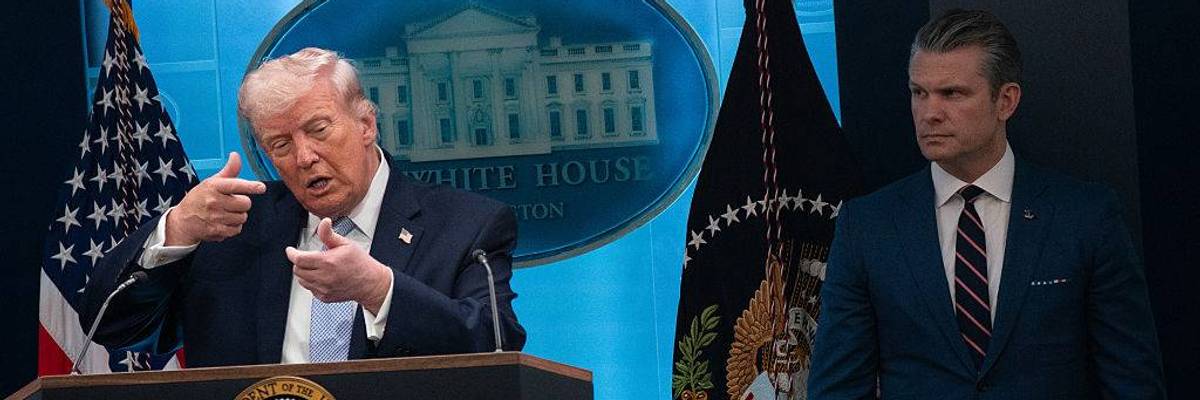
President Donald Trump, with Secretary of Defense Pete Hegseth, mimics firing a rifle while speaking to reporters at a briefing on Monday, April 6, 2026 at the White House in Washington, DC.
"International humanitarian law cannot authorize the United States’ attacks," wrote human rights expert Ben Saul.
In a report on the Trump administration's bombing of dozens of boats in the Caribbean Sea and eastern Pacific Ocean over the past year, a top United Nations rights expert dismissed President Donald Trump's claim that the military campaign has been in "self-defense" against "designated terrorist organizations," and warned that the evidence collected about the strikes could point to crimes against humanity being committed by the United States.
Ben Saul, the UN special rapporteur on human rights and counterterrorism, concurred with numerous human rights experts as he said Monday that even if the boats targeted by the US had been engaged in drug trafficking—the central claim of Trump, Secretary of State Marco Rubio, and Defense Secretary Pete Hegseth as they've defended the operation—there are no "international legal rights to unilaterally use military force" to counter drug cartels or other organized crime groups.
He noted that Trump last October notified Congress that the strikes were part of a "non-international armed conflict," governed by the law of armed conflict, as his administration highlighted the threat of "narco-terrorists."
"The United States military attacks are, however, contrary to international law, violate the human right to life, and plausibly constitute crimes against humanity," wrote Saul.
He added that the killings could reasonably constitute "crimes against humanity of murder under customary international law," noting that such crimes generally require "that murder (or attempted murder) was committed as part of a widespread or systematic attack directed against any civilian population."
Saul compared the bombings to the alleged crimes of former Philippine President Rodrigo Duterte, whose own "war on drugs" included the state killings of thousands of Filipinos accused of trafficking narcotics. Duterte, noted Saul, "is on trial for alleged crimes against humanity of murder for targeting suspected criminals, or criminals having criminal propensities, including drug offenders."
The special rapporteur's report pertains to attacks up until August, but came days after the US military said it had killed four more people aboard a vessel in the Caribbean. At least 234 people have been killed in the attacks by US Southern Command so far, in at least 70 strikes.
As with its previous bombings, US Southern Command did not release any evidence in its latest attack that the target was a boat involved in drug trafficking. US Sen. Tim Kaine (D-Va.) emphasized at a hearing in June that the "targeting criteria" the military has used in the boat bombing campaign has never included “evidence of narcotics on the boat," and data from Customs and Border Protection (CBP) has shown little to no evidence that the flow of drugs into the US has decreased since the bombings began more than a year ago.
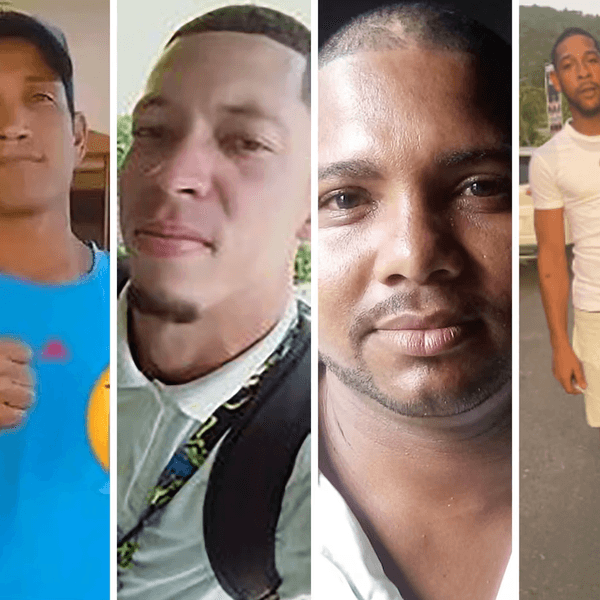
In addition to some people who may have been involved in narcotics trafficking, the report reads, "some victims have reportedly included fishermen, migrants, and victims of human trafficking." The families of some victims have filed legal complaints over their killings.
Moreoever, said Saul, "even assuming that the vessels and crew attacked were members of the criminal groups listed as terrorist, such organizations have not mounted any 'armed attack' on the United States so as to trigger a right of self-defense."
"Deaths from illicit drugs are not assimilable to an armed attack under international law," he wrote, despite Hegseth's insistence that the US aims to protect the country from "the drugs that are killing our people."
Instead of being legitimate attacks in self-defense, wrote Saul, the bombings "amount to serial extrajudicial killings in violation of the right to life, being unjustified in national or personal self-defense or under international humanitarian law, the international law of the sea, narcotics suppression conventions, or international counterterrorism law."
"International humanitarian law cannot authorize the United States’ attacks," he added.
Saul said the military campaign, which the Trump administration has recently expanded to include land attacks in Latin American countries, may violate Article 6 of the International Covenant on Civil and Political Rights, which was ratified by the US in 1992.
The report was filed as world leaders gathered in New York for the UN General Assembly and weeks after US Southern Command announced its campaign in the Caribbean and eastern Pacific was expanding to include operations inside countries in Latin America, with leaders who are aligned with Trump hosting joint military operations. The US has particularly deepened military ties with Ecuador in recent months, with the partnership reportedly resulting in torture, arbitrary detentions, and disappearances.
"International law on the right to life," wrote Saul, "applies to any extraterritorial military or law enforcement action against criminal groups."
Dear Common Dreams reader, It’s been nearly 30 years since I co-founded Common Dreams with my late wife, Lina Newhouser. We had the radical notion that journalism should serve the public good, not corporate profits. It was clear to us from the outset what it would take to build such a project. No paid advertisements. No corporate sponsors. No millionaire publisher telling us what to think or do. Many people said we wouldn't last a year, but we proved those doubters wrong. Together with a tremendous team of journalists and dedicated staff, we built an independent media outlet free from the constraints of profits and corporate control. Our mission has always been simple: To inform. To inspire. To ignite change for the common good. Building Common Dreams was not easy. Our survival was never guaranteed. When you take on the most powerful forces—Wall Street greed, fossil fuel industry destruction, Big Tech lobbyists, and uber-rich oligarchs who have spent billions upon billions rigging the economy and democracy in their favor—the only bulwark you have is supporters who believe in your work. But here’s the urgent message from me today. It's never been this bad out there. And it's never been this hard to keep us going. At the very moment Common Dreams is most needed, the threats we face are intensifying. We need your support now more than ever. We don't accept corporate advertising and never will. We don't have a paywall because we don't think people should be blocked from critical news based on their ability to pay. Everything we do is funded by the donations of readers like you. When everyone does the little they can afford, we are strong. But if that support retreats or dries up, so do we. Will you donate now to make sure Common Dreams not only survives but thrives? —Craig Brown, Co-founder |
In a report on the Trump administration's bombing of dozens of boats in the Caribbean Sea and eastern Pacific Ocean over the past year, a top United Nations rights expert dismissed President Donald Trump's claim that the military campaign has been in "self-defense" against "designated terrorist organizations," and warned that the evidence collected about the strikes could point to crimes against humanity being committed by the United States.
Ben Saul, the UN special rapporteur on human rights and counterterrorism, concurred with numerous human rights experts as he said Monday that even if the boats targeted by the US had been engaged in drug trafficking—the central claim of Trump, Secretary of State Marco Rubio, and Defense Secretary Pete Hegseth as they've defended the operation—there are no "international legal rights to unilaterally use military force" to counter drug cartels or other organized crime groups.
He noted that Trump last October notified Congress that the strikes were part of a "non-international armed conflict," governed by the law of armed conflict, as his administration highlighted the threat of "narco-terrorists."
"The United States military attacks are, however, contrary to international law, violate the human right to life, and plausibly constitute crimes against humanity," wrote Saul.
He added that the killings could reasonably constitute "crimes against humanity of murder under customary international law," noting that such crimes generally require "that murder (or attempted murder) was committed as part of a widespread or systematic attack directed against any civilian population."
Saul compared the bombings to the alleged crimes of former Philippine President Rodrigo Duterte, whose own "war on drugs" included the state killings of thousands of Filipinos accused of trafficking narcotics. Duterte, noted Saul, "is on trial for alleged crimes against humanity of murder for targeting suspected criminals, or criminals having criminal propensities, including drug offenders."
The special rapporteur's report pertains to attacks up until August, but came days after the US military said it had killed four more people aboard a vessel in the Caribbean. At least 234 people have been killed in the attacks by US Southern Command so far, in at least 70 strikes.
As with its previous bombings, US Southern Command did not release any evidence in its latest attack that the target was a boat involved in drug trafficking. US Sen. Tim Kaine (D-Va.) emphasized at a hearing in June that the "targeting criteria" the military has used in the boat bombing campaign has never included “evidence of narcotics on the boat," and data from Customs and Border Protection (CBP) has shown little to no evidence that the flow of drugs into the US has decreased since the bombings began more than a year ago.
In addition to some people who may have been involved in narcotics trafficking, the report reads, "some victims have reportedly included fishermen, migrants, and victims of human trafficking." The families of some victims have filed legal complaints over their killings.
Moreoever, said Saul, "even assuming that the vessels and crew attacked were members of the criminal groups listed as terrorist, such organizations have not mounted any 'armed attack' on the United States so as to trigger a right of self-defense."
"Deaths from illicit drugs are not assimilable to an armed attack under international law," he wrote, despite Hegseth's insistence that the US aims to protect the country from "the drugs that are killing our people."
Instead of being legitimate attacks in self-defense, wrote Saul, the bombings "amount to serial extrajudicial killings in violation of the right to life, being unjustified in national or personal self-defense or under international humanitarian law, the international law of the sea, narcotics suppression conventions, or international counterterrorism law."
"International humanitarian law cannot authorize the United States’ attacks," he added.
Saul said the military campaign, which the Trump administration has recently expanded to include land attacks in Latin American countries, may violate Article 6 of the International Covenant on Civil and Political Rights, which was ratified by the US in 1992.
The report was filed as world leaders gathered in New York for the UN General Assembly and weeks after US Southern Command announced its campaign in the Caribbean and eastern Pacific was expanding to include operations inside countries in Latin America, with leaders who are aligned with Trump hosting joint military operations. The US has particularly deepened military ties with Ecuador in recent months, with the partnership reportedly resulting in torture, arbitrary detentions, and disappearances.
"International law on the right to life," wrote Saul, "applies to any extraterritorial military or law enforcement action against criminal groups."
In a report on the Trump administration's bombing of dozens of boats in the Caribbean Sea and eastern Pacific Ocean over the past year, a top United Nations rights expert dismissed President Donald Trump's claim that the military campaign has been in "self-defense" against "designated terrorist organizations," and warned that the evidence collected about the strikes could point to crimes against humanity being committed by the United States.
Ben Saul, the UN special rapporteur on human rights and counterterrorism, concurred with numerous human rights experts as he said Monday that even if the boats targeted by the US had been engaged in drug trafficking—the central claim of Trump, Secretary of State Marco Rubio, and Defense Secretary Pete Hegseth as they've defended the operation—there are no "international legal rights to unilaterally use military force" to counter drug cartels or other organized crime groups.
He noted that Trump last October notified Congress that the strikes were part of a "non-international armed conflict," governed by the law of armed conflict, as his administration highlighted the threat of "narco-terrorists."
"The United States military attacks are, however, contrary to international law, violate the human right to life, and plausibly constitute crimes against humanity," wrote Saul.
He added that the killings could reasonably constitute "crimes against humanity of murder under customary international law," noting that such crimes generally require "that murder (or attempted murder) was committed as part of a widespread or systematic attack directed against any civilian population."
Saul compared the bombings to the alleged crimes of former Philippine President Rodrigo Duterte, whose own "war on drugs" included the state killings of thousands of Filipinos accused of trafficking narcotics. Duterte, noted Saul, "is on trial for alleged crimes against humanity of murder for targeting suspected criminals, or criminals having criminal propensities, including drug offenders."
The special rapporteur's report pertains to attacks up until August, but came days after the US military said it had killed four more people aboard a vessel in the Caribbean. At least 234 people have been killed in the attacks by US Southern Command so far, in at least 70 strikes.
As with its previous bombings, US Southern Command did not release any evidence in its latest attack that the target was a boat involved in drug trafficking. US Sen. Tim Kaine (D-Va.) emphasized at a hearing in June that the "targeting criteria" the military has used in the boat bombing campaign has never included “evidence of narcotics on the boat," and data from Customs and Border Protection (CBP) has shown little to no evidence that the flow of drugs into the US has decreased since the bombings began more than a year ago.
In addition to some people who may have been involved in narcotics trafficking, the report reads, "some victims have reportedly included fishermen, migrants, and victims of human trafficking." The families of some victims have filed legal complaints over their killings.
Moreoever, said Saul, "even assuming that the vessels and crew attacked were members of the criminal groups listed as terrorist, such organizations have not mounted any 'armed attack' on the United States so as to trigger a right of self-defense."
"Deaths from illicit drugs are not assimilable to an armed attack under international law," he wrote, despite Hegseth's insistence that the US aims to protect the country from "the drugs that are killing our people."
Instead of being legitimate attacks in self-defense, wrote Saul, the bombings "amount to serial extrajudicial killings in violation of the right to life, being unjustified in national or personal self-defense or under international humanitarian law, the international law of the sea, narcotics suppression conventions, or international counterterrorism law."
"International humanitarian law cannot authorize the United States’ attacks," he added.
Saul said the military campaign, which the Trump administration has recently expanded to include land attacks in Latin American countries, may violate Article 6 of the International Covenant on Civil and Political Rights, which was ratified by the US in 1992.
The report was filed as world leaders gathered in New York for the UN General Assembly and weeks after US Southern Command announced its campaign in the Caribbean and eastern Pacific was expanding to include operations inside countries in Latin America, with leaders who are aligned with Trump hosting joint military operations. The US has particularly deepened military ties with Ecuador in recent months, with the partnership reportedly resulting in torture, arbitrary detentions, and disappearances.
"International law on the right to life," wrote Saul, "applies to any extraterritorial military or law enforcement action against criminal groups."